

系统工程与电子技术 ›› 2026, Vol. 48 ›› Issue (1): 94-105.doi: 10.12305/j.issn.1001-506X.2026.01.10
陈海青( ), 汪刘应(), 刘顾, 王龙, 葛超群, 陈孟州
收稿日期:2024-06-03
出版日期:2026-01-25
发布日期:2026-02-11
通讯作者:
汪刘应
E-mail:411674446@qq.com;wangliuying1971@163.com
作者简介:陈海青(1988—),男,博士研究生,主要研究方向为合成孔径雷达信号与图像处理基金资助:
Haiqing CHEN(), Liuying WANG(), Gu LIU, Long WANG, Chaoqun GE, Mengzhou CHEN
Received:2024-06-03
Online:2026-01-25
Published:2026-02-11
Contact:
Liuying WANG
E-mail:411674446@qq.com;wangliuying1971@163.com
摘要:
合成孔径雷达(synthetic aperture radar, SAR)成像过程中相干斑噪声的影响显著降低图像的质量和准确性,给图像的后续解译带来挑战。简要概述SAR图像相干斑的形成机理,列举常用SAR数据集及在相干斑噪声建模中的应用,比较传统去噪算法和基于深度学习的去噪算法的研究进展。在总结国内外学者研究的基础上,介绍空域滤波、非局部均值和变换域滤波等传统去噪方法的原理及优缺点,分析这些方法在保留图像细节与抑制噪声方面的局限性。概括包括卷积神经网络、生成对抗网络等在内的深度学习去噪算法的最新发展,探讨不同模型的优势与改进策略。最后,通过实验对比分析各算法的性能和不足,探讨当前SAR图像去噪面临的挑战及未来的发展趋势。
中图分类号:
陈海青, 汪刘应, 刘顾, 王龙, 葛超群, 陈孟州. 合成孔径雷达图像去噪算法研究进展[J]. 系统工程与电子技术, 2026, 48(1): 94-105.
Haiqing CHEN, Liuying WANG, Gu LIU, Long WANG, Chaoqun GE, Mengzhou CHEN. Research progress on denoising algorithms for synthetic aperture radar images[J]. Systems Engineering and Electronics, 2026, 48(1): 94-105.
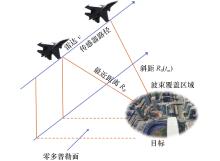
图1
SAR几何关系图"
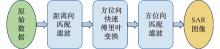
图2
RD成像算法流程"
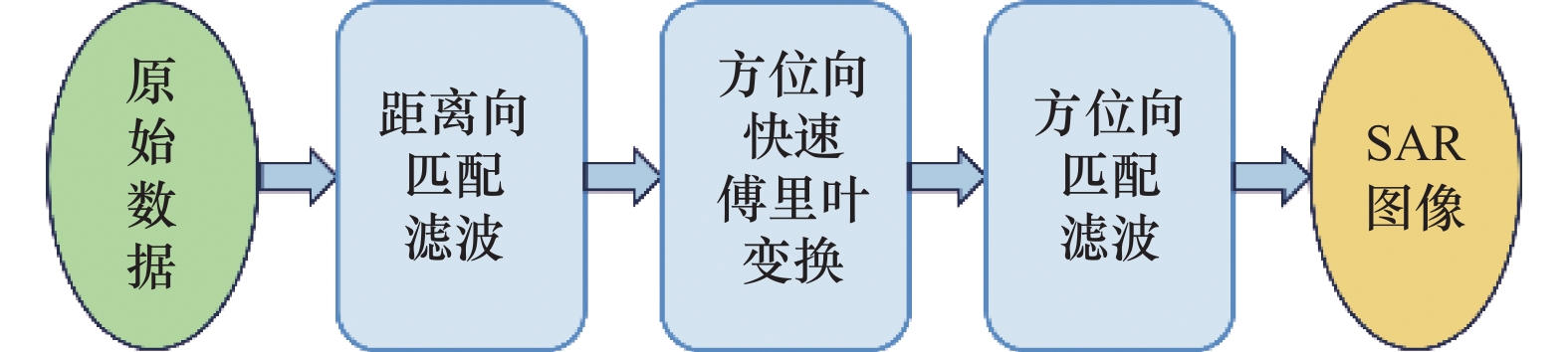
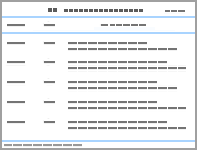
表1
SAR开源数据集"
| 数据集名称 | 图像数量 | 极化方式 | 样本分辨率 | 主要目标对象 | 采集工具 |
| MSTAR[ | 超20 000 | HH | 128 × 128 | SAR车辆 | 聚束式SAR |
| OpenSARShip[ | 11 346 | VV、VH | 100 × 100 | SAR船舶 | Sentinel-1卫星 |
| FuSAR-Ship[ | 16 144 | DH、DV | 512 × 512 | SAR船舶 | 高分三号卫星 |
| OpenSARUrban[ | 33 358 | VV、VH | 100 × 100 | SAR城市 | Sentinel-1卫星 |
| SAR-ACD[ | 4 322 | HH | 未公开 | SAR飞机 | 高分三号卫星 |
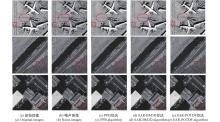
图3
传统经典算法SAR图像去噪结果图"

表2
传统SAR图像去噪算法对比"
| 算法类型 | 优点 | 缺点 |
| 经典空域滤波 | 简单易实现;可用于抑制噪声,改善图像质量;特定滤波器 (如均值滤波)对高斯噪声具有较好效果 | 对复杂噪声和低信噪比图像的处理效果有限; 性能受到滤波器窗口大小的影响较大,可能导致细节模糊化, 对目标信号边缘保护性能相对较差 |
| 基于小波变换 | 能够较好保留图像的细节特征; 对高斯噪声和脉冲噪声具有较好效果 | 对复杂噪声和非线性噪声处理能力有限;边缘保护能力 相对较差,可能引入新的伪影 |
| 基于Contourlet变换 | 能更好地捕捉图像纹理和结构信息; 对复杂噪声类型有较好效果 | 对计算资源要求较高;处理过程中可能引入新的 伪影,不符合MRA理论 |
| 基于Shearlet变换 | 能够更好地处理图像的纹理和微观结构信息; 对相干斑噪声和高斯噪声有较好效果 | 计算复杂度较高;处理过程中可能引入 新的伪影 |
| 基于非局部均值 | 能够保留图像细节;对脉冲噪声和斑点噪声 具有较好效果 | 计算复杂度较高;需要提前估计噪声水平; 在处理低信噪比图像时效果有限 |
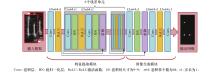
图4
DeepImaging网络框架[36]"
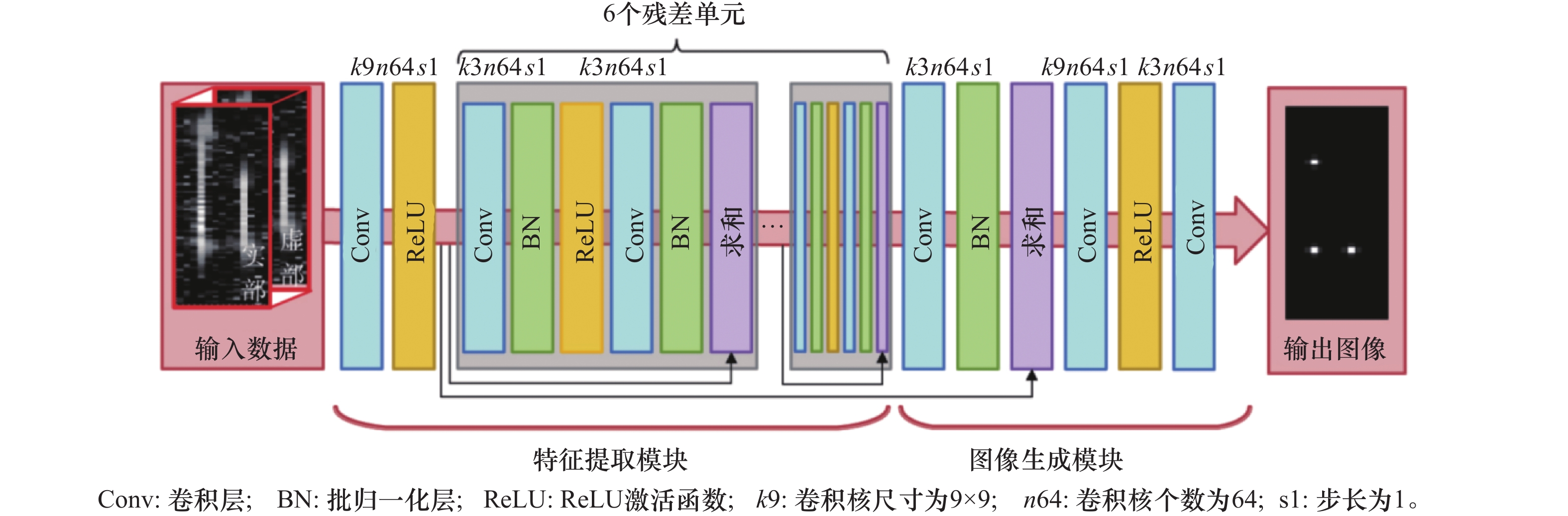
图5
注意力机制CBAM结构图"
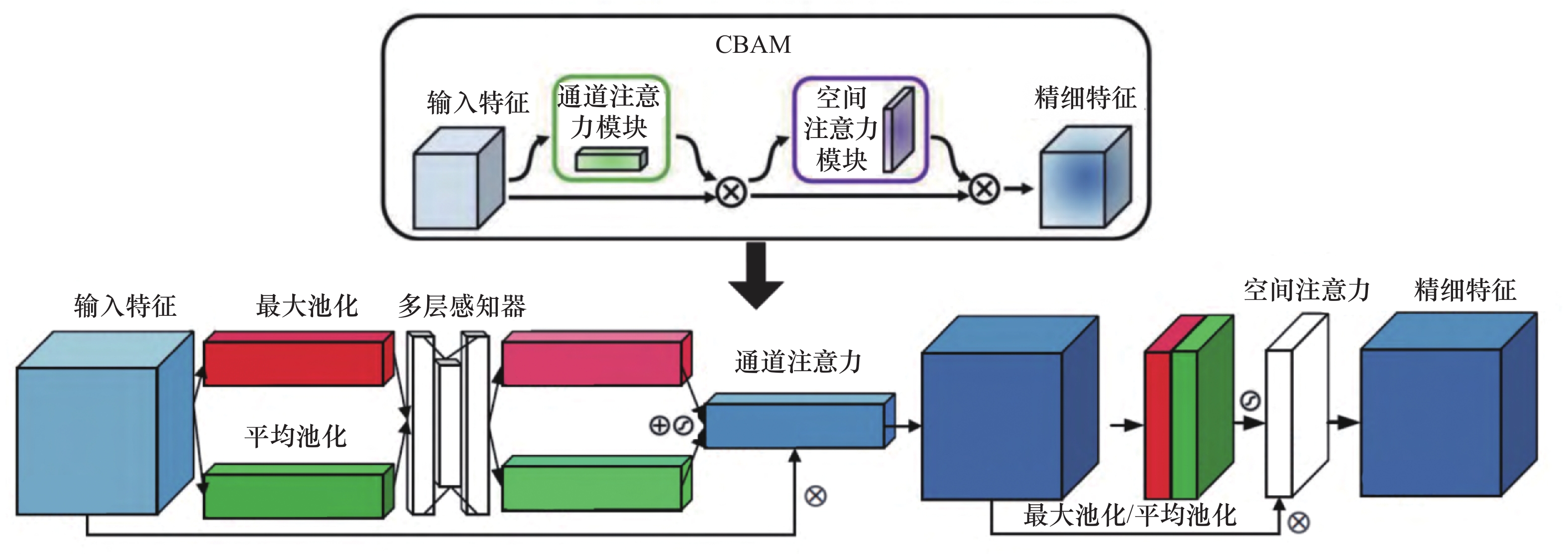
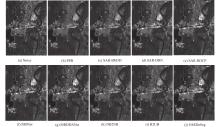
图6
不同方法对同一区域SAR图像的去噪效果"

表3
SAR图像的去噪性能参数的实验结果"
| Method | PPB | SAR-BM3D | SAR-DRN | SAR-RDCP | MONet | MRDDANet | NB2NB | B2UB | SARDeseg |
| PSNR | 17.38 | 17.94 | 21.35 | 21.3 | 21.22 | 21.51 | 21.2 | 21.32 | 21.41 |
| ENL | 167.714 0 | ||||||||
| FOM | |||||||||
| RGPI | − |
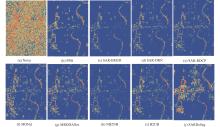
图7
不同方法对同一区域SAR图像去噪的ENL图"

| 1 |
LI J, CHEN J, CHENG P, et al. A survey on deep-learning-based real-time SAR ship detection[J]. IEEE Journal of Selected Topics in Applied Earth Observations and Remote Sensing, 2023, 16, 3218- 3247.
doi: 10.1109/JSTARS.2023.3244616 |
| 2 | SHEN H F, ZHOU C X, LI J, et al. SAR image despeckling employing a recursive deep CNN prior[J]. IEEE Trans. on Geoscience and Remote Sensing, 2021, 59 (1): 273- 286. |
| 3 | 朱磊, 姚同钰, 车晨洁, 等. 边缘引导的双分支网络SAR图像相干斑抑制方法[J]. 北京航空航天大学学报, 2025, 51(6): 1852−1862. |
| ZHU L, YAO T Y, CHE C J, et al. Edge-guided dual-branch network for SAR image speckle suppression[J]. Journal of Beijing University of Aeronautics and Astronautics, 2025, 51(6): 1852−1862. | |
| 4 | 王俊杰. 成像雷达目标特征电磁调控技术研究[D]. 长沙: 国防科技大学, 2020. |
| WANG J J. Research on electromagnetic regulation technology of imaging radar target characteristics [D]. Changsha: National University of Defense Technology, 2020. | |
| 5 | 邢孟道, 谢意远, 高悦欣, 等. 电磁散射特征提取与成像识别算法综述[J]. 雷达学报, 2022, 11 (6): 921- 942. |
| XING M D, XIE Y Y, GAO Y X, et al. Electromagnetic scattering characteristic extraction and imaging recognition algorithm: a review[J]. Journal of Radars, 2022, 11 (6): 921- 942. | |
| 6 |
PAN Y C, ZHONG L H, CHEN J D, et al. SAR image despeckling based on denoising diffusion probabilistic model and Swin transformer[J]. Remote Sensing, 2024, 16 (17): 3222.
doi: 10.3390/rs16173222 |
| 7 | KEYDEL E R, LEE S W, MOORE J T. MSTAR extended operating conditions: a tutorial[C]// Proc. of SPIE, 1996, 2757: 228−242. |
| 8 |
HUANG L Q, LIU B, LI B Y, et al. OpenSARShip: a dataset dedicated to Sentinel-1 ship interpretation[J]. IEEE Journal of Selected Topics in Applied Earth Observations and Remote Sensing, 2018, 11 (1): 195- 208.
doi: 10.1109/JSTARS.2017.2755672 |
| 9 |
HOU X Y, AO W, SONG Q, et al. FUSAR-Ship: building a high-resolution SAR-AIS matchup dataset of Gaofen-3 for ship detection and recognition[J]. Science China Information Sciences, 2020, 63 (4): 140303.
doi: 10.1007/s11432-019-2772-5 |
| 10 |
ZHAO J P, ZHANG Z H, YAO W, et al. OpenSARUrban: a Sentinel-1 SAR image dataset for urban interpretation[J]. IEEE Journal of Selected Topics in Applied Earth Observations and Remote Sensing, 2020, 13, 187- 203.
doi: 10.1109/JSTARS.2019.2954850 |
| 11 | SUN X, LV Y X, WANG Z R, et al. SCAN: scattering characteristics analysis network for few-shot aircraft classification in high-resolution SAR images[J]. IEEE Trans. on Geoscience and Remote Sensing, 2022, 60, 5226- 5517. |
| 12 | LEE J S. Refined filtering of image noise using local statistics[J]. Computer Graphics and Image Processing, 1983, 22 (2): 197- 206. |
| 13 | FROST V S, HAYES M H, WILSON A F, et al. A model for radar images and its application to adaptive digital filtering of multiplicative noise[J]. IEEE Trans. on Pattern Analysis and Machine Intelligence, 1982, 4 (2): 175- 186. |
| 14 | KUAN D T, HANSEN E R, JONES P A, et al. Adaptive noise smoothing filter for images with signal-dependent noise[J]. IEEE Trans. on Pattern Analysis and Machine Intelligence, 1985, 7 (2): 221- 229. |
| 15 | 曹国金. 基于多尺度注意力与域自适应的遥感SAR图像变化检测[D]. 西安: 西安电子科技大学, 2023. |
| CAO G J. Change detection of remote sensing SAR images based on multi-scale attention and domain adaptation[D]. Xi’an: Xi’an University of Electronic Science and Technology, 2023. | |
| 16 |
XU B, CUI Y, LI Z H, et al. Patch ordering-based SAR image despeckling via transform-domain filtering[J]. IEEE Journal of Selected Topics in Applied Earth Observations and Remote Sensing, 2015, 8 (4): 1682- 1695.
doi: 10.1109/JSTARS.2014.2375359 |
| 17 | WEI Z, BO L W, GONG Z, et al. SAR image denoising algorithm based on adaptive shrinkage in nonsubsampled contourlet domain[J]. Journal of Image and Graphics, 2009, 11 (2): 782- 795. |
| 18 | 范旭. 基于Contourlet变换的SAR图像去噪研究[D]. 西安: 西安电子科技大学, 2015. |
| FAN X. A study of SAR image denoising based on contourlet transform[D]. Xi’an: Xidian University, 2015. | |
| 19 |
刘帅奇, 胡绍海, 肖扬. 基于局部混合滤波的SAR图像去噪[J]. 系统工程与电子技术, 2012, 34 (2): 396- 402.
doi: 10.3969/j.issn.1001-506X.2012.02.34 |
|
LIU S Q, HU S H, XIAO Y. SAR image de-noise base on local hybrid filter[J]. Systems Engineering and Electronics, 2012, 34 (2): 396- 402.
doi: 10.3969/j.issn.1001-506X.2012.02.34 |
|
| 20 | 刘帅奇, 胡绍海, 肖扬. 基于稀疏表示的Shearlet域SAR图像去噪[J]. 电子与信息学报, 2012, 34 (9): 2110- 2115. |
| LIU S Q, HU S H, XIAO Y. Shearlet domain SAR image de-noising via sparse representation[J]. Journal of Electronics & Information Technology, 2012, 34 (9): 2110- 2115. | |
| 21 | 刘帅奇, 胡绍海, 肖扬. 基于复Shearlet域高斯混合模型的SAR图像去噪[J]. 航空学报, 2013, 34 (1): 173- 180. |
| LIU S Q, HU S H, XIAO Y. SAR image denoising based on complex Shearlet transform domain Gaussian mixture model[J]. Acta Aeronautica, 2013, 34 (1): 173- 180. | |
| 22 |
PARRILLI S, PODERICO M, ANGELINO C V, et al. A nonlocal SAR image denoising algorithm based on LLMMSE wavelet shrinkage[J]. IEEE Trans. on Geoscience and Remote Sensing, 2012, 50 (2): 606- 616.
doi: 10.1109/TGRS.2011.2161586 |
| 23 |
DELEDALE C A, DENIS L, TUPIN F. Iterative weighted maximum likelihood denoising with probabilistic patch-based weights[J]. IEEE Trans. on Image Processing, 2009, 18 (12): 2661- 2672.
doi: 10.1109/TIP.2009.2029593 |
| 24 |
GUAN D D, XIANG D L, TANG X A, et al. SAR image despeckling based on nonlocal low-rank regularization[J]. IEEE Trans. on Geoscience and Remote Sensing, 2019, 57 (6): 3472- 3489.
doi: 10.1109/TGRS.2018.2885089 |
| 25 |
LIU S Q, HU Q, LI P F, et al. Speckle suppression based on weighted nuclear norm minimization and grey theory[J]. IEEE Trans. on Geoscience and Remote Sensing, 2019, 57 (5): 2700- 2708.
doi: 10.1109/TGRS.2018.2876339 |
| 26 |
ZHANG Q, YUAN Q Q, LI J, et al. Learning a dilated residual network for SAR image despeckling[J]. Remote Sensing, 2018, 10 (2): 196.
doi: 10.3390/rs10020196 |
| 27 |
ZHAO W Y, DELEDALE C, DENIS L, et al. Ratio-based multitemporal SAR images denoising: RABASAR[J]. IEEE Trans. on Geoscience and Remote Sensing, 2019, 57 (6): 3552- 3565.
doi: 10.1109/TGRS.2018.2885683 |
| 28 | SALEEM A, ALVER M B, ÇETIN M. SAR image despeckling with CNN using a novel logarithmic discrete cosine transform-based loss[J]. IEEE Journal of Selected Topics in Applied Earth Observations and Remote Sensing, 2024, 17 (8): 1234- 1245. |
| 29 | CHIERCHIA G, COZZOLINO D, POGGI G, et al. SAR image despeckling through convolutional neural networks[C]// Proc. of the IEEE International Geoscience and Remote Sensing Symposium, 2017, 11: 23−28. |
| 30 |
WANG P Y, ZHANG H, PATEL V M. SAR image despeckling using a convolutional neural network[J]. IEEE Signal Processing Letters, 2017, 24 (12): 1763- 1767.
doi: 10.1109/LSP.2017.2758203 |
| 31 | WANG J, ZHENG T, LEI P, et al. Ground target classification in noisy SAR images using convolutional neural networks[J]. IEEE Journal of Selected Topics in Applied Earth Observations and Remote Sensing, 2018, 11 (11): 163- 167. |
| 32 |
SHI H Y, YANG X Y, ZHOU Q X, et al. SAR slow moving target imaging based on over-sampling smooth algorithm[J]. Chinese Journal of Electronics, 2017, 26 (4): 876- 882.
doi: 10.1049/cje.2017.06.005 |
| 33 |
ZHANG T W, ZHANG X L. A polarization fusion network with geometric feature embedding for SAR ship classification[J]. Pattern Recognition, 2022, 123, 108365.
doi: 10.1016/j.patcog.2021.108365 |
| 34 | 刘彤. 基于卷积神经网络的SAR图像去噪算法研究[D]. 保定: 河北大学, 2020. |
| LIU T. Research on SAR image denoising algorithm based on convolutional neural network[D]. Baoding: Hebei University, 2020. | |
| 35 |
YANG T, SHI H Y, QIAO Z J. Enhanced SAR imaging using multiple plane spiral orbital angular momentum beams[J]. Measurement, 2022, 202, 111784.
doi: 10.1016/j.measurement.2022.111784 |
| 36 | 张云, 穆慧琳, 姜义成, 等. 基于深度学习的雷达成像技术研究进展[J]. 雷达科学与技术, 2021, 19 (5): 467- 478. |
| ZHANG Y, MU H L, JIANG Y C, et al. Overview of radar imaging techniques based on deep learning[J]. Radar Science and Technology, 2021, 19 (5): 467- 478. | |
| 37 |
ANKUSH M, YASIR A. Optical and SAR images-based image translation for change detection using generative adversarial network (GAN)[J]. Multimedia Tools and Applications, 2023, 82 (17): 26289- 26315.
doi: 10.1007/s11042-023-14331-2 |
| 38 |
ZHANG Z W, LIU Y J, LIU T, et al. Edge detection algorithm of a symmetric difference kernel SAR image based on the GAN network model[J]. Symmetry, 2019, 11 (4): 557.
doi: 10.3390/sym11040557 |
| 39 | DING Z G, WANG Z W, WEI Y K, et al. SPA-GAN: SAR parametric autofocusing method with generative adversarial network[J]. Remote Sensing, 2022, 14 (20): 5159. |
| 40 | 周驿枰. 基于生成对抗网络的SAR图像生成与数据扩充研究[D]. 西安: 西安电子科技大学, 2020. |
| ZHOU Y P. The research of SAR image generation and data expansion based on generative adversarial network[D]. Xi’an: Xidian University, 2020. | |
| 41 | GU F, ZHANG H, WANG C, et al. Residual encoder-decoder network introduced for multisource SAR image despeckling[J]. IEEE Access, 2017, 7 (4): 73- 78. |
| 42 | 解涛, 郭建胜, 张晓丰, 等. 基于生成对抗网络的 SAR 图像降噪模型[J]. 电光与控制, 2022, 29 (9): 48- 52. |
| XIE T, GUO J S, ZHANG X F, et al. SAR image noise reduction model based on GAN[J]. Electronics Optics & Control, 2022, 29 (9): 48- 52. | |
| 43 | SHI H, ZHANG B C, WANG Y P, et al. SAR-to-optical image translation through generate-validate adversarial networks[J]. IEEE Geoscience and Remote Sensing Letters, 2022, 19 |
| 44 | 刘帅奇, 雷钰, 庞姣, 等. 基于生成对抗网络的SAR图像去噪[J]. 河北大学学报(自然科学版), 2022, 42 (3): 306- 313. |
| LIU S Q, LEI Y, PANG J, et al. SAR image denoising based on generative adversarial networks[J]. Journal of Hebei University (Natural Science Edition), 2022, 42 (3): 306- 313. | |
| 45 | WEI J, ZOU H X, SUN L, et al. CFRWD-GAN for SAR-to-optical image translation[J]. Remote Sensing, 2023, 15 (10): 2547. |
| 46 |
ZHANG M, YANG L Y, YU D J, et al. Synthetic aperture radar image despeckling with a residual learning of convolutional neural network[J]. Optik, 2021, 228, 165876.
doi: 10.1016/j.ijleo.2020.165876 |
| 47 | DONG Y S, JIANG Z Q, TAO F Z, et al. Multiple spatial residual network for object detection[J]. Complex & Intelligent Systems, 2023, 9 (2): 1347- 1362. |
| 48 |
GU F, ZHANG H, WANG C. A two-component deep learning network for SAR image denoising[J]. IEEE Access, 2020, 8, 17792- 17803.
doi: 10.1109/ACCESS.2020.2965173 |
| 49 |
VITALE S, FERRAIOLI G, PASCAZIO V. Multi-objective CNN-based algorithm for SAR despeckling[J]. IEEE Trans. on Geoscience and Remote Sensing, 2021, 59 (11): 9336- 9349.
doi: 10.1109/TGRS.2020.3034852 |
| 50 | VITALE S, FERRAIOLI G, PASCAZIO V. A new ratio image based CNN algorithm for SAR despeckling[J]. Ithaca: Cornell University Library, 2019, 57 (12): 180- 190. |
| 51 |
倪水平, 王仕杰, 李慧芳, 等. 多尺度残差密集注意力网络图像超分辨率重建[J]. 河南理工大学学报(自然科学版), 2024, 43 (1): 140- 148.
doi: 10.16186/j.cnki.1673-9787.2021110080 |
|
NI S P, WANG S J, LI H F, et al. Image super-resolution reconstruction of multi-scale residual dense attention network[J]. Journal of Henan Polytechnic University (Natural Science), 2024, 43 (1): 140- 148.
doi: 10.16186/j.cnki.1673-9787.2021110080 |
|
| 52 |
LUO R, CHEN L F, XING J, et al. A fast aircraft detection method for SAR images based on efficient bidirectional path aggregated attention network[J]. Remote Sensing, 2021, 13 (15): 2940.
doi: 10.3390/rs13152940 |
| 53 | 雷钰. 基于注意力卷积神经网络的SAR图像去噪算法研究[D]. 保定: 河北大学, 2022. |
| LEI Y. Research on SAR image denoising algorithm based on attention convolutional neural network[D]. Baoding: Hebei University, 2022. | |
| 54 | SHAN H L, FU X W, LV Z K, et al. Synthetic aperture radar images denoising based on multi-scale attention cascade convolutional neural network[J]. Measurement Science and Technology, 2023, 34, 085403. |
| 55 |
LI L. Target detection network for SAR images based on semi-supervised learning and attention mechanism[J]. Remote Sensing, 2021, 13 (21): 4369- 4379.
doi: 10.3390/rs13214369 |
| 56 | LIU S Q, LEI Y, ZHANG L Y, et al. MRDDANet: a multiscale residual dense dual attention network for SAR image denoising[J]. IEEE Trans. on Geoscience and Remote Sensing, 2022, 60 |
| 57 |
XU S P, XIAO N, LUO J, et al. Multi-channel deep image prior for image denoising[J]. Signal, Image and Video Processing, 2023, 17 (8): 4395- 4404.
doi: 10.1007/s11760-023-02673-1 |
| 58 |
LIU B, WU L, SONG X, et al. InDeandCoE: a framework based on multi-scale feature fusion and residual learning for interferometric SAR remote sensing image denoising and coherence estimation[J]. Displays, 2023, 79, 102496.
doi: 10.1016/j.displa.2023.102496 |
| 59 | LEI Y, LIU S Q, ZHANG L Y. Multi-level residual attention network for speckle suppression[C]//Proc. of the Pattern Recognition and Computer Vision, 2021. |
| 60 | SHAN H L, FU X W, LV Z K, et al. Synthetic aperture radar images denoising based on multi-scale attention cascade convolutional neural network[J]. Measurement Science & Technology, 2023, 34 (8): 85403. |
| 61 | 赵琰, 赵凌君, 匡纲要. 基于注意力机制特征融合网络的SAR图像飞机目标快速检测[J]. 电子学报, 2021, 49 (9): 1665- 1674. |
| ZHAO Y, ZHAO L J, KUANG G Y. Attention feature fusion network for rapid aircraft detection in SAR images[J]. Acta Electronica Sinica, 2021, 49 (9): 1665- 1674. | |
| 62 |
YUAN Y X, LUO Y, NI J C, et al. Inverse synthetic aperture radar imaging using an attention generative adversarial network[J]. Remote Sensing, 2022, 14 (15): 3509.
doi: 10.3390/rs14153509 |
| 63 |
ZHENG P G, ZHOU Y, WANG W, et al. Target recognition in SAR images via multi-scale perception and denoising representation[J]. IEEE Signal Processing Letters, 2023, 30, 1352- 1356.
doi: 10.1109/LSP.2023.3311956 |
| 64 |
LIU S Q, LIU M, LI P F, et al. SAR image denoising via sparse representation in shearlet domain based on continuous cycle spinning[J]. IEEE Trans. on Geoscience and Remote Sensing, 2017, 55 (5): 2985- 2992.
doi: 10.1109/TGRS.2017.2657602 |
| 65 |
JING R, DUAN F Z, LU F X, et al. Denoising diffusion probabilistic feature-based network for cloud removal in Sentinel-2 imagery[J]. Remote Sensing, 2023, 15 (9): 2217.
doi: 10.3390/rs15092217 |
| 66 |
HUANG T, LI S J, JIA X, et al. Neighbor2Neighbor: a self-supervised framework for deep image denoising[J]. IEEE Trans. on Image Processing, 2022, 31, 4023- 4038.
doi: 10.1109/TIP.2022.3176533 |
| 67 | WANG Z J, LIU J Z, LI G Q, et al. Blind2Unblind: self-supervised image denoising with visible blind spots[C]//Proc. of the IEEE/CVF Conference on Computer Vision and Pattern Recognition, 2022. |
| 68 | YUAN Y, WU Y X, FENG P M, et al. Segmentation-guided semantic-aware self-supervised denoising for SAR image[J]. IEEE Trans. on Geoscience and Remote Sensing, 2023, 61 |
| 69 | PERERA M V, NAIR N G, BANDARA W G C, et al. SAR despeckling using a denoising diffusion probabilistic model[J]. IEEE Geoscience and Remote Sensing Letters, 2023, 20 |
| 70 | ZHANG T W, ZHANG X L. A polarization fusion network with geometric feature embedding for SAR ship classification[J]. Pattern Recognition, 2022, 123: 108365. |
| 71 |
CHEN S W. SAR image speckle filtering with context covariance matrix formulation and similarity test[J]. IEEE Trans. on Image Processing, 2020, 29, 6641- 6654.
doi: 10.1109/TIP.2020.2992883 |
| 72 |
KO J, LEE S. SAR image despeckling using continuous attention module[J]. IEEE Journal of Selected Topics in Applied Earth Observations and Remote Sensing, 2022, 15, 3- 19.
doi: 10.1109/JSTARS.2021.3132027 |
| 73 | 刘颖, 庞羽良, 张伟东, 等. 基于主动学习的图像分类技术: 现状与未来[J]. 电子学报, 2023, 51 (10): 2960- 2984. |
| LIU Y, PANG Y L, ZHANG W D, et al. Active learning-based image classification technology: status and future[J]. Acta Electronica Sinica, 2023, 51 (10): 2960- 2984. | |
| 74 |
ZHU Y T, CHEN M R, WANG X Q, et al. Synthetic aperture radar image despeckling neural network based on maximum a posteriori probability estimation[J]. International Journal of Remote Sensing, 2023, 44 (2): 609- 630.
doi: 10.1080/01431161.2023.2169594 |
| 75 |
PU X Y, JIA H C, XIN Y, et al. Ship detection in low-quality SAR images via an unsupervised domain adaptation method[J]. Remote Sensing, 2023, 15 (13): 3326.
doi: 10.3390/rs15133326 |
| 76 |
MORADI M, AMINDAVAR H. A novel Bayesian image despeckling method using 2D CGARCH-M model in 2D dost framework[J]. Digital Signal Processing, 2023, 140, 104134.
doi: 10.1016/j.dsp.2023.104134 |
| 77 |
SHEN P, WANG C C. HoMeNL: a homogeneity measure-based nonlocal filtering framework for detail-enhanced (pol) (in)SAR image denoising[J]. ISPRS Journal of Photogrammetry and Remote Sensing, 2023, 197, 212- 227.
doi: 10.1016/j.isprsjprs.2023.01.026 |
| 78 |
LI J, XU Z Q, LI Z Y, et al. An unsupervised CNN-based multichannel interferometric phase denoising method applied to TomoSAR imaging[J]. IEEE Journal of Selected Topics in Applied Earth Observations and Remote Sensing, 2023, 16, 3784- 3796.
doi: 10.1109/JSTARS.2023.3263964 |
| 79 |
ZHAO C X, FU X J, DONG J, et al. LPDNet: a lightweight network for SAR ship detection based on multi-level Laplacian denoising[J]. Sensors, 2023, 23 (13): 6084.
doi: 10.3390/s23136084 |
| 80 |
WANG C, ZHENG R Y, ZHU J Z, et al. Unsupervised SAR despeckling by combining online speckle generation and unpaired training[J]. IEEE Journal of Selected Topics in Applied Earth Observations and Remote Sensing, 2023, 16, 10175- 10190.
doi: 10.1109/JSTARS.2023.3327180 |
| [1] | 包玉刚, 贾皓翔, 赵旦峰. 基于高阶递归网络的单幅图像去雨滴模型[J]. 系统工程与电子技术, 2026, 48(1): 12-21. |
| [2] | 张彬, 许高添, 张廷豪, 李志辉, 何宏强. 分布式合成孔径雷达前视高分辨成像算法[J]. 系统工程与电子技术, 2026, 48(1): 119-131. |
| [3] | 蒋明煜, 张顺生, 肖思瑶. 面向轻量级交叉注意力卷积网络的SAR目标识别[J]. 系统工程与电子技术, 2025, 47(9): 2853-2861. |
| [4] | 李开明, 张袁鹏, 罗迎, 代肖楠. 弹道导弹雷达目标识别研究进展[J]. 系统工程与电子技术, 2025, 47(9): 2870-2889. |
| [5] | 李响, 曾顶, 殷君君, 国贤玉, 杨健. 基于梯度融合的极化SAR图像引导滤波[J]. 系统工程与电子技术, 2025, 47(9): 2890-2904. |
| [6] | 朱国辉, 杨琳, 汪洋, 郑陶冶. 一种高速机动平台SAR成像PRF改进设计方法[J]. 系统工程与电子技术, 2025, 47(9): 2905-2912. |
| [7] | 季策, 马相宇, 牟晓宇, 赵家毅. TS-GRU-VTA:基于深度学习的车辆信道估计方案[J]. 系统工程与电子技术, 2025, 47(9): 3093-3098. |
| [8] | 陈凯柏, 高博, 高敏, 余道杰, 周晓东, 宋燕燕, 王越. 电子系统高功率微波效应研究进展[J]. 系统工程与电子技术, 2025, 47(8): 2429-2443. |
| [9] | 付卫红, 彭文洪, 刘乃安. 混合注意力优化的SAR图像小目标检测方法[J]. 系统工程与电子技术, 2025, 47(8): 2519-2526. |
| [10] | 倪康, 贾文杰, 邹旻瑞, 郑志忠. 基于动态聚合网络的SAR目标检测[J]. 系统工程与电子技术, 2025, 47(8): 2527-2539. |
| [11] | 王纪凯, 豆亚杰, 李婧, 董奕君, 姜江, 谭跃进. 智能决策在军事体系工程的研究综述[J]. 系统工程与电子技术, 2025, 47(8): 2581-2599. |
| [12] | 闫小伟, 凌冲, 石胜斌. 地表未爆子弹药快速检测系统设计与实现[J]. 系统工程与电子技术, 2025, 47(8): 2639-2645. |
| [13] | 张琬滢, 高由兵, 李泽一, 李鹏飞, 张伟. 基于双路径特征融合网络的背景信号抑制算法[J]. 系统工程与电子技术, 2025, 47(7): 2406-2413. |
| [14] | 黄丰卓, 冯东, 华洋晟, 黄晓涛. 一种改进的全息SAR相位梯度自聚焦算法[J]. 系统工程与电子技术, 2025, 47(6): 1786-1795. |
| [15] | 张新征, 闫梦可, 朱晓林. 噪声伪标签容忍的半监督SAR目标识别[J]. 系统工程与电子技术, 2025, 47(6): 1796-1805. |
| 阅读次数 | ||||||
|
全文 |
|
|||||
|
摘要 |
|
|||||
