

系统工程与电子技术 ›› 2026, Vol. 48 ›› Issue (3): 859-871.doi: 10.12305/j.issn.1001-506X.2026.03.13
• 系统工程 • 上一篇
冯蕴雯1,2,*, 吕世春1,2, 柯倩云3, 王锐1,2, 刘晚移1,2
收稿日期:2025-06-18
出版日期:2026-03-25
发布日期:2026-04-13
通讯作者:
冯蕴雯
作者简介:吕世春(2001—),男,硕士研究生,主要研究方向为飞机运行支持、飞机维修性工程基金资助:Yunwen FENG1,2,*, Shichun LYU1,2, Qianyun KE3, Rui WANG1,2, Wanyi LIU1,2
Received:2025-06-18
Online:2026-03-25
Published:2026-04-13
Contact:
Yunwen FENG
摘要:
为实现少样本下民机空调系统的有效健康评估,解决空调系统时间维度下状态评估这一难题,提出一种融合故障逻辑与贝叶斯时变评价网络的评估方法。首先,基于系统工作原理构建“监测指标–部件–系统”三级评价框架,以故障逻辑图明确监测指标与部件状态的关联关系。其次,引入时间因子和信息熵–独立性权重系数耦合赋权策略,建立时变?综合赋权模糊综合评价方法,实现部件时间维度下的健康状态量化。然后,结合博弈均衡驱动的贝叶斯网络,将部件状态映射至系统状态,形成贝叶斯时变耦合赋权模糊综合评估模型(Bayesian time-varying coupling weighted fuzzy comprehensive evaluation model, BTCW-FCEM),实现系统级健康状态的动态评估。最后,基于国产民机空调系统运行监测数据开展单部件与复合部件故障案例分析,验证模型在健康状态动态评估中的高精度与高效率表现。结果表明,BTCW-FCEM在多类故障场景下的准确率、精确度、召回率和F1分数均优于多种对比模型,为民机空调系统的健康监测与故障预警提供了可靠的技术支撑。
中图分类号:
冯蕴雯, 吕世春, 柯倩云, 王锐, 刘晚移. 故障逻辑与贝叶斯时变评价网络融合的民机空调系统健康评估方法[J]. 系统工程与电子技术, 2026, 48(3): 859-871.
Yunwen FENG, Shichun LYU, Qianyun KE, Rui WANG, Wanyi LIU. Health assessment method for civil aircraft air conditioning system integrating fault logic and Bayesian time-varying evaluation network[J]. Systems Engineering and Electronics, 2026, 48(3): 859-871.
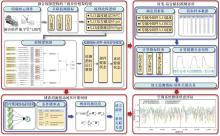
图1
故障逻辑与贝叶斯时变评价网络融合的民机空调系统健康评估框架"

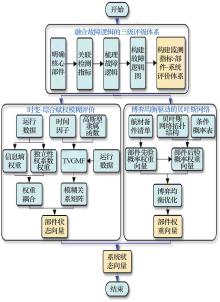
图2
BTCW-FCEM建模流程"
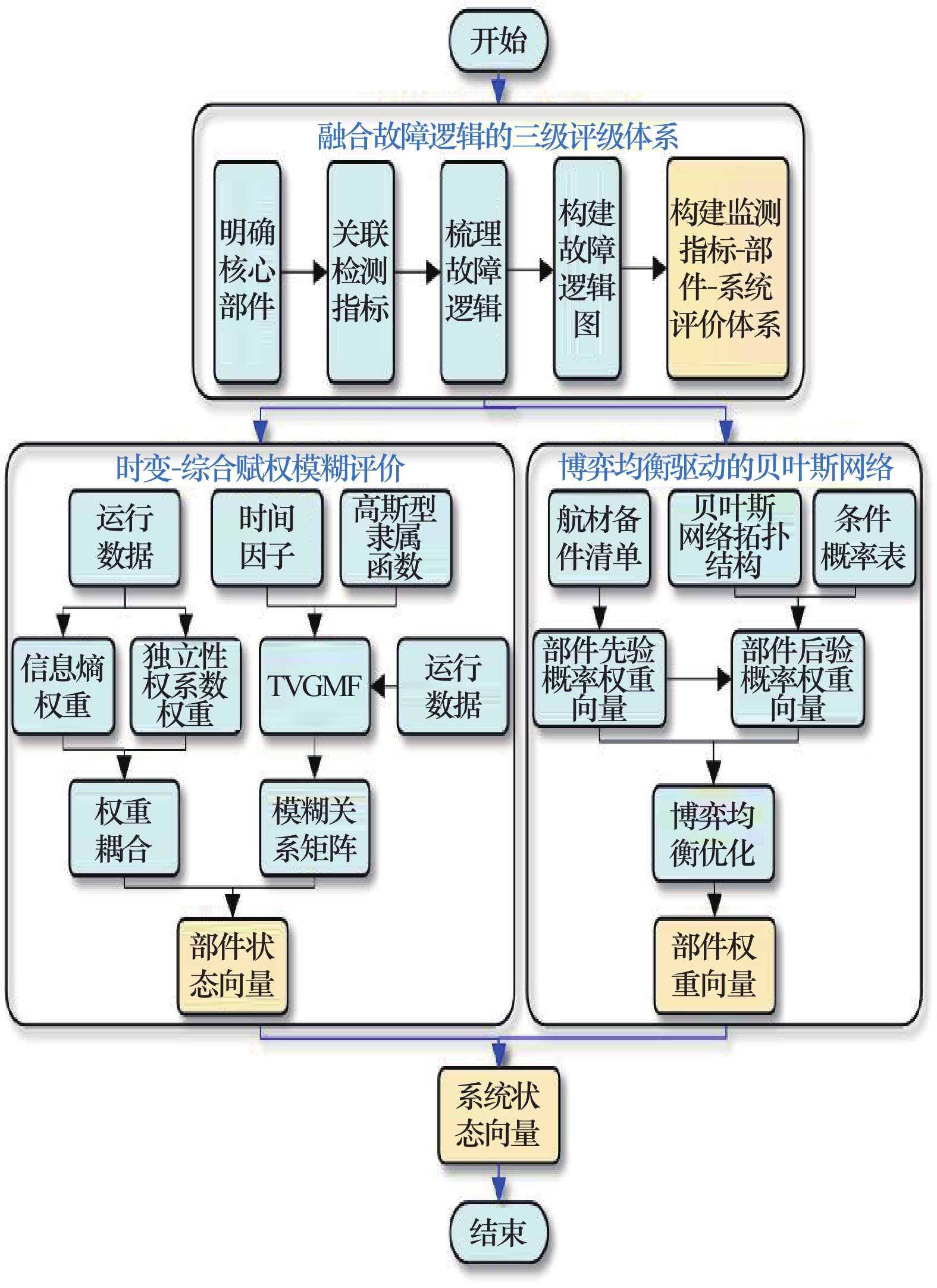
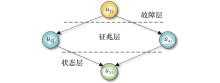
图3
贝叶斯网络结构图"
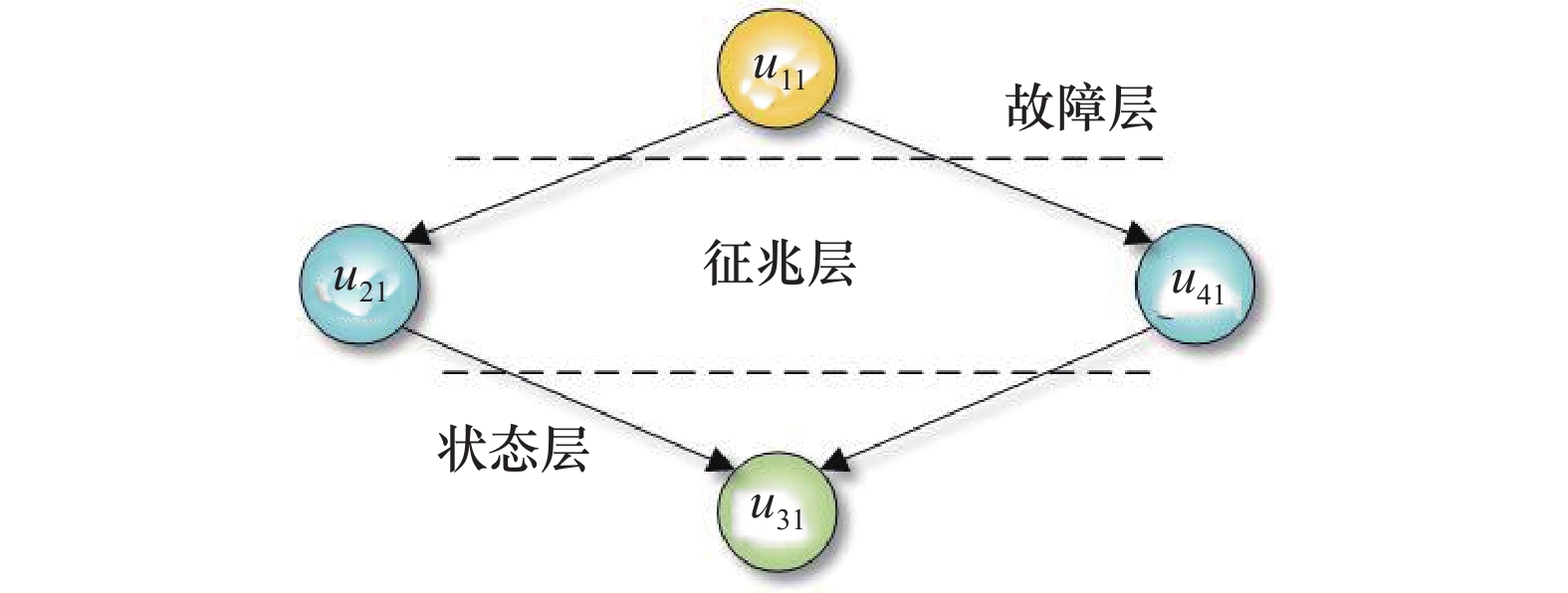
图4
逻辑图与门转换为贝叶斯网络节点"
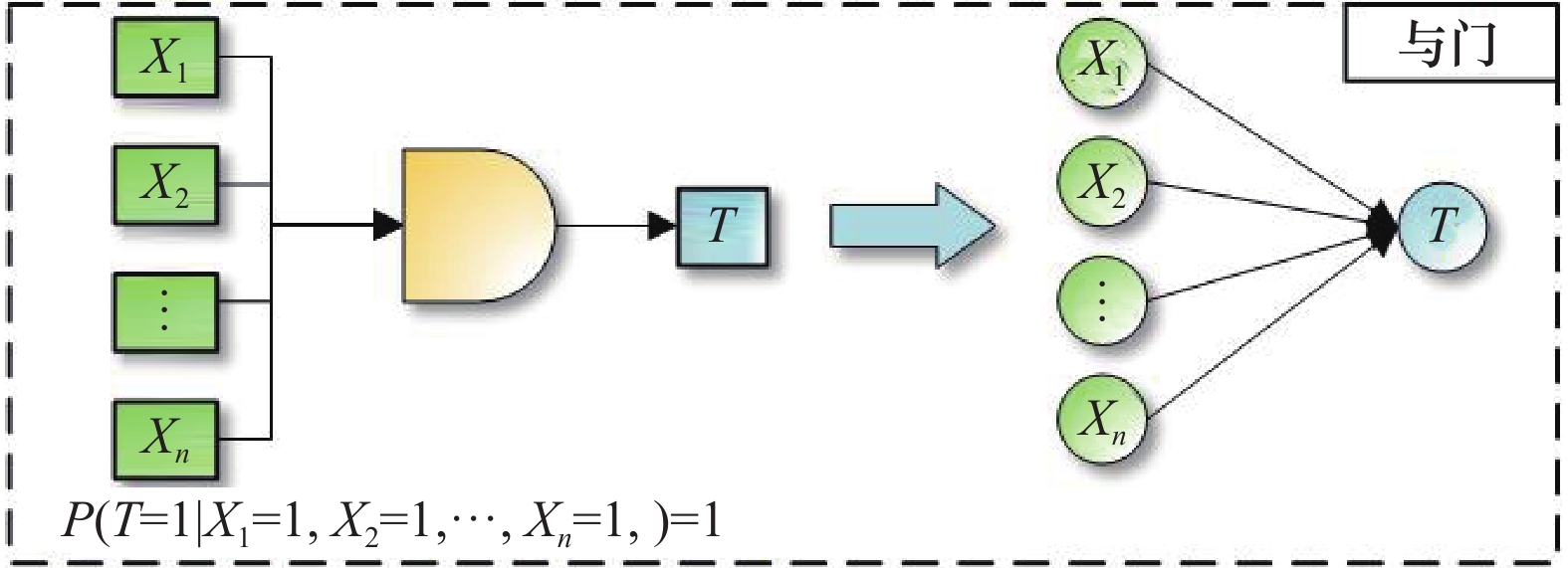
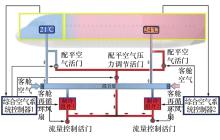
图5
ARJ21飞机空调系统结构简图"
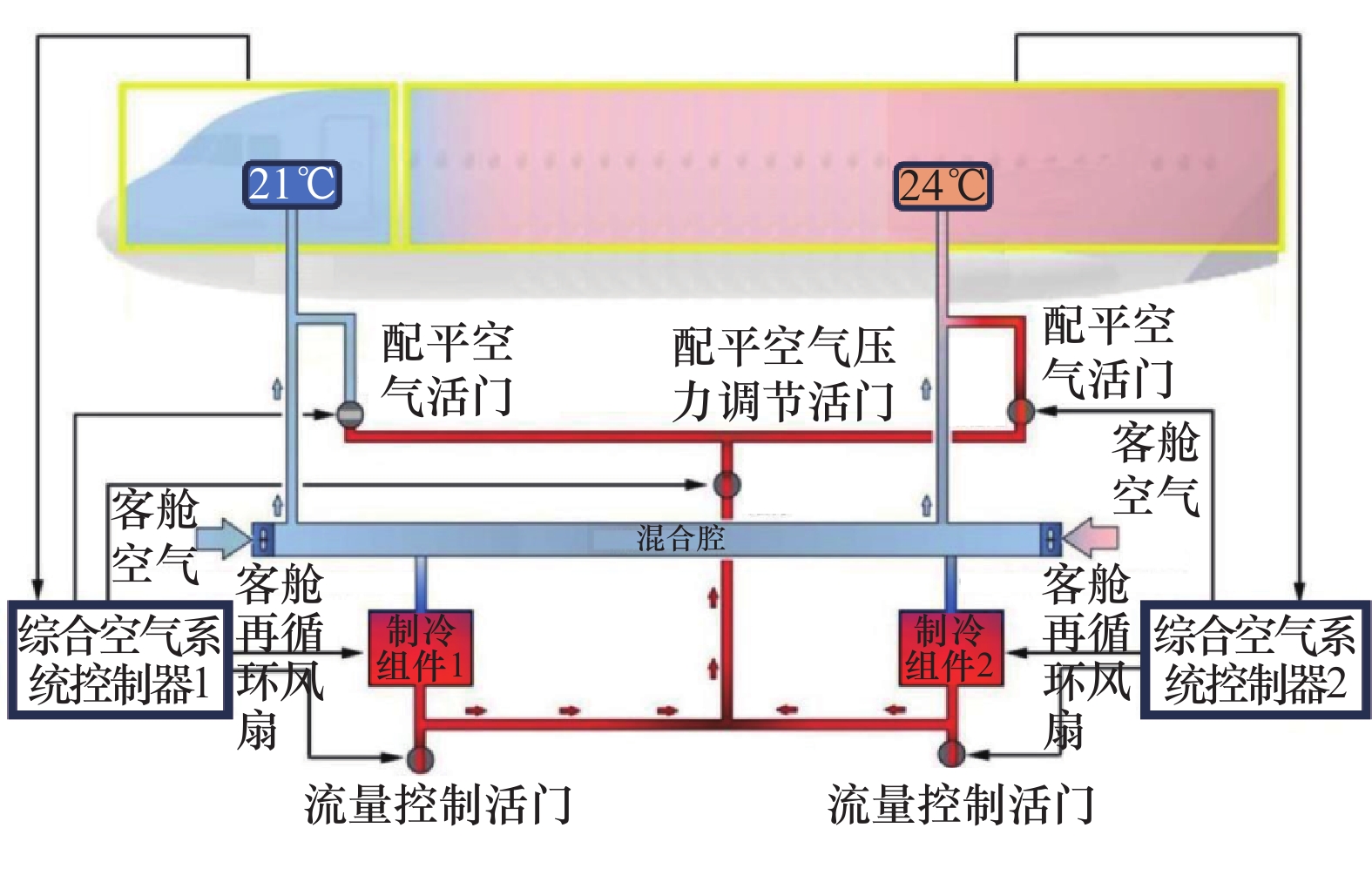
图6
ARJ21飞机空调系统故障逻辑图"
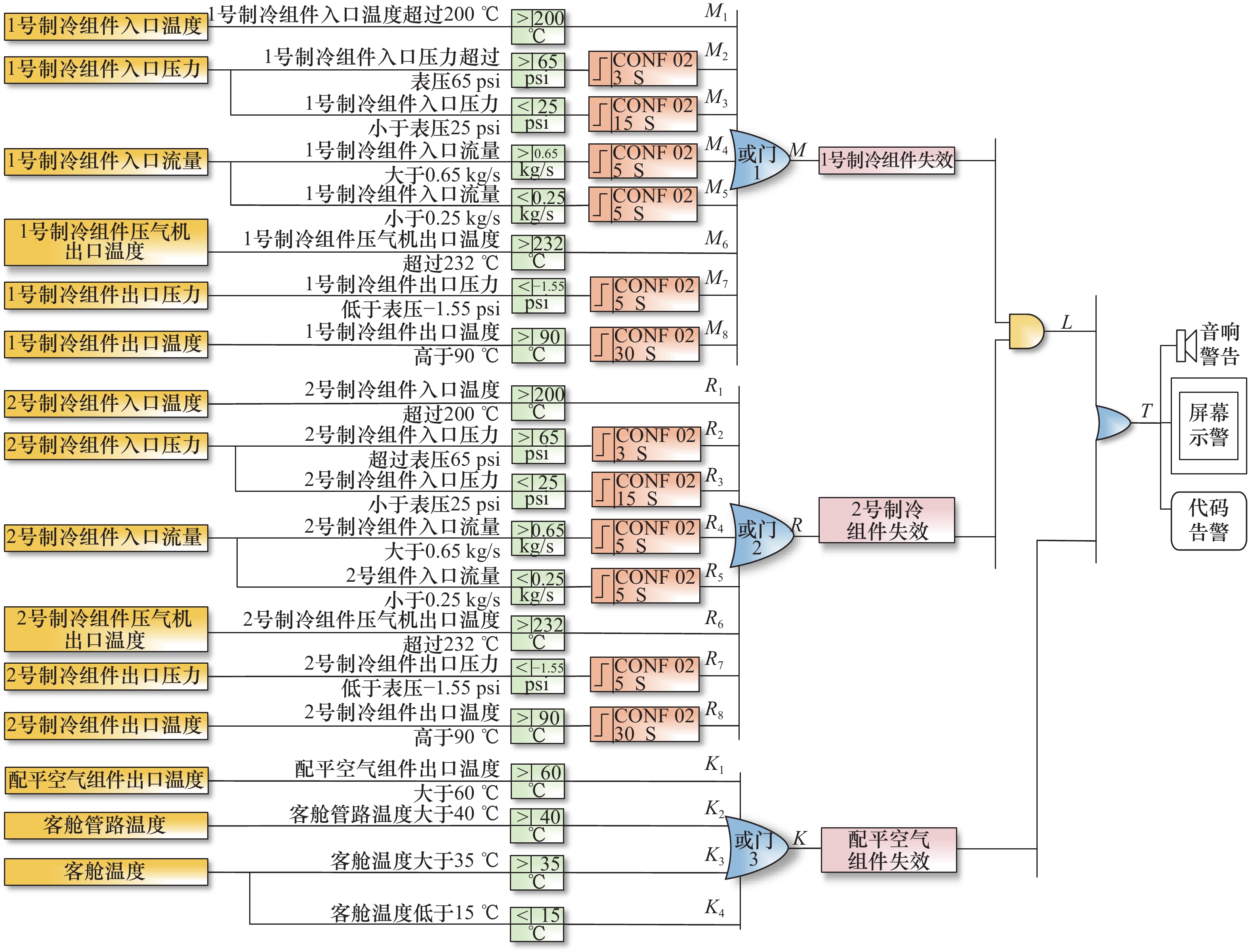

表1
配平空气组件监测指标样例"
| 序号 | 客舱管路温度/℃ | 客舱温度 | 组件出口温度 |
| 1 | 25.3 | 24.3 | 42.5 |
| 2 | 25.4 | 24.2 | 45.3 |
| n | 25.5 | 24.3 | 48.2 |
表2
1号/2号制冷组件各指标TVGMF"
| 指标名称 | TVGMF |
| 组件入口温度 | 偏小型TVGMF A1(x) |
| 组件入口压力 | 中间型TVGMF A3(x) |
| 组件入口流量 | 中间型TVGMF A3(x) |
| 组件压气机出口温度 | 偏小型TVGMF A1(x) |
| 组件出口压力 | 偏大型TVGMF A2(x) |
| 组件出口温度 | 偏小型TVGMF A1(x) |
表3
配平空气组件各指标TVGMF"
| 指标名称 | TVGMF |
| 组件出口温度 | 偏小型TVGMF A1(x) |
| 客舱管路温度 | 偏小型TVGMF A1(x) |
| 客舱温度 | 中间型TVGMF A3(x) |
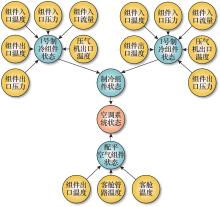
图7
民机空调系统故障贝叶斯网络"
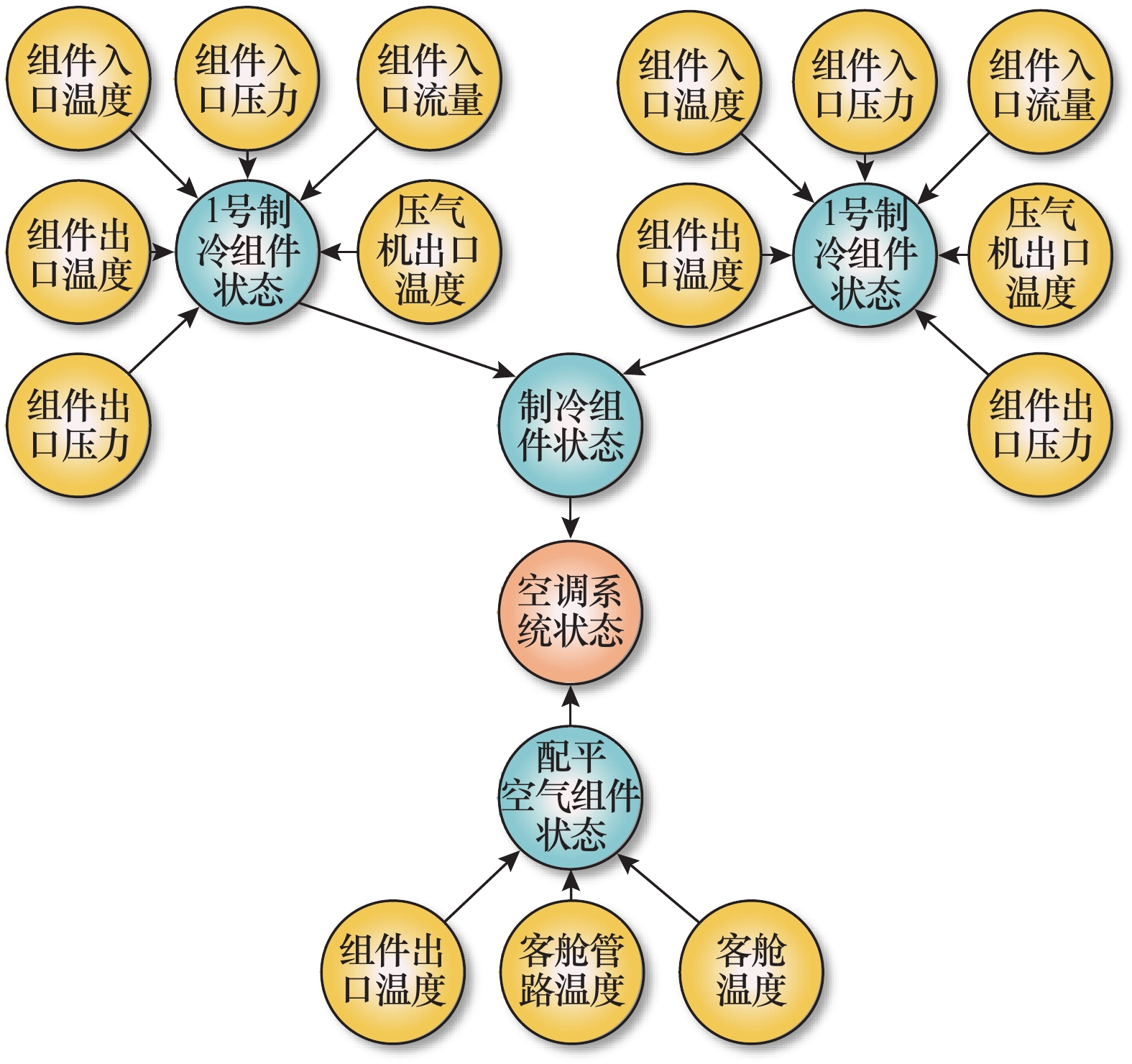
图8
征兆层与状态层拓扑结构"
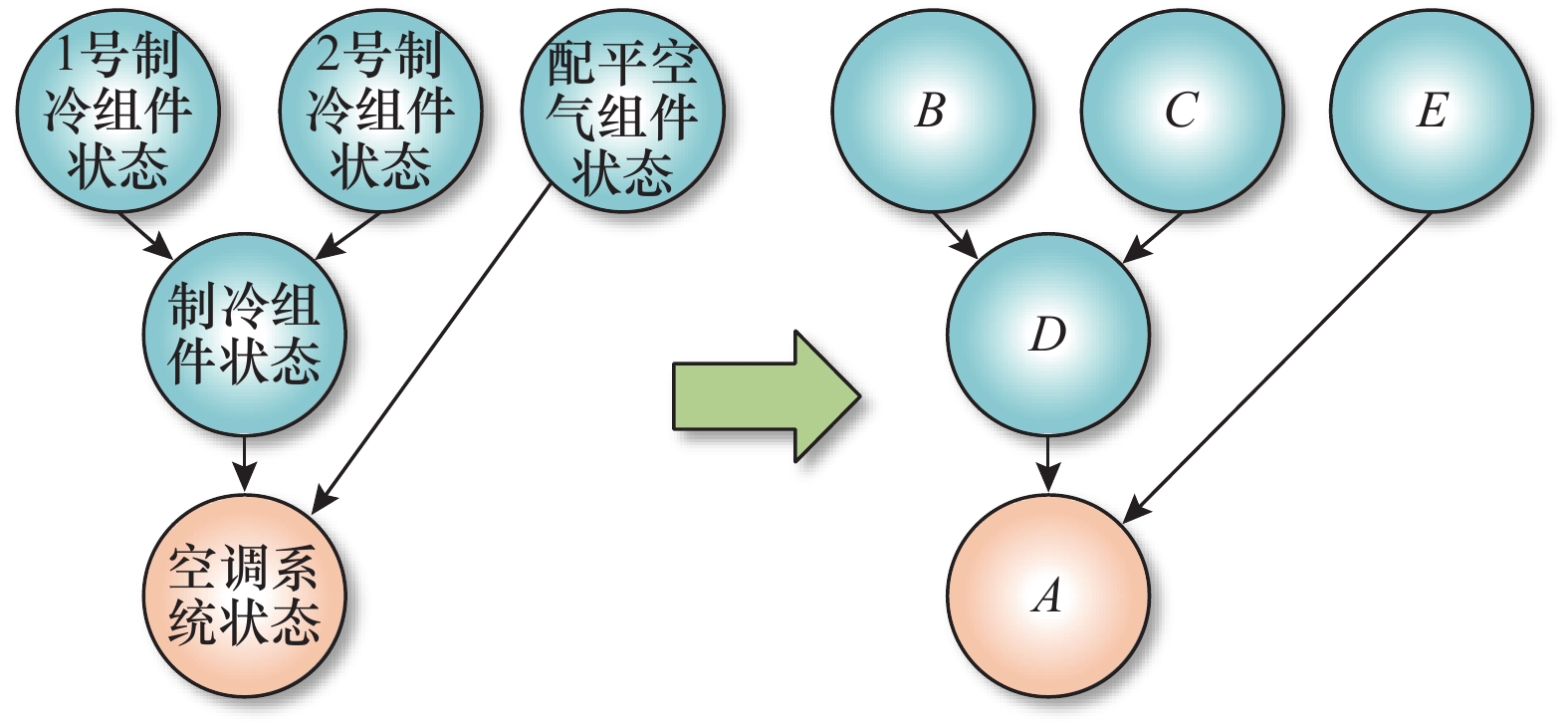
表4
贝叶斯网络节点条件概率分布"
| 征兆层 | 状态层 | 关联强度 |
| 1号制冷组件B | 制冷组件状态D | P(D=T |B=T,C=T)=1 P(D=T |其他)=0 |
| 2号制冷组件C | ||
| 配平空气组件E | 空调系统状态A | P(A=T |D=F,E=F)=0 P(A=F |其他)=1 |
表5
各组件故障概率"
| 概率 | 1号制冷组件 | 2号制冷组件 | 配平空气组件 |
| Pprior-false | |||
| Pposterior-false |
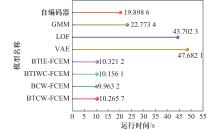
图9
多种方法的建模效率"
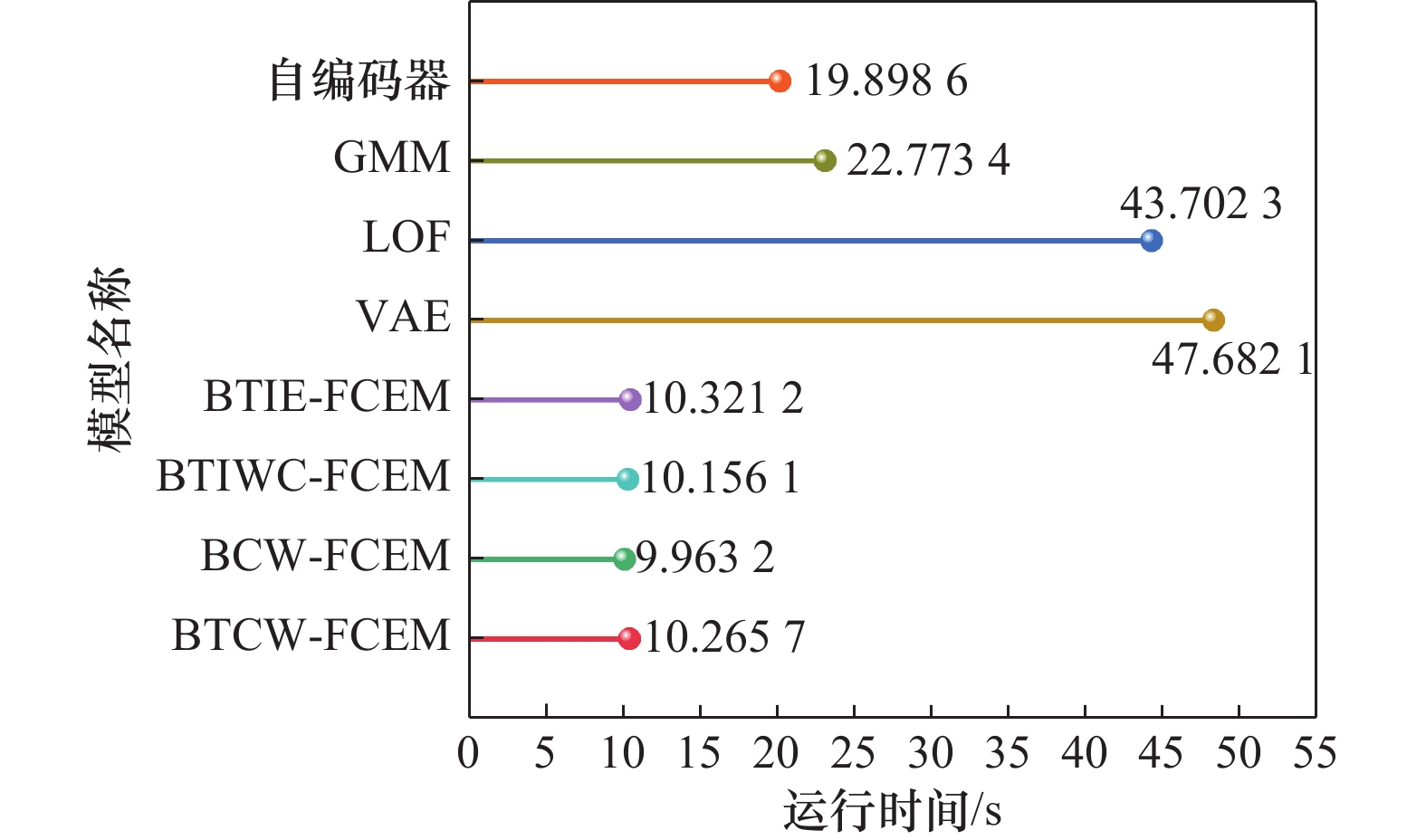
图10
单部件故障贝叶斯网络结构"
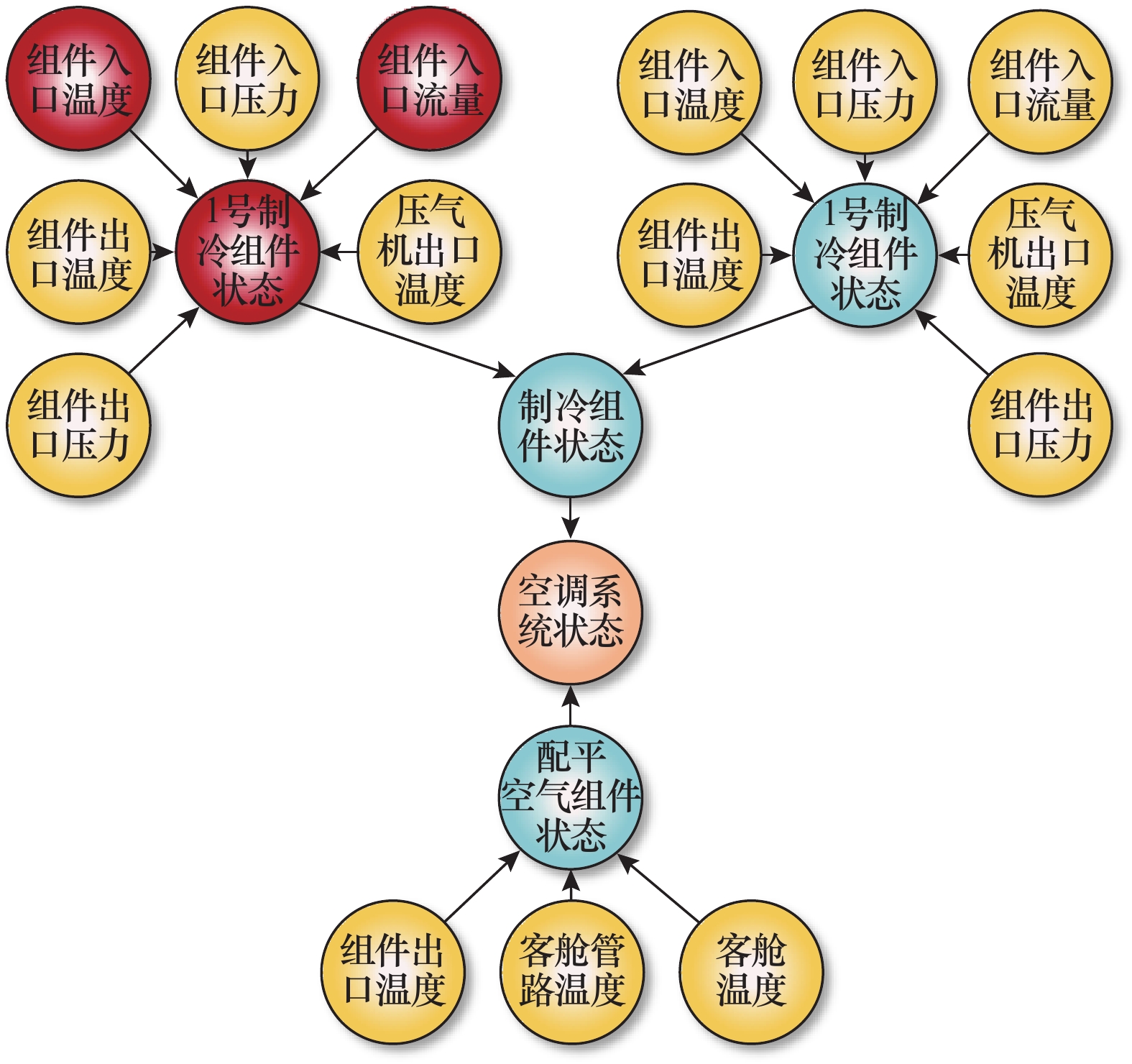
图11
单部件故障数据的空调系统健康状态评估曲线"
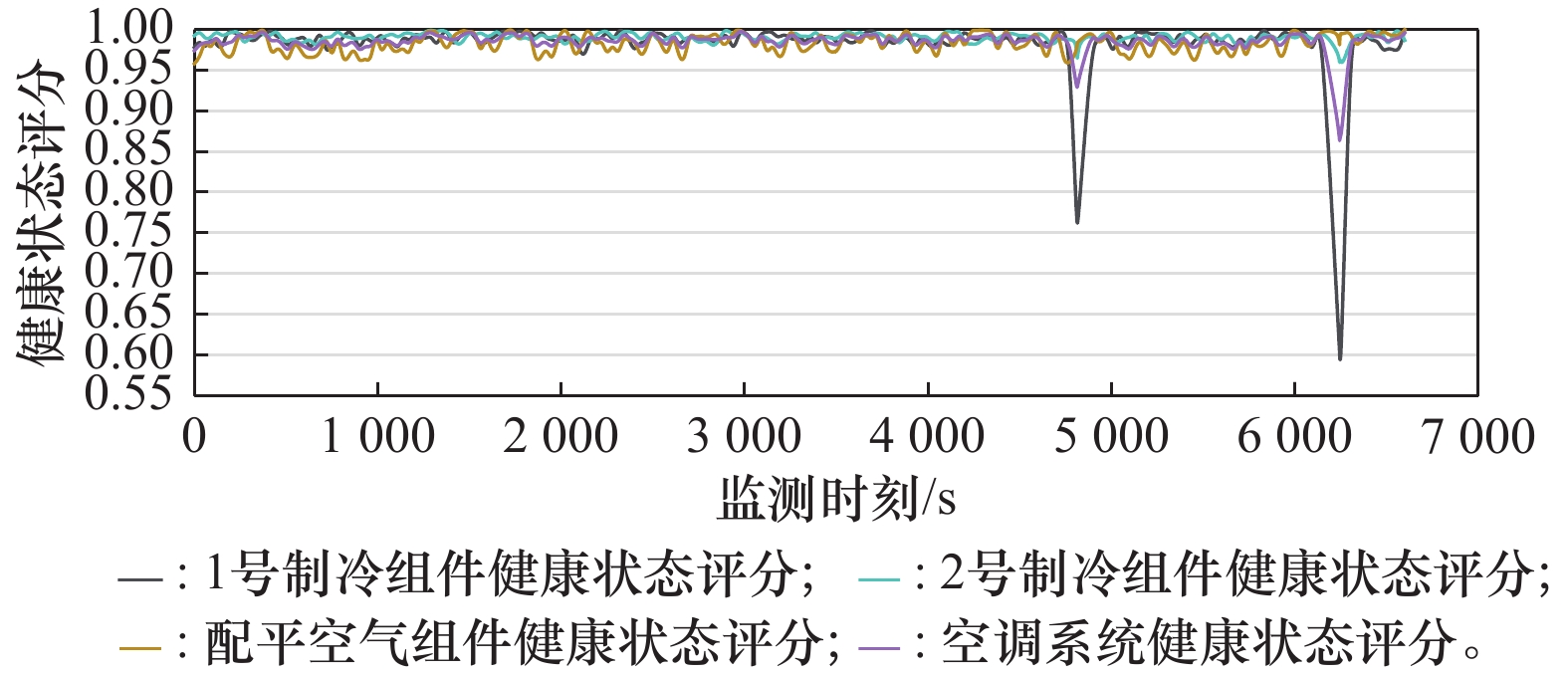
图12
单部件故障异常区段1"
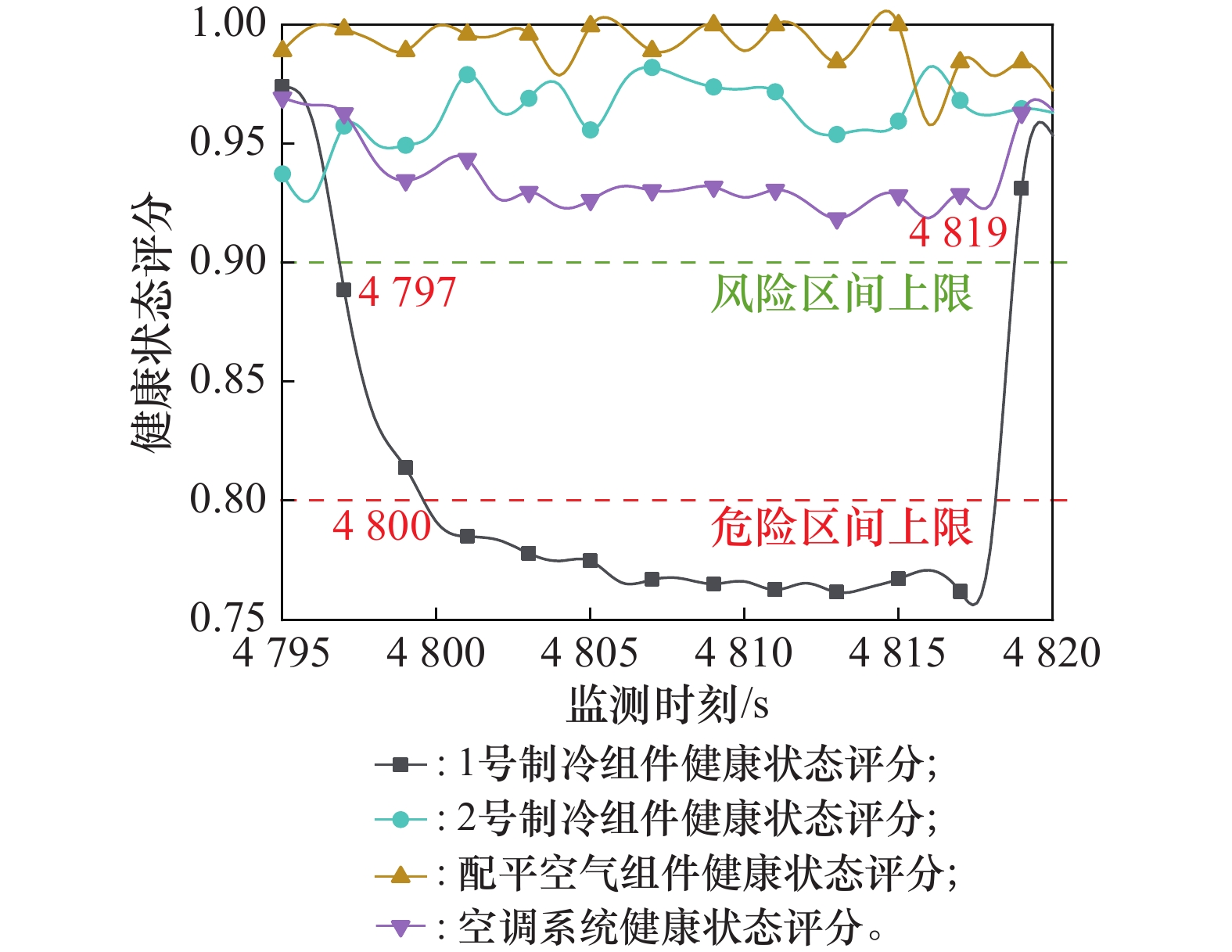
图13
单部件故障异常区段2"
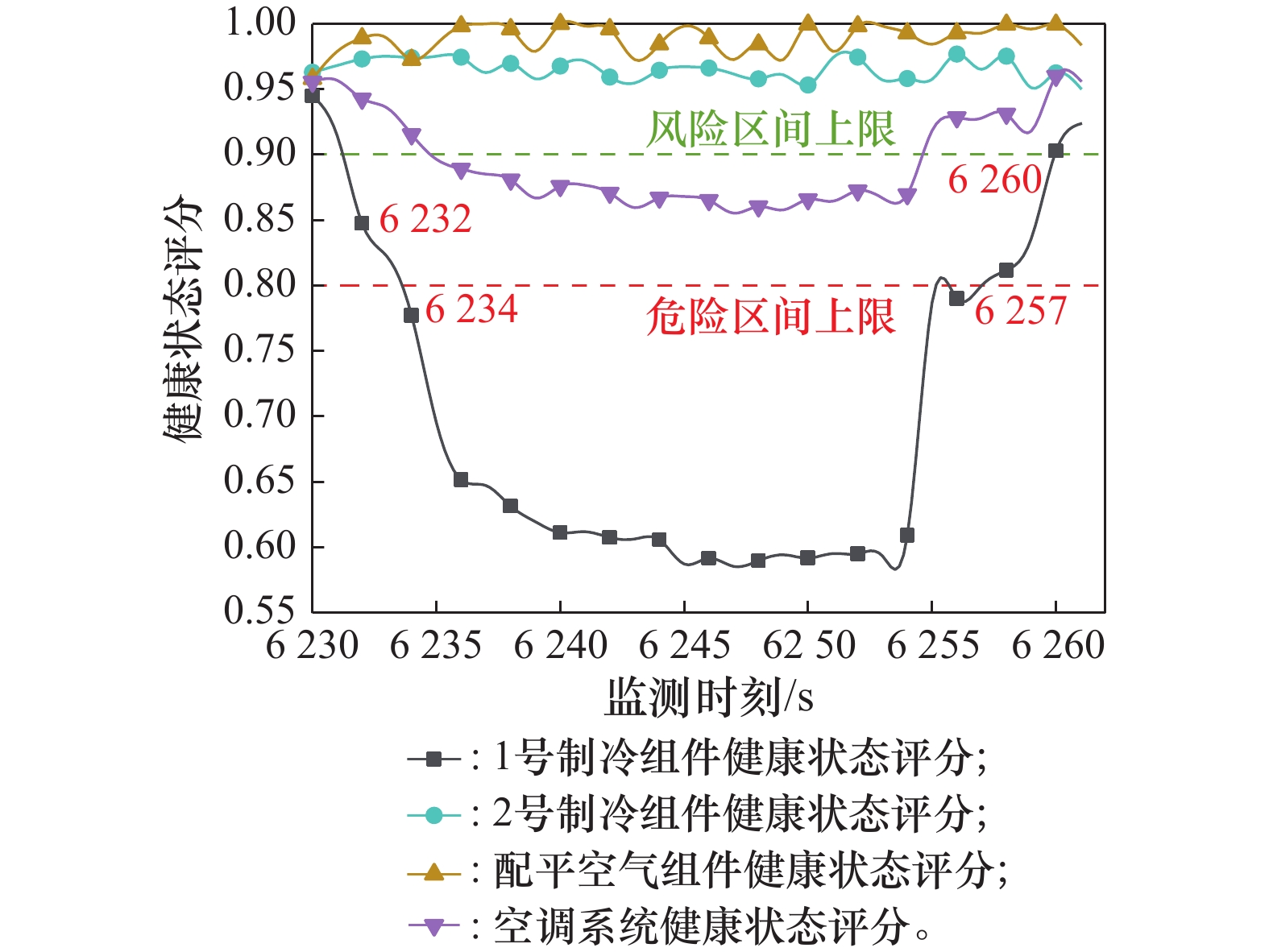
图14
单部件故障数据下多种模型的建模精度"
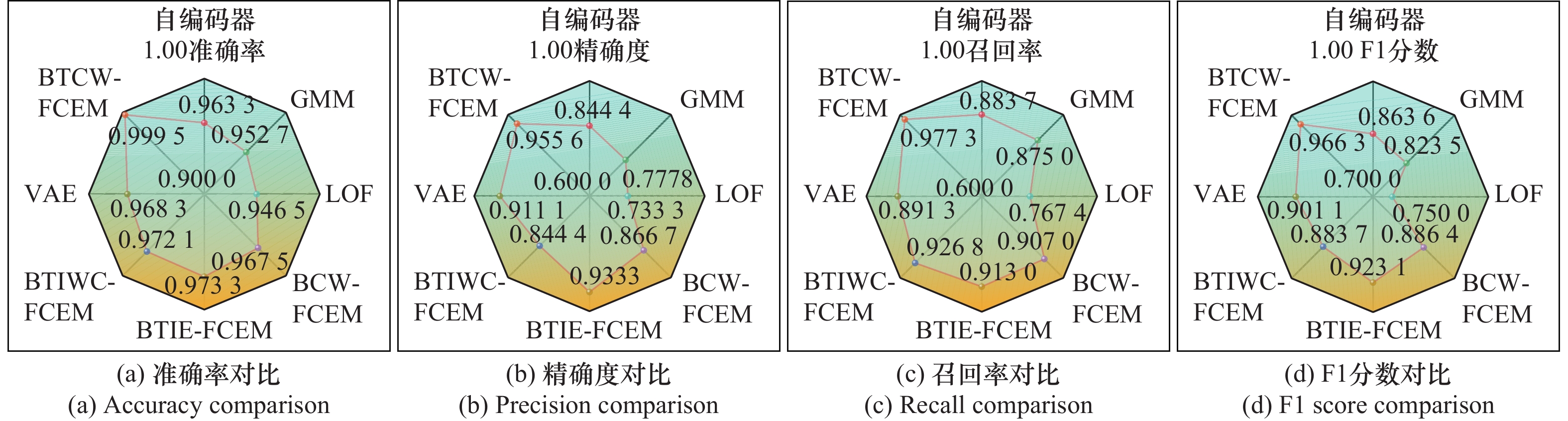
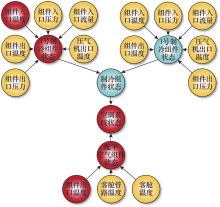
图15
复合部件故障贝叶斯网络结构"
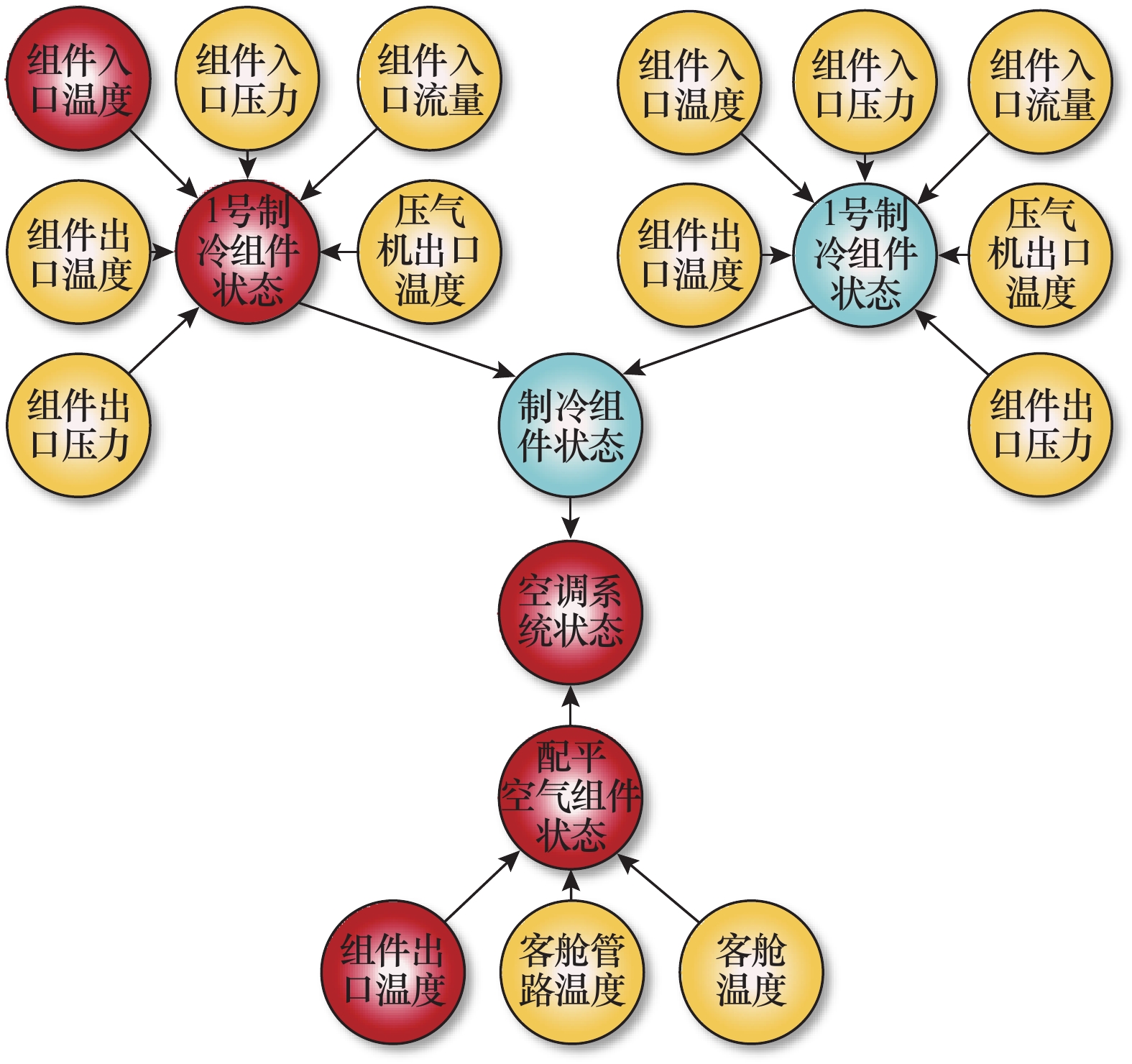
图16
复合部件故障数据的空调系统健康状态评估曲线"
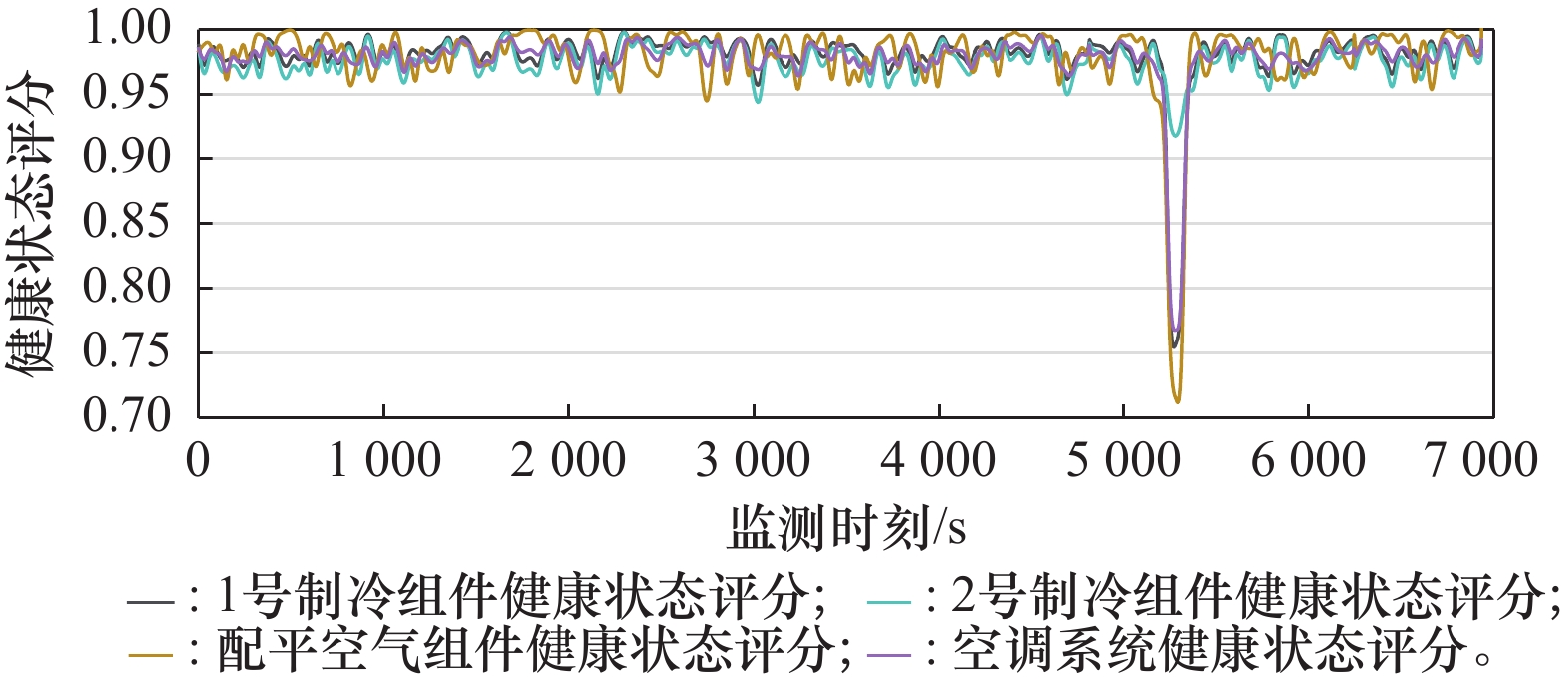
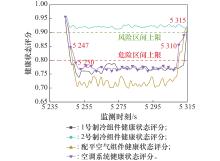
图17
复合部件故障异常区段"
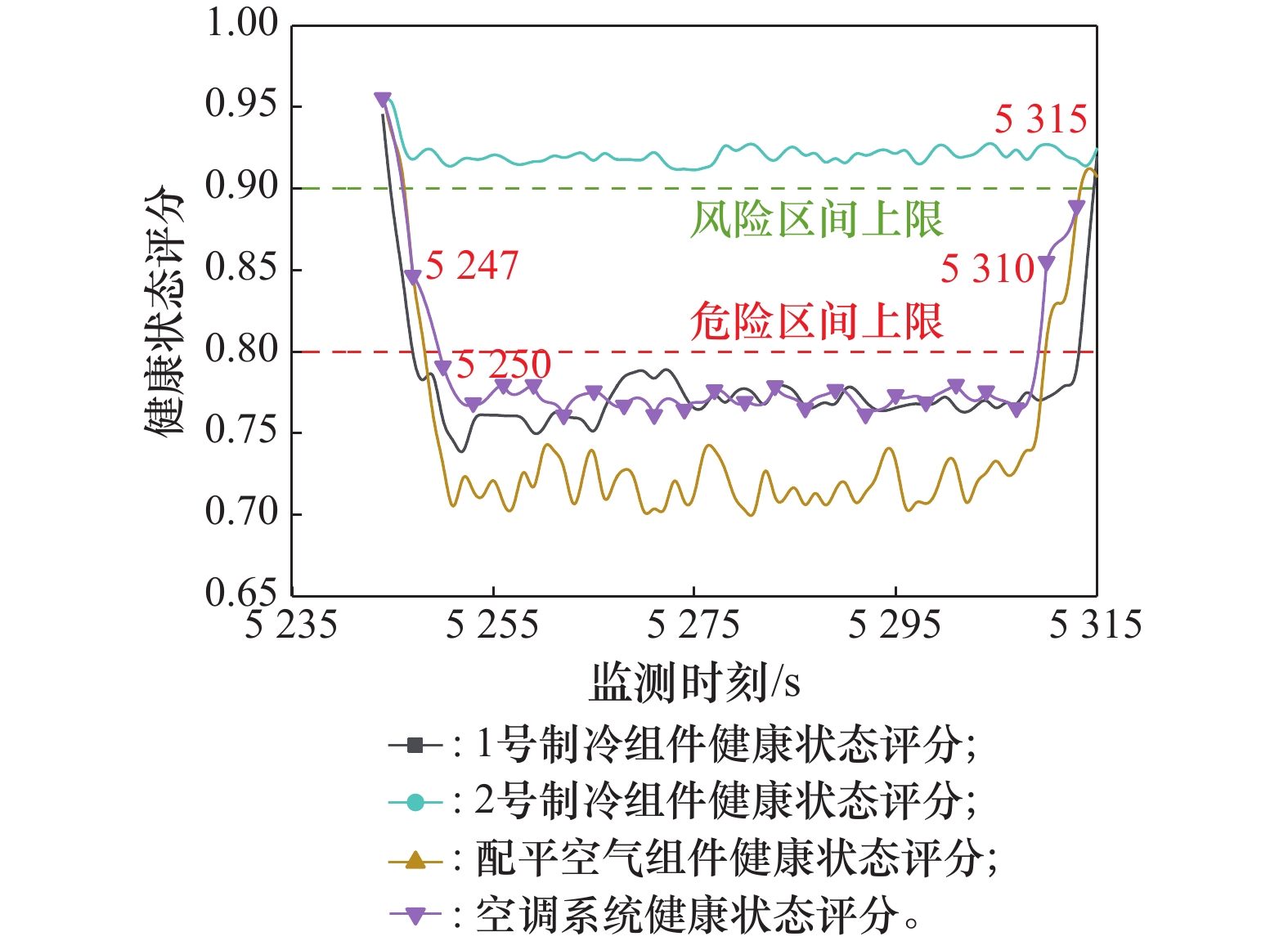
图18
复合部件故障数据下多种模型的建模精度"
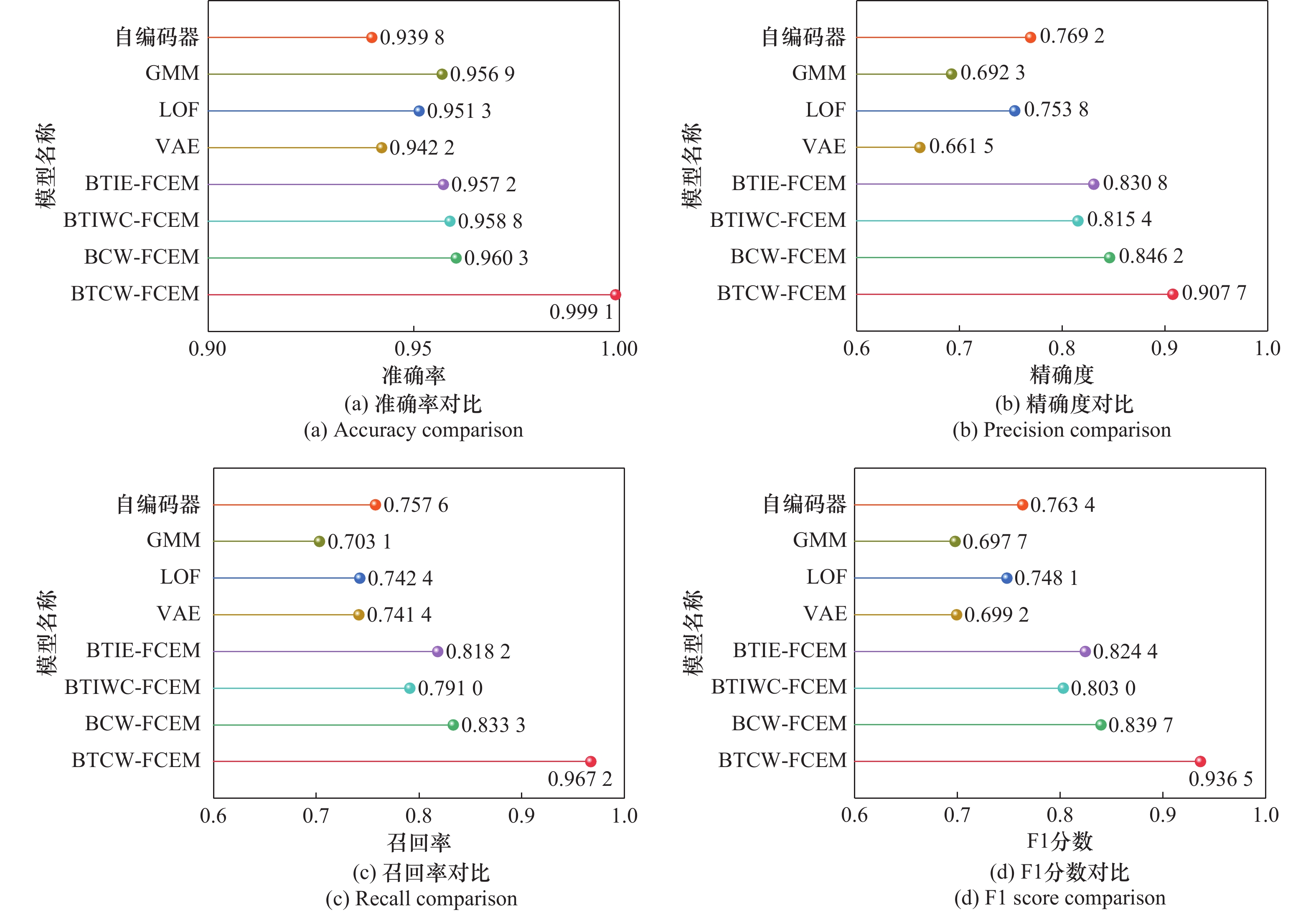
表6
基准模型选择"
| 对比指标 | 单部件 故障准确率 | 单部件 故障精确度 | 单部件 故障召回率 | 单部件 故障F1分数 | 复合部件 故障准确率 | 复合部件 故障精确度 | 复合部件 故障召回率 | 复合部件 故障F1分数 |
| 基准模型 | BTIE- FCEM | BTIE- FCEM | BTIWC- FCEM | BTIE- FCEM | BCW- FCEM | BCW- FCEM | BCW- FCEM | BCW- FCEM |
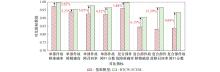
图19
单部件故障与复合部件故障情况下精度指标提升情况"

| 1 | 石旭东, 蒋贵嘉, 张宇, 等. 基于联合仿真的飞机空调系统故障影响[J]. 航空学报, 2020, 41 (8): 323647. |
| SHI X D, JIANG G J, ZHANG Y, et al. Fault impact of aircraft air conditioning system based on joint simulation[J]. Acta Aeronautica et Astronautica Sinica, 2020, 41 (8): 323647. | |
| 2 |
JENNIONS I, ALI F, MIGUEZ M E, et al. Simulation of an aircraft environmental control system[J]. Applied Thermal Engineering, 2020, 172, 114925.
doi: 10.1016/j.applthermaleng.2020.114925 |
| 3 | 曹明, 王鹏, 左洪福, 等. 民用航空发动机故障诊断与健康管理现状、挑战与机遇Ⅱ: 地面综合诊断、寿命管理和智能维护维修决策[J]. 航空学报, 2022, 43 (9): 625574. |
| CAO M, WANG P, ZUO H F, et al. Current status, challenges and opportunities of civil aero-engine diagnostics & health management Ⅱ: comprehensive off-board diagnosis, life management and intelligent condition bassed MRO[J]. Acta Aeronautica et Astronautica Sinica, 2022, 43 (9): 625574. | |
| 4 | 荘露, 陆中, 宋海靖, 等. 基于故障注入模型的电传飞控系统安全性分析[J]. 航空学报, 2023, 44 (9): 327329. |
| ZHUANG L, LU Z, SONG H J, et al. Safety analysis for fly-by-wire system based on fault injection model[J]. Acta Aeronautica et Astronautica Sinica, 2023, 44 (9): 327329. | |
| 5 |
LIU X, LIU Z. A hybrid approach for aircraft fault diagnosis based on fault inference and fault identification[J]. The Aeronautical Journal, 2014, 118 (1199): 81- 97.
doi: 10.1017/S0001924000008940 |
| 6 |
EZHILARASU C M, SKAF Z, JENNIONS I K. A generalised methodology for the diagnosis of aircraft systems[J]. IEEE Access, 2021, 9, 11437- 11454.
doi: 10.1109/ACCESS.2021.3050877 |
| 7 | 郭庆, 刘晓阳, 樊俊峰, 等. 融合先验信息的民航发动机自适应气路故障诊断方法[J]. 航空学报, 2025, 46 (4): 230871. |
| GUO Q, LIU X Y, FAN J F, et al. Adaptive gas path fault diagnosis method of civil aviation engine fusing prior information[J]. Acta Aeronautica et Astronautica Sinica, 2025, 46 (4): 230871. | |
| 8 | 胡明辉, 高金吉, 江志农, 等. 航空发动机振动监测与故障诊断技术研究进展[J]. 航空学报, 2024, 45 (4): 630194. |
| HU M H, GAO J J, JIANG Z N, et al. Research progress on vibration monitoring and fault diagnosis for aero-engine[J]. Acta Aeronautica et Astronautica Sinica, 2024, 45 (4): 630194. | |
| 9 |
冯蕴雯, 潘维煌, 路成, 等. 基于逻辑图的国产民机液压系统故障诊断与定位[J]. 西北工业大学学报, 2022, 40 (4): 732- 738.
doi: 10.1051/jnwpu/20224040732 |
|
FENG Y W, PAN W H, LU C, et al. Fault diagnosis and location of hydraulic system of domestic civil aircraft based on logic data[J]. Journal of Northwestern Poly technical University, 2022, 40 (4): 732- 738.
doi: 10.1051/jnwpu/20224040732 |
|
| 10 | TENG D, FENG Y W, CHEN J Y, et al. Multi-polynomial chaos Kriging-based adaptive moving strategy for comprehensive reliability analyses[J]. Reliability Engineering & System Safety, 2024, 241, 109657. |
| 11 |
LIU W Y, FENG Y W, TENG D, et al. Fault logic and data-driven model for operation reliability analysis of the flap deflection angle[J]. Philosophical Transactions of the Royal Society A, 2023, 381 (2260): 20220385.
doi: 10.1098/rsta.2022.0385 |
| 12 |
LI J, KING S, JENNIONS I. Intelligent fault diagnosis of an aircraft fuel system using machine learning—a literature review[J]. Machines, 2023, 11 (4): 481.
doi: 10.3390/machines11040481 |
| 13 |
SUN J Z, LI C Y, LIU C, et al. A data-driven health indicator extraction method for aircraft air conditioning system health monitoring[J]. Chinese Journal of Aeronautics, 2019, 32 (2): 409- 416.
doi: 10.1016/j.cja.2018.03.024 |
| 14 |
LEE H, LIM H J, CHATTOPADHYAY A. Data-driven system health monitoring technique using autoencoder for the safety management of commercial aircraft[J]. Neural Computing and Applications, 2021, 33 (8): 3235- 3250.
doi: 10.1007/s00521-020-05186-x |
| 15 |
FU S, AVDELIDIS N P. Prognostic and health management of critical aircraft systems and components: an overview[J]. Sensors, 2023, 23 (19): 8124.
doi: 10.3390/s23198124 |
| 16 |
CHE C C, WANG H W, FU Q, et al. Combining multiple deep learning algorithms for prognostic and health management of aircraft[J]. Aerospace Science and Technology, 2019, 94, 105423.
doi: 10.1016/j.ast.2019.105423 |
| 17 |
LU C, FENG Y W, LIEM R P, et al. Improved Kriging with extremum response surface method for structural dynamic reliability and sensitivity analyses[J]. Aerospace Science and Technology, 2018, 76, 164- 175.
doi: 10.1016/j.ast.2018.02.012 |
| 18 | 严如强, 许文纲, 王志颖, 等. 航空发动机燃油控制系统故障诊断技术研究进展与挑战[J]. 机械工程学报, 2024, 60 (4): 3- 31. |
| YAN R Q, XU W G, WANG Z Y, et al. Research status and challenges on fault diagnosis methodology for fuel control system of aero-engine[J]. Journal of Mechanical Engineering, 2024, 60 (4): 3- 31. | |
| 19 | 林京, 张博瑶, 张大义, 等. 航空燃气涡轮发动机故障诊断研究现状与展望[J]. 航空学报, 2022, 43 (8): 626565. |
| LIN J, ZHANG B Y, ZHANG D Y, et al. Research status and prospect of fault diagnosis for gas turbine aeroengine[J]. Acta Aeronautica et Astronautica Sinica, 2022, 43 (8): 626565. | |
| 20 | 方正汉. 基于多特征的航电空调系统寿命预测研究[D]. 天津: 中国民航大学, 2020. |
| FANG Z H. Research on life prediction of avionics air conditioning system based on multi-feature [D]. Tianjin: Civil Aviation University of China, 2020. | |
| 21 |
SONG Z C, FENG Y W, LU C. Superimposable neural network for health monitoring of aircraft hydraulic system[J]. Engineering Failure Analysis, 2024, 160, 108063.
doi: 10.1016/j.engfailanal.2024.108063 |
| 22 | 夏青, 邱实, 刘新颖, 等. 基于数据驱动方法的在轨卫星智能温度预测[J]. 系统工程与电子技术, 2024, 46 (5): 1619- 1627. |
| XIA Q, QIU S, LIU X Y, et al. Data-driven-based approach for intelligent temperature forecasting of in-orbit satellites[J]. Systems Engineering and Electronics, 2024, 46 (5): 1619- 1627. | |
| 23 |
SIKORSKA J Z, HODKIEWICZ M, MA L. Prognostic modelling options for remaining useful life estimation by industry[J]. Mechanical Systems and Signal Processing, 2011, 25 (5): 1803- 1836.
doi: 10.1016/j.ymssp.2010.11.018 |
| 24 |
孟晨, 杨华晖, 王成, 等. 数据驱动的武器系统电子元部件级故障诊断研究综述[J]. 系统工程与电子技术, 2021, 43 (2): 574- 583.
doi: 10.12305/j.issn.1001-506X.2021.02.33 |
|
MENG C, YANG H H, WANG C, et al. Review on data-driven fault diagnosis for electronic components and units level of weapon system[J]. Systems Engineering and Electronics, 2021, 43 (2): 574- 583.
doi: 10.12305/j.issn.1001-506X.2021.02.33 |
|
| 25 |
KHALID S, SONG J, AZAD M M, et al. A comprehensive review of emerging trends in aircraft structural prognostics and health management[J]. Mathematics, 2023, 11 (18): 3837.
doi: 10.3390/math11183837 |
| 26 |
ZHANG X L, TIAN M Y, HAO D H, et al. Applying the fuzzy comprehensive evaluation method in selection of non-destructive testing method of steel structure welds[J]. Welding in the World, 2022, 66 (8): 1637- 1643.
doi: 10.1007/s40194-022-01315-3 |
| 27 |
ZHU L Y. Research and application of AHP-fuzzy comprehensive evaluation model[J]. Evolutionary Intelligence, 2022, 15, 2403- 2409.
doi: 10.1007/s12065-020-00415-7 |
| 28 |
张军涛, 李尚生, 王旭坤. 基于灰色关联-模糊综合评判的雷达抗干扰性能评估方法[J]. 系统工程与电子技术, 2021, 43 (6): 1557- 1563.
doi: 10.12305/j.issn.1001-506X.2021.06.13 |
|
ZHANG J T, LI S S, WANG X K. Method of radar anti-jamming performance evaluation based on grey correlation-fuzzy comprehensive evaluation[J]. Systems Engineering and Electronics, 2021, 43 (6): 1557- 1563.
doi: 10.12305/j.issn.1001-506X.2021.06.13 |
|
| 29 |
魏东涛, 刘晓东, 周骏, 等. 基于DSM与信息熵的装备体系结构贡献率分析[J]. 系统工程与电子技术, 2022, 44 (6): 1927- 1933.
doi: 10.12305/j.issn.1001-506X.2022.06.19 |
|
WEI D T, LIU X D, ZHOU J, et al. Evaluation of equipment’s structure contribution rate to system-of-systems based on DSM and information entropy[J]. Systems Engineering and Electronics, 2022, 44 (6): 1927- 1933.
doi: 10.12305/j.issn.1001-506X.2022.06.19 |
|
| 30 |
魏东涛, 刘晓东, 李鹏, 等. 基于节点重要度与改进信息熵的装备体系效能评估方法研究[J]. 系统工程与电子技术, 2021, 43 (12): 3614- 3623.
doi: 10.12305/j.issn.1001-506X.2021.12.24 |
|
WEI D T, LIU X D, LI P, et al. Research on effectiveness evaluation method of equipment system based on node importance and improved information entropy[J]. Systems Engineering and Electronics, 2021, 43 (12): 3614- 3623.
doi: 10.12305/j.issn.1001-506X.2021.12.24 |
|
| 31 | WANG Y H, PANG Y T, CHEN O, et al. Uncertainty quantification and reduction in aircraft trajectory prediction using Bayesian-entropy information fusion[J]. Reliability Engineering & System Safety, 2021, 212, 107650. |
| 32 | XIA L Q, CAO R Y, DU J, et al. The improved correlation coefficient of Chatterjee[J]. Journal of Nonparametric Statistics, 2024, 37 (2): 265- 281. |
| 33 |
LOU H, WANG G J, WANG L M, et al. Model weighting for one-dependence estimators by measuring the independence assumptions[J]. IEEE Access, 2020, 8, 150465- 150477.
doi: 10.1109/ACCESS.2020.3016984 |
| 34 | 何思俊, 支锦亦. 基于AHP-独立性权数法的列车旅客界面设计评价[J]. 西南交通大学学报, 2021, 56 (4): 897- 904. |
| HE S J, ZHI J Y. Evaluation of train passenger interface design based on analytic hierarchy process with independent weight method[J]. Journal of Southwest Jiaotong University, 2021, 56 (4): 897- 904. | |
| 35 | YASIN Y, DEMIR G, RIAZ M, et al. A systematic investigation of multi-attributive border approximation area comparison approach with Gaussian membership function for optimizing water quality[EB/OL]. [2025-05-18]. https://doi.org/10.1007/s10668-024-0574-0. |
| 36 | KACHIASHVILI K, SENGUPTA A. Constrained Bayesian method for testing equi-correlation coefficient[J]. Axioms, 2024, 13 (10): 722. |
| 37 |
刘延钊, 黄志球, 沈国华, 等. 基于决策树和BN的自动驾驶车辆行为决策方法[J]. 系统工程与电子技术, 2022, 44 (10): 3143- 3154.
doi: 10.12305/j.issn.1001-506X.2022.10.18 |
|
LIU Y Z, HUANG Z Q, SHEN G H, et al. Behavioral decision-making methods of autonomous vehicles based on decision tree and BN[J]. Systems Engineering and Electronics, 2022, 44 (10): 3143- 3154.
doi: 10.12305/j.issn.1001-506X.2022.10.18 |
|
| 38 | 赵芷若, 曹雷, 陈希亮, 等. 基于多智能体博弈强化学习的无人机智能攻击策略生成模型[J]. 系统工程与电子技术, 2023, 45 (10): 3165- 3171. |
| ZHAO Z R, CAO L, CHEN X L, et al. UAV intelligent attack strategy generation model based on multi-agent game reinforcement learning[J]. Systems Engineering and Electronics, 2023, 45 (10): 3165- 3171. | |
| 39 |
KABIR S, PAPADOPOULOS Y. A review of applications of fuzzy sets to safety and reliability engineering[J]. International Journal of Approximate Reasoning, 2018, 100, 29- 55.
doi: 10.1016/j.ijar.2018.05.005 |
| [1] | 王阳阳, 高晓光, 茹鑫鑫. 高维数据局部贝叶斯网络结构学习[J]. 系统工程与电子技术, 2024, 46(8): 2676-2685. |
| [2] | 蔡一鸣, 马力, 陆恒杨, 方伟. 基于全流程并行遗传算法的贝叶斯网络结构学习[J]. 系统工程与电子技术, 2024, 46(5): 1703-1711. |
| [3] | 赵贵祥, 王晨旭, 周健, 李云淼. 基于改进模糊评价法的无人艇碰撞风险计算[J]. 系统工程与电子技术, 2024, 46(3): 1031-1037. |
| [4] | 王紫东, 高晓光, 刘晓寒. 基于Stacking策略的集成BN网络目标威胁评估[J]. 系统工程与电子技术, 2024, 46(2): 586-598. |
| [5] | 高晓光, 闫栩辰, 王紫东, 刘晓寒, 冯奇. 基于评分缓存的节点序空间下BN结构学习[J]. 系统工程与电子技术, 2024, 46(12): 4091-4107. |
| [6] | 茹鑫鑫, 高晓光, 王阳阳. 基于模糊约束的贝叶斯网络参数学习[J]. 系统工程与电子技术, 2023, 45(2): 444-452. |
| [7] | 曾婷, 高帅, 孙富强, 赖小明, 李云, 李孝鹏. 人机环耦合效应下卫星天线装配概率风险分析[J]. 系统工程与电子技术, 2023, 45(2): 606-613. |
| [8] | 李懿凡, 钱华明, 黄洪钟, 张庭瑜, 黄土地. 基于广义连续时间贝叶斯网络的指挥控制网络系统可靠性分析[J]. 系统工程与电子技术, 2022, 44(12): 3880-3886. |
| [9] | 王鹏, 孙紫荆, 张帆, 肖国松. 考虑概率型共因失效的多阶段任务系统可靠性分析模型[J]. 系统工程与电子技术, 2022, 44(12): 3887-3898. |
| [10] | 乔殿峰, 梁彦, 马超雄, 杨心语, 汪冕, 李建国. 多域作战下的群目标意图识别与预测[J]. 系统工程与电子技术, 2022, 44(11): 3403-3412. |
| [11] | 刘延钊, 黄志球, 沈国华, 王金永, 徐恒. 基于决策树和BN的自动驾驶车辆行为决策方法[J]. 系统工程与电子技术, 2022, 44(10): 3143-3154. |
| [12] | 赵禄达, 王斌. 基于RS-DBN的电子对抗目标清单生成方法[J]. 系统工程与电子技术, 2021, 43(9): 2373-2382. |
| [13] | 陈洪转, 赵爱佳, 李腾蛟, 蔡匆聪, 程硕, 徐春丽. 基于故障树的复杂装备模糊贝叶斯网络推理故障诊断[J]. 系统工程与电子技术, 2021, 43(5): 1248-1261. |
| [14] | 孙雪, 黄志球, 沈国华, 王金永, 徐恒. 基于本体和BN的无人车行为决策方法[J]. 系统工程与电子技术, 2021, 43(2): 452-465. |
| [15] | 魏东涛, 刘晓东, 李鹏, 陈玉金. 基于节点重要度与改进信息熵的装备体系效能评估方法研究[J]. 系统工程与电子技术, 2021, 43(12): 3614-3623. |
| 阅读次数 | ||||||
|
全文 |
|
|||||
|
摘要 |
|
|||||
