Systems Engineering and Electronics ›› 2025, Vol. 47 ›› Issue (9): 2839-2852.doi: 10.12305/j.issn.1001-506X.2025.09.07
• Sensors and Signal Processing • Previous Articles
Air floating ball trajectory prediction and payload judgment with radar wind field inversion
Xuesong WANG( ), Jiapeng YIN(), Jiankai HUANG(), Jianbing LI(), Yongzhen LI()
- School of Electronic Science,National University of Defense Technology,Changsha 410073,China
-
Received:2024-07-24Online:2025-09-25Published:2025-09-16 -
Contact:Jiapeng YIN E-mail:1003056129@qq.com;jiapeng.yin@hotmail.com;huangjiankai08@163.com;jianbingli@nudt.edu.cn;e0061@sina.com

CLC Number:
Cite this article
Xuesong WANG, Jiapeng YIN, Jiankai HUANG, Jianbing LI, Yongzhen LI. Air floating ball trajectory prediction and payload judgment with radar wind field inversion[J]. Systems Engineering and Electronics, 2025, 47(9): 2839-2852.
share this article
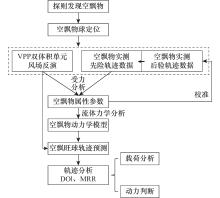
Fig.1
Method flow chart"
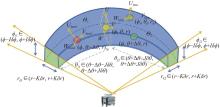
Fig.2
Double-volume unit wind speed and VPP inversion"
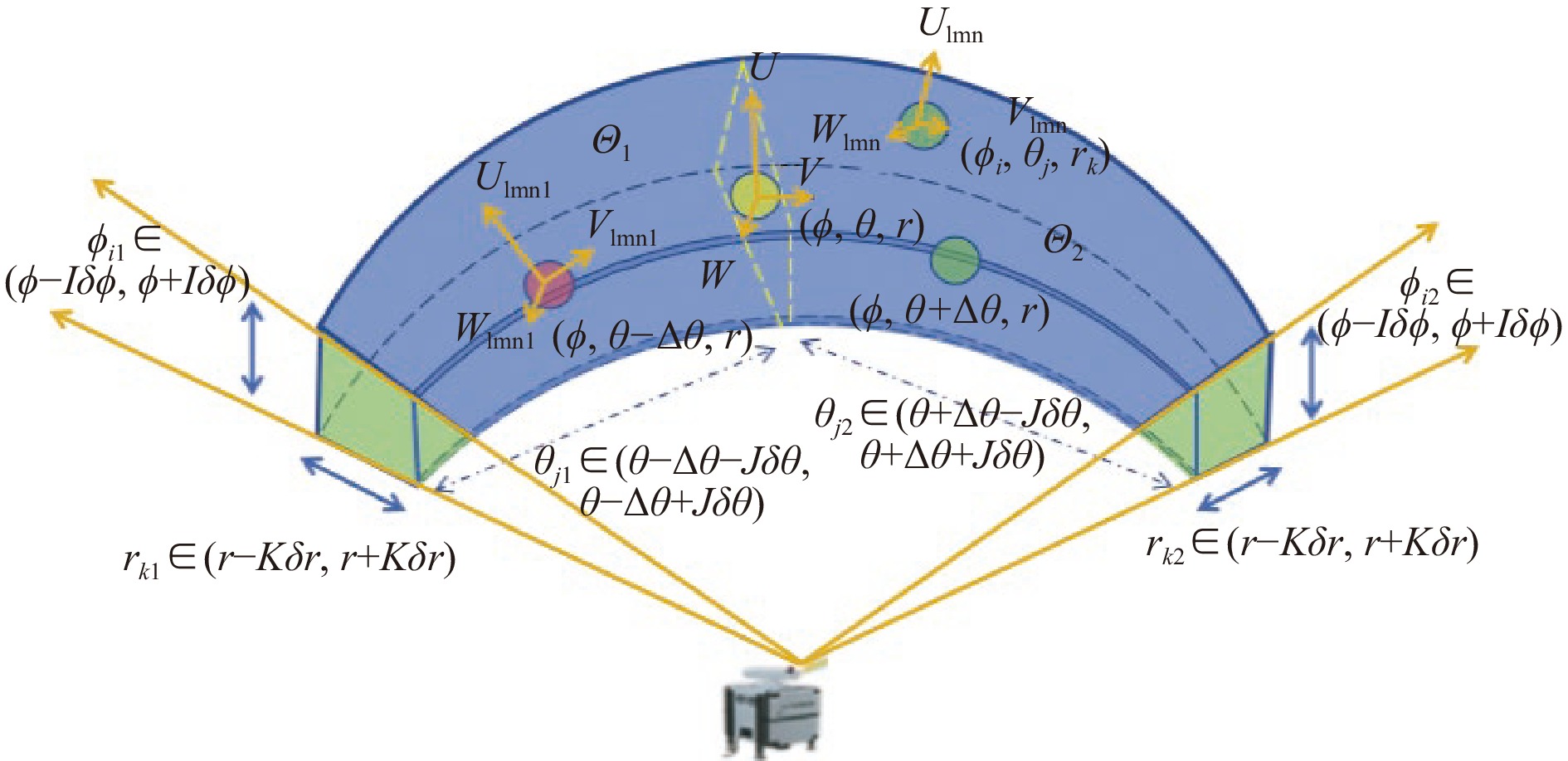
Fig.3
Wind field force situation of air floating ball"
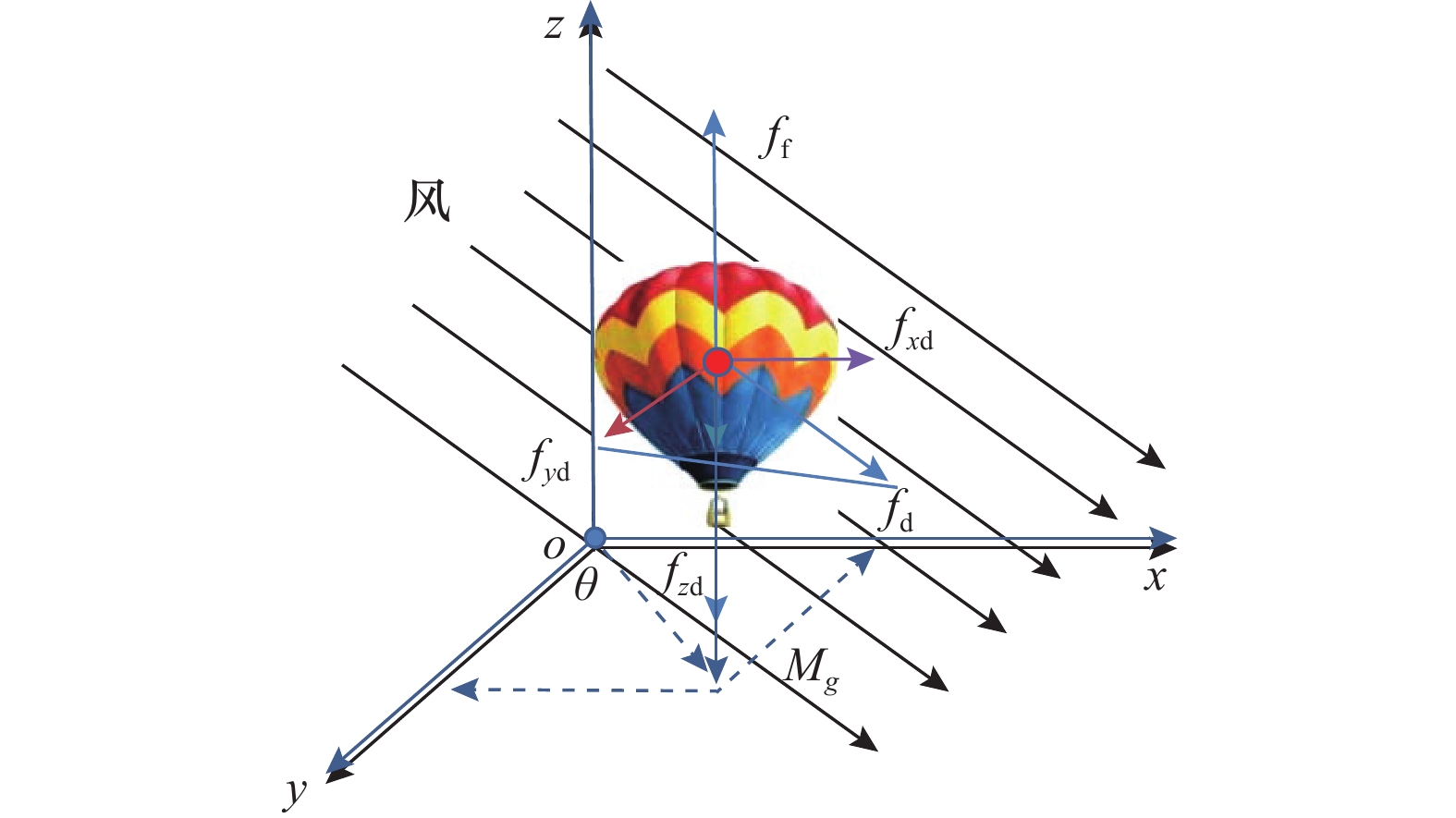
Fig.4
Schematic of parameter dynamic calibration"
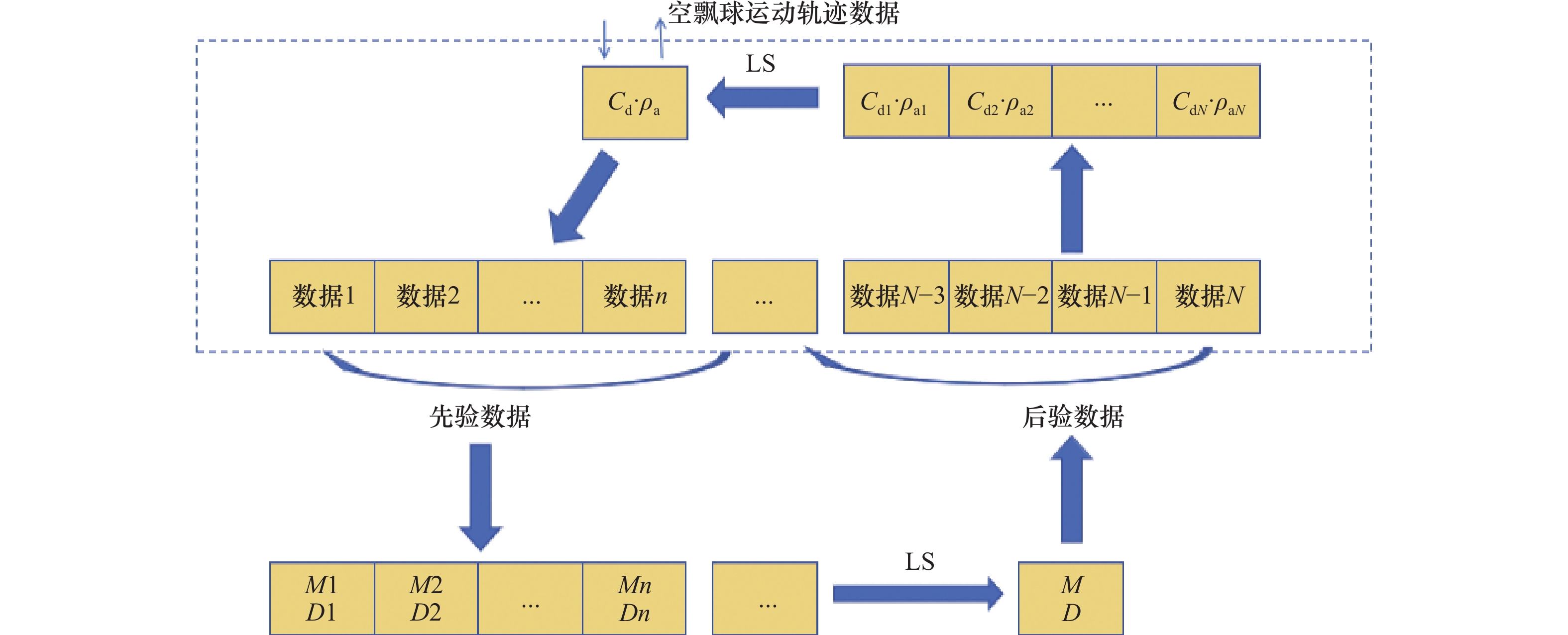
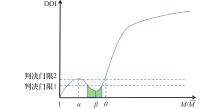
Fig.5
Trend chart of DOI variation with proportion of payload mass"
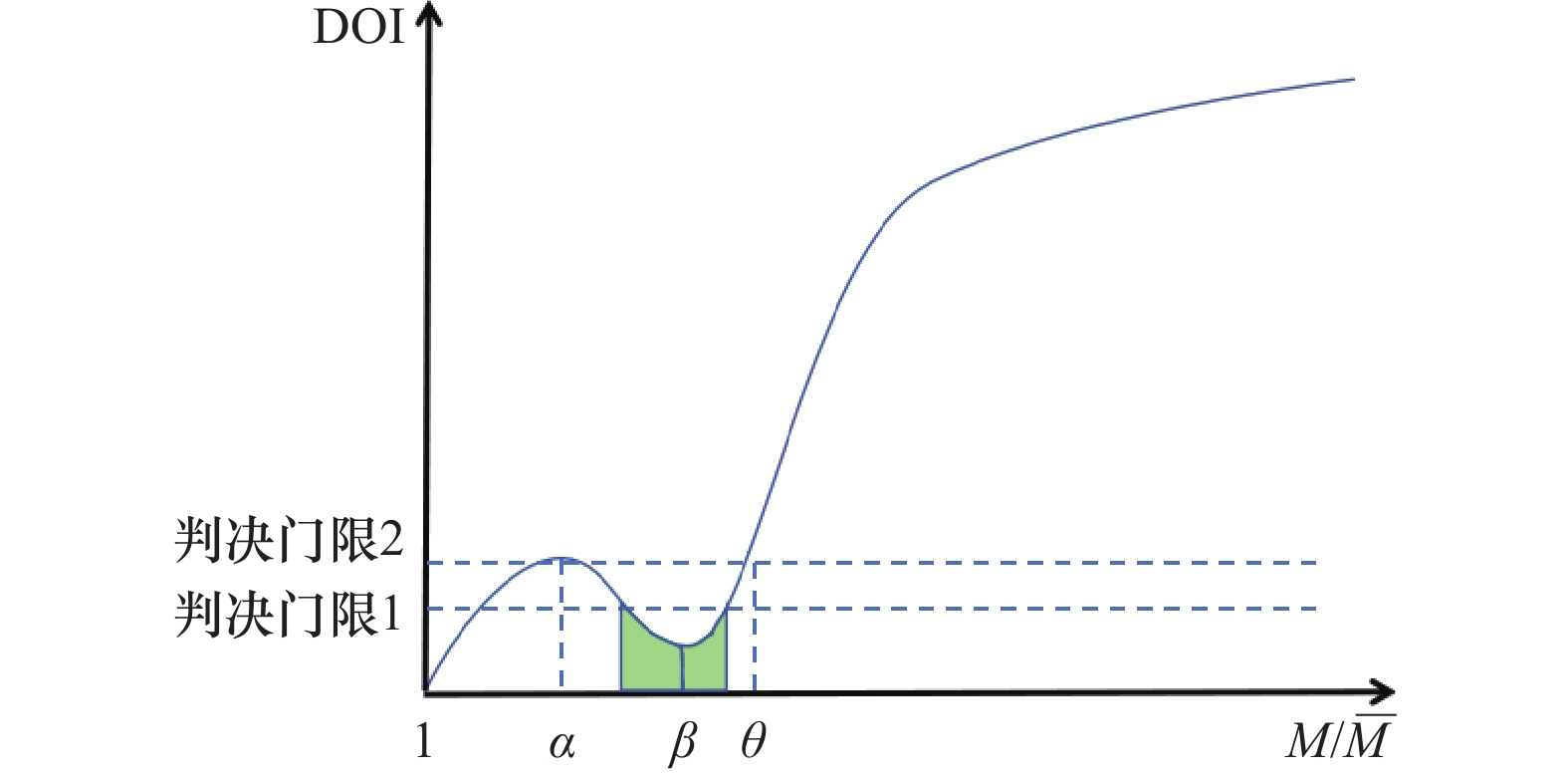
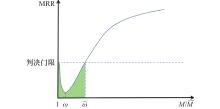
Fig.6
Trend chart of MRR variation with proportion of payload mass"
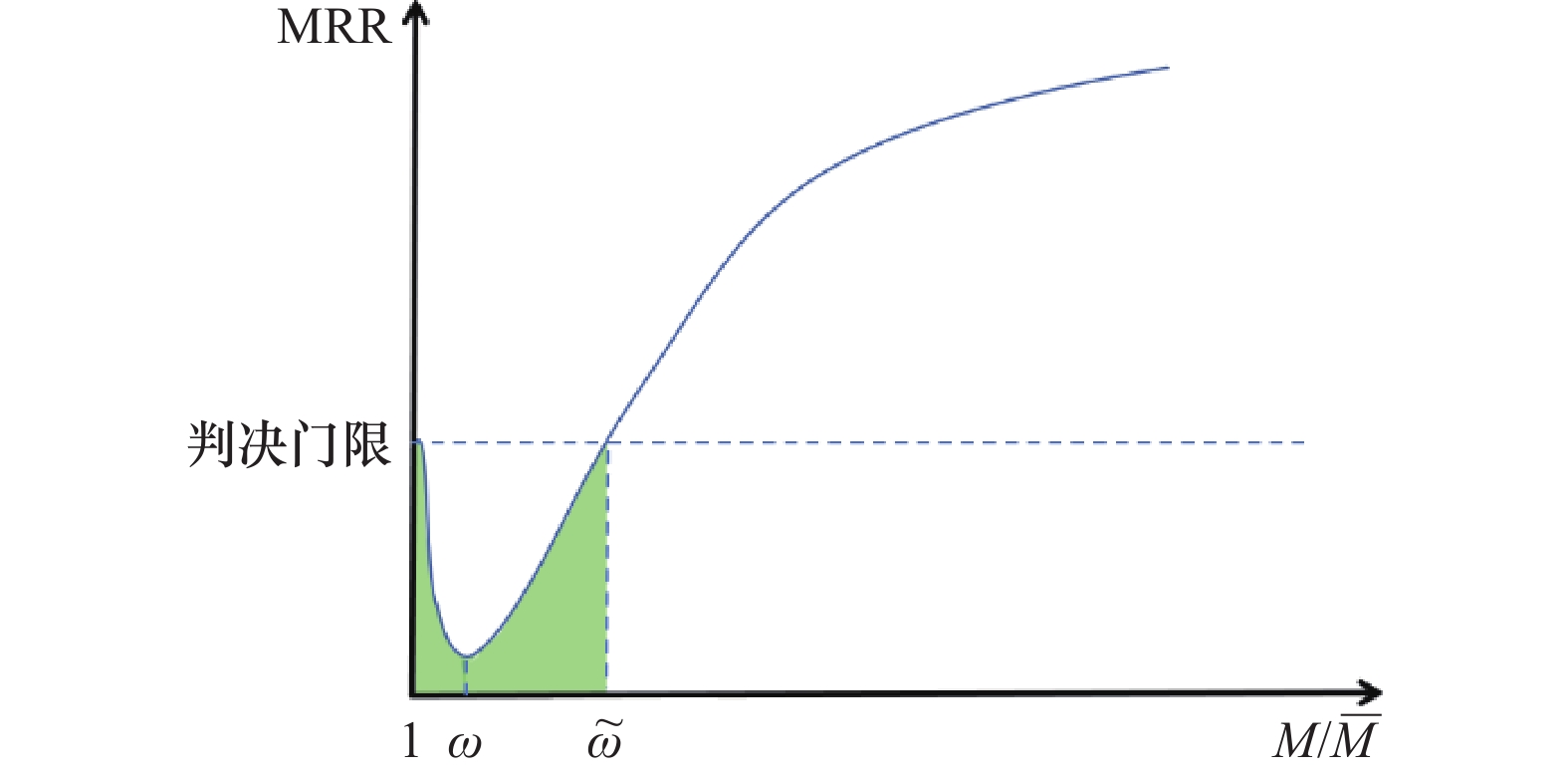
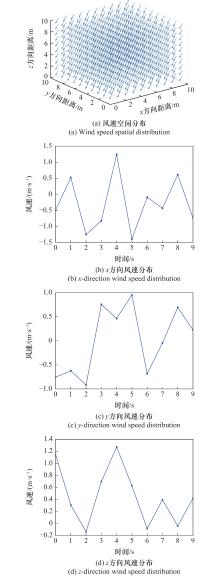
Fig.7
Three-dimensional wind field simulation"
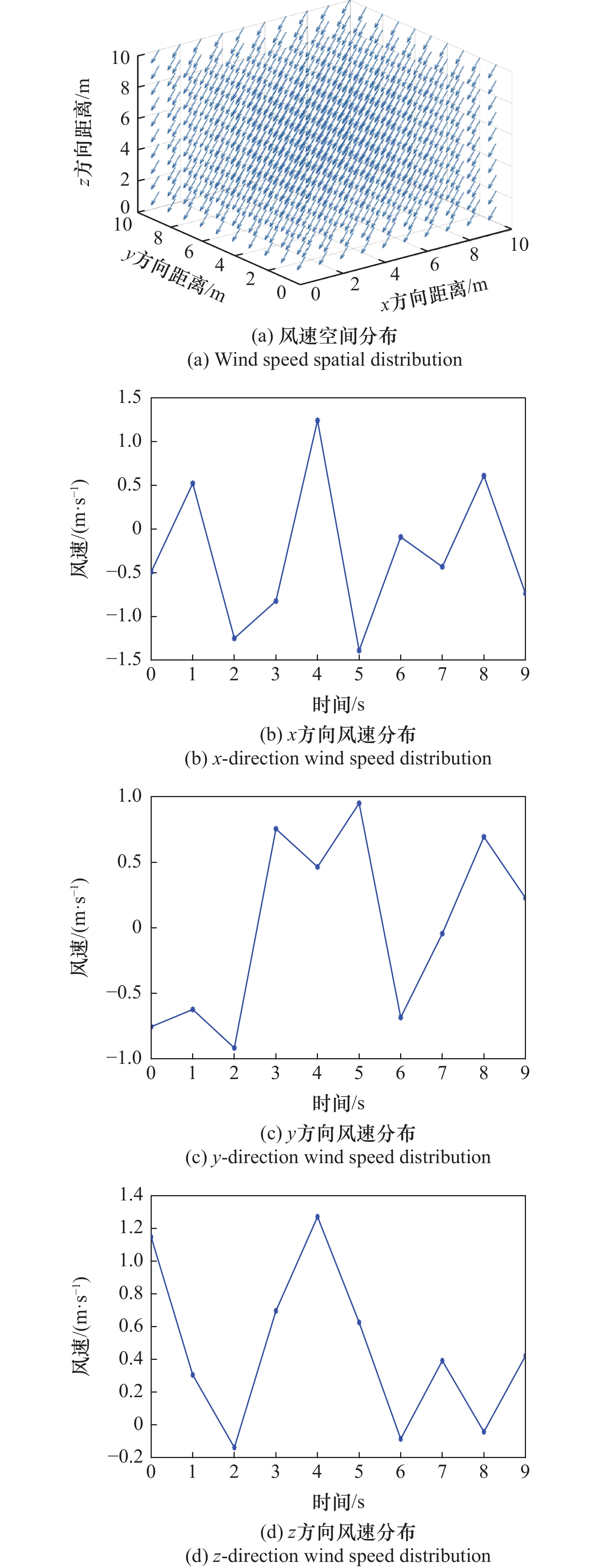
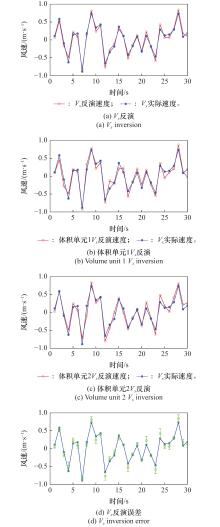
Fig.8
Wind field inversion results in x-direction"
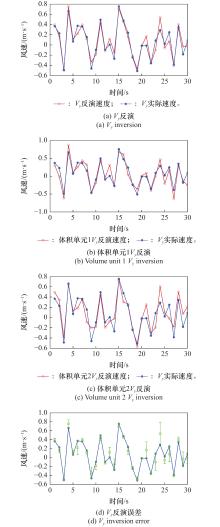
Fig.9
Wind field inversion results in y-direction"
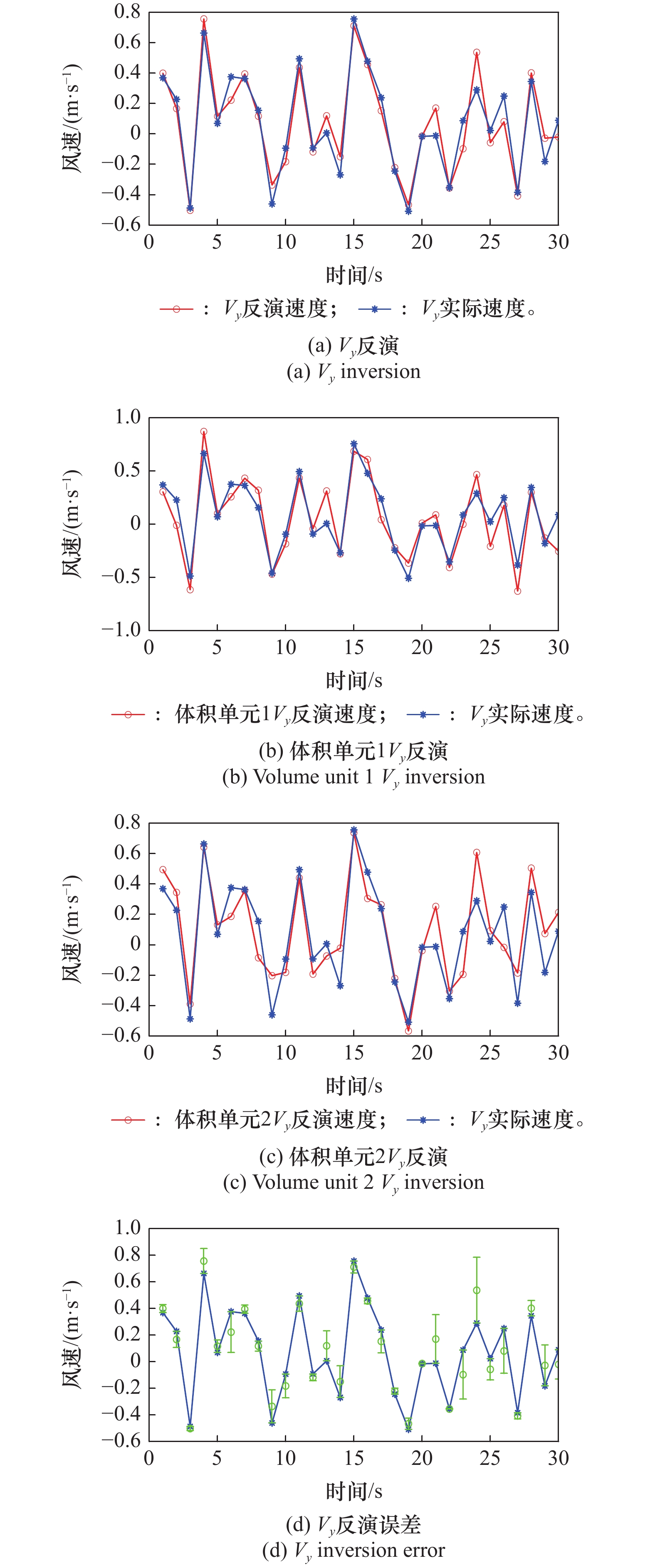
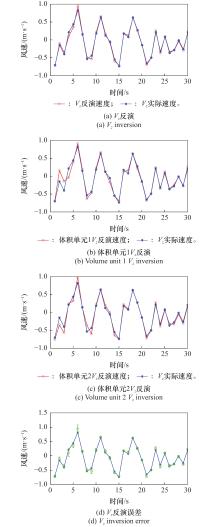
Fig.10
Wind field inversion results in z-direction"
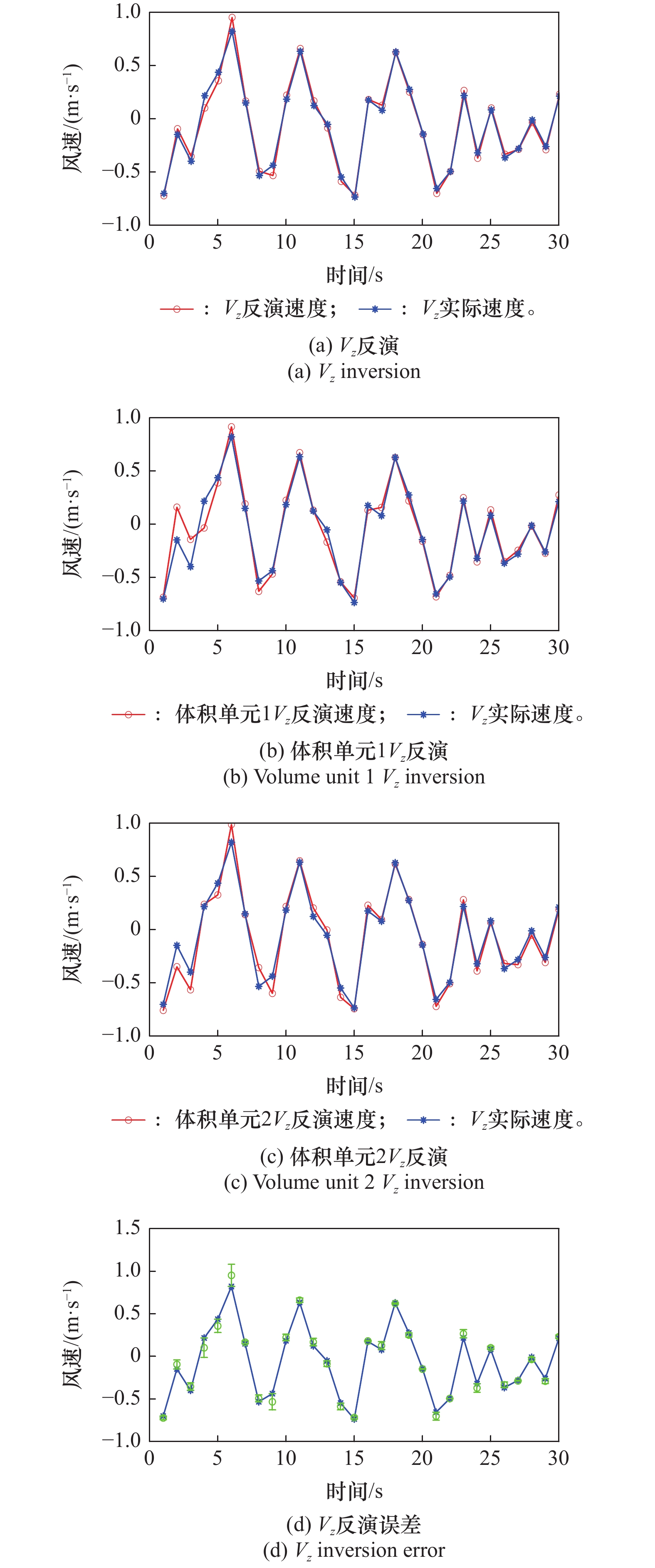
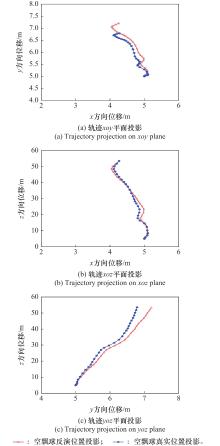
Fig.11
Simulation results of air floating ball position inversion"
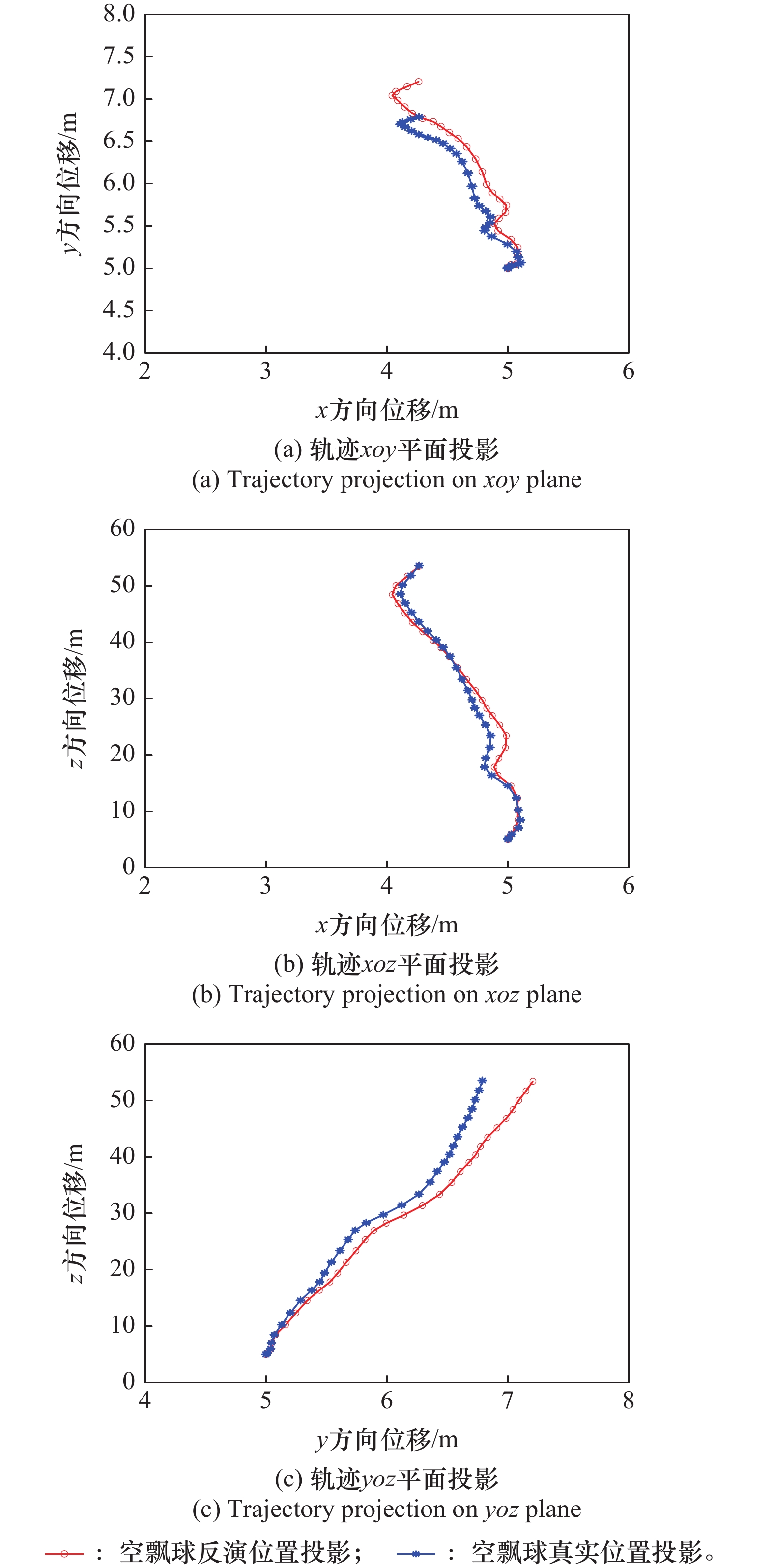

Table 1
Trajectory parameters with each mass distribution of same materials"
| M | ρ | ρa | M1 | M2 | DOI | MRR |
| 5 | 1 | 5 | 0 | 0 | ||
| 4.95 | 0.05 | |||||
| 4.90 | 0.1 | |||||
| 4.85 | 0.15 | |||||
| 4.80 | 0.2 | |||||
| 4.75 | 0.25 | |||||
| 4.70 | 0.3 | |||||
| 4.65 | 0.35 | |||||
| 4.60 | 0.4 | |||||
| 4.55 | 0.45 | |||||
| 4.50 | 0.5 |
Table 2
Trajectory parameters with each mass distribution of different materials"
| M | ρa | M1 | M2 | DOI | MRR |
| 5 | 5 | 0 | 0 | ||
| 4.5 | 0.5 | ||||
| 4 | 1 | ||||
| 3.5 | 1.5 | ||||
| 3 | 2 | ||||
| 2.5 | 2.5 | ||||
| 2 | 3 | ||||
| 1.5 | 3.5 | ||||
| 1 | 4 | ||||
| 0.72 | 4.28 | ||||
| 0.5 | 4.5 | ||||
| 0.1 | 4.9 | ||||
| 5 | 5 | 0 | 0 | ||
| 4.5 | 0.5 | ||||
| 4 | 1 | ||||
| 3.5 | 1.5 | ||||
| 3 | 2 | ||||
| 2.5 | 2.5 | ||||
| 2 | 3 | ||||
| 1.5 | 3.5 | ||||
| 1 | 4 | ||||
| 0.72 | 4.28 | ||||
| 0.5 | 4.5 | ||||
| 0.1 | 4.9 | ||||
| 5 | 0 | 0 | |||
| 4.5 | 0.5 | ||||
| 4 | 1 | ||||
| 3.5 | 1.5 | ||||
| 3 | 2 | ||||
| 2.5 | 2.5 | ||||
| 2 | 3 | ||||
| 1.5 | 3.5 | ||||
| 1 | 4 | ||||
| 0.72 | 4.28 | ||||
| 0.5 | 4.5 | ||||
| 0.1 | 4.9 |
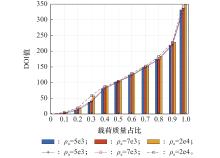
Fig.12
DOI distribution with different load mass distribution of different materials"
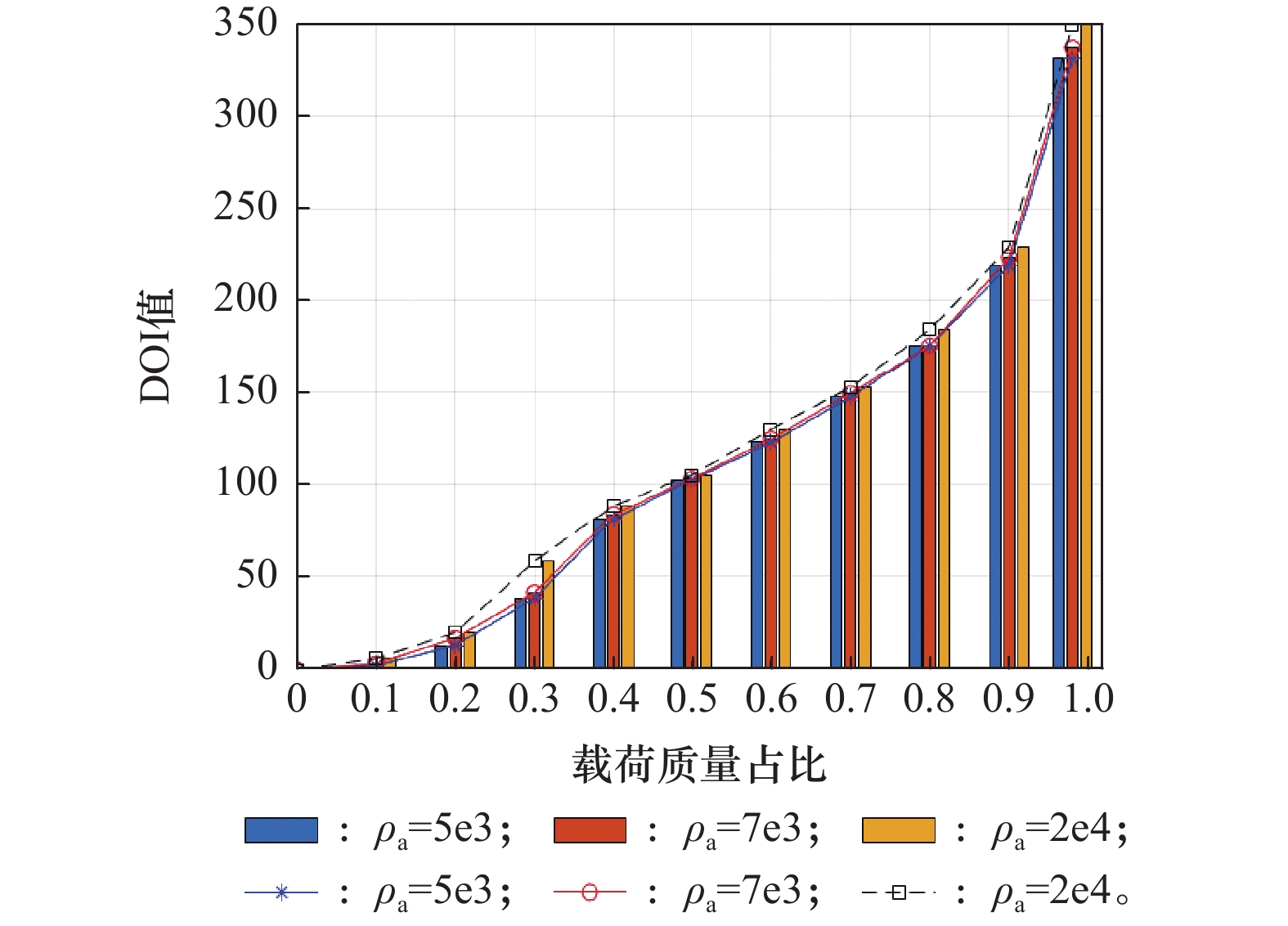
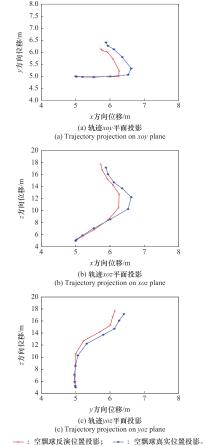
Fig.13
Position inversion effect with a random deviation of 3"
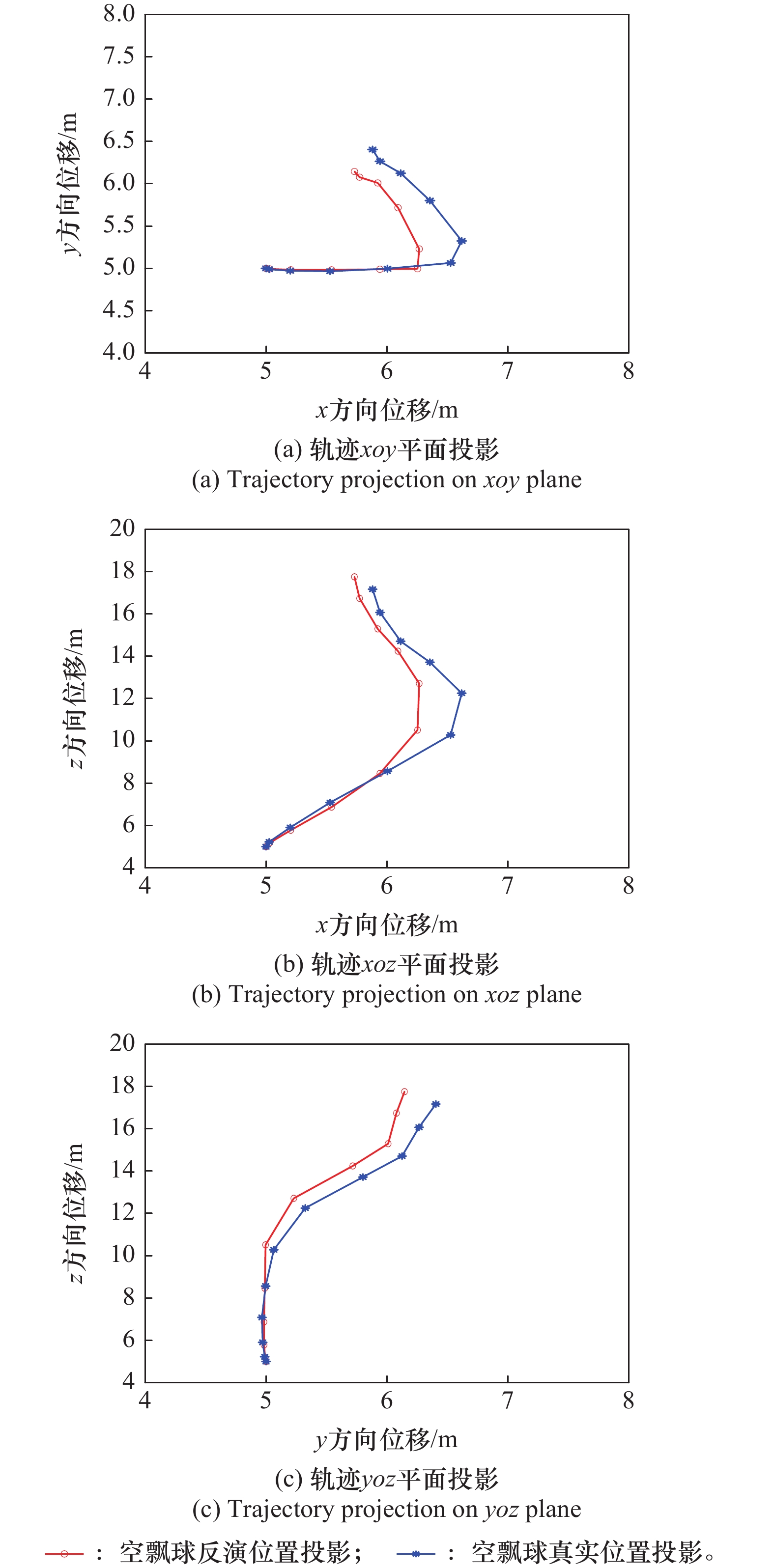
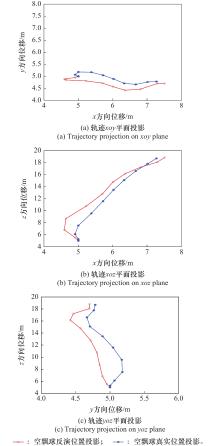
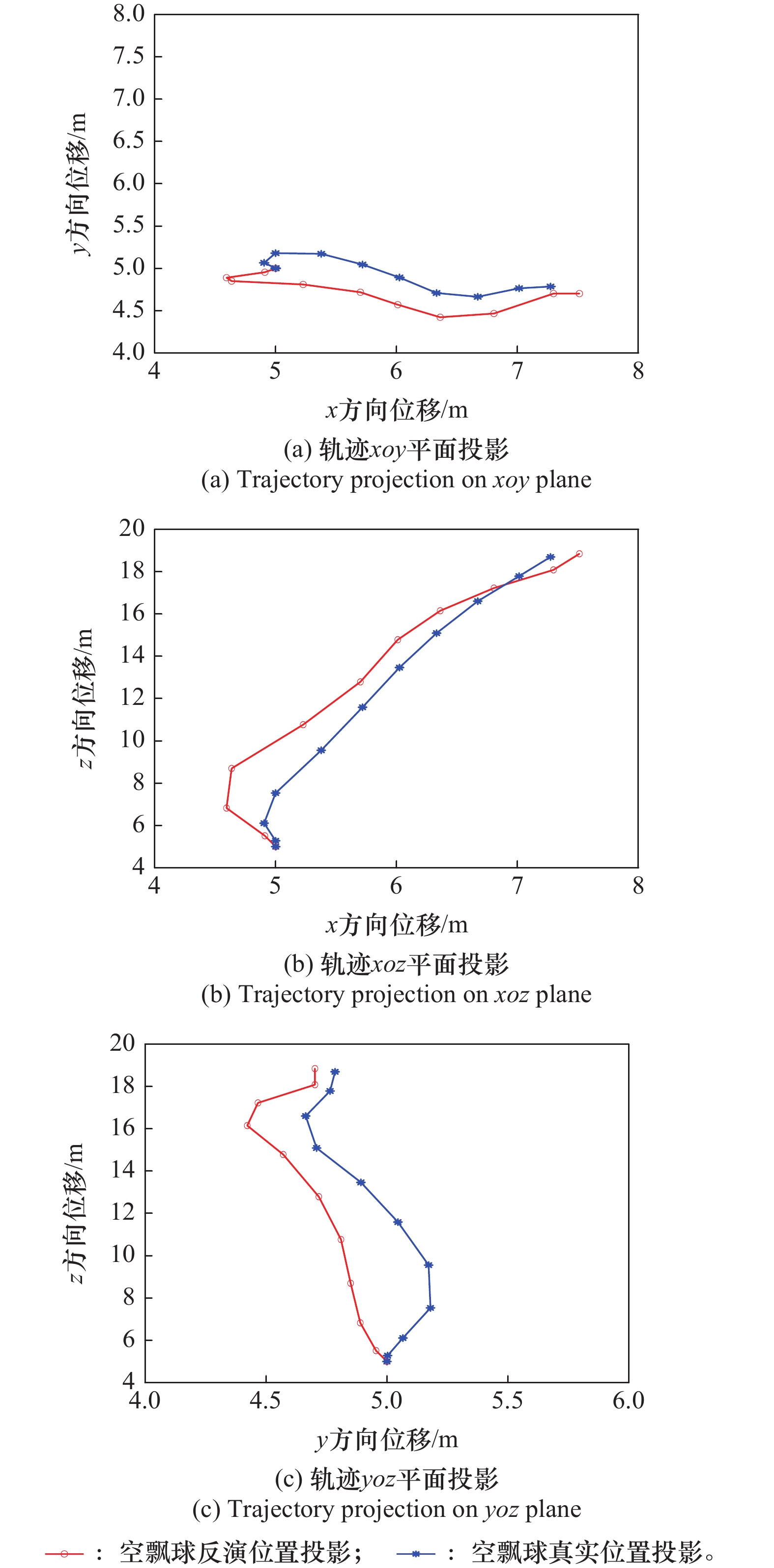
Fig.14
Position inversion effect with a random deviation of 5"
| 1 | 杨建军, 廖秋燕, 王卫星, 等. 空飘气球在军事对抗中的运用[J]. 舰船电子对抗, 2022, 45 (2): 28- 31. |
| YANG J J, LIAO Q Y, WANG W X, et al. The application of airborne balloons in military confrontation[J]. Ship Electronic Countermeasures, 2022, 45 (2): 28- 31. | |
| 2 | SIMON H. Qatar B773 at Sao Paulo on July 3rd 2022, hot air ball on final approach[EB/OL]. [2024-07-04]. https://www.aeroinside.com/airline/qatar-airways. |
| 3 | 黄宛宁, 栗颖思, 周书宇, 等. 现代浮空器军事应用[J]. 科技导报, 2022, 45 (2): 28- 31. |
| HUANG W N, LI Y S, ZHOU S Y, et al. The application of airborne balloons in military confrontation[J]. Ship Electronic Countermeasures, 2022, 45 (2): 28- 31. | |
| 4 |
JIAN L Z, XIN D, YONG Z, et al. An estimation method of unmanned aerial vehicle rotor spin frequency based on laser micro-Doppler effect[J]. Optics Communications, 2023, 526, 128926.
doi: 10.1016/j.optcom.2022.128926 |
| 5 | URS B, WELLIG P. Numerical RCS and micro Doppler investigations of a consumer UAV[C]//Proc. of the Target and Background Signatures II, 2016. |
| 6 |
TING D, SHI Y X, BIAO T, et al. Extraction of micro-Doppler feature using LMD algorithm combined supplement featurefor UAVs and birds classification[J]. Remote Sensing, 2022, 14 (9): 2196.
doi: 10.3390/rs14092196 |
| 7 | ZHAO Y C, SU Y. The extraction of micro-Doppler signal with EMD algorithm for radar-based small UAVs’ detection[J]. IEEE Trans. on Instrumentation and Measurement, 2019, 69, 929- 940. |
| 8 | RAO N G, RAO J P, DUVVURU R. A Drone remote sensing for virtual reality simulation system for forest fires: semantic neural-network approach[J]. IOP Conference Series: Materials Science and Engineering, 2024, 149, 012011. |
| 9 | RAKSHIT R H, ZADAH B P. A new approach to classify drones using a deep convolutionalneural network[J]. Drones, 2016, 8 (7): 319. |
| 10 |
LE N P, KANG J H. Robot manipulator calibration using a model based identification technique and a neural network with the teaching learning-based optimization[J]. IEEE Access, 2020, 8, 105447- 105454.
doi: 10.1109/ACCESS.2020.2999927 |
| 11 |
MA Y M, MUSTAPHA F, ISHAK M R, et al. Structural fault diagnosis of UAV based on convolutional neural network and data processing technology[J]. Nondestructive Testing and Evaluation, 2024, 39 (2): 426- 445.
doi: 10.1080/10589759.2023.2206655 |
| 12 | 殷加鹏, 黄建开, 李永祯, 等. 双极化雷达的空飘气球快速检测方法及装置[P]. 中国: CN202210488113.5, 2023-11−23. |
| YIN J P, HUANG J K, LI Y Z, et al. Rapid detection method and device for airborne balloons using dual-polarization radar[P]. China: CN202210488113.5, 2023-11−23. | |
| 13 | CHEN Y Y, JIANG J, CAO Z L, et al. Exploration of moiré tomography in spatial distribution measurement of wind velocity[J]. Optics and Lasers in Engineering, 2025, 184 (P1): 108579. |
| 14 | 李健兵, 周洁, 高航. 基于多经纬仪的三维风场反演方法, 装置, 设备和介质[P]. 中国: CN113281826A, 2025-05−30. |
| LI J B, ZHOU J, GAO H. Three-dimensional wind field inversion method, device, equipment, and medium based on multi-geodetic instruments[P]. China: CN113281826A, 2025-05−30. | |
| 15 |
YUE F Z, XIAO J Z, YU R Z, et al. Data processing and analysis of eight-beam wind profile coherent wind measurement lidar[J]. Remote Sensing, 2021, 13 (18): 3549.
doi: 10.3390/rs13183549 |
| 16 |
ABARI C F, XIN Z C, HARDESTY R M, et al. A reconfigurable all-fiber polarization-diversity coherent Doppler lidar: principles and numerical simulations[J]. Applied Optics, 2015, 54 (30): 8999- 9009.
doi: 10.1364/AO.54.008999 |
| 17 | WANG Y, DENG J Y, SHI L H, et al. Analysis of a dust-floating process based on the vertical distribution of aerosol optical properties[J]. Environmental Science, 2014, 35 (3): 830- 838. |
| 18 | CAYA D, ZAWADZKI L. VAD analysis of nonlinear wind fields[J]. Journal of Atmospheric & Oceanic Technology, 2008, 9 (5): 575- 587. |
| 19 | LIANG X D, WANG B. An integrating VAP method for single-Doppler radar wind retrieval[J]. Meteorological Journal: English Edition, 2009, (2): 166- 174. |
| 20 |
WALDTEUFEL P, CORBIN H. On the analysis of single-Doppler radar data[J]. Journal of Applied Meteorology, 1979, 18 (4): 532- 542.
doi: 10.1175/1520-0450(1979)018<0532:OTAOSD>2.0.CO;2 |
| 21 |
郎需兴, 魏鸣, 葛文忠, 等. 一种新的单多普勒雷达风场反演方法[J]. 气象科学, 2001, (4): 417- 424.
doi: 10.3969/j.issn.1009-0827.2001.04.005 |
|
LANG X X, WEI M, GE W Z, et al. A new method for wind field inversion using single Doppler radar[J]. Meteorological Science, 2001, (4): 417- 424.
doi: 10.3969/j.issn.1009-0827.2001.04.005 |
|
| 22 | 高航, 周洁, 胡健, 等. 基于激光雷达探测的三维风场变分反演算法[J]. 光学学报, 2021, 41 (20): 203- 215. |
| GAO H, ZHOU J, HU J, et al. Varying inversion algorithm for three-dimensional wind field based on lidar detection[J]. Acta Optica Sinica, 2021, 41 (20): 203- 215. | |
| 23 | 周洁, 高航, 张旭晖, 等. 一种基于激光雷达探测的风场多特征反演方法[J]. 激光与红外, 2022, 52 (4): 488- 496. |
| ZHOU J, GAO H, ZHANG X H, et al. Amulti-feature inversion method for wind field based on lidar detection[J]. Laser and Infrared, 2022, 52 (4): 488- 496. | |
| 24 |
WON S P, MELEK W W. A Kalman/particle filter-based position and orientation estimation method using a position sensor/inertial measurement unit hybrid system[J]. IEEE Trans. on Industrial Electronics, 2010, 57 (5): 1787- 1798.
doi: 10.1109/TIE.2009.2032431 |
| 25 | KAO C F, CHEN T L. Design and analysis of an orientation estimation system using coplanar gyro-free inertial measurement unit and magnetic sensors[J]. Sensors & Actuators A Physical, 2008, 144 (2): 251- 262. |
| 26 |
WANG H G, WILLIANMS T C. Strategic-inertial navigation systems-high-accuracy inertially stabilized platforms for hostile environments[J]. IEEE Control Systems Magazine, 2008, 28 (1): 65- 85.
doi: 10.1109/MCS.2007.910206 |
| 27 | 牛莉霞, 刘谋兴, 李乃文, 等. HVB惯性度的MPHMADM评价[J]. 中国安全科学学报, 2017, 27 (7): 48- 52. |
| NIU L X, LIU M X, LI N W, et al. Evaluation of HVB inertial degree using MPHMADM[J]. Journal of Safety Science and Technology, 2017, 27 (7): 48- 52. | |
| 28 | 张金凤, 何重阳, 梁彦. 面向再入目标跟踪的估计与辨识联合优化算法[J]. 航空学报, 2016, 37 (5): 1634- 1643. |
| ZHANG J F, HE C Y, LIANG Y. Joint optimization algorithm for measurement and identification aimed at tracking reentry targets[J]. Journal of Aviation, 2016, 37 (5): 1634- 1643. | |
| 29 | 李陆军, 丁建江, 胡磊, 等. 基于运动特征的弹道导弹目标识别技术[J]. 飞航导弹, 2017, (8): 89- 96. |
| LI L J, DING J J, HU L, et al. Technology for missile target recognition based on motion features[J]. Flight Navigation Missile, 2017, (8): 89- 96. | |
| 30 |
金文彬, 刘永祥, 黎湘, 等. 再入目标质阻比估计算法研究[J]. 国防科技大学学报, 2004, 26 (5): 46- 51.
doi: 10.3969/j.issn.1001-2486.2004.05.011 |
|
JIN W B, LIU Y X, LI X, et al. Study on estimating the mass-to-drag ratio of reentry targets[J]. Journal of National University of Defense Technology, 2004, 26 (5): 46- 51.
doi: 10.3969/j.issn.1001-2486.2004.05.011 |
|
| 31 | INCROPERA F P, DEWITT D P, BERGMAN T L, et al. Fundamentals of heat and mass transfer[M]. 4th ed. New York: Wiley, 1996. |
| 32 |
薛大同. 对地球大气密度随高度分布规律的讨论[J]. 真空科学与技术学报, 2009, 29 (S1): 1- 8.
doi: 10.3969/j.issn.1672-7126.2009.z1.01 |
|
XUE D T. Discussion on the distribution law of atmospheric density with altitude[J]. Journal of Vacuum Science and Technology, 2009, 29 (S1): 1- 8.
doi: 10.3969/j.issn.1672-7126.2009.z1.01 |
|
| 33 | 达道安, 杨亚天, 涂建辉. 太阳系行星及行星际大气环境特性研究[J]. 宇航学报, 2006, (6): 1306- 1313. |
| DA D A, YANG Y T, TU J H. Research on the environmental characteristics of planets and interplanetary atmospheres in the solar system[J]. Journal of Astronautics, 2006, (6): 1306- 1313. | |
| 34 | 王贵, 谭凯, 曹成. 形状差异的岩屑颗粒沉降规律及曳力系数模型[J]. 钻井液与完井 液, 2022, 39 (6): 707- 713. |
| WANG G, TAN K, CAO C. Settling laws of rock fragment particles with shape differences and drag coefficient model[J]. Drilling Fluid and Completion Fluid, 2022, 39 (6): 707- 713. | |
| 35 | SHIROKOV D. Non commutative vieta theorem in clifford geometric algebras[J]. Mathematical Methods in the Applied Sciences, 2023, 47 (14): 11305- 11320. |
| [1] | Yue ZHANG, Jing WANG, Dingheng WANG, Changhua DAI, Yuanchao DUAN, Baorong LIU, Xiaosong ZHANG. Dynamic obstacle avoidance method for unmanned vehicle based on pedestrian trajectory prediction [J]. Systems Engineering and Electronics, 2025, 47(7): 2371-2382. |
| [2] | Jinzhao ZHU, Di ZHOU, Xiaobo CHEN, Mingchun CAI. Fast time-varying maneuver model and trajectory prediction of near space hypersonic vehicle [J]. Systems Engineering and Electronics, 2025, 47(1): 244-253. |
| [3] | Gang ZHONG, Jiangying ZHOU, Sen DU, Honghai ZHANG, Hao LIU. Short-time trajectory deviation detection method for UAV based on trajectory prediction [J]. Systems Engineering and Electronics, 2024, 46(8): 2696-2708. |
| [4] | Zhenya YANG, Zhi ZHANG, Xiaobing SHANG, Zejun CAO, Zhexuan SUN. Vessel trajectory prediction based on improved multi-output support vector [J]. Systems Engineering and Electronics, 2024, 46(1): 173-181. |
| [5] | Wanyan HUANG, Wanhe DU, Shuzhen YANG, Tao YU. Trajectory prediction algorithm based on improved polynomial curve fitting [J]. Systems Engineering and Electronics, 2024, 46(1): 280-289. |
| [6] | Botao SONG, Guangliang XU. Missile trajectory prediction method based on LSTM and 1DCNN [J]. Systems Engineering and Electronics, 2023, 45(2): 504-512. |
| [7] | Mingjie LI, Chijun ZHOU, Humin LEI, Lei SHAO, Changxin LUO. An intelligent trajectory prediction algorithm of reentry glide target based on control parameter estimation [J]. Systems Engineering and Electronics, 2023, 45(1): 221-233. |
| [8] | Ruiping JI, Chengyi ZHANG, Yan LIANG, Yuedong WANG. Trajectory prediction of boost-phase ballistic missile based on LSTM [J]. Systems Engineering and Electronics, 2022, 44(6): 1968-1976. |
| [9] | Lei XIE, Dali DING, Zhenglei WEI, Andi TANG, Peng ZHANG. Real time prediction of maneuver trajectory for AdaBoost-PSO-LSTM network [J]. Systems Engineering and Electronics, 2021, 43(6): 1651-1658. |
| [10] | Yuke HU, Wei XIA, Xiaoxuan HU, Haiquan SUN, Yunhui WANG. Vessel trajectory prediction based on recurrent neural network [J]. Systems Engineering and Electronics, 2020, 42(4): 871-877. |
| [11] | Hongpeng ZHANG, Changqiang HUANG, Yongbo XUAN, Shangqin TANG. Real-time prediction of air combat flight trajectory using GRU [J]. Systems Engineering and Electronics, 2020, 42(11): 2546-2552. |
| [12] | Guanglei MENG, Mingzhe ZHOU, Haiyin PIAO, Huimin ZHANG. Threat assessment method of dual-aircraft formation based on cooperative tactical recognition [J]. Systems Engineering and Electronics, 2020, 42(10): 2285-2293. |
| [13] | Shijie LI, Humin LEI, Chijun ZHOU, Tao ZHANG. Trajectory prediction algorithm for hypersonic reentry gliding target based on control variables estimation [J]. Systems Engineering and Electronics, 2020, 42(10): 2320-2327. |
| [14] | ZHANG Bolun, ZHOU Di, WU Shikai. Maneuver model and trajectory prediction of near space hypersonic aircraft [J]. Systems Engineering and Electronics, 2019, 41(9): 2072-2079. |
| [15] | HU Zhiheng, ZHOU Di, ZOU Xinguang. Guidance law estimation and trajectory prediction of interceptor missile [J]. Systems Engineering and Electronics, 2018, 40(3): 609-614. |
| Viewed | ||||||
|
Full text |
|
|||||
|
Abstract |
|
|||||