

系统工程与电子技术 ›› 2026, Vol. 48 ›› Issue (2): 569-577.doi: 10.12305/j.issn.1001-506X.2026.02.18
• 系统工程 • 上一篇
郝雪婷1,*, 方志耕1, 江安康1, 张靖如1, 孙云柯1,2
收稿日期:2024-07-26
修回日期:2024-09-05
出版日期:2025-04-23
发布日期:2025-04-23
通讯作者:
郝雪婷
作者简介:方志耕(1962—),男,教授,博士研究生导师,博士,主要研究方向为复杂装备研制管理、质量与可靠性基金资助:Xueting HAO1,*, Zhigeng FANG1, Ankang JIANG1, Jingru ZHANG1, Yunke SUN1,2
Received:2024-07-26
Revised:2024-09-05
Online:2025-04-23
Published:2025-04-23
Contact:
Xueting HAO
摘要:
反导体系是抵御威胁的重要防线,如何更加准确地描述、评估反导体系的作战效能是一件非常重要而复杂的工作。针对反导体系效能评估问题,分析反导作战体系的特征,结合图示评审技术(graphical evaluation and review technique, GERT),首先构建反导作战GERT网络,为效能评价提供模型框架;其次引入节点重要度思想,通过分析装备自身属性和关联装备的重要性,修正装备能力,并利用梅森公式和矩母函数的优良性质,解决基于节点重要度的反导体系作战效能评估问题;最后通过算例研究,说明基于节点重要度的反导体系效能评估方法的实用性和有效性。结果表明,基于节点重要度的效能评估方法能够有效量化装备异质性及网络结构对整体效能的影响,充分考虑关键节点对体系效能的影响,为反导体系的效能评估与优化提供了一种更贴合实际的新思路。
中图分类号:
郝雪婷, 方志耕, 江安康, 张靖如, 孙云柯. 考虑节点重要度的反导体系效能评估方法[J]. 系统工程与电子技术, 2026, 48(2): 569-577.
Xueting HAO, Zhigeng FANG, Ankang JIANG, Jingru ZHANG, Yunke SUN. Method of effectiveness evaluation for anti-missile system of systems based on node importance[J]. Systems Engineering and Electronics, 2026, 48(2): 569-577.

图1
体系GERT网络基本单元"

图2
反导预警体系GERT网络结构"
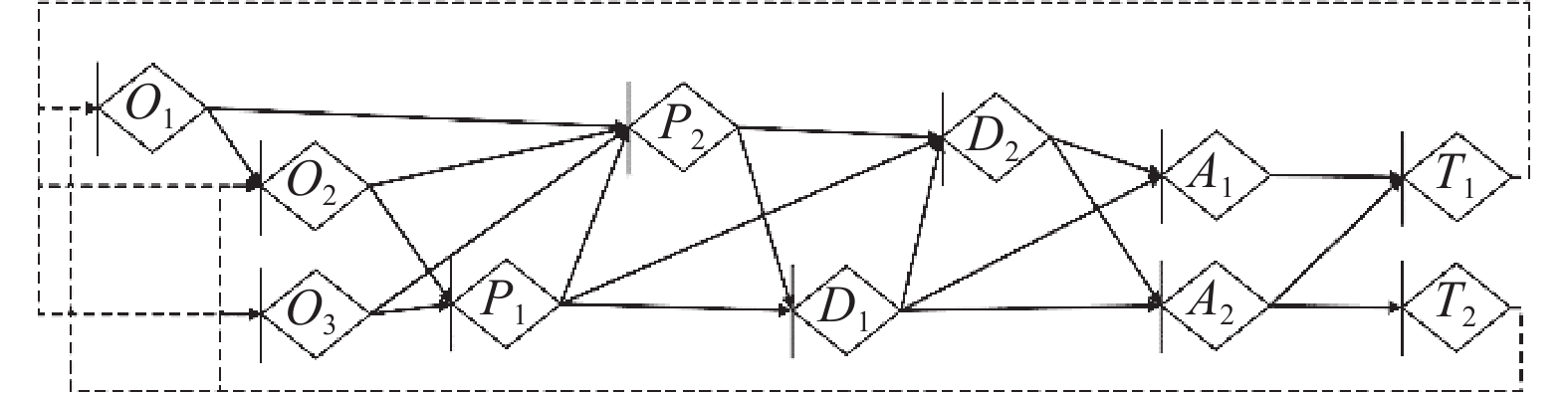
图3
反导体系GERT网络串联、并联、环形结构"
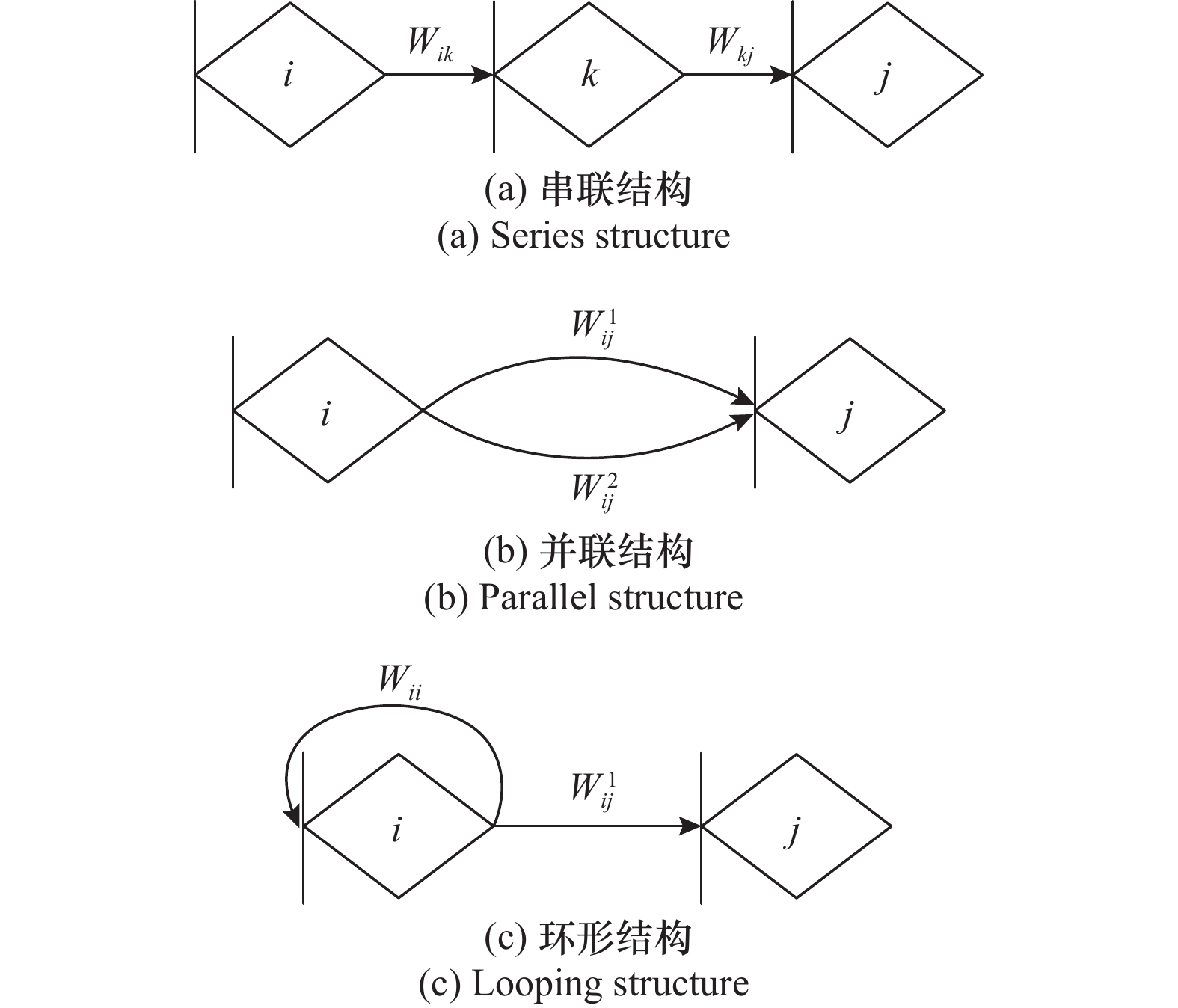
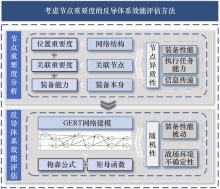
图4
研究思路"
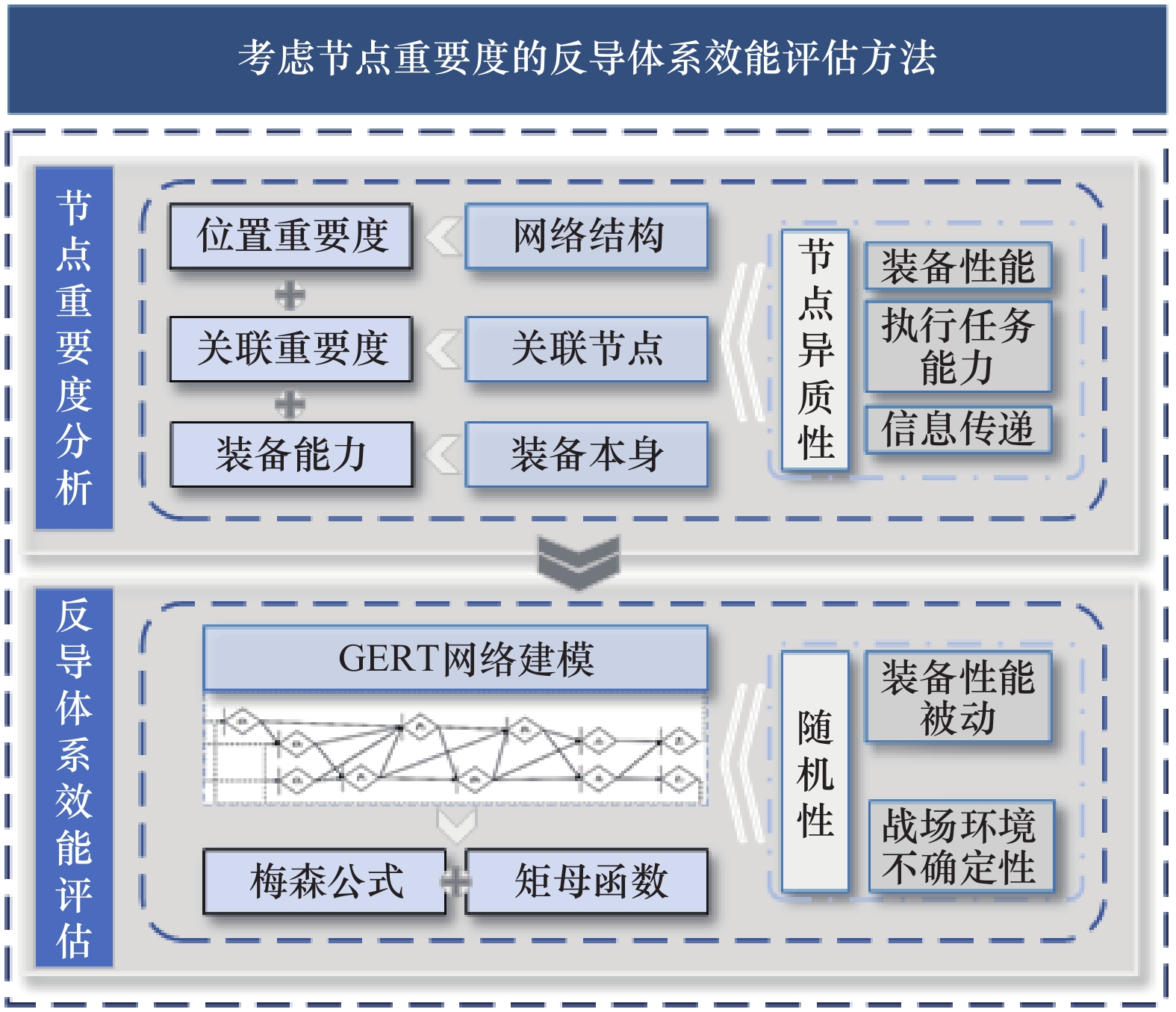

图5
反导预警体系GERT网络"

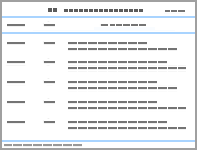
表1
反导预警体系效能评估GERT网络初始参数"
| 作战活动(i,j) | 活动概率pij | 活动效果Eij | 执行装备i | 装备能力 |
| 0.33 | 0 | − | − | |
| 0.33 | 0 | |||
| 0.33 | 0 | |||
| 0.5 | ||||
| 0.5 | ||||
| 0.49 | ||||
| 0.49 | ||||
| 0.49 | ||||
| 0.49 | ||||
| 0.33 | ||||
| 0.33 | ||||
| 0.33 | ||||
| 0.5 | ||||
| 0.5 |
表2
反导预警体系节点重要度参数"
| 节点 | 位置重要度 | 关联节点 | 关联重要度 | 节点重要度 | 归一化节点重要度 | |
| 入节点 | 出节点 | |||||
| 0.5 | ||||||
| 0.4 | ||||||
| 0.4 | ||||||
| 0.5 | ||||||
| 0.4 | ||||||
| 0.5 | ||||||
| 0.6 | ||||||
| 0.5 | ||||||
| 0.5 | ||||||
| 0.3 | ||||||
| 0.4 | 0.066 0 | |||||
表3
反导预警体系活动效果修正表"
| 作战活动 | 活动概率 | 活动效果 | 等价传递函数 |
| 0.33 | 0 | 0.33 | |
| 0.33 | 0 | 0.33 | |
| 0.33 | 0 | 0.33 | |
| 0.5 | |||
| 0.5 | |||
| 0.49 | |||
| 0.49 | |||
| 0.49 | |||
| 0.49 | |||
| 0.33 | |||
| 0.33 |
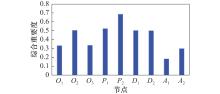
图6
节点综合重要度"
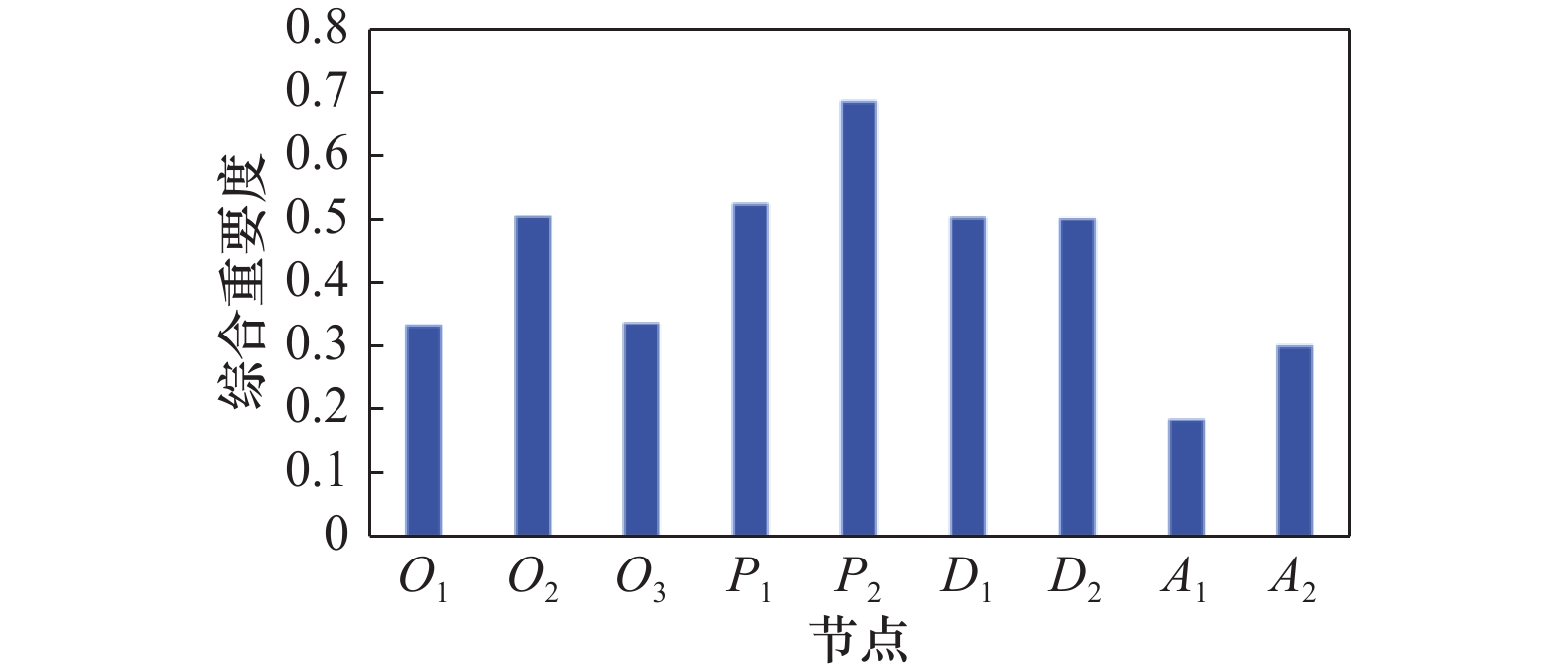
图7
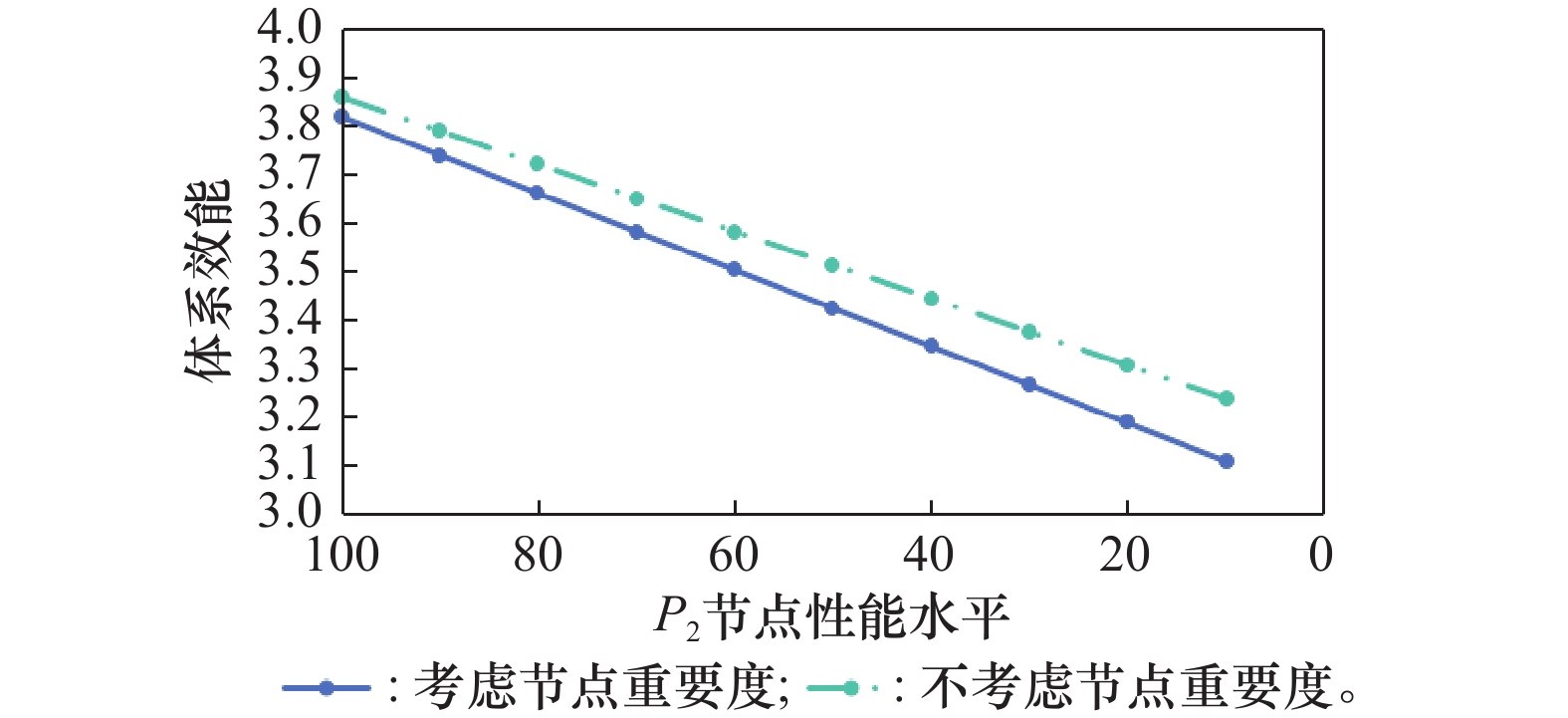
节点性能水平与体系效能的关系"
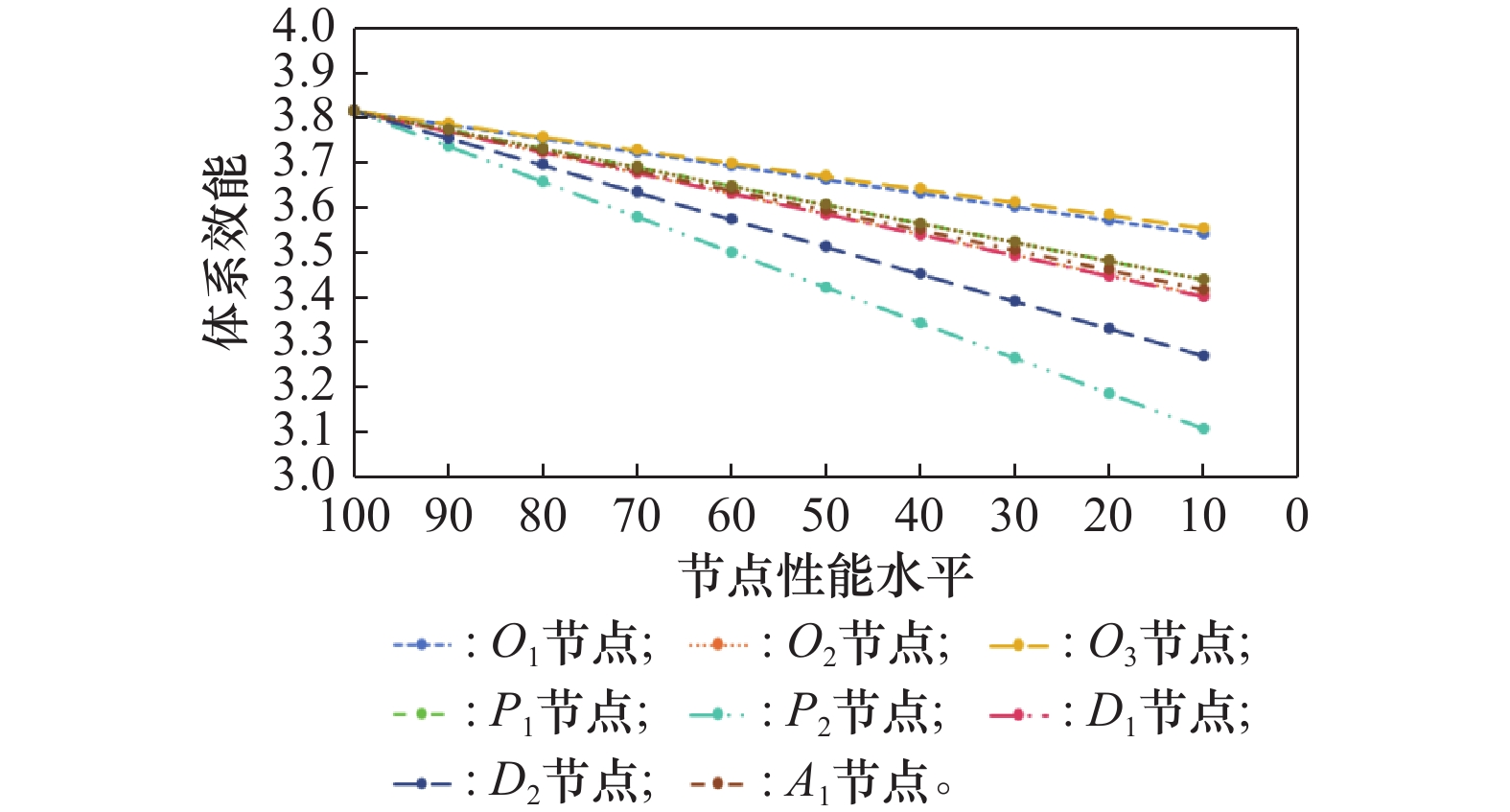
图8
高重要度节点性能水平与体系效能的关系"
| 1 | 李森, 田海林, 王刚, 等. 美一体化防空反导作战指控系统(IBCS)研究[J]. 现代防御技术, 2022, 50 (4): 84- 100. |
| LI S, TIAN H L, WANG G, et al. Research on IAMD battle command system (IBCS) of the US[J]. Modern Defence Technology, 2022, 50 (4): 84- 100. | |
| 2 | 陈雅萍, 刘杰, 董诗潮, 等. 2023年国外防空反导领域发展综述[J]. 战术导弹技术, 2024 (2): 27- 35. |
| CHEN Y P, LIU J, DONG S C, et al. Summary on development of foreign air and missile defense field in 2023[J]. Tactical Missile Technology, 2024 (2): 27- 35. | |
| 3 | 刘成刚, 叶雄兵. 战区联合作战指挥信息流评价模型[J]. 军事运筹与系统工程, 2018, 32 (1): 31- 36. |
| LIU C G, YE X B. Evaluation model of joint warfare command information flow in theater of operations[J]. Military Operations Research and Systems Engineering, 2018, 32 (1): 31- 36. | |
| 4 |
PRITSKER A A B. GERT networks[J]. Production Engineer, 1968, 47 (10): 499- 506.
doi: 10.1049/tpe.1968.0085 |
| 5 | YANG X Y, FANG Z G, TAO L Y. Grey GERT network model of equipment lifetime evaluation based on small samples[J]. The Journal of Grey System, 2018, 30 (1): 110- 122. |
| 6 | 方志耕, 华晨晨, 陈顶, 等. 复杂体系可靠性结构分析与建模GERT网络技术[J]. 系统工程与电子技术, 2024, 46 (10): 3427- 3436. |
| FANG Z G, HUA C C, CHEN D, et al. GERT network technology for reliability structure analysis and modeling of complex system-of-systems[J]. Systems Engineering and Electronics, 2024, 46 (10): 3427- 3436. | |
| 7 |
LI Z Y, NIE X T, WANG B, et al. Analysis of the transmission of project duration and cost impacts based on the GERT network technique[J]. Symmetry, 2019, 11 (3): 337.
doi: 10.3390/sym11030337 |
| 8 | LIU H Q, FANG Z G, YUAN C Q, et al. “Inverse problem” model of GERT network and its application in complex equipment development project schedule planning[C]//Proc. of the IEEE International Conference on Grey systems and Intelligent Services, 2013: 384−390. |
| 9 | FANG Z G, WU S, ZHANG X L, et al. ADC-GERT network parameter estimation model for mission effectiveness of joint operation system[J]. Journal of Systems Engineering and Electronics, 2021, 32 (6): 1394- 1406. |
| 10 | WANG Z, LIU S F, FANG Z G. Research on SoS-GERT network model for equipment system of systems contribution evaluation based on joint operation[J]. IEEE Systems Journal, 2019, 14 (3): 4188- 4196. |
| 11 |
GENG S Y, LIU S F, FANG Z G, et al. An optimal delay routing algorithm considering delay variation in the LEO satellite communication network[J]. Computer Networks, 2020, 173, 107166.
doi: 10.1016/j.comnet.2020.107166 |
| 12 | GENG S Y, LIU S F, FANG Z G, et al. A reliable framework for satellite networks achieving energy requirements[J]. Reliability Engineering & System Safety, 2021, 216, 107939. |
| 13 | NIE Y Y, FANG Z G, GAO S. Q-GERT survivability assessment of LEO satellite constellation[J]. Wireless Networks, 2021, 27: 249−268. |
| 14 |
SHAO R R, FANG Z G, GAO S, et al. PS-G-GERT effectiveness evaluation model of link-based GEO satellite communication constellation under poor information background[J]. China Communications, 2022, 19 (12): 176- 196.
doi: 10.23919/JCC.2022.00.001 |
| 15 | 方志耕, 张靖如, 夏悦馨, 等. 基于A-GERT网络的武器装备体系效能动态优化模型[J]. 中国管理科学, 2025, 33 (5): 214- 224. |
| FANG Z G, ZHANG J R, XAI Y X, et al. Effectiveness dynamic optimization model for weapon and equipment system of systems based on A-GERT network[J]. Chinese Journal of Management Science, 2025, 33 (5): 214- 224. | |
| 16 | HAO X T, FANG Z G, ZHANG J R, et al. Reinforcement model for unmanned combat system of systems based multi-layer grey target [J]. Journal of Grey System, 2024, 36(2): 54. |
| 17 | TAO L Y, WU D, LIU S F, et al. Schedule risk analysis for new product development: the GERT method extended by a characteristic function[J]. Reliability Engineering & System Safety, 2017, 167: 464−473. |
| 18 |
LU H H, UDDIN S. A parameterised model for link prediction using node centrality and similarity measure based on graph embedding[J]. Neurocomputing, 2024, 593, 127820.
doi: 10.1016/j.neucom.2024.127820 |
| 19 | GUO H M, WANG S L, YAN X F, et al. Node importance evaluation method of complex network based on the fusion gravity model[J]. Chaos Solitons & Fractals, 2024, 183, 114924. |
| 20 | DUI H Y, ZHU Y W, TAO J Y. Multi-phased resilience methodology of urban sewage treatment network based on the phase and node recovery importance in IoT[J]. Reliability Engineering & System Safety, 2024, 247, 110130. |
| 21 | LIU Y H, CHEN S F, WANG L F. A node importance assessment method for complex networks based on the neighborhood influence [C]//Proc. of the IEEE 3rd International Conference on Software Engineering and Artificial Intelligence, 2023: 224−228. |
| 22 |
WANG L, ZHANG S, SZUCS G, et al. Identifying the critical nodes in multi-modal transportation network with a traffic demand-based computational method[J]. Reliability Engineering and System Safety, 2024, 244, 109956.
doi: 10.1016/j.ress.2024.109956 |
| 23 |
YANG C, SUN H Y, LI T, et al. Coupled model and node importance evaluation of electric power cyber-physical systems considering carbon power flow[J]. Energies, 2022, 15 (21): 8223.
doi: 10.3390/en15218223 |
| 24 | GUO S Y, MIAO S H, YIN H R, et al. Construction of coupling model and evaluation of node importance for electric sensor communication network [C]//Proc. of the IEEE 1st China International Youth Conference on Electrical Engineering, 2020. |
| 25 |
XU M, WU J P, LIU M Q, et al. Discovery of critical nodes in road networks through mining from vehicle trajectories[J]. IEEE Trans. on Intelligent Transportation Systems, 2019, 20 (2): 583- 593.
doi: 10.1109/TITS.2018.2817282 |
| 26 |
ZHAO J, RONG W Y, LIU D. Urban agglomeration high-speed railway backbone network planning: a case study of Beijing-Tianjin-Hebei region, China[J]. Sustainability, 2023, 15 (8): 6450.
doi: 10.3390/su15086450 |
| 27 |
LI J L, LI J, CUI T, et al. Node importance evaluation method of satellite information network based on heterogeneous virtual subnet[J]. Journal of Physics: Conference Series, 2023, 2480 (1): 012017.
doi: 10.1088/1742-6596/2480/1/012017 |
| 28 |
LIU F Y, XIE G, ZHAO Z P. Importance evaluation of power network nodes based on community division and characteristics of coupled network[J]. Electric Power Systems Research, 2022, 209, 108015.
doi: 10.1016/j.jpgr.2022.108015 |
| 29 | YANG Z F, LI Y G, LIU J Y. A method of node importance measurement base on community structure in heterogeneous combat networks [C]//Proc. of the Communications and Networking: 15th EAI International Conference, 2021: 766−775. |
| 30 | LIU C, WANG J Y, XIA R. Node importance evaluation in multi-platform avionics architecture based on TOPSIS and PageRank[J]. EURASIP Journal on Advances in Signal Processing, 2023, 27. |
| 31 | 俞锦涛, 肖兵, 崔玉竹. 基于节点重要性和改进效能环的防空反导预警体系能力评估[J]. 兵工学报, 2024, 45 (1): 328- 338. |
| YU J T, XIAO B, CUI Y Z. Capability evaluation of air defense and anti-missile early warning system-of-systems based on node importance and improved effectiveness loop[J]. Acta Armamentarii, 2024, 45 (1): 328- 338. | |
| 32 | GUO J, LI T W, LI C X, et al. Construction of shipborne navigation equipment’s comprehensive effectiveness evaluation index system based on improved ADC model[C]// Proc. of the IEEE Chinese Guidance, Navigation and Control Conference, 2014: 822−826. |
| 33 | GJB 1364-1992. 装备费用-效能分析[S]. 北京: 国防科学技术工业委员会, 1992. |
| GJB 1364-1992. Cost-effectiveness analysis for materiel[S]. Beijing: Commission of Science, Technology and Industry for National Defense, 1992. | |
| 34 | GJB 451B-2021. 装备通用质量特性术语[S]. 北京: 中央军委装备发展部, 2021. |
| GJB 451B-2021. General quality characteristics terms for materiel[S]. Beijing: Equipment Development Department of People’s Republic, 2021. | |
| 35 | ZHANG J R, FANG Z G, DONG W J, et al. A mission success probability assessment framework for phased-mission-systems using extended graphical evaluation and review technique[J]. Reliability Engineering & System Safety, 2024, 249: 110248. |
| [1] | 余晨浩, 常雷雷, 周宇, 孙建彬. 基于反馈特征提取和因果反演辨识的自主智能系统效能评估方法[J]. 系统工程与电子技术, 2026, 48(1): 209-217. |
| [2] | 俞锦涛, 胡乔林, 肖兵, 高坡, 陶彦廷. 基于杀伤链的空中作战体系网络重要节点识别[J]. 系统工程与电子技术, 2026, 48(1): 257-264. |
| [3] | 孙文, 程娟, 王一豪, 曹开臣, 葛萌萌, 黄刘, 张耿. 高光谱卫星舰船目标检测效能分析与建模研究[J]. 系统工程与电子技术, 2025, 47(5): 1432-1442. |
| [4] | 陈顶, 方志耕, 杨保华, 叶丰, 张娜, 张靖如. 考虑指标协同效应重构的联合作战体系效能评估灰色主成分模型[J]. 系统工程与电子技术, 2025, 47(5): 1561-1574. |
| [5] | 袁彰求, 杨朝旭, 荣海军. 面向定性与定量指标的轻量化高空飞艇效能评估方法[J]. 系统工程与电子技术, 2025, 47(3): 817-826. |
| [6] | 韩维, 郭放, 刘玉杰, 苏析超, 刘洁. 基于三角模糊数作战环的航母编队作战效能评估方法[J]. 系统工程与电子技术, 2025, 47(3): 893-903. |
| [7] | 孙志国, 刘传令, 王震铎. 基于混合双链量子遗传算法的干扰效能评估方法[J]. 系统工程与电子技术, 2025, 47(12): 4186-4195. |
| [8] | 朱自强, 刘松涛, 彭锐晖. 基于Vague拓扑融合和改进博弈论的雷达侦察系统作战效能评估[J]. 系统工程与电子技术, 2025, 47(11): 3699-3707. |
| [9] | 汪江鹏, 杨萍, 汪民乐, 闫少强. 基于协同和网络效应的作战体系效能评估方法[J]. 系统工程与电子技术, 2025, 47(11): 3754-3764. |
| [10] | 丁泽柳, 季明, 杜静. 基于连通度的作战体系结构可靠性分析方法[J]. 系统工程与电子技术, 2024, 46(9): 3112-3117. |
| [11] | 郑丽莎, 尹东亮, 王旋. 基于改进D-S证据理论的相控阵雷达作战效能评估[J]. 系统工程与电子技术, 2024, 46(4): 1330-1336. |
| [12] | 马力, 师鹏, 陈宇, 李文龙. 天基信息支援体系离散事件仿真与效能评估[J]. 系统工程与电子技术, 2024, 46(3): 906-913. |
| [13] | 胡涛, 申立群, 朱镜达, 孙成会, 董伟锋. 基于FAST和Sobol指数法的雷达系统效能敏感性分析[J]. 系统工程与电子技术, 2024, 46(2): 561-569. |
| [14] | 陈宇, 师鹏, 马力, 李文龙. 天基信息支援体系建模与效能评估方法[J]. 系统工程与电子技术, 2024, 46(10): 3407-3415. |
| [15] | 曹嘉平, 欧萌歆, 李易珊, 姜江, 李际超. 岛礁防空电子对抗装备体系构建与效能评估[J]. 系统工程与电子技术, 2023, 45(9): 2784-2792. |
| 阅读次数 | ||||||
|
全文 |
|
|||||
|
摘要 |
|
|||||
