

系统工程与电子技术 ›› 2026, Vol. 48 ›› Issue (11): 4080-4091.doi: 10.12305/j.issn.1001-506X.2026.11.37
刘林( ), 文健吉, 薛璞钰, 穆再排尔·伊敏托合提
收稿日期:2025-09-10
修回日期:2025-11-11
出版日期:2026-10-25
发布日期:2026-04-28
通讯作者:
刘林
E-mail:lliu@home.swjtu.edu.cn
作者简介:文健吉(2000—),男,硕士研究生,主要研究方向为无线定位、信号处理基金资助:
Lin Liu(), Jianji Wen, Puyu Xue, ·Yimintuoheti Muzaipaier
Received:2025-09-10
Revised:2025-11-11
Online:2026-10-25
Published:2026-04-28
Contact:
Lin Liu
E-mail:lliu@home.swjtu.edu.cn
摘要:
受动态障碍物与金属反射等因素的影响,室内密集时变多径效应显著加剧,导致室内复杂非视距场景测距误差是视距场景的3~5倍。现有基于深度学习的超宽带(ultra wide band, UWB)定位模型由于对UWB信号特征的表征能力不足,导致定位精度显著下降,尤其是在跨应用场景时性能恶化更为显著。基于此,设计了图注意力-时域卷积-Transformer网络(graph attention-temporal convolution & Transformer network,GAT-TTN),通过多层感知机提取UWB信号特征,利用搭载Inception模块的时序卷积神经网络提取UWB信道特征,采用图注意力网络实现UWB信号特征与信道特征的跨模态融合,通过Transformer编码器增强跨模态适应性,捕捉信号特征变化与信道特征之间的关系,完成测距误差预测。最后建立测距误差方差与位置坐标的联合优化目标函数,基于有限内存布罗伊登-弗莱彻-戈德法布-香奈(有界约束版)(limited memory Broyden Fletcher Goldfarb Shanno-bound constraints, L-BFGS-B)算法求解非线性方程,实现GAT-TTN-BFGS多模态融合位置估计。该方案在4类测试环境中进行了性能验证,工业环境定位精度为0.25 m,两个居民环境与办公环境定位精度分别为0.09 m、0.05 m、0.12 m,定位误差比最小二乘算法分别小2.24 m、0.83 m、0.36 m、0.8 m。
中图分类号:
刘林, 文健吉, 薛璞钰, 穆再排尔·伊敏托合提. GAT-TTN-BFGS多模态融合定位算法[J]. 系统工程与电子技术, 2026, 48(11): 4080-4091.
Lin Liu, Jianji Wen, Puyu Xue, ·Yimintuoheti Muzaipaier. GAT-TTN-BFGS positioning algorithm based on multi-modal fusion[J]. Systems Engineering and Electronics, 2026, 48(11): 4080-4091.
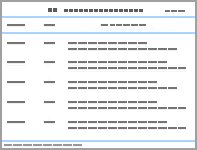
表1
UWB信号特征"
| 参数 | 说明 |
| RANGE | 标签到某个锚点的测量距离 |
| RSS_FP | 第一路径峰值的RSS |
| FP_INDEX | CIR序列第一路径峰值的采样点索引值 |
| FP_POINT1 | 第一路径峰值所在索引位置的信号幅度值 |
| FP_POINT2 | 第一路径峰值索引+2处的信号幅度值 |
| FP_POINT3 | 第一路径峰值索引+3处的信号幅度值 |
| STDEV_NOISE | 噪声的标准差 |
| MAX_NOISE | 测量到的最大噪声幅值 |
| CIR_POWER | CIR的总功率 |

图1
定位方案"

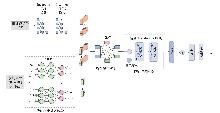
图2
GAT-TTN模型框架"
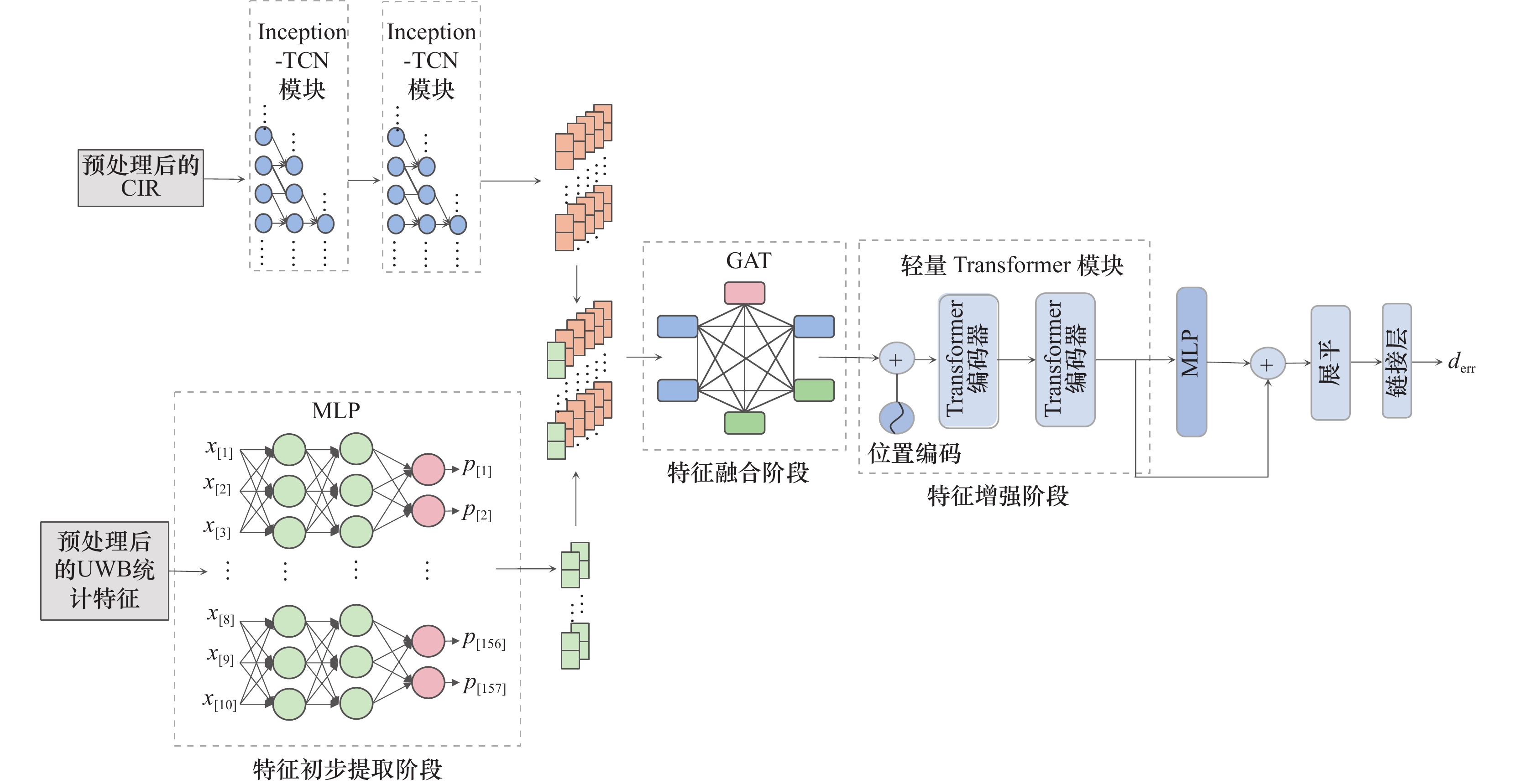
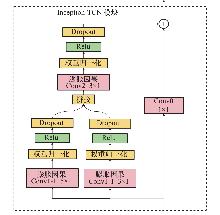
图3
Inception-TCN 模块模型框架"
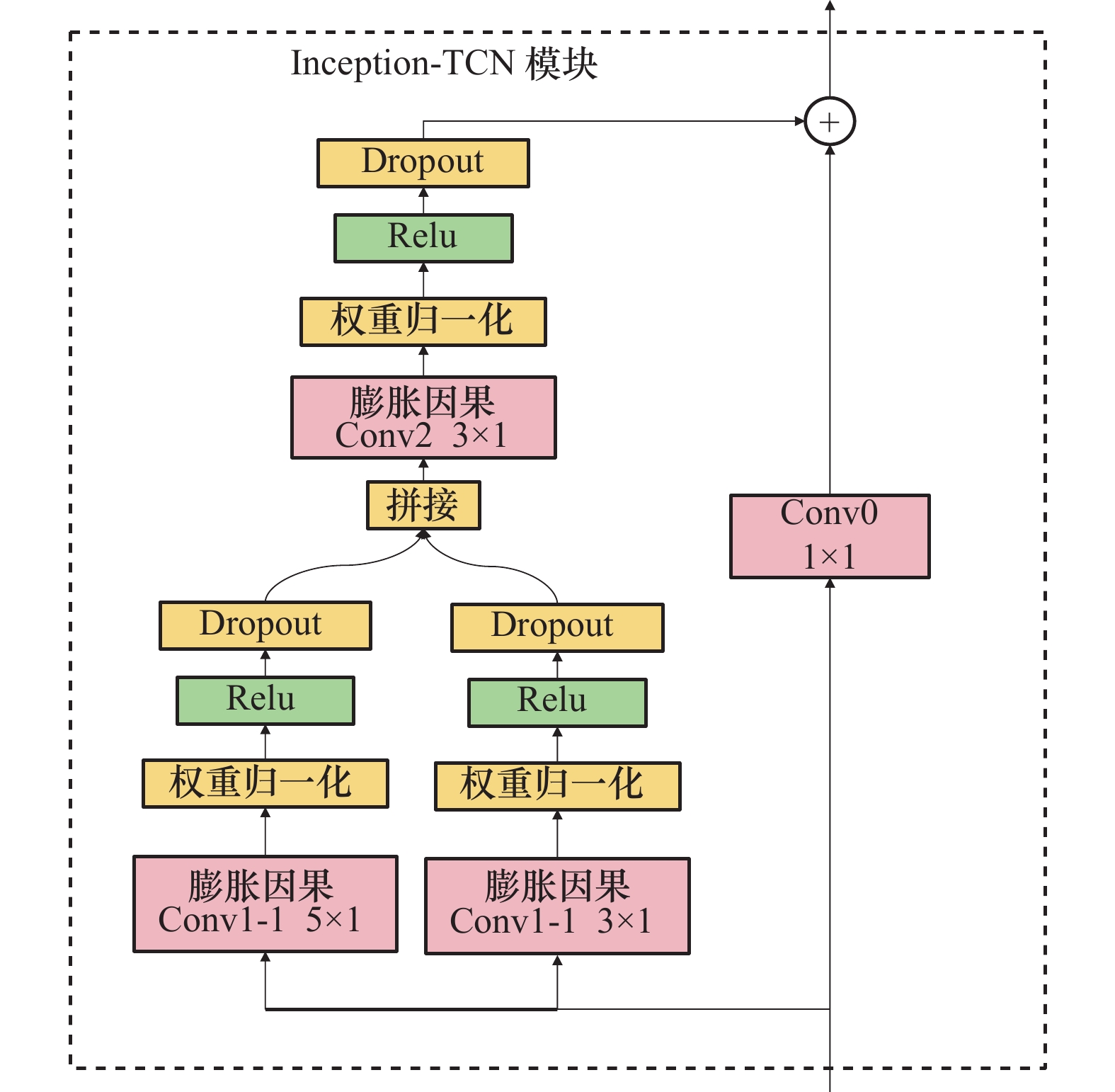
图4
膨胀因果卷积"
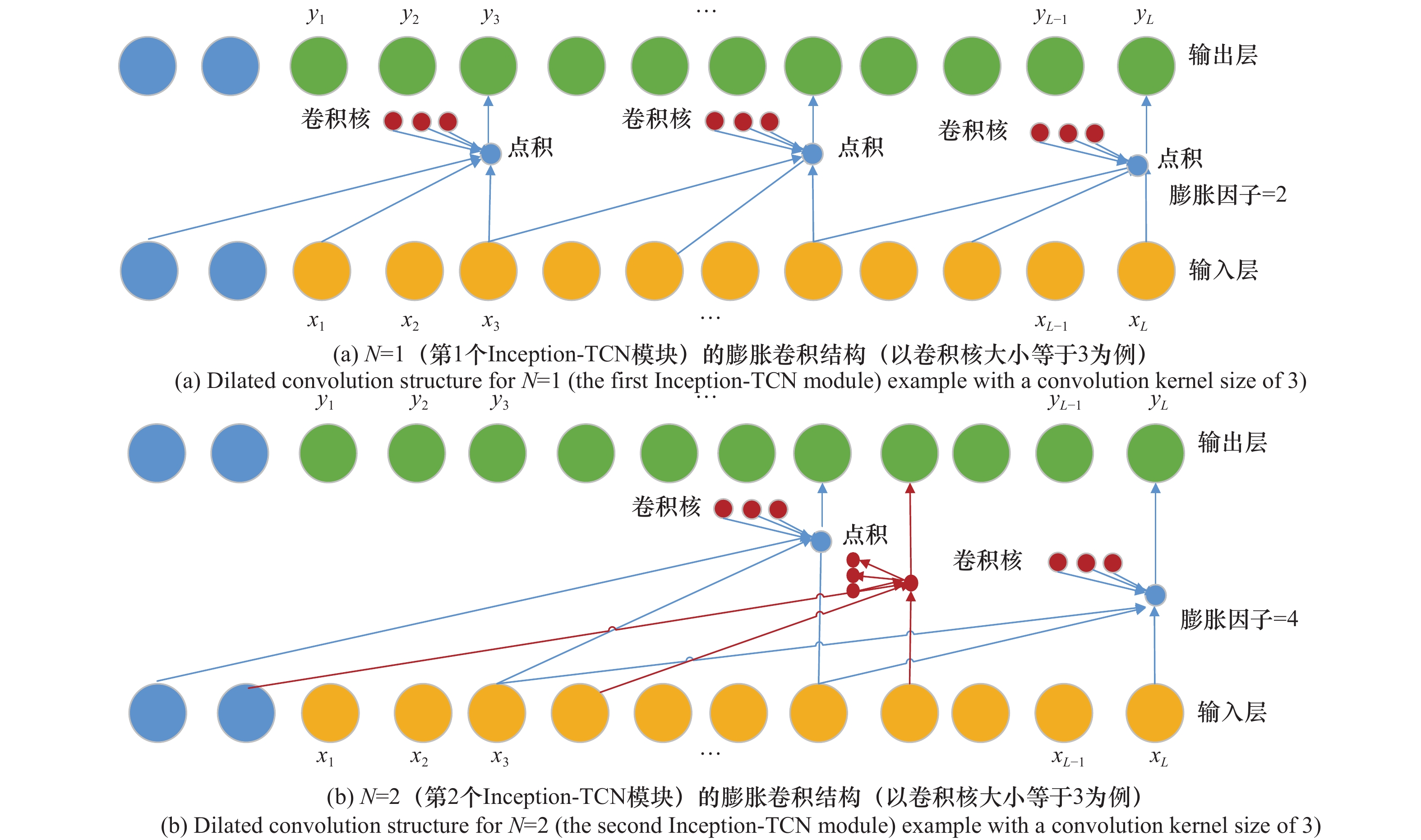
图5
MLP1结构"
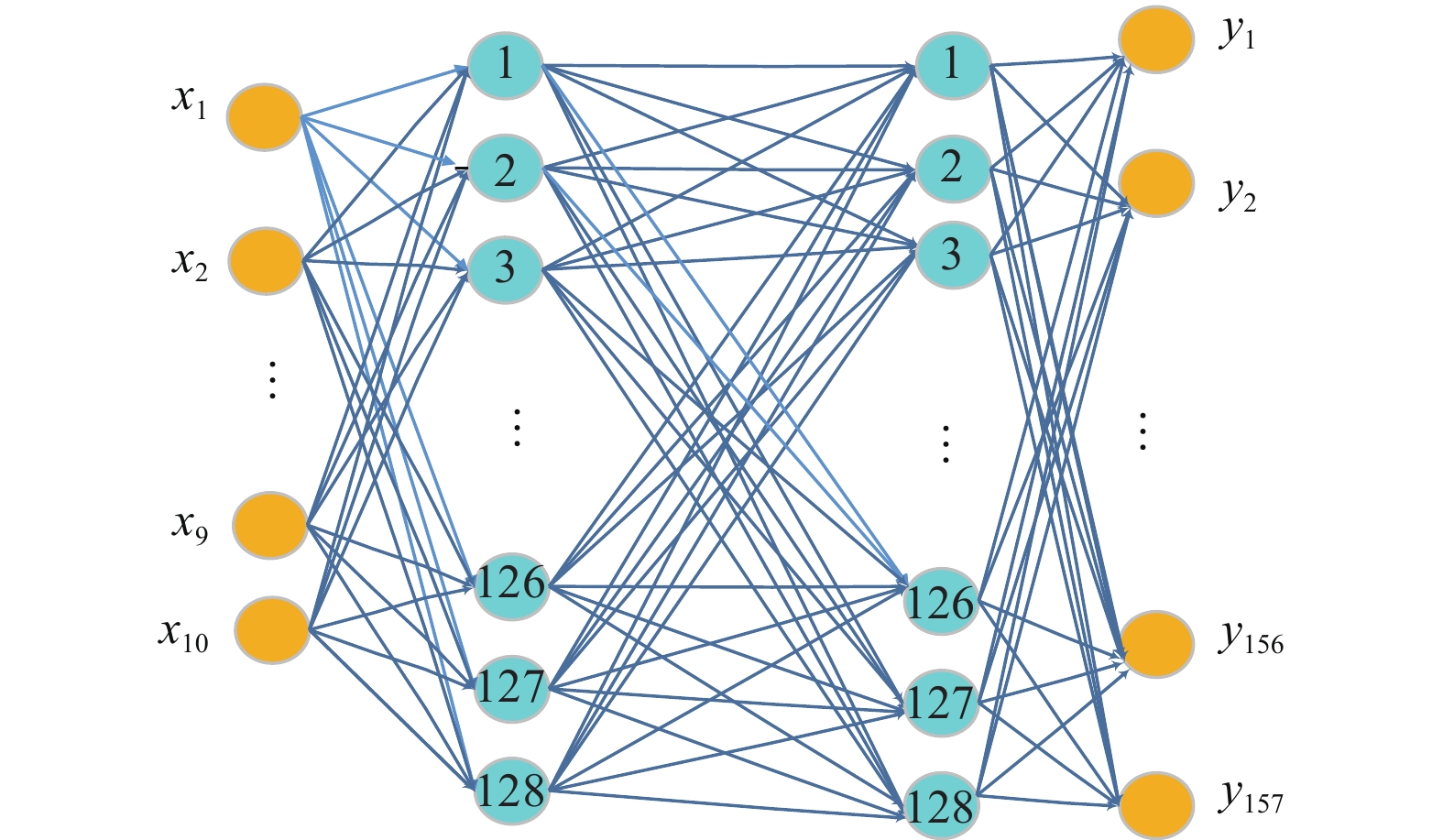
图6
MLP2结构"
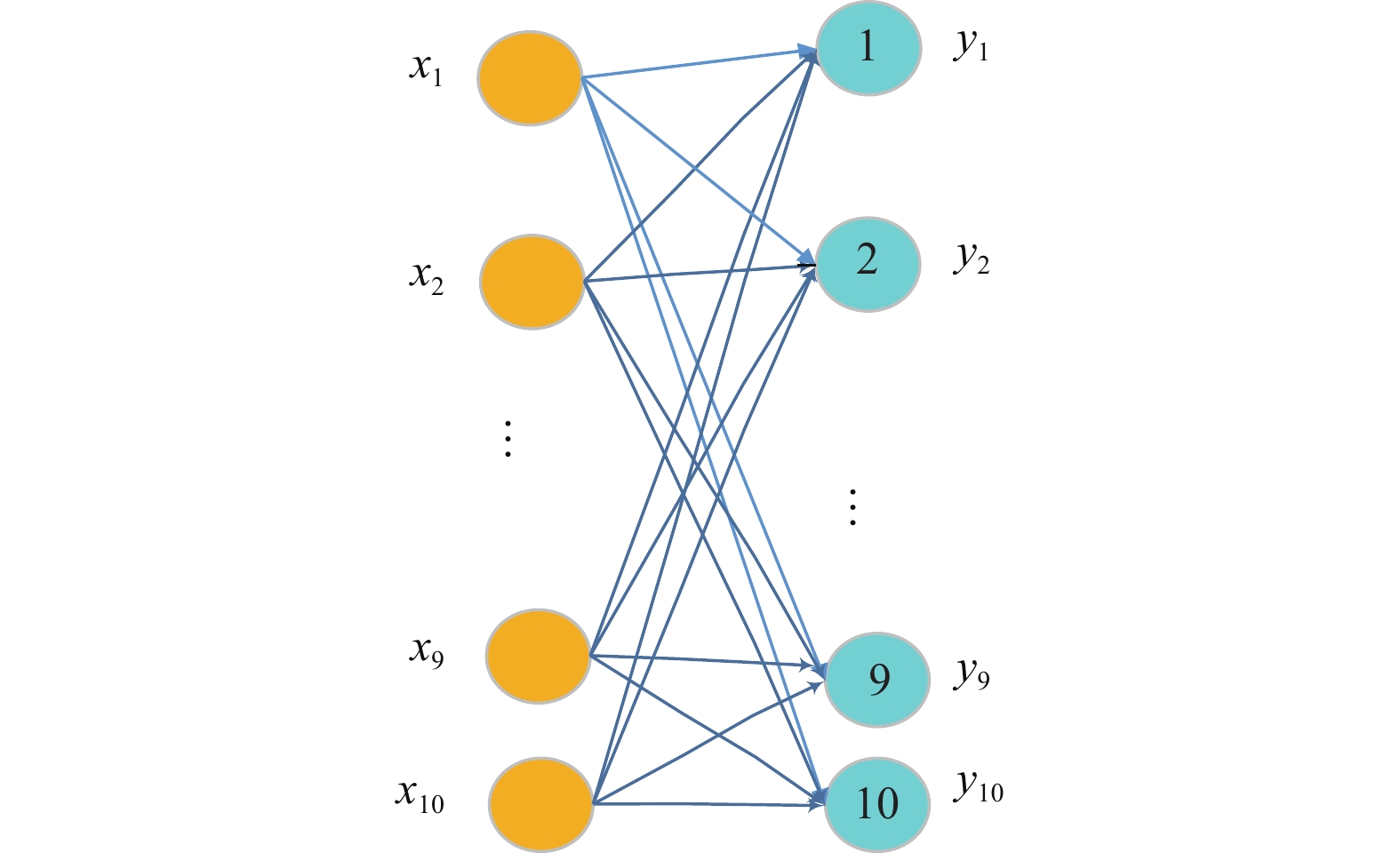
图7
预处理后的CIR序列"
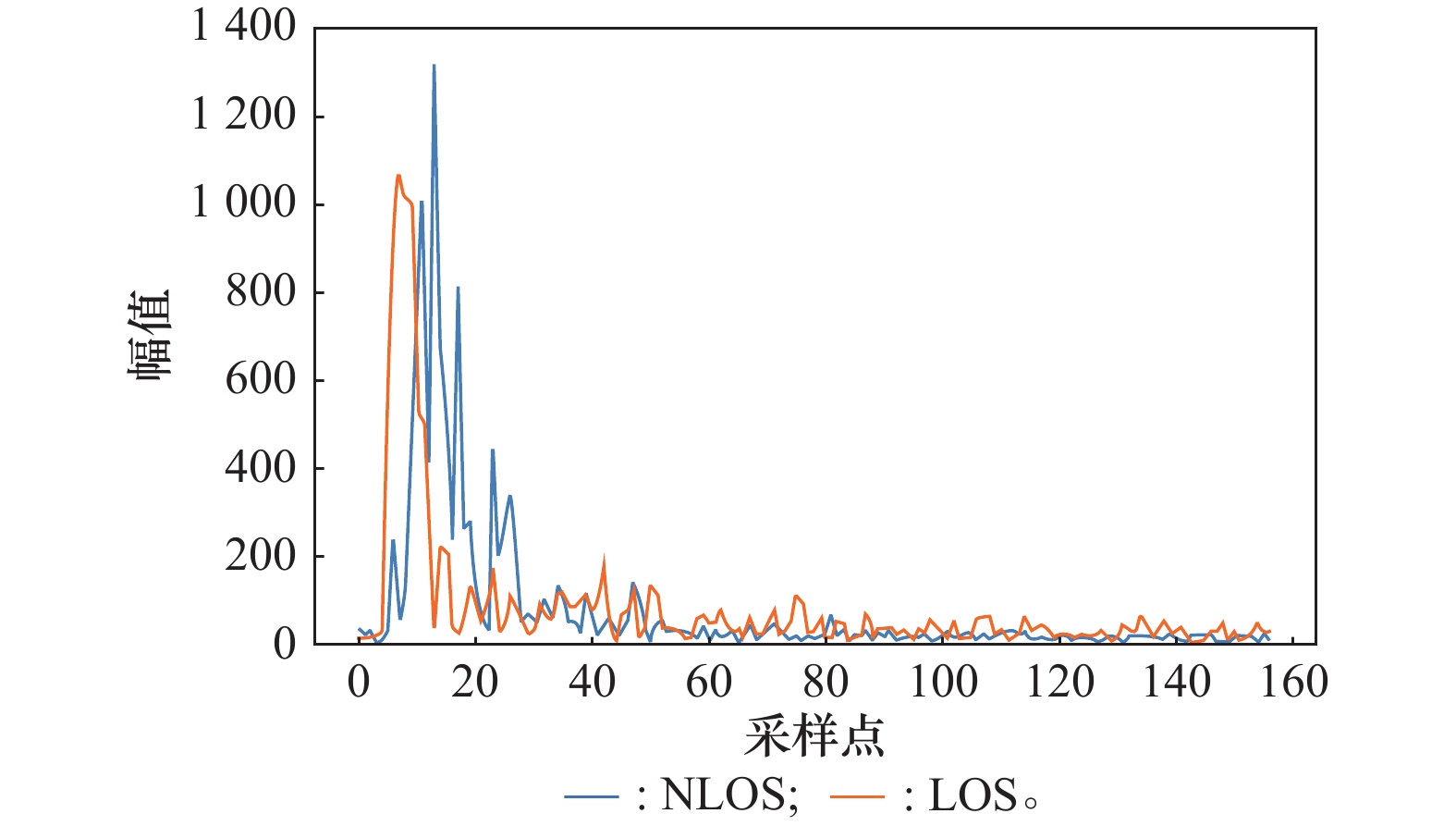
表2
GAT-TTN网络结构及参数"
| 网络结构 | 参数类型 | 参数值 |
| Conv0 | 卷积核 | 1×1 |
| 输入 | 157×8 | |
| 输出 | 157×8 | |
| 膨胀因果Conv1-1 | 卷积核 | 5×1 |
| 输入 | 157×8 | |
| 输出 | 157×8 | |
| 膨胀率 | 2N | |
| 填充 | (卷积核大小−1)×膨胀率 | |
| 膨胀因果Conv1-2 &Conv2 | 卷积核 | 3×1 |
| 输入 | 157×8 | |
| 输出 | 157×8 | |
| 膨胀率 | 2N | |
| 填充 | (卷积核大小−1)×膨胀率 | |
| MLP1 | 输入 | 10 |
| 输出 | 157 | |
| 隐藏层神经元 | 128 | |
| 隐藏层数 | 2 | |
| MPL2 | 输入 | 157×10 |
| 输出 | 157×10 | |
| GATConv | 输入 | 157×10 |
| 节点 | 10 | |
| 输出 | 157×10 | |
| Tranformer 编码器 | 层数 | 2 |
| 输入 | 157×10 | |
| 自注意力头数 | 2 | |
| 前馈神经网络维度 | 32 |
表3
超参数配置"
| 参数类型 | 参数值 |
| 学习率 | 0.001 |
| 优化器 | AdamW |
| 批量大小 | 128 |
| 迭代次数 | 600 |
| 早停门限值 | 45 |
| 丢失率 | 0.2/0.1 |
| 损失函数 | MSE |
表4
学习器参数配置"
| 学习器参数配置 | 参数值 |
| 忍耐度 | 30 |
| 学习率下降比例 | 0.5 |
| 学习器类型 | ReduceLROnPlateau |
图8
环境0(公寓)不同模型测距误差对比"
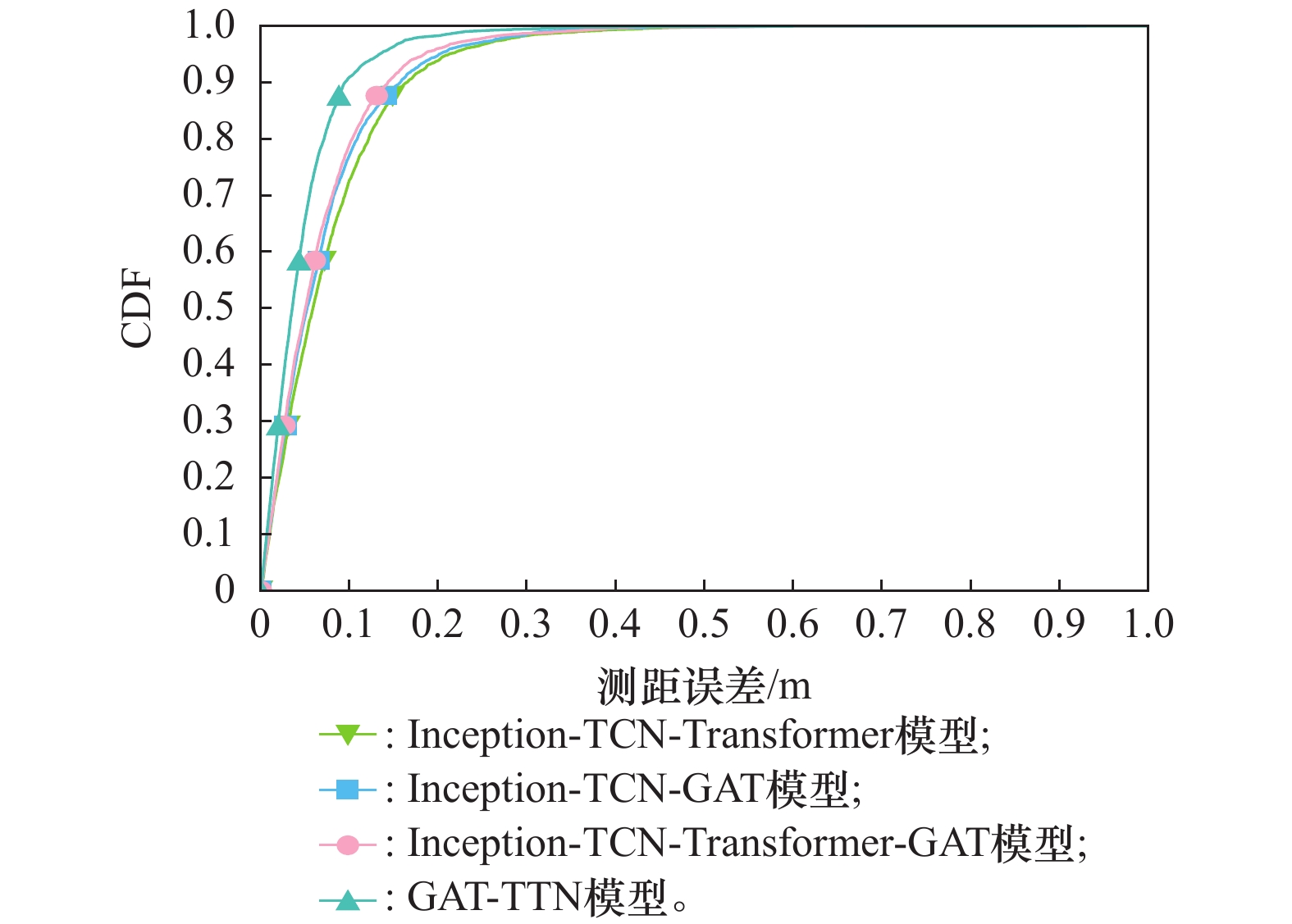
图9
环境1(小公寓)不同模型测距误差对比"
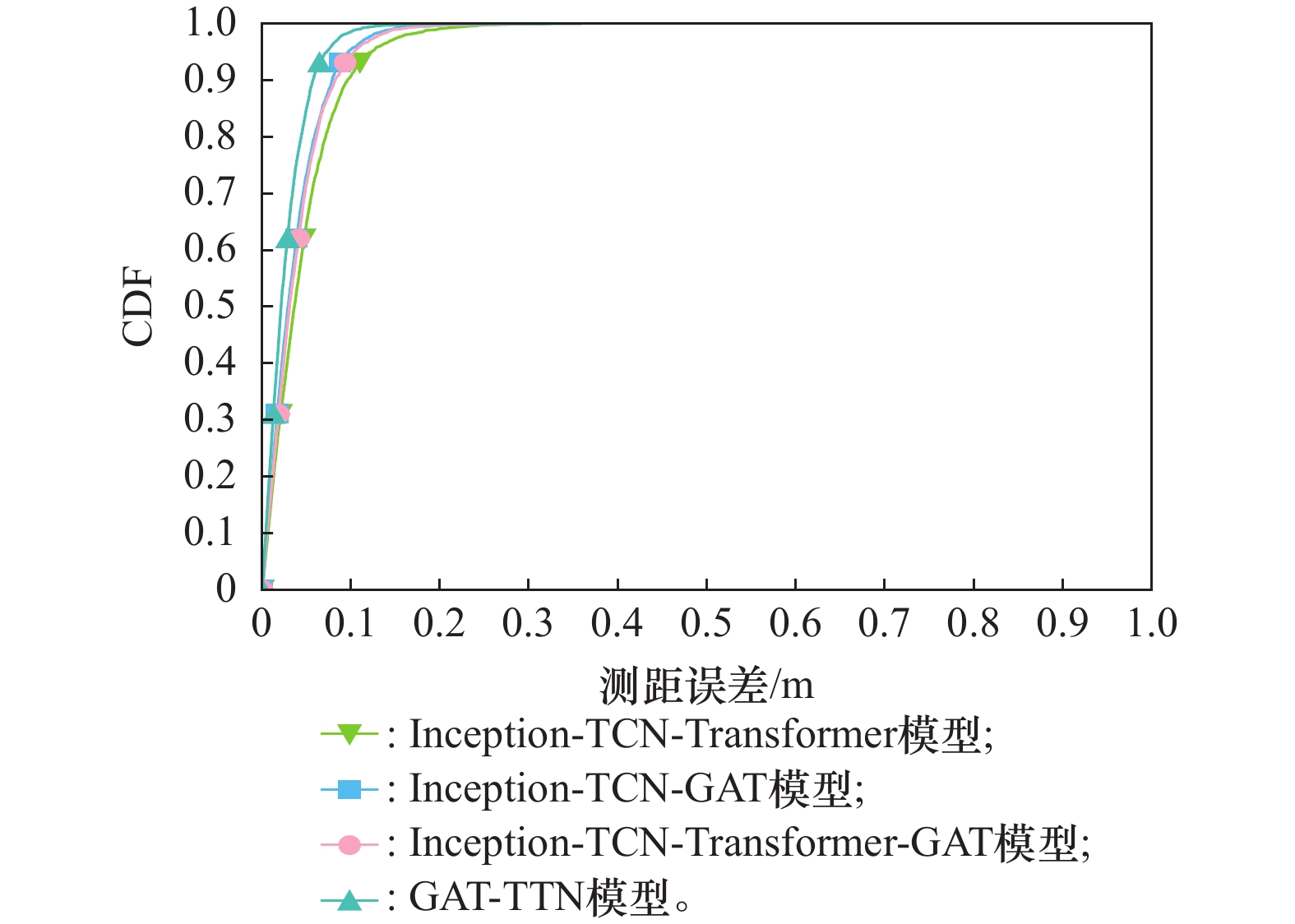
图10
环境2(车间)不同模型测距误差对比"
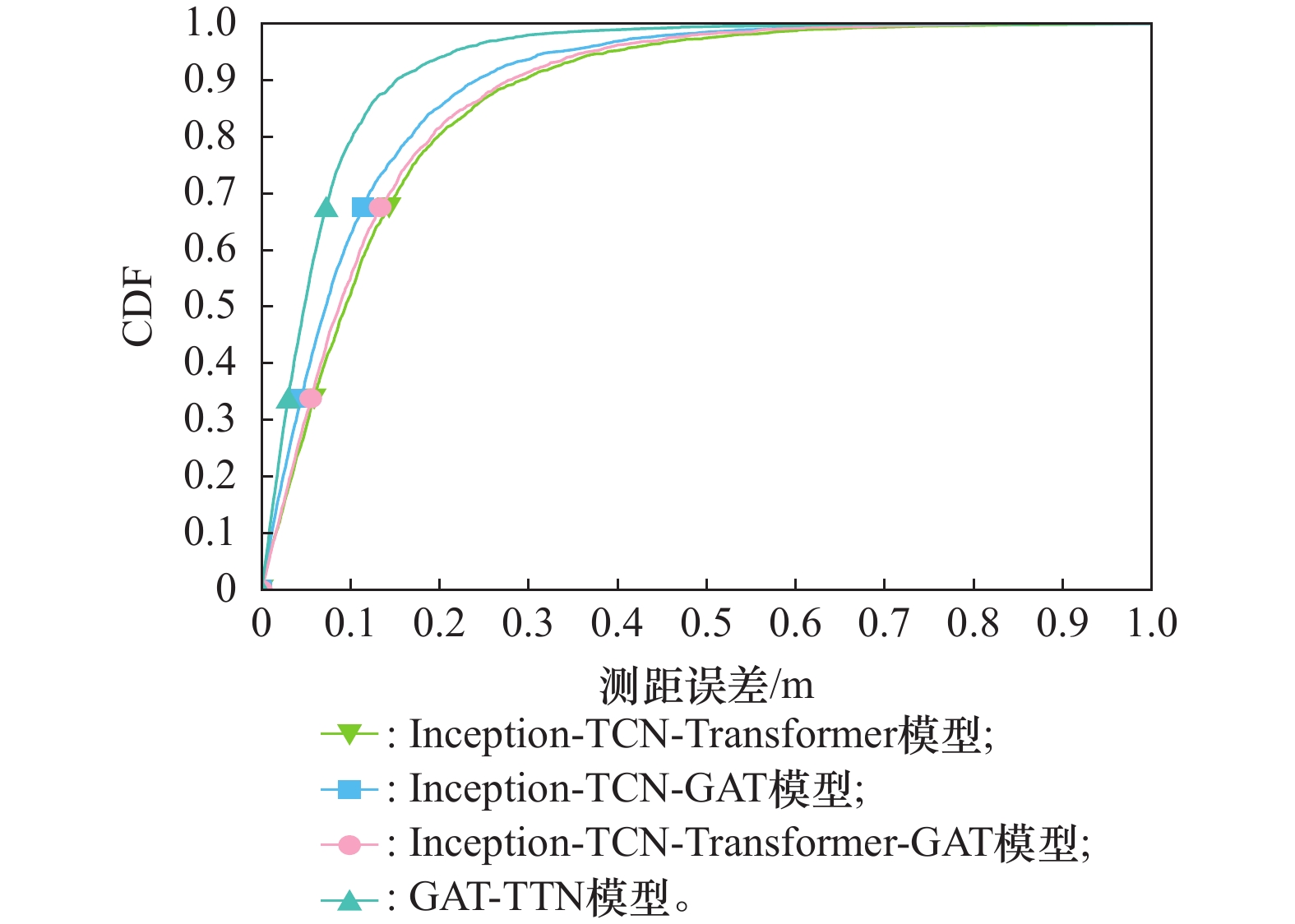
图11
环境3(办公室)不同模型测距误差对比"
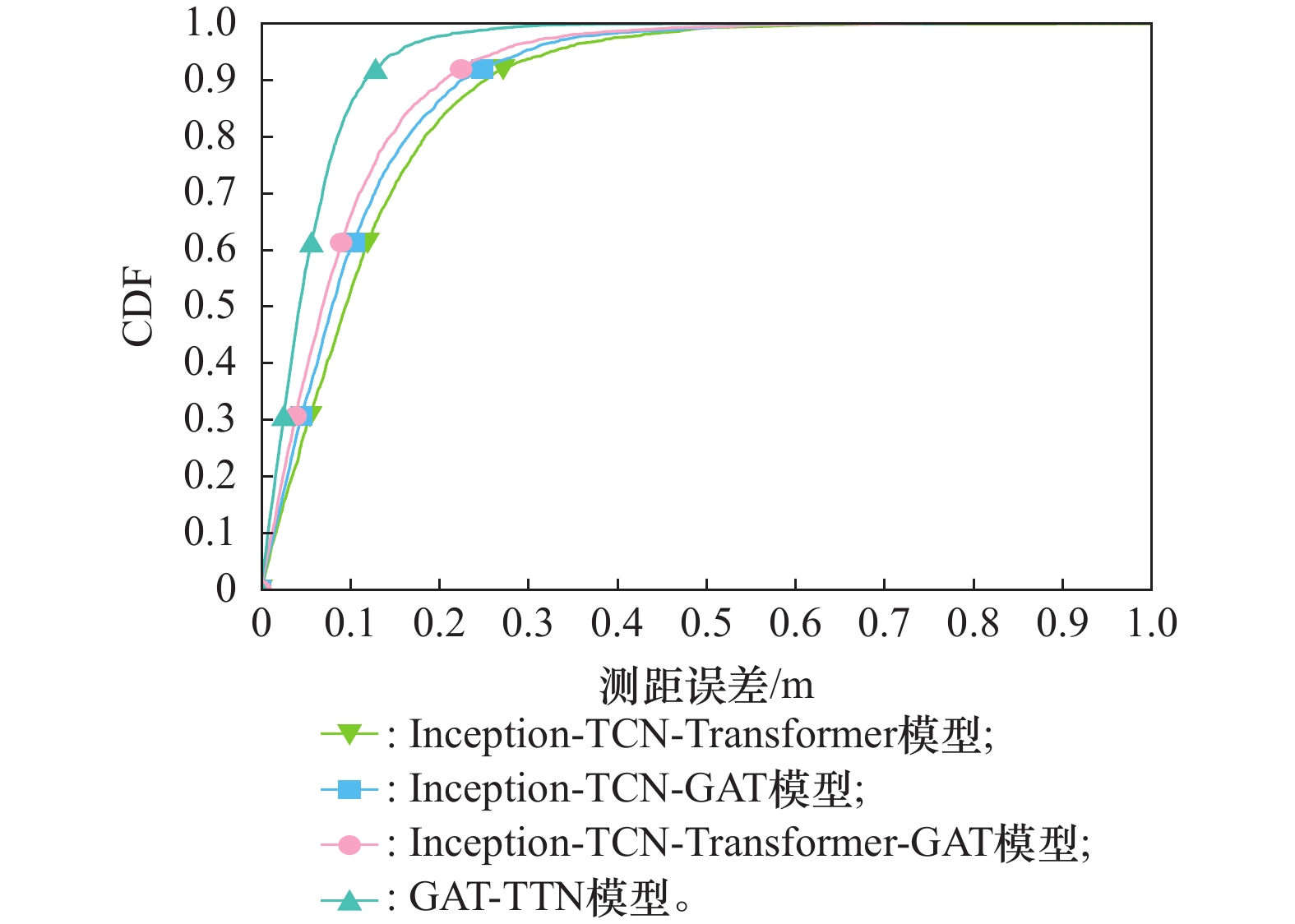
表5
不同融合架构测距误差"
| 环境 | 模型 | CDF=67% | CDF=90% |
| 0 | Inception-TCN-Transformer | 0.09 | 0.16 |
| Inception-TCN-GAT | 0.08 | 0.16 | |
| Inception-TCN-Transformer-GAT | 0.07 | 0.14 | |
| GAT-TTN | 0.05 | 0.09 | |
| 1 | Inception-TCN-Transformer | 0.05 | 0.10 |
| Inception-TCN-GAT | 0.04 | 0.08 | |
| Inception-TCN-Transformer-GAT | 0.05 | 0.08 | |
| GAT-TTN | 0.03 | 0.06 | |
| 2 | Inception-TCN-Transformer | 0.14 | 0.29 |
| Inception-TCN-GAT | 0.11 | 0.24 | |
| Inception-TCN-Transformer-GAT | 0.13 | 0.28 | |
| GAT-TTN | 0.07 | 0.15 | |
| 3 | Inception-TCN-Transformer | 0.14 | 0.25 |
| Inception-TCN-GAT | 0.12 | 0.22 | |
| Inception-TCN-Transformer-GAT | 0.10 | 0.21 | |
| GAT-TTN | 0.07 | 0.12 |
图12
环境0(公寓)测距误差"
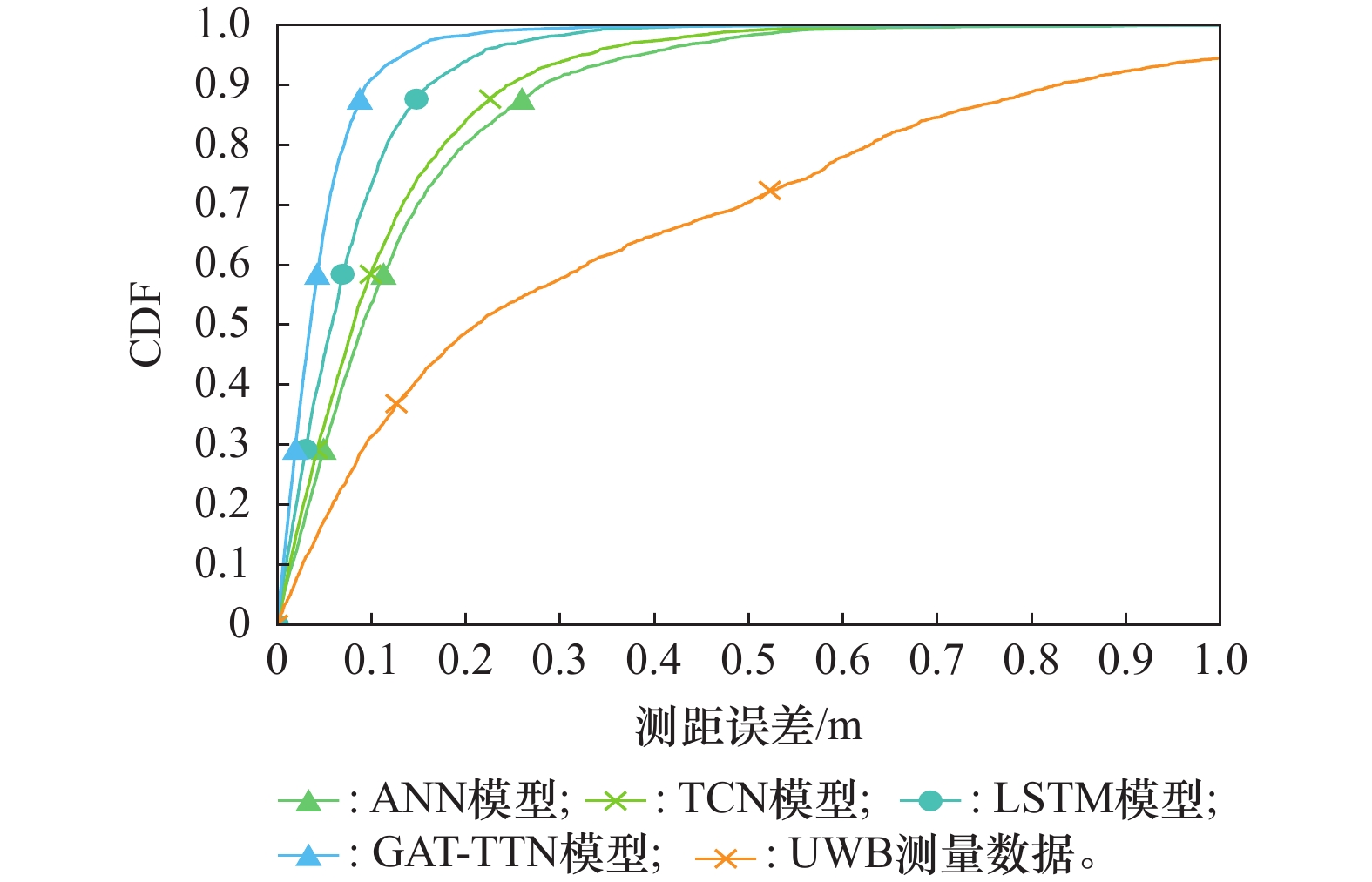
图13
环境1(小公寓)测距误差"
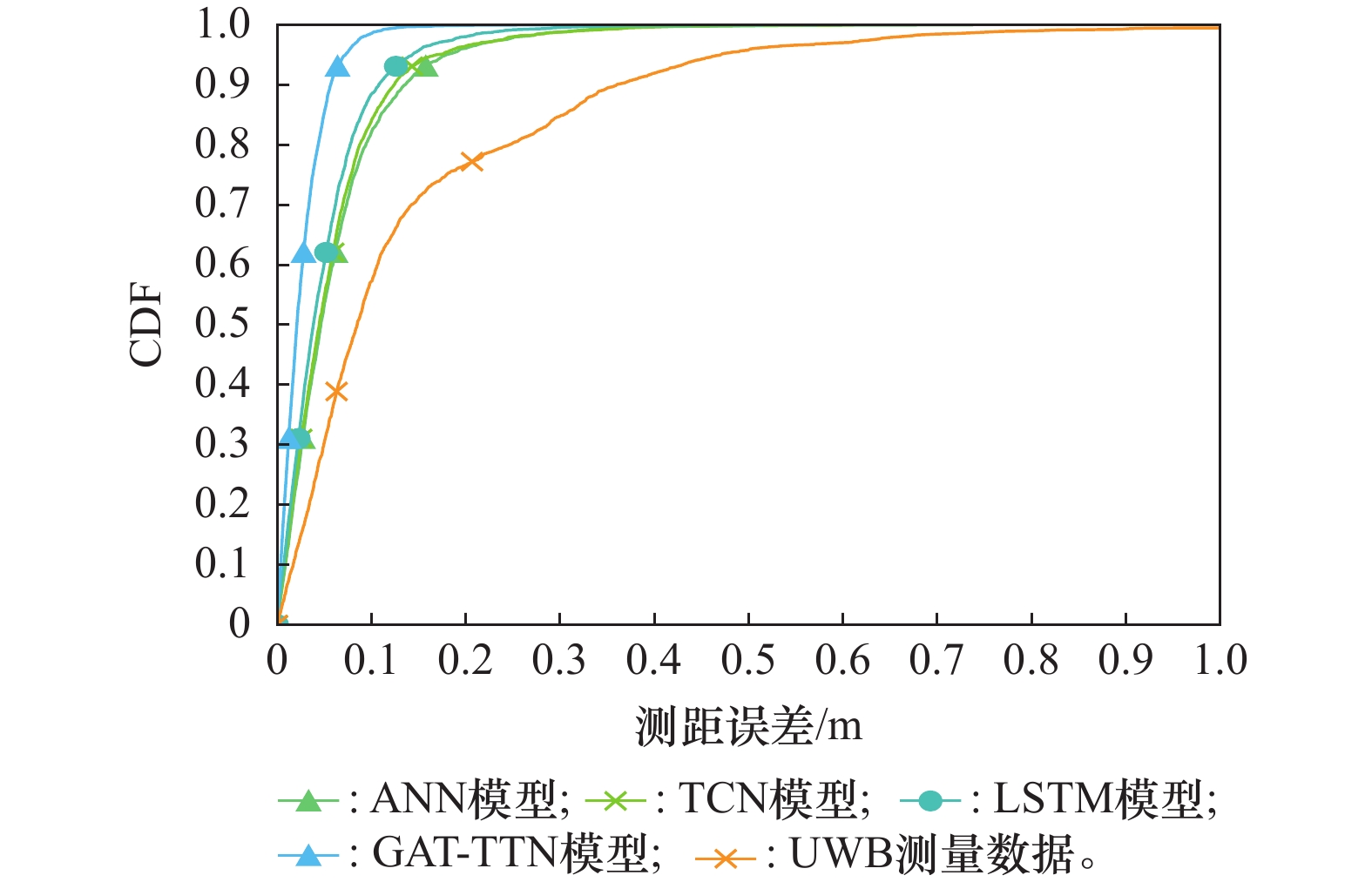
图14
环境2(车间)测距误差"
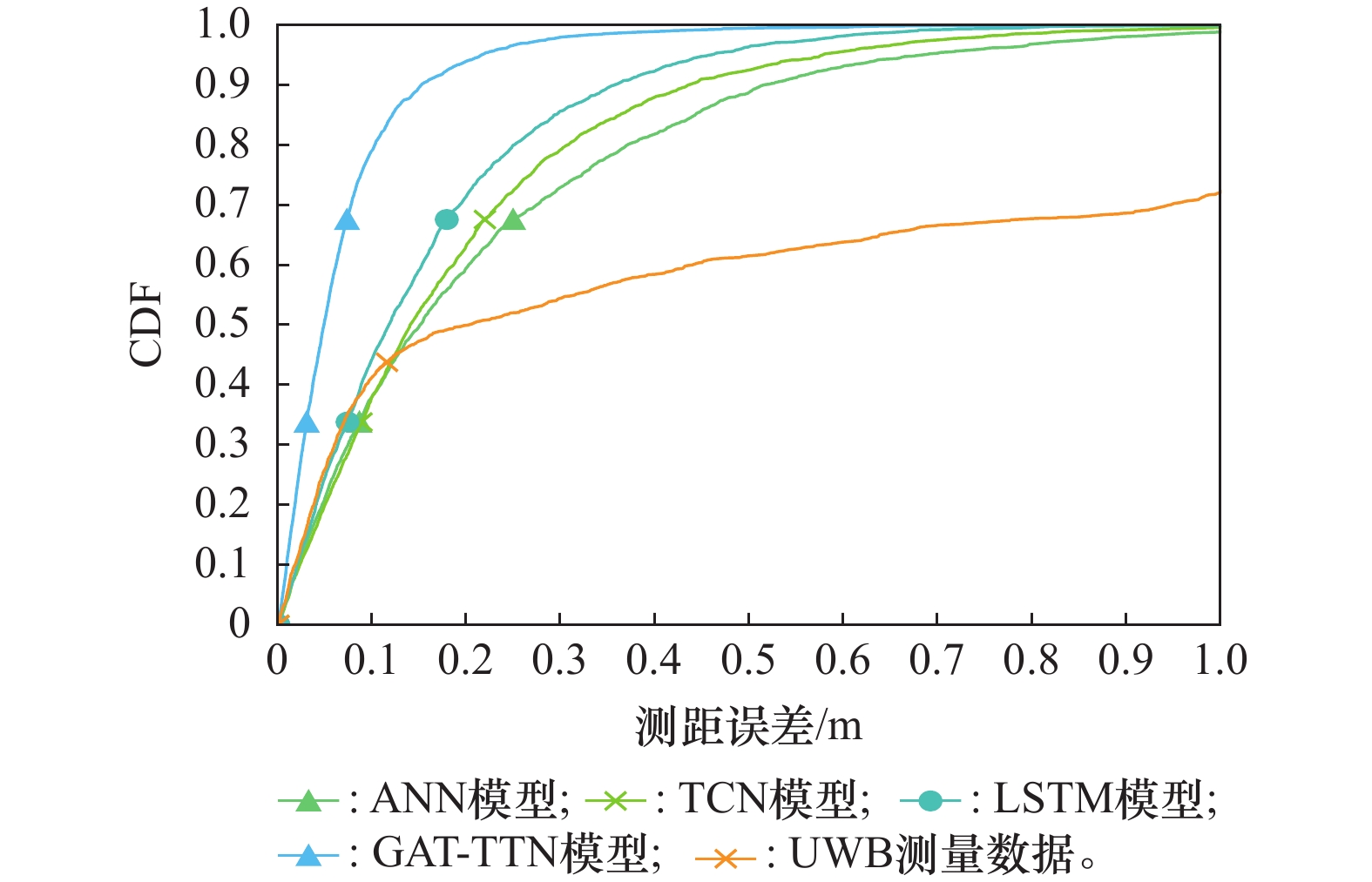
图15
环境3(办公室)测距误差"
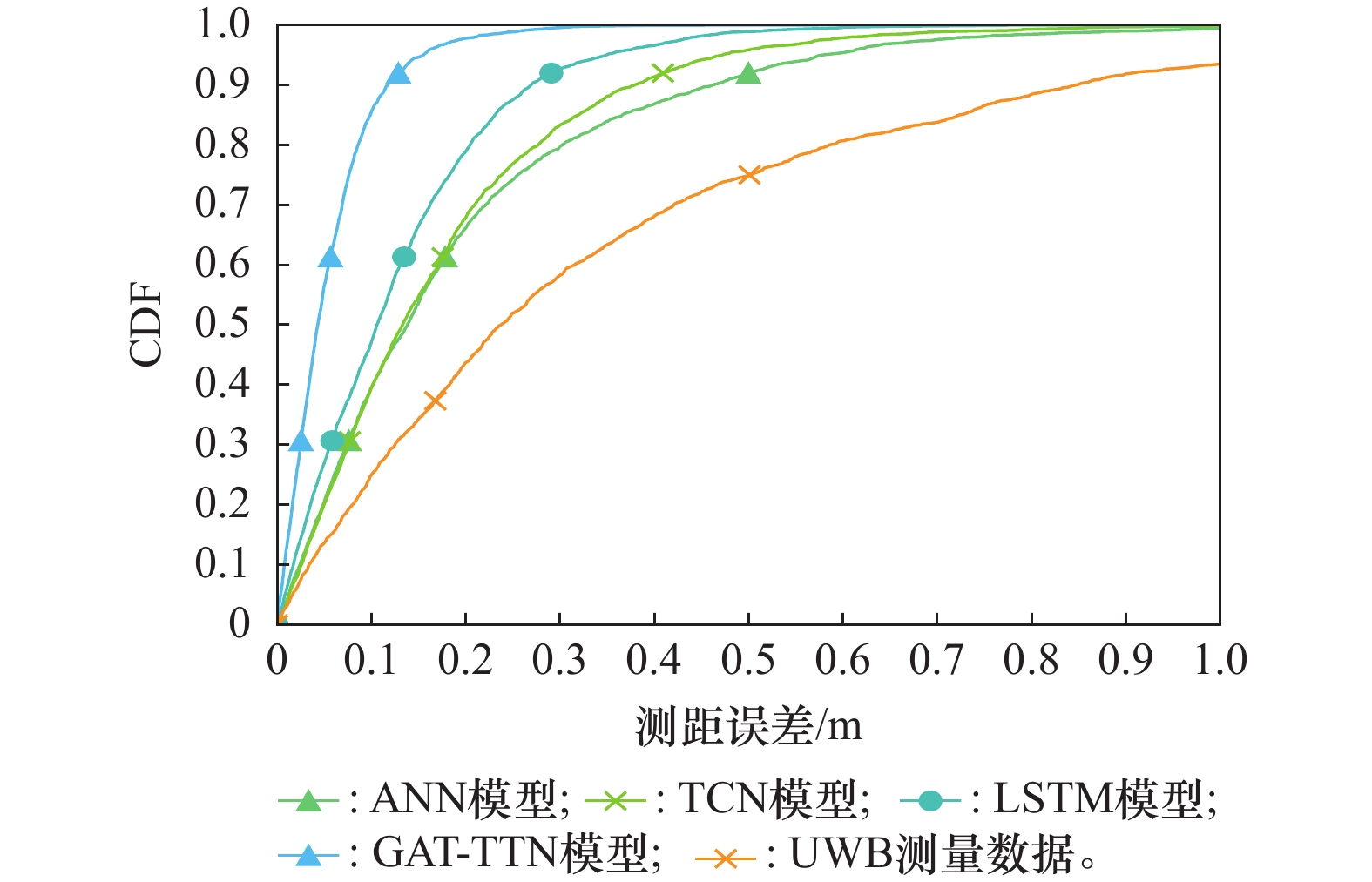
表6
测距误差统计特性"
| 环境 | 模型 | CDF=67% | CDF=90% |
| 0(公寓) | 真实误差 | 0.44 | 0.83 |
| ANN | 0.14 | 0.28 | |
| TCN | 0.12 | 0.25 | |
| LSTM | 0.09 | 0.16 | |
| GAT-TTN | 0.05 | 0.09 | |
| 1(小公寓) | 真实误差 | 0.13 | 0.36 |
| ANN | 0.07 | 0.14 | |
| TCN | 0.07 | 0.12 | |
| LSTM | 0.06 | 0.11 | |
| GAT-TTN | 0.03 | 0.06 | |
| 2(车间) | 真实误差 | 0.74 | 1.72 |
| ANN | 0.24 | 0.52 | |
| TCN | 0.21 | 0.44 | |
| LSTM | 0.18 | 0.36 | |
| GAT-TTN | 0.07 | 0.15 | |
| 3(办公室) | 真实误差 | 0.39 | 0.85 |
| ANN | 0.20 | 0.46 | |
| TCN | 0.20 | 0.38 | |
| LSTM | 0.15 | 0.27 | |
| GAT-TTN | 0.07 | 0.12 |
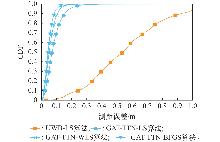
图16
环境0(公寓)定位误差"
图17
环境1(小公寓)定位误差"
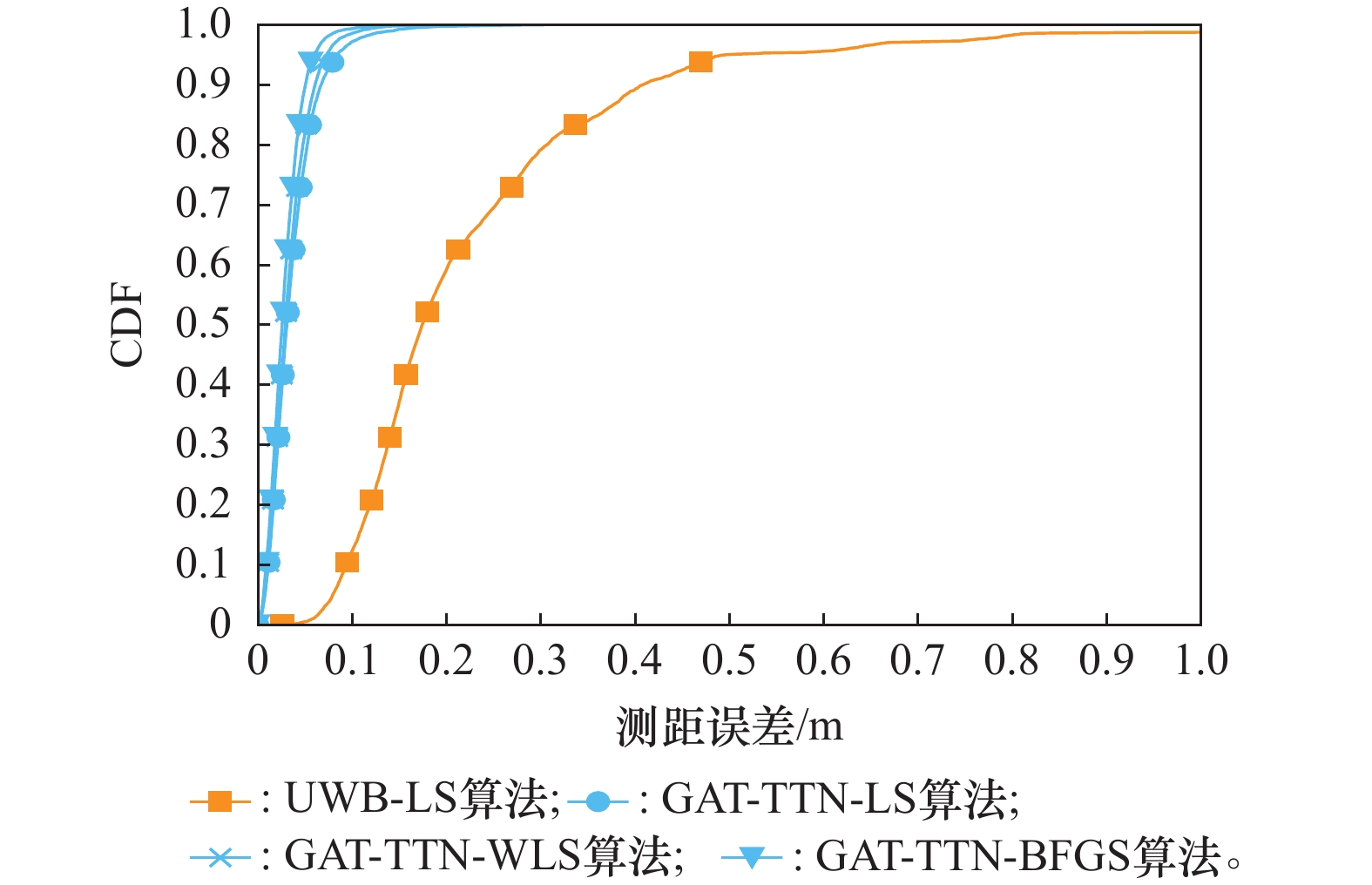
图18
环境2(车间)定位误差"
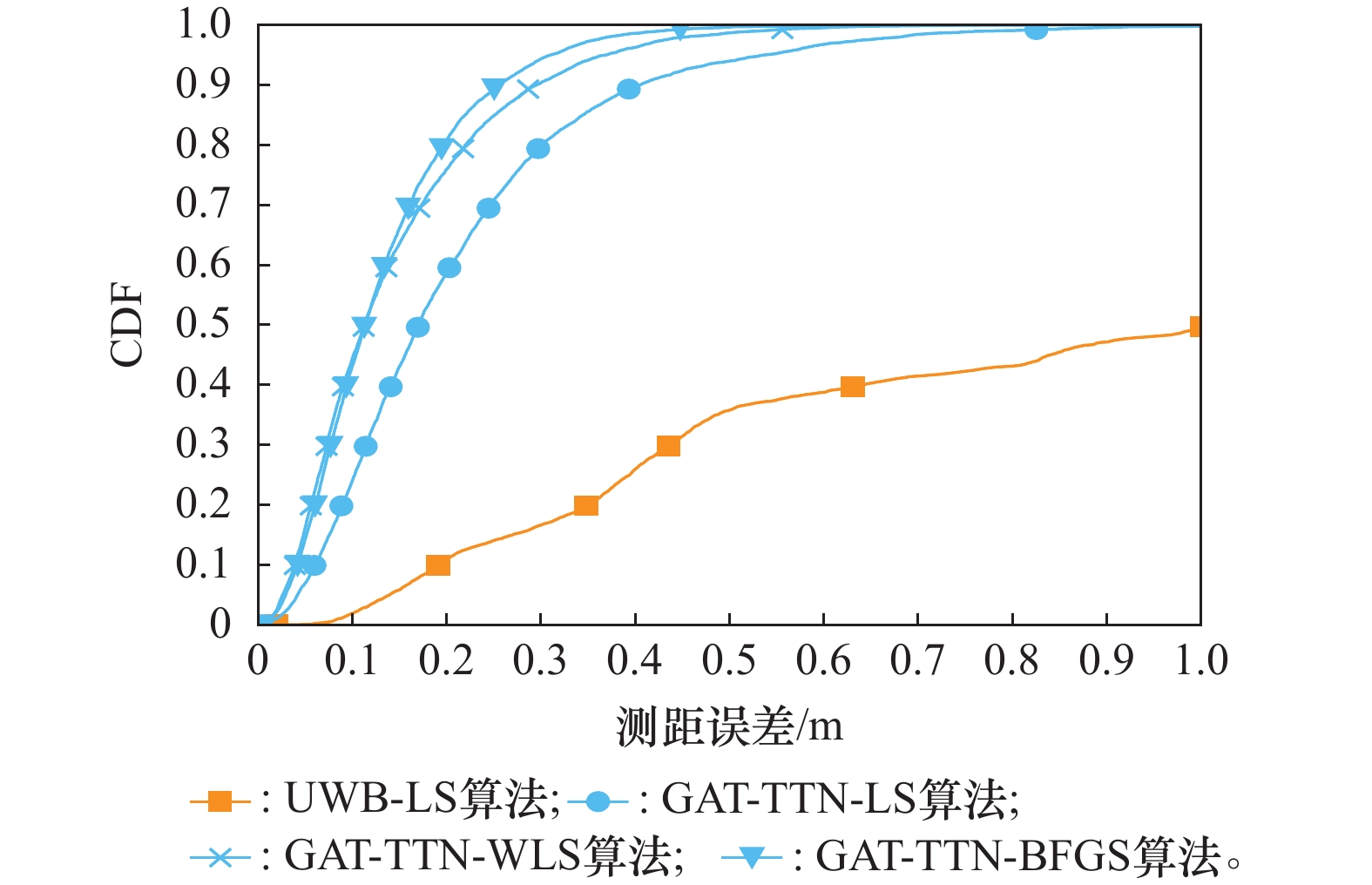
图19
环境3(办公室)定位误差"
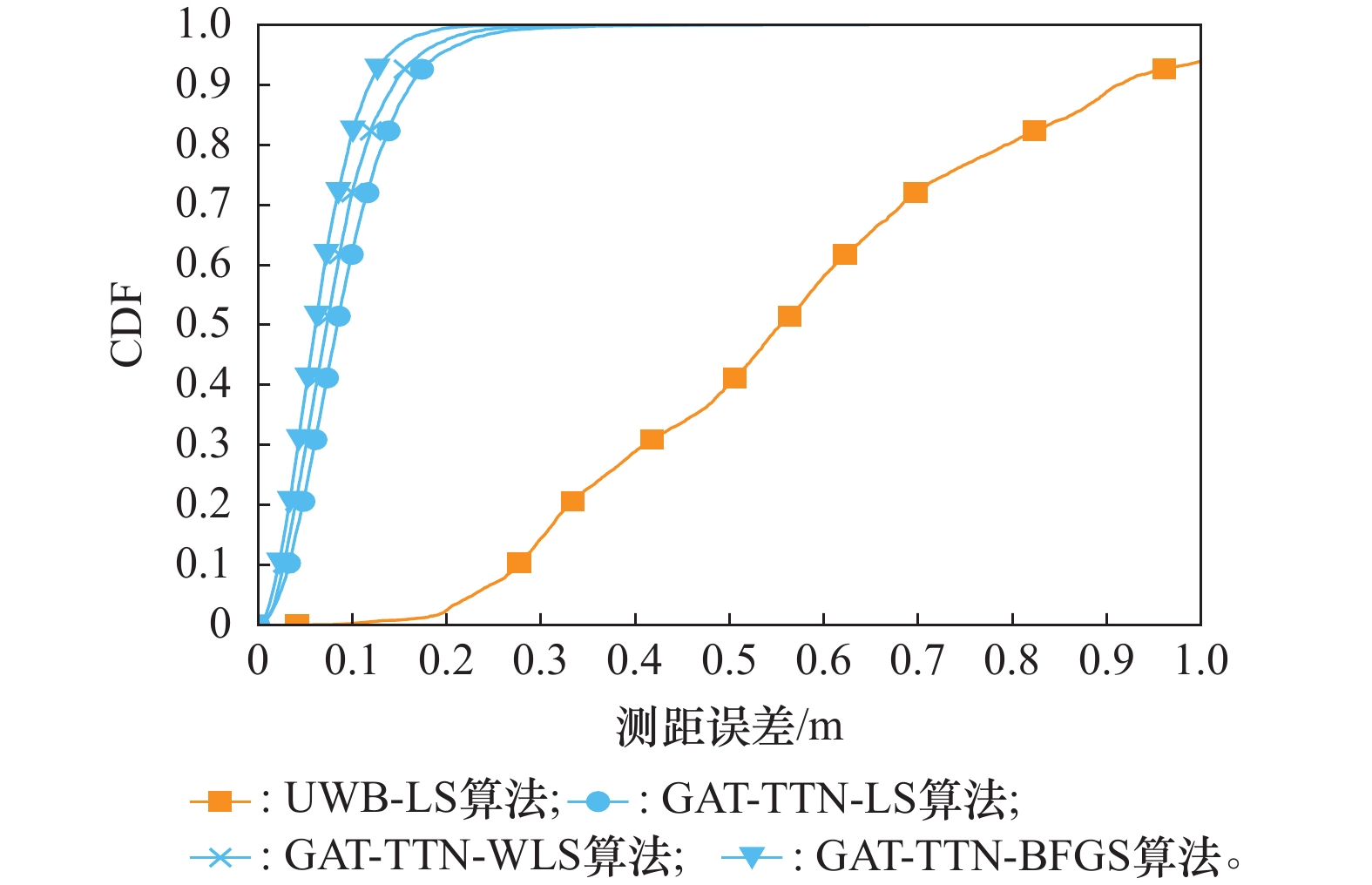
表7
定位误差统计特性"
| 环境 | 模型 | CDF=67% | CDF=90% |
| 0(公寓) | UWB-LS | 0.65 | 0.92 |
| GAT-TTN-LS | 0.09 | 0.15 | |
| GAT-TTN-WLS | 0.07 | 0.11 | |
| GAT-TTN-BFGS | 0.06 | 0.09 | |
| 1(小公寓) | UWB-LS | 0.24 | 0.41 |
| GAT-TTN-LS | 0.04 | 0.07 | |
| GAT-TTN-WLS | 0.04 | 0.06 | |
| GAT-TTN-BFGS | 0.03 | 0.05 | |
| 2(车间) | UWB-LS | 1.42 | 2.49 |
| GAT-TTN-LS | 0.23 | 0.42 | |
| GAT-TTN-WLS | 0.16 | 0.31 | |
| GAT-TTN-BFGS | 0.15 | 0.25 | |
| 3(办公室) | UWB-LS | 0.66 | 0.92 |
| GAT-TTN-LS | 0.11 | 0.17 | |
| GAT-TTN-WLS | 0.09 | 0.14 | |
| GAT-TTN-BFGS | 0.08 | 0.12 |
图20
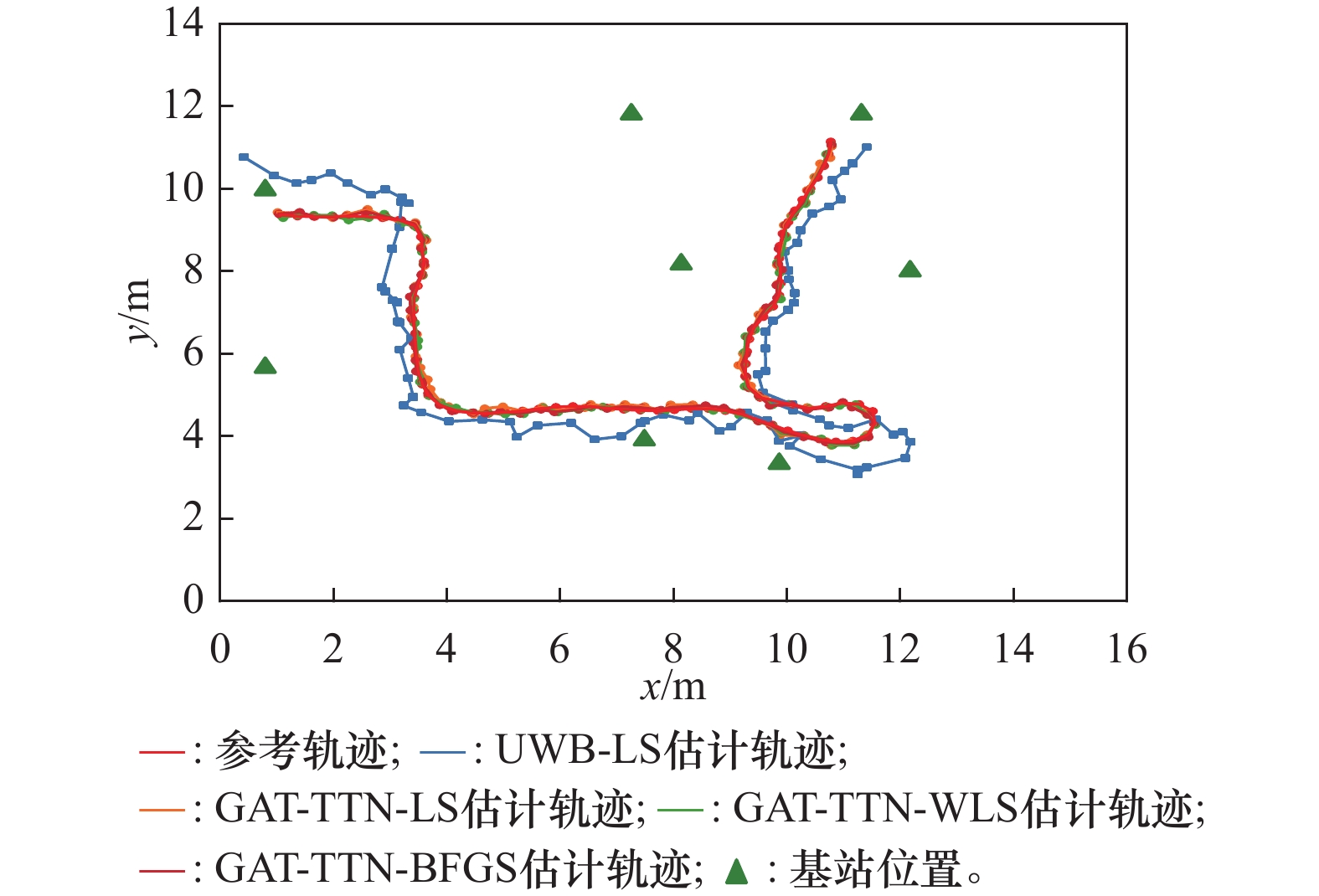
环境0(公寓)定位轨迹"
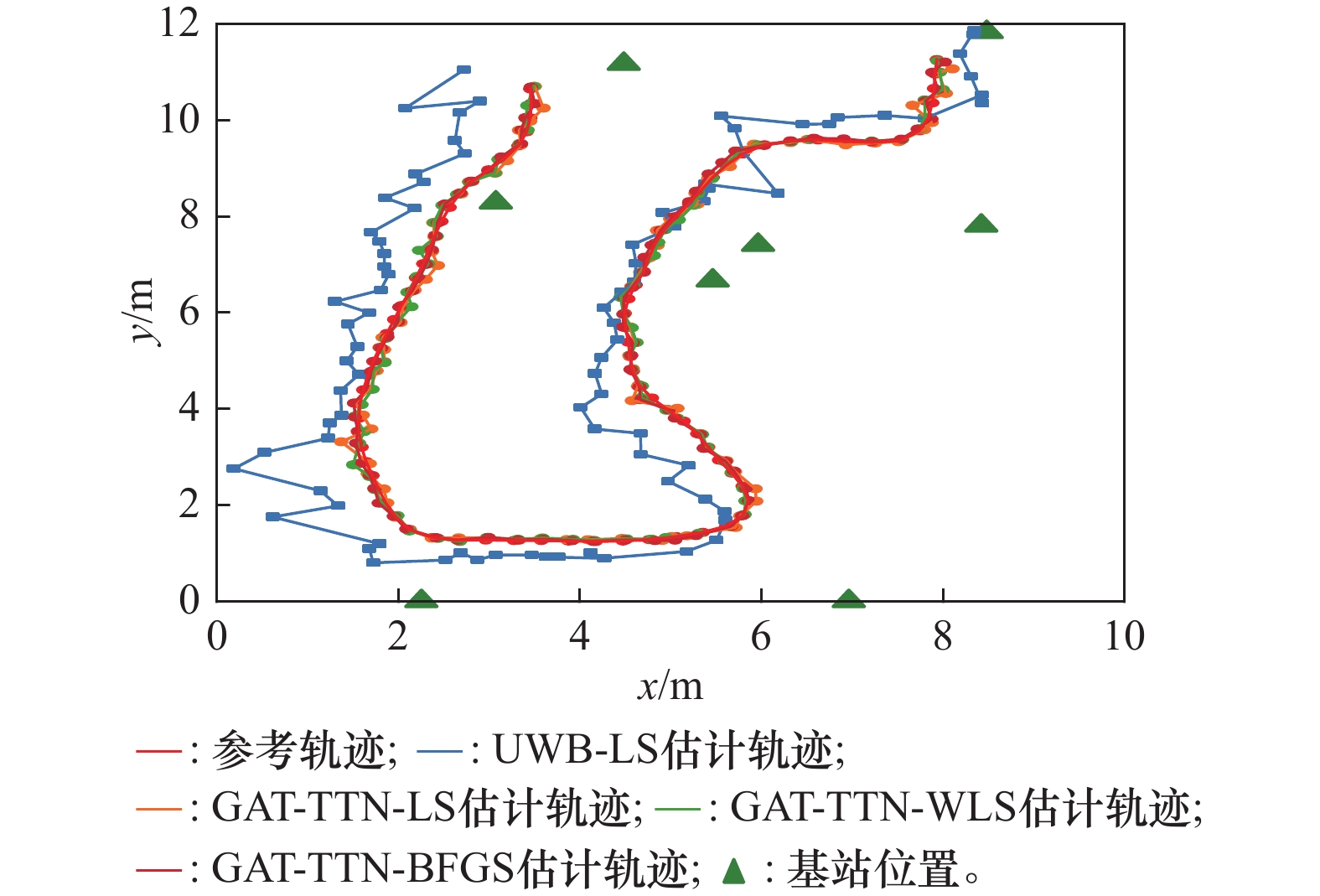
图21
环境1(小公寓)定位轨迹"
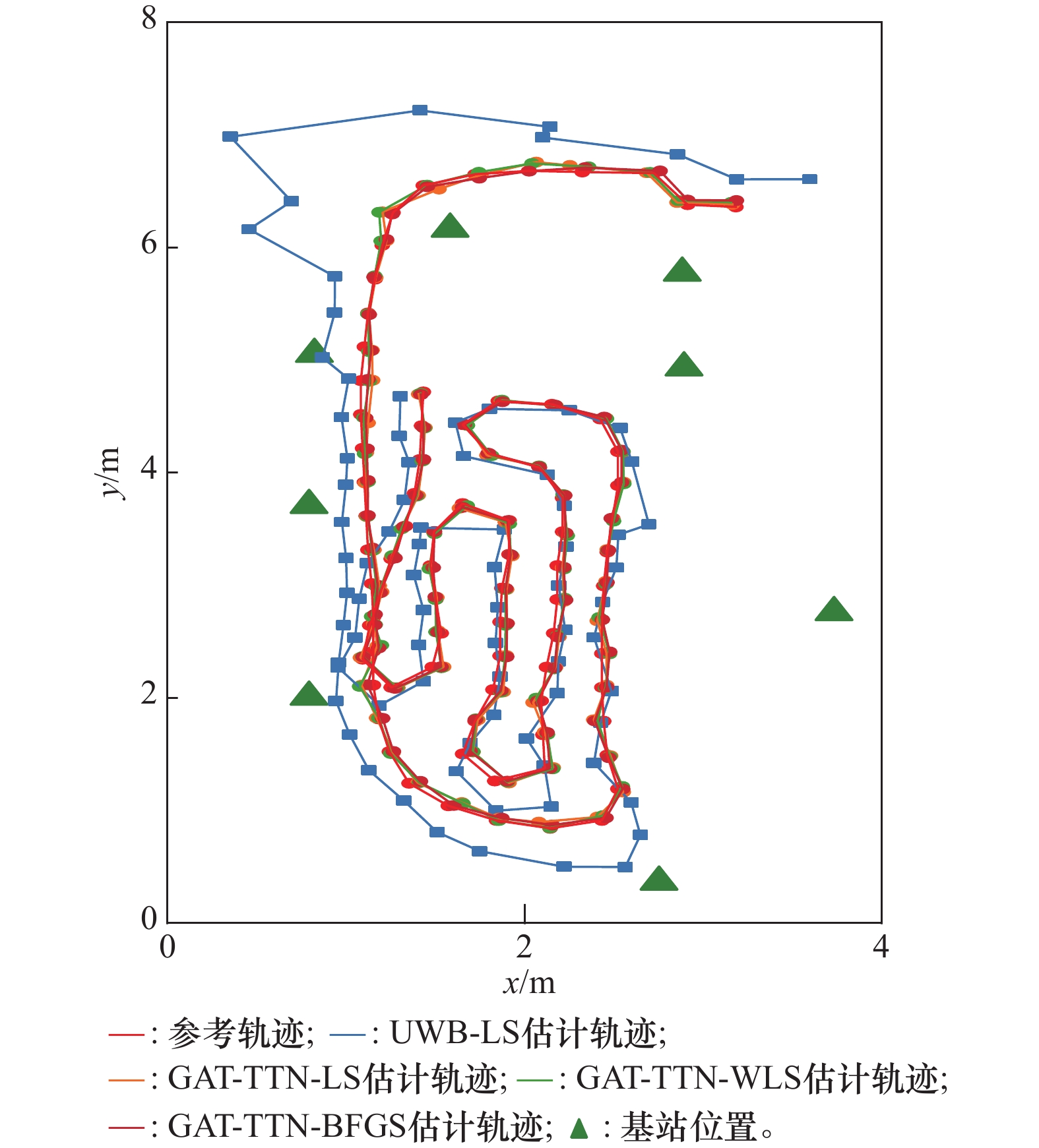
图22
环境2(车间)定位轨迹"
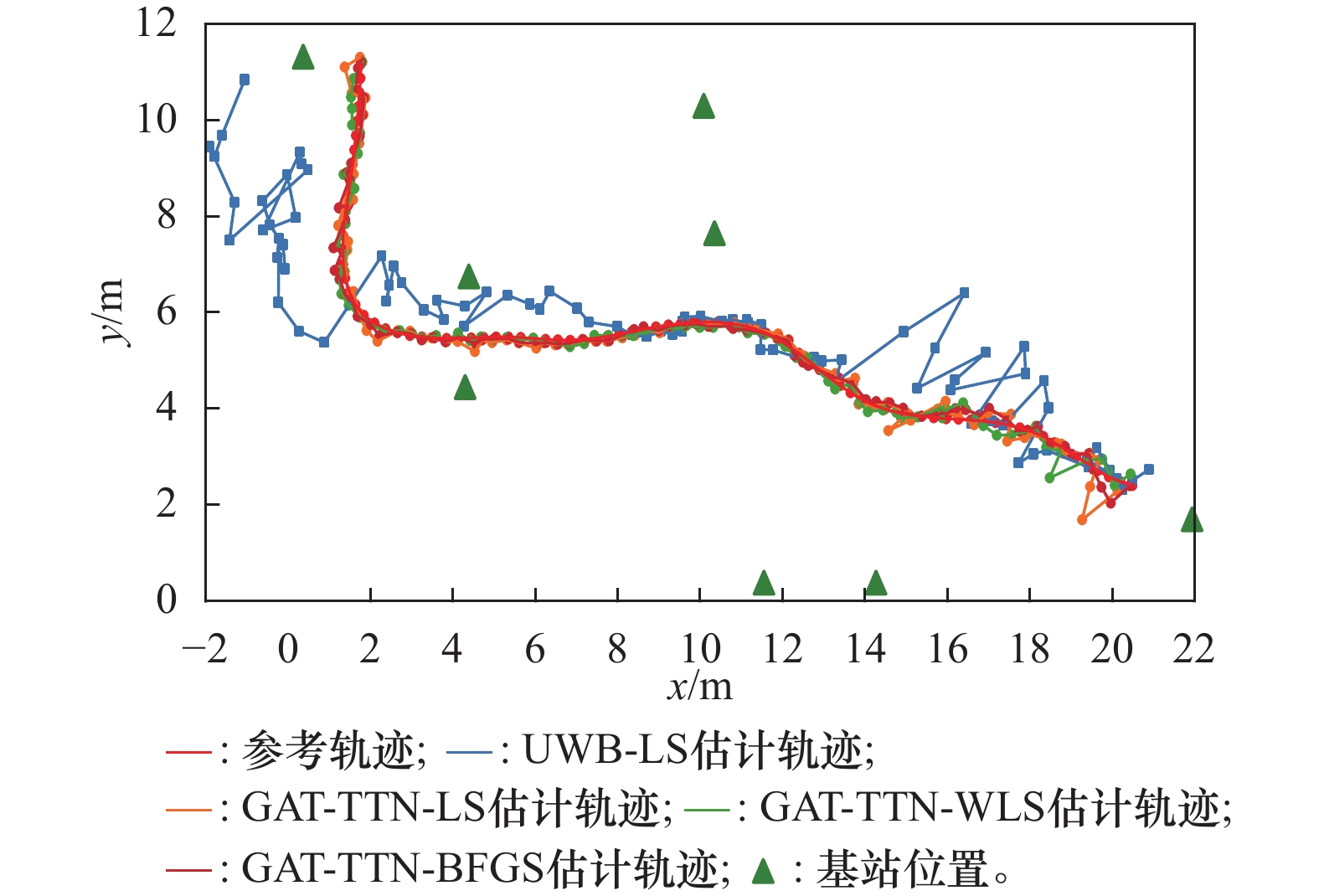
图23
环境3(办公室)定位轨迹"
| 1 |
Rana M, Mittal V. Wearable sensors for real-time kinematics analysis in sports: a review[J]. IEEE Sensors Journal, 2021, 21 (2): 1187.
doi: 10.1109/JSEN.2020.3019016 |
| 2 | Li X X, Huang J X, Li X, et al. Review of PPP-RTK: achievements, challenges, and opportunities[J]. Satellite Navigation, 2022, 3 (3): 16. |
| 3 |
Qi L, Liu Y, Yu Y, et al. Current status and future trends of meterlevel indoor positioning technology: a review[J]. Remote Sensing, 2024, 16 (2): 398.
doi: 10.3390/rs16020398 |
| 4 | Gao Y K, Postolache O, Yang Y S, et al. UWB system and algorithms for indoor positioning[C]//Telecoms Conference, 2021. |
| 5 |
Tan S, Yang J. Commodity WiFi sensing in ten years: status, challenges, and opportunities[J]. IEEE Internet of Things Journal, 2022, 9 (18): 17832.
doi: 10.1109/JIOT.2022.3164569 |
| 6 |
Han K, Yu S M, Kim S L, et al. Exploiting user mobility for WiFi RTT positioning: a geometric approach[J]. IEEE Internet of Things Journal, 2021, 8 (19): 14589.
doi: 10.1109/JIOT.2021.3070367 |
| 7 | Xiao K, Wang Y T, Wang Q, et al. Research on indoor localization algorithm based on multi-fusion bluetooth AOA using two-dimensional DOA estimation[C]//International Conference on Network Simulation and Evaluation, 2023: 121. |
| 8 |
Ji M X, Ren G H, Zhang H J, et al. Collaborative positioning for emergency rescuers based on INS, GPS and ZigBee[J]. Physica Scripta, 2024, 99 (6): 065530.
doi: 10.1088/1402-4896/ad38e1 |
| 9 |
Gezici S, Poor H V. Position estimation via ultra-wide-band signals[J]. Proceedings of the IEEE, 2009, 97 (2): 386.
doi: 10.1109/JPROC.2008.2008840 |
| 10 |
Marano S, Gifford W M, Wymeersch H, et al. NLOS identification and mitigation for localization based on UWB experimental data[J]. IEEE Journal on Selected Areas in Communications, 2010, 28 (7): 1026.
doi: 10.1109/JSAC.2010.100907 |
| 11 |
Wymeersch H. A machine learning approach to ranging error mitigation for UWB localization[J]. IEEE Trans. on Communications, 2012, 60 (6): 1719.
doi: 10.1109/TCOMM.2012.042712.110035 |
| 12 |
Nguyen T V, Jeong Y, Shin H, et al. Machine learning for wideband localization[J]. IEEE Journal on Selected Areas in Communications, 2015, 33 (7): 1357.
doi: 10.1109/JSAC.2015.2430191 |
| 13 |
Li W F, Yang A N, Zhou J L, et al. NLOS occlusion recognition method to improve UWB spatial sensing[J]. IEEE Internet of Things Journal, 2024, 11 (19): 31715.
doi: 10.1109/JIOT.2024.3419796 |
| 14 |
袁驰, 黄波. UWB 定位中基于 XGBoost 的 NLOS 识别方法[J]. 移动通信, 2023, 47 (5): 83.
doi: 10.3969/j.issn.1006-1010.20220509-0003 |
| 15 |
Bregar K, Mohorcic M. Improving indoor localization using convolutional neural networks on computationally restricted devices[J]. IEEE Access, 2018, 6, 17429.
doi: 10.1109/access.2018.2817800 |
| 16 |
Angarano S, Mazzia V, Salvetti F, et al. Robust ultra-wide-band range error mitigation with deep learning at the edge[J]. Engineering Applications of Artificial Intelligence, 2021, 102 (4): 10428.
doi: 10.1016/j.engappai.2021.104278 |
| 17 |
刘万青, 魏国, 高春峰, 等. 基于深度学习的 UWB NLOS 传播影响抑制技术研究[J]. 红外与激光工程, 2023, 52 (12): 285.
doi: 10.3788/IRLA20230183 |
| 18 |
Deng B W, Xu T W, Yan M D. UWB NLOS identification and mitigation based on Gramian angular field and parallel deep learning model[J]. IEEE Sensors Journal, 2023, 23 (22): 28513.
doi: 10.1109/JSEN.2023.3323564 |
| 19 |
Nkrow R E, Silva B, Boshoff D, et al. Transfer learning-based NLOS identification for UWB in dynamic obstructed settings[J]. IEEE Trans. on Industrial Informatics, 2024, 20 (3): 4839.
doi: 10.1109/TII.2023.3329655 |
| 20 | 苏毛弟, 王建博, 齐辉, 等. 斜井高频电磁波传输特性的研究[J]. 工矿自动化, 2009, 35 (5): 1. |
| 21 |
Byrd R H, Lu P, Nocedal J, et al. A limited memory algorithm for bound constrained optimization[J]. SIAM Journal on Scientific Computing, 1995, 16 (5): 1190.
doi: 10.1137/0916069 |
| 22 |
Zhu C, Byrd R H, Lu P, et al. Algorithm 778: L-BFGS-B: fortran subroutines for large-scale bound-constrained optimization[J]. ACM Transactions on Mathematical Software, 1997, 23 (4): 550.
doi: 10.1145/279232.279236 |
| 23 |
Ding C Y, Sun S L, Zhao J. MST-GAT: a multimodal spatial-temporal graph attention network for time series anomaly detection[J]. Information Fusion, 2023, 89, 527.
doi: 10.1016/j.inffus.2022.08.011 |
| 24 | Mo X Y, Xing Y, Lv C. Heterogeneous edge-enhanced graph attention network for multi-agent trajectory prediction[EB/OL]. [2024-08-08]. https://doi.org/10.48550/arXiv.2106.07161. |
| 25 | Vaswani A, Shazeer N, Parmar N, et al. Attention is all you need[C]// 31st Annual Conference on Neural Information Processing Systems, 2017: 5999. |
| 26 | Bai S, Kolter J Z, Koltun V. An empirical evaluation of generic convolutional and recurrent networks for sequence modeling[EB/OL]. [2024-08-08]. https: //arxiv.org/abs/1803.01271. |
| 27 | Szegedy C, Liu W, Jia Y, et al. Going deeper with convolutions[C]// IEEE Conference on Computer Vision and Pattern Recognition, 2015. |
| 28 |
Bregar K. Indoor UWB positioning and position tracking data set[J]. Scientific Data, 2023, 10 (1): 744.
doi: 10.1038/s41597-023-02639-5 |
| 29 |
Kirmaz A, Sahin T, Michalopoulos D S, et al. ToA and TDoA estimation using artificial neural networks for high-accuracy ranging[J]. IEEE Journal on Selected Areas in Communications, 2023, 41 (12): 3816.
doi: 10.1109/JSAC.2023.3322803 |
| [1] | 杨宽, 许小剑. 基于参数外推的超宽带雷达有源极化校准技术[J]. 系统工程与电子技术, 2025, 47(8): 2498-2510. |
| [2] | 奔粤阳, 黄原, 黄鸿殿, 李倩. 基于INS/UWB紧组合的行人室内定位方法[J]. 系统工程与电子技术, 2025, 47(4): 1300-1310. |
| [3] | 迟俊, 孙溶辰, 孙志国, 易振宇. 基于传播图论的6 GHz隧道信道建模[J]. 系统工程与电子技术, 2025, 47(1): 316-323. |
| [4] | 杨德贵, 许道峰. 基于时频域特征融合的IR-UWB穿墙雷达人体行为识别方法[J]. 系统工程与电子技术, 2024, 46(3): 849-858. |
| [5] | 程靖云, 王布宏, 罗鹏. 基于图表示和MHGAT的代码漏洞静态检测方法[J]. 系统工程与电子技术, 2023, 45(5): 1535-1543. |
| [6] | 陈凯柏, 高敏, 周晓东, 毕军建, 王毅. 毫米波探测器的超宽带耦合特性[J]. 系统工程与电子技术, 2022, 44(12): 3641-3651. |
| [7] | 王岩, 李奕欣, 王昊, 丁振东, 陶诗飞. 基于特征模理论的超宽带单极子天线设计[J]. 系统工程与电子技术, 2021, 43(11): 3078-3085. |
| [8] | 史策, 陈善学, 李方伟. 时间反演UWB通信系统的窄带干扰抑制[J]. 系统工程与电子技术, 2020, 42(4): 948-953. |
| [9] | 陈凯柏, 高敏, 周晓东, 程呈. 调频连续波引信超宽带电磁脉冲前门耦合效应[J]. 系统工程与电子技术, 2020, 42(3): 528-535. |
| [10] | 陈凯柏, 周晓东, 高敏, 范宇清. 毫米波引信射频前端UWB-HPM效应研究[J]. 系统工程与电子技术, 2020, 42(2): 284-291. |
| [11] | 李振亚, 竺小松, 张建华, 刘汉. 新型超宽带圆极化印刷天线[J]. 系统工程与电子技术, 2019, 41(1): 9-13. |
| [12] | 李振亚, 竺小松, 张建华. 具有双陷波特性的小型Vivaldi超宽带天线[J]. 系统工程与电子技术, 2018, 40(9): 1911-1916. |
| [13] | 蒋磊, 陈博文, 张群, 李涛. α稳定分布噪声下基于FHN模型的UWB-IR信号检测[J]. 系统工程与电子技术, 2018, 40(7): 1423-1428. |
| [14] | 廉昕, 王元钦, 侯孝民, 孟祥利. 一种脉冲超宽带测控信号及其性能分析[J]. 系统工程与电子技术, 2016, 38(9): 2179-2183. |
| [15] | 邢涛, 胡庆荣, 李军, 王冠勇. 基于非均匀FFT的超宽带合成孔径雷达高效成像算法[J]. 系统工程与电子技术, 2015, 37(2): 291-296. |
| 阅读次数 | ||||||
|
全文 |
|
|||||
|
摘要 |
|
|||||
