

系统工程与电子技术 ›› 2026, Vol. 48 ›› Issue (9): 2958-2968.doi: 10.12305/j.issn.1001-506X.2026.09.09
• 传感器与信号处理 • 上一篇
魏帅1( ), 谢荣1(), 杨洪飞2, 许述文1, 刘峥1
收稿日期:2025-05-08
修回日期:2025-11-21
接受日期:2025-12-02
出版日期:2026-01-19
发布日期:2026-01-19
通讯作者:
谢荣
E-mail:ws15031977865@163.com;rxie@mail.xidian.edu.cn
作者简介:魏 帅(2000—),男,硕士研究生,主要研究方向为雷达有源干扰识别、认知抗干扰波形设计基金资助:
Shuai Wei1(), Rong Xie1(), Hongfei Yang2, Shuwen Xu1, Zheng Liu1
Received:2025-05-08
Revised:2025-11-21
Accepted:2025-12-02
Online:2026-01-19
Published:2026-01-19
Contact:
Rong Xie
E-mail:ws15031977865@163.com;rxie@mail.xidian.edu.cn
摘要:
复杂电磁环境中存在着大量的参数复杂多变的有源干扰,基于原始图卷积网络(graph convolutional networks, GCN)的干扰识别方法适应性较差,且无权图无法反映相邻节点聚合特征的权重。针对以上问题,提出一种基于雷达信号高阶特征的多尺度加权图卷积网络的雷达有源干扰识别方法。通过提取雷达回波信号时域、频域和时频域的特征构成高阶特征向量,采用图结构数据定义识别单元,用于表示识别单元的时间和空间信息,最后构建多尺度图卷积网络模型进行识别。试验结果表明,当回波信号的干信比大于3 dB时,所提方法对各类干扰的识别率可达90%以上,在干扰参数复杂多变场景下可保持稳健的识别性能。
中图分类号:
魏帅, 谢荣, 杨洪飞, 许述文, 刘峥. 基于多尺度加权GCN的有源干扰识别方法[J]. 系统工程与电子技术, 2026, 48(9): 2958-2968.
Shuai Wei, Rong Xie, Hongfei Yang, Shuwen Xu, Zheng Liu. Active jamming identification method based on multi-scale weighted GCN[J]. Systems Engineering and Electronics, 2026, 48(9): 2958-2968.
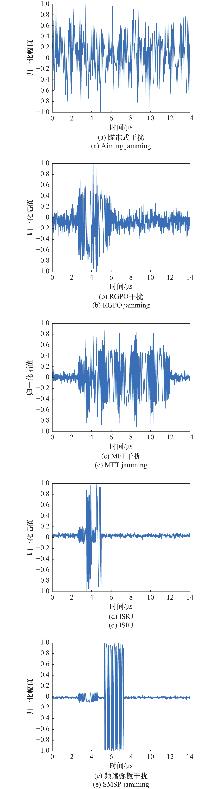
图1
干扰信号时域波形图"
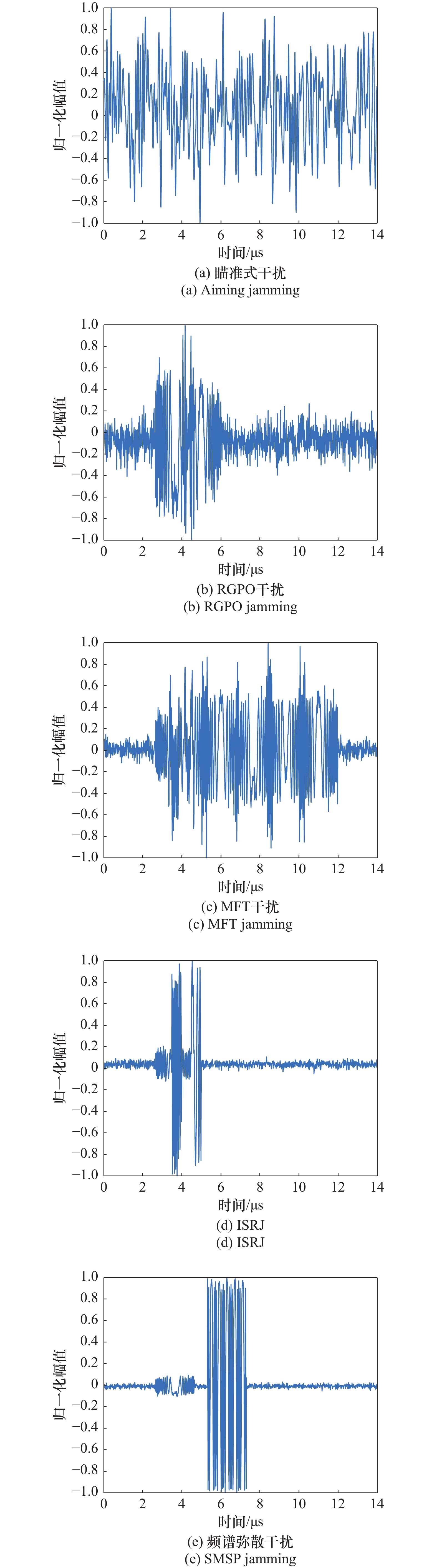
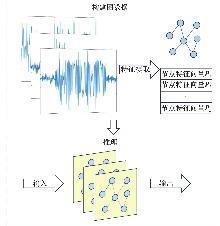
图2
算法框架"
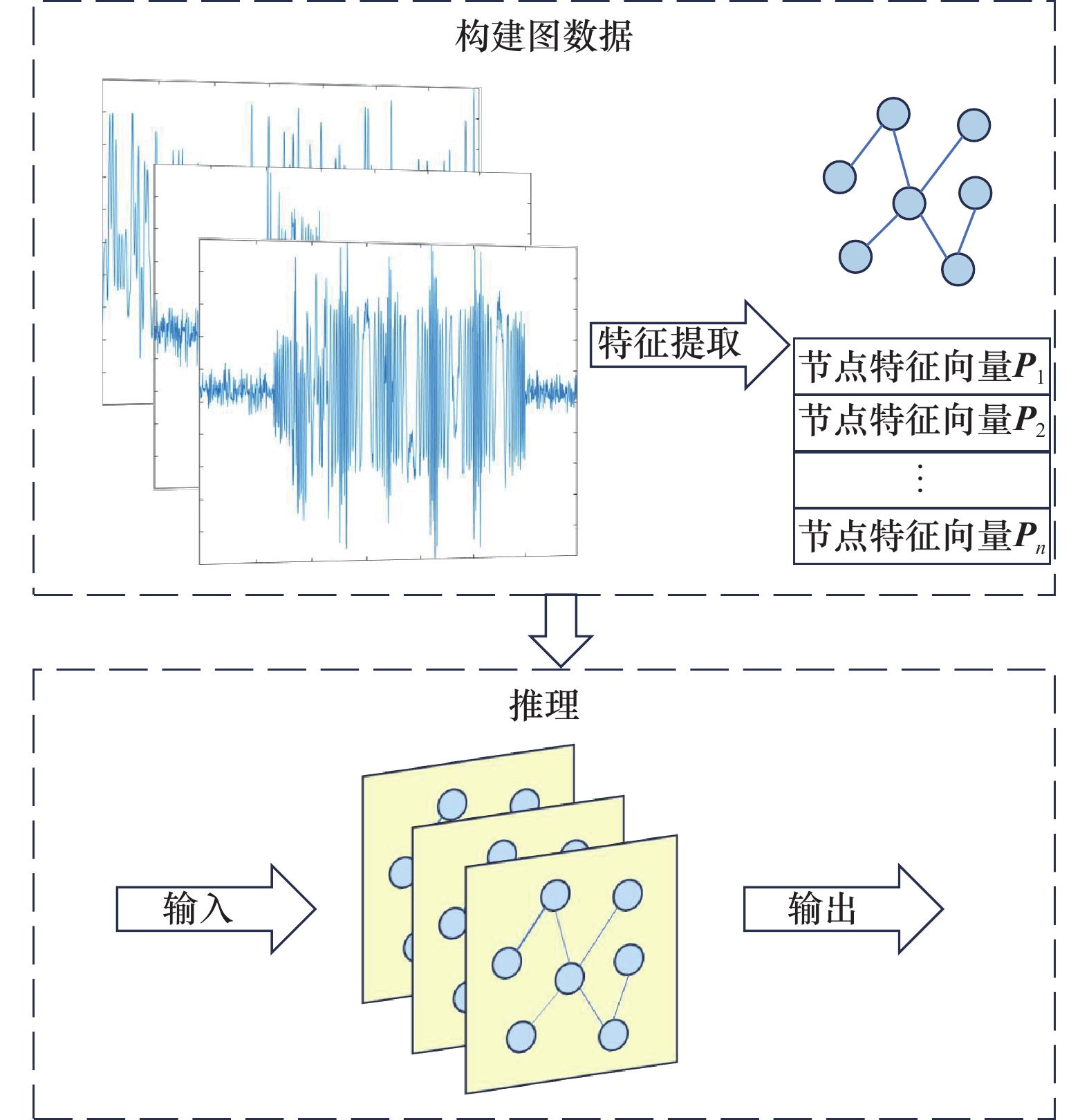
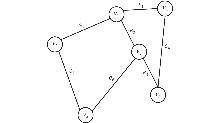
图3
图结构示意图"
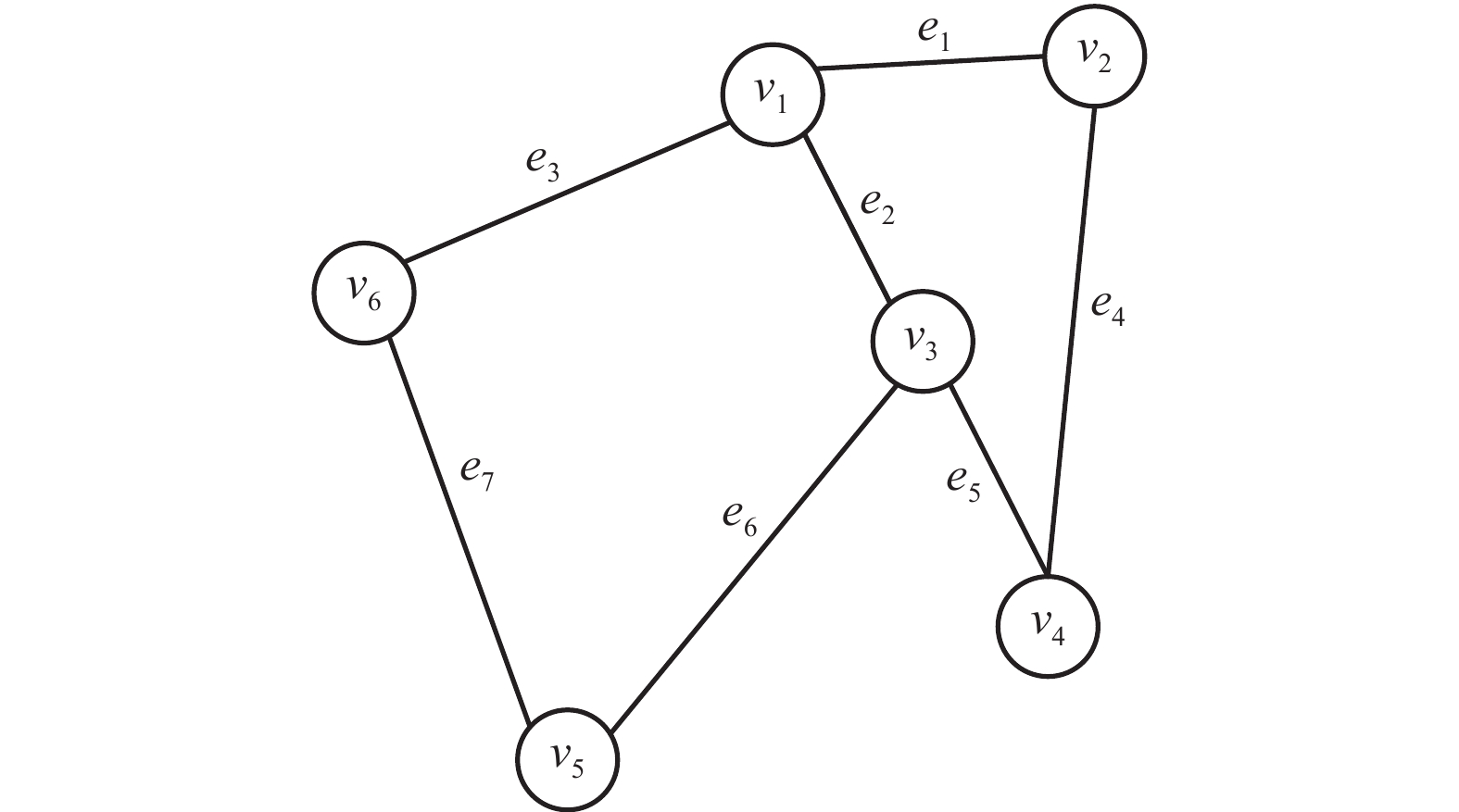
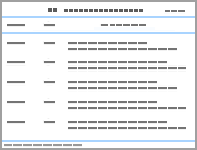
表1
多域特征参数汇总"
| 信号变换域 | 特征参数 |
| 时域 | 均值、标准差、有效值、峭度、偏度、波形因子、 峰值因子、裕度因子 |
| 频域 | 平均频率、重心频率、均方根、标准差、矩偏度、 矩峰度、包络起伏度 |
| 时频域 | 尺度重心 |
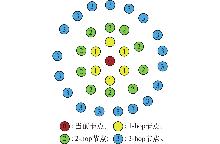
图4
k-hop节点图"
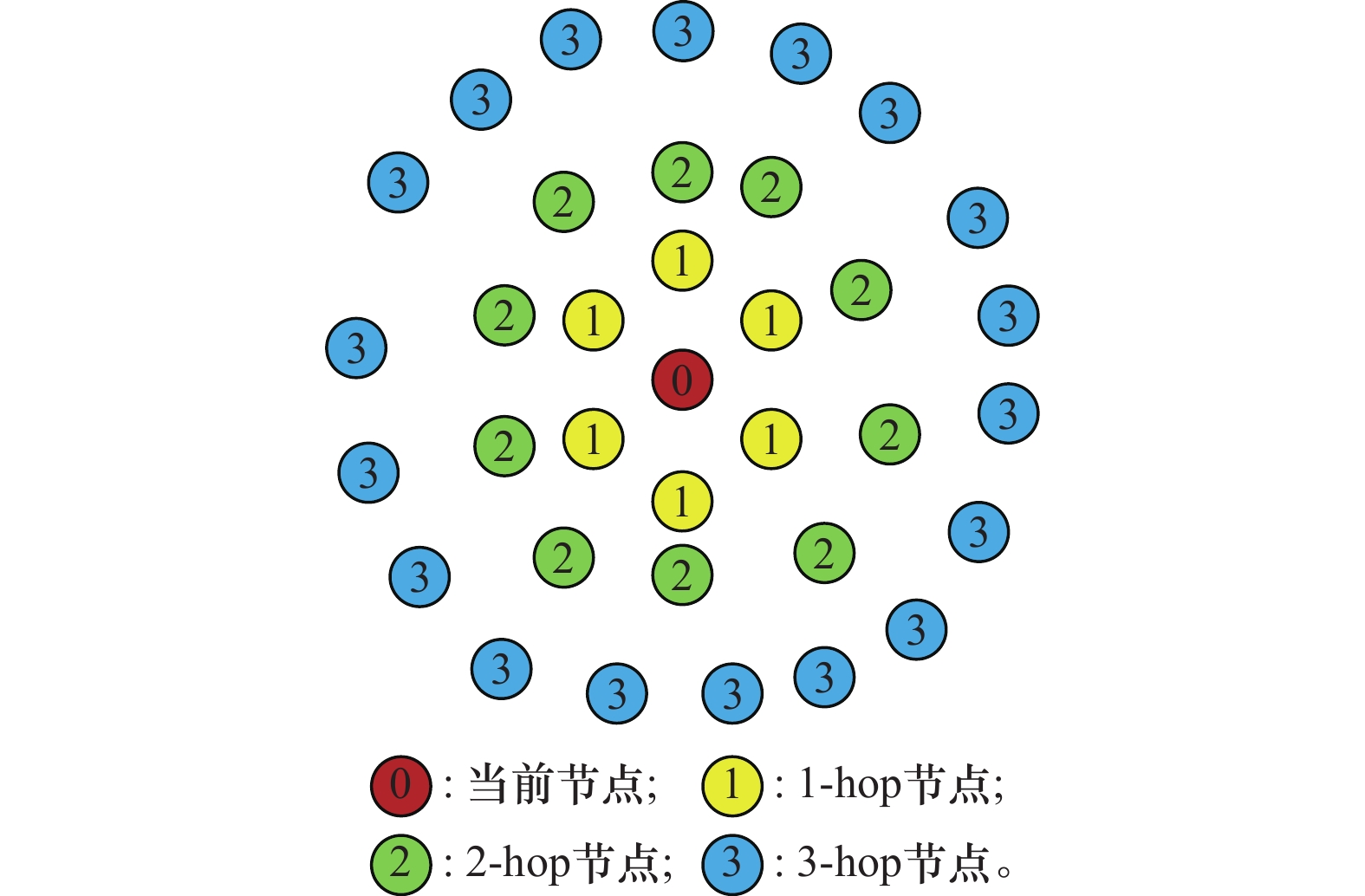
图5
多尺度图数据生成过程"
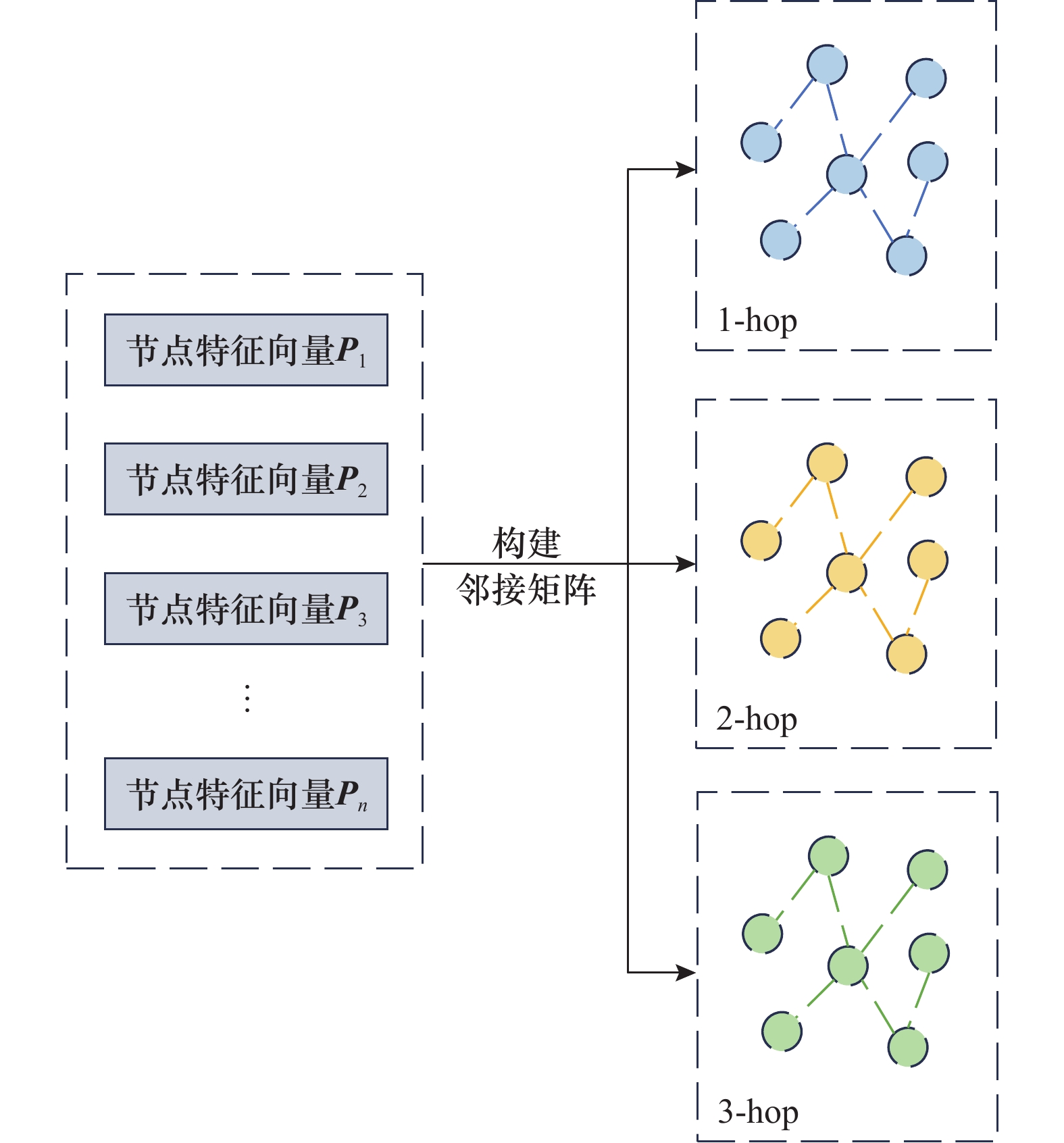
图6
多尺度加权GCN模型"
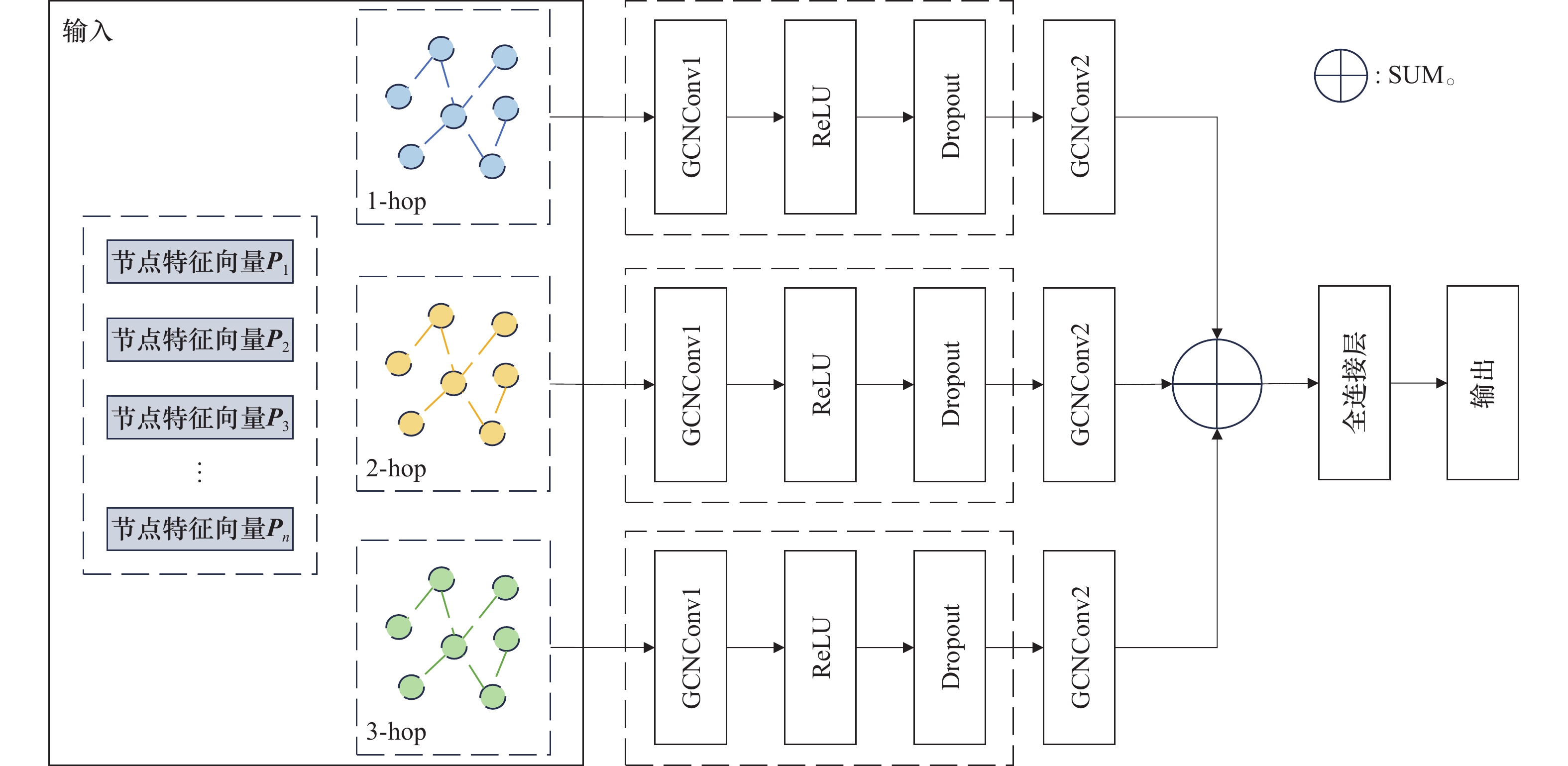
图7
干扰参数时变场景下t-SNE降维可视化"
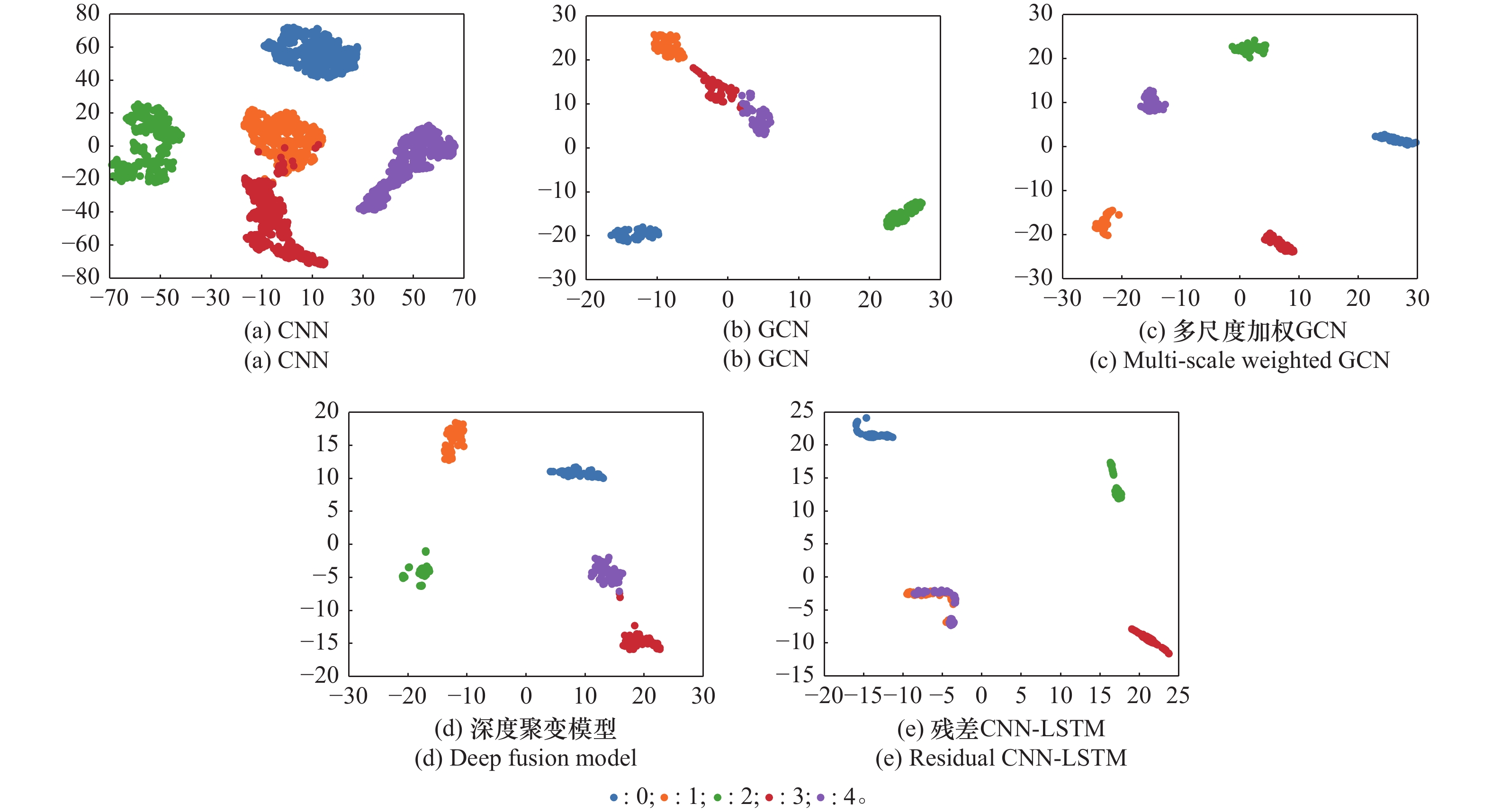
图8
干扰类型频繁切换场景下t-SNE降维可视化"
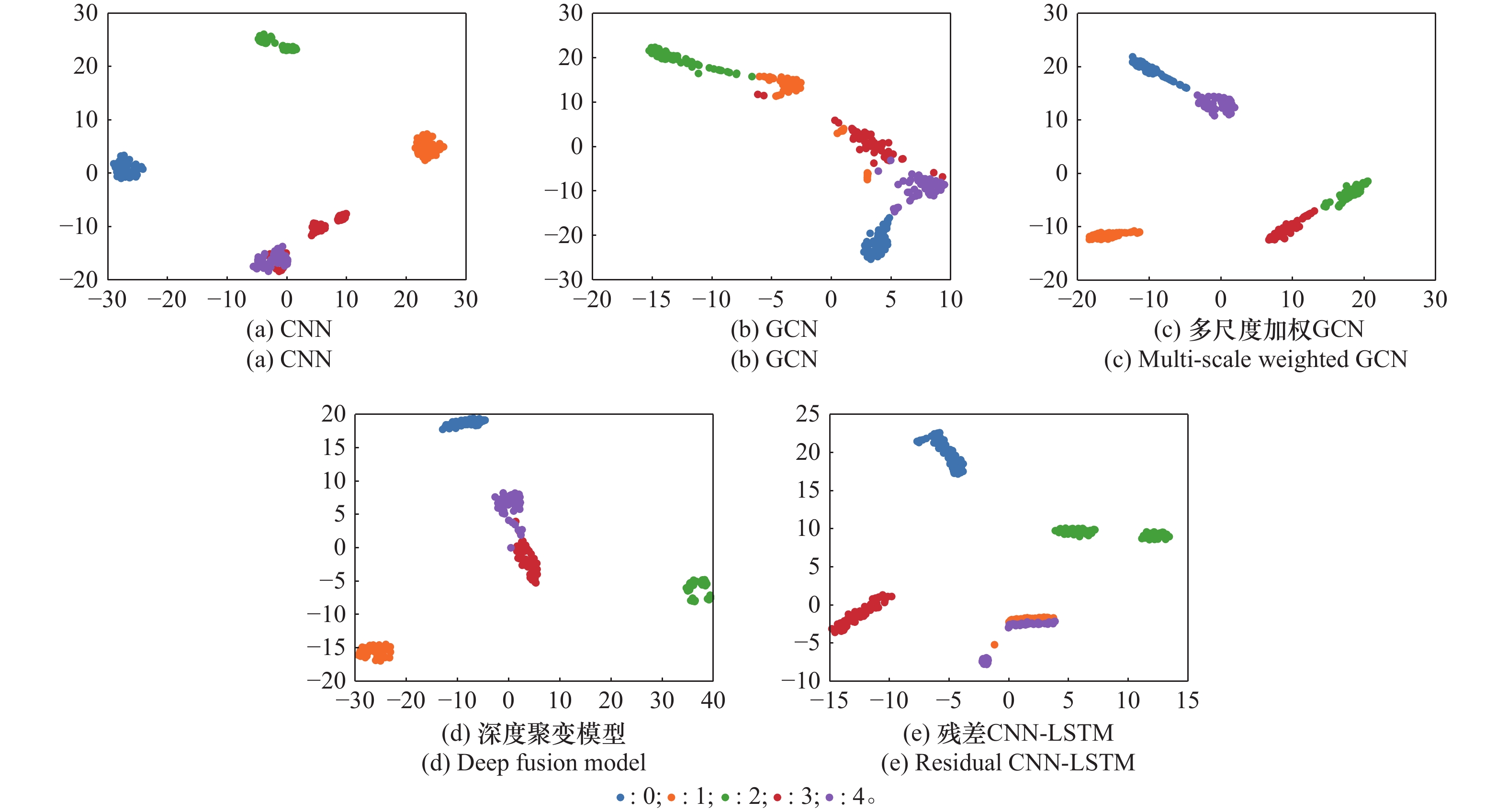
图9
实测数据t-SNE降维可视化"
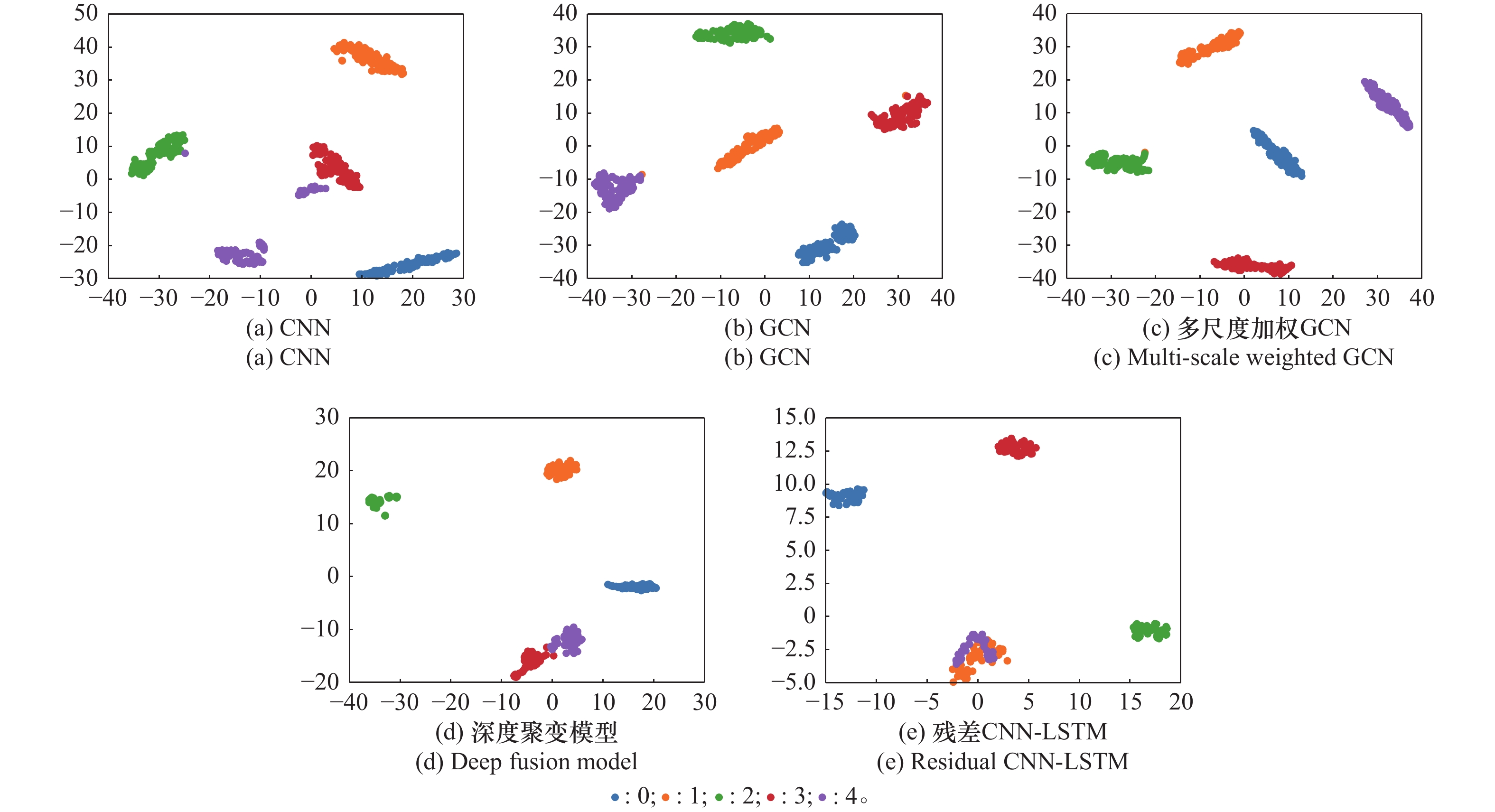
表2
干扰信号参数设置"
| 干扰类型 | 参数 | 值 |
| 瞄准式干扰 | 带宽/MHz | 80~200 |
| RJPO干扰 | 距离/m | ( |
| MFT干扰 | 个数 | 3~10 |
| ISRJ | 切片宽度/μs | 0.1~1 |
| 切片数目/个 | 1~9 | |
| 转发次数/次 | 1~9 | |
| SMSP干扰 | 调频斜率 | 4~8 |
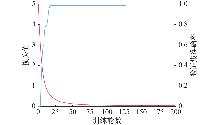
图10
损失值/验证集准确率变化图"
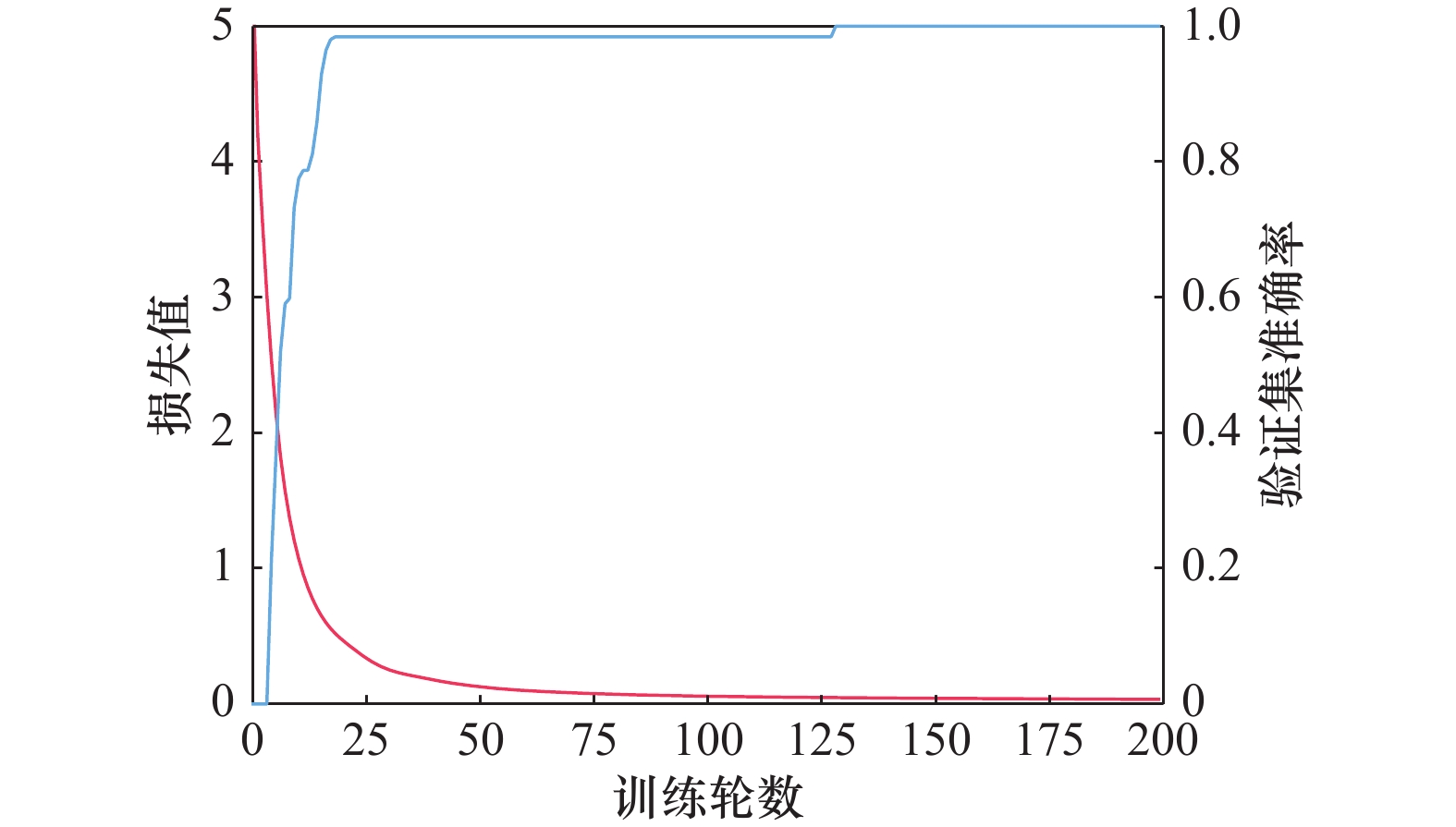
图11
干扰识别率随干信比变化曲线"
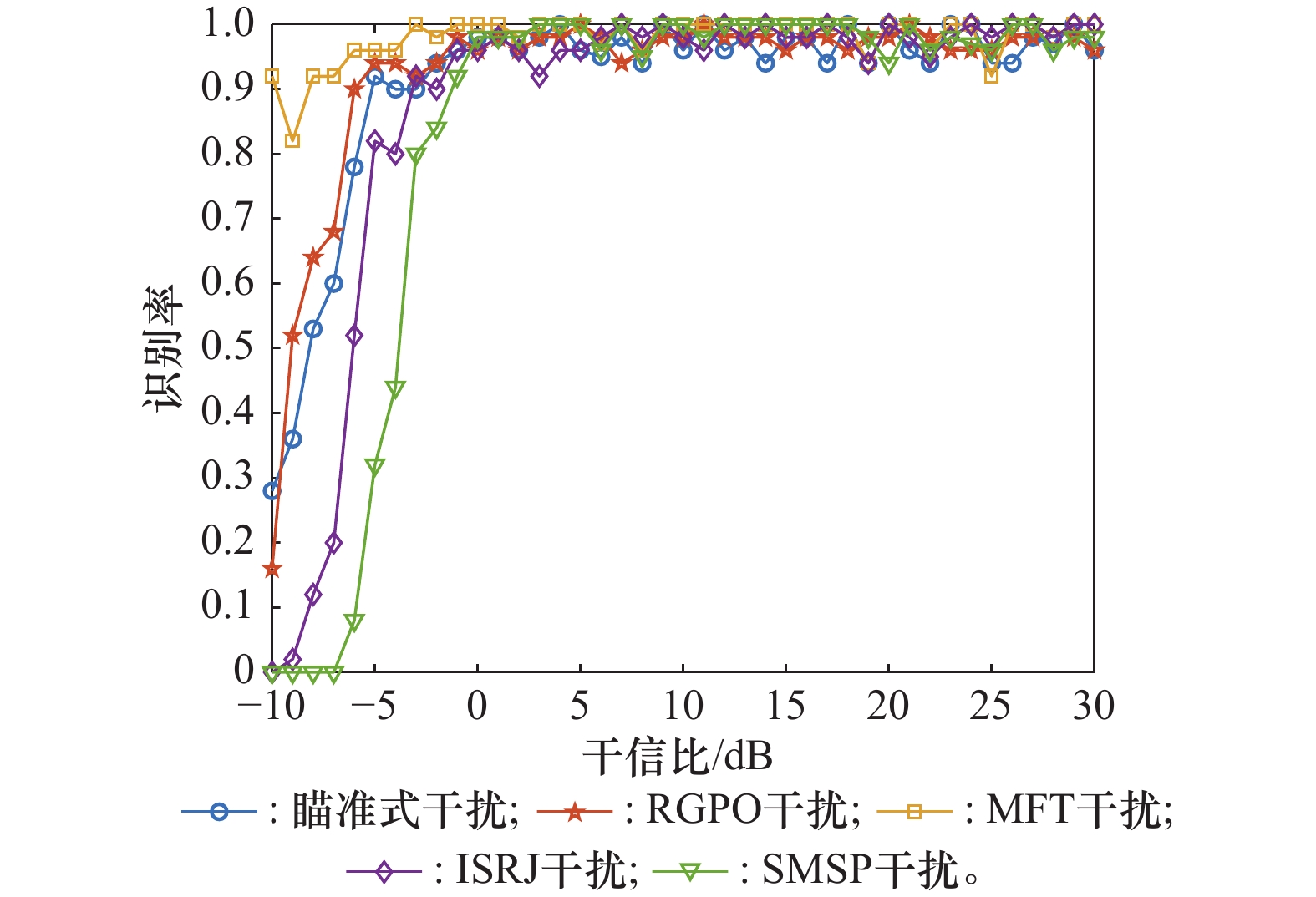
图12
干信比变化下各方法对比"
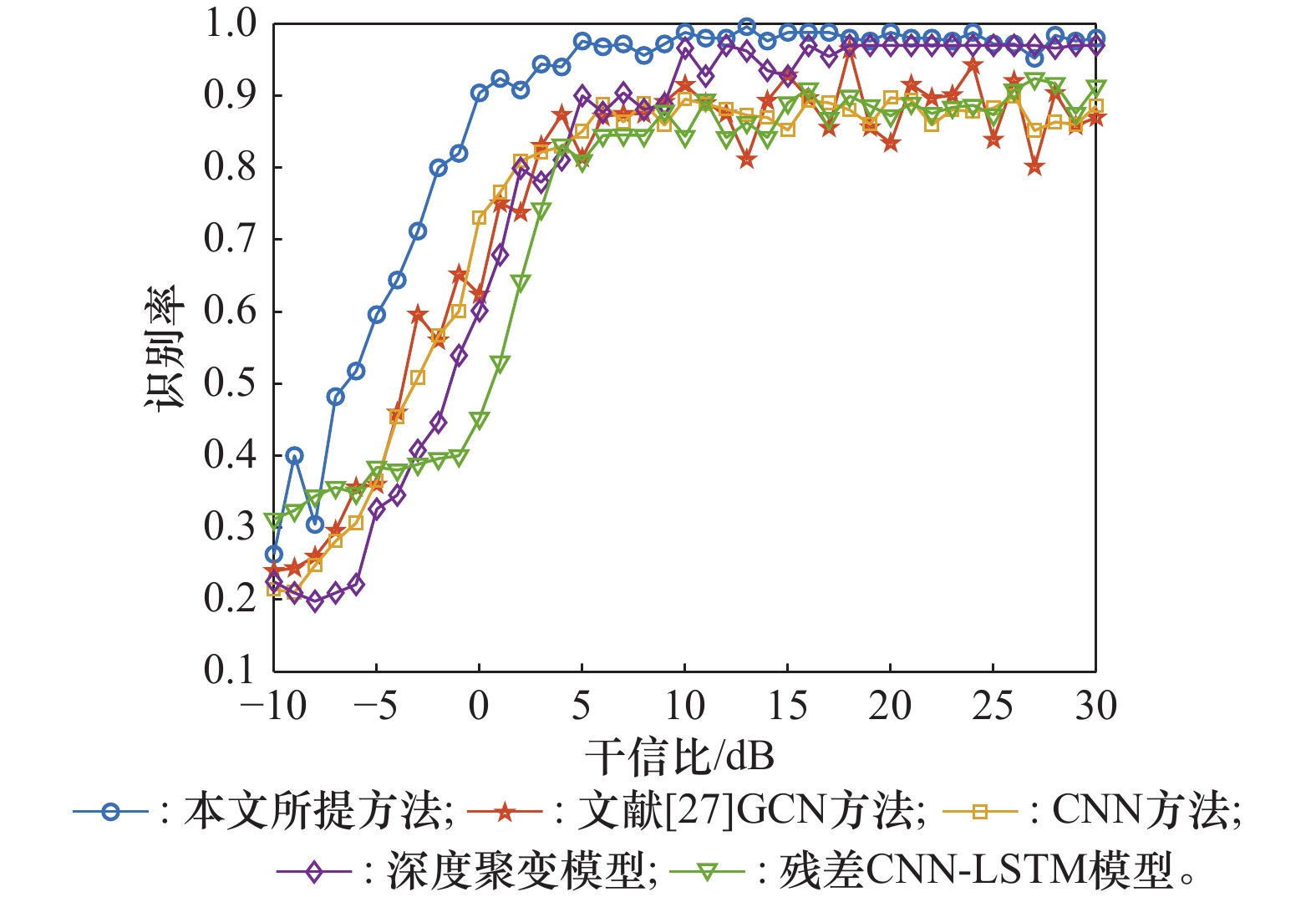
图13
多种干扰条件下不同方法对比"
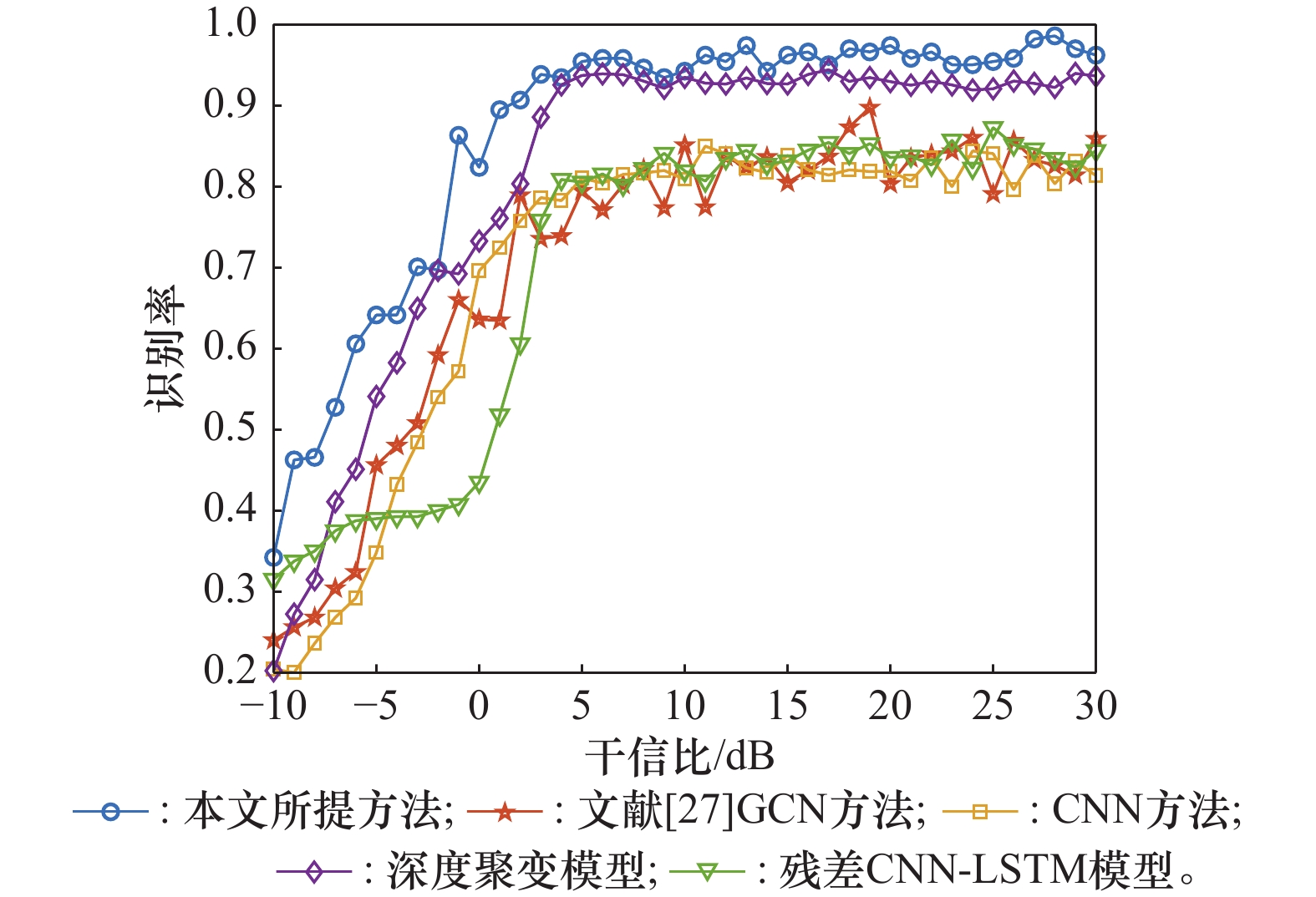
图14
复杂条件下不同方法对比"
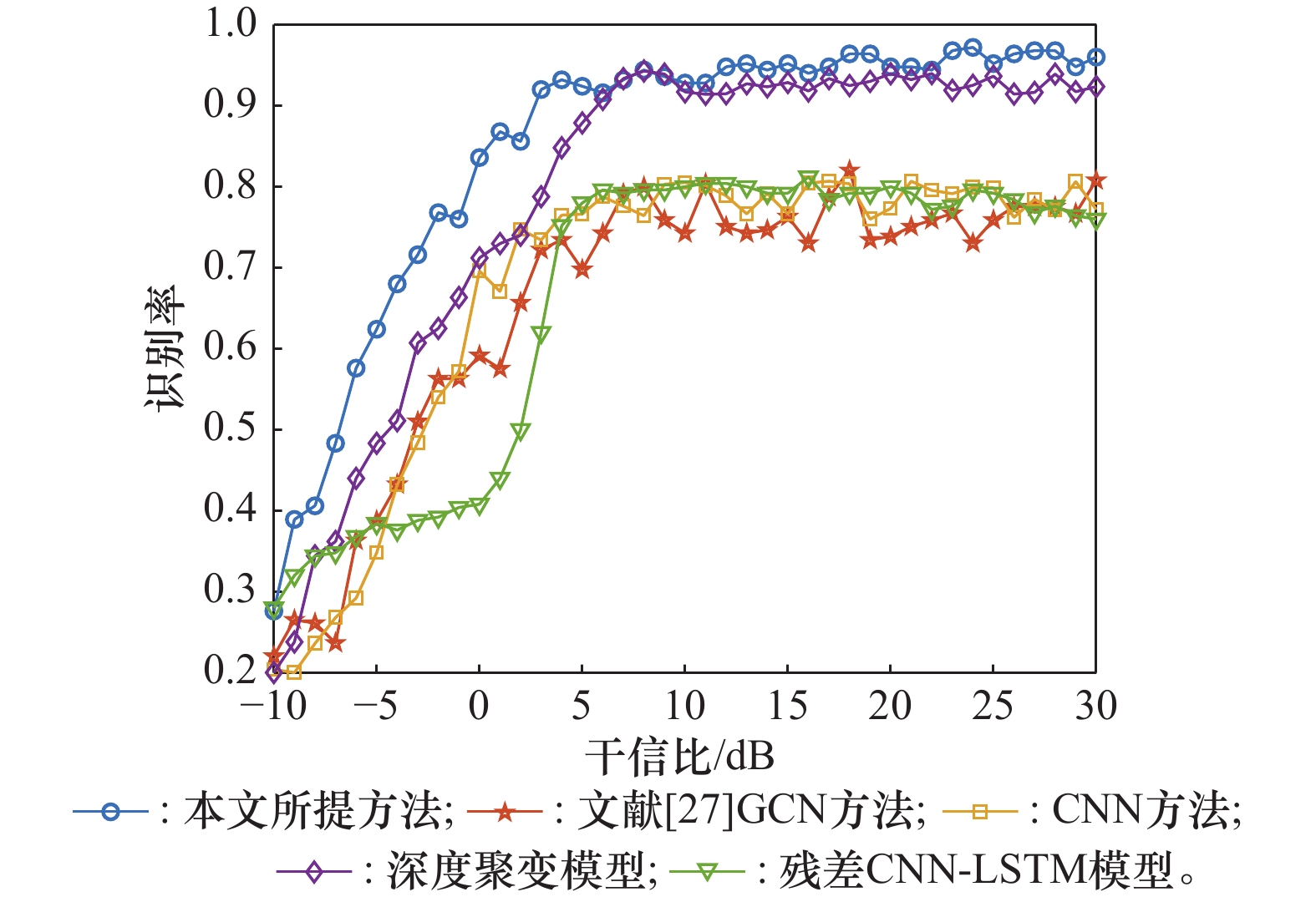
图15
实测数据脉压结果"
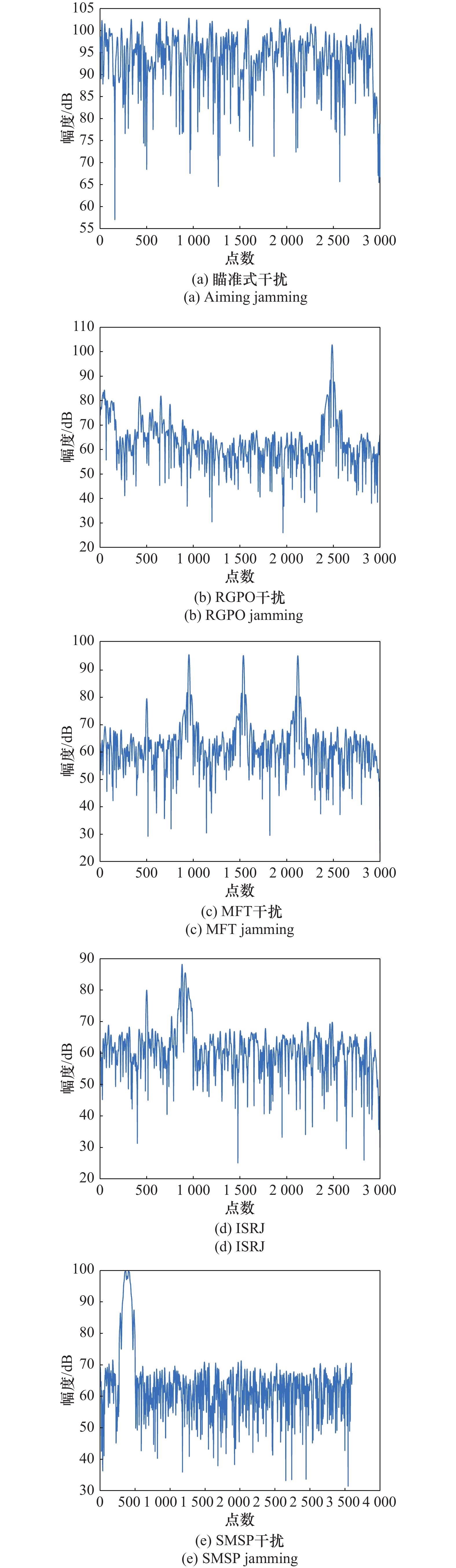
表3
实测数据识别率统计"
| 干扰类型 | 识别率 | ||||
| CNN方法 | 文献[ GCN方法 | 本文方法 | 深度聚 变模型 | 残差CNN- LSTM模型 | |
| 瞄准式干扰 | 90.79 | 89 | 97.11 | 94.4 | 89.2 |
| RGPO干扰 | 90.82 | 88.5 | 99.1 | 87.29 | 82.5 |
| MFT干扰 | 87.4 | 86.4 | 95 | 91.26 | 90.4 |
| ISRJ干扰 | 86.5 | 91.5 | 96.64 | 92.6 | 89.7 |
| SMSP干扰 | 88.7 | 86.1 | 95.6 | 90.4 | 83.6 |
| 1 |
Geng Z, Yan H J, Zhang J D, et al. Deep-learning for radar: a survey[J]. IEEE Access, 2021, 9, 141800.
doi: 10.1109/ACCESS.2021.3119561 |
| 2 |
Li K, Bo J, Wang P H, et al. Radar active antagonism through deep reinforcement learning: a way to address the challenge of mainlobe jamming[J]. Signal Processing, 2021, 186, 108130.
doi: 10.1016/j.sigpro.2021.108130 |
| 3 | Luo Z B, Xing M D. Target imaging and anti-jamming with frequency agile OAM radar[J]. IEEE Geoscience and Remote Sensing Letters, 2024 (21) |
| 4 | Huang L J, Song C, Jin G D, et al. Multiscale barrage jamming against SAR: a jamming signal modulation method and a template design method[J]. IEEE Trans. on Aerospace and Elecrtonic Systems, 2023 (60): 4543. |
| 5 | Yu L, Li J Q, Wei Y S. A novel jamming signal recognition method based on data augmentation using 1D-GAN under small sample condition[C]//IEEE International Radar Conference, 2023. |
| 6 | Li X Y, Dong S B, Yu M Y. Incremental radar jamming recognition method based on enhanced attention and dynamic weights[C]//5th International Academic Exchange Conference on Science and Technology Innovation, 2023: 470. |
| 7 |
张海舟, 贺青, 马泽强, 等. 基于轻量化卷积神经网络的雷达干扰识别技术研究[J]. 现代雷达, 2024, 46 (6): 79.
doi: 10.16592/j.cnki.1004-7859.2024.06.013 |
| 8 |
郭立民, 鄂璟仪, 黄文青. 基于改进MobileV3Net的脉冲雷达干扰识别方法[J]. 舰船电子对抗, 2024, 47 (4): 1.
doi: 10.16426/j.cnki.jcdzdk.2024.04.001 |
| 9 | Luo Z, Cao Y, Yeo T S, et al. Few-shot radar jamming recognition network via time-frequency self-attention and global knowledge distillation[J]. IEEE Trans. on Geoscience and Remote Sensing, 2023, 61, 5105612. |
| 10 |
Shi C W, Zhang Q, Lin T, et al. Recognition of micro-motion jamming based on complex-valued convolutional neural network[J]. Sensors, 2023, 23 (3): 1118.
doi: 10.3390/s23031118 |
| 11 | Zhou H P, Wang L, Ma M H, et al. Compound radar jamming recognition based on signal source separation[J]. Signal Processing, 2024, 241, 109246. |
| 12 | Shao G P, Chen Y, Wei Y. Deep fusion for radar jamming signal classification based on CNN[J]. IEEE Access, 2020, 8, 117256. |
| 13 |
Lin A, Ma Z Y, Zhang L R, et al. Unknown radar waveform recognition based on transferred deep learning[J]. IEEE Access, 2020, 8, 184793.
doi: 10.1109/ACCESS.2020.3029192 |
| 14 |
Du C J, Tang B. Novel unconventional active-jamming recognition method for wideband radars based on visibility graphs[J]. Sensors, 2019, 19 (10): 2344.
doi: 10.3390/s19102344 |
| 15 |
熊英, 刘旻, 唐斌, 等. 基于盒维数与L-Z复杂度的雷达复合干扰特征提取方法[J]. 数据采集与处理, 2008, 23 (6): 663.
doi: 10.3969/j.issn.1004-9037.2008.06.006 |
| 16 |
Zhou H P, Dong C C, Wu R W, et al. Feature fusion based on bayesian decision theory for radar deception jamming recognition[J]. IEEE Access, 2021, 9, 16296.
doi: 10.1109/ACCESS.2021.3052506 |
| 17 | 杜聪炬. 雷达非常规有源压制与欺骗干扰智能识别理论与方法研究[D]. 成都: 电子科技大学, 2019. |
| 18 | Wang F, Huang S S, Liang C. Automatic jamming modulation classification exploiting convolutional neural network for cognitive radar[J]. Mathematical Problems in Engineering, 2020, 2020, 9148096. |
| 19 |
Shao G Q, Chen Y, Wei Y. Convolutional neural network-based radar jamming signal classification with sufficient and limited samples[J]. IEEE Access, 2020, 8, 80588.
doi: 10.1109/ACCESS.2020.2990629 |
| 20 | 邵正途, 许登荣, 徐文利, 等. 基于LSTM和残差网络的雷达有源干扰识别[J]. 系统工程与电子技术, 2023, 45(2): 416. |
| 21 | 郭立民, 黄文青, 陈前, 等. 轻量化的ML-SNet雷达复合干扰识别算法[J]. 系统工程与电子技术, 2025, 47(2): 418. |
| 22 |
Qu Q, Wei S, Liu S, et al. JRNet: jamming recognition networks for radar compound suppression jamming signals[J]. IEEE Trans. on Vehicular Technology, 2020, 69 (12): 15035.
doi: 10.1109/TVT.2020.3032197 |
| 23 |
Lang P, Fu X J, Dong J, et al. A novel radar signals sorting method via residual graph convolutional network[J]. IEEE Signal Processing Letters, 2023, 30, 753.
doi: 10.1109/LSP.2023.3287404 |
| 24 |
Meng H, Peng Y X, Wang W B, et al. Spatio-temporal-frequency graph attention convolutional network for aircraft recognition based on heterogeneous radar network[J]. IEEE Trans. on Aerospace and Electronic Systems, 2022, 58 (6): 5548.
doi: 10.1109/TAES.2022.3175797 |
| 25 | Xu S F, Geng S J, Xu P F, et al. Cognitive fusion of graph neural network and convolutional neural network for enhanced hyperspectral target detection[J]. IEEE Trans. on Geoscience and Remote Sensing, 2024, 62 |
| 26 | Zhou X, Xing H Y, Ye R. Small target detection method on sea surface based on T-GCN[C]//IEEE 16th International Conference on Electronic Measurement & Instruments, 2023: 88. |
| 27 | 苗夕顺. 雷达有源干扰信号识别技术研究[D]. 西安: 西安电子科技大学, 2023. |
| 28 | 赵国庆. 雷达对抗原理[M]. 第2版. 西安: 西安电子科技大学出版社, 2012. |
| 29 |
王楠, 高晶, 薛翔, 等. 基于自干扰对消的同时收发距离拖引干扰技术研究[J]. 舰船电子对抗, 2024, 47 (6): 22.
doi: 10.16426/j.cnki.jcdzdk.2024.06.006 |
| 30 |
Hao Z M, Yu W, Chen W. Recognition method of dense false targets jamming based on time-frequency atomic decomposition[J]. The Journal of Engineering, 2019, 2019 (20): 6354.
doi: 10.1049/joe.2019.0147 |
| 31 |
王雪松, 刘建成, 张文明, 等. 间歇采样转发干扰的数学原理[J]. 中国科学E辑: 信息科学, 2006, 36 (8): 891.
doi: 10.3969/j.issn.1674-7259.2006.08.007 |
| 32 | 赵杨, 尚朝轩, 韩壮志, 等. 分数阶傅里叶和压缩感知自适应抗频谱弥散干扰[J]. 电子与信息学报, 2019, 41(5): 1047. |
| 33 | Kipf T N, WeillinG M. Semi-supervised classification with graph convolutional networks[EB/OL]. [2025-11-28]. https: //arxiv.org/abs/1609.02907. |
| 34 |
Sen P, Namata G, Bilgic M, et al. Collective classification in network data[J]. AI Magazine, 2008, 29 (3): 93.
doi: 10.1609/aimag.v29i3.2157 |
| 35 | Xing Y F, He T, Xiao T J, et al. Learning hierarchical graph neural networks for image clustering[C]//IEEE/CVF International Conference on Computer Vision, 2022: 3447. |
| 36 | Shervashidze N, Schweitzer P, Van leeuwen E J, et al. Weisfeiler-Lehman graph kernels[J]. Journal of Machine Learning Research, 2011, 12 (9): 2539. |
| 37 | Liu Q, Zhang W. Deep learning and recognition of radar jamming based on CNN[C]//12th International Symposium on Computational Intelligence and Design, 2019: 208. |
| 38 | Shao G Q, Chen Y S, Wei Y S. Deep fusion for radar jamming signal classification based on CNN[J]. IEEE Access, 2020, 8: 117236. |
| 39 |
邵正途, 许登荣, 徐文利, 等. 基于LSTM和残差网络的雷达有源干扰识别[J]. 系统工程与电子技术, 2023, 45 (2): 416.
doi: 10.12305/j.issn.1001-506X.2023.02.12 |
| [1] | 马治勋, 汤宁, 李璇, 郝程鹏. 基于混合扩散模型的水声数据增扩方法[J]. 系统工程与电子技术, 2026, 48(9): 2898-2906. |
| [2] | 陈任飞, 陈佳慧, 李忠文, 王思霖. 基于多相机信息协同的水面漂浮物跟踪方法研究[J]. 系统工程与电子技术, 2026, 48(8): 2545-2559. |
| [3] | 董健, 邹俊杰, 侯斐斐, 肖程望. 基于HRRP特征统计特性的雷达目标识别方法[J]. 系统工程与电子技术, 2026, 48(7): 2206-2217. |
| [4] | 付卫红, 彭文洪, 刘乃安. 面向高效检测的YOLOv11轻量化SAR图像船舶检测模型[J]. 系统工程与电子技术, 2026, 48(7): 2241-2250. |
| [5] | 韩成杰, 彭聪, 施苏牧, 王宇, 纪江南. 基于多尺度交互融合网络的作动器故障诊断[J]. 系统工程与电子技术, 2026, 48(7): 2319-2332. |
| [6] | 袁胜智, 王少蕾, 李静, 肖任楷, 谭浩天, 赖建伟, 许江涛. 基于小波变换和改进残差神经网络的故障诊断方法[J]. 系统工程与电子技术, 2026, 48(6): 2031-2041. |
| [7] | 陈垣光, 刘晓凯, 肖思瑶, 张顺生, 崔红元, 陈晓莹, 刘莹. 低信噪比下面向时空特征融合的雷达目标智能检测方法[J]. 系统工程与电子技术, 2026, 48(5): 1523-1531. |
| [8] | 夏文杰, 张子剑, 闫循良. 基于DMD模态特征提取重构的再入滑翔目标轨迹解析预测[J]. 系统工程与电子技术, 2026, 48(5): 1682-1694. |
| [9] | 杨泽莹, 陈卓, 徐志明, 艾小锋, 吴其华, 王玲. 空间目标ISAR图像部件正向标记方法[J]. 系统工程与电子技术, 2026, 48(4): 1165-1173. |
| [10] | 林炅, 高朋, 洪文兴. 物理信息神经网络在空天领域的应用与展望[J]. 系统工程与电子技术, 2026, 48(4): 1264-1282. |
| [11] | 程鲲, 雷洪涛, 吕志轩. 改进YOLOv8的轻量级无人机跟踪方法[J]. 系统工程与电子技术, 2026, 48(3): 737-750. |
| [12] | 张龙, 朱连宏, 杨波, 雷震, 冯轩铭. MFA-Net:一种面向复杂对抗环境的反舰导弹智能识别多模态自适应融合网络[J]. 系统工程与电子技术, 2026, 48(3): 894-907. |
| [13] | 田弘宇, 葛松虎, 郭宇, 崔中普, 梁潇. 低干噪比下多特征融合的通信干扰识别方法[J]. 系统工程与电子技术, 2026, 48(3): 1061-1071. |
| [14] | 包玉刚, 贾皓翔, 赵旦峰. 基于高阶递归网络的单幅图像去雨滴模型[J]. 系统工程与电子技术, 2026, 48(1): 12-21. |
| [15] | 陈海青, 汪刘应, 刘顾, 王龙, 葛超群, 陈孟州. 合成孔径雷达图像去噪算法研究进展[J]. 系统工程与电子技术, 2026, 48(1): 94-105. |
| 阅读次数 | ||||||
|
全文 |
|
|||||
|
摘要 |
|
|||||
