Systems Engineering and Electronics ›› 2026, Vol. 48 ›› Issue (1): 44-55.doi: 10.12305/j.issn.1001-506X.2026.01.05
• Electronic Technology • Previous Articles Next Articles
Method for detecting small targets using prior information under high sea states
Hao DING1( ), Jifeng WEI2, Yunlong DONG1,*, Zheng CAO1, Hengli YU1
- 1. Naval Aviation University,Yantai 264001,China
2. Harbin Engineering University Yantai Research Institute,Yantai 264006,China
-
Received:2024-09-26Online:2026-01-25Published:2026-02-11 -
Contact:Yunlong DONG E-mail:331299929@qq.com

CLC Number:
Cite this article
Hao DING, Jifeng WEI, Yunlong DONG, Zheng CAO, Hengli YU. Method for detecting small targets using prior information under high sea states[J]. Systems Engineering and Electronics, 2026, 48(1): 44-55.
share this article
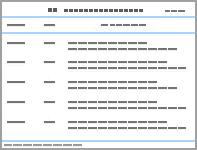
Table 1
Basic information of HH polarization dataset"
| 序号 | 数据名称 | ASCR/dB | 海况 |
| #1_HH | 19.97 | 2 | |
| #2_HH | 20.32 | 3 | |
| #3_HH | 15.42 | 4 | |
| #4_HH | 9.50 | 4 | |
| #5_HH | 9.73 | 5 | |
| #6_HH | 12.33 | 5 |
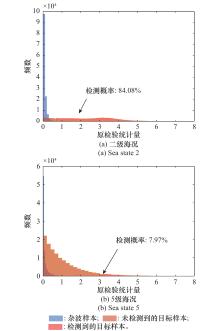
Fig.1
Histogram of SO-CFAR test statistic distribution for clutter cell and target cell"
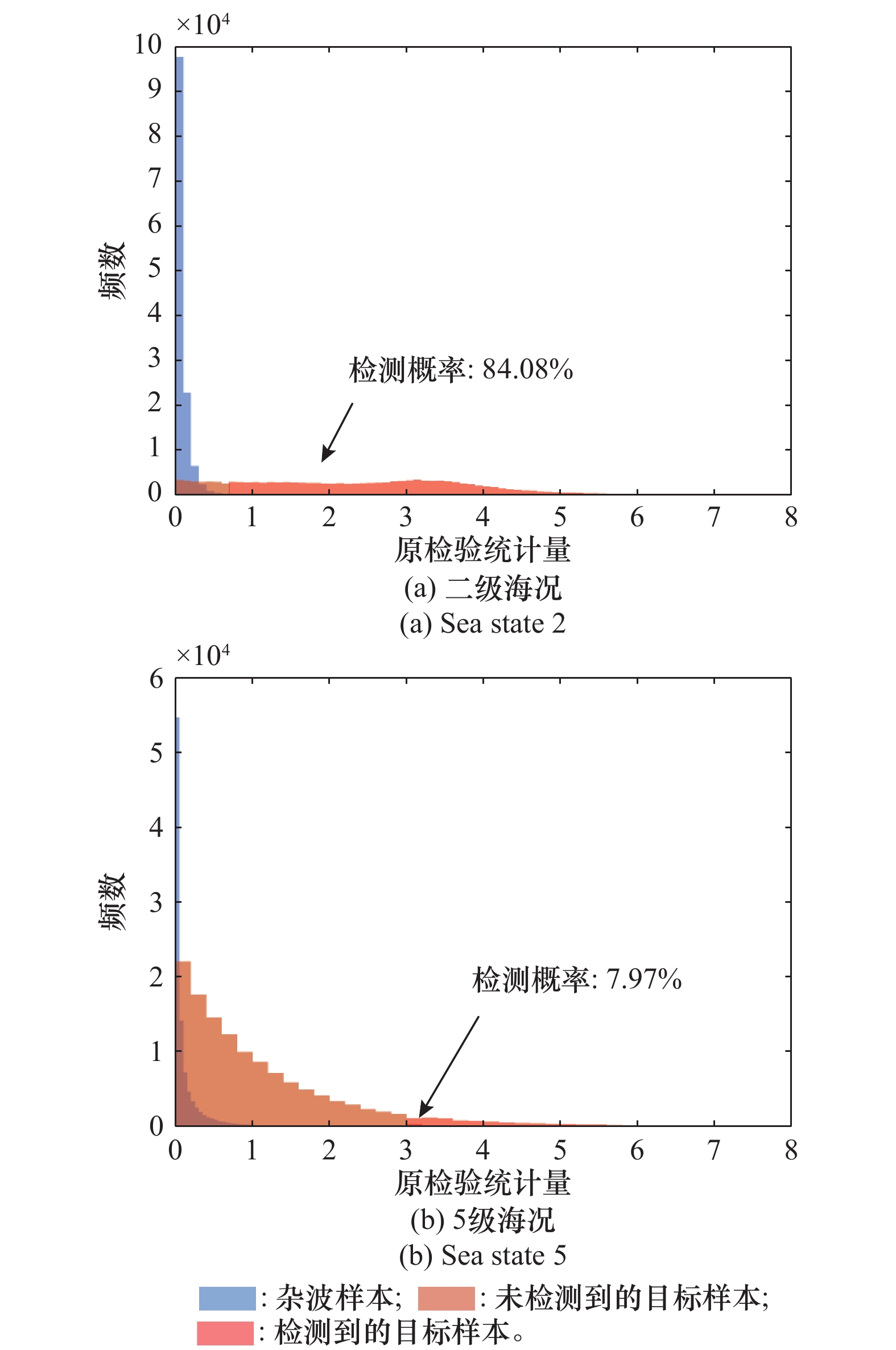
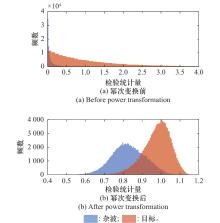
Fig.2
Histogram of the distribution of clutter cell test statistics before and after power transformation"
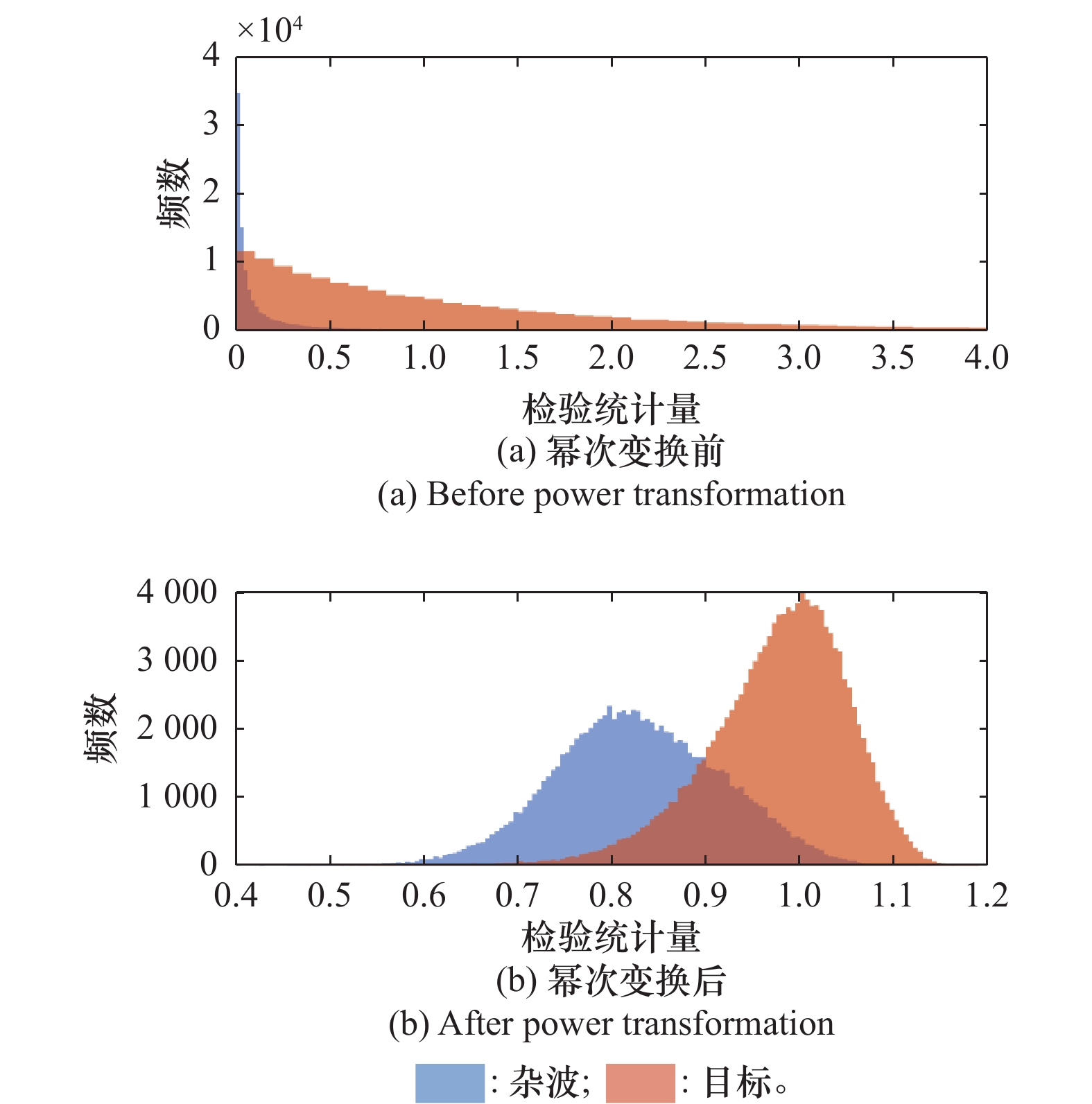
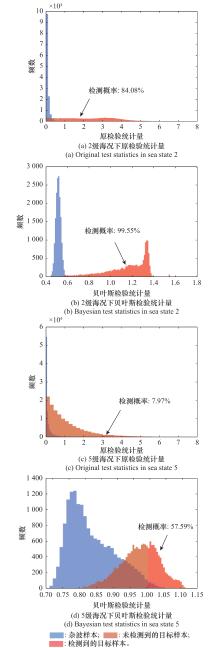
Fig.3
Distribution of original test statistic and Bayesian test statistic"
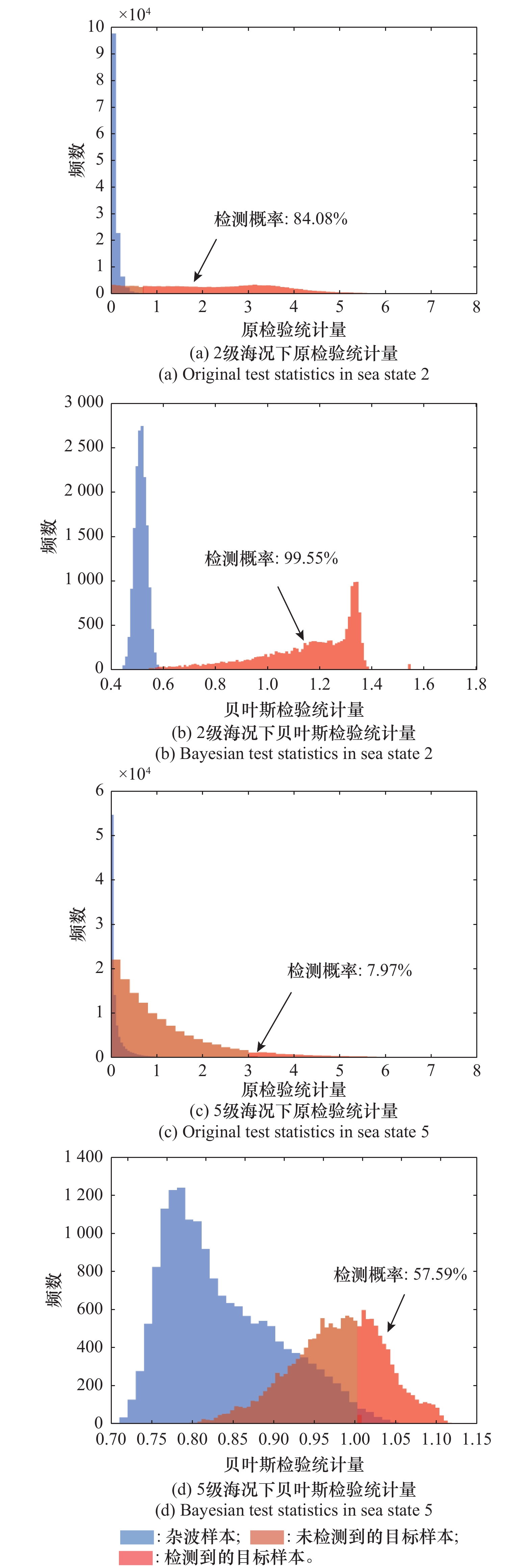
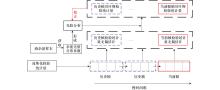
Fig.4
Flowchart of the prior distribution iterative perception algorithm"
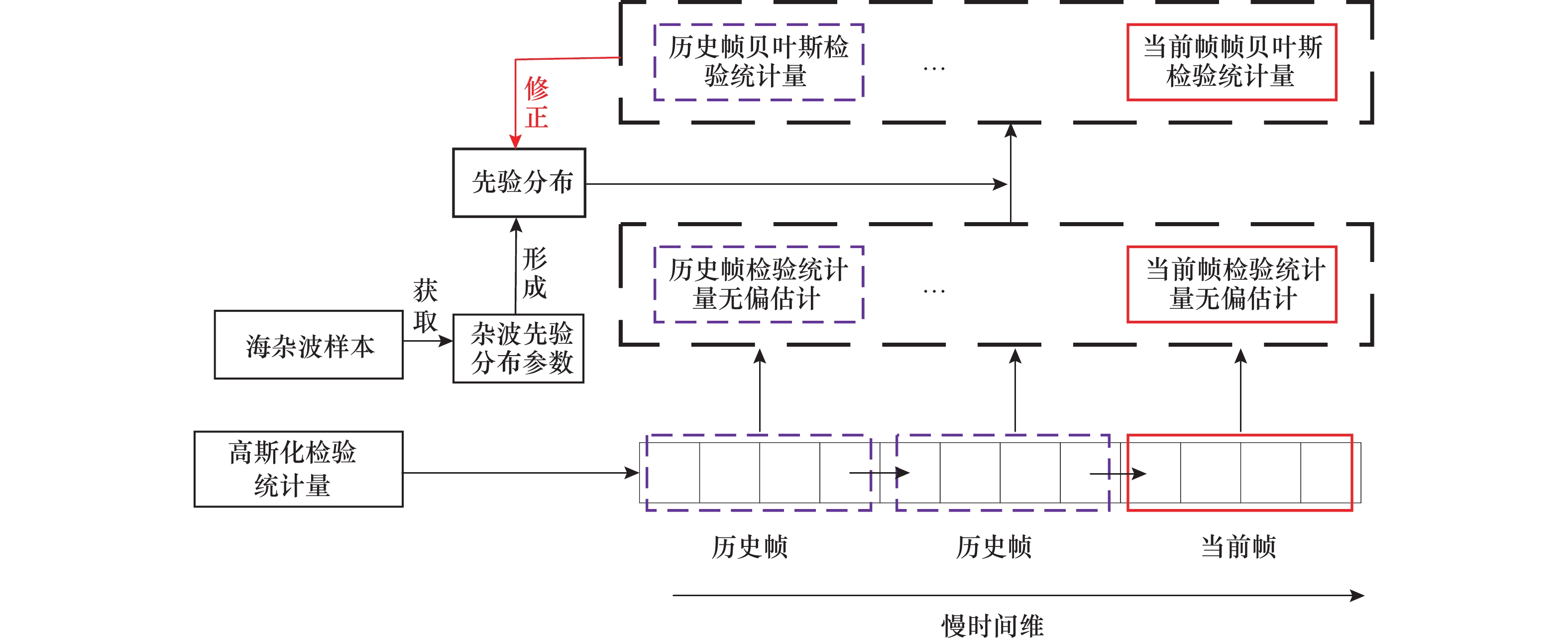

Fig.5
Original test statistics and priori distribution variance iteration process"
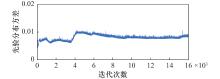
Fig.6
Iteration process of variance of prior distribution after power transformation"
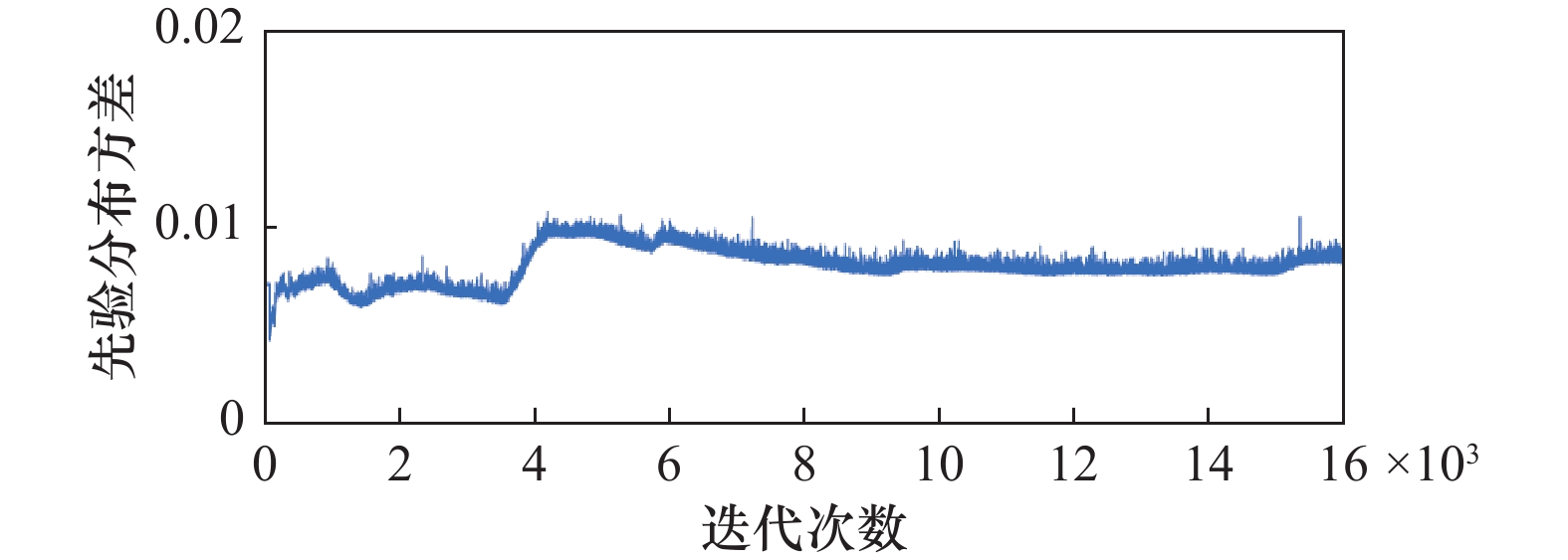
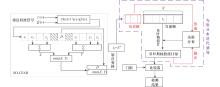
Fig.7
Target detection algorithm process based on priori distribution iterative perception in SO-CFAR framework"

Table 2
Basic information of VV polarization radar dataset"
| 序号 | 数据名称 | ASCR/dB | 海况 |
| #1_VV | 13.05 | 3 | |
| #2_VV | 19.01 | 3 | |
| #3_VV | 14.61 | 4 | |
| #4_VV | 10.78 | 5 | |
| #5_VV | 14.13 | 5 | |
| #6_VV | 8.08 | 5 |
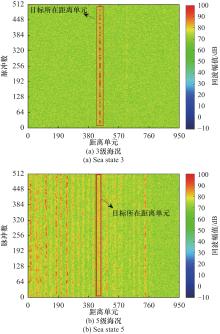
Fig.8
Disply of measured data in different sea states"
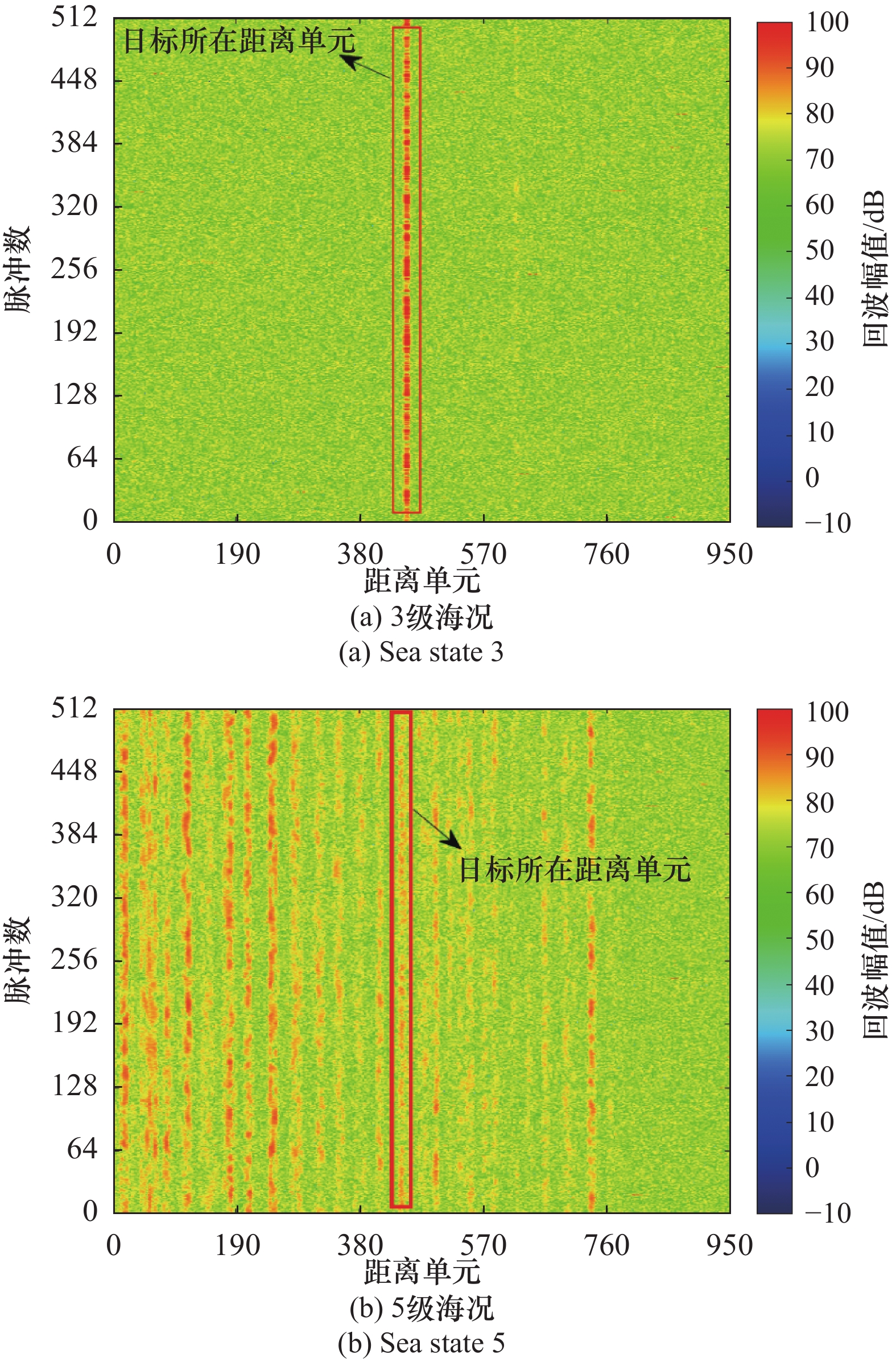
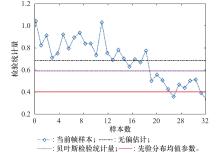
Fig.9
Unbiased estimation of the edge of the sea spire and estimation of Bayesian test statistics"
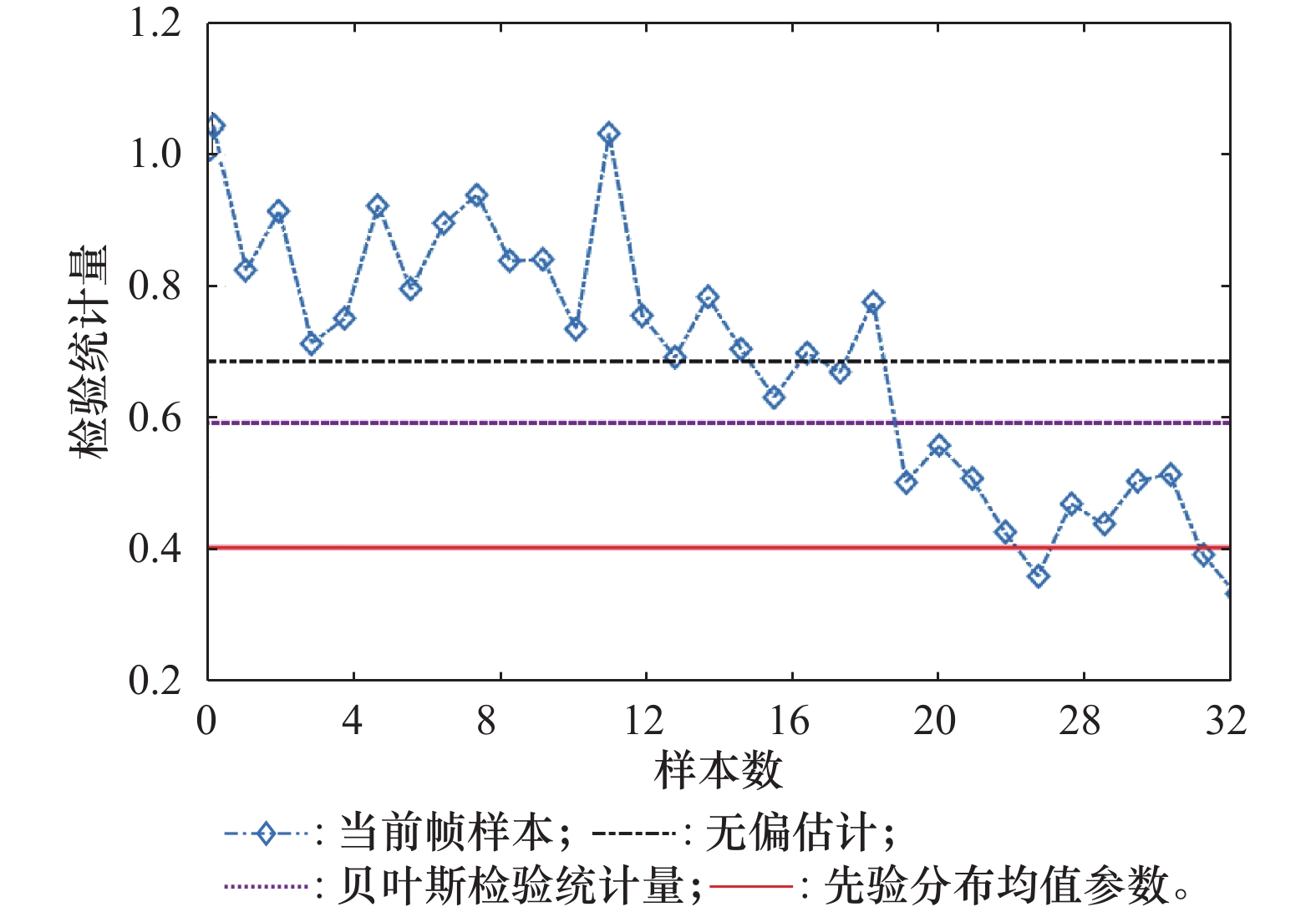
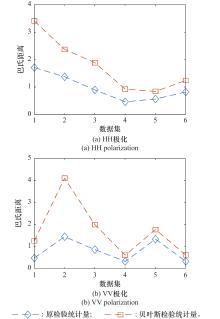
Fig.10
Bhattacharyya distance between original test statistic and Bayesian test statistic"
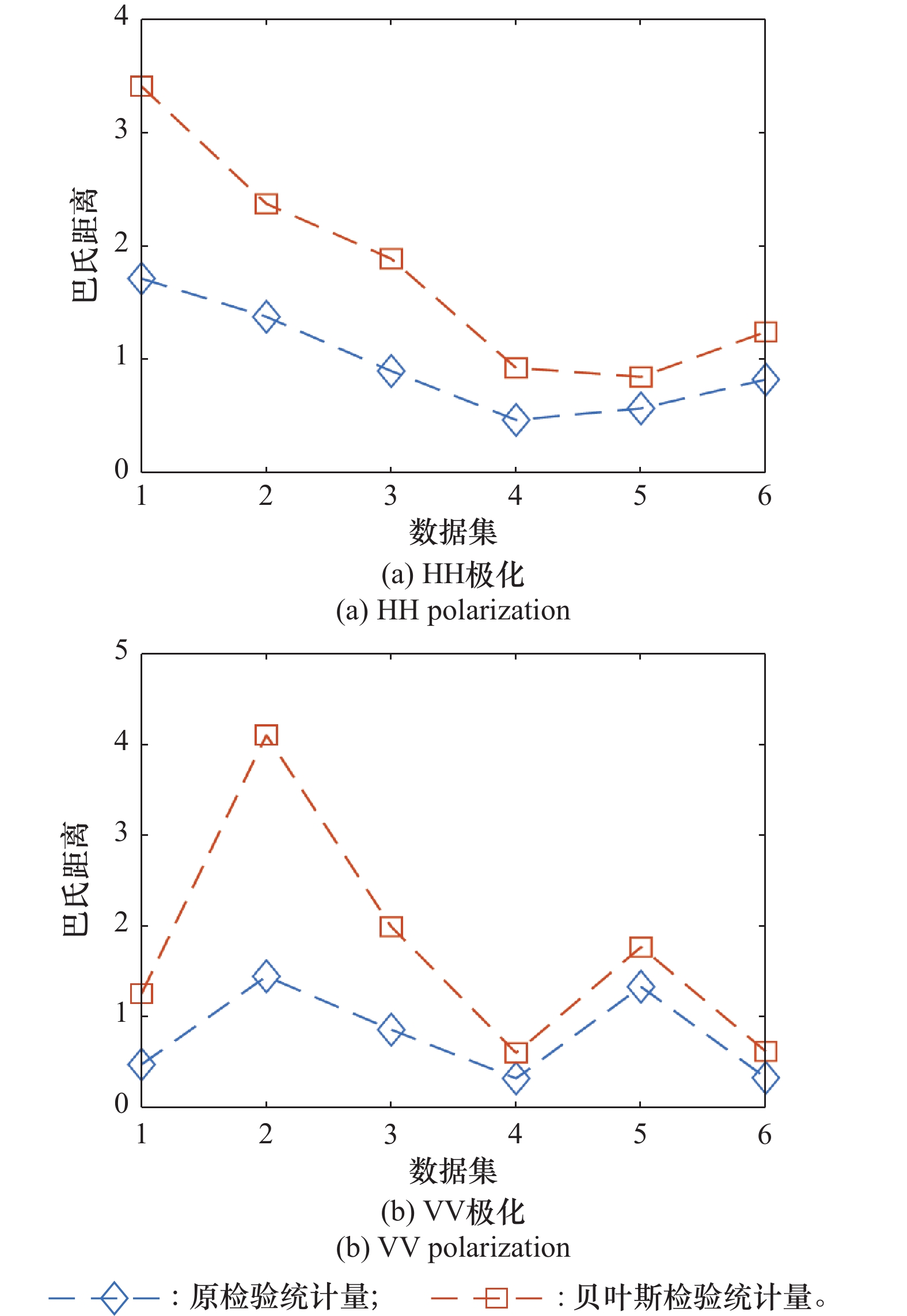
Fig.11
Comparison of detection performance in different polarization modes and false alarm rates"
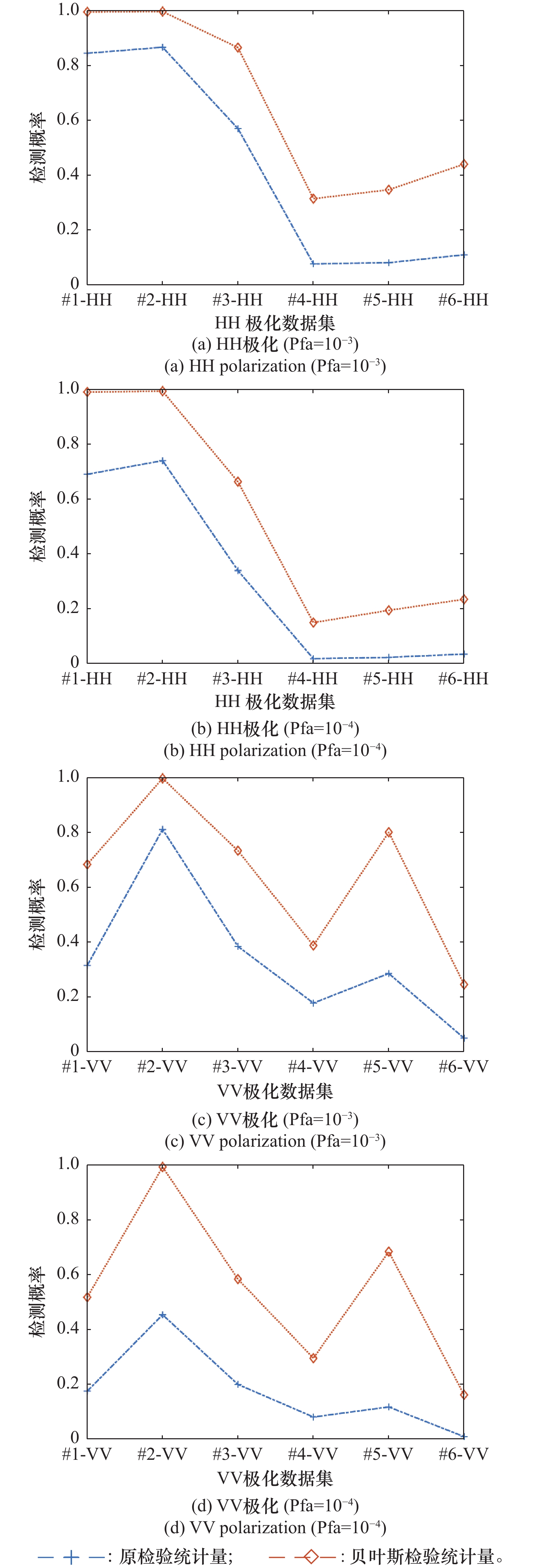
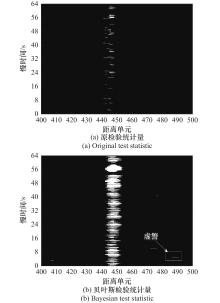
Fig.12
Binary image of the detection results of original test statistic and Bayesian test statistic, N=32"
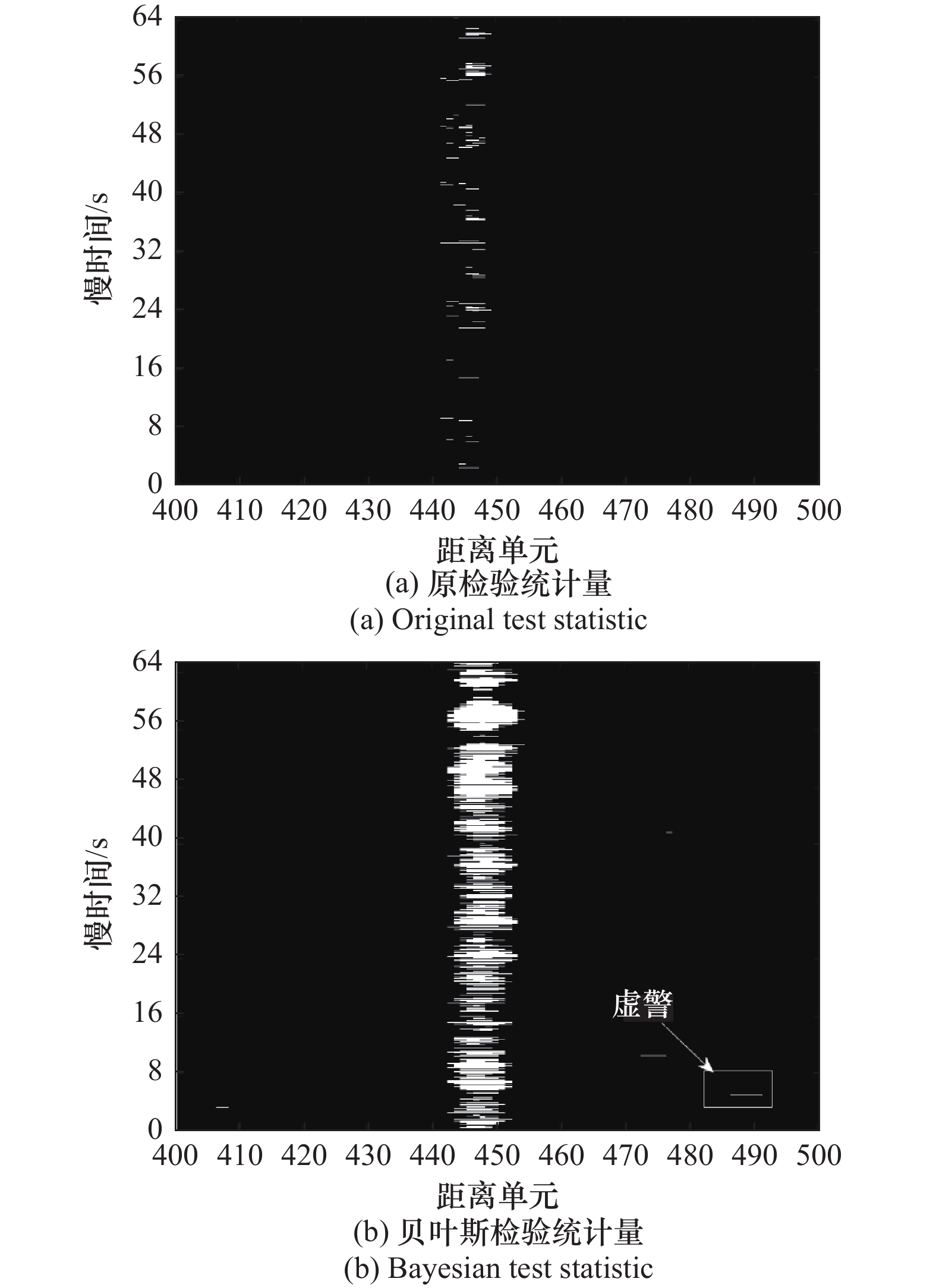
Table 3
Comparison of detect results"
| 虚警率 | 方法 | HH极化 | VV极化 | |||||
| 2、3级 海况 | 4级 海况 | 5级 海况 | 3级 海况 | 4级 海况 | 5级 海况 | |||
| 10−3 | 传统SO-CFAR | |||||||
| 时序预测方法[ | ||||||||
| 遗忘因子 估计法[ | ||||||||
| 多帧累积法[ | ||||||||
| 所提方法 | ||||||||
| 10−4 | 传统SO-CFAR | |||||||
| 时序预测方法[ | ||||||||
| 遗忘因子 估计法[ | ||||||||
| 多帧累积法[ | ||||||||
| 所提方法 | ||||||||
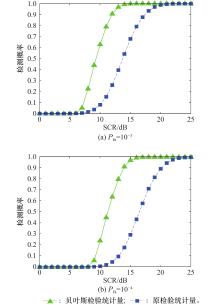
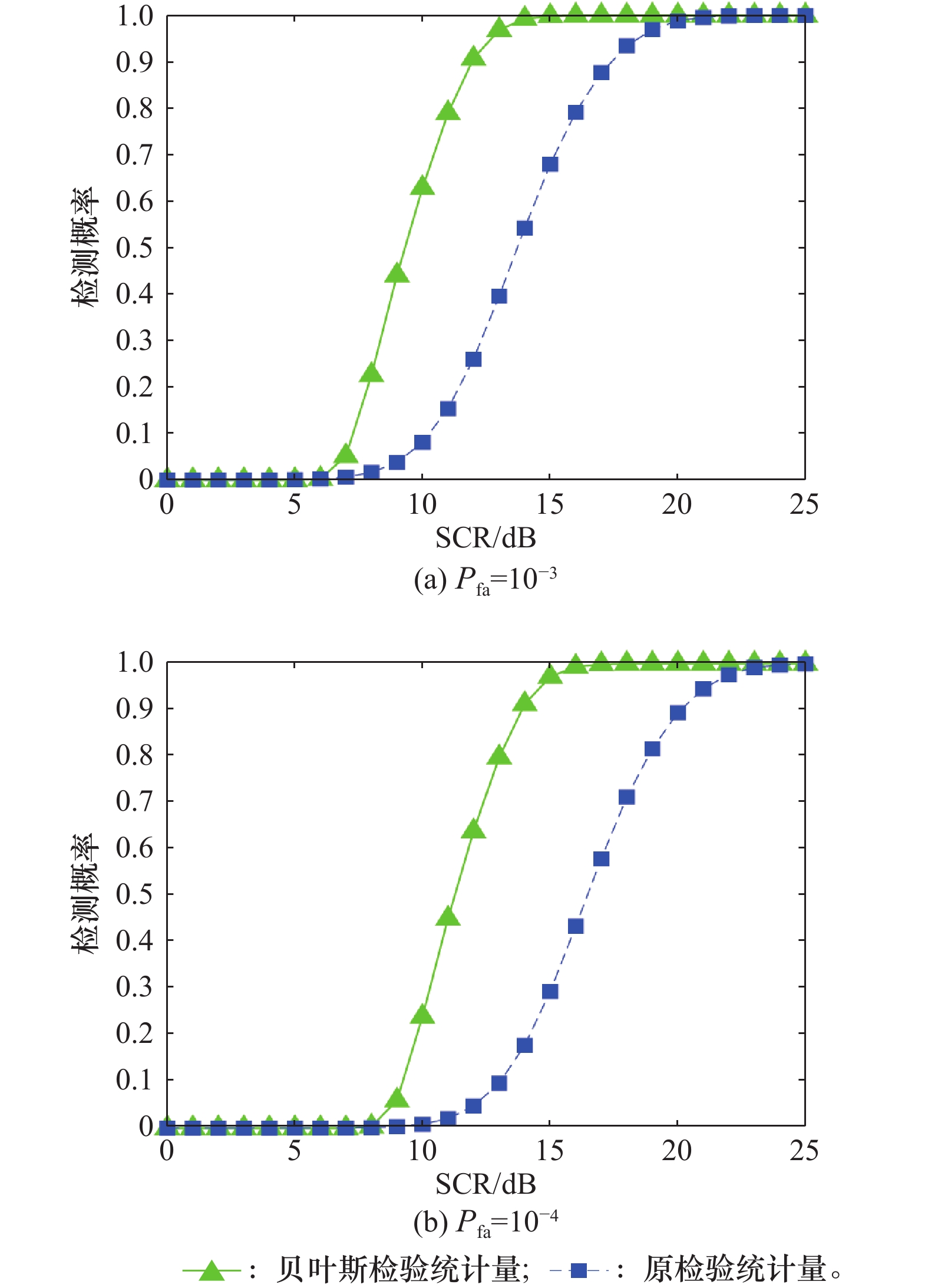
Fig.13
SCR-detection probability curve between original test statistic and Bayesian test statistic"
| 1 |
PANAGOPOULOS S, SORAGHAN J J. Small-target detection in sea clutter[J]. IEEE Trans. on Geoscience and Remote Sensing, 2004, 42 (7): 1355- 1361.
doi: 10.1109/TGRS.2004.827259 |
| 2 |
GRECO M, STINCO P, GINI F, et al. Impact of sea clutter nonstationarity on disturbance covariance matrix estimation and CFAR detector performance[J]. Transactions on Aerospace and Electronic Systems, 2010, 46 (3): 1502- 1513.
doi: 10.1109/TAES.2010.5545205 |
| 3 |
SHUI P L, LI D C, XU S W. Tri-feature-based detection of floating small targets in sea clutter[J]. IEEE Trans. on Aerospace and Electronic Systems, 2014, 50 (2): 1416- 1430.
doi: 10.1109/TAES.2014.120657 |
| 4 | SHI Y L, HU Y. mRMR-Tri-ConcaveHull detector for floating small targets in sea clutter[J]. IEEE Journal of Selected Topics in Applied Earth Observations and Remote Sensing, 2023, 16, 6799- 6811. |
| 5 | 吴巍, 薛冰, 刘丹丹. 基于Tri-feature训练的目标与海杂波鉴别算法[J]. 系统工程与电子技术, 2024, 46 (9): 2935- 2940. |
| WU W, XUE B, LIU D D. Target and sea clutter identification algorithm based on Tri-feature training[J]. Systems Engineering and Electronics, 2024, 46 (9): 2935- 2940. | |
| 6 |
GUO Z X, BAI X H, LI J Y, et al. Small target detection in sea clutter using dominant clutter tree based on anomaly detection framework[J]. Signal Processing, 2024, 219, 109399.
doi: 10.1016/j.sigpro.2024.109399 |
| 7 |
YU H L, CAO Z, WANG G Q, et al. A classification method for marine surface floating small targets and ship targets[J]. IEEE Journal on Miniaturization for Air and Space Systems, 2024, 5 (2): 94- 99.
doi: 10.1109/JMASS.2024.3372116 |
| 8 |
GUAN J, JIANG X Y, LIU N B, et al. Target detection in sea clutter based on feature re-expression using spearman correlation[J]. IEEE Sensors Journal, 2024, 24 (19): 30435- 30450.
doi: 10.1109/JSEN.2024.3440065 |
| 9 |
GUO Z X, BAI X H, SHUI P L, et al. Fast dual trifeature-based detection of small targets in sea clutter by using median normalized Doppler amplitude spectra[J]. IEEE Journal of Selected Topics in Applied Earth Observations and Remote Sensing, 2023, 16, 4050- 4063.
doi: 10.1109/JSTARS.2023.3268181 |
| 10 | LI D C, SHUI P L. Floating small target detection in sea clutter via normalised Doppler power spectrum[J]. IET Radar, Sonar & Navigation, 2016, 10(4): 699-706. |
| 11 |
SHI S N, SHUI P L. Sea-surface floating small target detection by one-class classifier in time-frequency feature space[J]. IEEE Trans. on Geoscience and Remote Sensing, 2018, 56 (11): 6395- 6411.
doi: 10.1109/TGRS.2018.2838260 |
| 12 | SHUI P L, GUO Z X, SHI S N. Feature-compression-based detection of sea-surface small targets[J]. IEEE Access, 2019, 8, 8371- 8385. |
| 13 |
GUO Z X, BAI X H, LI J Y, et al. Fast detection of small targets in high-resolution maritime radars by feature normalization and fusion[J]. IEEE Journal of Oceanic Engineering, 2022, 47 (3): 736- 750.
doi: 10.1109/JOE.2021.3133553 |
| 14 |
BAI X H, XU S W, ZHU J N, et al. Floating small target detection in sea clutter based on multifeature angle variance[J]. IEEE Journal of Selected Topics in Applied Earth Observations and Remote Sensing, 2023, 16, 9422- 36.
doi: 10.1109/JSTARS.2023.3321998 |
| 15 | XIE J D, XU X J. Phase-feature-based detection of small targets in sea clutter[J]. IEEE Geoscience and Remote Sensing Letters, 2021, 19, 1- 5. |
| 16 | XU S W, ZHENG J B, PU J, et al. Sea-surface floating small target detection based on polarization features[J]. IEEE Geoscience and Remote Sensing Letters, 2018, 15 (10): 1505- 1509. |
| 17 | XU S W, HE Q. Spatio-temporal dynamic graph attention network-based detector for sea-surface small targets[J]. IEEE Trans. on Aerospace and Electronic Systems , 2024, 60(6): 8010−8021. |
| 18 | RU H T, XU S W, HE Q, et al. Marine small floating target detection method based on fusion weight and graph dynamic attention mechanism[J]. IEEE Trans. on Geoscience and Remote Sensing, 2023, 61 |
| 19 | SU N Y, CHEN X L, GUAN J, et al. Radar maritime target detection via spatial-temporal feature attention graph convolutional network[J]. IEEE Trans. on Geoscience and Remote Sensing, 2024, 62, 5102615. |
| 20 | 董云龙, 张兆祥, 丁昊, 等. 基于三特征预测的海杂波中小目标检测方法 [J]. 雷达学报, 2023, 12(4): 762-75. |
| DONG Y L, ZHANG Z X, DING H, et al. Target detection in sea clutter using a three-feature prediction-based method[J]. Journal of Radars, 2023, 12(4): 762–775. | |
| 21 | WU X J, DING H, LIU N B, et al. Priori information-based feature extraction method for small target detection in sea clutter[J]. IEEE Trans. on Geoscience and Remote Sensing, 2022, 60, 1- 15. |
| 22 | YU H L, DING H, CAO Z, et al. A floating small target identification method based on doppler time series information[J]. Remote Sensing, 2024, 16 (3): 505. |
| 23 | WU X J, DING H, LIU N B, et al. A method for detecting small targets in sea surface based on singular spectrum analysis[J]. IEEE Trans. on Geoscience and Remote Sensing, 2021, 60 |
| 24 | XU S W, MA Y T, BAI X H. Small target detection method in sea clutter based on interframe multi-feature iteration[C]//Proc. of the IEEE 6th International Conference on Signal and Image Processing, 2021: 82–87. |
| 25 | SABAHI M F, HASHEMI M M, SHEIKHI A. Radar detection based on Bayesian estimation of target amplitude[J]. IET Radar, Sonar & Navigation, 2008, 2(6): 458–467. |
| 26 | LIANG X, YU H, ZOU P J, et al. Multiscan recursive Bayesian parameter estimation of large-scene spatial-temporally varying generalized Pareto distribution model of sea clutter[J]. IEEE Trans. on Geoscience and Remote Sensing, 2022, 60 |
| 27 | YU H, SHUI P L, ZENG W L , et al. Multiscan recursive bayesian method for parameter estimation of spatially-varying sea clutter models[C]//Proc. of the International Conference on Radar, 2018. |
| 28 | XUE J, XU S W, LIU J, et al. Bayesian detection for radar targets in compound-Gaussian sea clutter[J]. IEEE Geoscience and Remote Sensing Letters, 2022, 19, 4020805. |
| 29 | 许述文, 王喆祥, 水鹏朗. 海杂波背景下雷达目标贝叶斯检测算法[J]. 西安电子科技大学学报(自然科学版), 2021, 48 (2): 15- 26. |
| XU S W, WANG Z X, SHUI P L. Bayesian detection algorithm for radar targets in sea clutter background[J]. Journal of Xi’an University of Electronic Science and Technology (Natural Science Edition), 2021, 48 (2): 15- 26. | |
| 30 | 许述文, 王乐, 曾威良, 等. 逆伽马纹理复合高斯杂波参数的贝叶斯估计方法[J]. 太赫兹科学与电子信息学报, 2019, 17(4): 583−588. |
| XU S W, WANG L, ZENG W L, et al. Bayesian estimation method for composite Gaussian clutter parameters with inverse gamma texture [J] Journal of Terahertz Science and Electronic Information, 2019, 17(4): 583−588. | |
| 31 | 邹鲲, 张斌, 王晓薇, 等. 贝叶斯估计器先验模型参数的迭代感知方法[J]. 电子与信息学报, 2015, 37 (6): 1402- 1408. |
| ZHOU K, ZHANG B, WANG X W, et al. Iterative perception method for Bayesian estimator’s prior model parameters[J]. Journal of Electronics and Information Technology, 2015, 37 (6): 1402- 1408. | |
| 32 | KAY S M. Fundamental of statistical signal processing, volume I: estimation theory[M]. New Jersy: Pearson Education Inc. , 1993: 360-365. |
| 33 | 关键, 刘宁波, 王国庆, 等. 雷达对海探测试验与目标特性数据获取——海上目标双极化多海况散射特性数据集[J]. 雷达学报, 2023, 12(2): 456−469. |
| GUAN J, LIU N B, WANG G Q, et al. Sea-detecting radar experiment and target feature data acquisition for dual polarization multistate scattering dataset of marine targets[J]. Journal of Radars, 2023, 12(2): 456–469. |
| [1] | Jianhua ZHU, Chen ZHOU, Mingjie LYU, Junming WANG, Moran LIU, Xinmiao ZHANG, Zhengyu ZHAO. Statistical analysis of and modeling research on ionospheric clutter for skywave over-the-horizon radar applications [J]. Systems Engineering and Electronics, 2026, 48(1): 56-66. |
| [2] | Haiqing CHEN, Liuying WANG, Gu LIU, Long WANG, Chaoqun GE, Mengzhou CHEN. Research progress on denoising algorithms for synthetic aperture radar images [J]. Systems Engineering and Electronics, 2026, 48(1): 94-105. |
| [3] | Bin ZHANG, Gaotian XU, Tinghao ZHANG, Zhihui LI, Hongqiang HE. Forward-looking high resolution imaging algorithm for distributed synthetic aperture radar [J]. Systems Engineering and Electronics, 2026, 48(1): 119-131. |
| [4] | Ning GAO, Feng XU, Juan YANG. Parameter estimation algorithm of underwater moving small target in MIMO sonar based on FrFT [J]. Systems Engineering and Electronics, 2025, 47(9): 2797-2807. |
| [5] | Mingyu JIANG, Shunsheng ZHANG, Siyao XIAO. SAR target recognition based on lightweight cross-attention convolutional neural network [J]. Systems Engineering and Electronics, 2025, 47(9): 2853-2861. |
| [6] | Jiaqi ZHANG, Fang LIU, Cao ZENG, Haihong TAO, Shihua ZHAO. Broken track association method for joint radar and photoelectric equipment [J]. Systems Engineering and Electronics, 2025, 47(9): 2862-2869. |
| [7] | Xiang LI, Ding ZENG, Junjun YIN, Xianyu GUO, Jian YANG. Guided filtering for polarimetric SAR image based on gradient fusion [J]. Systems Engineering and Electronics, 2025, 47(9): 2890-2904. |
| [8] | Guohui ZHU, Lin YANG, Yang WANG, Taoye ZHENG. A modified PRF design method for high-speed maneuvering-platform SAR imaging [J]. Systems Engineering and Electronics, 2025, 47(9): 2905-2912. |
| [9] | Shuyao LAN, Yu LI, Chunhua ZHANG, Cheng CHI, Chunhui CHEN. Diversity shading vertical array signal transmission strategy for shadow zone detection [J]. Systems Engineering and Electronics, 2025, 47(8): 2454-2462. |
| [10] | Kuan YANG, Xiaojian XU. Active polarimetric calibration technique based on parameter extrapolation for ultrawide-band radar [J]. Systems Engineering and Electronics, 2025, 47(8): 2498-2510. |
| [11] | Yingcong LUO, Lei ZHANG, Shaopeng WEI, Zhichao MENG. Joint design algorithm using chaotic waveform and mismatched filter for low sidelobe near mainlobe region [J]. Systems Engineering and Electronics, 2025, 47(8): 2511-2518. |
| [12] | Weihong FU, Wenhong PENG, Naian LIU. SAR image small target detection method with hybrid attention optimization [J]. Systems Engineering and Electronics, 2025, 47(8): 2519-2526. |
| [13] | Kang NI, Wenjie JIA, Minrui ZOU, Zhizhong ZHENG. SAR object detection based on dynamic aggregation network [J]. Systems Engineering and Electronics, 2025, 47(8): 2527-2539. |
| [14] | Juntian BO, Wantian WANG, Yaxing LI, Yunshuo ZHANG, Hengfeng WANG, Jiahao ZHANG, Jin MENG. Analysis and optimization of bandwidth limitation for anti-mainlobe jamming method based on waveform coding [J]. Systems Engineering and Electronics, 2025, 47(8): 2540-2548. |
| [15] | Chen TIAN, Yangyang GUAN, Chunliang DAI, Yu MAO. LPI based line formation design of multiple receivers for single-transmitter multiple-receiver cooperative radar system [J]. Systems Engineering and Electronics, 2025, 47(7): 2176-2184. |
| Viewed | ||||||
|
Full text |
|
|||||
|
Abstract |
|
|||||