Systems Engineering and Electronics ›› 2025, Vol. 47 ›› Issue (9): 2890-2904.doi: 10.12305/j.issn.1001-506X.2025.09.11
• Sensors and Signal Processing • Previous Articles
Guided filtering for polarimetric SAR image based on gradient fusion
Xiang LI1( ), Ding ZENG2(), Junjun YIN2,*(), Xianyu GUO2(), Jian YANG3()
- 1. Beijing Institute of Radio Measurement,Beijing 100854,China
2. School of Computer and Communication Engineering,University of Science and Technology Beijing,Beijing 100083,China
3. Department of Electronic Engineering,Tsinghua University,Beijing 100084,China
-
Received:2024-10-15Online:2025-09-25Published:2025-09-16 -
Contact:Junjun YIN E-mail:150194353@qq.com;1215978653@qq.com;michelle198329@163.com;guoxianyu@xs.ustb.edu.cn;yangjian_ee@tsinghua.edu.cn

CLC Number:
Cite this article
Xiang LI, Ding ZENG, Junjun YIN, Xianyu GUO, Jian YANG. Guided filtering for polarimetric SAR image based on gradient fusion[J]. Systems Engineering and Electronics, 2025, 47(9): 2890-2904.
share this article
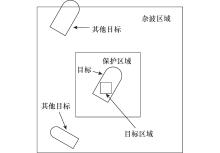
Fig.1
Area selection diagram of CFAR algorithm"
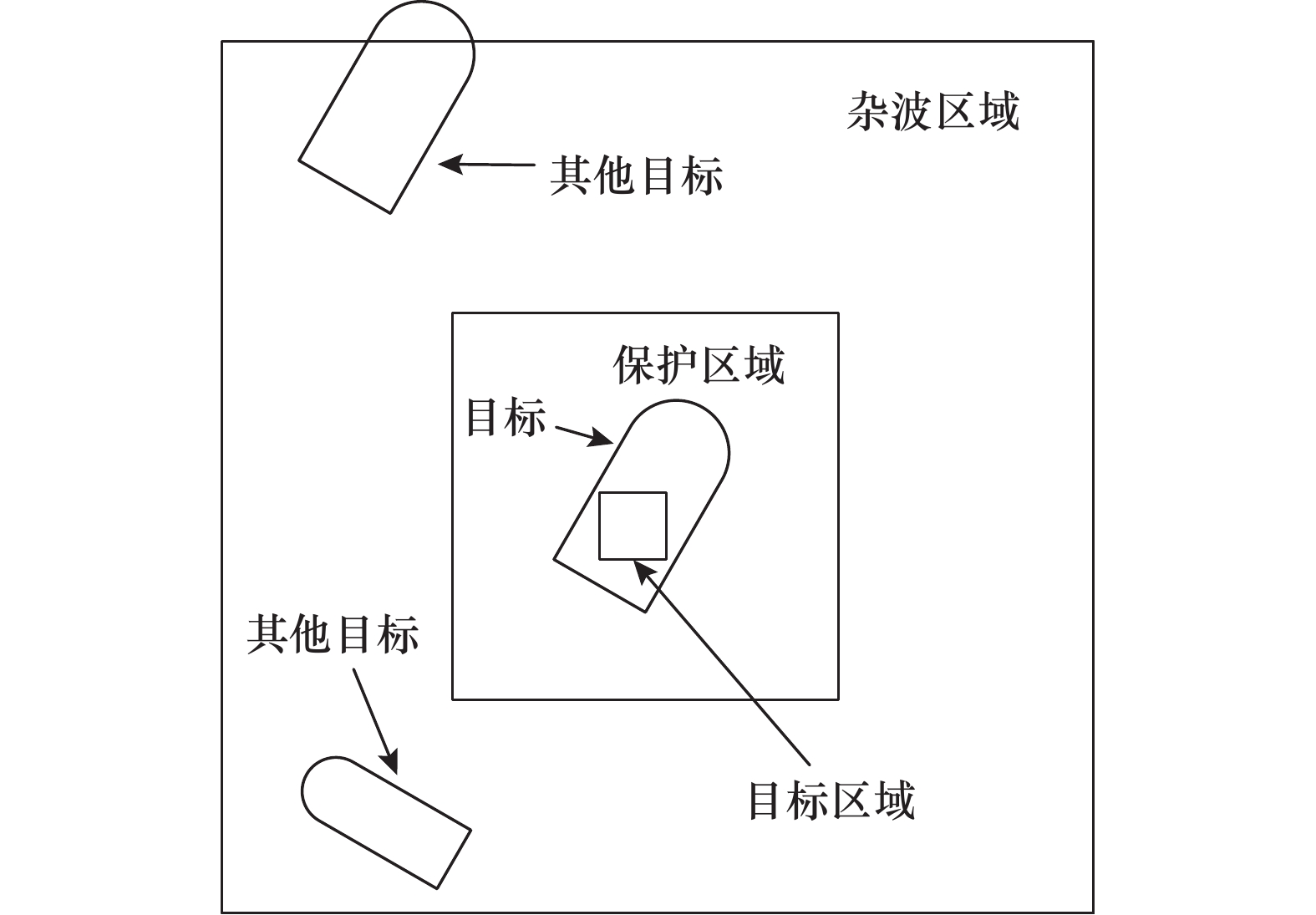
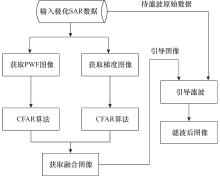
Fig.2
Flow chart of the proposed algorithm"
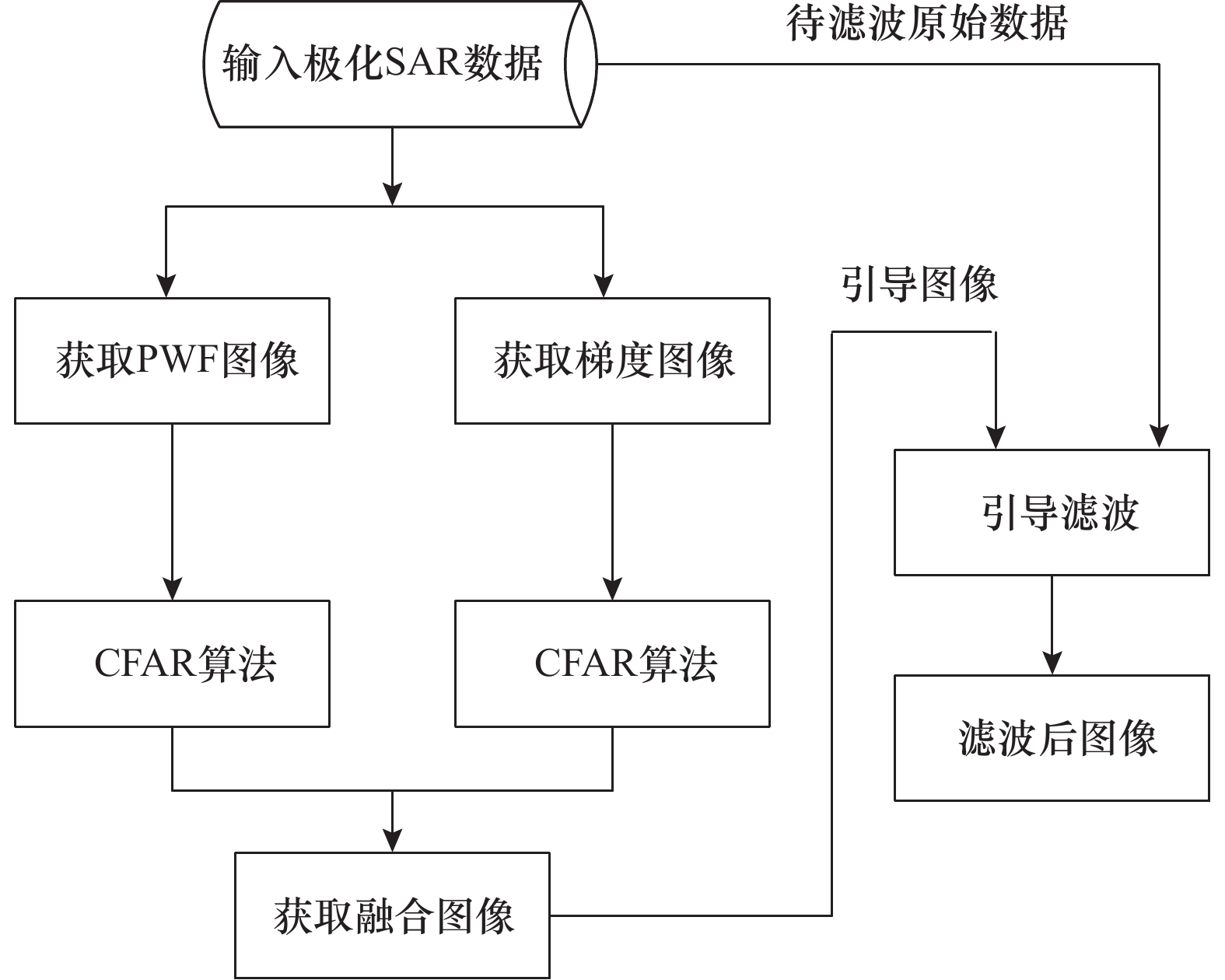
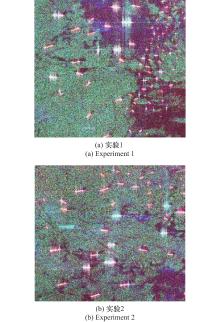
Fig.3
Pauli pseudo-color image of original data"

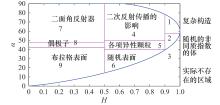
Fig.4
$H/\alpha $ two-dimensional distribution plane"
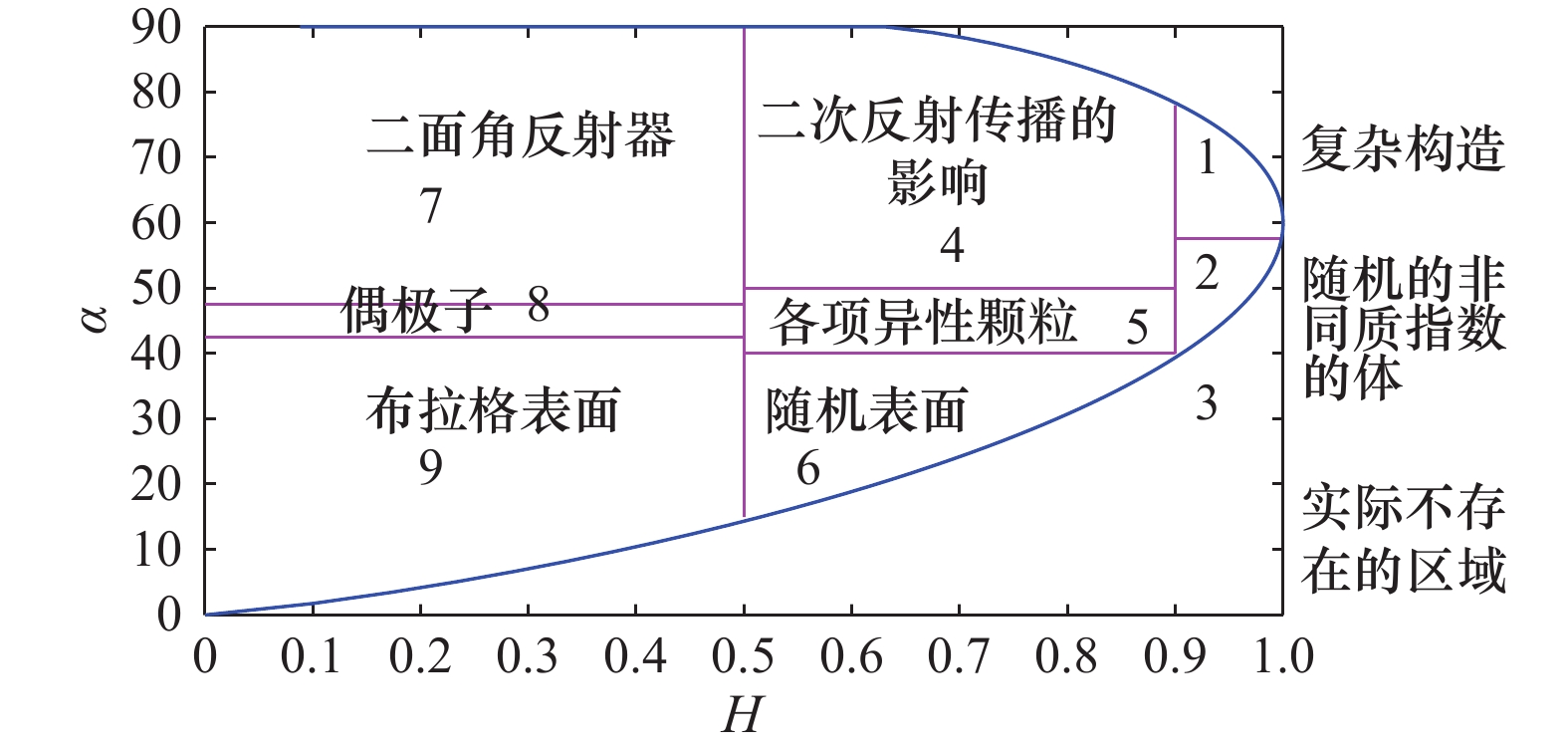
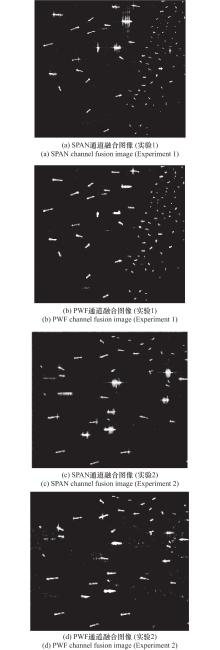
Fig.5
Experimental results of channel fusion"
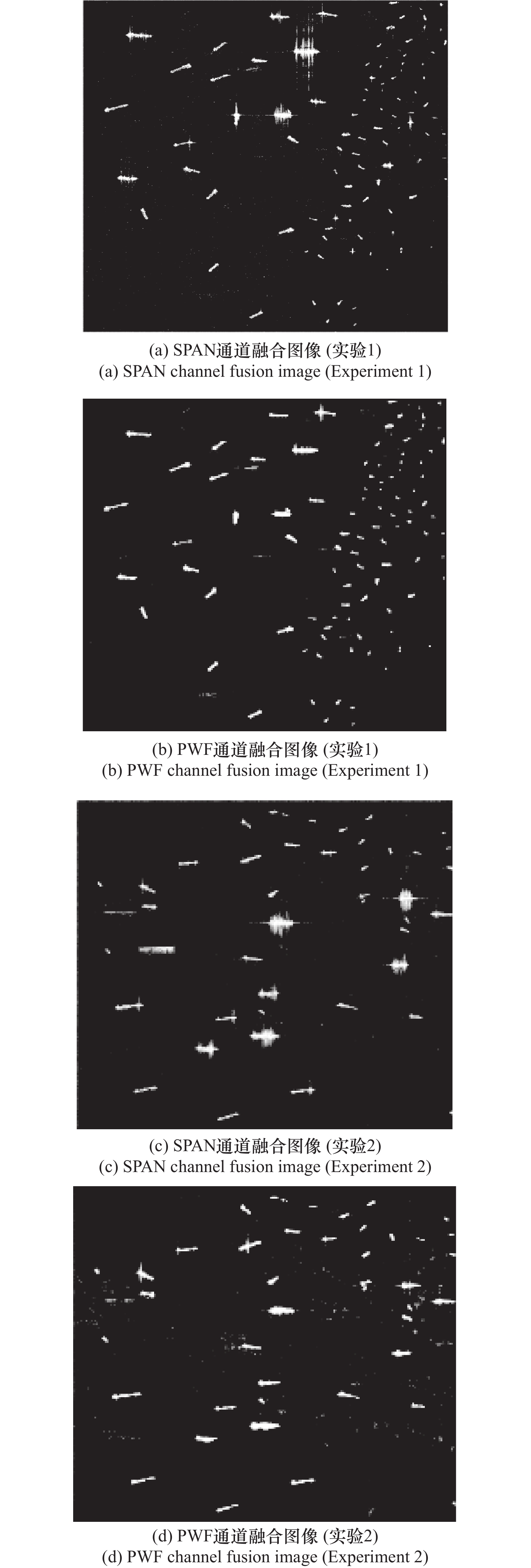
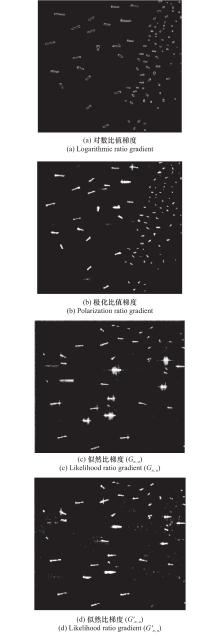
Fig.6
Experimental results of polarization gradient"
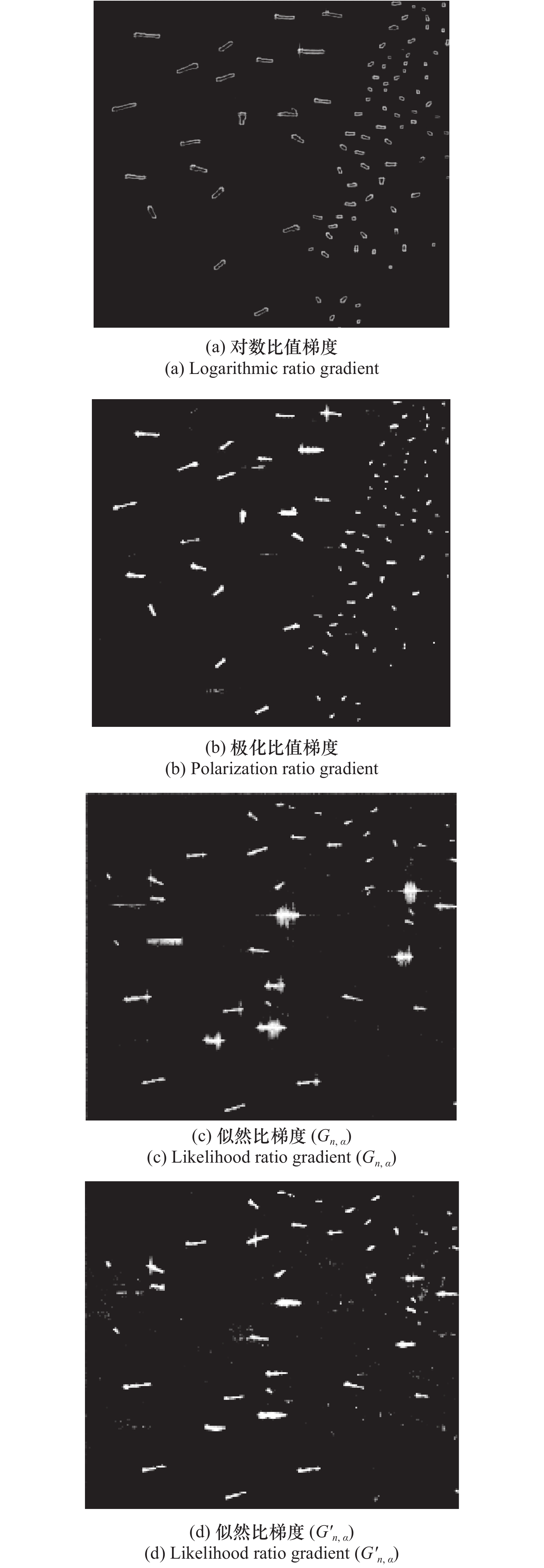
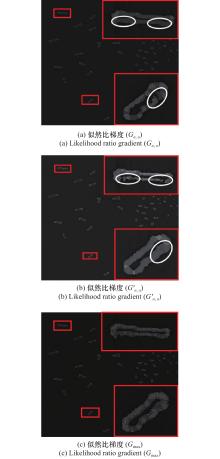
Fig.7
Detail diagram of likelihood ratio gradient"
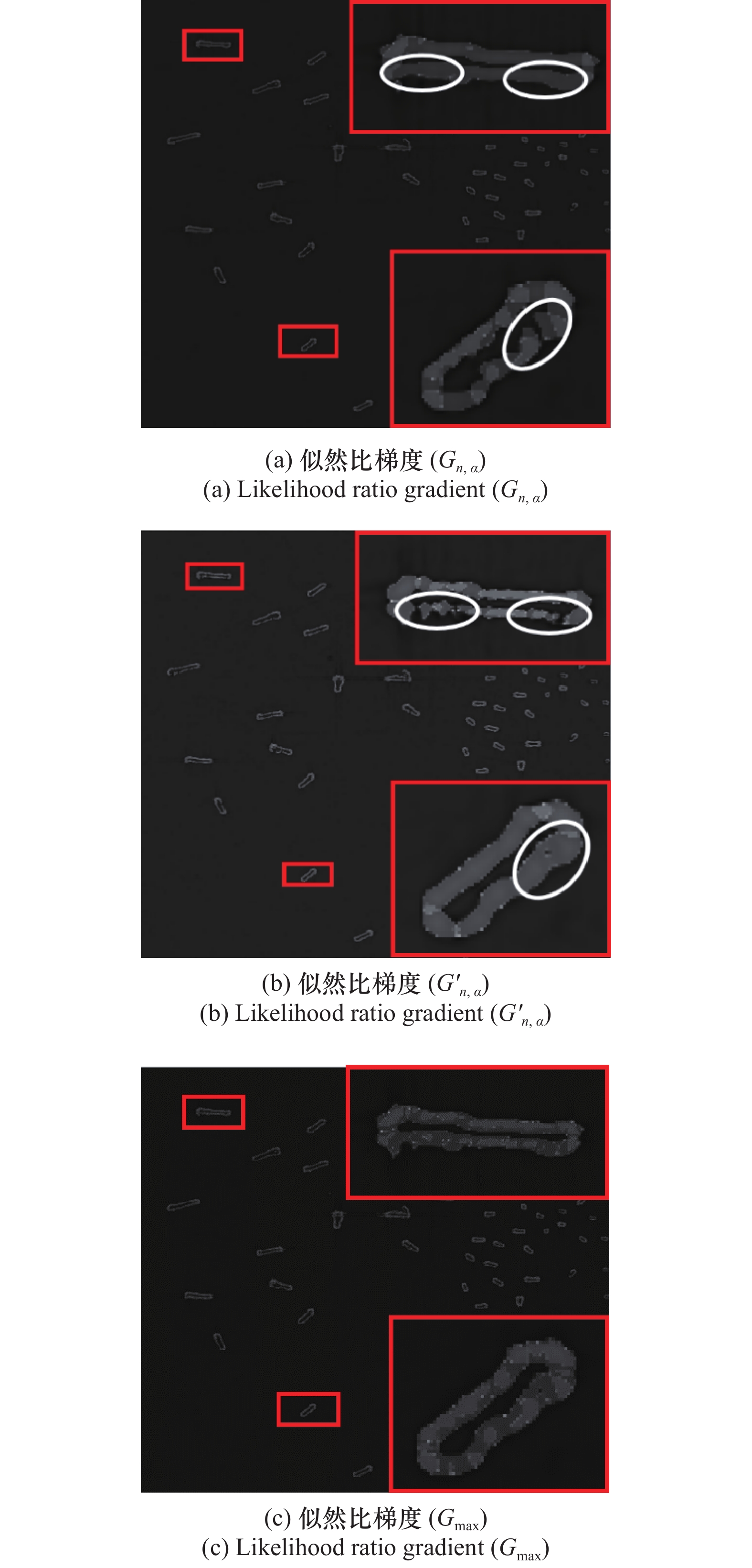
Fig.8
Binarization results of gradient diagram"
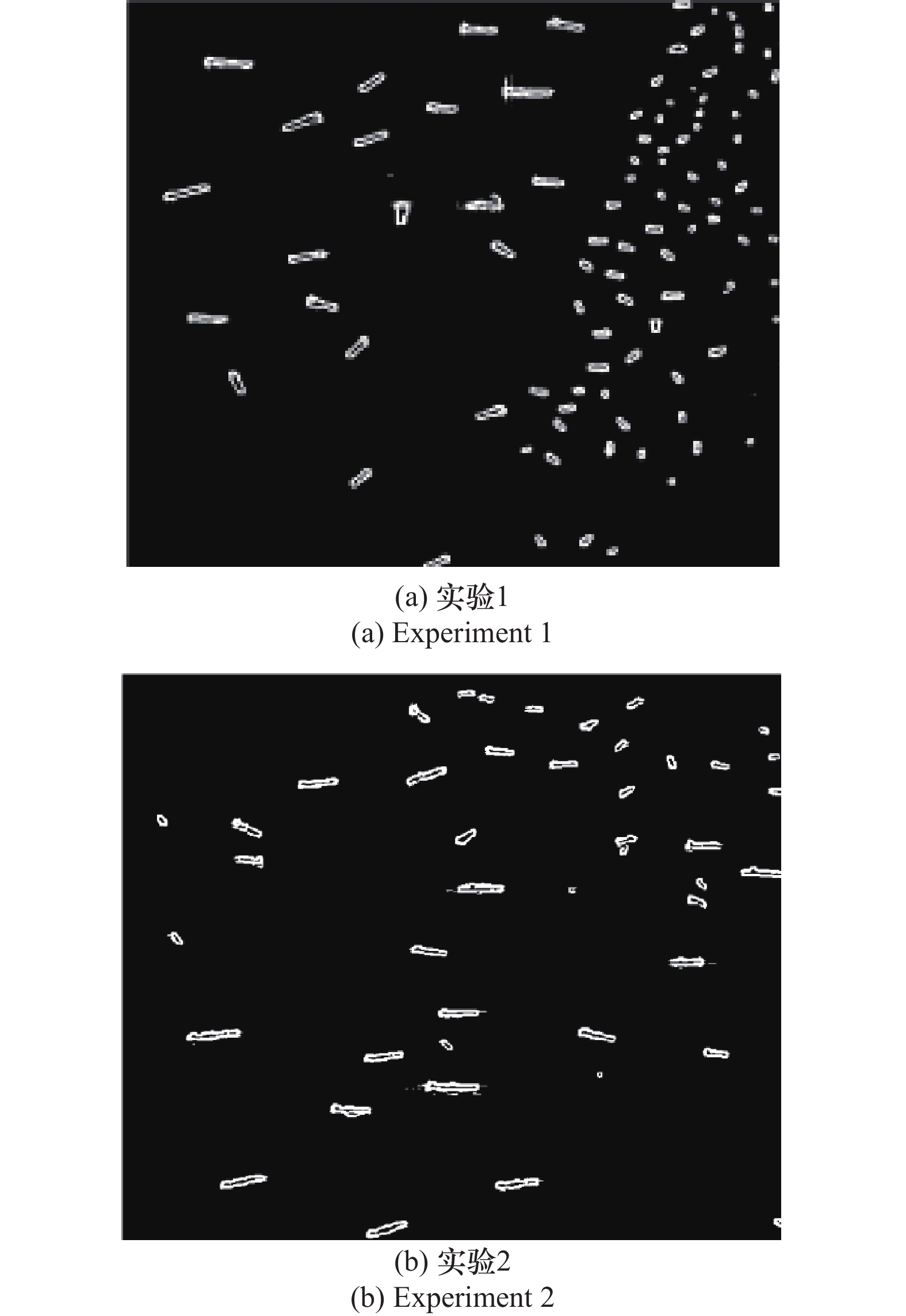
Fig.9
Comparison of PWF binarization results with different thresholds"
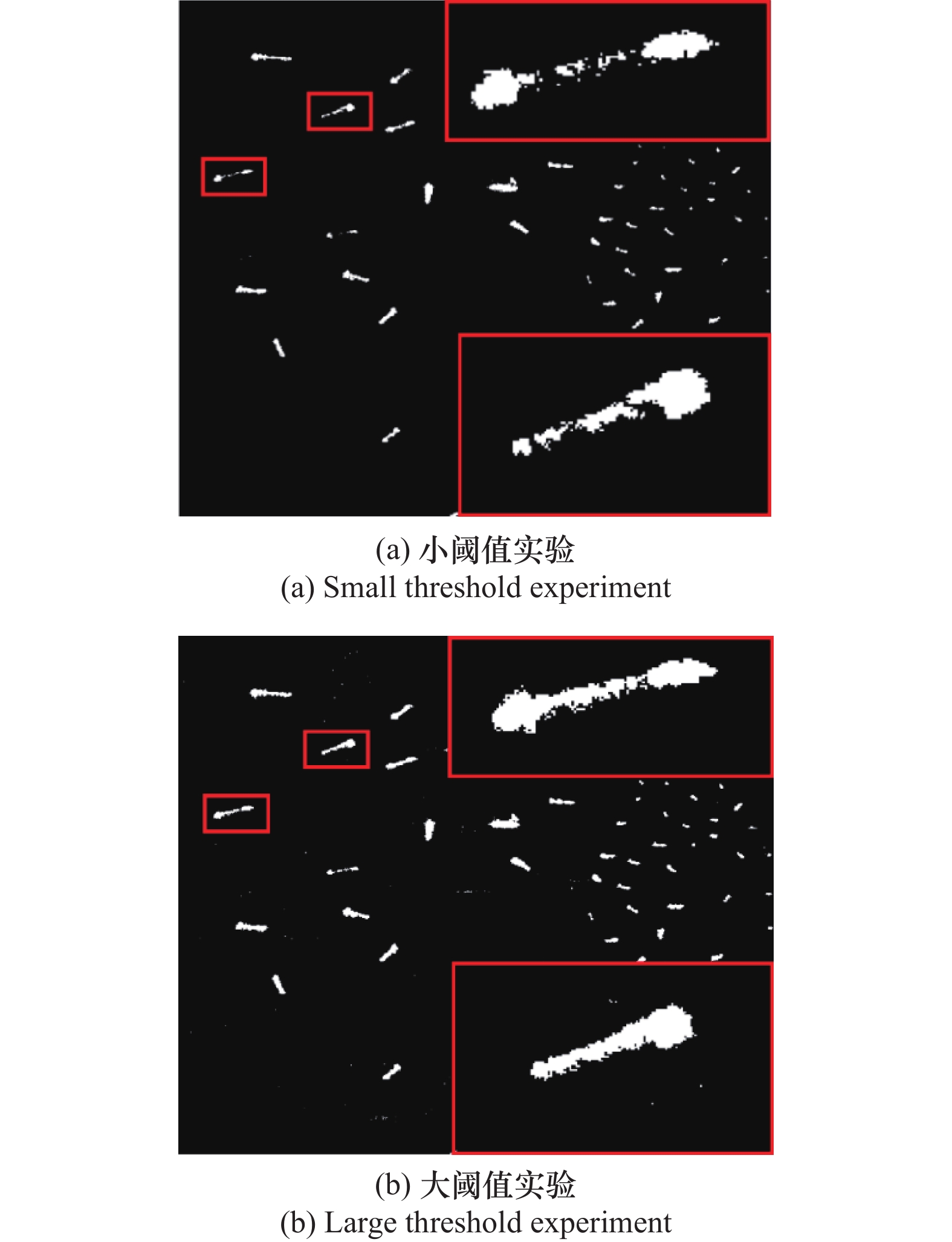
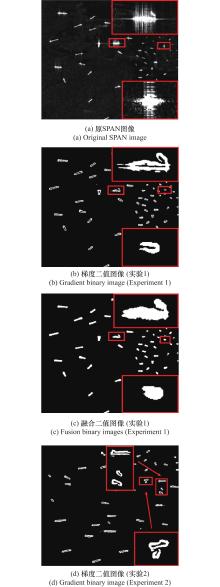
Fig.10
Binarization results of gradient information"
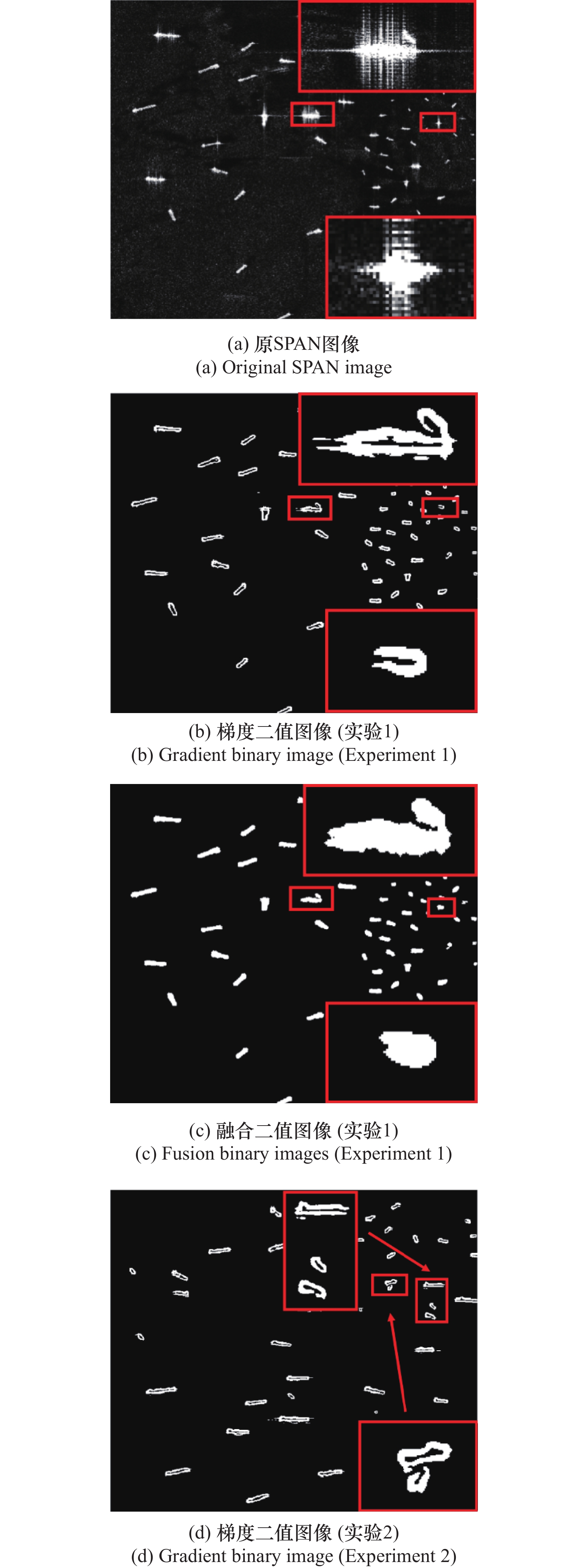
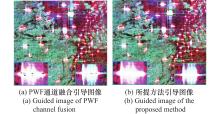
Fig.11
Pauli diagram of different guided images after filtering"
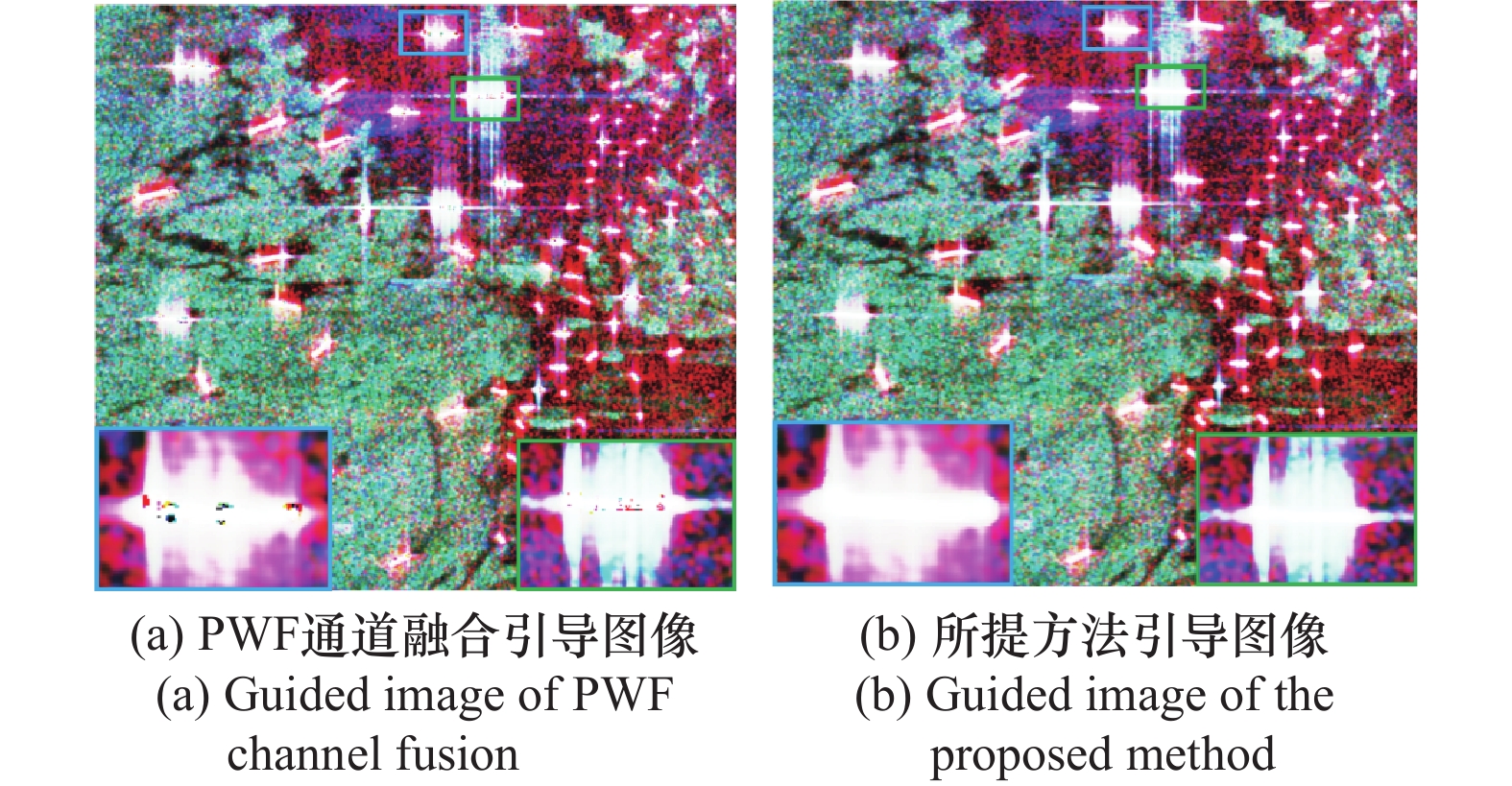
Fig.12
Experimental Pauli diagram"

Fig.13
Experimental SPAN diagram details"
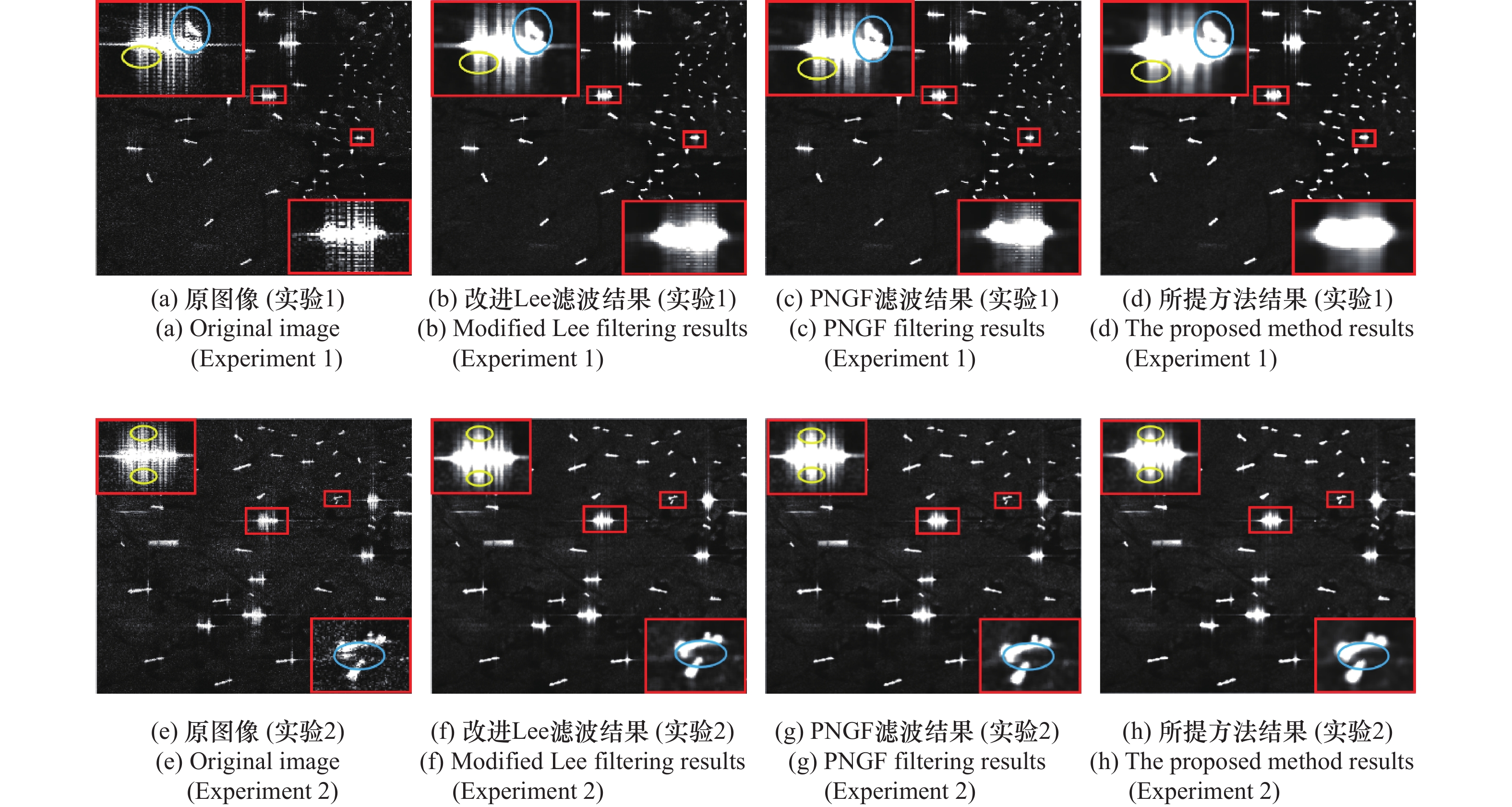
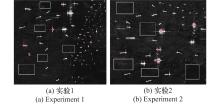
Fig.14
Experimental area"
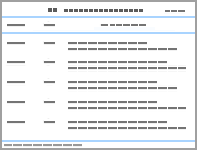
Table 1
Performance evaluation of every filtering result"
| 滤波类型 | 实验1 | 实验2 | |||||
| ENL | 标准差 | SSIM | ENL | 标准差 | SSIM | ||
| 原始数据 | 1 | 1 | |||||
| 改进Lee滤波 | |||||||
| PNGF滤波 | |||||||
| 所提方法滤波 | |||||||
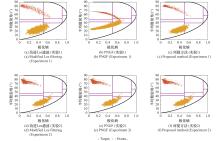
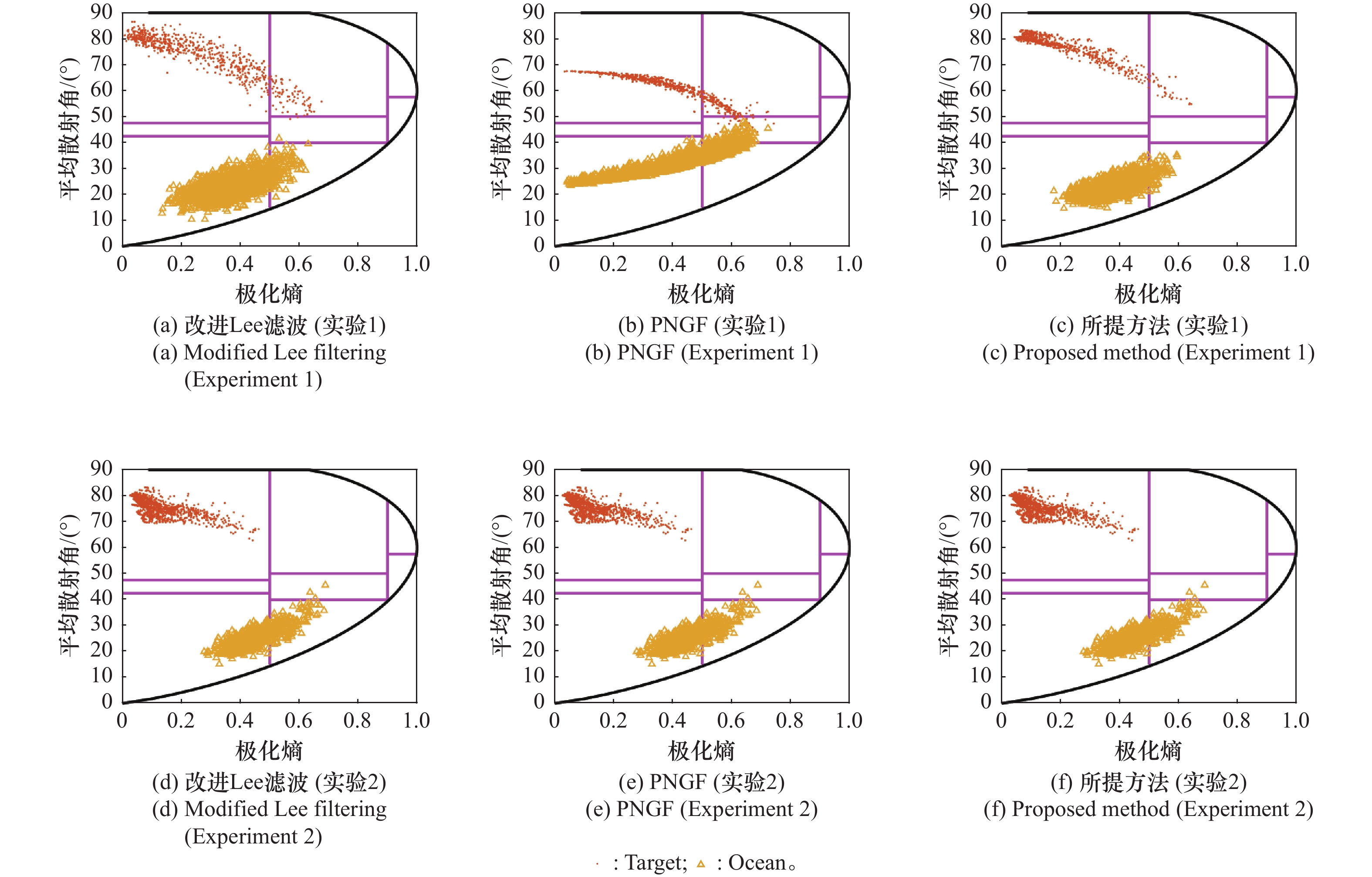
Fig.15
Scatter plots diagram of $H/\alpha $ decomposition"
| 1 |
HE K M, SUN J, TANG X O. Guided image filtering[J]. IEEE Trans. on Pattern Analysis and Machine Intelligence, 2013, 35 (6): 1397- 1409.
doi: 10.1109/TPAMI.2012.213 |
| 2 | 谢伟, 周玉钦, 游敏. 融合梯度信息的改进引导滤波[J]. 中国图象图形学报, 2016, 21 (9): 1119- 1126. |
| XIE W, ZHOU Y Q, YOU M. Improved guided image filtering integrated with gradient information[J]. Journal of Image and Graphics, 2016, 21 (9): 1119- 1126. | |
| 3 | 葛朋, 杨波, 韩庆林, 等. 一种基于引导滤波图像分层的红外图像细节增强算法[J]. 红外技术, 2018, 40(12): 1161−1170. |
| GE P, YANG B, HAN Q L, et al. Infrared image detail enhancement algorithm based on hierarchical processing by guided image filter[J]. Infrared Technology, 2018, 40(12): 1161−1169. | |
| 4 |
NI W P, GAO X B. Despeckling of SAR image using generalized guided filter with Bayesian nonlocal means[J]. IEEE Trans. on Geoscience and Remote Sensing, 2016, 54 (1): 567- 579.
doi: 10.1109/TGRS.2015.2462120 |
| 5 |
MA X S, WU P H, SHEN H F. A nonlinear guided filter for polarimetric SAR image despeckling[J]. IEEE Trans. on Geoscience and Remote Sensing, 2019, 57 (4): 1918- 1927.
doi: 10.1109/TGRS.2018.2870188 |
| 6 | ZHANG H, XU H, XIAO Y, et al. Rethinking the image fusion: a fast unified image fusion network based on proportional maintenance of gradient and intensity[C]//Proc. of the AAAI Conference on Artificial Intelligence, 2020: 12797−12804. |
| 7 | 陈奇. 基于图像梯度与生成对抗网络的图像超分辨率重建算法[D]. 广州: 华南理工大学, 2020. |
| CHEN Q. Image super-resolution based on image gradient and generative adversarial networks[D]. Guangzhou: South China University of Technology, 2020. | |
| 8 | LOWE D G. Object recognition from local scale-invariant features[C]//Proc. of the IEEE 7th International Conference on Computer Vision, 1999. |
| 9 |
RIGNOT E J, VAN Z J J. Change detection techniques for ERS-1 SAR data[J]. IEEE Trans. on Geoscience and Remote sensing, 1993, 31 (4): 896- 906.
doi: 10.1109/36.239913 |
| 10 |
WANG H M, ZENG L, ZHANG T, et al. A PolSAR despeckling method based on Wishart gradient and anisotropic diffusion[J]. Electronics Letters, 2021, 57 (3): 126- 128.
doi: 10.1049/ell2.12086 |
| 11 |
LIU G Q, HUANG S J, TORRE A, et al. The multilook polarimetric whitening filter (MPWF) for intensity speckle reduction in polarimetric SAR images[J]. IEEE Trans. on Geoscience and Remote Sensing, 1998, 36 (3): 1016- 1020.
doi: 10.1109/36.673694 |
| 12 | NOVAK L M, BURL M C. Optimal speckle reduction in polarimetric SAR imagery[C]//Proc. of the 22nd Asilomar Conference on Signals, Systems and Computers, 1988. |
| 13 | MA X S, WU P H, WU Y L, et al. A review on recent developments in fully polarimetric SAR image despeckling[J]. IEEE Journal of Selected Topics in Applied Earth Observations and Remote Sensing, 2017, 11 (3): 743- 758. |
| 14 |
韩萍, 贾锟, 卢晓光, 等. PolSAR图像的改进非局部均值滤波算法[J]. 系统工程与电子技术, 2019, 41 (5): 992- 999.
doi: 10.3969/j.issn.1001-506X.2019.05.09 |
|
HAN P, JIA K, LU X G, et al. Improved non-local mean filtering method for PolSAR images[J]. Systems Engineering and Electronics, 2019, 41 (5): 992- 999.
doi: 10.3969/j.issn.1001-506X.2019.05.09 |
|
| 15 |
MU W X, WANG N, FANG L, et al. Superpixel-level CFAR ship detection based on polarimetric bilateral truncated statistics[J]. IEEE Journal of Selected Topics in Applied Earth Observations and Remote Sensing, 2024, 17, 4247- 4262.
doi: 10.1109/JSTARS.2024.3356591 |
| 16 |
SALEHI H, VAHIDI J, ABDELJAWAD T, et al. A SAR image despeckling method based on an extended adaptive Wiener filter and extended guided filter[J]. Remote Sensing, 2020, 12 (15): 2371.
doi: 10.3390/rs12152371 |
| 17 | FERRAIOLI G. Multichannel InSAR building edge detection[J]. IEEE Trans. on Geoscience and Remote Sensing, 2009, 48 (3): 1224- 1231. |
| 18 | LIU H, HE Z W, ZHAO Y B, et al. Improved ROEWA edge detector for SAR images[J]. Journal of Remote Sensing, 2017, 21 (2): 273- 279. |
| 19 |
LUO Y X, AN D X, WANG W, et al. Improved ROEWA SAR image edge detector based on curvilinear structures extraction[J]. IEEE Geoscience and Remote Sensing Letters, 2020, 17 (4): 631- 635.
doi: 10.1109/LGRS.2019.2926428 |
| 20 | DELLINGER F, DELON J, GOUSSEAU Y, et al. SAR-SIFT: a SIFT-like algorithm for SAR images[J]. IEEE Trans. on Geoscience and Remote Sensing, 2014, 53 (1): 453- 466. |
| 21 |
NIELSEN A A, CONRADSEN K, SKRIVER H. Change detection in full and dual polarization, single-and multifrequency SAR data[J]. IEEE Journal of Selected Topics in Applied Earth Observations and Remote Sensing, 2015, 8 (8): 4041- 4048.
doi: 10.1109/JSTARS.2015.2416434 |
| 22 |
殷君君, 罗嘉豪, 李响, 等. 基于极化SAR梯度和复Wishart分类器的舰船检测[J]. 雷达学报, 2024, 13 (2): 396- 410.
doi: 10.12000/JR23198 |
|
YIN J J, LUO J H, LI X, et al. Ship detection based on polarimetric SAR gradient and complex Wishart classifier[J]. Journal of Radars, 2024, 13 (2): 396- 410.
doi: 10.12000/JR23198 |
|
| 23 | NEYMAN J, PEARSON E S. On the problem of the most efficient tests of statistical hypotheses[J]. Philosophical Transactions of the Royal Society of Series A, 1933, 231, 289- 337. |
| 24 | FARINA A, STUDER F A. A review of CFAR detection techniques in radar systems[J]. Microwave Journal, 1986, 29 (9): 115. |
| 25 | WEISS M. Analysis of some modified cell-averaging CFAR processors in multiple-target situations[J]. IEEE Trans. on Aerospace and Electronic Systems, 1982, (1): 102- 114. |
| 26 | 余佳恒, 艾加秋, 史骏, 等. 基于双边截断的双参数海上风电站SAR图像CFAR检测[J]. 海军航空大学学报, 2024, 39 (2): 215- 223. |
| YU J H, AI J Q, SHI J, et al. Two-parameter CFAR detectionin of offshore wind farms SAR images based on dual truncated clutter statistics[J]. Journal of Naval Aviation University, 2024, 39 (2): 215- 223. | |
| 27 |
李浠铭, 甘新胜, 程健庆. 基于快速非局部均值滤波的SAR图像相干斑抑制算法[J]. 指挥控制与仿真, 2020, 42 (6): 63- 68.
doi: 10.3969/j.issn.1673-3819.2020.06.011 |
|
LI X M, GAN X S, CHENG J Q. Despeckling algorithm for SAR image based on fast non-local mean filtering[J]. Command Control & Simulation, 2020, 42 (6): 63- 68.
doi: 10.3969/j.issn.1673-3819.2020.06.011 |
|
| 28 |
刘书君, 吴国庆, 张新征, 等. 基于Shearlet域系数处理的SAR图像降噪[J]. 系统工程与电子技术, 2015, 37 (9): 2023- 2028.
doi: 10.3969/j.issn.1001-506X.2015.09.11 |
|
LIU S J, WU G Q, ZHANG X Z, et al. SAR image denoising via the process of shearlet coefficients[J]. Systems Engineering and Electronics, 2015, 37 (9): 2023- 2028.
doi: 10.3969/j.issn.1001-506X.2015.09.11 |
|
| 29 | CAMERON W L, LEUNG L K. Feature motivated polarization scattering matrix decomposition[C]//Proc. of the IEEE International Conference on Radar, 1990. |
| 30 |
CLOUDE S R, POTTIER E. A review of target decomposition theorems in radar polarimetry[J]. IEEE Trans. on Geoscience and Remote Sensing, 1996, 34 (2): 498- 518.
doi: 10.1109/36.485127 |
| 31 |
LEE J S, GRUNES M R, DE-GRANDI G. Polarimetric SAR speckle filtering and its implication for classification[J]. IEEE Trans. on Geoscience and Remote Sensing, 1999, 37 (5): 2363- 73.
doi: 10.1109/36.789635 |
| [1] | Zishuo HAN, Xiquan FAN, Qiang FU, Chuanyan MA, Dongdong ZHANG. Target detection based on multi-source information fusion from the perspective of drones [J]. Systems Engineering and Electronics, 2025, 47(1): 52-61. |
| [2] | Ding ZENG, Junjun YIN, Jian YANG. Nonlocal means filter for polarimetric SAR images based on fusion distance [J]. Systems Engineering and Electronics, 2024, 46(5): 1493-1502. |
| [3] | Wenjuan REN, Zhanpeng YANG, Guangluan XU, Kun FU. Fusion calculation model of sea moving target identity confidence [J]. Systems Engineering and Electronics, 2023, 45(4): 1082-1089. |
| [4] | Ye ZHANG, Yi HOU, Kewei OUYANG, Shilin ZHOU. Survey of univariate sequence data classification methods [J]. Systems Engineering and Electronics, 2023, 45(2): 313-335. |
| [5] | Luning YANG, Zhenghua LIU, Nuan WEN. Integrated navigation trajectory prediction method based on deep Gaussian process for multiple unknown environments [J]. Systems Engineering and Electronics, 2023, 45(11): 3632-3639. |
| [6] | Jian WANG, Zihao HE, Jie LIU, Ke YANG. Image fusion algorithm based on gradient domain guided filtering and improved PCNN [J]. Systems Engineering and Electronics, 2022, 44(8): 2381-2392. |
| [7] | Lin HUANG, Li GONG, Wei JIANG, Kangbo WANG. Remaining useful life prediction based on multi-source information fusion and HMM [J]. Systems Engineering and Electronics, 2022, 44(5): 1747-1756. |
| [8] | Chunling XUE, Fei CAO, Qing SUN, Jianqiang QIN, Xiaowei FENG. Sea-surface weak target detection based on multi-feature information fusion [J]. Systems Engineering and Electronics, 2022, 44(11): 3338-3345. |
| [9] | Yu ZHANG, Kai WU, Jie GUO, Zhishan GE, Baochao ZHANG. Adaptive sequential track-association algorithm based on data quality assessment [J]. Systems Engineering and Electronics, 2022, 44(11): 3477-3485. |
| [10] | Xin GUAN, Haotian YU, Xiao YI. Research on evidence independence and its influence on target recognition [J]. Systems Engineering and Electronics, 2022, 44(1): 192-198. |
| [11] | Yanlei DU, Fan GAO, Tao LIU, Jian YANG. Statistical modeling and characteristic analysis of polarimetric SAR sea clutter at X-band based on numerical simulations [J]. Systems Engineering and Electronics, 2021, 43(10): 2742-2755. |
| [12] | Yan ZHAO, Jianfeng WU, Yupeng GAO. Information fusion method of hypersonic vehicle based on multi-agent navigation [J]. Systems Engineering and Electronics, 2020, 42(2): 405-413. |
| [13] | Jiawei LI, Jing JIANG, Chongyang LIU, Weihua WU. Maximum likelihood registration for systemic error of multiple spaceborne optical sensors [J]. Systems Engineering and Electronics, 2020, 42(1): 1-9. |
| [14] | SHAO Songshi, LIU Haitao, ZHANG Zhihua. Reliability estimation for warship spares by fusing multi-source prior information [J]. Systems Engineering and Electronics, 2019, 41(12): 2905-2910. |
| [15] | HUANG Chenxia, YIN Junjun, YANG Jian. Polarimetric SAR change detection with l1-norm principal component analysis [J]. Systems Engineering and Electronics, 2019, 41(10): 2214-2220. |
| Viewed | ||||||
|
Full text |
|
|||||
|
Abstract |
|
|||||