

系统工程与电子技术 ›› 2025, Vol. 47 ›› Issue (11): 3685-3698.doi: 10.12305/j.issn.1001-506X.2025.11.17
• 系统工程 • 上一篇
王大力1,2( ), 董磊1,2,*, 李华旺1,2, 郑珍珍1,2, 胡海鹰1,2
收稿日期:2025-03-12
出版日期:2025-11-25
发布日期:2025-12-08
通讯作者:
董磊
E-mail:wang61254@163.com
作者简介:王大力(1993—),男,博士研究生,主要研究方向为卫星任务规划
Dali WANG1,2(), Lei DONG1,2,*, Huawang LI1,2, Zhenzhen ZHENG1,2, Haiying HU1,2
Received:2025-03-12
Online:2025-11-25
Published:2025-12-08
Contact:
Lei DONG
E-mail:wang61254@163.com
摘要:
针对多个卫星对多个空间目标在一定时间区间内的多次观测规划问题,提出一种多种群遗传邻域搜索算法(multi-population genetic neighborhood search algorithm,MPGNSA)。首先,考虑卫星观测能力与空间目标观测需求,以目标的观测频次与观测时间在观测周期内收益最大化为设计方向。其次,分析卫星任务规划的约束条件,建立卫星对于空间目标观测任务规划模型。此外,在整体上采用多种群并行进化的方式,在各种群的进化过程中,建立编码方式与启发式规则,保证基因的高适应度,并引入邻域搜索的思想,提升算法收敛速度。最后,仿真结果表明,MPGNSA在任务规划中能够获得较其他对比算法更高的最终适应度;在相同的计算时间限制下,MPGNSA的适应度高于其他对比算法。MPGNSA在提高任务收益和优化调度效率方面具有明显优势,在有限的计算时间内能够提供更高效的解决方案。
中图分类号:
王大力, 董磊, 李华旺, 郑珍珍, 胡海鹰. 空间碎片多次观测的多卫星调度方法[J]. 系统工程与电子技术, 2025, 47(11): 3685-3698.
Dali WANG, Lei DONG, Huawang LI, Zhenzhen ZHENG, Haiying HU. Multi-satellite task scheduling method for repeated observation of space debris[J]. Systems Engineering and Electronics, 2025, 47(11): 3685-3698.
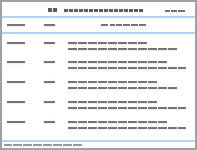
表1
符号定义"
| 符号 | 定义 |
| 卫星集合, | |
| 目标集合, | |
| 卫星、目标的轨道数据 | |
| 卫星、目标的数量 | |
| 卫星进行任务切换所需要的时间 | |
| 整体规划区间, | |
| 每个目标的实际观测时间, | |
| 卫星负载, | |
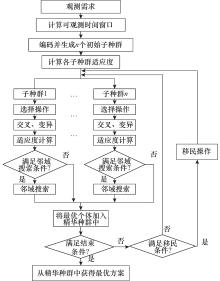
图1
MPGNSA流程图"


图2
任务无冲突"


图3
任务冲突"

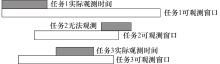
图4
观测冲突"

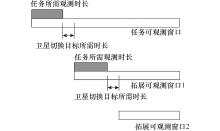
图5
OWE"
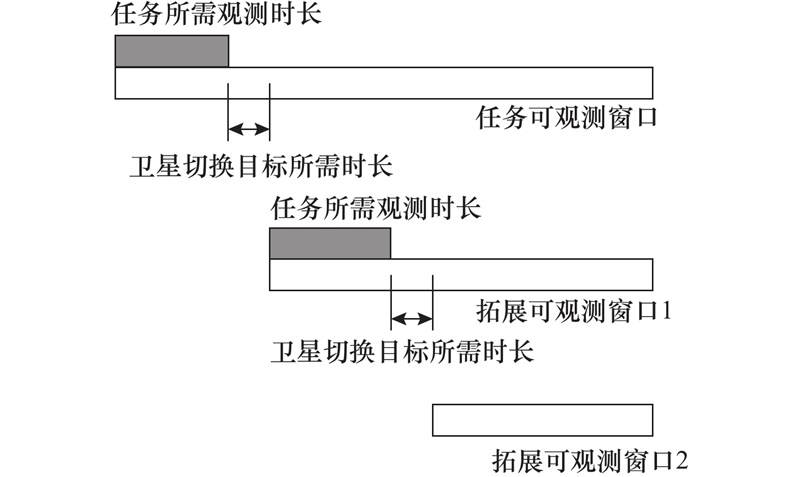
图6
OWE的应用"
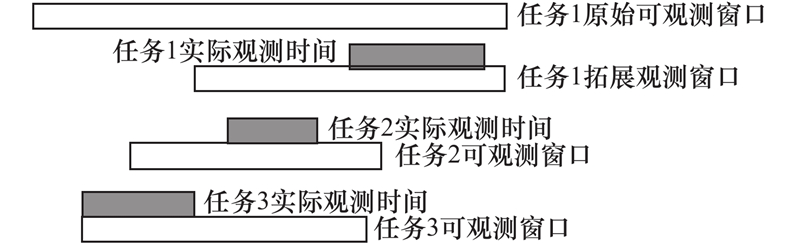
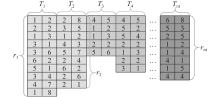
图7
编码方式"
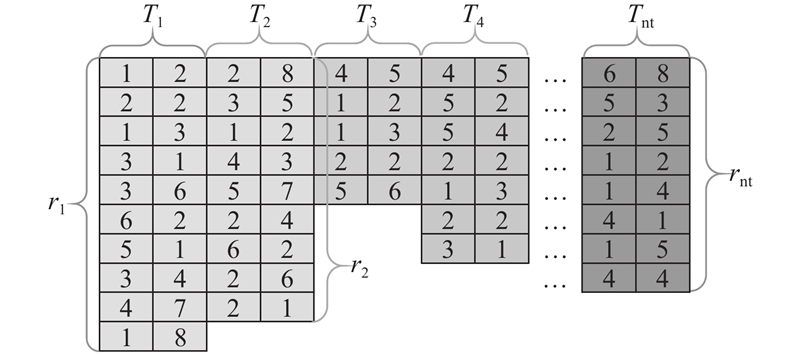

图8
交叉方式"
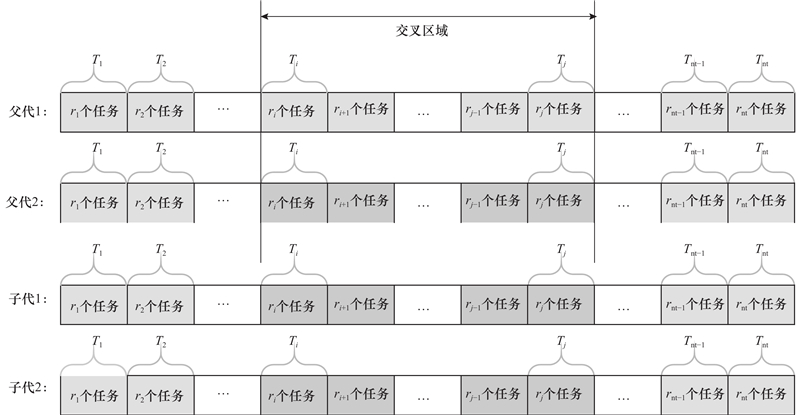

图9
变异方式"
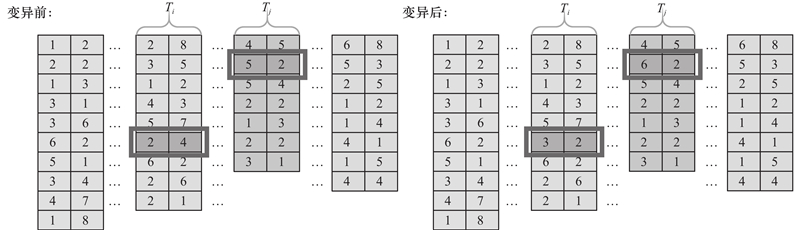
图10
邻域生成方式"
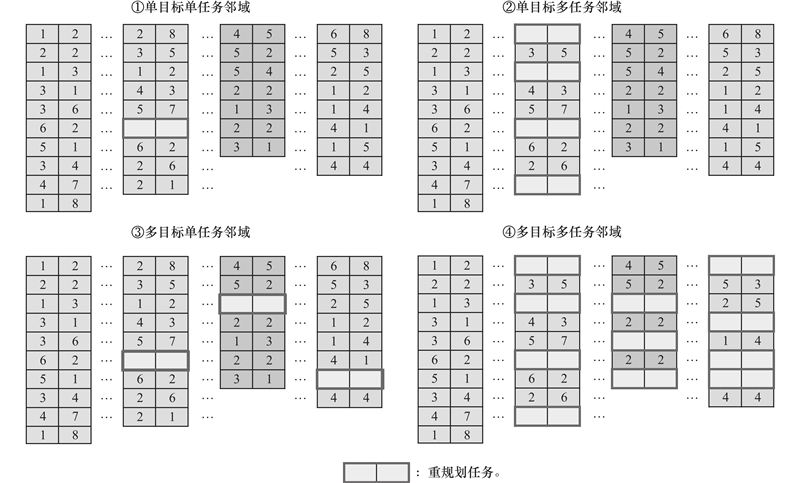
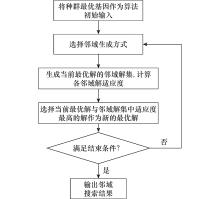
图11
邻域搜索流程"
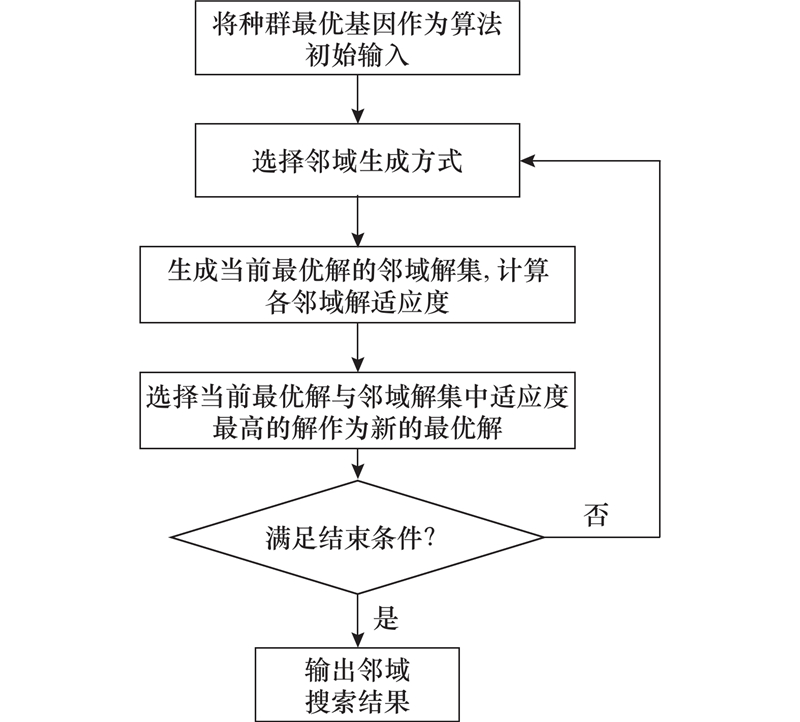
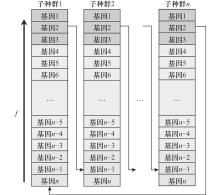
图12
移民操作"

表2
卫星轨道参数"
| 卫星编号 | a/km | e | i/(°) | ω/(°) | Ω/(°) | M/(°) |
| Sat1 | 0 | 99.5 | 0 | 10.9 | 0 | |
| Sat2 | 0 | 99.5 | 0 | 10.9 | 60 | |
| Sat3 | 0 | 99.5 | 0 | 10.9 | 120 | |
| Sat4 | 0 | 99.5 | 0 | 10.9 | 180 | |
| Sat5 | 0 | 99.5 | 0 | 10.9 | 240 | |
| Sat6 | 0 | 99.5 | 0 | 10.9 | 300 |
表3
目标轨道参数"
| 编号 | a/km | e | i/(°) | ω/(°) | Ω/(°) | M/(°) |
| Tar1 | 0 | 143.4 | 57.09 | 62.9 | 6.4 | |
| Tar2 | 0 | 98.13 | 100.47 | 90 | 311.22 | |
| Tar3 | 0.04 | 63.42 | 358.84 | 98.61 | 34.45 | |
| Tar4 | 0.01 | 57.01 | 130.38 | 57.49 | 340.77 | |
| Tar5 | 0.01 | 96.88 | 191.12 | 14.87 | 14.34 | |
| | | | | | | |
表4
目标观测需求"
| 目标编号 | 观测次数/次 | 每次观测时间/s |
| 1 | 10 | 240 |
| 2 | 8 | 300 |
| 3 | 6 | 480 |
| 4 | 8 | 480 |
| 5 | 7 | 300 |
| 6 | 7 | 300 |
| 7 | 6 | 420 |
| 8 | 10 | 420 |
| 9 | 6 | 420 |
| 10 | 8 | 420 |
| | | |

图13
算法适应度"
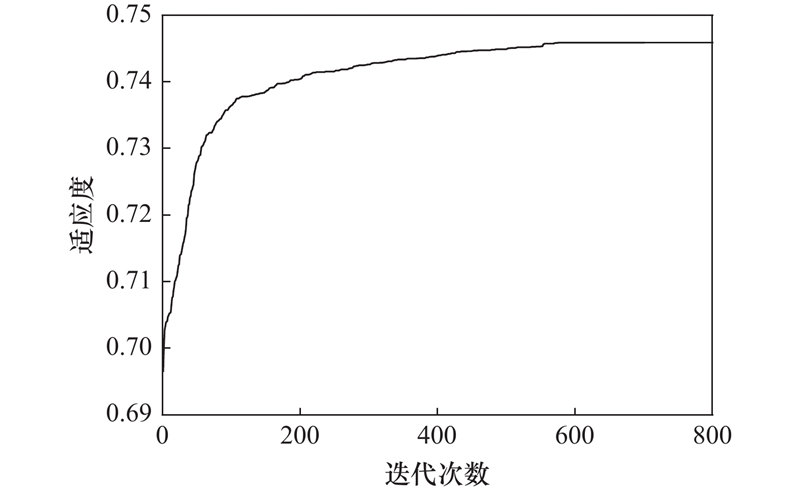

图14
各指标收益曲线"
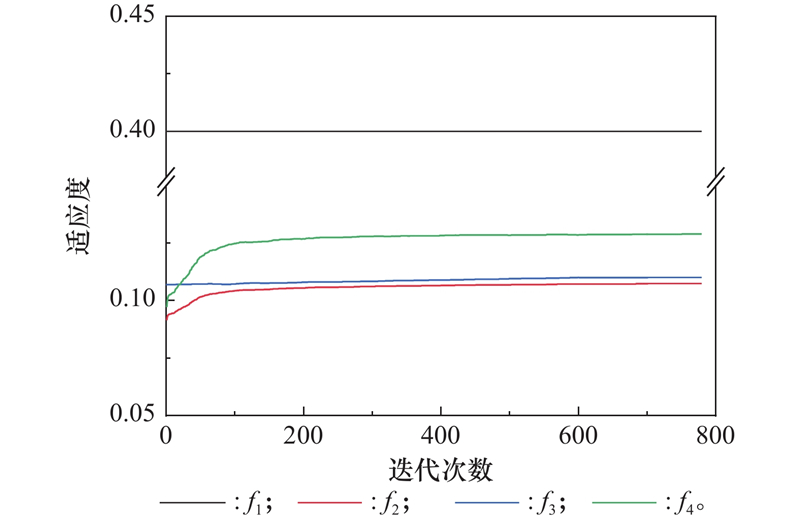
表5
卫星负载"
| 卫星编号 | 任务数量/个 | 任务总时长/h | 负载率/% |
| Sat1 | 82 | 7.825 | 65.21 |
| Sat2 | 89 | 7.875 | 65.63 |
| Sat3 | 89 | 7.85 | 65.42 |
| Sat4 | 87 | 7.85 | 65.42 |
| Sat5 | 83 | 7.808 | 65.07 |
| Sat6 | 88 | 7.867 | 65.56 |
| 合计 | 516 | — | — |
图15
任务规划方案甘特图"
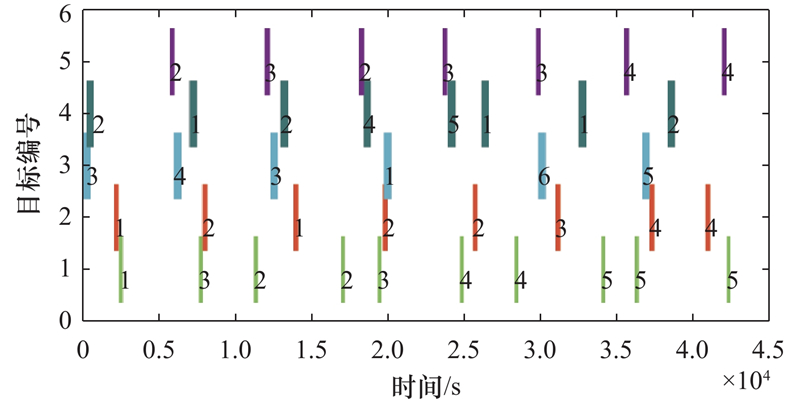
表6
目标观测安排"
| 目标 编号 | 观测次数/次 | 观测时长/s | 观测方案 | ||
| 卫星 | 开始时刻 | 结束时刻 | |||
| 目标1 | 10 | 240 | 1 | 0:39:09 | 0:43:09 |
| 3 | 2:06:29 | 2:10:29 | |||
| 2 | 3:06:42 | 3:10:42 | |||
| 2 | 4:41:54 | 4:45:54 | |||
| 3 | 5:21:45 | 5:25:45 | |||
| 4 | 6:51:45 | 6:55:45 | |||
| 4 | 7:51:33 | 7:55:33 | |||
| 5 | 9:26:08 | 9:30:08 | |||
| 5 | 10:02:45 | 10:06:45 | |||
| 5 | 11:43:35 | 11:47:35 | |||
| 目标2 | 8 | 300 | 1 | 0:33:39 | 0:38:39 |
| 2 | 2:10:28 | 2:15:28 | |||
| 1 | 3:49:47 | 3:54:47 | |||
| 2 | 5:27:28 | 5:32:28 | |||
| 2 | 7:05:46 | 7:10:46 | |||
| 3 | 8:36:12 | 8:41:12 | |||
| 4 | 10:18:57 | 10:23:57 | |||
| 4 | 11:20:02 | 11:25:02 | |||
| 目标3 | 6 | 480 | 3 | 0:00:01 | 0:08:01 |
| 4 | 1:39:11 | 1:47:11 | |||
| 3 | 3:24:31 | 3:32:31 | |||
| 1 | 5:28:44 | 5:36:44 | |||
| 6 | 8:17:12 | 8:25:12 | |||
| 5 | 10:10:59 | 10:18:59 | |||
| 目标4 | 8 | 480 | 2 | 0:03:31 | 0:11:31 |
| 1 | 1:56:10 | 2:04:10 | |||
| 2 | 3:35:47 | 3:43:47 | |||
| 4 | 5:06:20 | 5:14:20 | |||
| 5 | 6:38:32 | 6:46:32 | |||
| 1 | 7:15:13 | 7:23:13 | |||
| 1 | 9:01:22 | 9:09:22 | |||
| 2 | 1038:44 | 10:46:44 | |||
| 目标5 | 7 | 300 | 2 | 1:34:43 | 1:39:43 |
| 3 | 3:18:34 | 3:23:34 | |||
| 2 | 5:01:35 | 5:06:35 | |||
| 3 | 6:32:45 | 6:37:45 | |||
| 3 | 8:14:56 | 8:19:56 | |||
| 4 | 9:51:12 | 9:56:12 | |||
| 4 | 11:38:08 | 11:43:08 | |||
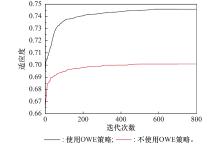
图16
算法收益曲线对比"
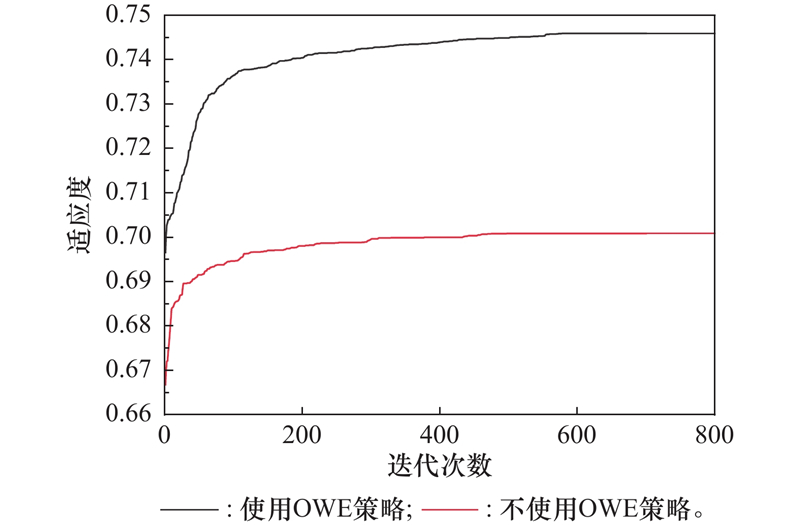
表7
无OWE策略卫星负载"
| 卫星编号 | 任务数量/个 | 任务总时长/h | 负载率/% |
| Sat1 | 77 | 7.333 | 61.11 |
| Sat2 | 83 | 7.383 | 61.53 |
| Sat3 | 82 | 7.358 | 61.32 |
| Sat4 | 82 | 7.358 | 61.32 |
| Sat5 | 80 | 7.317 | 60.97 |
| Sat6 | 79 | 7.367 | 61.39 |
| 合计 | 483 | — | — |
表8
测试用例"
| 场景编号 | 目标数量 | 任务数量 | 描述 |
| 场景1 | 30 | 265 | 负载较低 |
| 场景2 | 45 | 384 | 负载适中 |
| 场景3 | 60 | 516 | 负载较高 |
表9
不同场景下各算法求解结果"
| 场景 | 指标 | GA | GNSA | MPGA | MPGNSA |
| 场景1 | 最大适应度值 | ||||
| 平均适应度值 | |||||
| 最小适应度值 | |||||
| 任务完成数 | 265 | 265 | 265 | 265 | |
| 任务完成率/% | 100 | 100 | 100 | 100 | |
| 场景2 | 最大适应度值 | ||||
| 平均适应度值 | |||||
| 最小适应度值 | |||||
| 任务完成数 | 384 | 384 | 384 | 384 | |
| 任务完成率/% | 100 | 100 | 100 | 100 | |
| 场景3 | 最大适应度值 | ||||
| 平均适应度值 | |||||
| 最小适应度值 | |||||
| 任务完成数 | 516 | 516 | 516 | 516 | |
| 任务完成率/% | 100 | 100 | 100 | 100 |

图17
各算法迭代曲线"
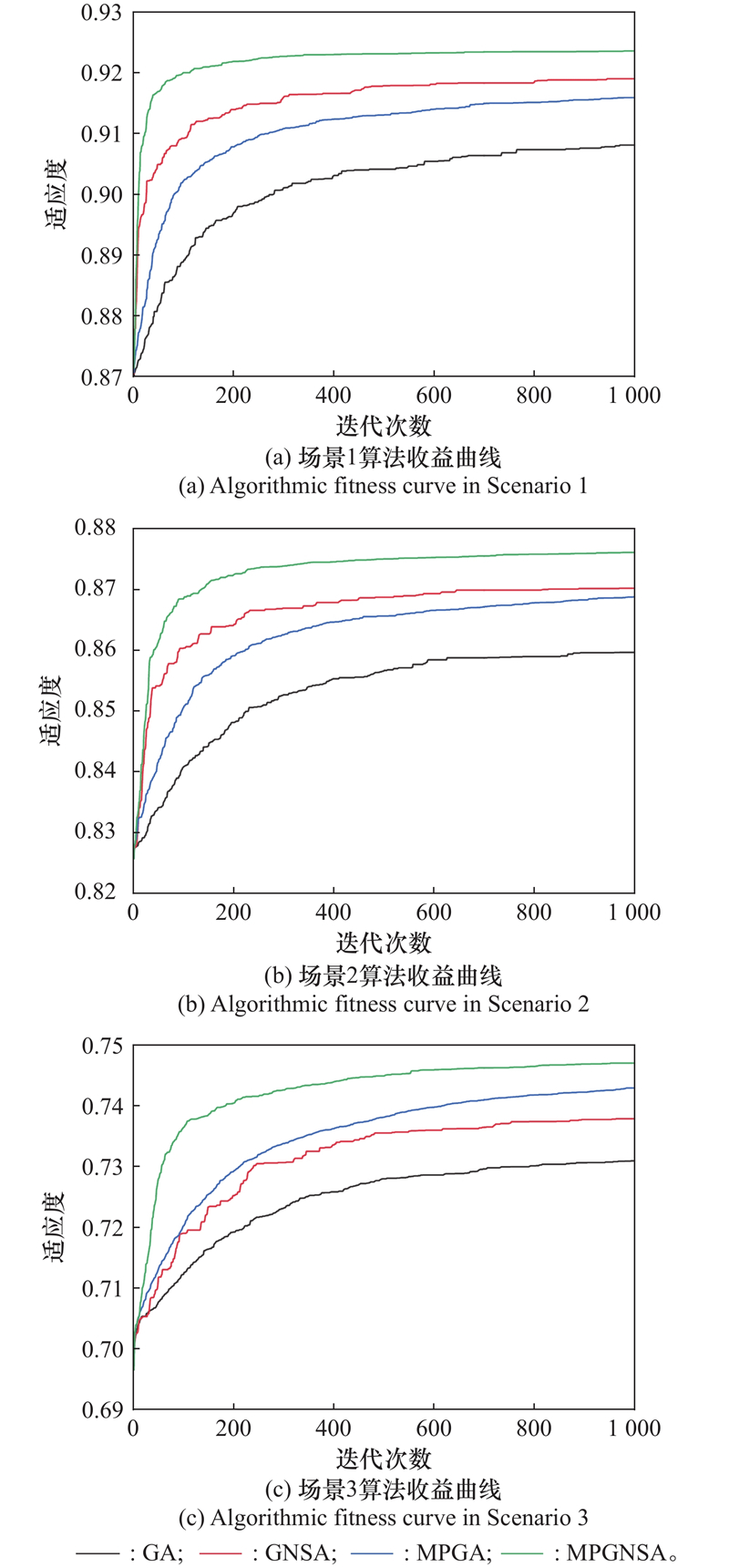
表10
算法运行时间对比"
| 场景 | ||||
| 场景1 | 27.1 | 32.4 | 47.4 | 51.7 |
| 场景2 | 43.5 | 52.3 | 69.3 | 76.3 |
| 场景3 | 63.7 | 71.6 | 98.6 | 107.3 |

图18
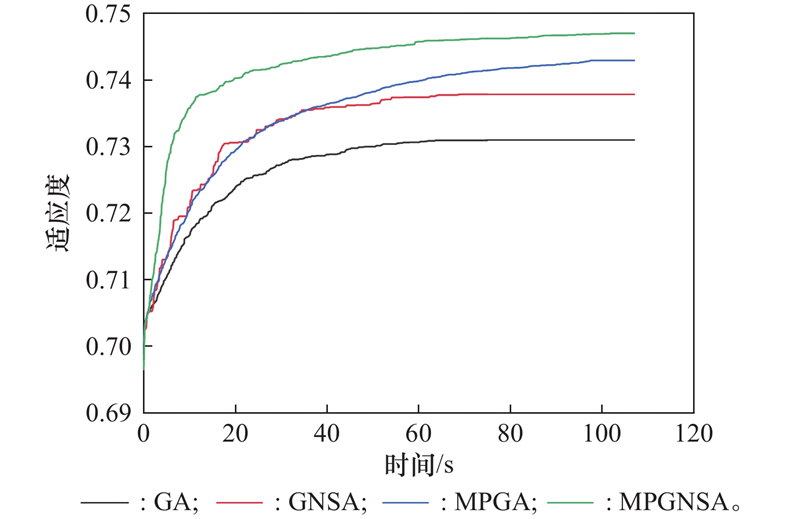
适应度随时间变化曲线"
| 1 | LEDKOV A, ASLANOV V. Review of contact and contactless active space debris removal approaches[J]. Progress in Aerospace Sciences, 2022, 134: 100858. |
| 2 |
YANG K, WU Y L. Improving international governance of space debris in the era of large constellations of small satellites and China’s response[J]. Advances in Space Research, 2023, 72 (7): 2607- 2615.
doi: 10.1016/j.asr.2022.06.061 |
| 3 |
LI G Q, LIU J, JIANG H, et al. Research on the efficient space debris observation method based on optical satellite constellations[J]. Applied Sciences, 2023, 13 (7): 4127.
doi: 10.3390/app13074127 |
| 4 |
郑珍珍, 朱振才, 康一舟. 天基空间碎片可见光观测系统与关键技术发展概述[J]. 光学学报, 2022, 42 (17): 1712002.
doi: 10.3788/AOS202242.1712002 |
|
ZHENG Z Z, ZHU Z C, KANG Y Z. Overview of space-based optical observation systems for space debris and development of key technologies[J]. Acta Optica Sinica, 2022, 42 (17): 1712002.
doi: 10.3788/AOS202242.1712002 |
|
| 5 | ZHANG G H, LI X H, HU G X, et al. Mission planning issues of imaging satellites: summary, discussion, and prospects[J]. International Journal of Aerospace Engineering, 2021, 2021 (1): 7819105. |
| 6 | HE L L, LIU X, LAPORTE G, et al. An improved adaptive large neighborhood search algorithm for multiple agile satellites scheduling[J]. Computers & Operations Research, 2018, 100(1): 12–25. |
| 7 | HE Y M, CHEN Y M, LU J M, et al. Scheduling multiple agile earth observation satellites with an edge computing framework and a constructive heuristic algorithm[J]. Journal of Systems Architecture, 2019, 95(1): 55–66. |
| 8 |
SHE Y C, LI S B, ZHAO Y B. Onboard mission planning for agile satellite using modified mixed-integer linear programming[J]. Aerospace Science and Technology, 2018, 72, 204- 216.
doi: 10.1016/j.ast.2017.11.009 |
| 9 | LEE K, KIM D J, CHUNG D W, et al. Optimal mission planning for multiple agile satellites using modified dynamic programming[J]. Aerospace, 2024, 21, 279- 289. |
| 10 |
张淳, 张强, 赵阳, 等. 一种面向成像卫星的启发式分层任务规划方法[J]. 航天控制, 2021, 39 (2): 45- 50.
doi: 10.3969/j.issn.1006-3242.2021.02.007 |
|
ZHANG C, ZHANG Q, ZHAO Y, et al. A heuristic layering mission planning algorithm for earth observation satellite[J]. Aerospace Control, 2021, 39 (2): 45- 50.
doi: 10.3969/j.issn.1006-3242.2021.02.007 |
|
| 11 |
LONG J, WU S M, HAN X D, et al. Autonomous task planning method for multi-satellite system based on a hybrid genetic algorithm[J]. Aerospace, 2023, 10 (1): 70.
doi: 10.3390/aerospace10010070 |
| 12 |
FEI H X, ZHANG X, LONG J, et al. Towards multi-satellite collaborative computing via task scheduling based on genetic algorithm[J]. Aerospace, 2023, 10 (2): 95.
doi: 10.3390/aerospace10020095 |
| 13 |
CHEN Y X, SHEN X, ZHANG G, et al. Multi-objective multi-satellite imaging mission planning algorithm for regional mapping based on deep reinforcement learning[J]. Remote Sensing, 2023, 15 (16): 3932.
doi: 10.3390/rs15163932 |
| 14 |
HUANG W Q, WANG H, YI D B, et al. A multiple agile satellite staring observation mission planning method for dense regions[J]. Remote Sensing, 2023, 15 (22): 5317.
doi: 10.3390/rs15225317 |
| 15 | ZHOU Z B, CHEN E M, WU F, et al. Multi-satellite scheduling problem with marginal decreasing imaging duration: an improved adaptive ant colony algorithm[J]. Computers & Industrial Engineering, 2023, 176, 108890. |
| 16 |
LU Z Z, SHEN X, LI D R, et al. Multiple super-agile satellite collaborative mission planning for area target imaging[J]. International Journal of Applied Earth Observation and Geoinformation, 2023, 117, 103211.
doi: 10.1016/j.jag.2023.103211 |
| 17 | 樊慧晶, 章文毅, 田妙苗, 等. 基于粒子群算法的卫星任务地面站资源调度方法[J]. 中国科学院大学学报, 2022, 39 (6): 801- 808. |
| FAN H J, ZHANG W Y, TIAN M M, et al. A resource scheduling method for satellite mission ground station based on particle swarm optimization algorithm[J]. Journal of University of Chinese Academy of Sciences, 2022, 39 (6): 801- 808. | |
| 18 |
彭双, 伍江江, 陈浩, 等. 基于注意力神经网络的对地观测卫星星上自主任务规划方法[J]. 计算机科学, 2022, 49 (7): 242- 247.
doi: 10.11896/jsjkx.210500093 |
|
PENG S, WU J J, CHEN H, et al. Satellite onboard observation task planning based on attention neural network[J]. Computer Science, 2022, 49 (7): 242- 247.
doi: 10.11896/jsjkx.210500093 |
|
| 19 |
LI D L, WANG H J, YANG Z, et al. An online distributed satellite cooperative observation scheduling algorithm based on multiagent deep reinforcement learning[J]. IEEE Geoscience and Remote Sensing Letters, 2021, 18 (11): 1901- 1905.
doi: 10.1109/LGRS.2020.3009823 |
| 20 | 冯朝. 天基空间目标光学定轨方法研究[D]. 长春: 中国科学院长春光学精密机械与物理研究所, 2023. |
| FENG Z. Study on space-based optical orbit determination method for space targets[D]. Changchun: Changchun Institute of Optics, Fine Mechanics and Physics, Chinese Academy of Sciences, 2023. | |
| 21 | 李彬, 陈俊宇, 桑吉章, 等. 天基光学观测条件下的空间目标轨道编目[C]//第2届中国空天安全会议, 2017. |
| LI B, CHEN J Y, SANG J Z, et al. Orbit catalog of space objects using space-based optical observations[C]//Proc. of the 2nd Chinese Aerospace Safety Symposium, 2017. | |
| 22 | LI J H, SUN G, WU Q Q, et al. Collaborative ground-space communications via evolutionary multi-objective deep reinforcement learning[J]. IEEE Journal on Selected Areas in Communications, 2024, 24 (12): 3395- 3411. |
| 23 |
BHADOURIA V S, CHAKRABORTY S, BUCH S D, et al. Base station location generation algorithm for satellite-terrestrial co-existence studies[J]. International Journal of Satellite Communications and Networking, 2024, 42 (1): 86- 96.
doi: 10.1002/sat.1501 |
| 24 | QI J T, GUO J J, WANG M M, et al. A cooperative autonomous scheduling approach for multiple earth observation satellites with intensive missions[J]. IEEE Access, 2021, 9(1): 61646–61661. |
| 25 |
LU C, SHI J F, LI B L, et al. Dynamic resource allocation for low earth orbit satellite networks[J]. Physical Communication, 2024, 67, 102498.
doi: 10.1016/j.phycom.2024.102498 |
| 26 |
ZHOU Z, NING Y L, ZHOU X Y, et al. Improved artificial bee colony algorithm-based channel allocation scheme in low earth orbit satellite downlinks[J]. Computers and Electrical Engineering, 2023, 110, 108838.
doi: 10.1016/j.compeleceng.2023.108838 |
| 27 |
KRIGMAN S, GRINSHPOUN T, DERY L, et al. Scheduling of earth observing satellites using distributed constraint optimization[J]. Journal of Scheduling, 2024, 27 (5): 507- 524.
doi: 10.1007/s10951-024-00816-x |
| 28 |
XIE D D, HUANG Y W, YAN C X, et al. Determination of field of view of a dawn–dusk sun-synchronous orbit satellite based on improved observation mode[J]. Applied Sciences, 2022, 12 (15): 7475.
doi: 10.3390/app12157475 |
| 29 |
ROEVA O, ZOTEVA D, ROEVA G, et al. An effective hybrid metaheuristic approach based on the genetic algorithm[J]. Mathematics, 2024, 12 (23): 3815.
doi: 10.3390/math12233815 |
| 30 | HAMLAOUI O, HAJJI M K, HADDA H. A simulated annealing metaheuristic approach to hybrid flow shop scheduling problem[J]. Advances in Industrial and Manufacturing Engineering, 2024, 9 (1): 100144. |
| 31 |
PHAN T, HUANG T, DILKINA B, et al. Adaptive anytime multi-agent path finding using bandit-based large neighborhood search[J]. 38th AAAI Conference on Artificial Intelligence, 2024, 38 (16): 17514- 17522.
doi: 10.1609/aaai.v38i16.29701 |
| [1] | 袁健波, 杜永浩, 陈盈果, 何永明. 面向点群与大区域目标的成像卫星任务规划模型与算法研究[J]. 系统工程与电子技术, 2025, 47(9): 2939-2950. |
| [2] | 朱运豆, 孙海权, 胡笑旋. 基于指针网络架构的多星协同成像任务规划方法[J]. 系统工程与电子技术, 2025, 47(7): 2246-2255. |
| [3] | 付留芳, 许林周, 周明, 董晓明, 寇祝. 基于二次优化的T-Rn型多基地声纳部署方法[J]. 系统工程与电子技术, 2025, 47(5): 1600-1608. |
| [4] | 孙正阳, 杜晔. 基于改进萤火虫算法的卫星网络路由优化方法[J]. 系统工程与电子技术, 2025, 47(4): 1346-1354. |
| [5] | 汪达旺, 陆志沣, 伍国华. 基于自适应变邻域搜索的火控雷达组网资源调度研究[J]. 系统工程与电子技术, 2025, 47(2): 496-507. |
| [6] | 吴浩南, 韩维, 潘子双, 郭放, 苏析超. 基于多层编码遗传算法的舰载机群兵力行动规划方法[J]. 系统工程与电子技术, 2025, 47(2): 555-567. |
| [7] | 祁新宇, 张智, 尚晓兵, 张艺琼, 姜立超, 周悦欣. 基于多项式混沌展开的船舶避碰鲁棒轨迹规划[J]. 系统工程与电子技术, 2025, 47(2): 621-632. |
| [8] | 雷勤, 高颜兵, 周煜丰, 吴志彬. 基于改进ALNS算法的多交付选项路径规划[J]. 系统工程与电子技术, 2025, 47(1): 173-181. |
| [9] | 王佩骐, 鞠儒生, 张淼, 段伟. 基于非支配遗传算法的HLA仿真系统数据采集策略[J]. 系统工程与电子技术, 2024, 46(9): 3103-3111. |
| [10] | 许强强, 柴华. 基于NSGA-Ⅱ的车载光学测量设备任务调度方案优化[J]. 系统工程与电子技术, 2024, 46(7): 2393-2400. |
| [11] | 李阳阳, 罗俊仁, 张万鹏, 项凤涛. 多星协同观测遗传-演进双层任务规划算法[J]. 系统工程与电子技术, 2024, 46(6): 2044-2053. |
| [12] | 蔡一鸣, 马力, 陆恒杨, 方伟. 基于全流程并行遗传算法的贝叶斯网络结构学习[J]. 系统工程与电子技术, 2024, 46(5): 1703-1711. |
| [13] | 尧泽昆, 王超, 施庆展, 张少卿, 袁乃昌. 基于改进离散模拟退火遗传算法的雷达网协同干扰资源分配模型[J]. 系统工程与电子技术, 2024, 46(3): 824-830. |
| [14] | 尹帅, 余建慧, 宋斌, 郭延宁, 李传江, 吕跃勇. 基于多种群混沌遗传算法的GEO目标服务任务规划[J]. 系统工程与电子技术, 2024, 46(3): 914-921. |
| [15] | 张玉婷, 杨镜宇. 基于能力的国防资源分配方法[J]. 系统工程与电子技术, 2024, 46(2): 599-604. |
| 阅读次数 | ||||||
|
全文 |
|
|||||
|
摘要 |
|
|||||
