Systems Engineering and Electronics ›› 2026, Vol. 48 ›› Issue (6): 2014-2030.doi: 10.12305/j.issn.1001-506X.2026.06.22
• Systems Engineering • Previous Articles Next Articles
Dynamic scheduling methodology for shipboard helicopter missions under stochastic disturbance events
Wei HAN1( ), Jingyu CONG1(), Yiyang CHENG1,2, Xiaohua HAN1, Fang GUO1, Changjiu LI1,*, Xichao SU1()
- 1. Naval Aviation University, Yantai 264001, China
2. Unit.92810 of PLA,Sanya 572032, China
-
Received:2025-02-19Revised:2025-06-18Online:2026-06-25Published:2025-12-04 -
Contact:Changjiu LI E-mail:hanwei70cn@163.com;1837733589@qq.com;suxich@126.com

CLC Number:
Cite this article
Wei HAN, Jingyu CONG, Yiyang CHENG, Xiaohua HAN, Fang GUO, Changjiu LI, Xichao SU. Dynamic scheduling methodology for shipboard helicopter missions under stochastic disturbance events[J]. Systems Engineering and Electronics, 2026, 48(6): 2014-2030.
share this article
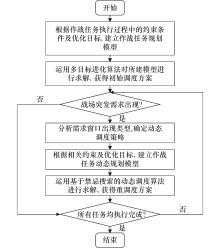
Fig.1
Dynamic scheduling process"
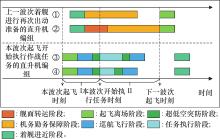
Fig.2
Mission phase description of the shipboard helicopter formation"

Table 1
Notations of amphibious operational dynamic scheduling model of shipboard helicopters and their meanings"
| 符号 | 含义 |
| 红方舰载机编队所执行的任务类型, | |
| 蓝方待攻击的目标节点序号, | |
| 红方舰载直升机编队计划出动的波次序号, | |
| 红方两栖攻击舰的序号, | |
| 红方执行垂直投送任务的分队类别序号, | |
| 红方两栖攻击舰上搭载的直升机编组序号, | |
| 红方第 | |
| 红方所有两栖攻击舰在第 | |
| 红方第 | |
| 红方在一场登陆战役中能够投送的第 | |
| 红方对蓝方第 | |
| 红方第 | |
| 红方第 | |
| 红方对蓝方第 | |
| 红方对蓝方第 | |
| 红方投送第 | |
| 红方投送第 | |
| 表示红方第 | |
| 红方对蓝方第 | |
| 蓝方在第 |
Table 2
Decision variable symbol and meaning"
| 符号 | 含义 |
| 整数变量,表示红方第 当 | |
| 0-1变量,第 | |
| 连续变量,对应舰载直升机编组作战任务各子阶段任务的开始时刻 | |
| 连续变量,对应舰载直升机编组作战任务各子阶段任务的结束时刻, |
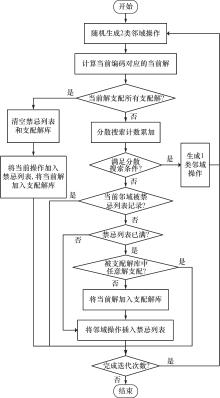
Fig.3
Tabu search algorithm framework"
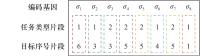
Fig.4
Example of chromosome coding"
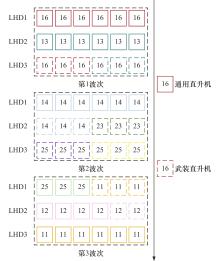
Fig.5
Example of helicopter sortie schedule"
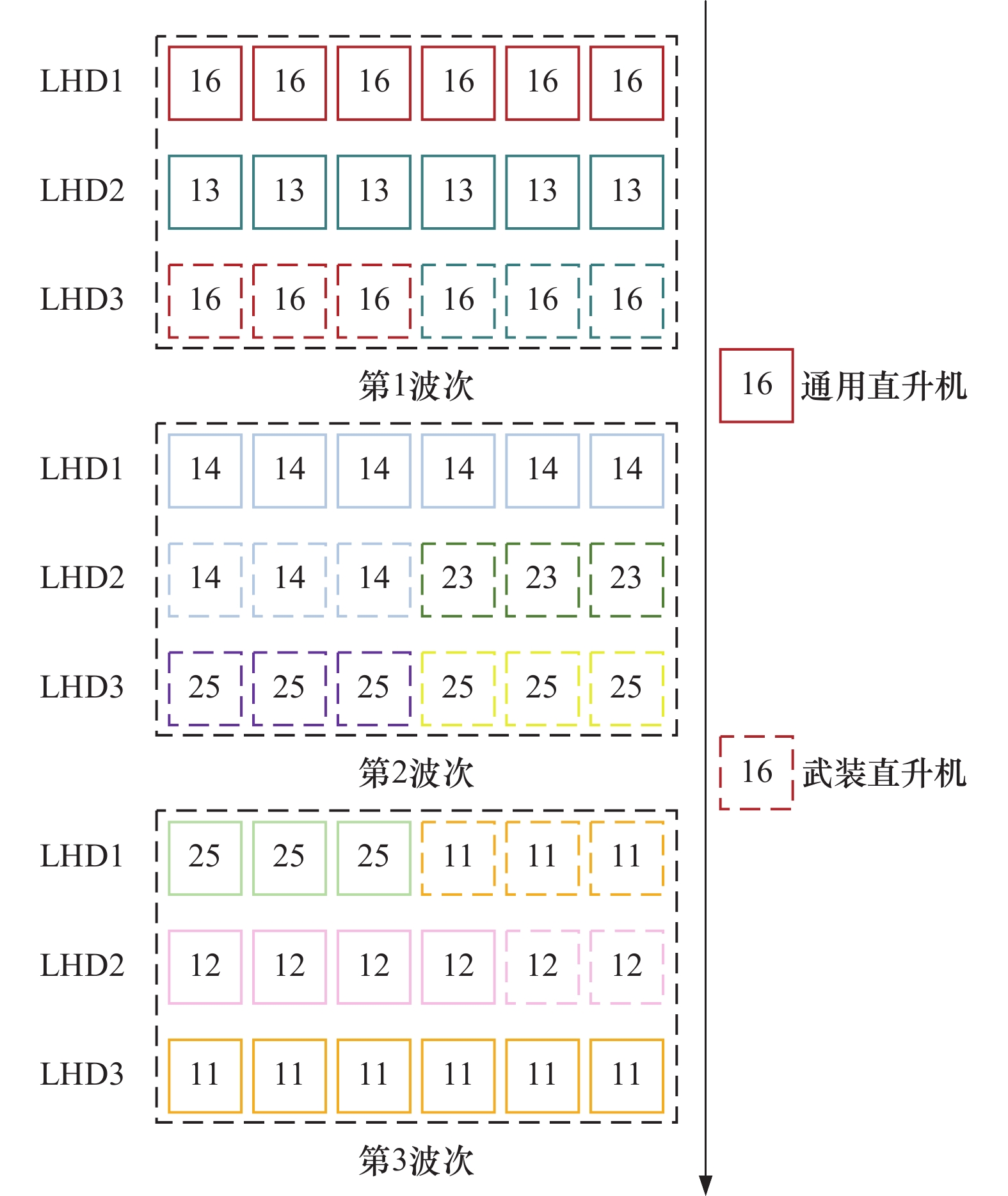
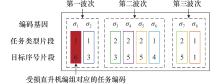
Fig.6
Example of chromosome coding under helicopter damage conditions"
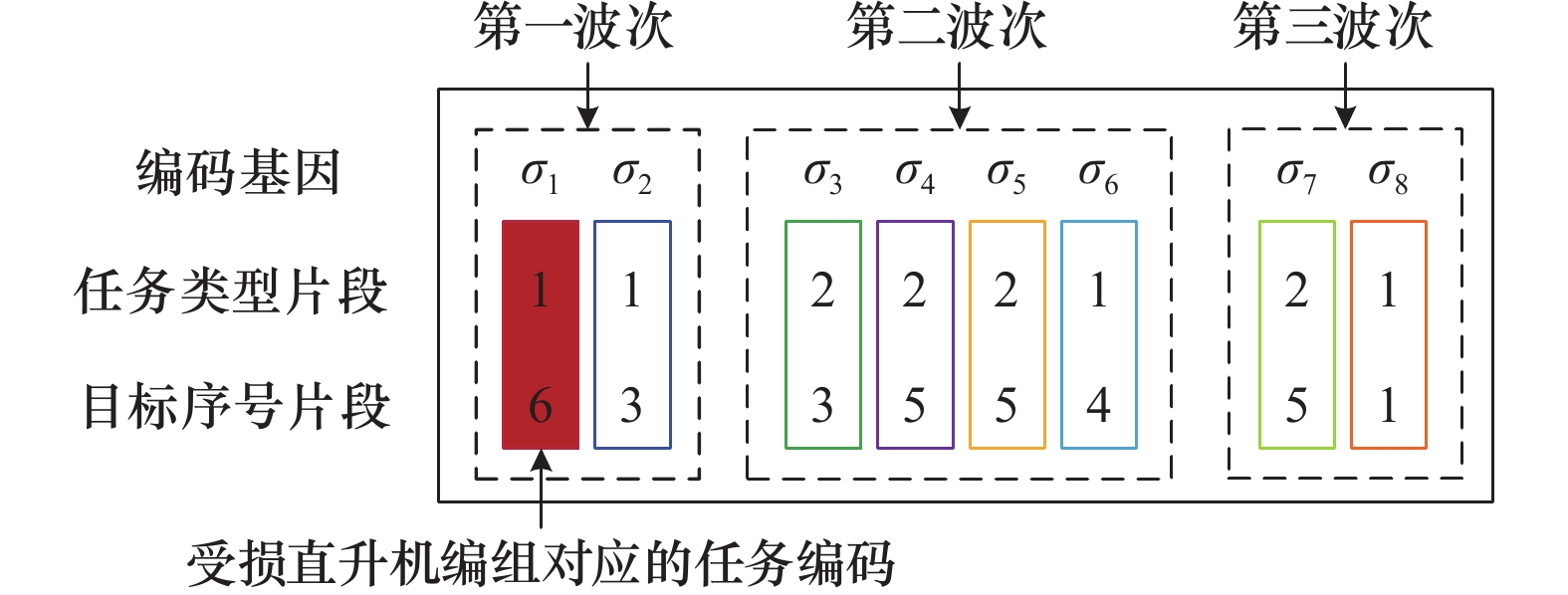
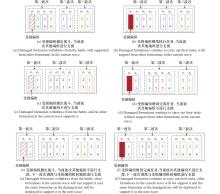
Fig.7
Optimization initial value corresponding to the scheduling strategy"
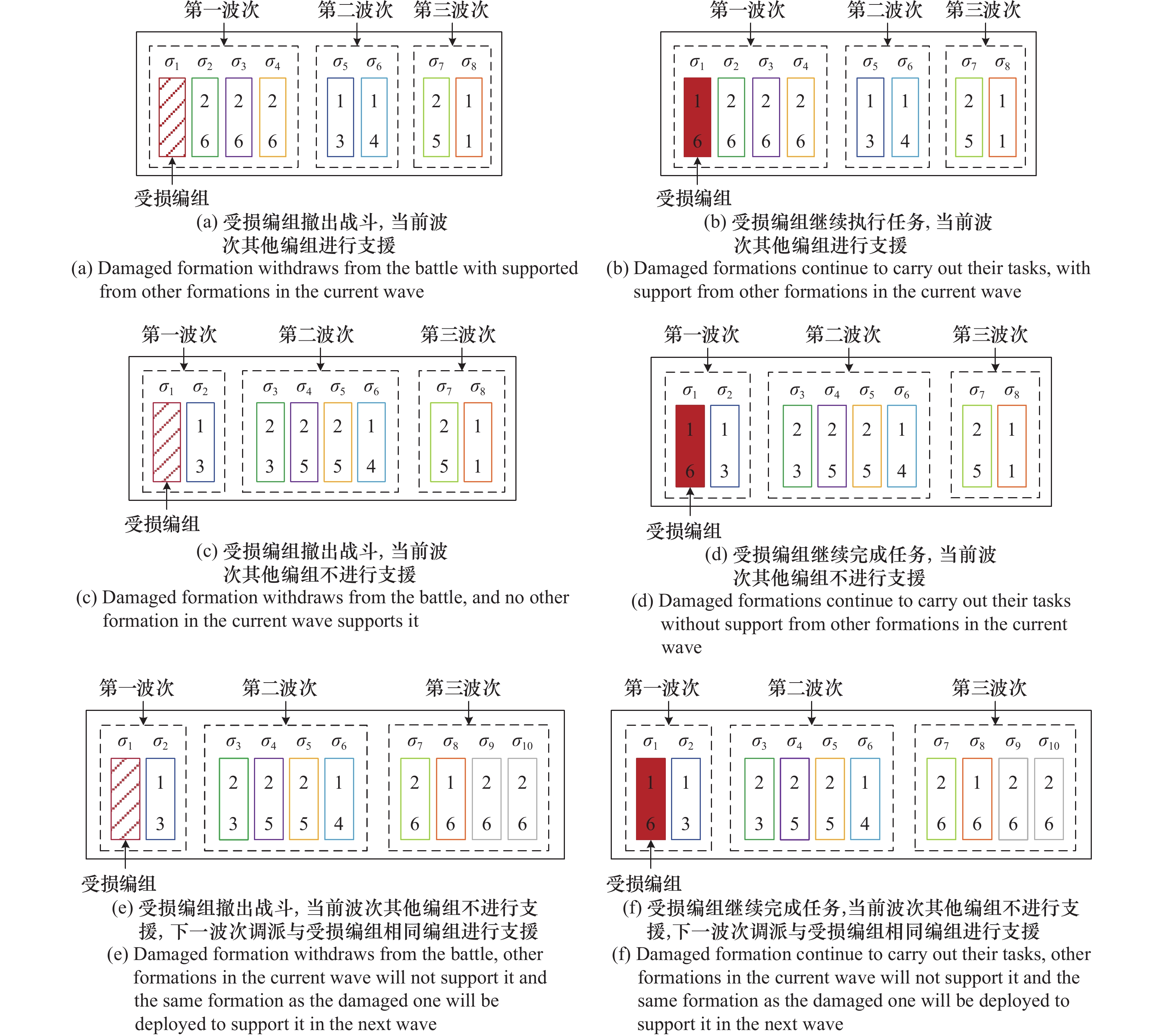
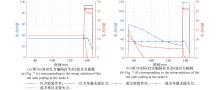
Fig.8
Troop attrition curve of the red side in local engagement at obtained 6 by solving the corresponding codes of scheduling strategies 5 and 6"
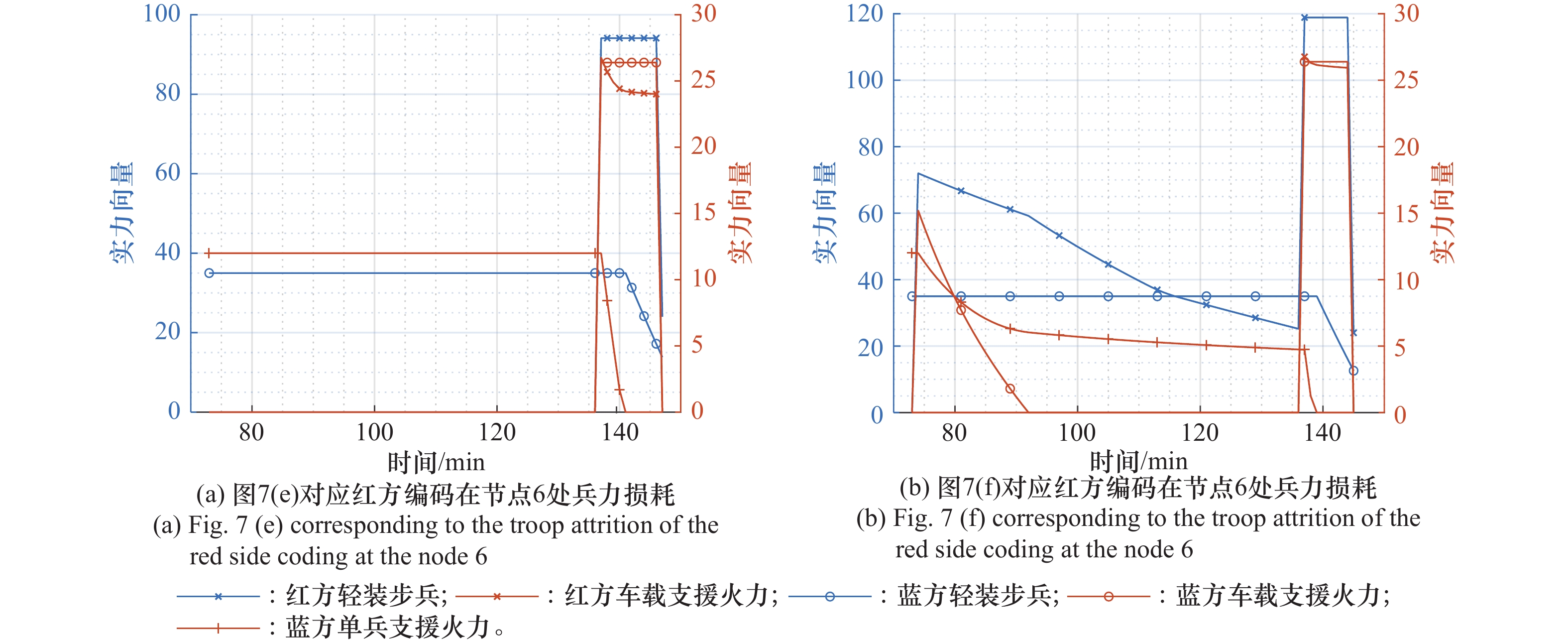
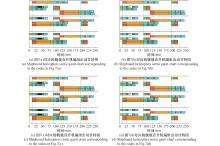
Fig.9
Shipboard helicopters sortie gantt chart corresponding to the different codes"

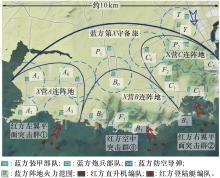
Fig.10
Case of landing campaign scenario"
Table 3
Weapon deployment of the red side"
| 登陆编队 | 人员 | 装备类型 | ||||||
| 两栖步战车 | 两栖登陆车 | 火箭筒 | 迫击炮 | 重机枪 | 轻机枪 | 突击步枪 | ||
| 左翼突击群 | 300 | 15 | 10 | 13 | 13 | 15 | 30 | 100 |
| 右翼突击群 | 300 | 15 | 10 | 13 | 13 | 15 | 30 | 100 |
| 纵深突击群 | 550 | 30 | 25 | 25 | 25 | 30 | 50 | 200 |
| 空中突击群 | 400 | − | − | 25 | 25 | 30 | 60 | 200 |
| 步兵分队 | 100 | − | − | 3 | 5 | 7 | 15 | 55 |
| 火力分队 | 50 | − | − | 6 | 8 | 4 | 8 | 25 |
| 侦查分队 | 50 | − | − | 2 | 2 | 4 | 10 | 40 |
Table 4
Weapon deployment of the blue side"
| 目标节点类别 | 人员 | 装备类型 | ||||||
| 近程导弹 | 自行榴弹炮 | 单兵导弹 | 迫击炮 | 重机枪 | 轻机枪 | 突击步枪 | ||
| 导弹阵地 | 300 | 3 | − | 3 | 6 | 3 | 6 | 22 |
| 炮兵阵地 | 400 | − | 10 | 4 | 8 | 4 | 7 | 25 |
| 装甲阵地 | 400 | − | − | 4 | 5 | 4 | 5 | 20 |
| 指挥所 | 200 | − | − | 7 | 7 | 5 | 9 | 30 |
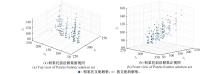
Fig.11
Pareto frontier solution set obtained by algorithm iteration"

Fig.12
Algorithm iteration results under different initial code values"
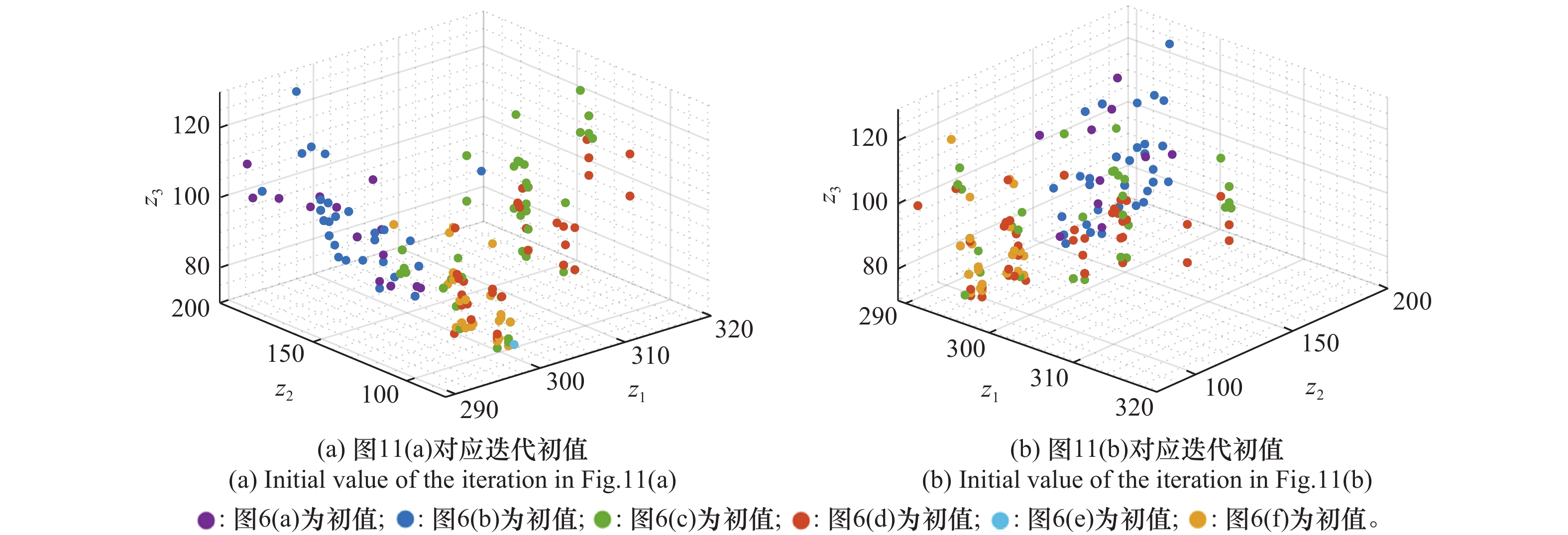
Table 5
Codes and objectives of excellent individuals obtained by taking the codes in Fig. 7(d), Fig. 7(e) and Fig. 7(f) as the initial chromosomes"
| 编码初值 | 最优编码 | 目标值 | ||||||||||||||||||||||
| 1 | 1 | 2 | 2 | 2 | 1 | 2 | 1 | 1 | 1 | 2 | 2 | 2 | 1 | 2 | 1 | (215, 228) | ||||||||
| 6 | 3 | 3 | 5 | 5 | 4 | 5 | 1 | 6 | 3 | 6 | 2 | 5 | 4 | 5 | 1 | |||||||||
| 0 | 1 | 2 | 2 | 2 | 1 | 2 | 1 | 2 | 2 | 1 | 1 | 2 | 2 | 2 | 1 | 2 | 1 | (215, 228) | ||||||
| 0 | 3 | 3 | 5 | 5 | 4 | 6 | 6 | 6 | 6 | 6 | 3 | 5 | 2 | 6 | 4 | 1 | 1 | |||||||
| 1 | 1 | 2 | 2 | 2 | 1 | 2 | 1 | 2 | 2 | 1 | 1 | 2 | 2 | 2 | 1 | 2 | 2 | 2 | 2 | 2 | 2 | (214, 119) | ||
| 6 | 3 | 3 | 5 | 5 | 4 | 6 | 6 | 6 | 6 | 6 | 3 | 5 | 2 | 5 | 4 | 8 | 3 | 7 | 8 | 3 | 3 | |||
Table 6
Parameters of dynamic scheduling model of shipboard helicopters and their levels"
| 因素 | 水平1 | 水平2 | 水平3 |
| 波次数目 | 3 | 5 | 8 |
| 直升机编队数量 | 18 | 15 | 12 |
| 火力威胁密度 | 低威胁(0.5倍) | 基准威胁(1倍) | 高威胁(2倍) |
Table 7
Results of the experiment"
| 实验 序号 | 波次 | 直升机 编队数量 | 火力威胁 密度 | 登陆 耗时/min | 作战调整代价 | |
| 兵力损耗 | 火力威胁 | |||||
| 1 | 3 | 18 | 0.5 | 211 | 43 | 46 |
| 2 | 3 | 15 | 1.0 | 235 | 63 | 82 |
| 3 | 3 | 12 | 2.0 | 265 | 92 | 120 |
| 4 | 5 | 18 | 1.0 | 303 | 129 | 107 |
| 5 | 5 | 15 | 2.0 | 315 | 166 | 164 |
| 6 | 5 | 12 | 0.5 | 325 | 126 | 95 |
| 7 | 8 | 18 | 2.0 | 387 | 188 | 223 |
| 8 | 8 | 15 | 0.5 | 409 | 165 | 108 |
| 9 | 8 | 12 | 1.0 | 425 | 167 | 111 |
Table 8
Analysis of experimental results"
| 水平 | 波次 | 资源 | 火力 |
| 1 | −42.45 | −45.65 | −44.69 |
| 2 | −45.53 | −45.33 | −45.08 |
| 3 | −47.77 | −44.76 | −45.98 |
| 变化量 | 5.32 | 0.89 | 1.29 |
Table 9
Analysis of variance on signal to noise ratio of experimental results"
| 来源 | 自由度 | 平方和 | 均方 | 比值 | P |
| 波次 | 2 | 130.62 | 0.008 | ||
| 资源 | 2 | 3.68 | 0.214 | ||
| 火力 | 2 | 8.00 | 0.111 | ||
| 残差误差 | 2 | 8 |
Fig.13
Signal to noise ratio impact"
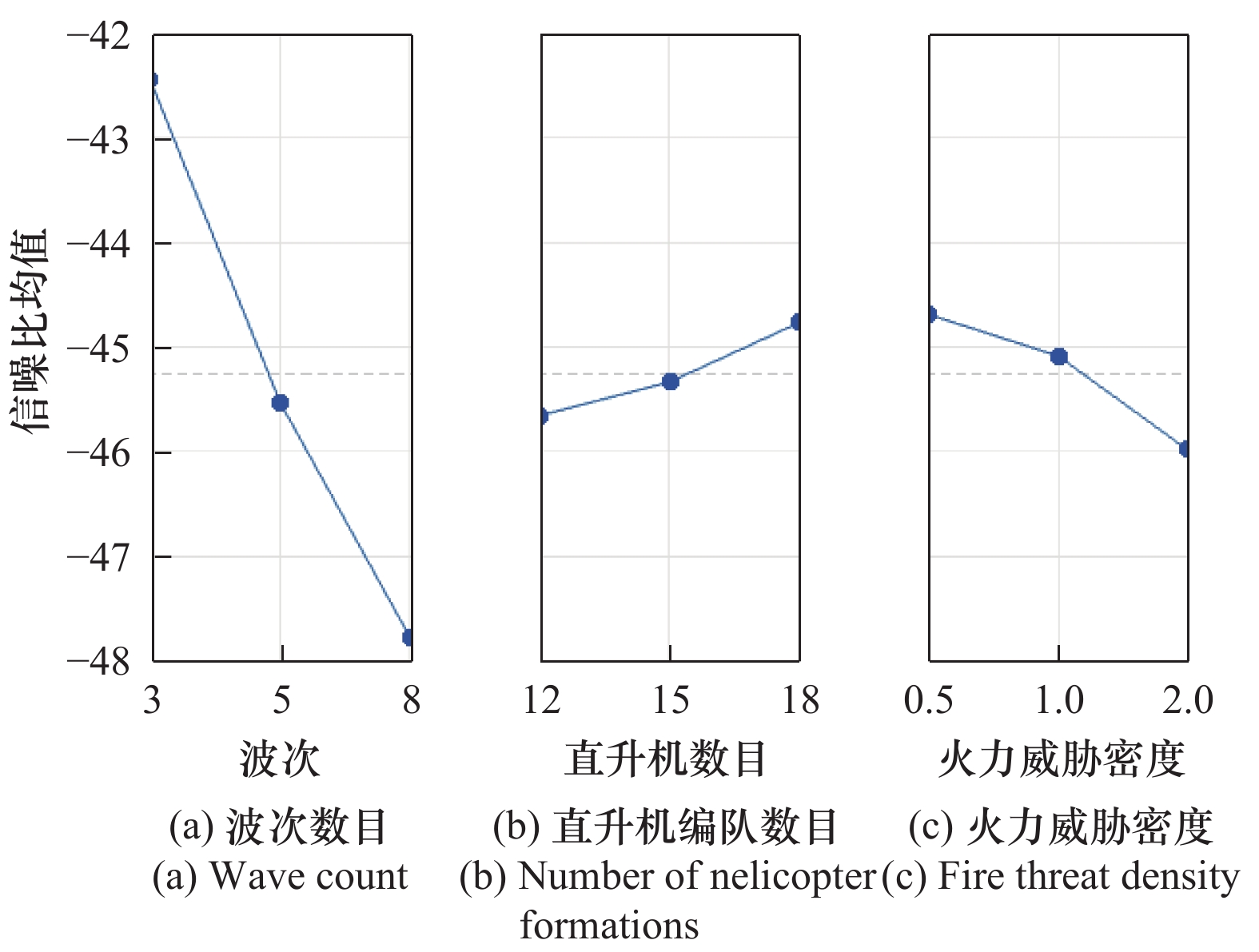
Table 10
Scenario scale definition"
| 规模 | 波次数目 | 直升机编组数 |
| 小规模 | 3~5 | 12~18 |
| 中规模 | 5~8 | 18~24 |
| 大规模 | 8~10 | 24~30 |
Table 11
Comparison of algorithm results"
| 规模 | 生成首个 可行解时间/s | 平均收敛 时间/s | 解集超体积 | 收敛迭代 次数 |
| 小规模 | 22.435 | 0.94 | 11 | |
| 中规模 | 96.776 | 0.89 | 20 | |
| 大规模 | 297.08 | 0.85 | 30 |
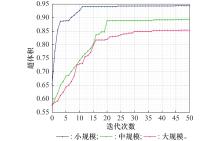
Fig.14
Comparison of hypervalume under different scaling algorithms"

| 1 | 陈伟龙, 陈春良, 刘彦, 等. 战场抢修任务动态调度的研究综述[J]. 现代防御技术, 2018, 46 (4): 139- 152. |
| CHEN W L, CHEN C L, LIU Y, et al. Review on dynamic scheduling of battlefield rush-repair tasks[J]. Modern Defence Technology, 2018, 46 (4): 139- 152. | |
| 2 | 曾斌, 樊旭, 李厚朴. 支持重规划的战时保障动态调度研究[J]. 自动化学报, 2023, 49 (7): 1519- 1529. |
| ZENG B, FAN X, LI H P. Research of dynamic scheduling with re-planning for wartime logistics support[J]. Acta Automatica Sinica, 2023, 49 (7): 1519- 1529. | |
| 3 | DING J P, CHEN M S, WANG T, et al. A survey of ai-enabled dynamic manufacturing scheduling: from directed heuristics to autonomous learning[J]. ACM Computing Surveys, 2023, 55 (14s): 1- 36. |
| 4 | 葛显龙, 竹自强, 金渊智. 基于两阶段求解策略的动态电动车辆路径优化研究[J]. 运筹与管理, 2022, 31 (8): 57- 63. |
| GE X L, ZHU Z Q, JIN Y Z. Dynamic electric vehicle routing problem based on two-stage solution strategy[J]. Operations Research and Management Science, 2022, 31 (8): 57- 63. | |
| 5 |
吴秀丽, 闫晓燕. 基于改进Q学习的可重入混合流水车间绿色动态调度[J]. 机械工程学报, 2023, 59 (13): 246- 259.
doi: 10.3901/JME.2023.13.246 |
|
WU X L, YAN X Y. An improved Q learning algorithm to optimize green dynamic scheduling problem in a reentrant hybrid flow shop[J]. Journal of Mechanical Engineering, 2023, 59 (13): 246- 259.
doi: 10.3901/JME.2023.13.246 |
|
| 6 | 王浩, 王浩枫. 面向CPUs-GPUs系统的OpenCL任务调度框架[J]. 计算机工程与设计, 2022, 43 (7): 1955- 1963. |
| WANG H, WANG H F. Scheduling framework for OpenCL programs on CPUs-GPUs heterogeneous platforms[J]. Computer Engineering and Design, 2022, 43 (7): 1955- 1963. | |
| 7 | 万兵, 苏析超, 郭放, 等. 不确定性工时下甲板作业的前摄性鲁棒调度[J]. 航空学报, 2022, 43 (12): 385- 402. |
| WAN B, SU X C, GUO F, et al. Proactive robust scheduling of aircraft carrier flight deck operations with uncertain activity durations[J]. Acta Aeronautica et Astronautica Sinica, 2022, 43 (12): 385- 402. | |
| 8 | 周鲜成, 王莉, 周开军, 等. 动态车辆路径问题的研究进展及发展趋势[J]. 控制与决策, 2019, 34 (3): 449- 458. |
| ZHOU X C, WANG L, ZHOU K J, et al. Research progress and development trend of dynamic vehicle routing problem[J]. Control and Decision, 2019, 34 (3): 449- 458. | |
| 9 | 曹志鹏, 姜良存, 黄秋钧, 等. 利用破坏重建算法进行物流车辆动态调度[J]. 武汉大学学报(信息科学版), 2021, 46 (5): 755- 765,776. |
| CAO Z P, JIANG L C, HUANG Q J, et al. A Dynamic scheduling method of logistics vehicles based on ruin and recreate algorithm[J]. Geomatics and Information Science of Wuhan University, 2021, 46 (5): 755- 765,776. | |
| 10 | LEI D M, CUI Z Z, LI M. A dynamical artificial bee colony for vehicle routing problem with drones[J]. Engineering Applications of Artificial Intelligence, 2022, 107: 104510. |
| 11 |
YUAN P L, HAN W, SU X C, et al. A dynamic scheduling method for carrier aircraft support operation under uncertain conditions based on rolling horizon strategy[J]. Applied Sciences, 2018, 8 (9): 1546.
doi: 10.3390/app8091546 |
| 12 | SU X C, HAN W, WU Y, et al. A robust scheduling optimization method for flight deck operations of aircraft carrier with ternary interval durations[J]. IEEE Access, 2018, 6: 69918−69936. |
| 13 | 冯强, 曾声奎, 康锐. 基于MAS的舰载机动态调度模型[J]. 航空学报, 2009, 30 (11): 2119- 2125. |
| FENG Q, ZENG S K, KANG R. A MAS-based model for dynamic scheduling of carrier aircraft[J]. Acta Aeronautica et Astronautica Sinica, 2009, 30 (11): 2119- 2125. | |
| 14 | BALOUKA N, COHEN I. A robust optimization approach for the multi-mode resource-constrained project scheduling problem[J]. European Journal of Operational Research, 2019, 291 (2): 457- 470. |
| 15 | HAUDER V A, BEHAM A, RAGGL S, et al. Resource-constrained multi-project scheduling with activity and time flexibility[J]. Computers & Industrial Engineering, 2020, 150, 106857. |
| 16 | VAN DE VONDER S, DEMEULEMEESTER E, HERROELEN W. Proactive heuristic procedures for robust project scheduling: An experimental analysis[J]. European Journal of Operational Research, 2006, 189 (3): 723- 733. |
| 17 | BOLD M, GOERIGK M. A compact reformulation of the two-stage robust resource-constrained project scheduling problem[J]. Computers & Operations Research, 2021, 130, 105232. |
| 18 |
ZENG B, ZHAO L. Solving two-stage robust optimization problems using a column-and-constraint generation method[J]. Operations Research Letters, 2013, 41 (5): 457- 461.
doi: 10.1016/j.orl.2013.05.003 |
| 19 | 段毅, 谭贤四, 曲智国, 等. 基于分支定界法的相控阵雷达事件调度算法[J]. 电子学报, 2019, 47 (6): 1309- 1315. |
| DUAN Y, TAN X S, QU Z G, et al. Phased array radar task scheduling algorithm based on branch and bound method[J]. Acta Electronica Sinica, 2019, 47 (6): 1309- 1315. | |
| 20 | 胡剑鹏, 罗霞, 甘易玄. 基于列生成算法的鲁棒电动车路径问题[J]. 计算机集成制造系统, 2023, 29 (7): 2427- 2439. |
| HU J P, LUO X, GAN Y X. Robust electric vehicle routing problem based on column generation algorithm[J]. Computer Integrated Manufacturing Systems, 2023, 29 (7): 2427- 2439. | |
| 21 | 崔黎黎, 张勇, 张欣. 非线性零和微分对策的事件触发自适应动态规划算法[J]. 控制理论与应用, 2018, 35 (5): 610- 618. |
| CUN L L, ZHANG Y, ZHANG X. Event-triggered adaptive dynamic programming algorithm for the nonlinear zero-sum differential games[J]. Control Theory & Applications, 2018, 35 (5): 610- 618. | |
| 22 | 玄世龙, 许志远, 孙帅, 等. 基于禁忌搜索算法的无人船路径规划[J]. 船舶工程, 2022, 44 (4): 8- 13,37. |
| XUAN S L, XU Z Y, SUN S, et al. Path planning of unmanned ship based on the tabu search algorithm[J]. Ship Engineering, 2022, 44 (4): 8- 13,37. | |
| 23 | 伍国华, 毛妮, 徐彬杰, 等. 基于自适应大规模邻域搜索算法的多车辆与多无人机协同配送方法[J]. 控制与决策, 2023, 38 (1): 201- 210. |
| WU G H, MAO N, XU B J, et al. The cooperative delivery of multiple vehicles and multiple drones based on adaptive large neighborhood search[J]. Control and Decision, 2023, 38 (1): 201- 210. | |
| 24 | JAYAPANDIAN N. Cloud dynamic scheduling for multimedia data encryption using tabu search algorithm[J]. Wireless personal Communications, 2021, 120 (3): 1- 21. |
| 25 | YU J, YOU X M, LIU S. Dynamically induced clustering ant colony algorithm based on a coevolutionary chain[J]. Knowledge-Based Systems, 2022, 251: 109231. |
| 26 |
ZHAO Y P, KONG X T R, XU X Y, et al. Resource-controlled stochastic customer order scheduling via particle swarm optimization with bound information[J]. Industrial Management and Data Systems, 2022, 122 (8): 1882- 1908.
doi: 10.1108/IMDS-02-2022-0105 |
| 27 | XIE Y, SHENG Y H, QIU M Q, et al. An adaptive decoding biased random key genetic algorithm for cloud workflow scheduling[J]. Engineering Applications of Artificial Intelligence, 2022, 112: 104879. |
| 28 | ZHAO Y , WANG W L, YANG J P, et al. A dynamic differential evolution algorithm for dynamic hybrid flow shop scheduling problem[C]//Proc. of the 5th International Conference on Computer Sciences and Automation Engineering , 2015: 294−300. |
| 29 | LI J Q, LIU Z M, LI C D, et al. Improved artificial immune system algorithm for Type-2 fuzzy flexible job shop scheduling problem[J]. IEEE Trans. on Fuzzy Systems, 2021, 29(11): 3234−3248. |
| 30 |
OUELHADJ D, PETROVIC S. A survey of dynamic scheduling in manufacturing systems[J]. Journal of Scheduling, 2009, 12, 417- 431.
doi: 10.1007/s10951-008-0090-8 |
| 31 | 黄珈其, 郭宏伟, 杨帅, 等. 航空保障作业两阶段动态调度方法研究[EB/OL]. [2025-01-10]. https://doi.org/10.13700/j.bh.1001-5965.2024.0427. |
| HUANG J Q, GUO H S, YANG S, et al. Research on the two-stage dynamic scheduling method for aviation support operations[EB/OL]. [2025-01-10]. https://doi.org/10.13700/j.bh.1001-5965.2024.0427. | |
| 32 | ATKINSON M P, KRESS M, MACKAY N J. Targeting, deployment, and loss-tolerance in lanchester engagements[J]. Operations Research, 2020, 69 (1): 71- 81. |
| 33 |
KRESS M. Lanchester models for irregular warfare[J]. Mathematics, 2020, 8 (5): 737.
doi: 10.3390/math8050737 |
| 34 |
LIN K Y. New results on a stochastic duel game with each force consisting of heterogeneous units[J]. Naval Research Logistics, 2014, 61 (1): 56- 65.
doi: 10.1002/nav.21566 |
| 35 | JIN J S, HYOCHOONG B. UAV path planning under dynamic threats using an improved PSO algorithm[J]. International Journal of Aerospace Engineering, 2020, 2020: 8820284. |
| 36 | ZHOU Y L, HUANG N N. Airport AGV path optimization model based on ant colony algorithm to optimize Dijkstra algorithm in urban systems[J]. Sustainable Computing: Informatics and Systems, 2022, 35, 100716. |
| [1] | Hao LIU, Zipeng HE, Guangde XU. Fast planning method for space multi-target rendezvous sequence based on CUDA texture interpolation [J]. Systems Engineering and Electronics, 2026, 48(4): 1331-1339. |
| [2] | Jianbo YUAN, Yonghao DU, Yingguo CHEN, Yongming HE. Research on imaging satellite mission planning model and algorithm for point-cluster and large-region targets [J]. Systems Engineering and Electronics, 2025, 47(9): 2939-2950. |
| [3] | An ZHANG, Xianchao MA, Qian TANG, Yuwen YAN, Wenhao BI. Method for solving release conditions of firefighting aircraft based on improved tabu search algorithm [J]. Systems Engineering and Electronics, 2025, 47(9): 2951-2959. |
| [4] | Dali WANG, Lei DONG, Huawang LI, Zhenzhen ZHENG, Haiying HU. Multi-satellite task scheduling method for repeated observation of space debris [J]. Systems Engineering and Electronics, 2025, 47(11): 3685-3698. |
| [5] | Qin LEI, Yanbing GAO, Yufeng ZHOU, Zhibin WU. Multi-delivery option path planning based on improved ALNS algorithm [J]. Systems Engineering and Electronics, 2025, 47(1): 173-181. |
| [6] | Jianguo XU, Zhimou YANG, Qing YANG, Yu HE, Jiang JIANG. Research on electronic countermeasures mission planning under the background of joint sea attack [J]. Systems Engineering and Electronics, 2024, 46(11): 3736-3743. |
| [7] | Jianfeng WANG, Gaowei JIA, Zheng GUO, Zhongxi HOU. Review of research on multi-UAV collaborative mission planning method [J]. Systems Engineering and Electronics, 2024, 46(10): 3437-3450. |
| [8] | Qidi WEN, Zhiyu KANG, Guoning WEI, Yanbo HE, Bin WU, Ruiyi ZHOU. Research on the approach observation mission flow planning method of parent-child spacecraft [J]. Systems Engineering and Electronics, 2023, 45(12): 3941-3948. |
| [9] | Zenan ZHONG, Shenming QUAN, Tao CHAO, Songyan WANG, Ming YANG. An active space debris removal mission planning method [J]. Systems Engineering and Electronics, 2023, 45(12): 3958-3966. |
| [10] | Jiali FAN, Kui HUANG, Xingdong ZHU, Yangkai MENG. Carrier aircraft deck operations dynamic scheduling optimization algorithm based on the tabu algorithm [J]. Systems Engineering and Electronics, 2023, 45(10): 3172-3182. |
| [11] | Jing YU, Enmi YONG, Hanyang CHEN, Dong HAO, Xiancai ZHANG. Bi-level mission planning method for multi-cooperative UAV air-to-ground attack [J]. Systems Engineering and Electronics, 2022, 44(9): 2849-2857. |
| [12] | Peng JIN, Kang LI. Distributed satellite resource scheduling based on improved contract network protocol [J]. Systems Engineering and Electronics, 2022, 44(10): 3164-3173. |
| [13] | Shengyu ZHANG, Yukun SUN, Zhencai ZHU, Haiying HU. Heuristic optimized forward-backward chains combination method for on-board multi-targets observation planning [J]. Systems Engineering and Electronics, 2021, 43(5): 1262-1269. |
| [14] | Chunyu HU, Weidong LIU, Tianxiang YU, Liyao ZHOU, Chen FENG. Analysis of multi wave task planning model based on UAV real-time data [J]. Systems Engineering and Electronics, 2021, 43(3): 747-754. |
| [15] | Kai CHENG, Gang CHEN, Xiaohan YU, Man LIU, Tianhao SHAO. Knowledge traction and data-driven wargame AI design and key technologies [J]. Systems Engineering and Electronics, 2021, 43(10): 2911-2917. |
| Viewed | ||||||
|
Full text |
|
|||||
|
Abstract |
|
|||||