Systems Engineering and Electronics ›› 2026, Vol. 48 ›› Issue (6): 2031-2041.doi: 10.12305/j.issn.1001-506X.2026.06.23
• Systems Engineering • Previous Articles Next Articles
Fault diagnosis method based on wavelet packet transform and improved residual neural network
Shengzhi YUAN1( ), Shaolei WANG1, Jing LI1, Renkai XIAO1, Haotian TAN2, Jianwei LAI1,*, Jiangtao XU2
- 1. College of Weaponry Engineering,Naval University of Engineering,Wuhan 430033,China
2. College of Aerospace and Civil Engineering,Harbin Engineering University,Harbin 150001,China
-
Received:2025-01-22Revised:2025-06-11Online:2026-06-25Published:2026-03-16 -
Contact:Jianwei LAI E-mail:yuanszhi_hjgcdx@sina.com

CLC Number:
Cite this article
Shengzhi YUAN, Shaolei WANG, Jing LI, Renkai XIAO, Haotian TAN, Jianwei LAI, Jiangtao XU. Fault diagnosis method based on wavelet packet transform and improved residual neural network[J]. Systems Engineering and Electronics, 2026, 48(6): 2031-2041.
share this article
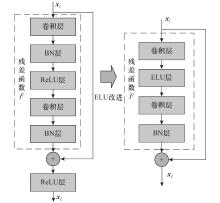
Fig.1
Residual block improvement diagram"
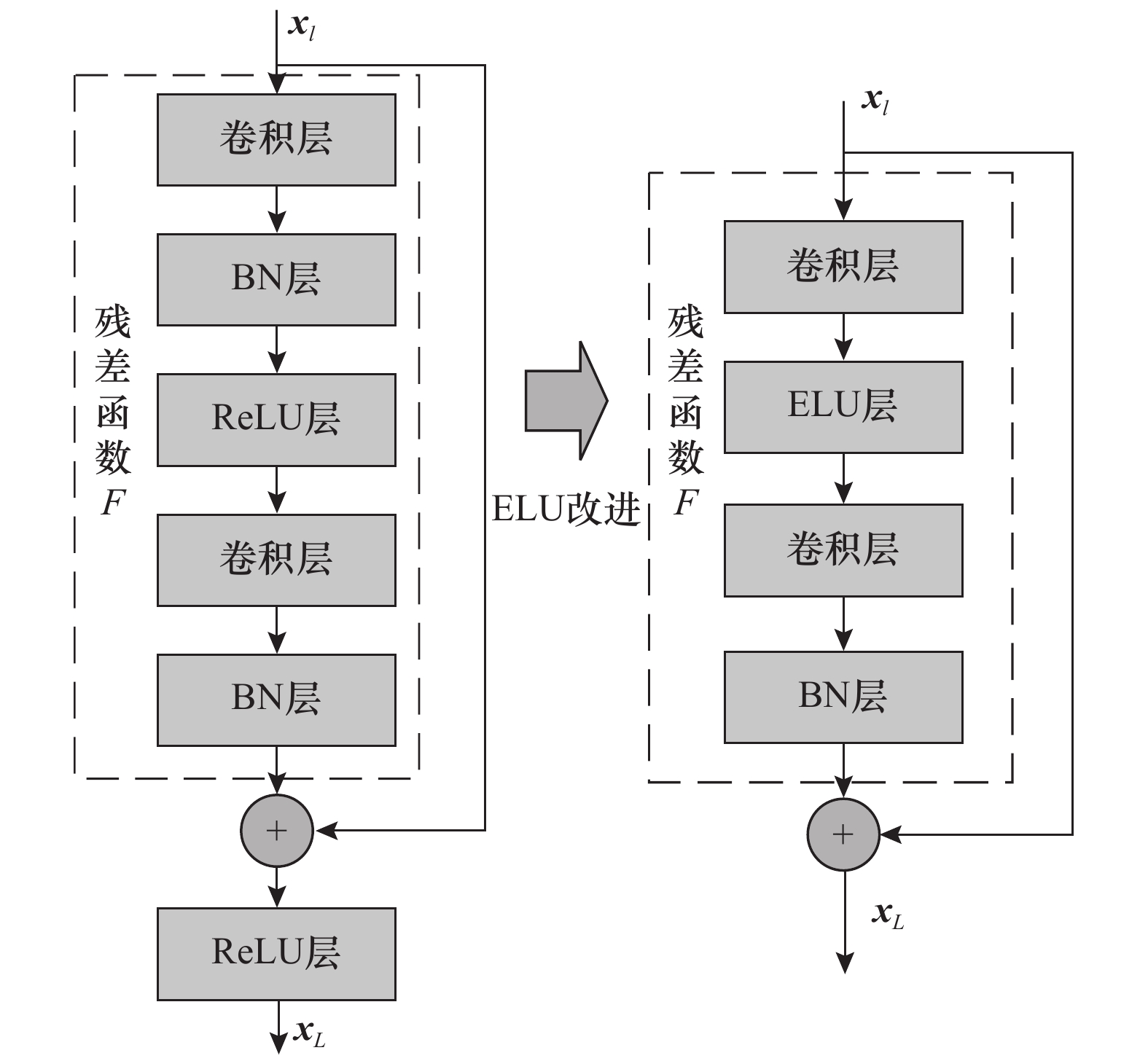
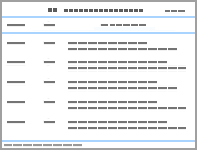
Table 1
Network specific parameter"
| 层类型 | 具体参数 |
| 输入层 | 输入数据二维图 |
| 卷积层1(Conv1) | 卷积核大小7×7,步长2 |
| 最大池化层(Maxpool) | 池化窗口大小3×3,步长2 |
| 卷积层2(Conv2) | |
| 卷积层3(Conv3) | |
| 卷积层4(Conv4) | |
| 卷积层5(Conv5) | |
| 全连接层(Fc) | 输入维度512,输出维度42 |
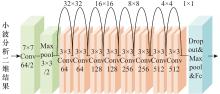
Fig.2
ResNet architecture"
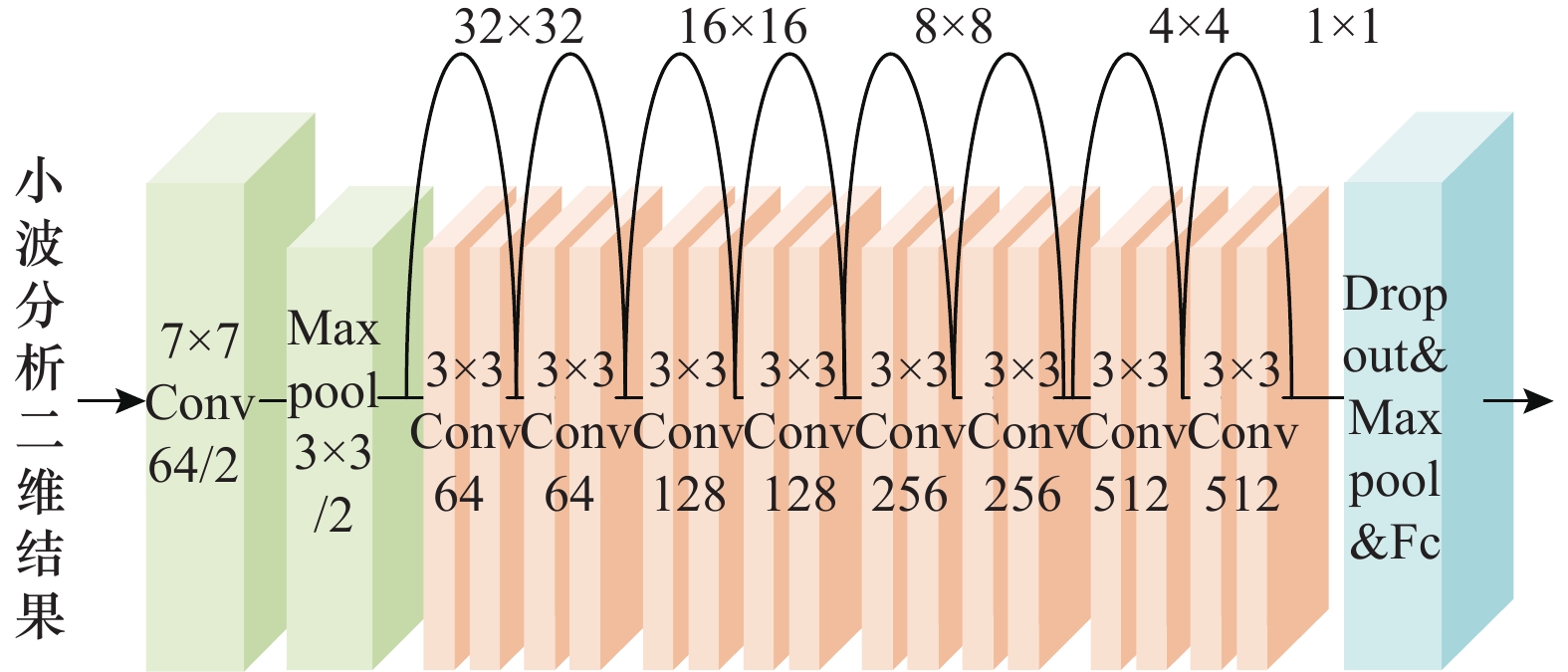
Fig.3
Motor fault diagnosis flow chart"
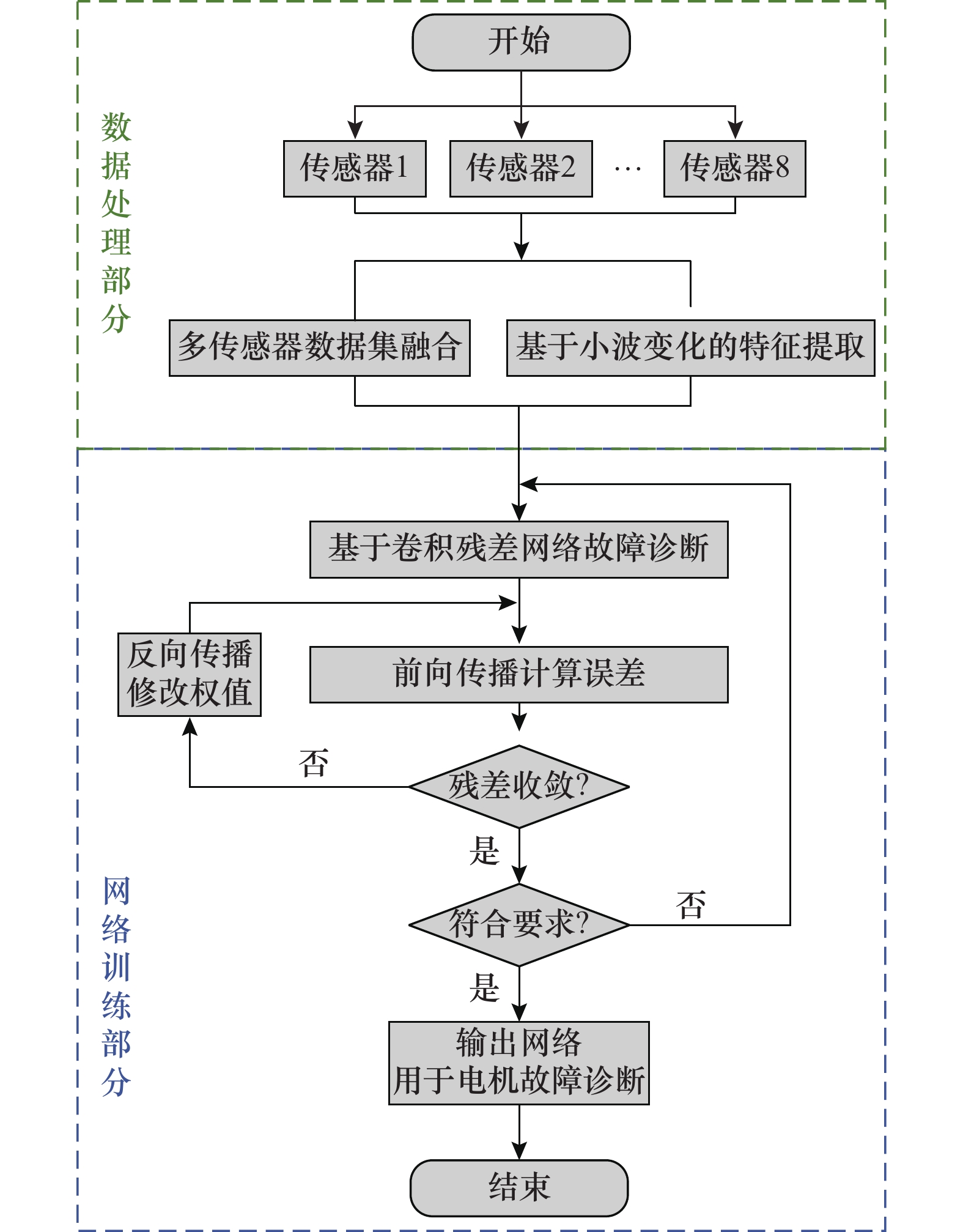
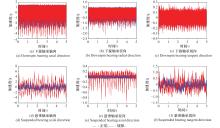
Fig.4
Fault data comparison"
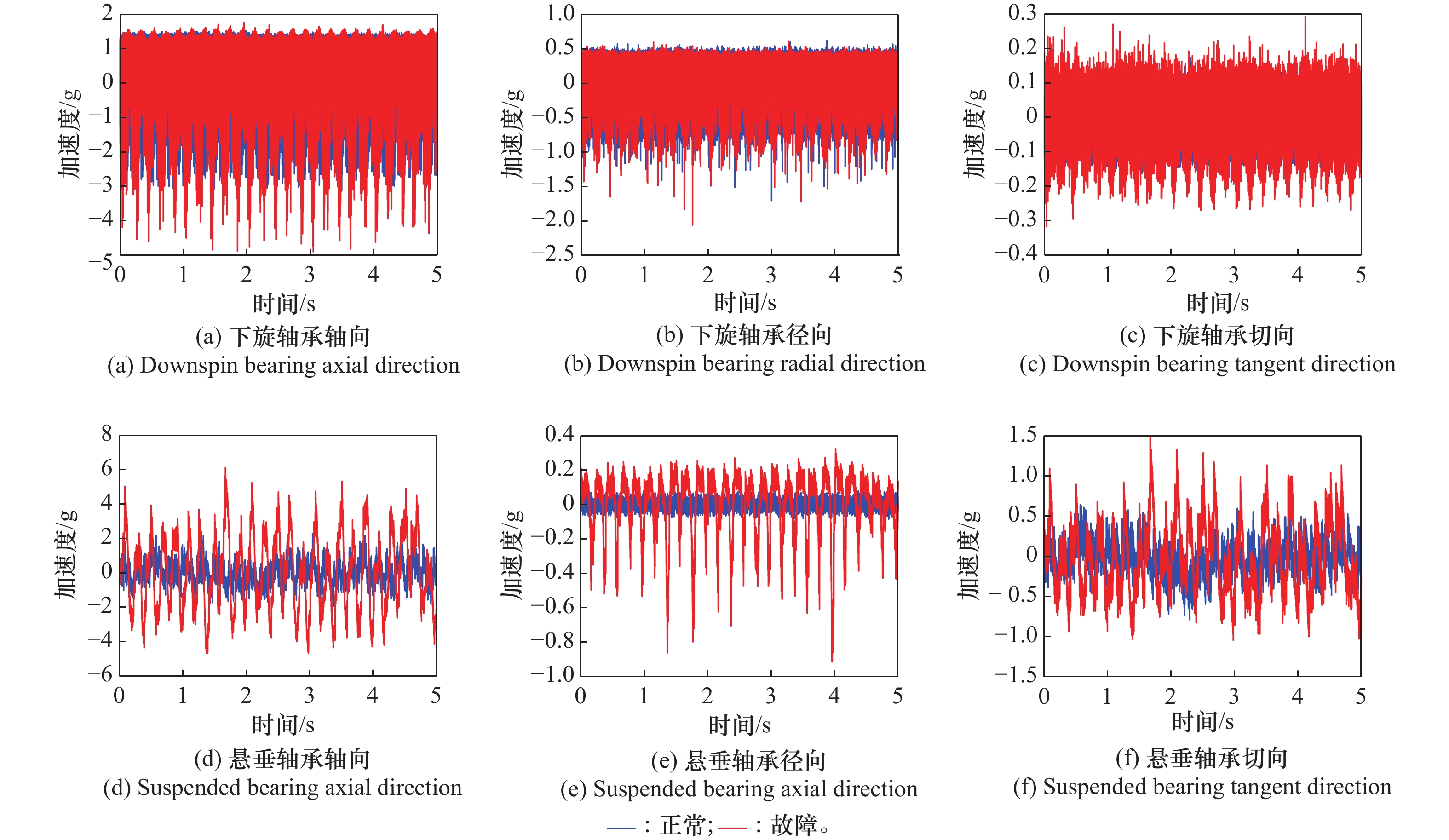
Table 2
Number of data samples in the motor"
| 信号状况 | 样本集数量 | 标签 |
| 正常数据 | 0 | |
| 不平衡故障 | 1 | |
| 水平平行错位 | 2 | |
| 垂直平行错位 | 3 | |
| 内轨道故障 | 4 | |
| 外轨道故障 | 5 |
Fig.5
Multichannel time-frequency feature analysis diagram"
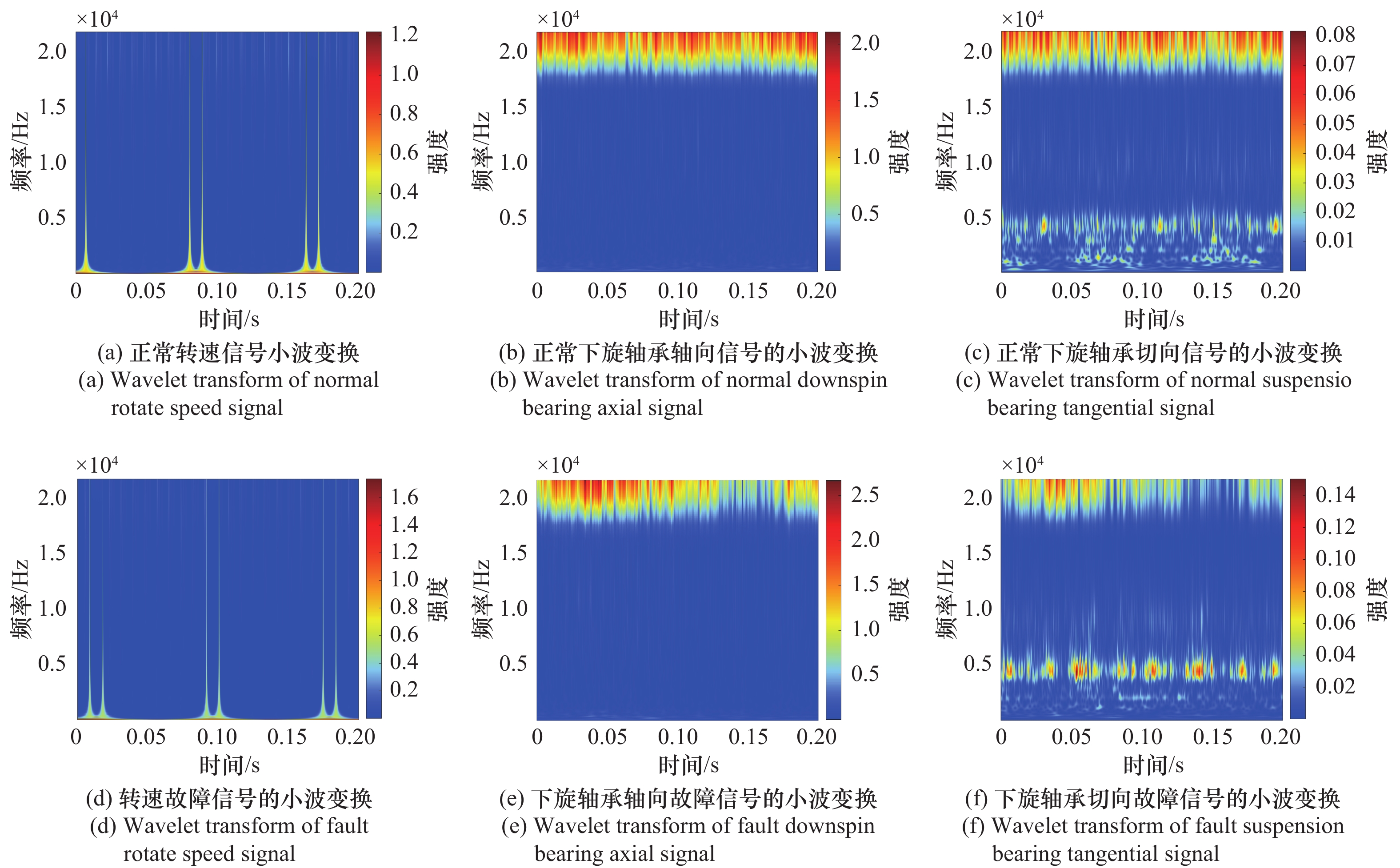
Table 3
Algorithmic computation time s"
| 项目 | 训练耗时 | 检测耗时 |
| CNN网络训练 | 8.55 | |
| ResNet网络训练 | 10.62 | |
| Transformer网络训练 | 116.22 | |
| ConvNext网络训练 | 115.33 |
Table 4
Memory footprint"
| 项目 | 计算占用/GB |
| CNN网络训练 | 14.2 |
| ResNet网络训练 | 14.6 |
| Transformer网络训练 | 14.1 |
| ConvNext网络训练 | 10.9 |
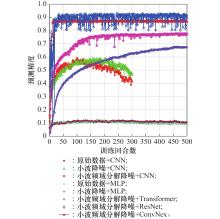
Fig.6
Accuracy transformation curve of ResNet"
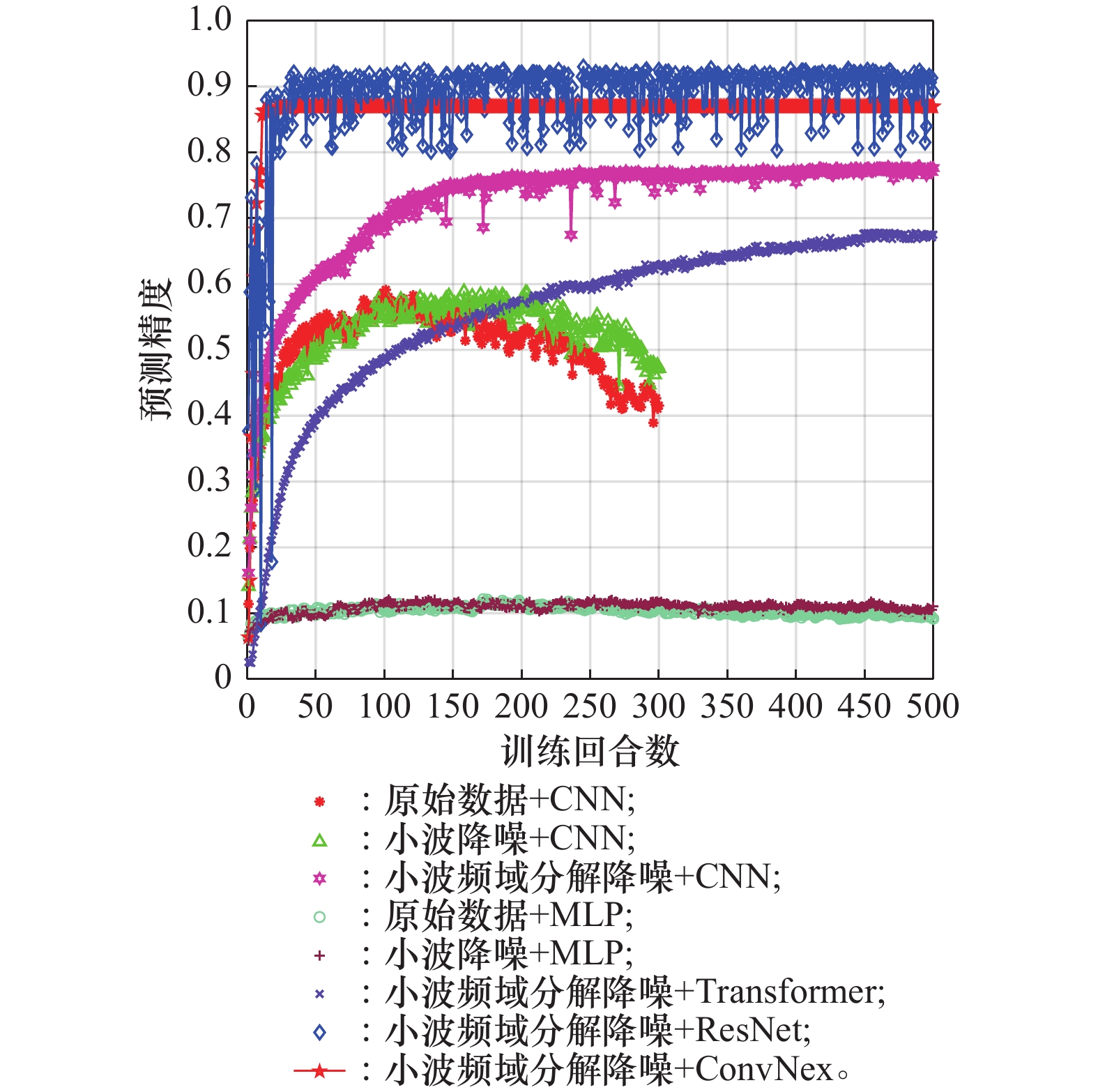
Table 5
Comparison of test results under downsampling %"
| 训练样本 数据量 | 小波降噪+ MLP | 小波降噪+ CNN | 小波频域分解 降噪+CNN | 小波频域分解 降噪+ResNet |
| 原数据大小 | 12.07 | 58.85 | 77.85 | 92.95 |
| 4倍降采样 | 15.09 | 63.26 | 75.33 | 92.32 |
| 8倍降采样 | 16.54 | 60.50 | 73.25 | 92.25 |
Fig.7
Confusion matrix of different methods"
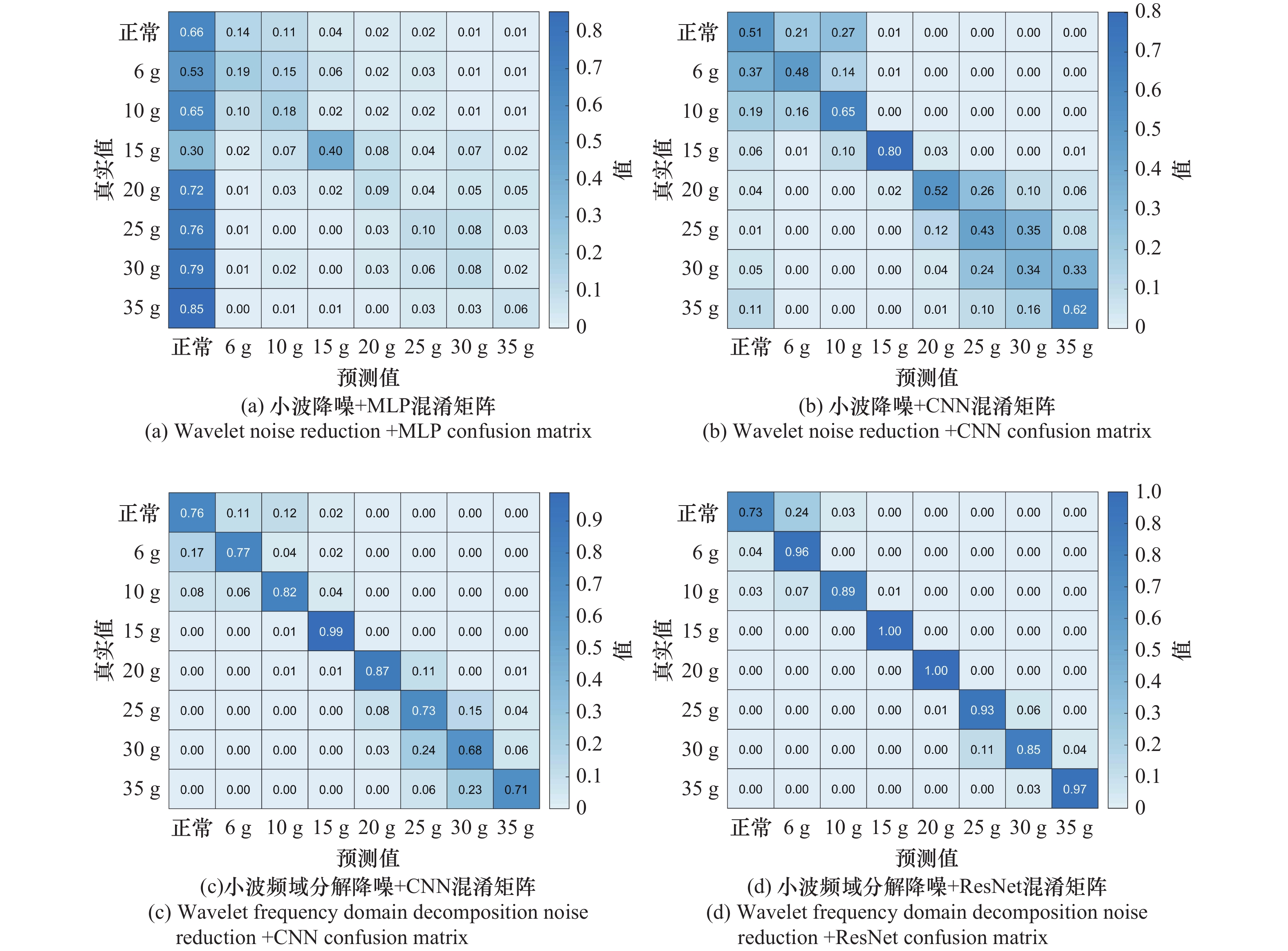
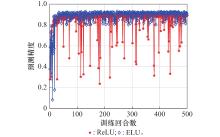
Fig.8
Comparison curve of prediction accuracy between ReLU and ELU with training epochs"
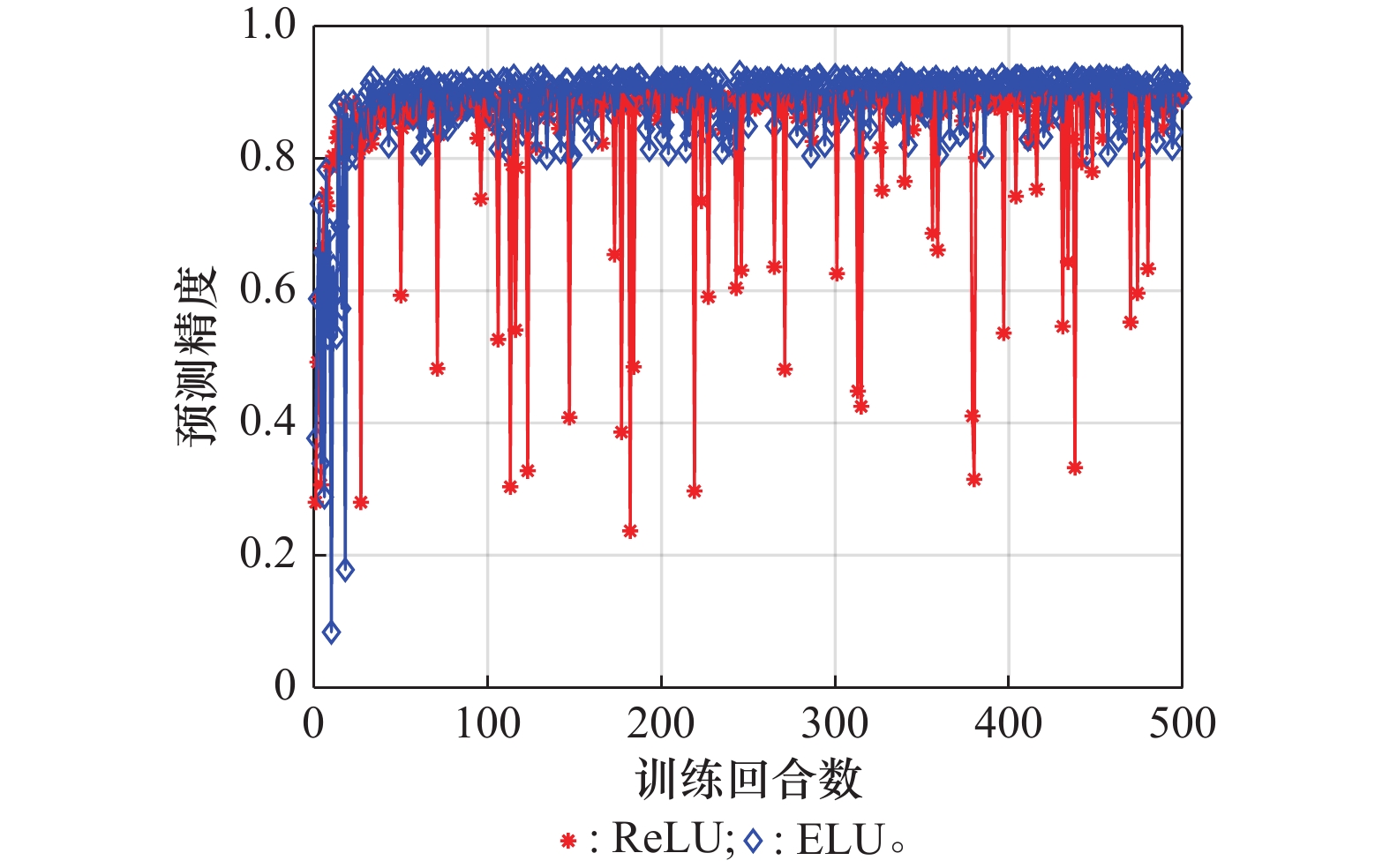
Fig.9
Comparison of gradient distributions across different convolutional layers in ResNet"
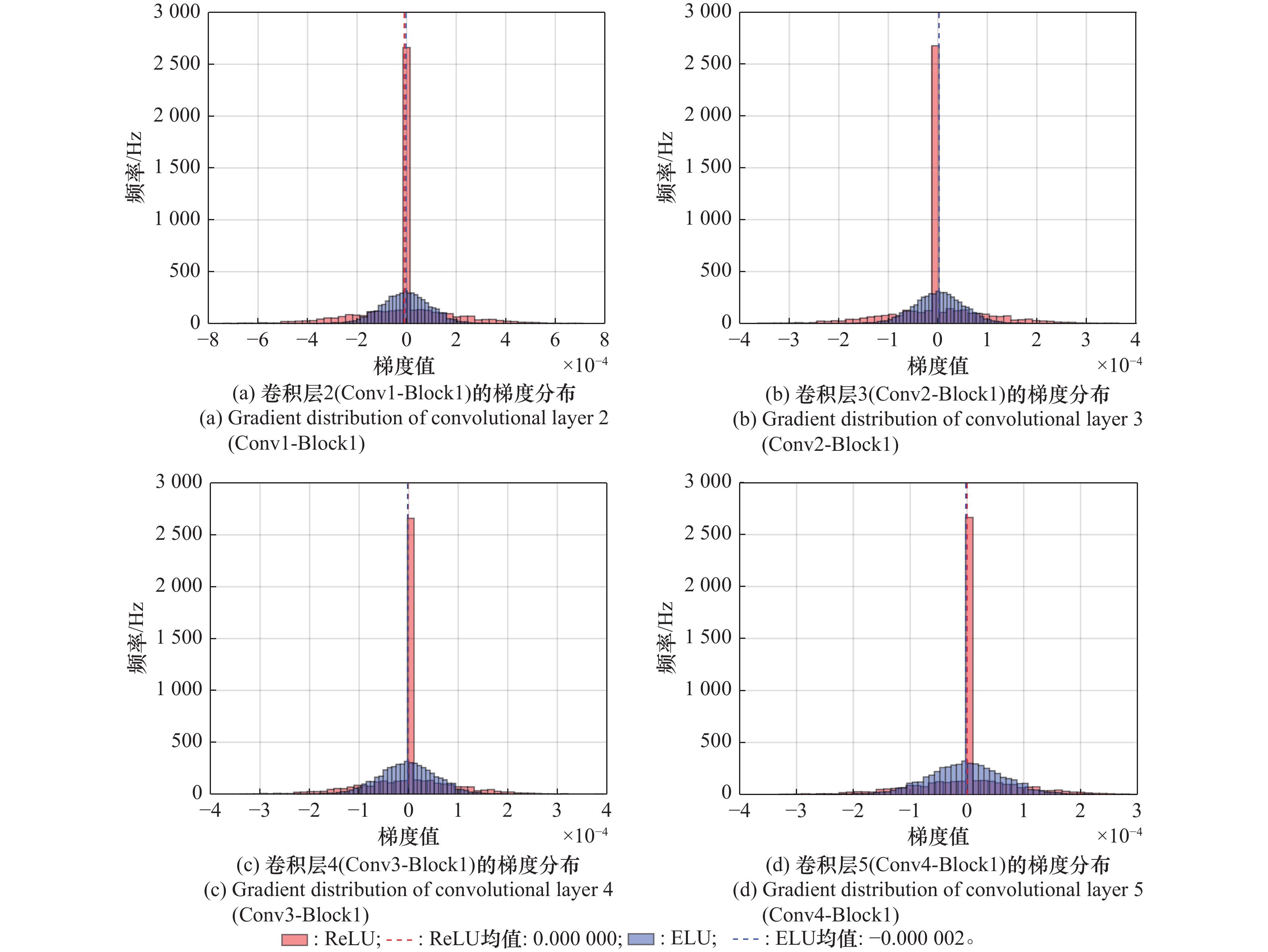
Table 6
Comparison of activation probabilities between ReLU and ELU functions"
| 层名称 | ReLU激活概率 | ELU激活概率 |
| Conv1 | 1 | |
| Conv2-Block1 | 1 | |
| Conv2-Block2 | 1 | |
| Conv3-Block1 | 1 | |
| Conv3-Block2 | 1 | |
| Conv4-Block1 | 1 | |
| Conv4-Block2 | 1 | |
| Conv5-Block1 | 1 | |
| Conv5-Block2 | 1 |
| 1 |
LIU H L, DONG J C, WANG T Y, et al. The digital manufacturing equipment and development of high speed and high precision with monitoring and intelligent maintenance[J]. Key Engineering Materials, 2016, 693, 1948- 1953.
doi: 10.4028/www.scientific.net/KEM.693.1948 |
| 2 | PARMAR U, PANDYA D H. Experimental investigation of cylindrical bearing fault diagnosis with SVM[J]. Materials Today: Proceedings, 2021, 44, 1286- 1290. |
| 3 |
GOYAL D, CHOUDHARY A, PABLA B S, et al. Support vector machines based non-contact fault diagnosis system for bearings[J]. Journal of Intelligent Manufacturing, 2020, 31, 1275- 1289.
doi: 10.1007/s10845-019-01511-x |
| 4 | 钟张豪, 丑永新, 侯千红. 基于随机森林的电机异音故障诊断方法[J]. 盐城工学院学报: 自然科学版, 2023, 36 (2): 37- 43. |
| ZHONG Z H, CHOU Y X, HOU Q H. Fault diagnosis method of motor abnormal sound based on random forest[J]. Journal of Yancheng Institute of Technology (Natural Science Edition), 2023, 36 (2): 37- 43. | |
| 5 | 李兵, 韩睿, 何怡刚, 等. 改进随机森林算法在电机轴承故障诊断中的应用[J]. 中国电机工程学报, 2020, 4, 1310- 1319. |
| LI B, HAN R, HE Y G, et al. Applications of the improved random forest algorithm in fault diagnosis of motor bearings[J]. Proceedings of the CSEE, 2020, 4, 1310- 1319. | |
| 6 | 袁建虎, 韩涛, 唐建, 等. 基于小波时频图和CNN的滚动轴承智能故障诊断方法[J]. 机械设计与研究, 2017, 33 (2): 93- 97. |
| YUAN J H, HAN T, TANG J, et al. An approach to intelligent fault diagnosis of rolling bearing using wavelet time-frequency representations and CNN[J]. Machine Design and Research, 2017, 33 (2): 93- 97. | |
| 7 | HUANG X D, PANG X W. Review of intelligent device fault diagnosis based on deep learning[J]. Computer Science, 2023, 50 (5): 93- 102. |
| 8 |
HUANG T, ZHANG Q, TANG X A, et al. A novel fault diagnosis method based on CNN and LSTM and its application in fault diagnosis for complex systems[J]. Artificial Intelligence Review, 2022, 55, 1289- 1315.
doi: 10.1007/s10462-021-09993-z |
| 9 | MENH W, ZHAO P, SHI Y, et al. Intelligent fault diagnosis of mechanical engineering using NLF-LSTM optimized deep learning model[J]. Optimization and Engineering, 2024, 28, 1- 22. |
| 10 | KHAN T, ALEKHYA P, SESHADRINATH J. Incipient inter-turn fault diagnosis in induction motors using CNN and LSTM based methods[C]//Proc. of the IEEE Industry Applications Society Annual Meeting, 2018. |
| 11 |
AZAMFAR M, SINGH J, BRAVO-IMAZ I, et al. Multisensor data fusion for gearbox fault diagnosis using 2-D convolutional neural network and motor current signature analysis[J]. Mechanical Systems and Signal Processing, 2020, 144, 106861.
doi: 10.1016/j.ymssp.2020.106861 |
| 12 | PARK C H, KIM H, LEE J, et al. A feature inherited hierarchical convolutional neural network (FI-HCNN) for motor fault severity estimation using stator current signals[J]. Korean Society for Precision Engineering, 2021, 8, 1253- 1266. |
| 13 |
LV J H. Research on mechanical fault diagnosis and prediction technology based on deep learning[J]. Transactions on Computer Science and Intelligent Systems Research, 2024, 4, 112- 117.
doi: 10.62051/vbkk3b17 |
| 14 | YAN S, SHAO H D, WANG J, et al. LiConv Former: a lightweight fault diagnosis framework using separable multiscale convolution and broadcast self-attention[J]. Expert Systems with Applications, 2023, 237, 121338. |
| 15 | WANG G, LU M F. Multiscale deep subspace clustering network with hierarchical fusion mechanism for mechanical fault diagnosis[J]. IEEE Trans. on Instrumentation and Measurement, 2024, 73, 1- 15. |
| 16 | YEMI H N. Deep learning architectures enabling sophisticated feature extraction and representation for complex data analysis[J]. International Journal of Innovative Science and Research Technology, 2024, 9 (10): 2290- 2300. |
| 17 |
LIU C. Research on image classification leveraging deep convolutional neural networks and visual cognition[J]. Applied and Computational Engineering, 2024, 32 (1): 200- 209.
doi: 10.54254/2755-2721/32/20230212 |
| 18 | HU Y H, HUBER A, ANUMULA J, et al. Overcoming the vanishing gradient problem in plain recurrent networks[EB/OL]. https://arxiv.org/abs/1801.06105. |
| 19 | WANG S B, ZHANG X D, LIU D R, et al. Unified batch normalization: identifying and alleviating the feature condensation in batch normalization and a unified framework [EB/OL]. [2024−12−22]. https://arxiv.org/abs/2311.15993. |
| 20 | ZHONG J, CHEN H Y, CHAO W L. Making batch normalization great in federated deep learning[EB/OL]. [2024−12−22]. https://arxiv.org/abs/2303.06530. |
| 21 | HE K M, ZHANG X Y, REN S, et al. Deep residual learning for image recognition[C]// Proc. of the IEEE Conference on Computer Vision and Pattern Recognition, 2016: 770−778. |
| 22 | 刘飞, 陈仁文, 邢凯玲, 等. 基于迁移学习与深度残差网络的滚动轴承快速故障诊断算法[J]. 振动与冲击, 2022, 41 (3): 154- 164. |
| LIU F, CHEN R W, XING K L, et al. Fast fault diagnosis algorithm for rolling bearing based on transfer learning and deep residual network[J]. Journal of Vibration and Shock, 2022, 41 (3): 154- 164. | |
| 23 |
YAN X F, CHEN S C, JIN S M, et al. Research on fault identification method of high-voltage circuit breaker based on wavelet packet dispersion entropy feature extraction[J]. Journal of Physics: Conference Series, 2025, 2935 (1): 012022.
doi: 10.1088/1742-6596/2935/1/012022 |
| 24 |
LIU R Z, WANG X B, KUMAR A, et al. WPD-enhanced deep graph contrastive learning data fusion for fault diagnosis of rolling bearing[J]. Micromachines, 2023, 14 (7): 1467.
doi: 10.3390/mi14071467 |
| 25 | ZHOU X, TANG X Z, LIANG W H. A novel analog circuit fault diagnosis method based on multi-channel 1D-resnet and wavelet packet transform[J]. Analog Integrated Circuits and Signal Processing, 2024, 121 (1): 25- 38. |
| 26 |
WU G G, JI X R, YANG G L, et al. Signal-to-image: rolling bearing fault diagnosis using ResNet family deep-learning models[J]. Processes, 2023, 11 (5): 1527.
doi: 10.3390/pr11051527 |
| 27 |
WANG S H, SATAPATHY S C, XIE M X, et al. Retracted article: ELUCNN for explainable COVID-19 diagnosis[J]. Soft Computing, 2024, 28 (S2): 455.
doi: 10.1007/s00500-023-07813-w |
| 28 |
FENG H S, YANG C H. PolyLU: a simple and robust polynomial-based linear unit activation function for deep learning[J]. IEEE Access, 2023, 11, 101347- 101358.
doi: 10.1109/ACCESS.2023.3315308 |
| 29 | YE Q, LIU C H. An unsupervised deep feature learning model based on parallel convolutional autoencoder for intelligent fault diagnosis of main reducer[J]. Computational Intelligence and Neuroscience, 2021, 8922656. |
| 30 | 张洪亮, 余其源, 秦超群, 等. 基于信息融合及双连接注意力残差网络的轴承故障诊断[J]. 振动与冲击, 2023, 42 (20): 114- 123. |
| ZHANG H L, YU Q Y, QIN C Q, et al. Bearing fault diagnosis based on double connected attention residual network and information fusion[J]. Journal of Vibration and Shock, 2023, 42 (20): 114- 123. | |
| 31 |
ZHANG K, ZUO W M, CHEN Y J, et al. Beyond a Gaussian denoiser: residual learning of deep CNN for image denoising[J]. IEEE Trans. on Image Processing, 2017, 26 (7): 3142- 3155.
doi: 10.1109/TIP.2017.2662206 |
| [1] | Yuanguang CHEN, Xiaokai LIU, Siyao XIAO, Shunsheng ZHANG, Hongyuan CUI, Xiaoying CHEN, Ying LIU. Radar intelligent target detection method using spatio-temporal feature fusion under low signal-to-noise ratio [J]. Systems Engineering and Electronics, 2026, 48(5): 1523-1531. |
| [2] | Zeying YANG, Zhuo CHEN, Zhiming XU, Xiaofeng AI, Qihua WU, Ling WANG. Forward labeling method for ISAR image components of space targets [J]. Systems Engineering and Electronics, 2026, 48(4): 1165-1173. |
| [3] | Jiong LIN, Peng GAO, Wenxing HONG. Applications and prospects of physics-informed neural networks in aerospace [J]. Systems Engineering and Electronics, 2026, 48(4): 1264-1282. |
| [4] | Kun CHENG, Hongtao LEI, Zhixuan LYU. Lightweight unmanned aerial vehicle tracking method of improved YOLOv8 [J]. Systems Engineering and Electronics, 2026, 48(3): 737-750. |
| [5] | Long ZHANG, Lianhong ZHU, Bo YANG, Zhen LEI, Xuanming FENG. MFA-Net: a multimodal adaptive fusion network for intelligent recognition of anti-ship missiles in complex adversarial environments [J]. Systems Engineering and Electronics, 2026, 48(3): 894-907. |
| [6] | Hongyu TIAN, Songhu GE, Yu GUO, Zhongpu CUI, Xiao LIANG. Communication interference recognition method based on multi-feature fusion under low interference-to-noise ratio conditions [J]. Systems Engineering and Electronics, 2026, 48(3): 1061-1071. |
| [7] | Yugang BAO, Haoxiang JIA, Danfeng ZHAO. Single image raindrop removal model based on high-order recursive network [J]. Systems Engineering and Electronics, 2026, 48(1): 12-21. |
| [8] | Haiqing CHEN, Liuying WANG, Gu LIU, Long WANG, Chaoqun GE, Mengzhou CHEN. Research progress on denoising algorithms for synthetic aperture radar images [J]. Systems Engineering and Electronics, 2026, 48(1): 94-105. |
| [9] | Kaiming LI, Yuanpeng ZHANG, Ying LUO, Xiaonan DAI. Research progress on radar target recognition of ballistic missile [J]. Systems Engineering and Electronics, 2025, 47(9): 2870-2889. |
| [10] | Ce JI, Xiangyu MA, Xiaoyu MU, Jiayi ZHAO. TS-GRU-VTA: vehicle channel estimation scheme based on deep learning [J]. Systems Engineering and Electronics, 2025, 47(9): 3093-3098. |
| [11] | Xiaowei YAN, Chong LING, Shengbin SHI. Design and implementation of a rapid detection system for surface unexploded submunitions [J]. Systems Engineering and Electronics, 2025, 47(8): 2639-2645. |
| [12] | Wanying ZHANG, Youbing GAO, Zeyi LI, Pengfei LI, Wei ZHANG. Background signal suppression algorithm based on dual-path feature fusion net [J]. Systems Engineering and Electronics, 2025, 47(7): 2406-2413. |
| [13] | Xinzheng ZHANG, Mengke YAN, Xiaolin ZHU. Noise pseudo-label tolerant semi-supervised SAR target recognition [J]. Systems Engineering and Electronics, 2025, 47(6): 1796-1805. |
| [14] | Xiaonan CHEN, Yishou WANG, Xinlin QING. Review of aero engine gas path fault diagnostics technology based on hybrid-driven method [J]. Systems Engineering and Electronics, 2025, 47(6): 1880-1892. |
| [15] | Zhijie JIANG, Heng SONG, Nan HU, Lanxi DUAN, Ping CAO. Target recognition and classification algorithm of MMW radar in tunnel [J]. Systems Engineering and Electronics, 2025, 47(5): 1453-1460. |
| Viewed | ||||||
|
Full text |
|
|||||
|
Abstract |
|
|||||