Systems Engineering and Electronics ›› 2026, Vol. 48 ›› Issue (3): 1039-1049.doi: 10.12305/j.issn.1001-506X.2026.03.28
• Guidance, Navigation and Control • Previous Articles
Dual-branch acquisition and tracking algorithm based on auxiliary vectors
E CHEN, Yike GUO, Wenlong XIA, Qinggong GUO
- College of Electronics and Information Engineering,Sichuan University,Chengdu 610065,China
-
Received:2025-05-14Online:2026-03-25Published:2026-04-13 -
Contact:Wenlong XIA

CLC Number:
Cite this article
E CHEN, Yike GUO, Wenlong XIA, Qinggong GUO. Dual-branch acquisition and tracking algorithm based on auxiliary vectors[J]. Systems Engineering and Electronics, 2026, 48(3): 1039-1049.
share this article
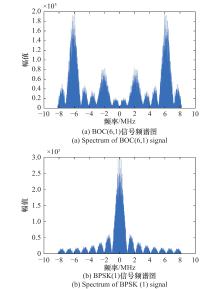
Fig.1
Spectrum comparison of signals"
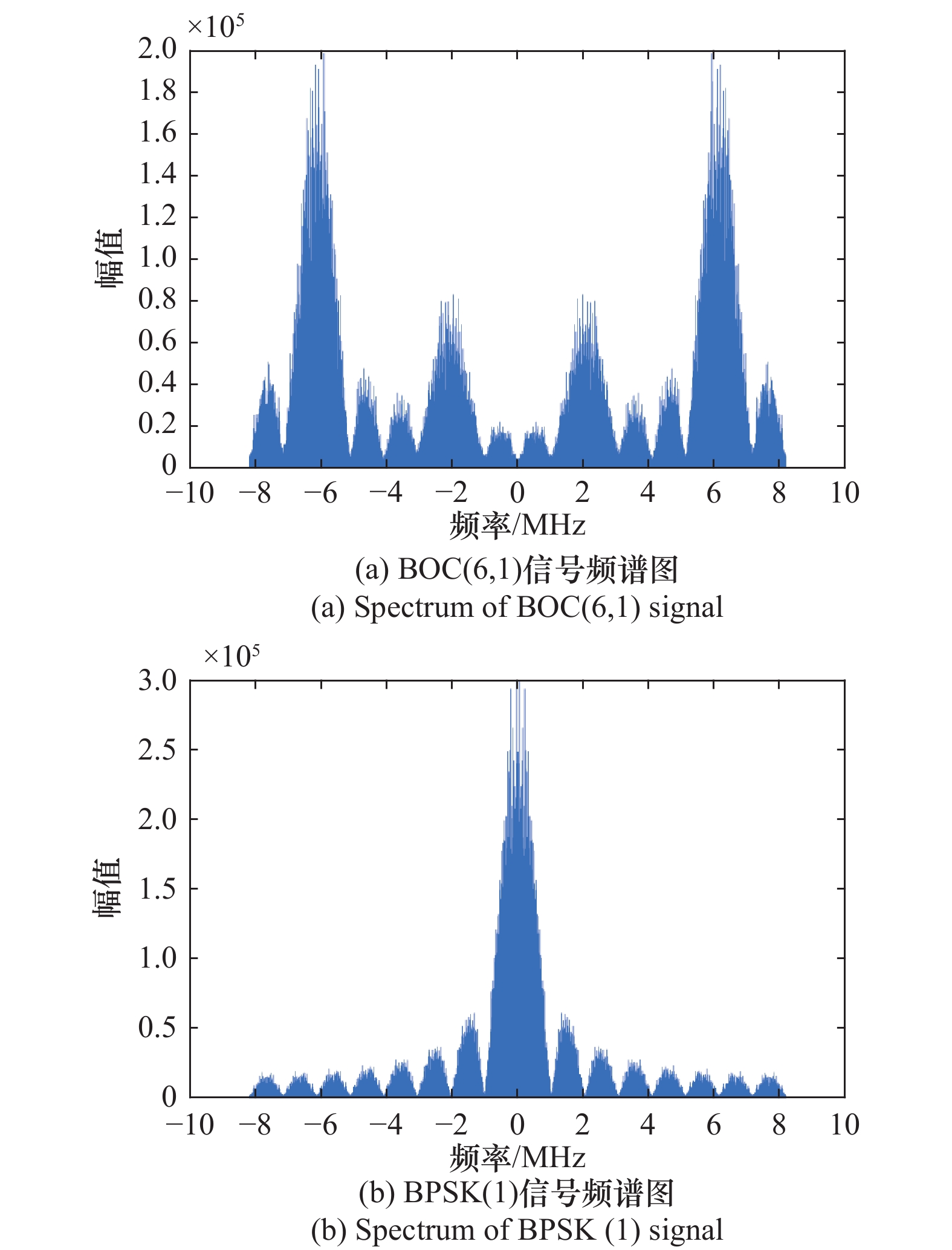
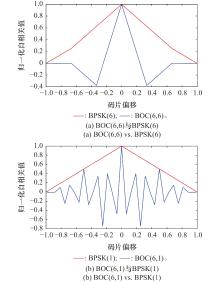
Fig.2
Autocorrelation function comparison of signals"
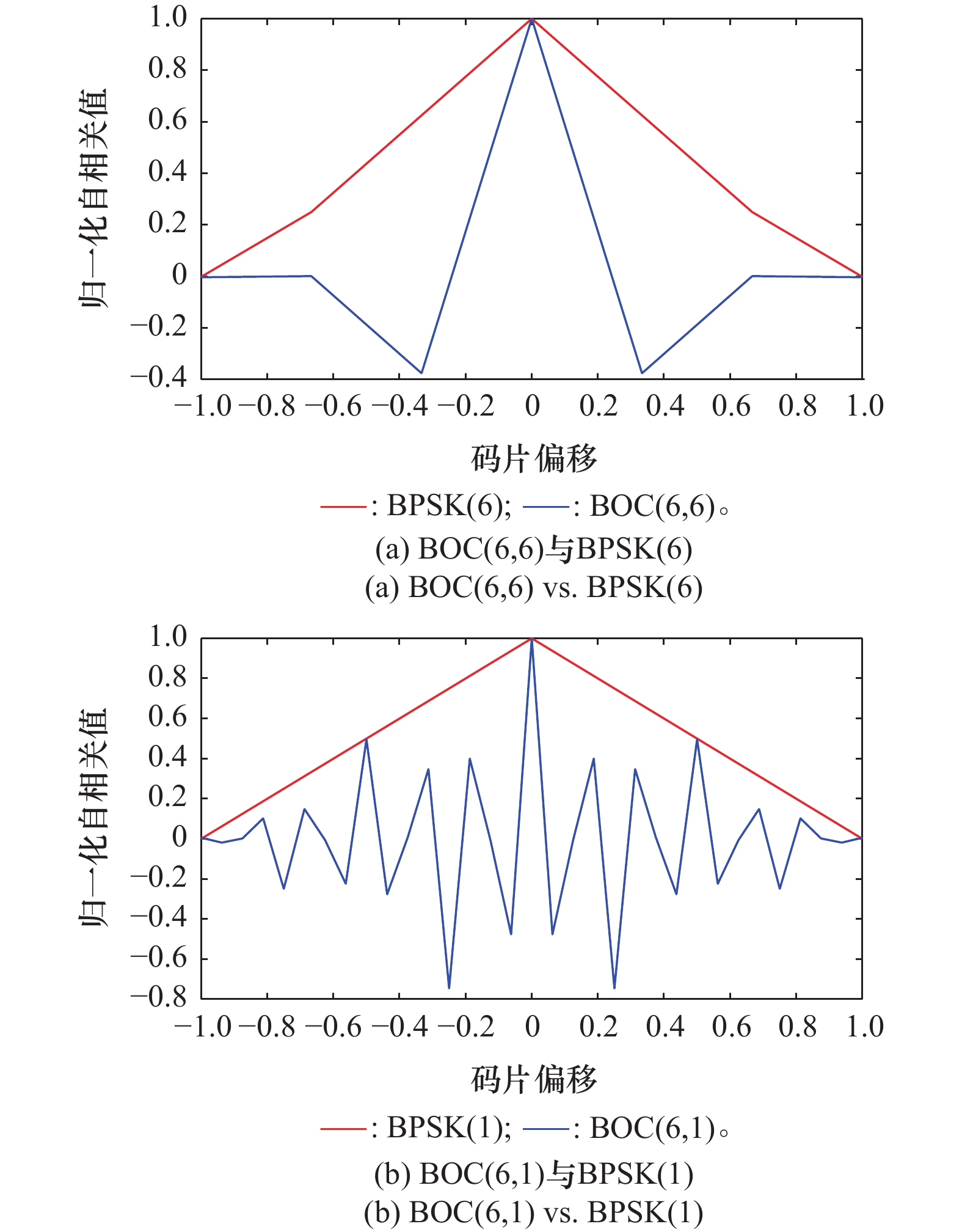
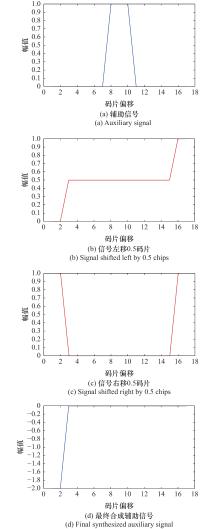
Fig.3
Diagram of BOC(6, 1) auxiliary signal generation"
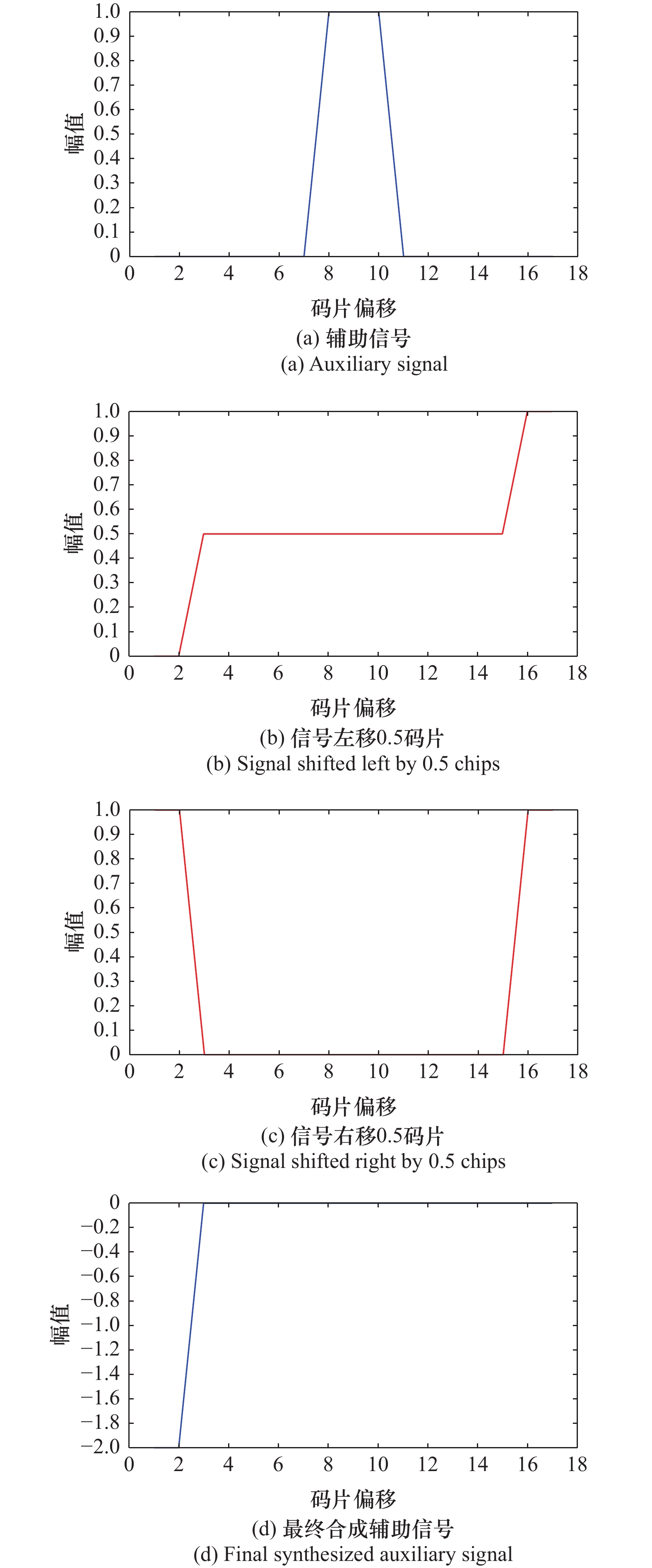
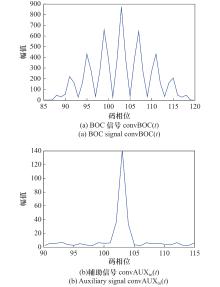
Fig.4
Correlation result of data branch"
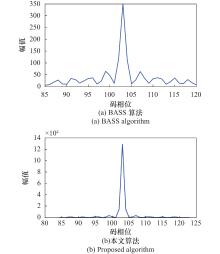
Fig.5
Comparison of acquisition curves"
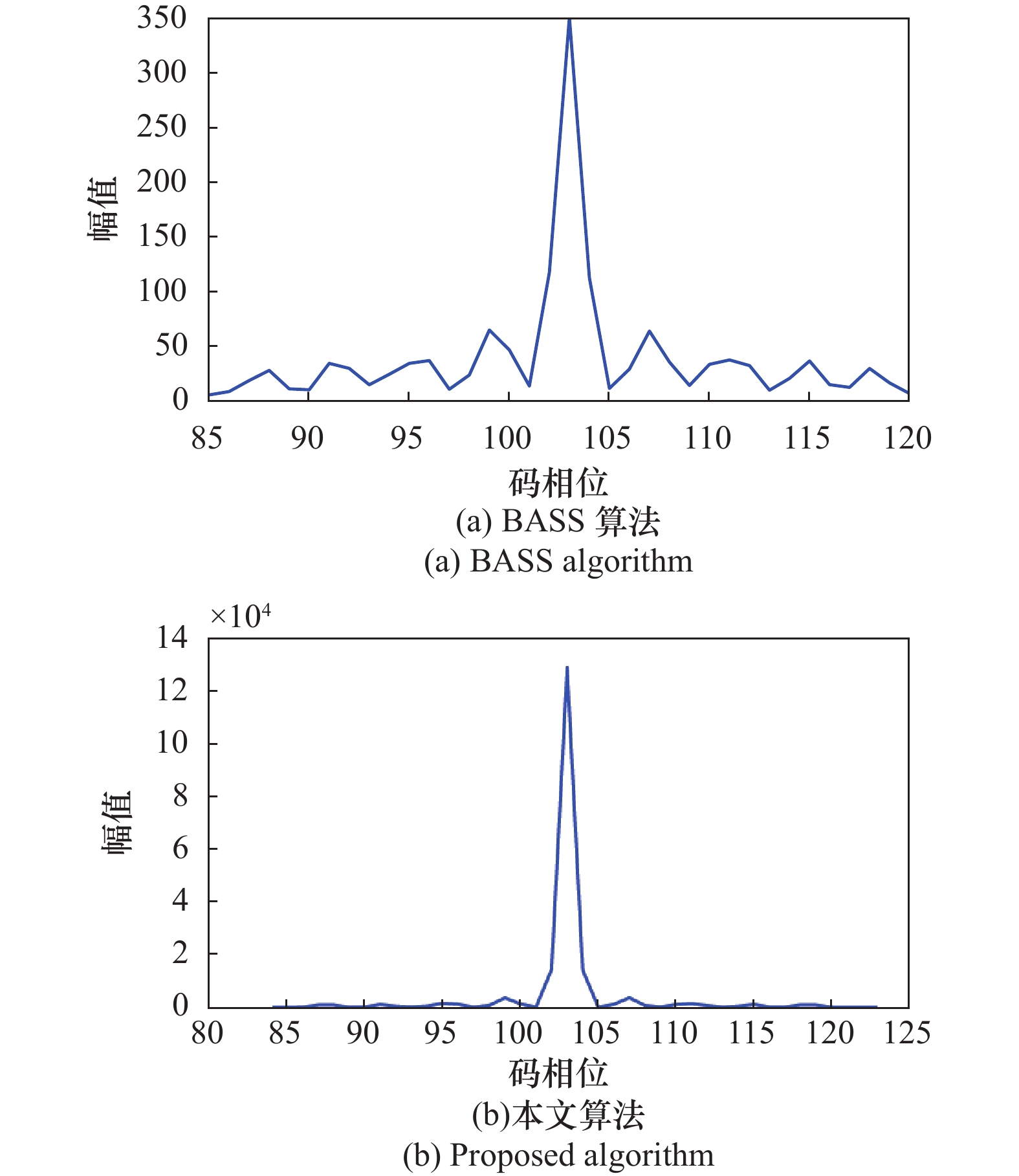
Table 1
Equal-length coherent integration joint algorithm"
| 算法类型 | 处理增益/dB | 抗数据反转 | 复杂度 | 适用场景 |
| 非相干联合 | 3 | 强 | 低 | 高动态 |
| 相干联合 | 6 | 弱 | 高 | 静态 |
| 差分联合 | 4.5 | 中 | 中 | 动态 |
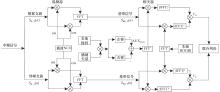
Fig.6
Block diagram of the acquisition algorithm principle"
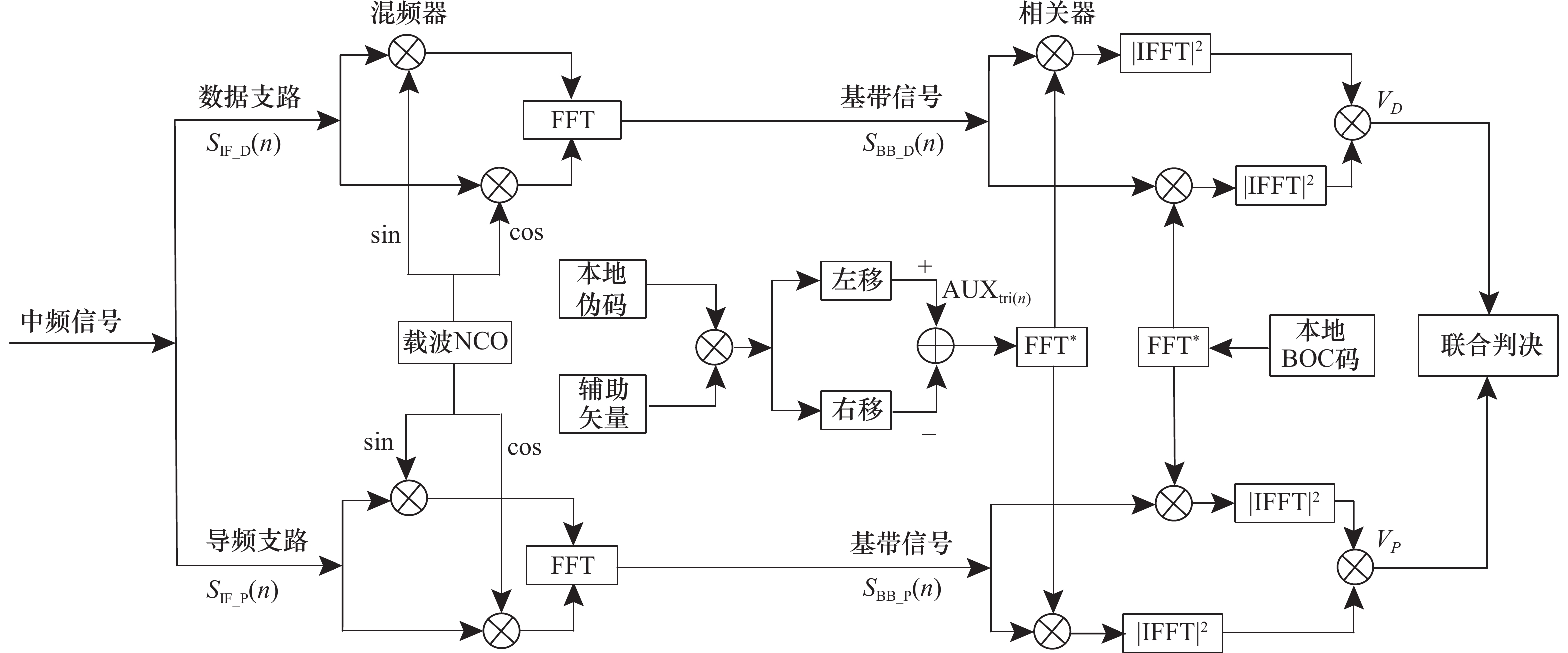
Fig.7
Loop structure of tracking algorithm"
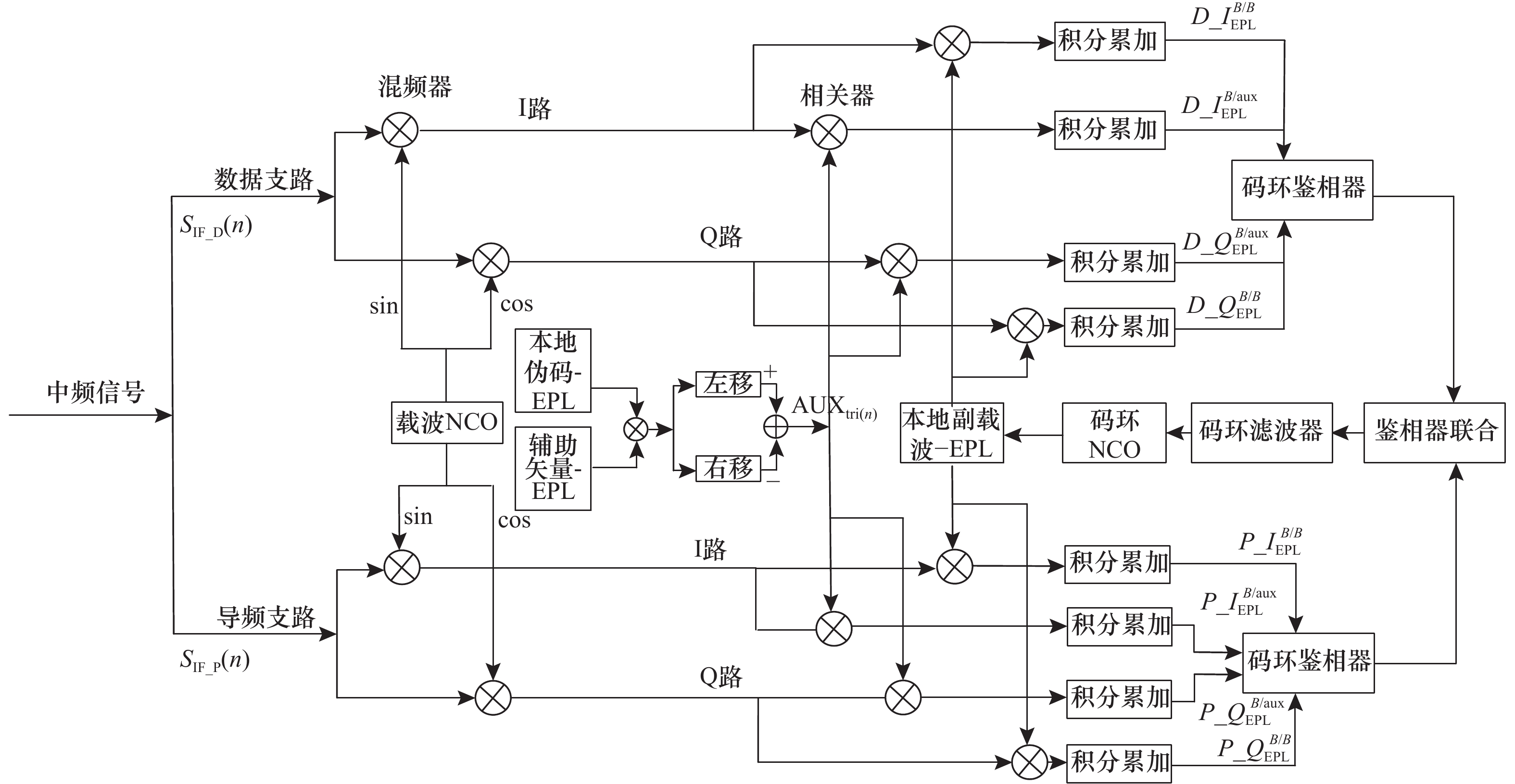
Table 2
Parameter list of BOC signals"
| 名称 | 参数/MHz |
| 采样频率 | 16.384 |
| 载波频率 | 1.023 |
| 副载波频率 | 6.138 |
| 伪码频率 | 1.023 |
| 数据频率 | 0.001 |
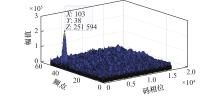
Fig.8
Three-dimensional diagram of acquisition results"
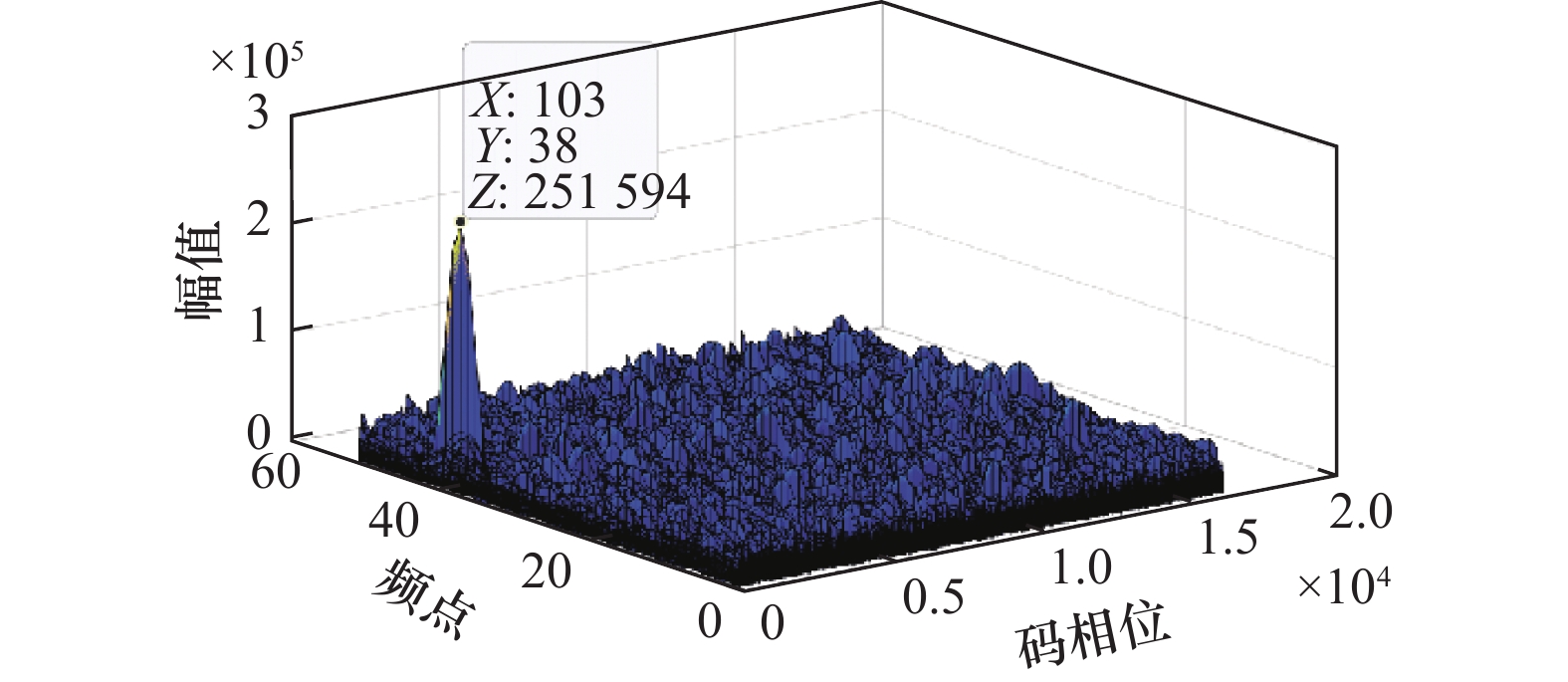
Fig.9
Two-dimensional projection of acquisition results"
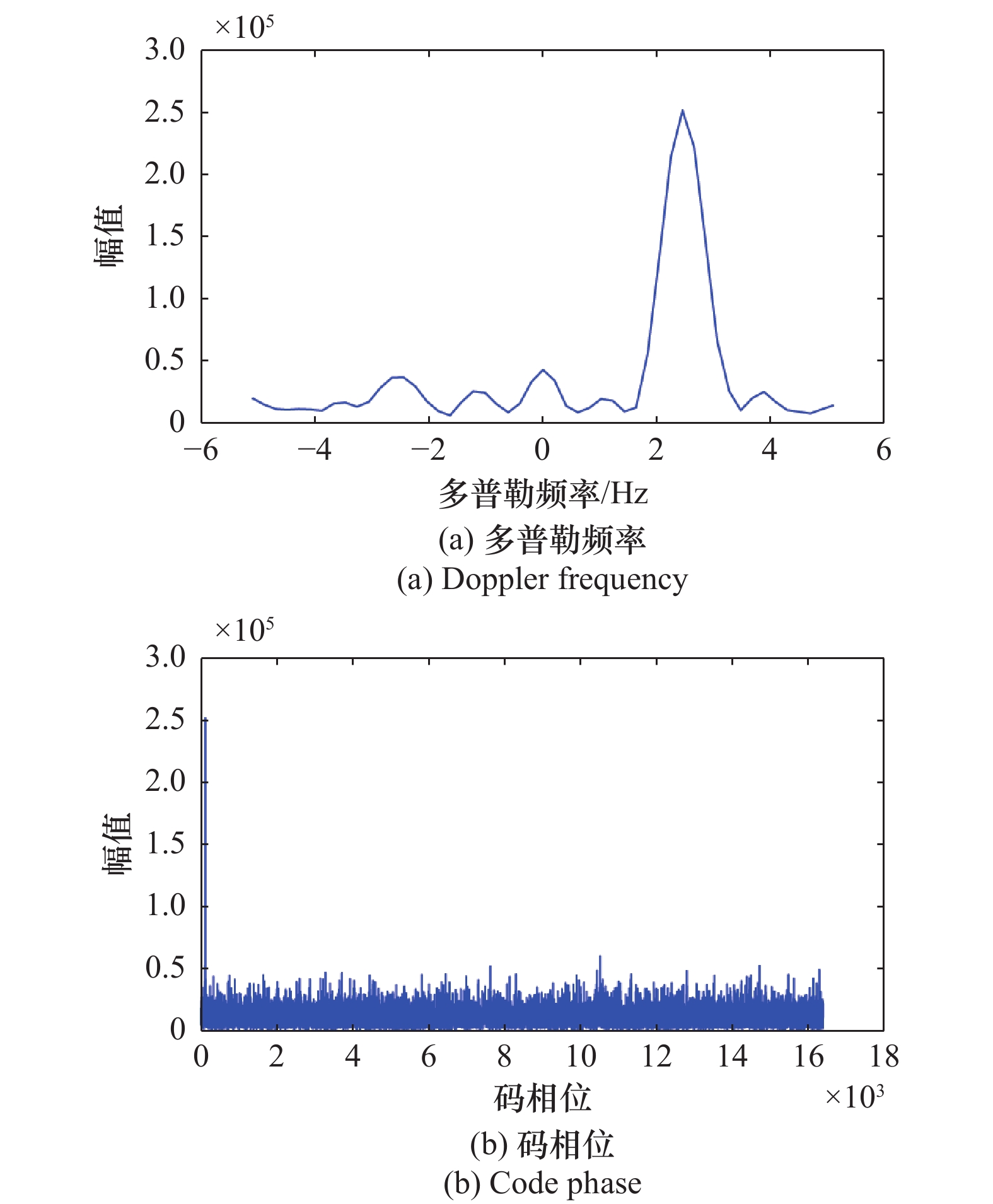
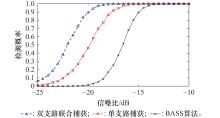
Fig.10
Acquisition probability with different SNRs"
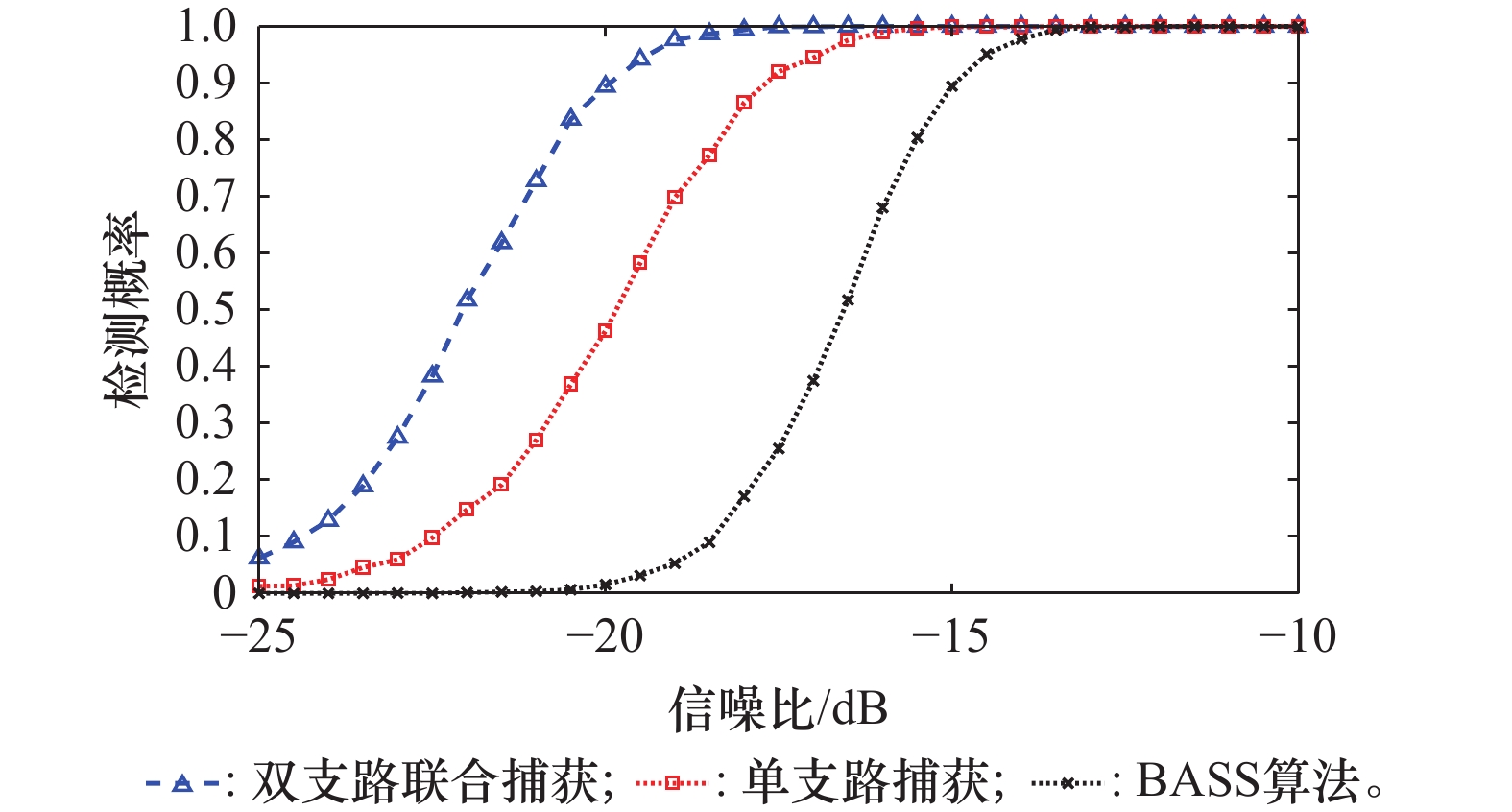
Table 3
Parameter list of the tracking loop"
| 名称 | 参数 |
| 码环阻尼系数 | 0.707 |
| 前后相关器间距 | 0.04 Tc |
| 码环噪声带宽/Hz | 2 |
| 锁相环阻尼系数 | 0.707 |
| 锁相环噪声带宽/Hz | 4 |
| 锁频环噪声带宽/Hz | 120 |
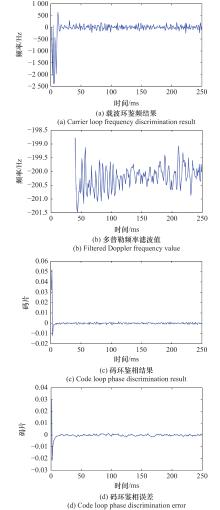
Fig.11
Schematic diagram of tracking results"
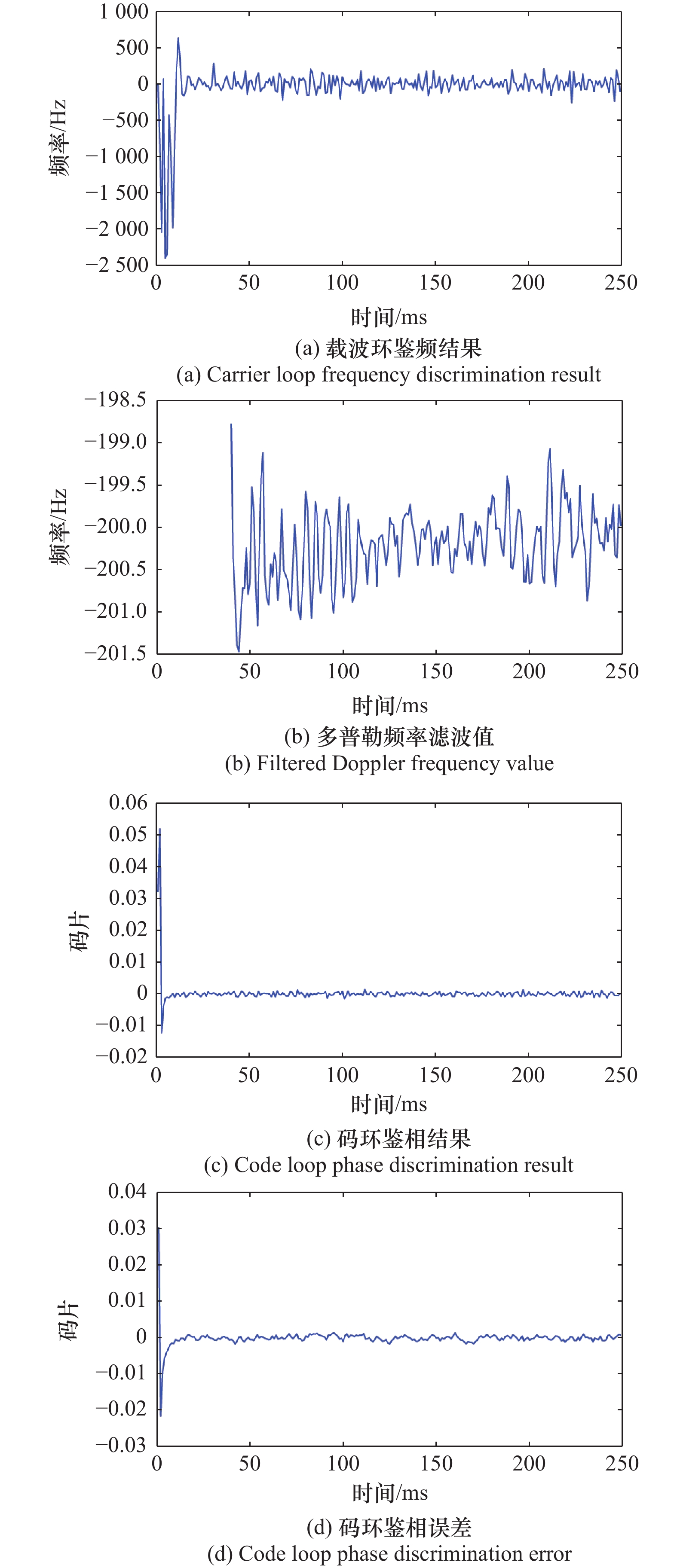
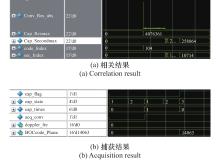
Fig.12
Schematic diagram of FPGA simulation acquisition results"
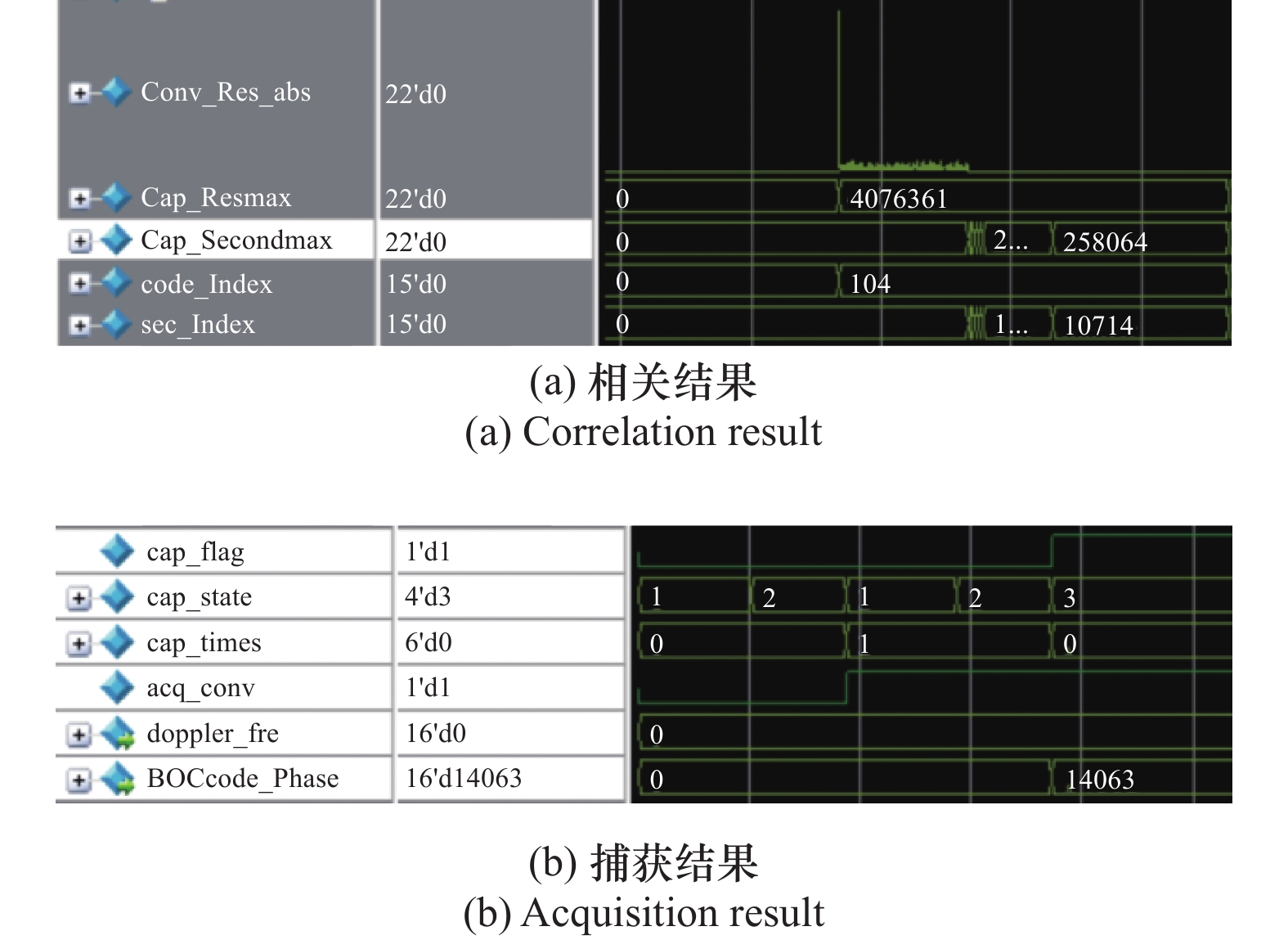
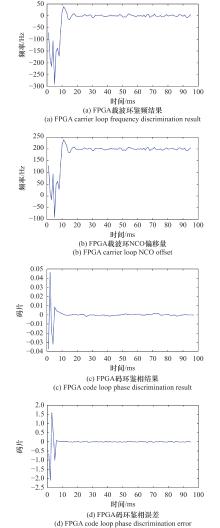
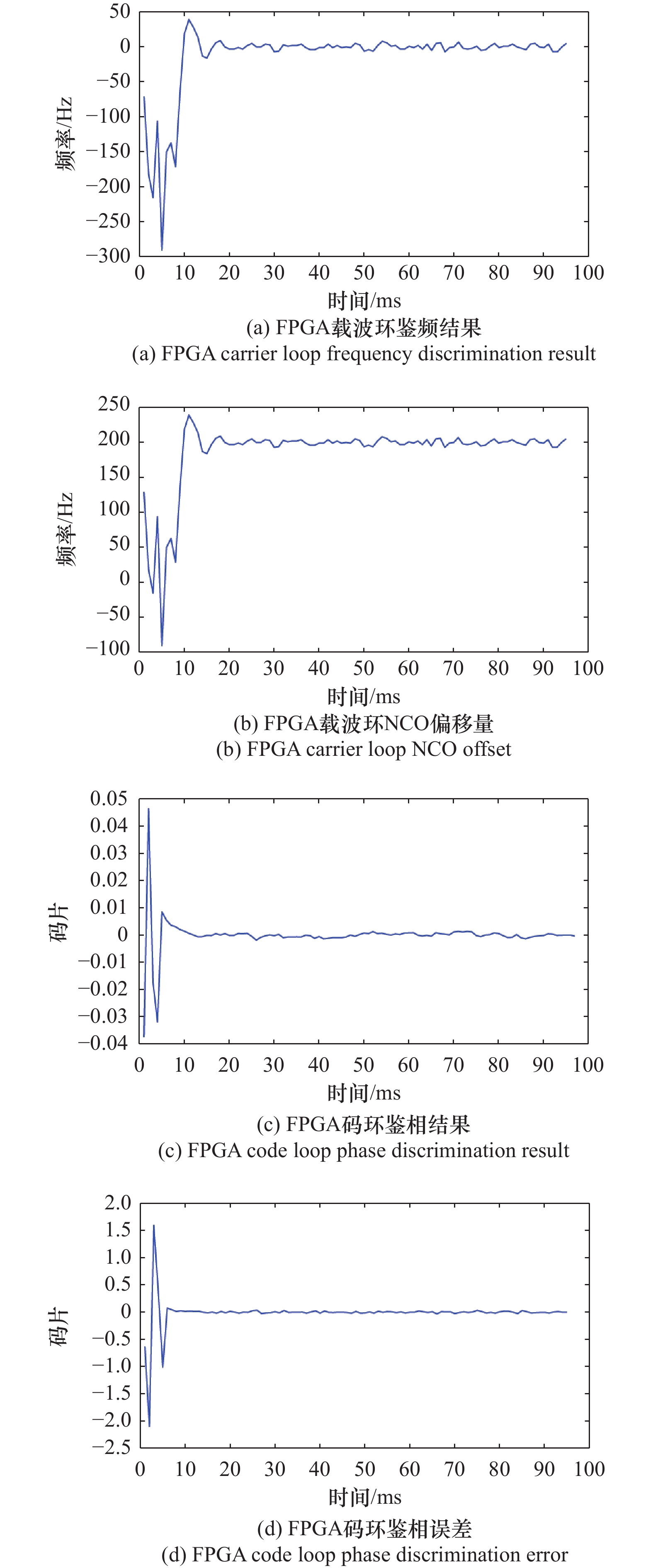
Fig.13
Schematic diagram of FPGA simulation tracking results"
| 1 |
LI X, ZHOU P, ZHANG Y S, et al. Research on a high-dynamics acquisition algorithm for new binary offset carrier signal in UAV Communication[J]. Drones, 2024, 8 (10): 548.
doi: 10.3390/drones8100548 |
| 2 | HE Y F, JIN A Z, CHEN L, et al. Acquisition algorithm of high-order BOC modulation satellite communication signal based on big data[C]//Proc. of the IEEE/ACIS 20th International Fall Conference on Computer and Information Science, 2021: 285−288. |
| 3 |
PADOKHIN A M, MYLNIKOVA A A, YASYUKEVICH Y V, et al. Galileo E5 AltBOC signals: application for single-frequency total electron content estimations[J]. Remote Sensing, 2021, 13 (19): 3973.
doi: 10.3390/rs13193973 |
| 4 |
BETZ J W. Binary offset carrier modulations for radio navigation[J]. Navigation, 2001, 48 (4): 227- 246.
doi: 10.1002/j.2161-4296.2001.tb00247.x |
| 5 |
都文杰, 荆文芳, 陈校非, 等. 低轨卫星高动态信号捕获算法研究[J]. 时间频率学报, 2023, 46 (2): 150- 160.
doi: 10.13875/j.issn.1674-0637.2023-02-0150-11 |
|
DU W J, JING W F, CHEN X F, et al. Research on high dynamic signal acquisition algorithm of low Earth orbit satellite[J]. Journal of Time and Frequency, 2023, 46 (2): 150- 160.
doi: 10.13875/j.issn.1674-0637.2023-02-0150-11 |
|
| 6 | 刘瀛翔, 谢郁辰, 唐小妹. 基于多相分解的BOC信号高效捕获算法[J]. 电子学报, 2023, 51 (1): 1- 10. |
| LIU Y X, XIE Y C, TANG X M. An efficient BOC signal acquisition method based on polyphase decomposition[J]. Acta Electronica Sinica, 2023, 51 (1): 1- 10. | |
| 7 |
QI Y H, YAO Z, LU M Q. Carrier assisted robust unambiguous positioning technique for subcarrier modulated signals in GNSS[J]. IEEE Trans. on Vehicular Technology, 2023, 72 (6): 7450- 7462.
doi: 10.1109/tvt.2023.3282291 |
| 8 |
QI Y H, YAO Z, LU M Q. Dual-assisted high-precision tracking technique for wideband multiplexed signals in new generation GNSS[J]. Satellite Navigation, 2024, 5 (1): 52- 73.
doi: 10.1186/s43020-023-00125-2 |
| 9 |
REN J W, JIA W M, CHEN H H, et al. Unambiguous tracking method for alternative binary offset carrier modulated signals based on dual estimate loop[J]. IEEE Communications Letters, 2012, 16 (11): 1737- 1740.
doi: 10.1109/LCOMM.2012.092112.121853 |
| 10 |
SUN X Y, SONG S J, JI Y F, et al. An unambiguous synchronization scheme for GNSS BOC signals based on reconstructed correlation function[J]. Sensors, 2021, 21 (6): 1982.
doi: 10.3390/s21061982 |
| 11 | HUANG X M, KE Z, LI J Y, et al. DPCCRW: an unambiguous acquisition technique for high-order binary offset carrier modulated signal[C]//Proc. of the China Satellite Navigation Conference, 2021: 456−465. |
| 12 |
孙希延, 郝放, 纪元法, 等. 基于相关移位BOC(n, n)无模糊度捕获算法[J]. 北京理工大学学报, 2021, 41 (7): 812- 818.
doi: 10.15918/j.tbit1001-0645.2018.078 |
|
SUN X Y, HAO F, JI Y F, et al. An unambiguous acquisition algorithm based on correlation shift for BOC(n, n)[J]. Journal of Beijing Institute of Technology, 2021, 41 (7): 812- 818.
doi: 10.15918/j.tbit1001-0645.2018.078 |
|
| 13 |
舒翊, 胡辉, 谢虹群, 等. 适用于任意阶数的BOC信号无模糊度捕获算法[J]. 哈尔滨理工大学学报, 2024, 29 (3): 90- 98.
doi: 10.15938/j.jhust.2024.03.011 |
|
SHU Y, HU H, XIE H Q, et al. An unambiguous acquisition algorithm for BOC signal with arbitrary order[J]. Journal of Harbin University of Science and Technology, 2024, 29 (3): 90- 98.
doi: 10.15938/j.jhust.2024.03.011 |
|
| 14 |
孟振, 刘昌迪, 沈锋. 基于形状码向量设计的卫星导航BOC调制信号无模糊捕获方法[J]. 系统科学与数学, 2025, 45 (1): 41- 55.
doi: 10.12341/jssms23246 |
|
MENG Z, LIU C D, SHEN F. Unambiguous acquisition method for satellite navigation BOC modulated signals based on the design of shape code vector[J]. Journal of Systems Science and Mathematics, 2025, 45 (1): 41- 55.
doi: 10.12341/jssms23246 |
|
| 15 | 张莹. BOC体制下GNSS信号同步算法研究[D]. 桂林: 桂林电子科技大学, 2024. |
| ZHANG Y. Research on GNSS signal synchronization algorithm of BOC modulation[D]. Guilin: Guilin University of Electronic Technology, 2024. | |
| 16 | FISHMAN P, BETZ J W. Predicting performance of direct acquisition for the m code signal[C]//Proc. of the National Technical Meeting of the Institute of Navigation, 2000: 574−582. |
| 17 | MARTIN N, LEBLOND V, GUILLOTEL G, et al. BOC(x, y) signal acquisition techniques and performances[C]//Proc. of the 16th International Technical Meeting of the Satellite Division of the Institute of Navigation, 2003: 188−198. |
| 18 | 张天骐, 唐娟, 谭霜, 等. 多分量LFM干扰及动态环境下DBOC信号的捕获[J]. 信号处理, 2024, 40 (7): 1287- 1297. |
| ZHANG T Q, TANG J, TAN S, et al. Acquisition of DBOC signals in a multicomponent LFM interference and dynamic environment[J]. Signal Processing, 2024, 40 (7): 1287- 1297. | |
| 19 |
张天骐, 方竹, 汪锐, 等. 窄带干扰及动态环境BOC调制信号多通道并行捕获[J]. 系统工程与电子技术, 2023, 45 (4): 1222- 1230.
doi: 10.12305/j.issn.1001-506X.2023.04.32 |
|
ZHANG T Q, FANG Z, WANG R, et al. Multi-channel parallel acquisition of BOC modulated signals in narrowband interference and dynamic environment[J]. Systems Engineering and Electronics, 2023, 45 (4): 1222- 1230.
doi: 10.12305/j.issn.1001-506X.2023.04.32 |
|
| 20 | JULIEN O, MACABIAU C, CANNON M, et al. ASPeCT: unambiguous sine-BOC(n, n) acquisition/tracking technique for navigation applications[J]. IEEE Trans. on Aerospace & Electronic Systems, 2007, 43(1): 150−162. |
| 21 |
YAO Z, LU M Q, FENG Z M. Unambiguous sine-phased binary offset carrier modulated signal acquisition technique[J]. IEEE Trans. on Wireless Communications, 2010, 9 (2): 577- 580.
doi: 10.1109/TWC.2010.02.091066 |
| 22 |
HAO F, YU B G, GAN X L, et al. Unambiguous acquisition/tracking technique based on sub-correlation functions for GNSS Sine-BOC signals[J]. Sensors, 2020, 20 (2): 485.
doi: 10.3390/s20020485 |
| 23 | DU J Y, DENG Z L, DING Z K, et al. An improved algorithm of unambiguous acquisition based on BOC signal[C]//Proc. of the China Satellite Navigation Conference, 2024: 525-534. |
| 24 |
JI Y F, ZHANG Y, SUN X Y, et al. Enhanced synchronization algorithms for BOC signals based on reconstructed sub-correlation functions[J]. Electronics, 2023, 12 (13): 2839.
doi: 10.3390/electronics12132839 |
| 25 |
YAN T, WEI J L, TANG Z P, et al. Unambiguous acquisition/tracking technique for high-order sine-phased binary offset carrier modulated signal[J]. Wireless Personal Communications, 2015, 84 (4): 2835- 2857.
doi: 10.1007/s11277-015-2769-4 |
| 26 |
YAO Z, CUI X W, LU M Q, et al. Pseudo-correlation-function-based unambiguous tracking technique for sine BOC signals[J]. IEEE Trans. on Aerospace and Electronic Systems, 2023, 59 (4): 3456- 3467.
doi: 10.1109/taes.2010.5595594 |
| 27 |
陈林, 靳云迪, 黄杰, 等. 基于副峰叠加的BOC导航信号捕获算法[J]. 系统工程与电子技术, 2023, 45 (7): 2211- 2219.
doi: 10.12305/j.issn.1001-506X.2023.07.32 |
|
CHEN L, JIN Y D, HUANG J, et al. Acquisition algorithm for BOC navigation signals based on sub-peak superposition[J]. Systems Engineering and Electronics, 2023, 45 (7): 2211- 2219.
doi: 10.12305/j.issn.1001-506X.2023.07.32 |
|
| 28 | 吴涛. 北斗新体制信号性能分析与联合接收技术研究[D]. 长沙: 国防科技大学, 2020. |
| WU T. Research on performance analysis of BDS new generation signals and joint receiving technology[D]. Changsha: National University of Defense Technology, 2020. | |
| 29 | 黄杰. 面向BOC导航信号的捕获跟踪算法研究及实现[D]. 成都: 电子科技大学, 2022. |
| HUANG J. Research and implementation of the acquisition and tracking algorithms for BOC navigation signal[D]. Chengdu: University of Electronic Science and Technology of China, 2022. | |
| 30 |
KUMAR R G, GIREDDY A K R. Enhanced global navigation satellite system signal processing using field programmable gate array and system-on-chip based software receivers[J]. International Journal of Electrical and Computer Engineering, 2025, 15 (1): 480- 492.
doi: 10.11591/ijece.v15i1.pp480-492 |
| 31 |
MAJORAL M, ARRIBAS J, FERNÁNDEZ-PRADES C. Implementation of a high-sensitivity global navigation satellite system receiver on a system-on-chip field-programmable gate array platform[J]. Sensors, 2024, 24 (5): 1416.
doi: 10.3390/s24051416 |
| 32 | 贾茹尚. 卫星导航信号捕获算法基于ZYNQ平台的研究与实现[D]. 济南: 山东大学, 2022. |
| JIA R S. Research and implementation of satellite navigation signal acquisition algorithm based on ZYNQ platform[D]. Jinan: Shandong University, 2022. | |
| 33 | 杜君宇. 复杂环境下的BOC信号无模糊定位算法研究[D]. 北京: 北京邮电大学, 2024. |
| DU J Y. Research on unambiguous location algorithm for BOC signal in complex environment[D]. Beijing: Beijing University of Posts and Telecommunications, 2024. | |
| 34 | 刘李纯子. 新体制导航信号的低功耗捕获跟踪研究[D]. 长沙: 中南大学, 2023. |
| LIU L C Z. Research on low-power capture and tracking of new type navigation signals[D]. Changsha: Central South University, 2023. | |
| 35 | 谢钢. GPS原理与接收机设计[M]. 北京: 电子工业出版社, 2017. |
| XIE G. Principles of GPS and receiver design[M]. Beijing: Publishing House of Electronics Industry, 2017. |
| [1] | Kun CHENG, Hongtao LEI, Zhixuan LYU. Lightweight unmanned aerial vehicle tracking method of improved YOLOv8 [J]. Systems Engineering and Electronics, 2026, 48(3): 737-750. |
| [2] | Yueneng YANG, Xi KONG, Shifeng ZHANG, Shaoyong DENG. Close range interception and capture method for low-altitude small rotor-winged drone [J]. Systems Engineering and Electronics, 2026, 48(3): 1010-1017. |
| [3] | Cuiyun LI, Zeyu ZHAO, Shuangwu ZHANG. Adaptive TPMBM filter in heavy-tailed noise environment [J]. Systems Engineering and Electronics, 2025, 47(9): 2808-2817. |
| [4] | Jiazheng FU, Yuxia GUO, Boxiang ZHANG, Lei CHAI, Wei YI, Lingjiang KONG. Distributed multi-target tracking method based on TPHD and TCPHD filters [J]. Systems Engineering and Electronics, 2025, 47(9): 2828-2838. |
| [5] | Xiaomeng MA, Dongming DENG, Yongjian SHEN, Jinshan DING, Guoqing HAO. Multi-target tracking method based on single observer passive motion location [J]. Systems Engineering and Electronics, 2025, 47(8): 2549-2557. |
| [6] | Xiao ZHOU, Xingang MOU, Wen KE, Ying SU, Li WANG. Adaptive IMM-UKF maneuvering target tracking algorithm [J]. Systems Engineering and Electronics, 2025, 47(8): 2686-2695. |
| [7] | Yixin SUN, Yuyuan FANG, Lei ZHANG. Tactical maneuver priori assisted interactive multiple model target tracking method [J]. Systems Engineering and Electronics, 2025, 47(7): 2086-2097. |
| [8] | Hongyuan ZHANG, Baichun GONG, Fei HAN, Yue SUN, Xin NING. Space-based passive cooperative multi-target initial orbit determination method in complex environments [J]. Systems Engineering and Electronics, 2025, 47(5): 1404-1413. |
| [9] | Yongqi YAN, Qi WANG, Fan YI. Algorithm for countering velocity gate pull-off jamming based on interacting multiple model probability data association [J]. Systems Engineering and Electronics, 2025, 47(5): 1507-1515. |
| [10] | Xu WANG, Yanfang LIU, Jiayu SHE, Qiufan YUAN, Naiming QI. Follow-up control technology and experiment research of suspension gravity compensation system [J]. Systems Engineering and Electronics, 2025, 47(3): 929-937. |
| [11] | Tianqi ZHANG, Xianyue WU, Yunge WU, Chunyun LI. Sequence estimation of LSC-DSSS signals based on novel information criterion and Massey algorithm [J]. Systems Engineering and Electronics, 2025, 47(2): 659-665. |
| [12] | Wenlan LIU, Dewu WANG, Jinhui DAI, Qiang AN, Songyao DOU. Joint power allocation and node selection algorithm for precision-preserving tracking in active-passive radar network [J]. Systems Engineering and Electronics, 2025, 47(12): 4110-4116. |
| [13] | Lina SHANG, Mei DONG, Baixiao CHEN. Low-altitude multi-target tracking algorithm in non-uniform clutter environment [J]. Systems Engineering and Electronics, 2025, 47(10): 3218-3227. |
| [14] | Mingjun WANG, Xiaoli WU, Biao YAN, Xinyue ZHANG, Yuhan WU. Tacit knowledge mining based on multi-channel interactive system of human-machine cooperative combat [J]. Systems Engineering and Electronics, 2025, 47(10): 3313-3324. |
| [15] | Jialong ZHANG, Di ZHAO, Pu ZHANG, Lei YE. Adaptive tracking control for UAV swarm with communication constraint [J]. Systems Engineering and Electronics, 2025, 47(10): 3401-3410. |
| Viewed | ||||||
|
Full text |
|
|||||
|
Abstract |
|
|||||