Systems Engineering and Electronics ›› 2026, Vol. 48 ›› Issue (6): 1819-1829.doi: 10.12305/j.issn.1001-506X.2026.06.04
• Electronic Technology • Previous Articles Next Articles
Target localization for multi-static sonar based on differential evolution algorithm
Qiangqiang WEI1( ), Linzhou XU1,*(), Dong HAN2(), Yutong GUO3()
- 1. Department of Underwater Weaponry and Chemical Defense,Dalian Naval Academy,Dalian 116018,China
2. Department of Information System,Dalian Naval Academy,Dalian 116018,China
3. College of Meteorology and Oceanography,National University of Defense Technology,Changsha 410073,China
-
Received:2025-04-24Revised:2025-07-27Online:2026-06-25Published:2025-12-08 -
Contact:Linzhou XU E-mail:9154657@qq.com;xubigboy@163.com;332548360@qq.com;guoyutong@nudt.edu.cn

CLC Number:
Cite this article
Qiangqiang WEI, Linzhou XU, Dong HAN, Yutong GUO. Target localization for multi-static sonar based on differential evolution algorithm[J]. Systems Engineering and Electronics, 2026, 48(6): 1819-1829.
share this article
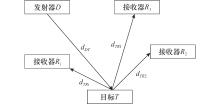
Fig.1
Schematic diagram of signal transmission for hyperbolic positioning model"
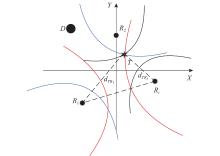
Fig.2
Localization principle of TDOA hyperbolic model"
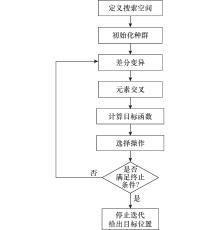
Fig.3
Flowchart of implementation of DE algorithm"
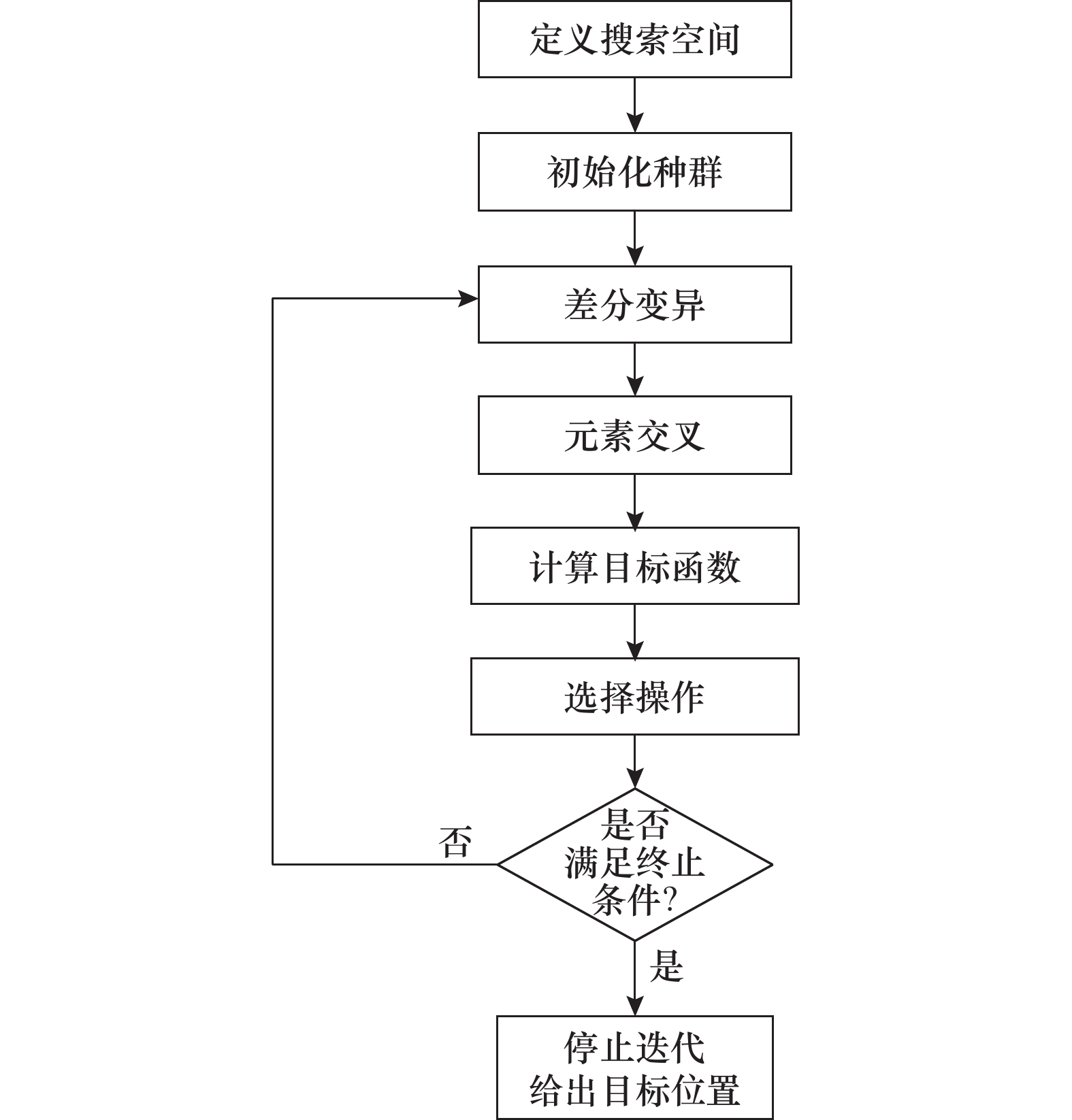
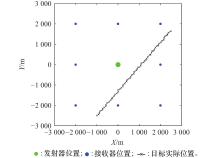
Fig.4
Sensor positions and target motion trajectory"
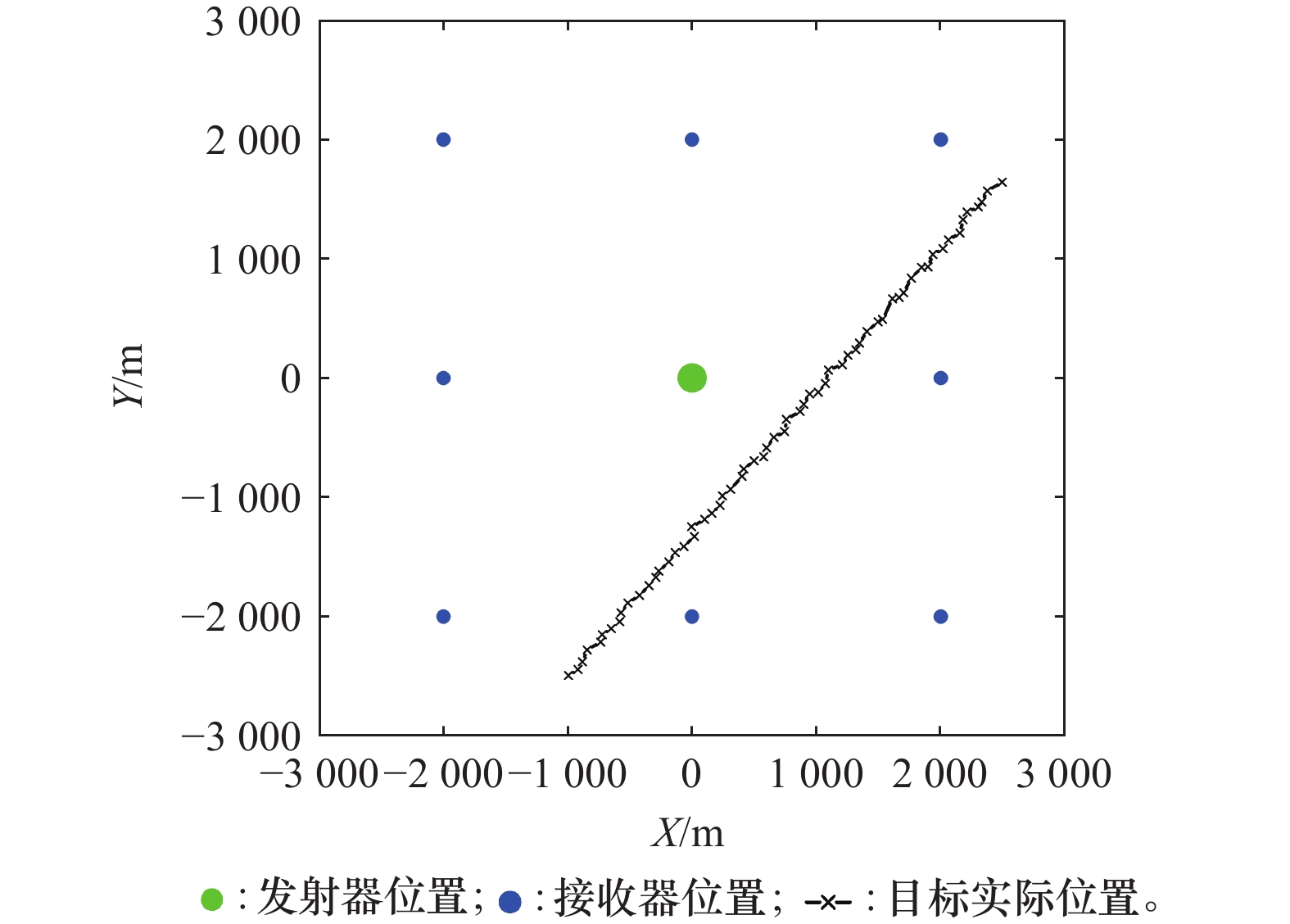
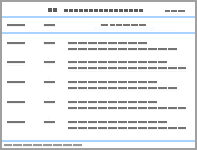
Table 1
Noise level and its parameters"
| 噪声水平 | 测量误差类别 | ||
| 低噪声 | 10 | 5 | 10 |
| 中噪声 | 50 | 25 | 50 |
| 高噪声 | 100 | 50 | 100 |
Table 2
Parameter combinations of DE Algorithm"
| 最大迭代次数 | 种群数量 | 缩放因子 | 交叉概率 |
| 100 | 5 | 0.1 ~ 2(步进0.1) | 0.05 ~ 0.95(步进0.05) |
| 10 | 0.1 ~ 2(步进0.1) | 0.05 ~ 0.95(步进0.05) | |
| 20 | 0.1 ~ 2(步进0.1) | 0.05 ~ 0.95(步进0.05) | |
| 50 | 0.1 ~ 2(步进0.1) | 0.05 ~ 0.95(步进0.05) | |
| 100 | 0.1 ~ 2(步进0.1) | 0.05 ~ 0.95(步进0.05) |
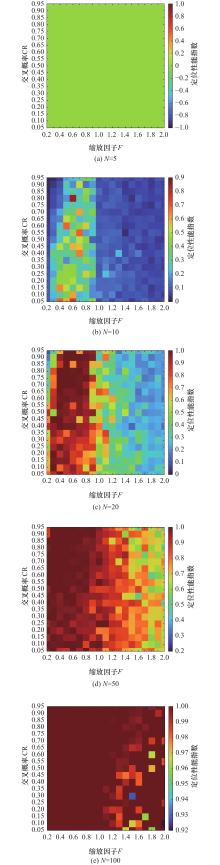
Fig.5
Positioning performance index of DE algorithm with low-noise level"
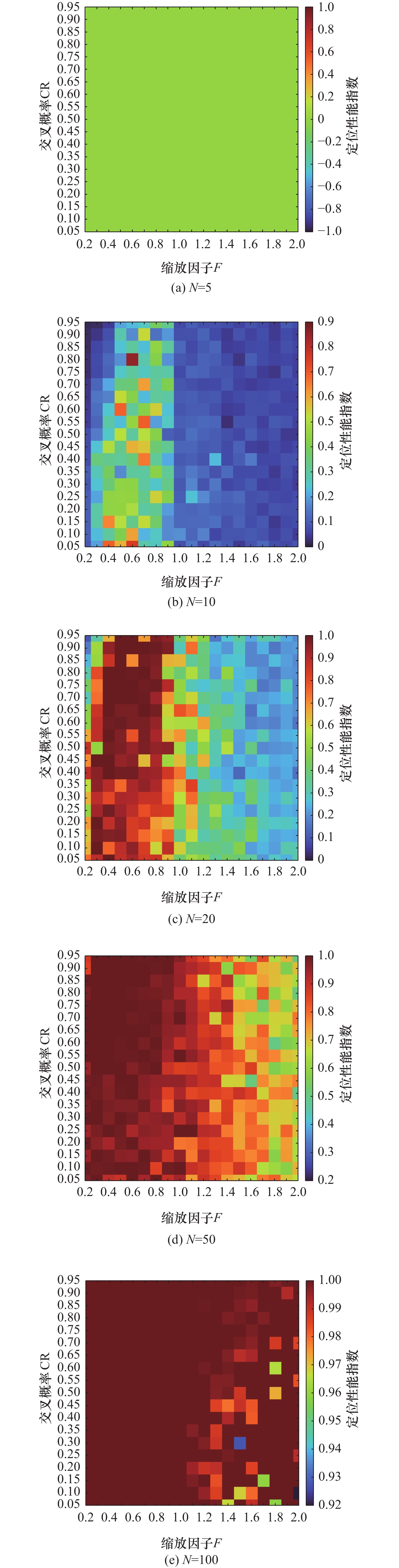
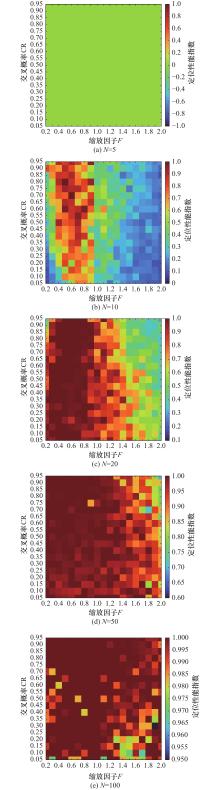
Fig.6
Positioning performance index of DE algorithm with middle-noise level"

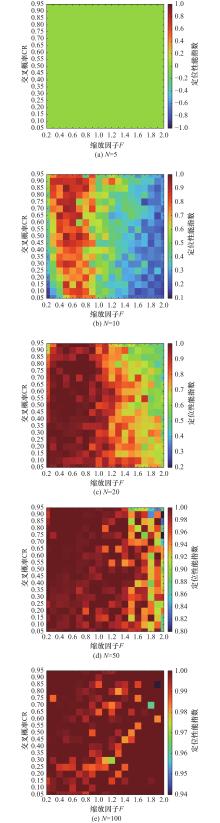
Fig.7
Positioning performance index of DE algorithm with high-noise level"
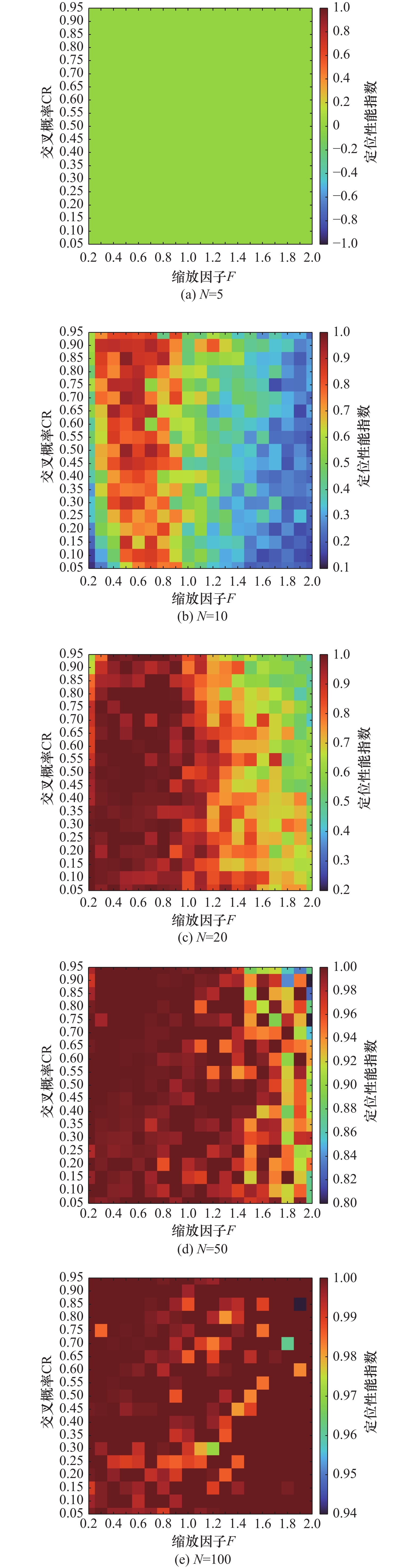
Fig.8
Localization error and computation time of DE algorithm versus population size"
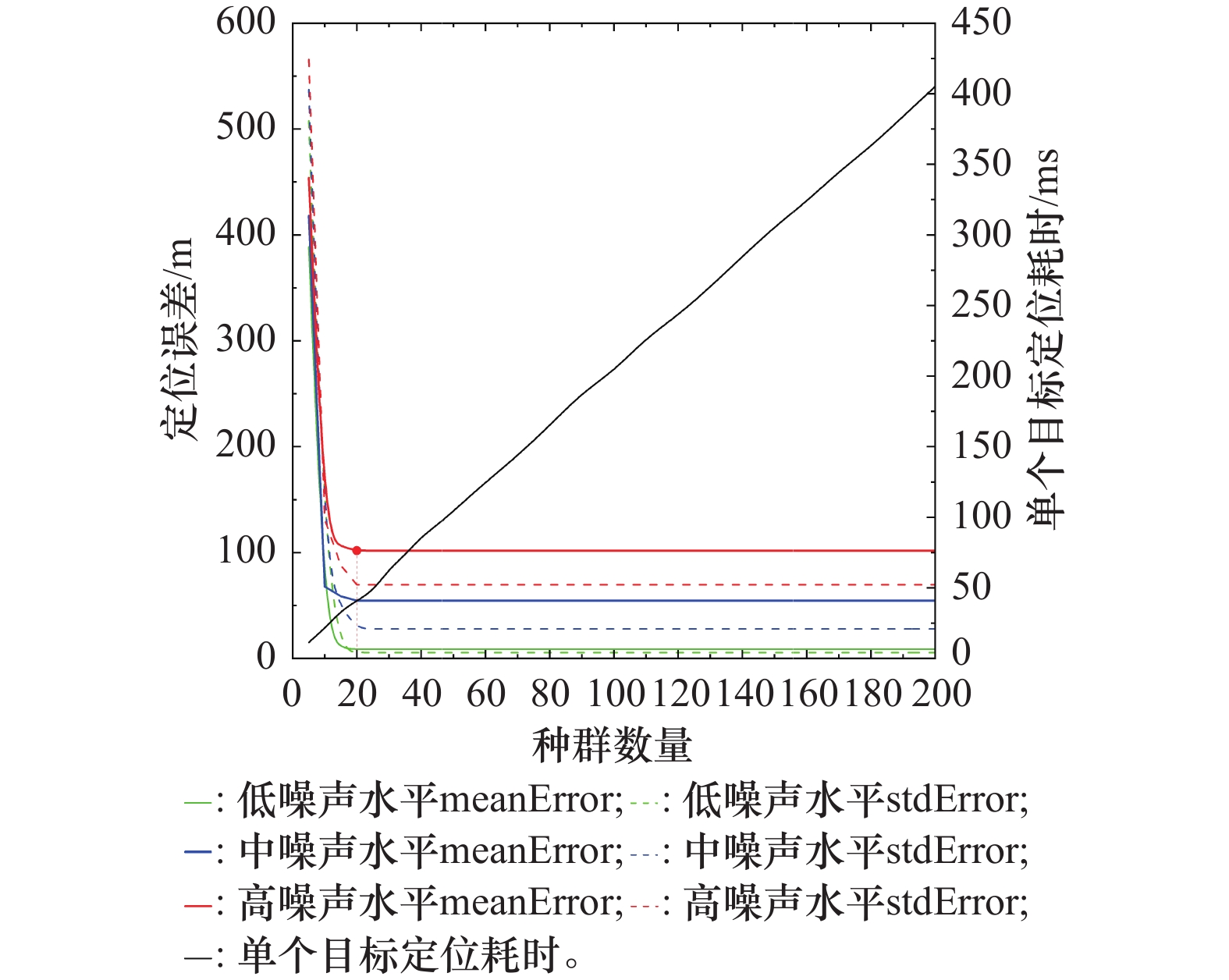
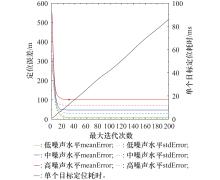
Fig.9
Localization error and computation time of DE algorithm versus maximum number of iterations"
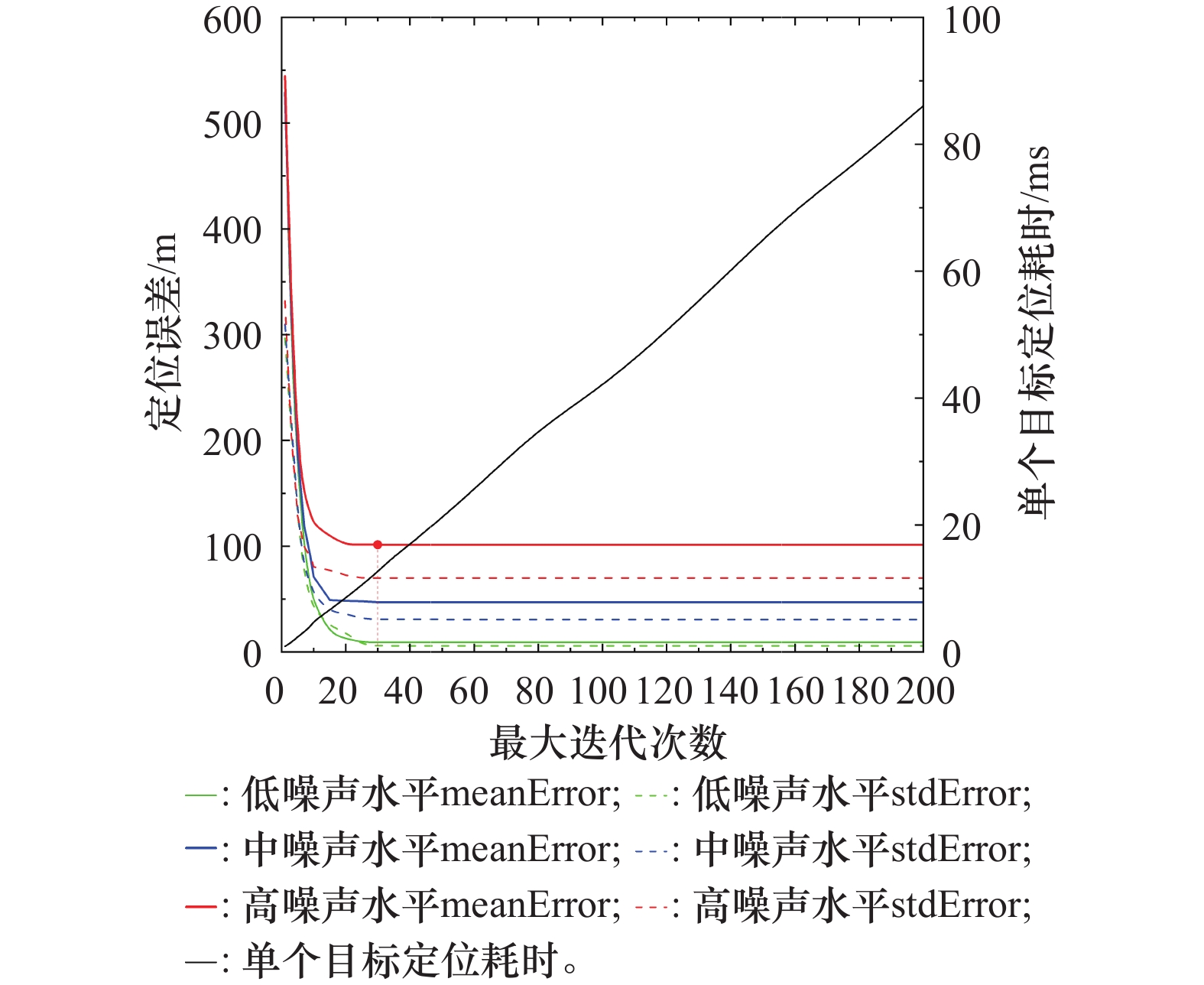
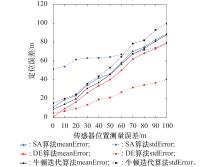
Fig.10
Localization error versus sensor-position measurement errors"
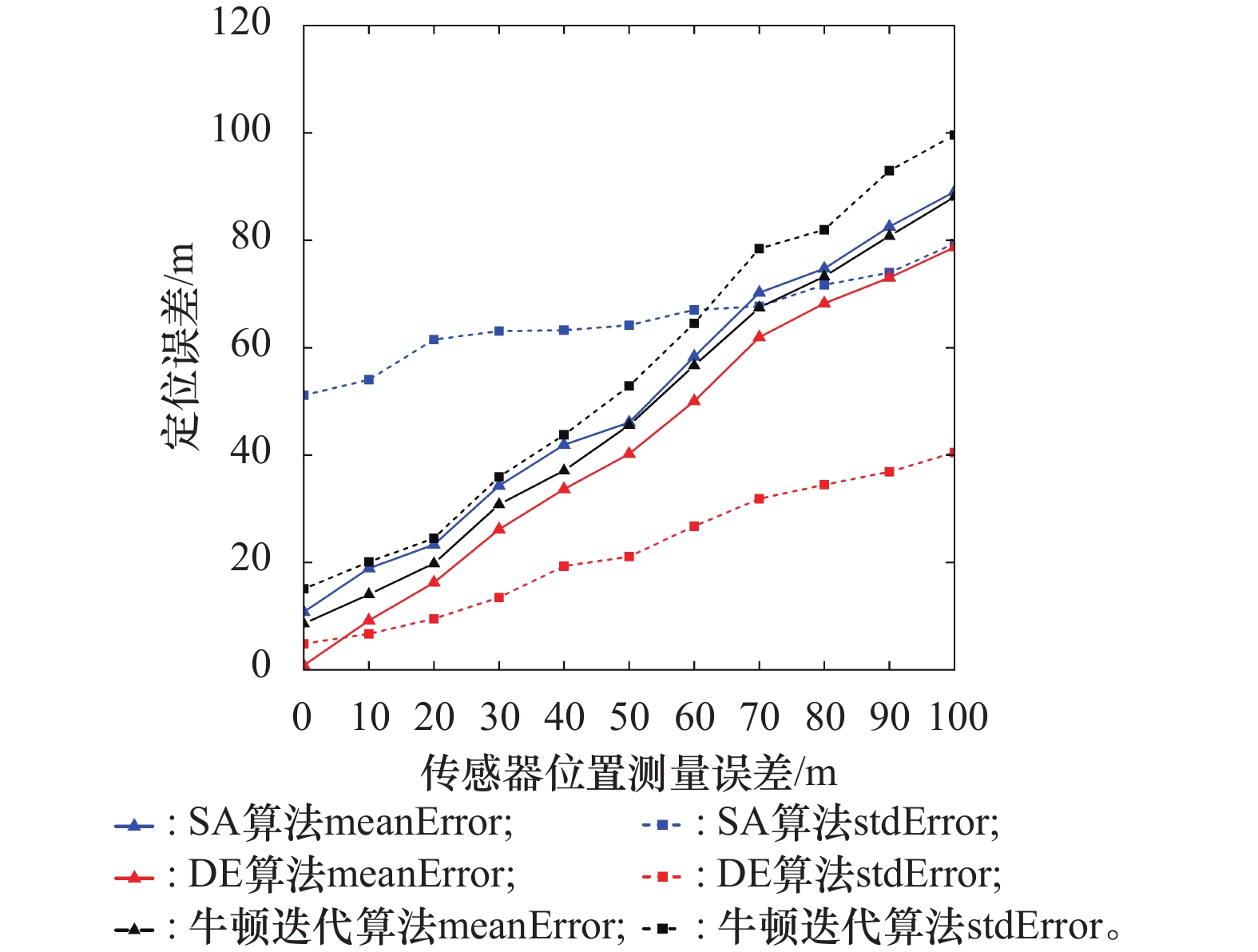
Fig.11
Localization error versus sound-speed measurement errors"
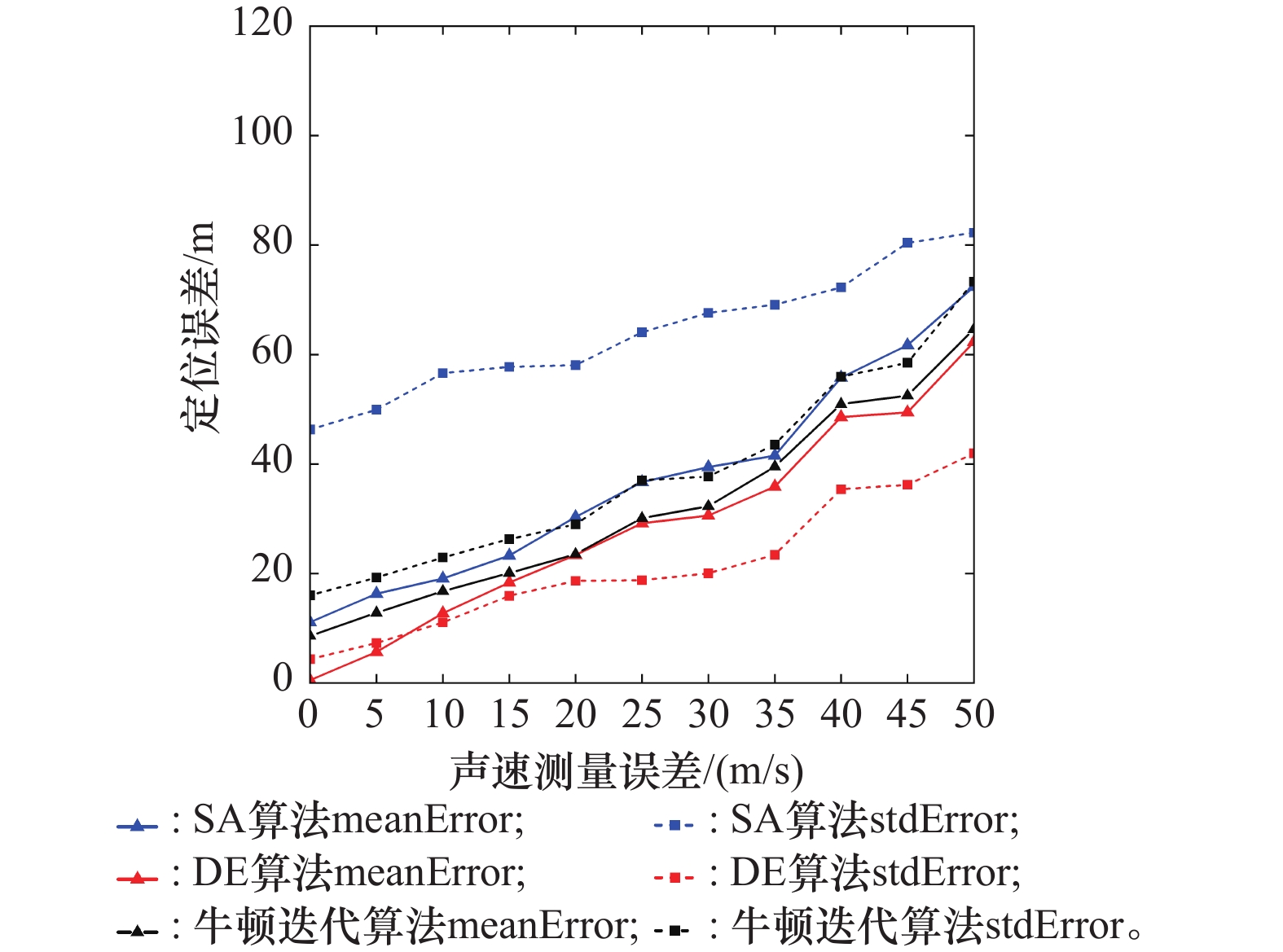
Fig.12
Localization error versus time-delay measurement errors"
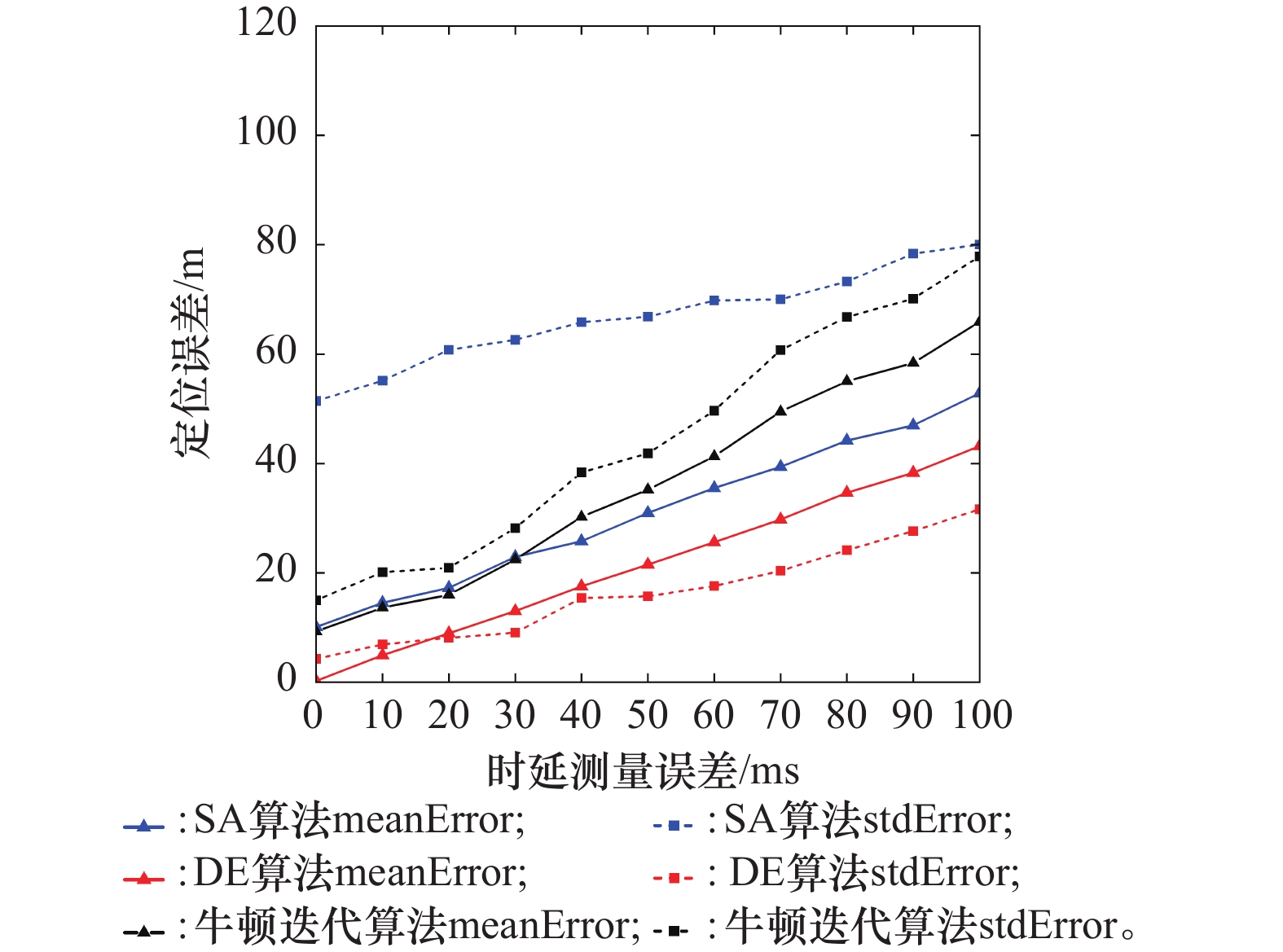
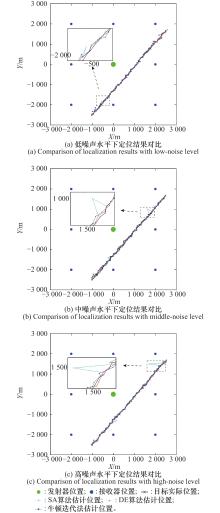
Fig.13
Comparison of localization results for three algorithms with varying noise levels"
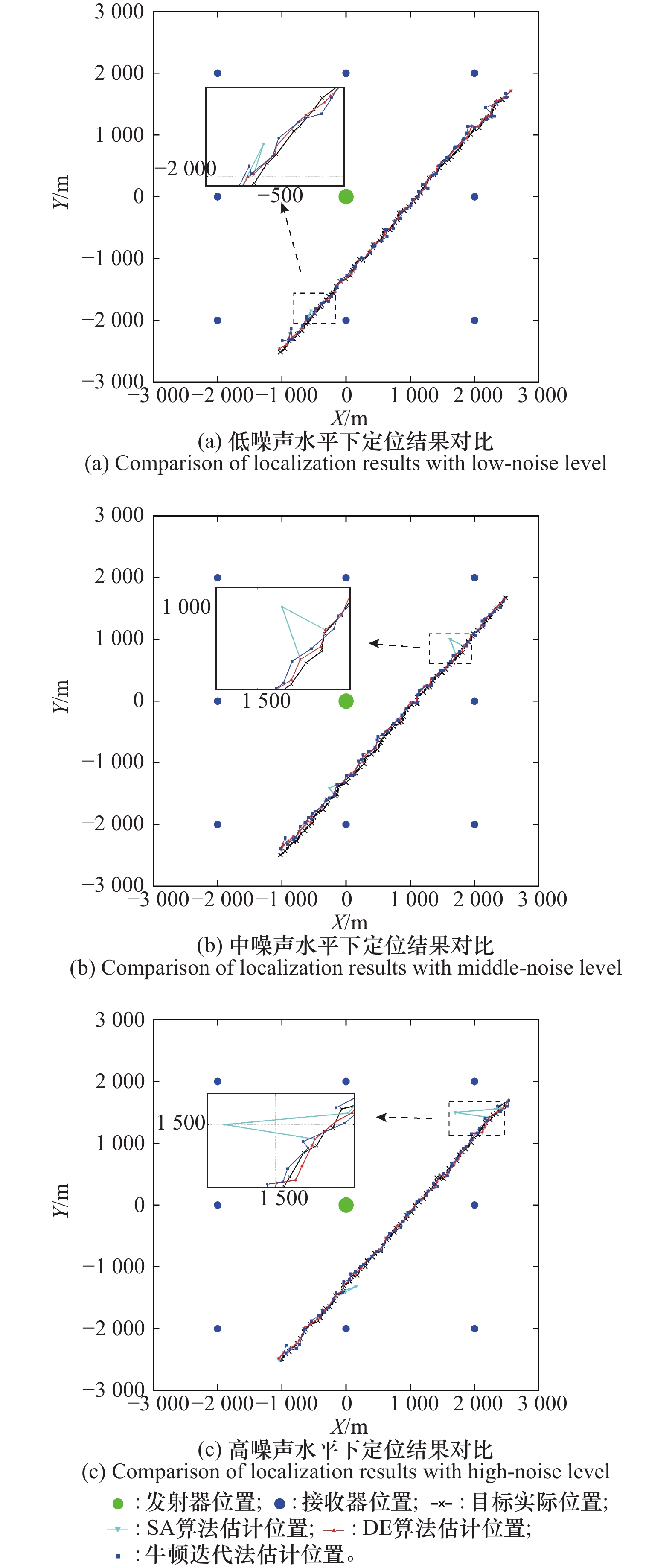
Table 3
Algorithm run time comparison ms"
| 噪声水平 | DE算法 | SA算法 | 牛顿迭代算法 |
| 低噪声 | 13.43 | 14.85 | 9.05 |
| 中噪声 | 13.50 | 14.95 | 9.39 |
| 高噪声 | 13.64 | 15.14 | 9.26 |
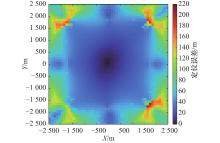
Fig.14
Spatial distribution of localization errors of DE algorithm"
| 1 |
LUO J H, HAN Y, FAN L Y. Underwater acoustic target tracking: a review[J]. Sensors, 2018, 18 (1): 112.
doi: 10.3390/s18010112 |
| 2 |
THUILLIER O, JOSSE N L, OLTEANU A L, et al. An improved two-phase heuristic for active multi-static sonar network configuration[J]. Expert Systems with Applications, 2024, 238, 121985.
doi: 10.1016/j.eswa.2023.121985 |
| 3 |
HO K C. Bias reduction for an explicit solution of source localization using TDOA[J]. IEEE Trans. on Signal Processing, 2012, 60 (5): 2101- 2114.
doi: 10.1109/TSP.2012.2187283 |
| 4 | LIU Y, WANG Y M, CHEN C. Efficient underwater acoustical localization method based on TDOA with sensor position errors[J]. Journal of Marine Science and Engineering, 2023, 11 (4): 861. |
| 5 |
CHEN D J, LI G J, FAN Y S. Hybrid positioning algorithm based on least squares and LM for 3D cluster networks[J]. Physical Communication, 2024, 66, 102400.
doi: 10.1016/j.phycom.2024.102400 |
| 6 | FAN C, WANG D, YANG B, et al. An algorithm for underwater target localization of multi-static sonar system with unknown signal propagation speed[J]. Acta Armamentarii, 2022, 43 (3): 637- 652. |
| 7 | WANG L, SHEN X H, KANG Y Z, et al. Least squares estimation performance for tdoa target localization in underwater acoustic sensor networks[J]. Acta Armamentarii, 2020, 41 (3): 542- 551. |
| 8 |
HUANG B Q, XIE L H, YANG Z. TDOA-based source localization with distance-dependent noises[J]. IEEE Trans. on Wireless Communications, 2015, 14 (1): 468- 480.
doi: 10.1109/TWC.2014.2351798 |
| 9 |
CHAN Y T, HO K C. A simple and efficient estimator for hyperbolic location[J]. IEEE Trans. on Signal Processing, 1994, 42 (8): 1905- 1915.
doi: 10.1109/78.301830 |
| 10 |
YANG K, AN J P, BU X Y, et al. Constrained total least-squares location algorithm using time-difference-of-arrival measurements[J]. IEEE Trans. on Vehicular Technology, 2010, 59 (3): 1558- 1562.
doi: 10.1109/TVT.2009.2037509 |
| 11 |
YANG T C, YU C Q, WANG T P, et al. A single observer location method under the scatter signals position disturbance situation: the constraint total least square method[J]. SCIENCE CHINA Information Sciences, 2011, 54 (1): 146- 152.
doi: 10.1007/s11432-010-4129-z |
| 12 |
ZHENG J, LUI K W K, SO H C. Accurate three-step algorithm for joint source position and propagation speed estimation[J]. Signal Processing, 2007, 87 (12): 3096- 3100.
doi: 10.1016/j.sigpro.2007.06.014 |
| 13 |
WANG D, YIN J X, TANG T, et al. A two-step weighted least-squares method for joint estimation of source and sensor locations: a general framework[J]. Chinese Journal of Aeronautics, 2019, 32 (2): 417- 443.
doi: 10.1016/j.cja.2018.12.027 |
| 14 | XUE J, CHEN Y, HE F J. The constraint weighted least-squares algorithm of TDOA based on hierarchy in underwater sensor wireless network[J]. Chinese Journal of Sensors and Actuators, 2015, 28 (2): 239- 243. |
| 15 |
LAKSHMI Y V, SINGH P, ABOUHAWASH M, et al. Improved chan algorithm based optimum UWB sensor node localization using hybrid particle swarm optimization[J]. IEEE Access, 2022, 10, 32546- 32565.
doi: 10.1109/ACCESS.2022.3157719 |
| 16 |
RUI L, HO K C. Efficient closed-form estimators for multi-static sonar localization[J]. IEEE Trans. on Aerospace and Electronic Systems, 2015, 51 (1): 600- 614.
doi: 10.1109/TAES.2014.140482 |
| 17 | GOU Y N, WANG Y M, WANG Q. Applying simulated annealing algorithm to locating multi-static buoy[J]. Journal of Northwestern Poly-technical University, 2013, 31 (4): 607- 613. |
| 18 | 尹宣紫, 黄志浩, 周子凌. 基于海洋捕食者算法的多基地声纳定位技术[C]//中国声学学会水声学分会学术会议, 2022: 295−298. |
| YIN X Z, HUANG Z H, ZHOU Z L. Multi-base sonar localization technology based on marine predators algorithm [C]//Academic Conference of the Underwater Acoustics Branch of the Chinese Acoustical Society, 2022: 295−298. | |
| 19 |
STORN R, PRICE K. Differential evolution−a simple and efficient heuristic for global optimization over continuous spaces[J]. Journal of Global Optimization, 1997, 11 (4): 341- 359.
doi: 10.1023/A:1008202821328 |
| 20 |
DAS S, ABRAHAM A, CHAKRABORTY U K. Differential evolution using a neighborhood-based mutation operator[J]. IEEE Trans. on Evolutionary Computation, 2009, 13 (3): 526- 553.
doi: 10.1109/TEVC.2008.2009457 |
| 21 |
CHEN M Y, FENG C C, CHENG R. MetaDE: evolving differential evolution by differential evolution[J]. IEEE Trans. on Evolutionary Computation,
doi: 10.1109/TEVC.2025.3541.587 |
| 22 |
WU W M, PU W, WU J J, et al. A geometry and synchronization error decoupling and compensation approach for multi-static SAR imaging[J]. IEEE Journal of Selected Topics in Applied Earth Observations and Remote Sensing, 2024, 17, 15431- 15442.
doi: 10.1109/JSTARS.2024.3439876 |
| 23 | AN H Y, SHEN M X, WANG C D, et al. Multi-static synthetic aperture radar baseline design for 3-D imaging[C]//Proc. of the IGARSS IEEE International Geoscience and Remote Sensing Symposium, 2022: 2502−2505. |
| 24 | SUN Z C, REN H, YANG J Y, et al. Array arrangement design of multi-static sparse linear array SAR for 3-D imaging[C]//Proc. of the IEEE USNC-URSI Radio Science Meeting (Joint with AP-S Symposium), 2022: 50−51. |
| 25 |
何振宇, 毛亿, 杨扬, 等. 基于改进差分进化算法的GNSS无源多基地雷达海上目标定位方法[J]. 通信学报, 2025, 46 (2): 44- 58.
doi: 10.11959/j.issn.1000-436x.2025024 |
|
HE Z Y, MAO Y, YANG Y, et al. Maritime moving target localization method based on improved differential evolution with GNSS-based passive multi-static radar[J]. Journal on Communications, 2025, 46 (2): 44- 58.
doi: 10.11959/j.issn.1000-436x.2025024 |
|
| 26 | 包子阳, 余继周, 杨杉. 智能优化算法及其MATLAB实例[M]. 3版. 北京: 电子工业出版社, 2021: 37−45. |
| BAO Z Y, YU J Z, YANG S. Intelligent optimization algorithms and matlab implementation[M]. 3rd ed. Beijing: Publishing House of Electronics Industry, 2021: 37–45. | |
| 27 | 张春美. 差分进化算法理论与应用[M]. 北京: 北京理工大学出版社, 2014: 2−71. |
| ZHANG C M. Theory and application of differential evolution algorithms [M]. Beijing: Beijing Institute of Technology Press, 2014: 2–71. | |
| 28 | KARIN Z, PETRA W, RAINER L, et al. Parameter study for differential evolution using a power allocation problem including interference cancellation[C]//Proc. of the IEEE International Conference on Evolutionary Computation, 2006: 1857−1864. |
| [1] | Xinchen XIE, Lin GAO, Ping WEI, Wanchun LI. Radiation source tracking algorithm based on unbiased measurement conversion of TDOA/FDOA [J]. Systems Engineering and Electronics, 2026, 48(3): 751-757. |
| [2] | Qinglin ZHU, Fang SUN, Shanfeng YAO, Xinxin OUYANG, Hongguang WANG, Jie HAN, Xiang DONG, Shoubao ZHANG, Zhenwei ZHAO. Refraction correction of TDOA technique for over-the-horizon propagation mechanism [J]. Systems Engineering and Electronics, 2025, 47(7): 2119-2126. |
| [3] | Qiang TANG, Gaoping SHAO, Minglei SUN, Shuai SHAO. tdoa-doa underwater target passive localization algorithm with sensor position errors [J]. Systems Engineering and Electronics, 2024, 46(8): 2572-2580. |
| [4] | Xingsong DEND, Liang QI, Yuanjiang ZHU, Fan YANG, Zhichen JIANG, Zhiyong LIU. Positioning method using time difference measurements from multi-station based on precise distance information of observation stations [J]. Systems Engineering and Electronics, 2024, 46(8): 2592-2599. |
| [5] | Shengxi LI, Haiyang LI, Xiangyue HE. Design method of restricted Walker constellation for global rapid revisit [J]. Systems Engineering and Electronics, 2024, 46(12): 4149-4156. |
| [6] | Jianlong TANG, Jialong XIE, Hongkai CHEN. Selection method for localization node without priori measurement error [J]. Systems Engineering and Electronics, 2024, 46(1): 35-41. |
| [7] | Jingyue ZHENG, Peilun WU, Jiahui CHEN, Shisheng GUO, Guolong CUI. Multipath false target analysis and elimination method for automotive millimeter wave radar [J]. Systems Engineering and Electronics, 2024, 46(1): 88-96. |
| [8] | Kaiyu ZHANG, Haotian YU, Yu LU. A method of the time and frequency difference location based on duel-station cooperation [J]. Systems Engineering and Electronics, 2023, 45(9): 2698-2705. |
| [9] | Chen LI, Chen ZHOU, Junming WANG, Mingjie LYU, Wei QIAO. Theoretical analysis of shortwave TDOA geolocation based on empirical ionospheric model [J]. Systems Engineering and Electronics, 2023, 45(7): 1911-1919. |
| [10] | Yongzhen LI, Yemin LIU, Shiqi XING, Datong HUANG, Zhengwen LU. Study on passive direction-finding and SAR deception jamming method based on multi-receiver cooperation [J]. Systems Engineering and Electronics, 2023, 45(12): 3792-3805. |
| [11] | Yemin LIU, Yongzhen LI, Datong HUANG, Shiqi XING, Xiaowei YU. Research on the method of dual-jammer system against SAR-GMTI based on integration of reconnaissance and jamming [J]. Systems Engineering and Electronics, 2023, 45(10): 3098-3107. |
| [12] | Shengyang HE, Jiepeng DU, Yaqin ZHAO, Baoying WANG, Liang ZHAO, Longwen WU. TDOA-based cooperative single target location using UAV cluster [J]. Systems Engineering and Electronics, 2023, 45(1): 1-8. |
| [13] | Mulai TAN, Dali DING, Lei XIE, Wei DING, Chenghui LYU. UCAV escape maneuvering decision based on fuzzy expert system and IDE algorithm [J]. Systems Engineering and Electronics, 2022, 44(6): 1984-1993. |
| [14] | Yunxiang CHEN, Yi RAO, Zhongyi CAI, Zezhou WANG. Remaining useful lifetime prediction and economic reserve strategy of equipment components based on improved similarity [J]. Systems Engineering and Electronics, 2021, 43(9): 2688-2696. |
| [15] | Wenhai WU, Xiaofeng GUO, Siyu ZHOU, Li GAO. Self-adaptive differential evolution algorithm with random neighborhood-based strategy and generalized opposition-based learning [J]. Systems Engineering and Electronics, 2021, 43(7): 1928-1942. |
| Viewed | ||||||
|
Full text |
|
|||||
|
Abstract |
|
|||||