

系统工程与电子技术 ›› 2026, Vol. 48 ›› Issue (6): 1880-1892.doi: 10.12305/j.issn.1001-506X.2026.06.10
丁昊1( ), 唐天宇2, 曹政1,*(), 于恒力1, 董云龙1
收稿日期:2025-02-26
修回日期:2025-05-06
出版日期:2026-06-25
发布日期:2025-07-30
通讯作者:
曹政
E-mail:331299929@qq.com;caoziyuan0707@163.com
作者简介:丁 昊(1988—),男,副教授,博士,主要研究方向为海杂波特性认知与抑制、海杂波中目标检测识别基金资助:
Hao DING1(), Tianyu TANG2, Zheng CAO1,*(), Hengli YU1, Yunlong DONG1
Received:2025-02-26
Revised:2025-05-06
Online:2026-06-25
Published:2025-07-30
Contact:
Zheng CAO
E-mail:331299929@qq.com;caoziyuan0707@163.com
摘要:
现有雷达海上漂浮目标识别方法通常需要应用双极化、长时观测数据等信息,导致应用场景受限。针对该问题,以海上目标耐波性理论为支撑,通过分析发现漂浮目标在海浪扰动下呈现的排序起伏变化和随机程度具有特定规律,利用多尺度排列熵方法进行特征提取,可清晰呈现漂浮目标时序扰动频率高、排列模式多样的规律特点。基于该机理提出一种应用多尺度排列熵特征的海上漂浮目标识别方法。以衡量两类目标样本可分性的巴氏距离为定量指标,对特征提取参数中的嵌入维数和粗粒化尺度进行优化处理,实现特征可分性改善。2级和4级海况实测数据验证结果表明,在0.5 s观测时间上,所提方法对漂浮目标识别的平均准确率达96.1%,优于已有方法,且在较短观测时间、不同观测视角、无需双极化等条件下均可实现较高的识别准确率,具有稳健性。
中图分类号:
丁昊, 唐天宇, 曹政, 于恒力, 董云龙. 基于多尺度排列熵特征的海上漂浮目标识别方法[J]. 系统工程与电子技术, 2026, 48(6): 1880-1892.
Hao DING, Tianyu TANG, Zheng CAO, Hengli YU, Yunlong DONG. Identification method of maritime floating targets based on multiscale permutation entropy features[J]. Systems Engineering and Electronics, 2026, 48(6): 1880-1892.
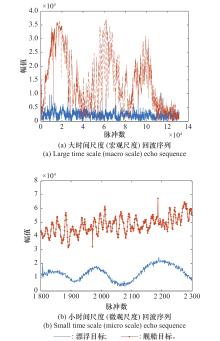
图1
不同时间尺度下两类目标回波序列"
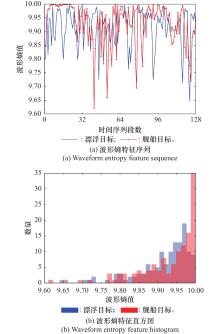
图2
波形熵特征提取结果与统计分析"
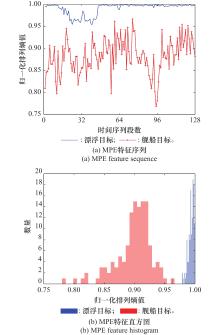
图3
MPE特征提取结果与统计分析"
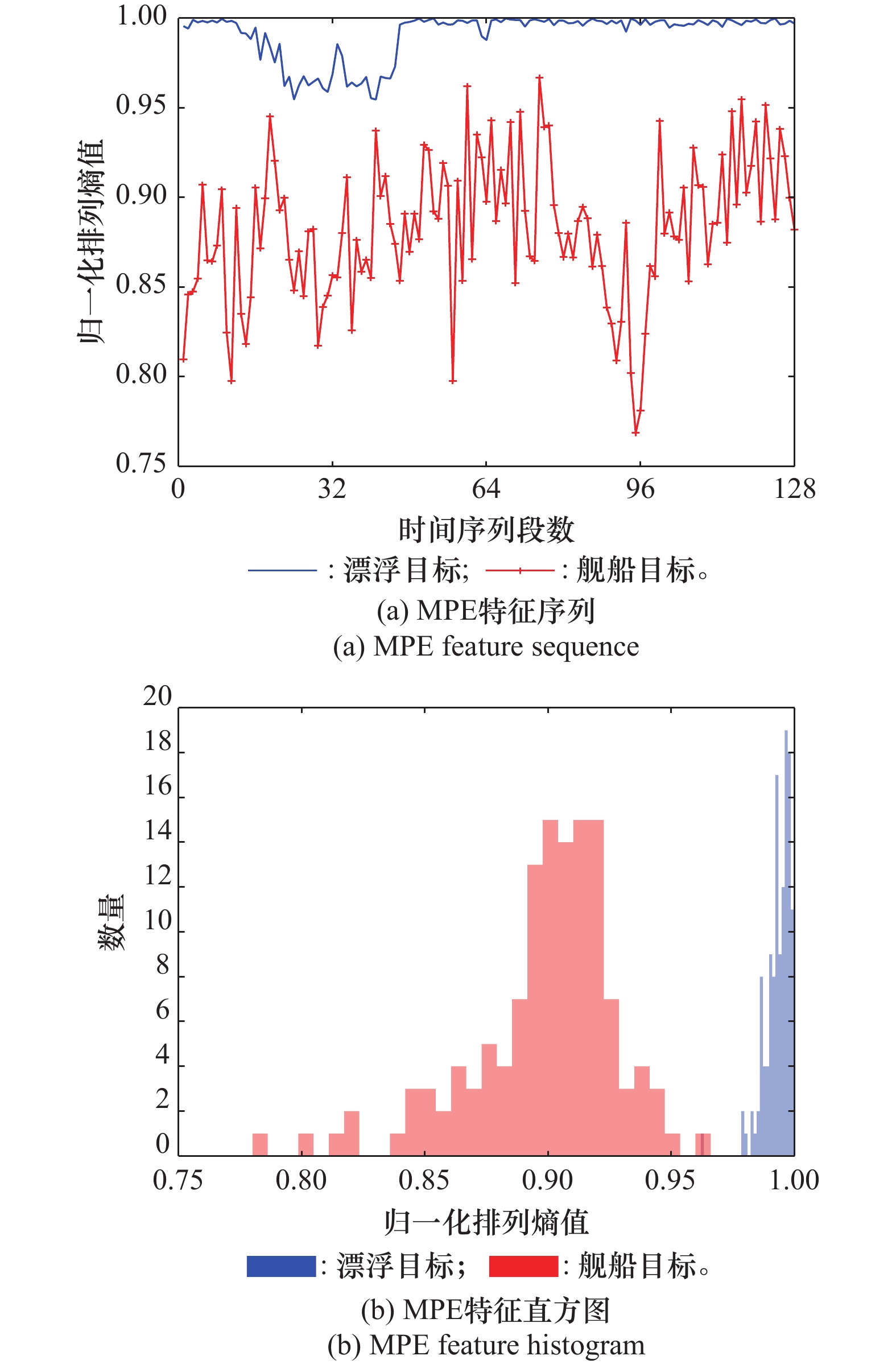
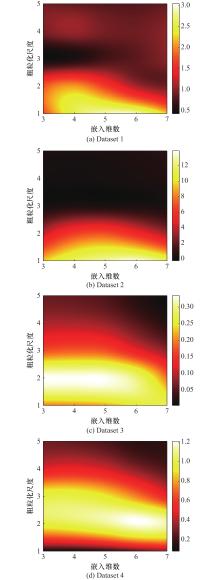
图4
不同数据的巴氏距离云图"
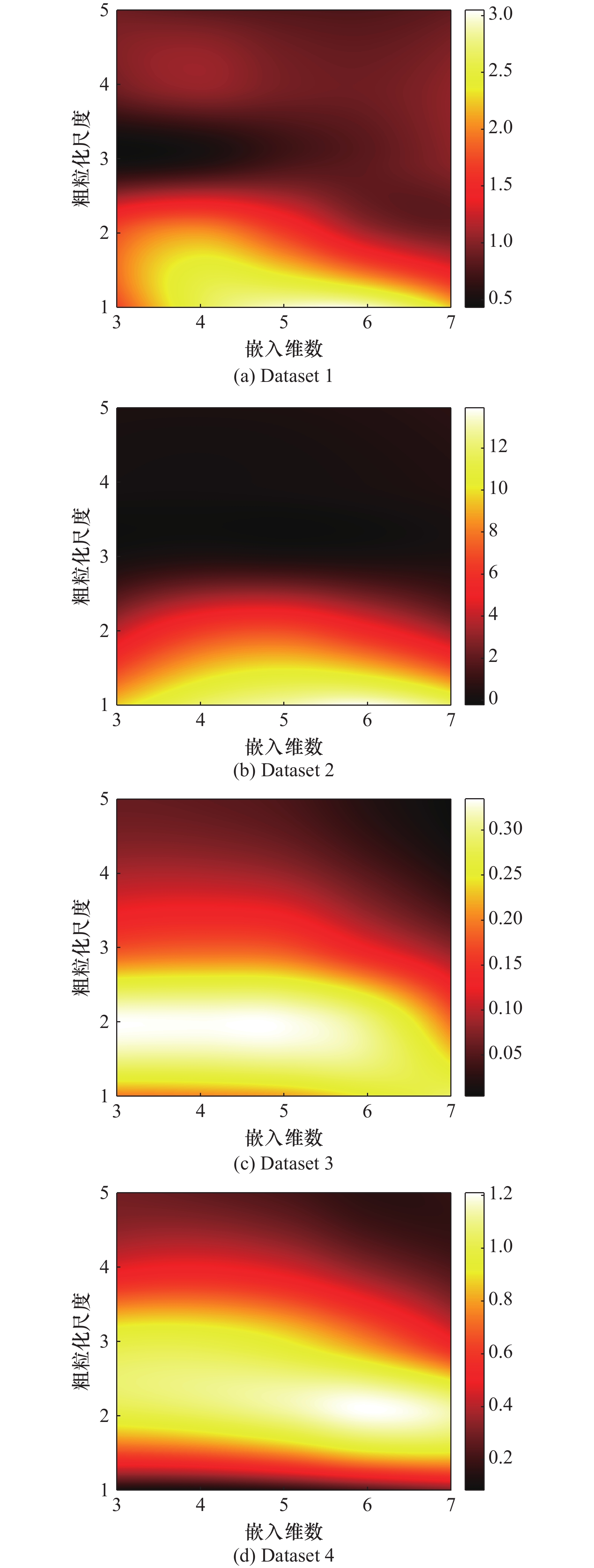
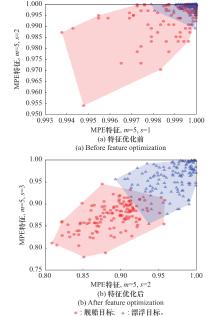
图5
特征优化前后两类目标MPE特征散点包络图"
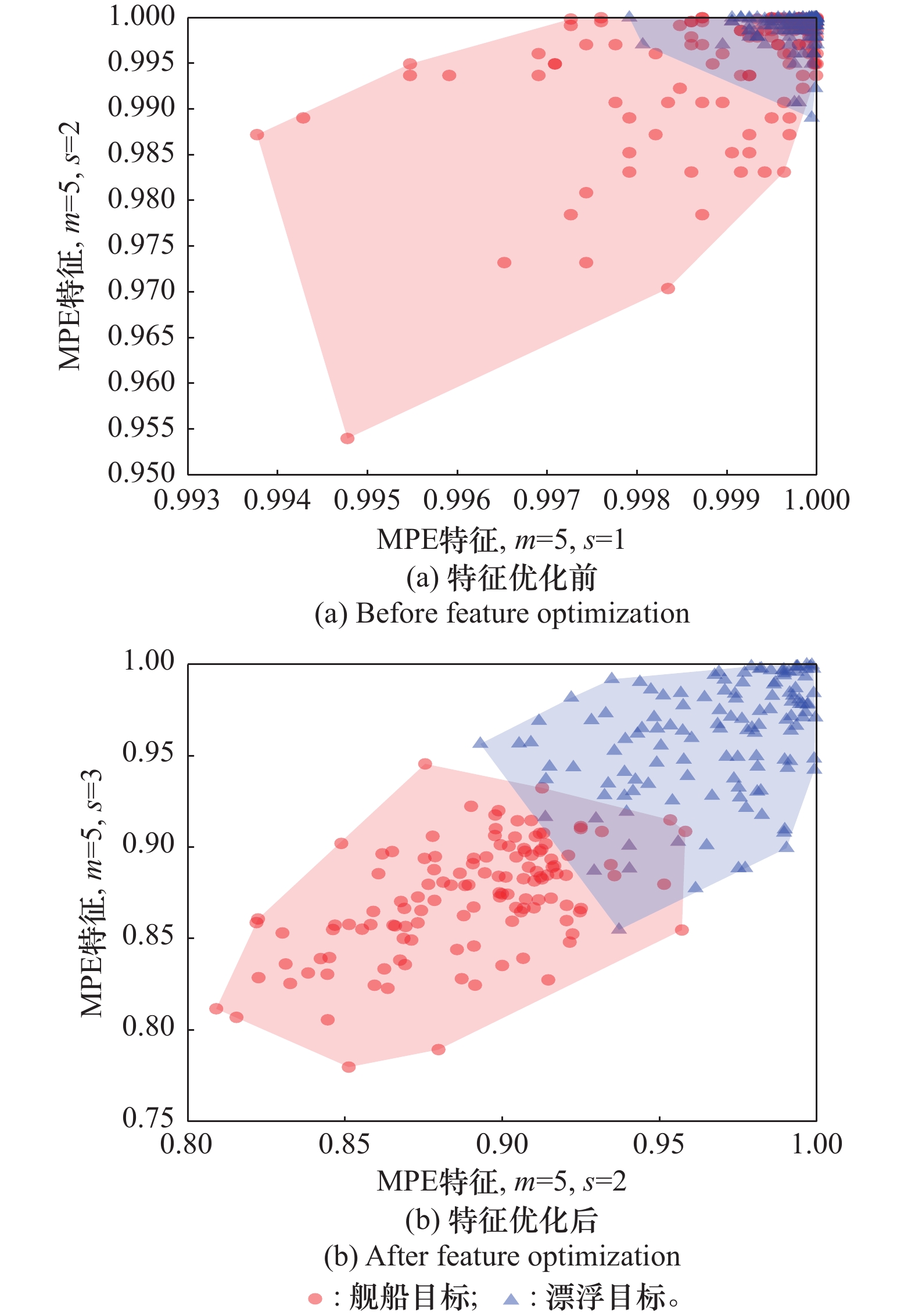
图6
基于MPE特征的海上漂浮目标识别方法流程图"
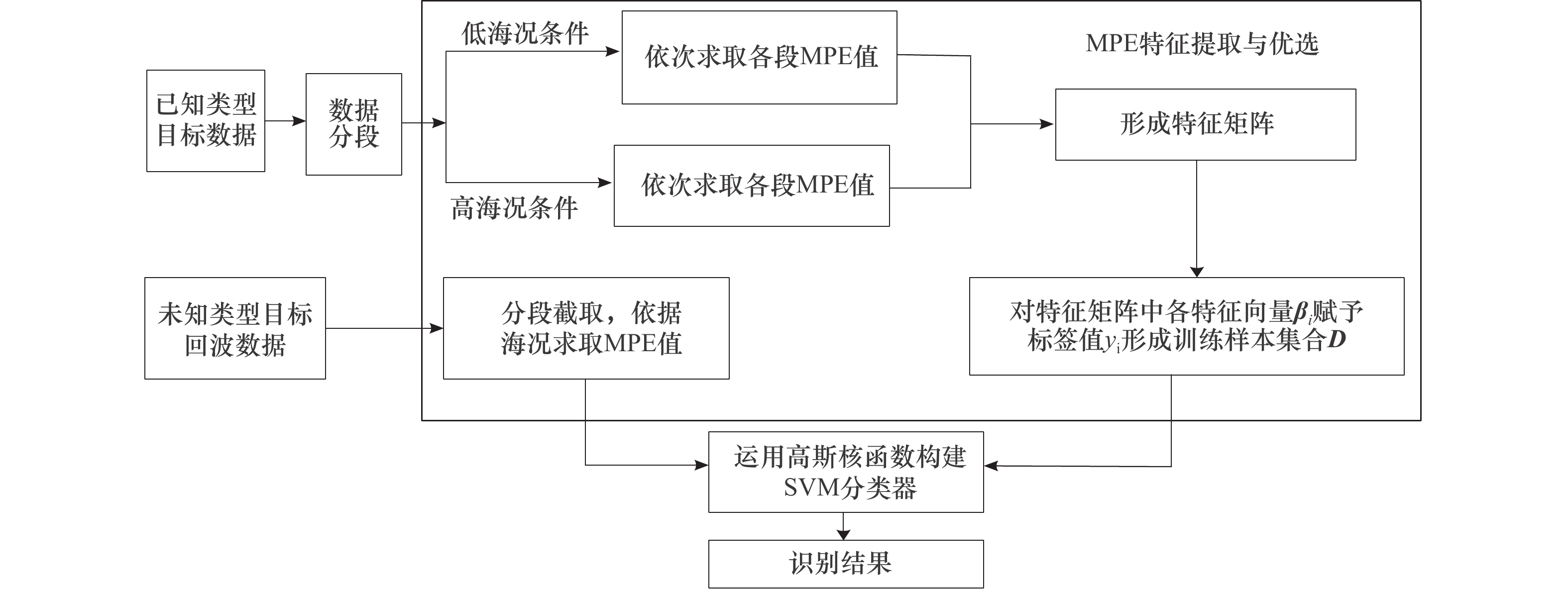
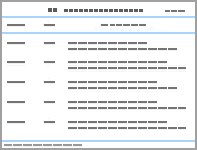
表1
试验雷达相关参数"
| 雷达参数 | 参数设置 |
| 工作频率范围/GHz | 9.3~9.5 |
| 量程/nm | 6 |
| 带宽/MHz | 25 |
| 距离分辨率/m | 6 |
| 脉冲重复频率/kHz | 2 |
| 发射峰值功率/W | 100 |
| 天线长度/m | 2 |
| 天线极化方式 | HH、VV |
| 天线水平波束宽度/(°) | 1.2 |
表2
实测数据基本信息"
| 数据序号 | 极化 | 海况 | 脉冲数 | 目标类型 |
| 1 | HH | 2级 | 货船+航道浮标 | |
| 2 | VV | 2级 | 货船+航道浮标 | |
| 3 | HH | 4级 | 货船+航道浮标 | |
| 4 | VV | 4级 | 货船+航道浮标 |
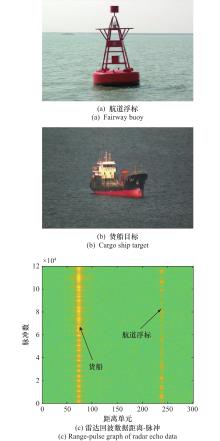
图7
海上目标光学图像及雷达回波数据"
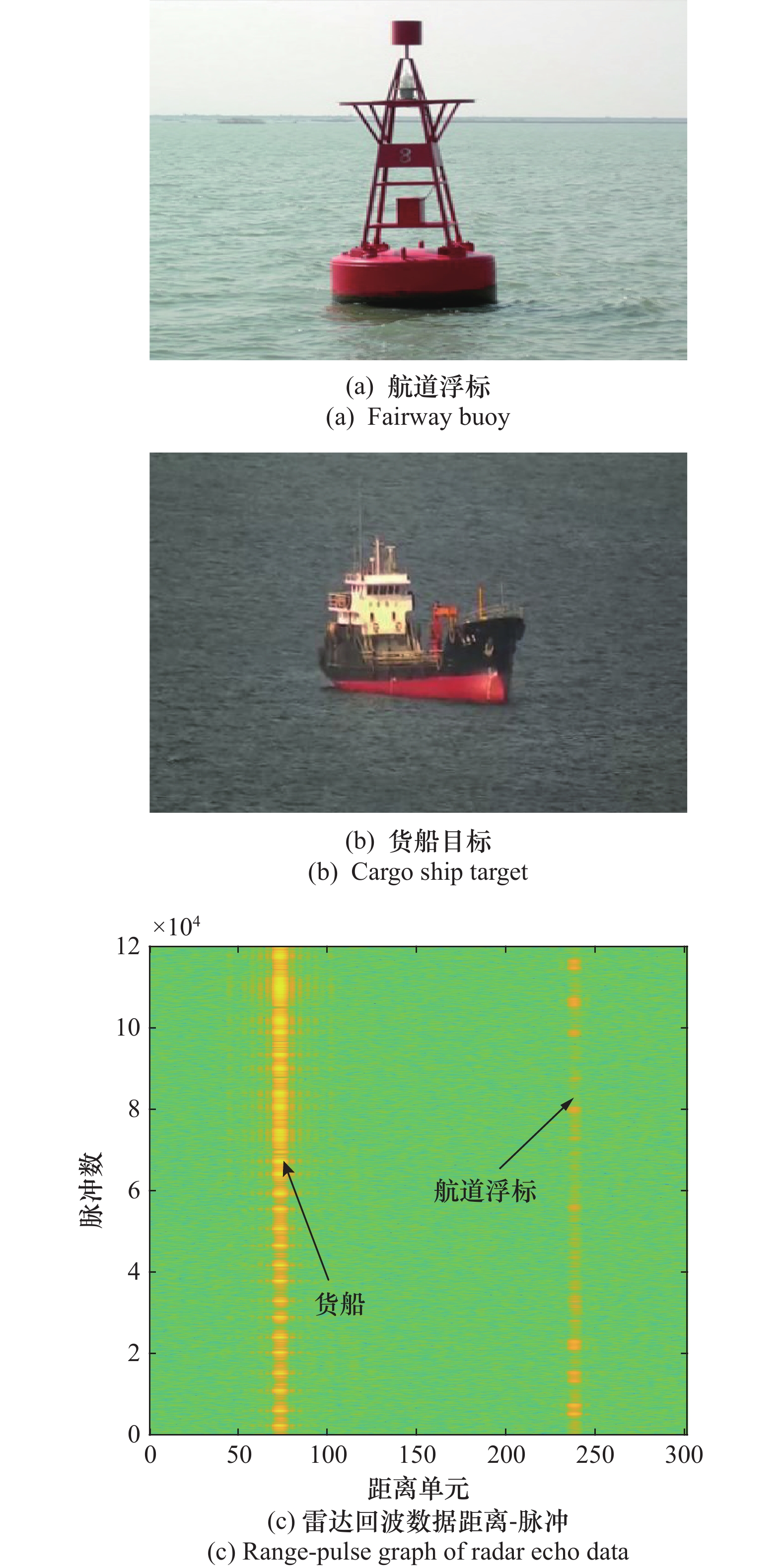
表3
MPE特征与波形熵特征识别结果"
| 数据序号 | 测试集 样本数 | 本文方法 | 波形熵识别方法 | |||||||||
| TP | FN | FP | TN | 准确率/% | TP | FN | FP | TN | 准确率/% | |||
| 1 | 128 | 64 | 1 | 0 | 63 | 99.22 | 26 | 39 | 17 | 46 | 56.25 | |
| 2 | 128 | 63 | 0 | 0 | 65 | 100 | 46 | 18 | 40 | 24 | 54.68 | |
| 3 | 128 | 69 | 1 | 14 | 44 | 88.28 | 32 | 32 | 29 | 35 | 52.34 | |
| 4 | 128 | 62 | 2 | 2 | 62 | 96.88 | 40 | 24 | 34 | 30 | 54.68 | |
表4
文献[40]方法识别结果统计"
| 数据序号 | 测试集样本数 | TP | FN | FP | TN | 准确率/% |
| 1 | 128 | 62 | 2 | 1 | 63 | 97.66 |
| 2 | 128 | 61 | 4 | 11 | 52 | 88.28 |
| 3 | 128 | 55 | 8 | 8 | 57 | 87.50 |
| 4 | 128 | 62 | 2 | 6 | 58 | 93.75 |
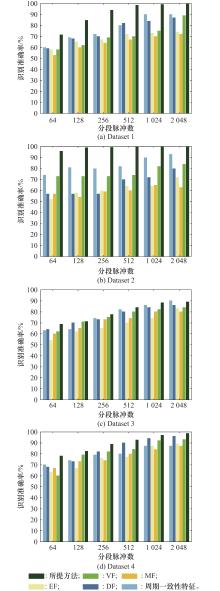
图8
与同类型最新方法的性能对比"
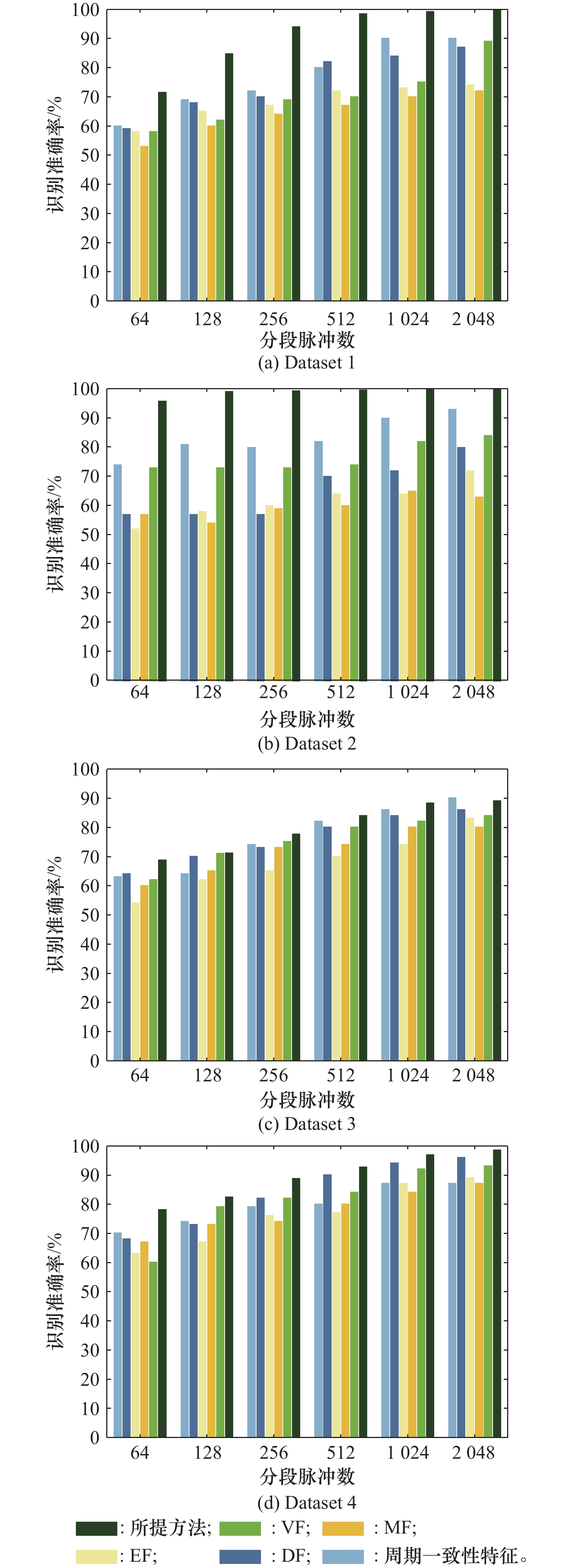
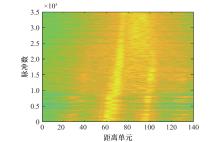
图9
船不同姿态下的距离-脉冲图"
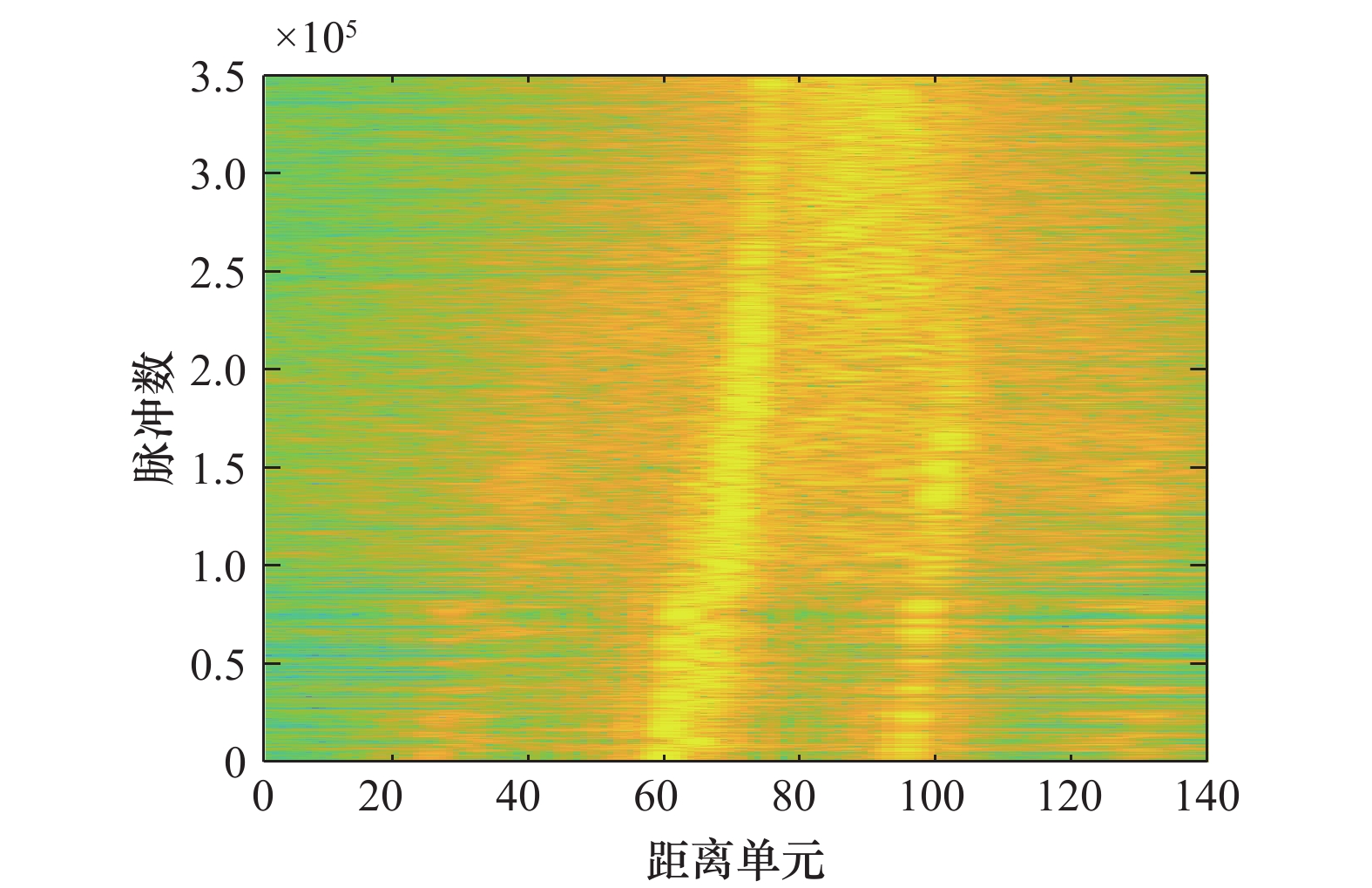
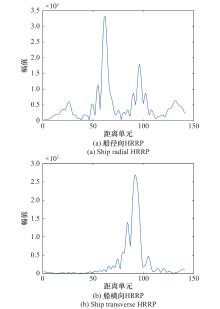
图10
货船不同姿态下的HRRP"
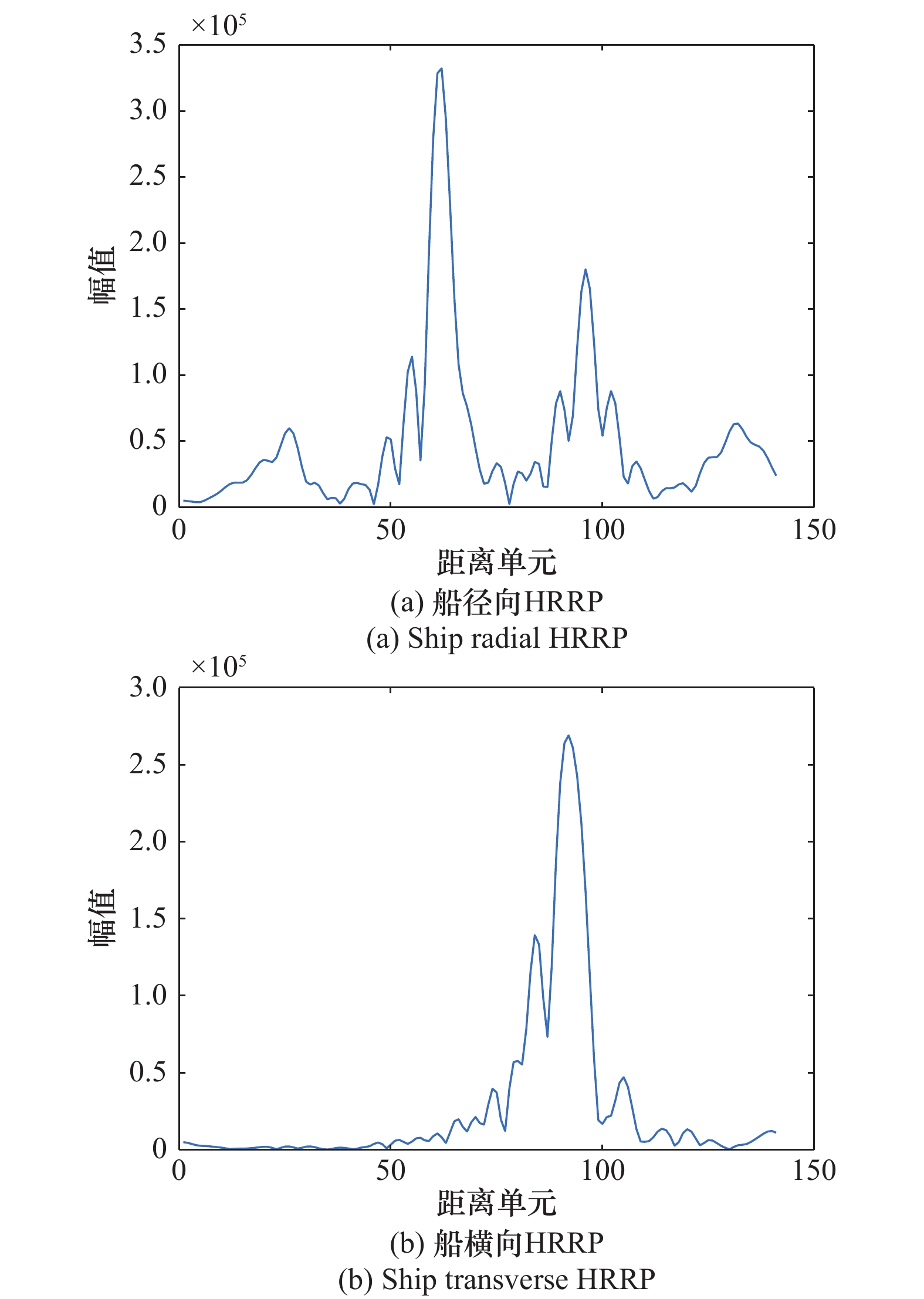
表5
不同观测视角下的识别结果"
| 货船姿态 | 测试集样本数 | TP | FN | FP | TN | 准确率/% |
| 径向视角 | 128 | 62 | 3 | 5 | 58 | 93.75 |
| 横向视角 | 128 | 61 | 2 | 5 | 60 | 94.53 |
| 1 | 关键. 雷达海上目标特性综述[J]. 雷达学报, 2020, 9 (4): 674- 683. |
| GUAN J. Summary of marine radar target characteristics[J]. Journal of Radars, 2020, 9 (4): 674- 683. | |
| 2 | 郭立新, 魏仪文. 复杂动态海面与目标电磁散射及回波仿真研究现状与展望[J]. 雷达学报, 2023, 12 (1): 76- 109. |
| GUO L X, WEI Y W. Status and prospects of electromagnetic scattering echoes simulation from complex dynamic sea surfaces and targets[J]. Journal of Radars, 2023, 12 (1): 76- 109. | |
| 3 | 董云龙, 罗霄, 丁昊, 等. 基于特征时序性的海杂波环境小目标检测方法[J]. 电子与信息学报, 2025, 47 (3): 707- 719. |
| DONG Y L, LUO X, DING H, et al. A detection method of small target in sea clutter environment based on feature temporal sequence[J]. Journal of Electronics & Information Technology, 2025, 47 (3): 707- 719. | |
| 4 | 丁昊, 韦继丰, 董云龙, 等. 高海况下应用先验信息的海上小目标检测方法[J]. 系统工程与电子技术, 2026, 48 (1): 44- 55. |
| DING H, WEI J F, DONG Y L, et al. A method for detecting small targets using prior information under high sea states[J]. Systems Engineering and Electronics, 2026, 48 (1): 44- 55. | |
| 5 | 关键, 姜星宇, 刘宁波, 等. 海杂波背景下的双极化最大特征值目标检测[J]. 系统工程与电子技术, 2024, 46 (11): 3715- 3725. |
| GUAN J, JIANG X Y, LIU N B, et al. Dual-polarized maximum eigenvalue-based target detection in sea clutter environment[J]. Systems Engineering and Electronics, 2024, 46 (11): 3715- 3725. | |
| 6 | 关键, 姜星宇, 刘宁波, 等. 海杂波中目标分数域谱范数特征检测方法[J]. 电子与信息学报, 2023, 45 (6): 2162- 2170. |
| GUAN J, JIANG X Y, LIU N B, et al. Spectral norm feature detection method in FRFT domain of targets in sea clutter[J]. Journal of Electronics & Information Technology, 2023, 45 (6): 2162- 2170. | |
| 7 |
GUO Z X, BAI X H, LI J Y, et al. Small target detection in sea clutter using dominant clutter tree based on anomaly detection framework[J]. Signal Processing, 2024, 219, 109399.
doi: 10.1016/j.sigpro.2024.109399 |
| 8 |
SHUI P L, ZHANG L, BAI X. Small target detection in sea clutter by weighted biased soft-margin SVM algorithm in feature spaces[J]. IEEE Sensors Journal, 2024, 24 (7): 10419- 10433.
doi: 10.1109/JSEN.2024.3350571 |
| 9 | WU X J, DING H, LIU N B, et al. A method for detecting small targets in sea surface based on singular spectrum analysis[J]. IEEE Trans. on Geoscience and Remote Sensing, 2022, 60, 5110817. |
| 10 | 关键, 伍僖杰, 丁昊, 等. 基于对角积分双谱的海面慢速小目标检测方法[J]. 电子与信息学报, 2022, 44 (7): 2449- 2460. |
| GUAN J, WU X J, DING H, et al. A method for detecting small slow targets in sea surface based on diagonal integrated bispectrum[J]. Journal of Electronics & Information Technology, 2022, 44 (7): 2449- 2460. | |
| 11 | WU X J, DING H, LIU N B, et al. Priori information-based feature extraction method for small target detection in sea clutter[J]. IEEE Trans. on Geoscience and Remote Sensing, 2022, 60, 5115315. |
| 12 |
董云龙, 张兆祥, 丁昊, 等. 基于三特征预测的海杂波中小目标检测方法[J]. 雷达学报, 2023, 12 (4): 762- 775.
doi: 10.12000/JR23037 |
|
DONG Y L, ZHANG Z X, DING H, et al. Target detection in sea clutter using a three-feature prediction-based method[J]. Journal of Radars, 2023, 12 (4): 762- 775.
doi: 10.12000/JR23037 |
|
| 13 | 韩静雯, 杨勇, 连静, 等. 大掠射角下幅相极化特征融合雷达导引头舰船检测方法[J]. 系统工程与电子技术, 2025, 47 (4): 1127- 1135. |
| HAN J W, YANG Y, LIAN J, et al. Ship target detection method at high grazing angle based on phase and amplitude polarization feature information fusion for radar seeker[J]. Systems Engineering and Electronics, 2025, 47 (4): 1127- 1135. | |
| 14 |
李郝亮, 陈思伟. 海面角反射体电磁散射特性与雷达鉴别研究进展与展望[J]. 雷达学报, 2023, 12 (4): 738- 761.
doi: 10.12000/JR23100 |
|
LI H L, CHEN S W. Electromagnetic scattering characteristics and radar identification of sea corner reflectors: advances and prospects[J]. Journal of Radars, 2023, 12 (4): 738- 761.
doi: 10.12000/JR23100 |
|
| 15 | 张坤. 高分辨雷达舰船距离像估计和遮蔽小目标检测方法研究[D]. 西安: 西安电子科技大学, 2021. |
| ZHANG K. Methods of ship HRRP estimation and masked small target detection in high resolution radars[D]. Xi’an: Xidian University, 2021. | |
| 16 | 吕方方. 海面目标动态回波仿真与特性分析[D]. 西安: 西安电子科技大学, 2019. |
| LV F F. Dynamic echo simulation and characteristic analysis of sea surface targets[D]. Xi’an: Xidian University, 2019. | |
| 17 | 韩静雯, 杨勇, 连静, 等. 基于极化与距离像特征融合的雷达导引头角反射器鉴别方法[J]. 系统工程与电子技术, 2024, 46 (11): 3658- 3670. |
| HAN J W, YANG Y, LIAN J, et al. Identification method of corner reflector based on polarization and HRRP feature fusion for radar seeker[J]. Systems Engineering and Electronics, 2024, 46 (11): 3658- 3670. | |
| 18 |
艾小锋, 邱梦奇, 胡旖航, 等. 宽带复合双基地雷达舰船目标长度估计方法[J]. 电子与信息学报, 2024, 46 (3): 944- 951.
doi: 10.11999/JEIT230088 |
|
AI X F, QIU M Q, HU Y H, et al. Instantaneous length estimation of ships through wideband composite bistatic radar[J]. Journal of Electronics & Information Technology, 2024, 46 (3): 944- 951.
doi: 10.11999/JEIT230088 |
|
| 19 | RU H T, XU S W, HE Q, et al. Marine small floating target detection method based on fusion weight and graph dynamic attention mechanism[J]. IEEE Trans. on Geoscience and Remote Sensing, 2023, 61, 5111511. |
| 20 | TAO Z Y, GUO Y, FU Q. Discrimination method of ship and corner reflector based on SVM[C]//Proc. of the 6th International Conference on Instrumentation & Measurement, Computer, Communication and Control, 2016: 699−702. |
| 21 | 黄孟俊, 陈建军, 赵宏钟, 等. 海面角反射器干扰微多普勒建模与仿真[J]. 系统工程与电子技术, 2012, 34 (9): 1781- 1787. |
| HUANG M J, CHEN J J, ZHAO H Z, et al. Micro-Doppler modeling and simulating of corner reflector in sea surface[J]. Journal of Systems Engineering and Electronics, 2012, 34 (9): 1781- 1787. | |
| 22 | 黄孟俊, 赵宏钟, 付强, 等. 一种基于微多普勒特征的海面角反射器干扰鉴别方法[J]. 宇航学报, 2012, 33 (10): 1486- 1491. |
| HUANG M J, ZHAO H Z, FU Q, et al. A sea corner-reflector jamming identification method based on micro-Doppler feature[J]. Journal of Astronautics, 2012, 33 (10): 1486- 1491. | |
| 23 | 张群, 胡健, 罗迎, 等. 微动目标雷达特征提取、成像与识别研究进展[J]. 雷达学报, 2018, 7 (5): 531- 547. |
| ZHANG Q, HU J, LUO Y, et al. Research progresses in radar feature extraction, imaging, and recognition of target with micro-motions[J]. Journal of Radars, 2018, 7 (5): 531- 547. | |
| 24 | 范学满, 胡生亮, 贺静波. 对海雷达目标识别中全极化HRRP的特征提取与选择[J]. 电子与信息学报, 2016, 38 (12): 3261- 3268. |
| FAN X M, HU S L, HE J B. Feature extraction and selection of full polarization HRRP in target recognition process of maritime surveillance radar[J]. Journal of Electronics & Information Technology, 2016, 38 (12): 3261- 3268. | |
| 25 |
吴国庆, 王罗胜斌, 庞晨, 等. 雷达极化域变焦角反组合体对抗方法: 抗冲淡式干扰[J]. 电子学报, 2022, 50 (12): 2969- 2983.
doi: 10.12263/DZXB.20220979 |
|
WU G Q, WANG L S B, PANG C, et al. Radar polarization modulation countermeasures for combined corner reflector: anti diluted jamming[J]. Acta Electronica Sinica, 2022, 50 (12): 2969- 2983.
doi: 10.12263/DZXB.20220979 |
|
| 26 |
王罗胜斌, 吴国庆, 徐振海, 等. 雷达极化域变焦角反组合体对抗方法: 抗质心式干扰[J]. 电子学报, 2022, 50 (12): 2957- 2968.
doi: 10.12263/DZXB.20221139 |
|
WANG L S B, WU G Q, XU Z H, et al. Radar polarization modulation countermeasures for combined corner reflector: anti centroid jamming[J]. Acta Electronica Sinica, 2022, 50 (12): 2957- 2968.
doi: 10.12263/DZXB.20221139 |
|
| 27 |
郑近德, 姚殷柔, 潘海洋, 等. 多尺度熵方法在机械故障诊断中的应用研究进展[J]. 安徽工业大学学报(自然科学版), 2024, 41 (1): 46- 57.
doi: 10.12415/j.issn.1671-7872.23170 |
|
ZHENG J D, YAO Y R, PAN H Y, et al. Research progress on the application of multi-scale entropy method in the mechanical fault diagnosis[J]. Journal of Anhui University of Technology (Natural Science), 2024, 41 (1): 46- 57.
doi: 10.12415/j.issn.1671-7872.23170 |
|
| 28 |
YANG J W, GULRAIZ I C, SUSANTO R, et al. Classification of interbeat interval time-series using attention entropy[J]. IEEE Trans. on Affective Computing, 2023, 14 (1): 321- 330.
doi: 10.1109/TAFFC.2020.3031004 |
| 29 | AZIZ W, ARIF M. Multiscale permutation entropy of phsiological time series[C]//Proc. of the 9th International Multitopic Conference, 2005. |
| 30 |
席旭刚, 汤敏彦, 张自豪, 等. 融合表面肌电和加速度信号的下肢运动模式识别研究[J]. 电子学报, 2017, 45 (11): 2735- 2741.
doi: 10.3969/j.issn.0372-2112.2017.11.022 |
|
XI X G, TANG M Y, ZHANG Z H, et al. Lower limb motion recognition based on the fusion of sEMG and acceleration signal[J]. Acta Electronica Sinica, 2017, 45 (11): 2735- 2741.
doi: 10.3969/j.issn.0372-2112.2017.11.022 |
|
| 31 | 产秀秀. 机载雷达下海面目标检测方法研究[D]. 西安: 西安电子科技大学, 2021. |
| CHAN X X. Research on sea surface target detection method under airborne radar[D]. Xi’an: Xidian University, 2021. | |
| 32 | EUISUN C, CHULHEE L. Feature extraction based on the Bhattacharyya distance[C]//Proc. of the IEEE International Conference on Geoscience and Remote Sensing Symposium, 2000: 2146−2148. |
| 33 | BHATTACHARYYA A. On a measure of divergence between two statistical populations defined by their probability distributions[J]. Bulletin of the Calcutta Mathematical Society, 1943, 35 (1): 99- 109. |
| 34 | CHRYSOSTOMOU C, SEKER H. Structural classification of protein sequences based on signal processing and support vector machines[C]//Proc. of the 38th Annual International Conference of the IEEE Engineering in Medicine and Biology Society, 2016: 3088−3091. |
| 35 |
PANTELIS B, SERGIOS T, CHARALAMPOS M, et al. Complex support vector machines for regression and quaternary classification[J]. IEEE Trans. on Neural Networks and Learning Systems, 2015, 26 (6): 1260- 1274.
doi: 10.1109/TNNLS.2014.2336679 |
| 36 | 丁昊, 朱晨光, 刘宁波, 等. 高海况条件下海面漂浮小目标特征提取与分析[J]. 海军航空大学学报, 2023, 38 (4): 301- 312. |
| DING H, ZHU C G, LIU N B, et al. Feature extraction and analysis of small floating targets in high sea conditions[J]. Journal of Naval Aviation University, 2023, 38 (4): 301- 312. | |
| 37 |
关键, 刘宁波, 王国庆, 等. 雷达对海探测试验与目标特性数据获取-海上目标双极化多海况散射特性数据集[J]. 雷达学报, 2023, 12 (2): 456- 469.
doi: 10.12000/JR23029 |
|
GUAN J, LIU N B, WANG G Q, et al. Sea-detecting radar experiment and target feature data acquisition for dual polarization multistate scattering dataset of marine targets[J]. Journal of Radars, 2023, 12 (2): 456- 469.
doi: 10.12000/JR23029 |
|
| 38 |
刘宁波, 丁昊, 黄勇, 等. X波段雷达对海探测试验与数据获取年度进展[J]. 雷达学报, 2021, 10 (1): 173- 182.
doi: 10.12000/JR21011 |
|
LIU N B, DING H, HUANG Y, et al. Annual progress of the sea-detecting X-band radar and data acquisition program[J]. Journal of Radars, 2021, 10 (1): 173- 182.
doi: 10.12000/JR21011 |
|
| 39 |
刘宁波, 董云龙, 王国庆, 等. X波段雷达对海探测试验与数据获取[J]. 雷达学报, 2019, 8 (5): 656- 667.
doi: 10.12000/JR19089 |
|
LIU N B, DONG Y L, WANG G Q, et al. Sea-detecting X-band radar and data acquisition program[J]. Journal of Radars, 2019, 8 (5): 656- 667.
doi: 10.12000/JR19089 |
|
| 40 |
赵越, 陈之纯, 纠博, 等. 一种基于时频分析的窄带雷达飞机目标分类特征提取方法[J]. 电子与信息学报, 2017, 39 (9): 2225- 2231.
doi: 10.11999/JEIT161204 |
|
ZHAO Y, CHEN Z C, JIU B, et al. Narrowband aircraft targets feature extraction and classification based on time-frequency analysis[J]. Journal of Electronics & Information Technology, 2017, 39 (9): 2225- 2231.
doi: 10.11999/JEIT161204 |
|
| 41 |
YU H L, CAO Z, WANG G Q, et al. A classification method for marine surface floating small targets and ship targets[J]. IEEE Journal on Miniaturization for Air and Space Systems, 2024, 5 (2): 94- 99.
doi: 10.1109/JMASS.2024.3372116 |
| [1] | 赵巍山, 尤思洋, 黄丽佳, 周光尧. 基于散射拓扑增强的双流SAR飞机检测网络[J]. 系统工程与电子技术, 2026, 48(6): 1848-1858. |
| [2] | 袁永康, 王君旭, 华煜明, 张磊. 地基雷达对月多普勒补偿成像方法[J]. 系统工程与电子技术, 2026, 48(6): 1859-1868. |
| [3] | 罗雨泉, 何雨强, 李雅鑫, 梁松, 王俊. 基于CNN-BiLSTM-MHA时空融合框架的毫米波雷达人体姿态估计[J]. 系统工程与电子技术, 2026, 48(5): 1502-1514. |
| [4] | 胡讯铭, 吴建新. 针对分布式雷达抗主瓣干扰技术的多波束干扰方法[J]. 系统工程与电子技术, 2026, 48(5): 1532-1538. |
| [5] | 王新, 周生华, 张新勋, 南静怡, 孙世坤. 全极化MIMO雷达主瓣压制干扰抑制方法[J]. 系统工程与电子技术, 2026, 48(5): 1539-1550. |
| [6] | 林文斌, 时晨光, 严牧, 汪飞, 周建江. 面向欺骗干扰组网雷达的无人机集群稳健航迹规划算法[J]. 系统工程与电子技术, 2026, 48(5): 1551-1563. |
| [7] | 杨泽莹, 陈卓, 徐志明, 艾小锋, 吴其华, 王玲. 空间目标ISAR图像部件正向标记方法[J]. 系统工程与电子技术, 2026, 48(4): 1165-1173. |
| [8] | 黄天佑, 林惠孚, 杨超, 赖涛, 王青松, 黄海风. SAR移频欺骗干扰距离主瓣展宽问题解决方法[J]. 系统工程与电子技术, 2026, 48(4): 1174-1185. |
| [9] | 胡继军, 韩伟, 张国玉, 李洋, 杨洁, 田甜. 基于行为识别网络的SAR工作模式识别方法[J]. 系统工程与电子技术, 2026, 48(4): 1218-1229. |
| [10] | 王威, 杨勇, 韩静雯. 基于相关性的雷达海面弱目标检测技术[J]. 系统工程与电子技术, 2026, 48(3): 787-794. |
| [11] | 翟佳, 画麒嘉, 王梓权, 张子恺, 王睿琦, 刘金玲, 胡美琪, 武晨辉. 基于多级别融合的可见光和SAR图像联合识别[J]. 系统工程与电子技术, 2026, 48(3): 817-825. |
| [12] | 高晨然, 张西川, 熊元燚, 陈威, 谢文冲. 基于频域滤波的无人机载预警雷达抗主瓣无意干扰方法[J]. 系统工程与电子技术, 2026, 48(3): 826-834. |
| [13] | 黄治军, 衣晓, 关欣. 基于锚定思想的新型雷达与ESM异步关联算法[J]. 系统工程与电子技术, 2026, 48(3): 835-845. |
| [14] | 李莹莹, 吴昊, 陈凤, 林郁卓越, 王雪莹, 冯鑫. 一种基于天线指向的大方位扫描滑聚模式星载SAR几何定位技术[J]. 系统工程与电子技术, 2026, 48(3): 846-858. |
| [15] | 杨跃能, 孔希, 张士峰, 邓少永. 低空小型旋翼无人机近距拦截捕获方法[J]. 系统工程与电子技术, 2026, 48(3): 1010-1017. |
| 阅读次数 | ||||||
|
全文 |
|
|||||
|
摘要 |
|
|||||
