Systems Engineering and Electronics ›› 2026, Vol. 48 ›› Issue (5): 1670-1681.doi: 10.12305/j.issn.1001-506X.2026.05.23
• Systems Engineering • Previous Articles Next Articles
Robust multi-agent cooperative confrontation policy offline reinforcement learning
Huaqing ZHANG1, Xiaofei ZHANG2, Mingrui HAO1, Jixiang JIANG1,*, Shan LI3
- 1. National Key Laboratory of Complex System Control and Intelligent Agent Cooperation,Beijing Institute of Mechanical and Electrical Engineering,Beijing 100074,China
2. Beijing Institute of Computer Technology and Applications, Beijing 100854,China
3. School of Mathematics and Statistics,Hainan University,Haikou 570228,China
-
Received:2025-01-14Online:2026-05-27Published:2026-05-27 -
Contact:Jixiang JIANG

CLC Number:
Cite this article
Huaqing ZHANG, Xiaofei ZHANG, Mingrui HAO, Jixiang JIANG, Shan LI. Robust multi-agent cooperative confrontation policy offline reinforcement learning[J]. Systems Engineering and Electronics, 2026, 48(5): 1670-1681.
share this article
Fig.1
Schematic diagram of the brief principle of offline reinforcement learning"
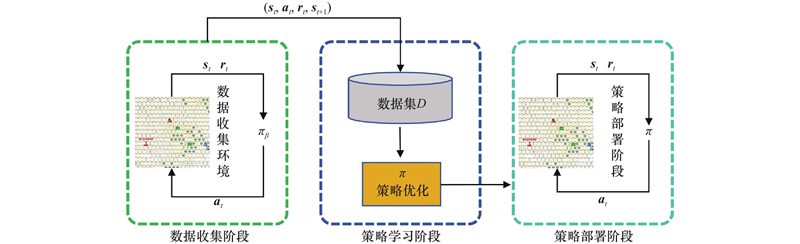
Fig.2
The red-blue control competition scenario in the Miaosuan wargame system"
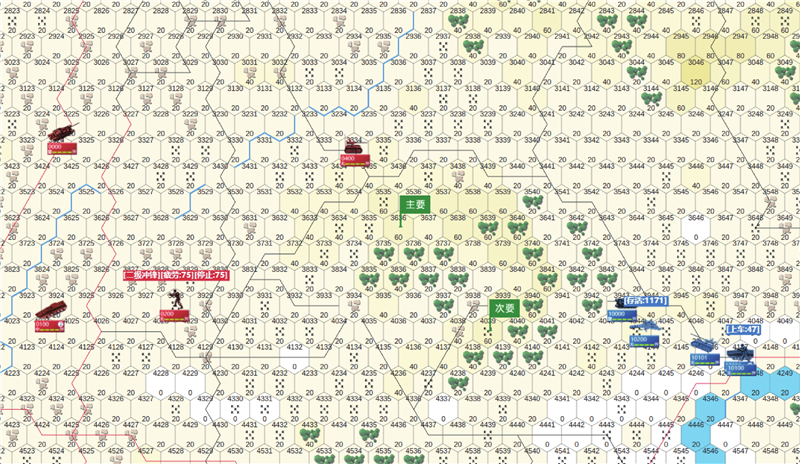
Fig.3
Simplified diagram of the structure of centralized strategy model for multi-agent system"
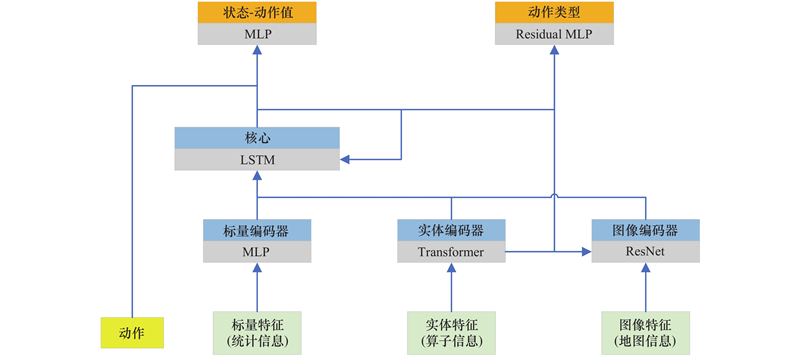
Fig.4
Schematic diagram of the differences in the principle of policy improvement between PIH and the offline reinforcement learning method based on behavioral regularization"
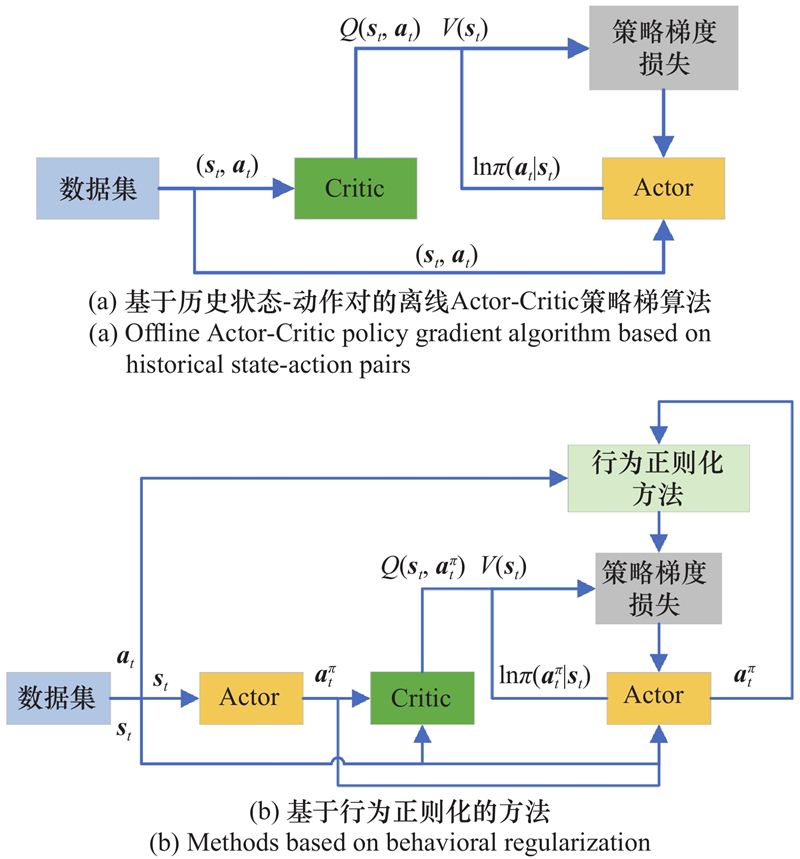
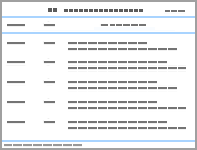
Table 1
Related hyper-parameters setting in datasets generation and experiments setup"
| 超参数 | 参数设置 |
| 优化器 | Adam |
| 优化器 | 0.99 |
| 学习率 | |
| 交互步长 | 8 |
| 缩放系数 | 0.01 |
| 训练数据批次大小 | 15 |
| 隐藏层单元数 | 300,400 |
| 评价模块动作扩展层单元数 | 84 |
| 指数移动平均参数 | 0.9 |
| 激活函数 | ReLU |
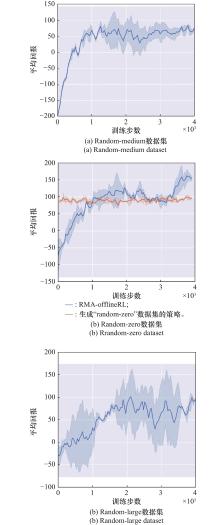
Fig.5
Evaluation results comparism of RMA-of?ineRL on the dataset generated by Miaosuan Wargame System"
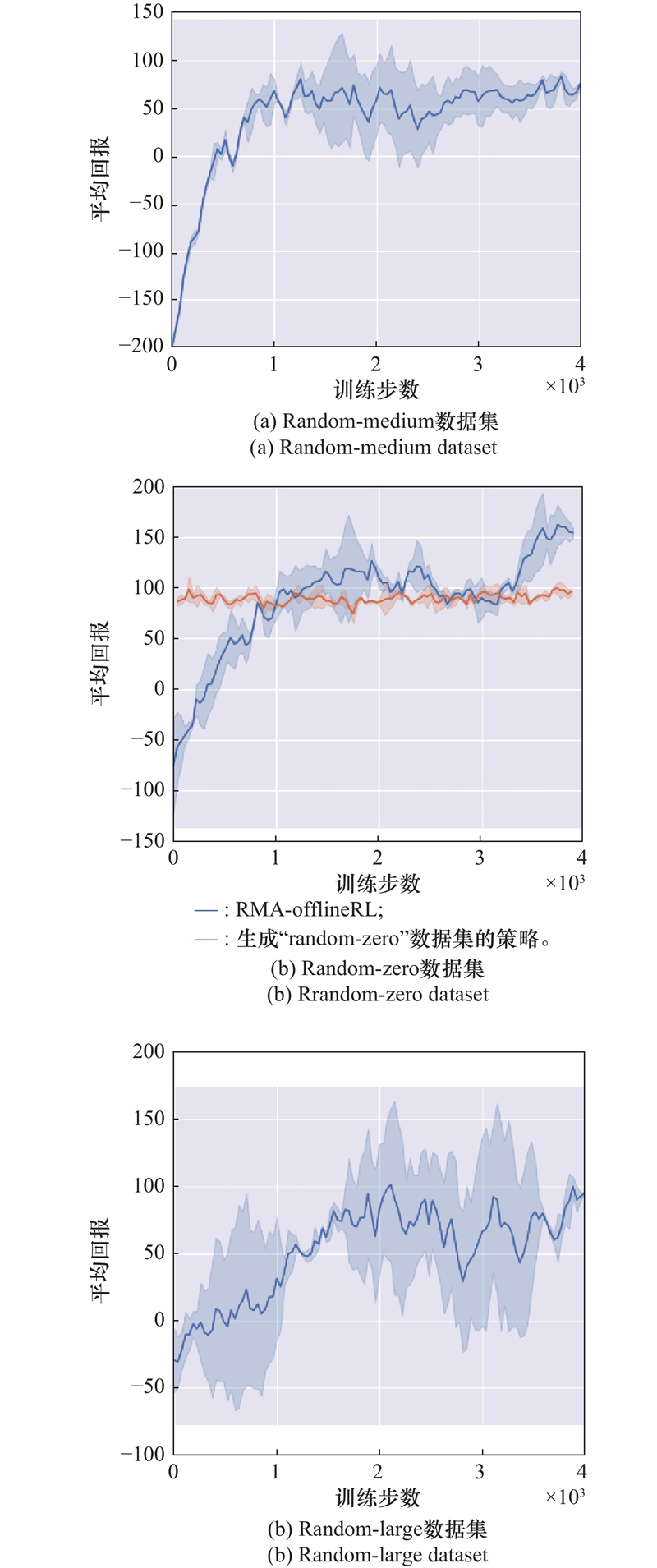
Table 2
Full names and abbreviations of the benchmark environments used in the simulation experiments"
| 基准环境全称 | 简称 |
| LunarLanderContinuous-v2 | LunarLander |
| BipedalWalkerHardcore-v3 | BipedalWalker |
| HopperPyBulletEnv-v0 | Hopper |
| AntPyBulletEnv-v0 | Ant |
| HalfCheetahPyBulletEnv-v0 | HalfCheetah |
| Walker2DPyBulletEnv-v0 | Walker2D |
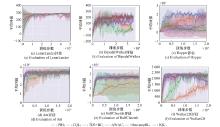
Fig.6
Cumulative average return of the algorithms participating in the evaluation on random-zero dataset"
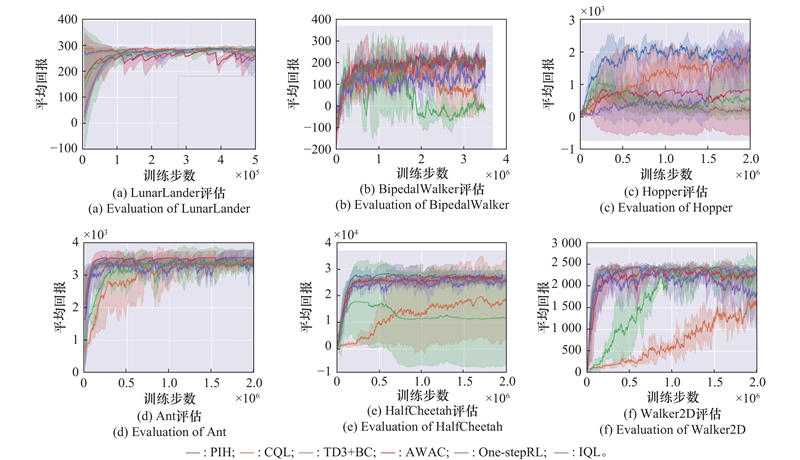
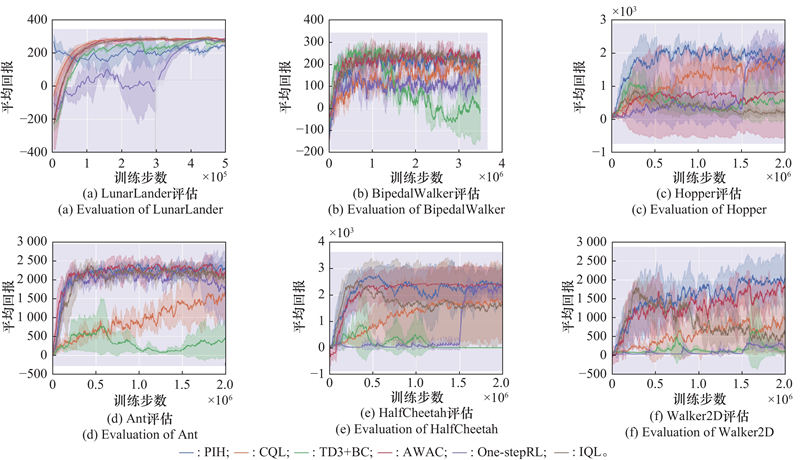
Fig.7
Cumulative average return of the algorithms participating in the evaluation on random-large dataset"
| 1 | 张梦钰, 豆亚杰, 陈子夷, 等. 深度强化学习及其在军事领域中的应用综述[J]. 系统工程与电子技术, 2024, 46(4): 1297−1308. |
| ZHANG M Y, DOU Y J, CHEN Z Y, et al. Review of deep reinforcement learning and its applications in military field[J]. Systems Engineering and Electronics, 2024, 46(4): 1297−1308 . | |
| 2 |
周雪, 苘大鹏, 许晨, 等. 无人系统中离线强化学习的隐蔽数据投毒攻击方法[J]. 通信学报, 2024, 45 (12): 16- 27.
doi: 10.11959/j.issn.1000-436x.2024264 |
|
ZHOU X, RUI D P, XU C, et al. Stealthy data poisoning attack method on offline reinforcement learning in unmanned systems[J]. Journal on Communications, 2024, 45 (12): 16- 27.
doi: 10.11959/j.issn.1000-436x.2024264 |
|
| 3 | 侯永宏, 丁旺, 任懿, 等. 基于优质样本筛选的离线强化学习算法[J]. 模式识别与人工智能, 2024, 37(11): 1022−1032. |
| HOU Y H, DING W, REN Y, et al. Offline reinforcement learning algorithm based on selection of high-quality samples[J]. Pattern Recognition and Artificial Intelligence, 2024, 37(11): 1022−1032. | |
| 4 | 彭莉莎, 孙宇祥, 薛宇凡, 等. 融合三支多属性决策与SAC的兵棋推演智能决策技术[J]. 系统工程与电子技术, 2024, 46 (7): 2310- 2322. |
| PENG L S, SUN Y X, XUE Y F, et al. Intelligent decision-making technology for wargame by integrating three-way multiple attribute decision-making and SAC[J]. Systems Engineering and Electronics, 2024, 46 (7): 2310- 2322. | |
| 5 | ARNOB S Y, ISLAM R, PRECUP D. Importance of empirical sample complexity analysis for offline reinforcement learning[EB/OL]. [2024-12-10]. https://doi.org/10.48550/arXiv.2112.15578. |
| 6 | KAJETAN S, MARKUS H, MARKUS C D, et al. A dataset perspective on offline reinforcement learning[C]//Proc. of the Conference on Lifelong Learning Agents, 2022: 470−517. |
| 7 | AVRIAL K, JUSTING F, MATTHEW S, et al. Stabilizing off-policy Q-learning via bootstrapping error reduction[C]//Proc. of the 33th Neural Information Processing Systems, 2019: 452−461. |
| 8 | 毛经坤, 李凤熙, 刘春新, 等. 基BCQ离线强化学习的呼吸机动态治疗策略控制[EB/OL]. [2024-12-10]. https://link.cnki.net/urlid/12.1374.N.20241122.0937.008. |
| MAO J K, LI F X, LIU C X, et al. Dynamic treatment policy control of ventilator based on BCQ offline deep reinforcement learning[EB/OL]. [2024-12-10]. https://link.cnki.net/urlid/12.1374.N.20241122.0937.008. | |
| 9 | 陈锶奇, 耿婕, 汪云飞, 等. 基于离线强化学习的研究综述[J]. 无线电通信技术, 2024, 50 (5): 831- 842. |
| CHEN S Q, GENG J, WANG Y F, et al. Survey of research on offline reinforcement learning[J]. Radio Communications and Technology, 2024, 50 (5): 831- 842. | |
| 10 | NATASHA J, ASMA G, JUDY H S, et al. Way off-policy batch deep reinforcement learning of implicit human preferences in dialog[EB/OL]. [2024-12-10]. https://doi.org/10.48550/arXiv.1907.00456. |
| 11 | HUANG L Y, DONG B T, XIE W, et al. An implicit trust region approach to behavior regularized offine reinforcement learning[C]//Proc. of the 38th AAAI Conference on Artificial Intelligence, 2024, 16944−16952. |
| 12 | WU Y F, TUCKER G, NACHUM O. Behavior regularized offline reinforcement learning[EB/OL]. [2024-12-10]. https://doi.org/10.48550/arXiv.1911.11361 . |
| 13 | FUJIMOTO S, GU S S. A minimalist approach to offline reinforcement learning[C]//Proc. of the 35th Conference on Neural Information Processing Systems, 2024. |
| 14 | PAINE T L, PADURARU C, MICHI A, et al. Hyperparameter selection for offline reinforcement learning[EB/OL]. [2024-12-10]. https://doi.org/10.48550/arXiv.2007.09055. |
| 15 | ZHANG S Y, JIANG N. Towards hyperparameter-free policy selection for offline reinforcement learning[C]//Proc. of the 35th Conference on Neural Information Processing Systems, 2021: 12864−12875. |
| 16 | JIN Y, YANG Z R, WANG Z R. Is pessimism provably efficient for offline RL?[C]//Proc. of the 38th International Conference on Machine Learning, 2021: 5084−5096. |
| 17 | KUMAR A, ZHOU A, TUCKER G, et al. Conservative Q-learning for offline reinforcement learning[C]//Proc. of the 34th Conference on Neural Information Processing Systems, 2020: 1179−1191. |
| 18 | KOSTRIKOV I, NAIR A, LEVINE S. Offline reinforcement learning with implicit Q-learning[EB/OL]. [2024-12-10]. https://doi.org/10.48550/arXiv.2110.06169. |
| 19 | BRANDFONBRENER D, WHITNEY W, RANGANATH R, et al. Offline RL without off-policy evaluation[C]//Proc. of the 35th Conference on Neural Information Processing Systems, 2021, 34: 4933−4946. |
| 20 | NAIR A, GUPTA A, DALAL M, et al. AWAC: accelerating online reinforcement learning with offline datasets[EB/OL]. [2024-12-10]. https://doi.org/10.48550/arXiv.2006.09359. |
| 21 | XU J L, HU J, WANG S X, et al. MiaoSuan Wargame: a multi-mode integrated platform for imperfect information game[C]//Proc. of the IEEE Conference on Games, 2022: 457−464. |
| 22 |
WANG C B, ZHANG X Y, GAO H B, et al. COLERGs-constrained safe reinforcement learning for realising MASS’s risk-informed collision avoidance decision making[J]. Knowledge-Based Systems, 2024, 300, 112205.
doi: 10.1016/j.knosys.2024.112205 |
| 23 |
GAO H B, ZHAO M, ZHENG X, et al. An improved hierarchical deep reinforcement learning algorithm for multi-intelligent vehicle lane change[J]. Neurocomputing, 2024, 609, 128482.
doi: 10.1016/j.neucom.2024.128482 |
| 24 | SUTTON R S, MCALLESTER D, SINGH S, et al. Policy gradient methods for reinforcement learning with function approximation[C]//Proc. of the Neural Information Processing Systems, 2000: 1057−1063. |
| 25 |
SCHULMAN J, WOLSKI F, DHARIWAL P, et al. Combustion optimization study of pulverized coal boiler based on proximal policy optimization algorithm[J]. Applied Thermal Engineering, 2024, 254, 1359- 1361.
doi: 10.2139/ssrn.4542814 |
| 26 | OSBORNE J. Improving your data transformations: applying the Box-Cox transformation[J]. Practical Assessment, Research, and Evaluation, 2010, 15(12). DOI: https://doi.org/10.7275/qbpc-gk17. |
| 27 | LIU R Z, WANG W H, SHEN Y J, et al. An introduction of mini-AlphaStar[EB/OL]. [2024-12-10]. https://doi.org/10.48550/arXiv.2104.06890. |
| 28 | VASWANI A, SHAZEER N, PARMAR N, et al. Attention is all you need[C]//Proc. of the Neural Information Processing Systems, 2017: 5998−6008. |
| 29 | HE K M, ZHANG X Y, REN S Q, et al. Deep residual learning for image recognition[C]//Proc. of the IEEE Conference on Computer Vision and Pattern Recognition, 2016: 770−778. |
| 30 | ZHANG H Q, MA H B, YING J. An improved off-policy actor-critic algorithm with historical behaviors reusing for robotic control[C]//Proc. of the 15th International Conference on Intelligent Robots and Applications, 2023: 449−458. |
| 31 | ESPEHOLT L, SOYER H, MUNOS R, et al. IMPALA: scalable distributed deep RL with importance weighted actor-learner architectures[C]//Proc. of the 35th International Conference on Machine Learning, 2018: 1407−1416. |
| 32 | HU M. Deep RL zoo: a collections of deep RL algorithms implemented with PyTorch[EB/OL]. [2024-12-10]. https://github.com/michaelnny/deep_rl_zoo. |
| 33 | BROCKMAN G, CHEUNG V, PETTERSSON L, et al. OpenAI Gym[EB/OL]. [2024-12-10]. https://doi.org/10.48550/arXiv.1606.01540. |
| 34 | BERROCAL E, SIERRA B, HERRERO H W. Evaluating PyBullet and Isaac Sim in the scope of robotics and reinforcement learning[C]//Proc. of the 7th Iberian Robotics Conference, 2024. |
| [1] | Danhe CHEN, Shuhang WANG, Zhiyong LIU, Chuangge WANG. Intelligent decision-making methods for collaborative roundup by multi-spacecraft [J]. Systems Engineering and Electronics, 2026, 48(4): 1404-1412. |
| [2] | Zonggang LI, Jintao QIU, Xiaogang NING, Yinjuan CHEN. Dynamic periodic event-triggered bipartite consensus for multi-agent systems [J]. Systems Engineering and Electronics, 2026, 48(1): 278-289. |
| [3] | Chenyu SHAN, Shaofan LI, Ruiyun QI. Fast task reassignment in multi-agent system emergency fault handling [J]. Systems Engineering and Electronics, 2026, 48(1): 185-197. |
| [4] | Fangjie GUO, Jing LI, Zhaohui ZHANG. Predefined-time lag consensus for MAS with input delay [J]. Systems Engineering and Electronics, 2025, 47(9): 3041-3046. |
| [5] | Dapeng YANG, Zihao GONG, Xiaoye WANG, Zhengyu GUO, Delin LUO. Research on UAV cooperative interception maneuver decision-making based on multi-agent reinforcement learning [J]. Systems Engineering and Electronics, 2025, 47(9): 3076-3085. |
| [6] | Ziyi WANG, Xiongjun FU, Jian DONG, Cheng FENG. Optimization of radar collaborative anti-jamming strategies based on hierarchical multi-agent reinforcement learning [J]. Systems Engineering and Electronics, 2025, 47(4): 1108-1114. |
| [7] | Ke FU, Hao CHEN, Yu WANG, Quan LIU, Jian HUANG. Uncertainty-based Bayesian policy reuse method [J]. Systems Engineering and Electronics, 2025, 47(2): 535-543. |
| [8] | Jiale LI, Qilin ZHONG, Jie XIAO, Guofei LI. Adaptive fixed-time formation control for multi-agent system [J]. Systems Engineering and Electronics, 2025, 47(2): 600-607. |
| [9] | Chen WANG, Cheng ZHU, Xiangke WANG, Zhaoyun DING, Qianzhen ZHANG, Sheng ZHANG, Xianqiang ZHU. Technology for countering dynamic multi-target motion control using distributed drone swarm systems [J]. Systems Engineering and Electronics, 2025, 47(11): 3765-3778. |
| [10] | Yaozhong ZHANG, Zhuoran WU, Jiandong ZHANG, Qiming YANG, Guoqing SHI, Zixiang XU. UAV many-to-one pursuit-evasion game based on ME-DDPG algorithm [J]. Systems Engineering and Electronics, 2025, 47(10): 3288-3299. |
| [11] | Weimin IU, Yongyue WANG, Xinyang MA, Jinkun LIU. Consensus control for input-delay multi-agent system with input constraint [J]. Systems Engineering and Electronics, 2024, 46(9): 3176-3184. |
| [12] | Jie ZHANG, Kairong LIU, Jinbao CHEN, Yingxue ZHANG, Chuanzhi CHEN, Hongzhi YU, Yunxiao ZHANG. Multi-agents formation control method based on space confrontation [J]. Systems Engineering and Electronics, 2024, 46(6): 2082-2091. |
| [13] | Junren LUO, Wanpeng ZHANG, Jiongming SU, Weilin YUAN, Jing CHEN. Research progress of multi-agent learning in games [J]. Systems Engineering and Electronics, 2024, 46(5): 1628-1655. |
| [14] | Kun ZHANG, Shuai HUA, Binlin YUAN, Ruiyi DU. Design of autonomous combat system of unmanned cluster system based on Multi-Agent [J]. Systems Engineering and Electronics, 2024, 46(4): 1273-1286. |
| [15] | Guhao SUN, Zhongze CAI, Qingshuang ZENG. Fixed-time distributed tracking and control of multi-agent formation weighted centroid [J]. Systems Engineering and Electronics, 2024, 46(12): 4165-4172. |
| Viewed | ||||||
|
Full text |
|
|||||
|
Abstract |
|
|||||