Systems Engineering and Electronics ›› 2024, Vol. 46 ›› Issue (10): 3334-3346.doi: 10.12305/j.issn.1001-506X.2024.10.11
• Sensors and Signal Processing • Previous Articles
Radar signal modulation recognition method based on synchro-extracting transform denoising
Zhian DENG1,2, Zhiguo WANG1,2, Sheng'ao WANG3,*, Weijian SI1,2
- 1. College of Information and Communication Engineering, Harbin Engineering University, Harbin 150001, China
2. Key Laboratory of Advanced Marine Communication and Information Technology, Ministry of Industry and Information Technology, Harbin 150001, China
3. Department of Science and Information Technology, Sichuan Jiuzhou Investment Holding Group Company Limited, Mianyang 621000, China
-
Received:2023-06-10Online:2024-09-25Published:2024-10-22 -
Contact:Sheng'ao WANG

CLC Number:
Cite this article
Zhian DENG, Zhiguo WANG, Sheng'ao WANG, Weijian SI. Radar signal modulation recognition method based on synchro-extracting transform denoising[J]. Systems Engineering and Electronics, 2024, 46(10): 3334-3346.
share this article
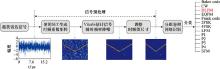
Fig.1
Framework of modulation recognition method for grouped convolution networks based on SET denoising"
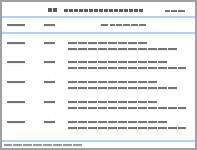
Table 1
Time consumption for calculating time-frequency distribution of SET, CWD, and SPWVD ms"
| 信号长度N | 方法 | ||
| SET | CWD | SPWVD | |
| 512 | 44.7 | 155.5 | 179.1 |
| 768 | 93.1 | 343.1 | 385.9 |
| 1 024 | 176.3 | 673.5 | 747.1 |
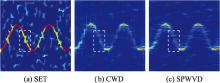
Fig.2
Time frequency diagrams of SFM modulation signal generated by different time frequency distributions"
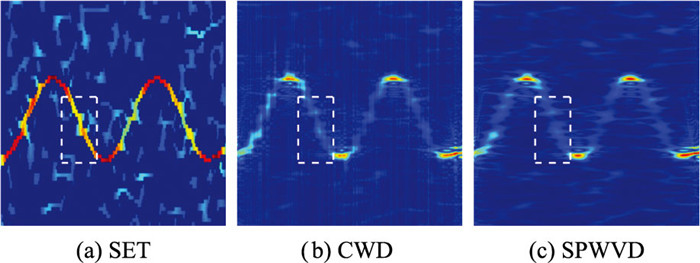
Fig.3
Time-frequency diagram of Baker code"
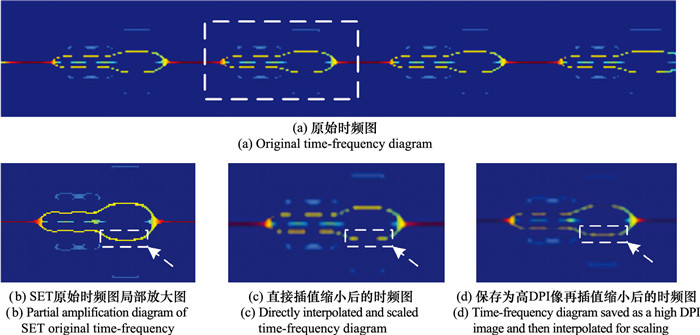
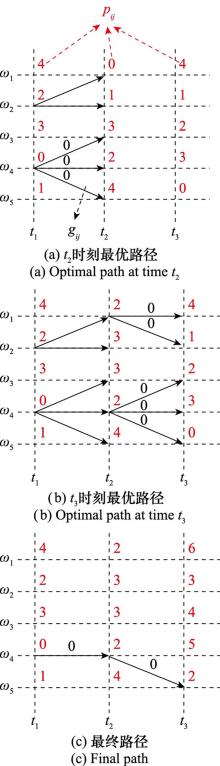
Fig.4
Instaneous frequency estimation of time-frequency coefficient matrix with n=3 and m=5"
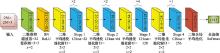
Fig.5
Overall structure of CNN"
Fig.6
Group convolutional block structure"

Table 2
Modulation parameters of different radar signals"
| 信号调制类型 | 训练集和验证集参数 | 测试集参数 |
| BPSK | 载频: 5~40 MHz | 载频: 5~45 MHz |
| Baker码长度: {5、7、11、13} | Baker码长度: {5、7、11} | |
| 码元宽度: 500~800 ns | 码元宽度: 400~700 ns | |
| 相位循环次数: 2~5 | 相位循环次数: 4~6 | |
| CW | 载频: 5~40 MHz | 载频: 5~45 MHz |
| 脉宽: 6.4~13.6 μs | 脉宽: 4.8~11.2 μs | |
| DLFM、EQFM、LFM、SFM | 中心频率: 5~30 MHz | 中心频率: 10~35 MHz |
| 带宽: 10~20 MHz | 带宽: 15~30 MHz | |
| 脉宽: 6.4~13.6 μs | 脉宽: 4.8~11.2 μs | |
| 2FSK | 2个载频: 5~40 MHz | 2个载频: 5~45 MHz |
| 码元宽度: 1.5~2 μs | 码元宽度: 1.2~1.6 μs | |
| 码元数量: 4~8 | 码元数量: 6~12 | |
| 4FSK | 4个载频: 5~40 MHz | 4个载频: 5~45 MHz |
| 码元宽度: 1.5~2 μs | 码元宽度: 1.2~1.6 μs | |
| 码元数量: 8~12 | 码元数量: 10~16 | |
| P1码、P2码、P3码、P4码、Frank | 载频: 5~40 MHz | 载频: 5~45 MHz |
| 相位跳变数: (5~8)2 | 相位跳变数: (5~8)2 | |
| 码元宽度: 100~600 ns | 码元宽度: 200~700 ns |
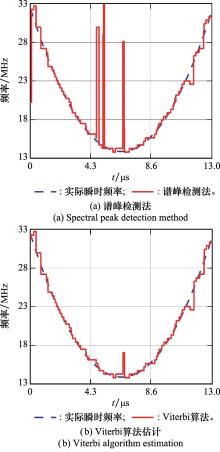
Fig.7
Instaneous frequency estimation of EQFM signal"

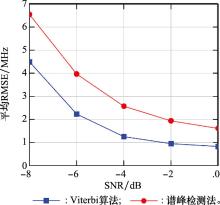
Fig.8
Average RMSE of instaneous frequency estimation value for 13 modulation signals under different SNRs"
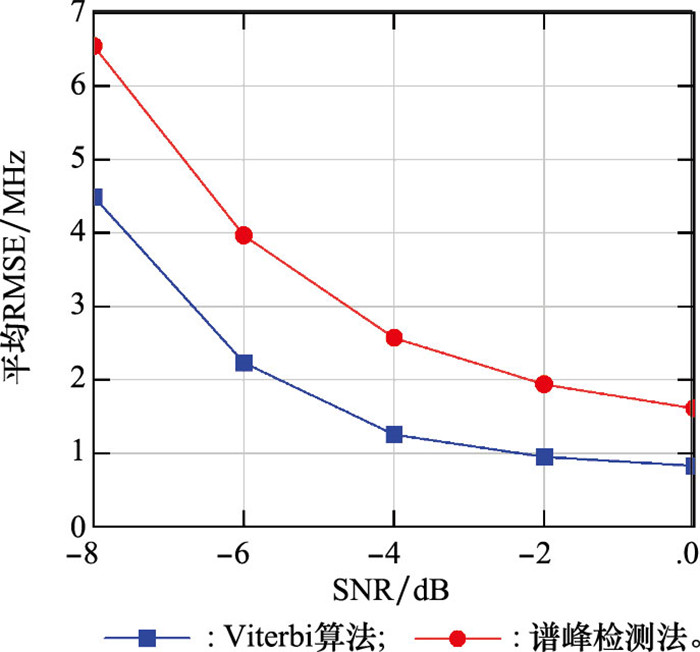
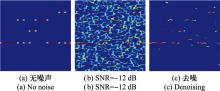
Fig.9
Denoising effect of 4FSK"
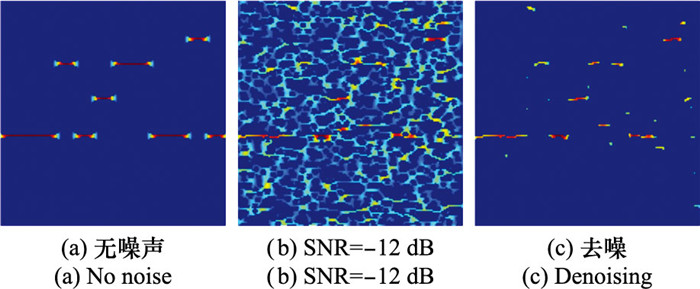
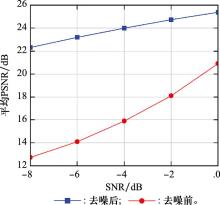
Fig.10
Average PSNR of 13 modulation signals at different SNRs"
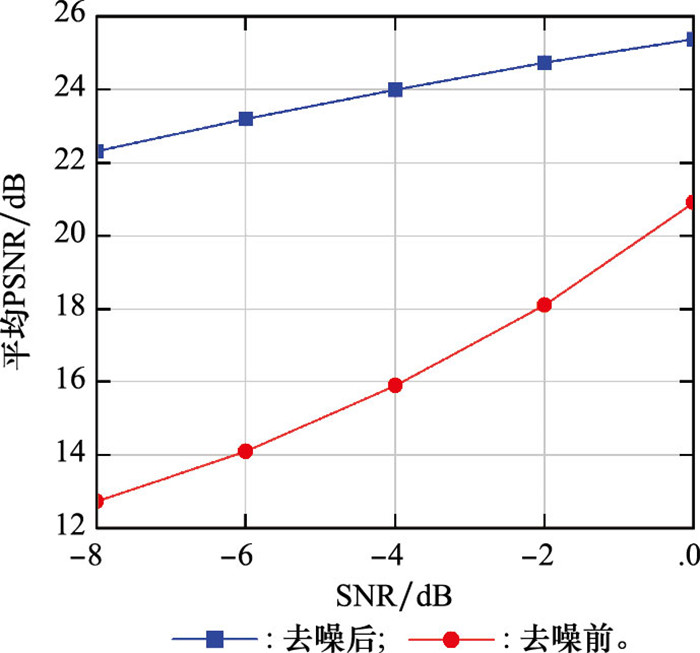
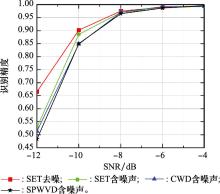
Fig.11
Relationship between recognition accuracy and SNR of different time-frequency analysis methods"
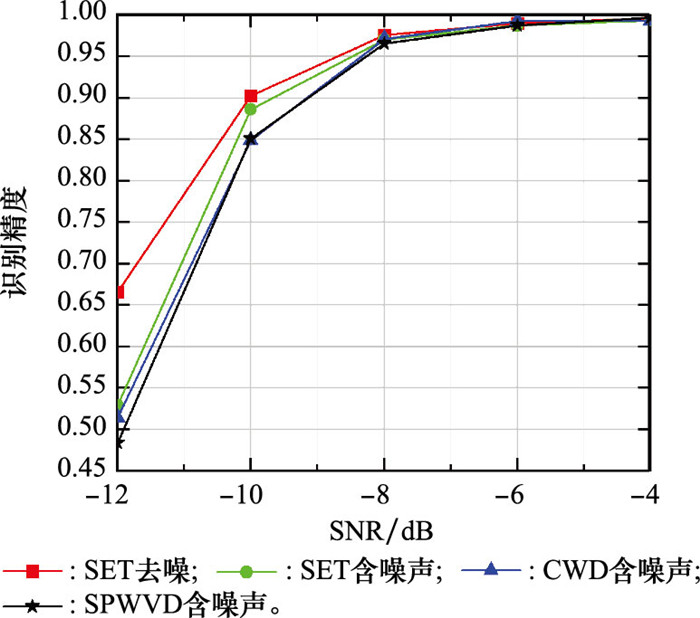
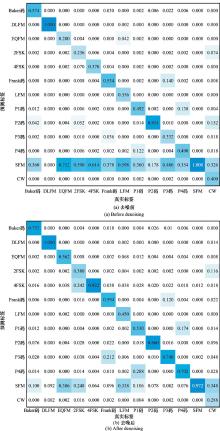
Fig.12
Identification accuracy confusion matrix when SNR=-12 dB"

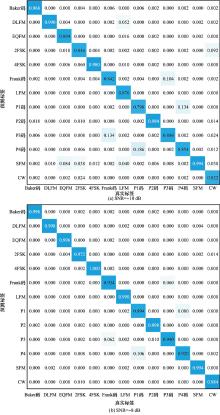
Fig.13
Confusion matrix of recognition accuracy under different SNRs after denoising"
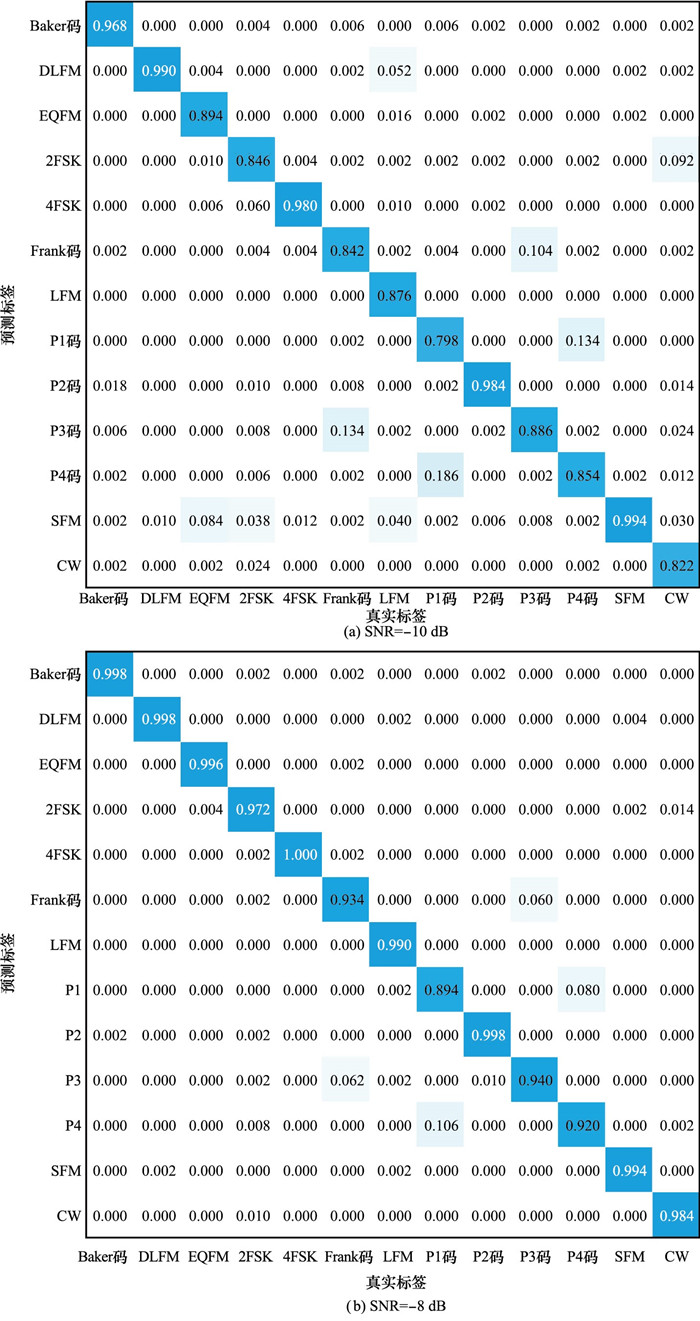
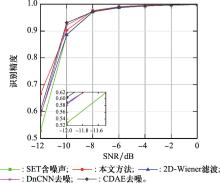
Fig.14
Relationship between recognition accuracy and SNR of different denoising methods"

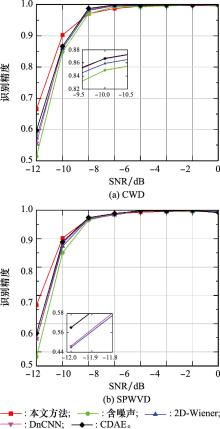
Fig.15
Relationship between recognition accuracy and SNR for different denoising methods of time-frequency image"

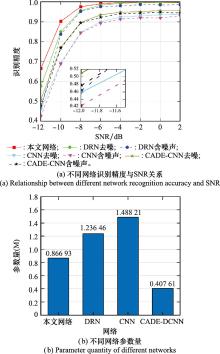
Fig.16
Identification accuracy and parameter quantity of different networks"
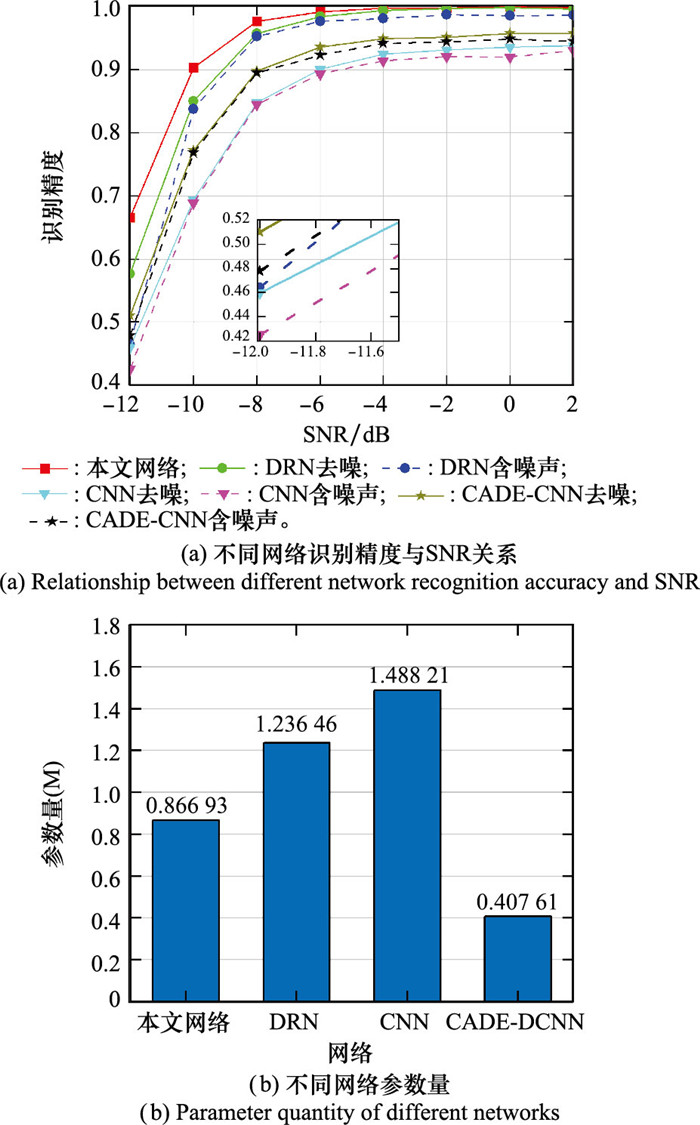
Table 3
Influence of group number d on recognition accuracy"
| 分组数d | 模型参数量(M) | 识别精度(SNR=-12 dB)/% |
| 2 | 1.309 29 | 65.35 |
| 4 | 0.866 93 | 66.60 |
| 8 | 0.645 74 | 65.61 |
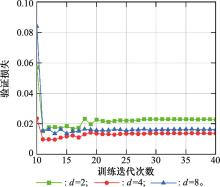
Fig.17
Validation loss of models under different group numbers d"

Table 4
Influence of the value of Stage 3 on recognition accuracy"
| Stage | 模型参数量(M) | 识别精度(SNR=-12 dB)/% |
| [2, 2, 0, 1] | 0.305 26 | 62.46 |
| [2, 2, 2, 1] | 0.617 07 | 64.57 |
| [2, 2, 4, 1] | 0.866 93 | 66.60 |
| [2, 2, 6, 1] | 1.116 78 | 61.22 |
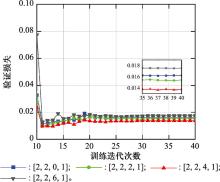
Fig.18
Validation loss of models under different values of Stage 3"

| 17 |
YUAN S B , WU B , LI P . Intra-pulse modulation classification of radar emitter signals based on a 1-D selective kernel convolutional neural network[J]. Remote Sensing, 2021, 13 (14): 2799.
doi: 10.3390/rs13142799 |
| 18 |
LI D J , YANG R J , LI X B , et al. Radar signal modulation recognition based on deep joint learning[J]. IEEE Access, 2020, 8, 48515- 48528.
doi: 10.1109/ACCESS.2020.2978875 |
| 19 |
LIAO Y P , JIANG F , WANG J L . Intra-pulse modulation recognition of radar signals based on multi-feature random matching fusion network[J]. The Journal of Supercomputing, 2023, 79 (6): 6422- 6451.
doi: 10.1007/s11227-022-04902-9 |
| 20 |
ZHANG Z F , WANG C , GAN C Q , et al. Automatic modulation classification using convolutional neural network with features fusion of SPWVD and BJD[J]. IEEE Trans.on Signal and Information Processing over Networks, 2019, 5 (3): 469- 478.
doi: 10.1109/TSIPN.2019.2900201 |
| 21 | 郭立民, 寇韵涵, 陈涛, 等. 基于栈式稀疏自编码器的低信噪比下低截获概率雷达信号调制类型识别[J]. 电子与信息学报, 2018, 40 (4): 875- 881. |
| GUO L M , KOU Y H , CHEN T , et al. Low probability of intercept radar signal recognition based on stacked sparse auto-encoder[J]. Journal of Electronics & Information Technology, 2018, 40 (4): 875- 881. | |
| 22 | 邵凯, 朱苗苗, 王光宇. 基于生成对抗与卷积神经网络的调制识别方法[J]. 系统工程与电子技术, 2022, 44 (3): 1036- 1043. |
| SHAO K , ZHU M M , WANG G Y . Modulation recognition method based on generative adversarial and convolutional neural network[J]. Systems Engineering and Electronics, 2022, 44 (3): 1036- 1043. | |
| 23 | OBERLIN T, MEIGNEN S, PERRIER V. The Fourier-based synchrosqueezing transform[C]//Proc. of the IEEE International Conference on Acoustics, Speech and Signal Processing, 2014: 315-319. |
| 24 |
YU G , YU M J , XU C Y . Synchroextracting transform[J]. IEEE Trans.on Industrial Electronics, 2017, 64 (10): 8042- 8054.
doi: 10.1109/TIE.2017.2696503 |
| 25 | MAO W T , CHEN J X , LIANG X H , et al. A new online detection approach for rolling bearing incipient fault via self-adaptive deep feature matching[J]. IEEE Trans.on Instrumentation and Measurement, 2019, 69 (2): 443- 456. |
| 1 | ISMAIL G U L , ISLN E . Randomized low rank and sparse decomposition based receiver search strategy for electronic support receivers[J]. IEEE Trans.on Aerospace and Electronic Systems, 2022, 59 (2): 1392- 1399. |
| 2 |
XU X S , BI D P , PAN J F , et al. An end-to-end deep learning approach for state recognition of multifunction radars[J]. Sensors, 2022, 22 (13): 4980.
doi: 10.3390/s22134980 |
| 3 | PARK B, AHN J M. Intra-pulse modulation recognition using pulse description words and complex waveforms[C]//Proc. of the International Conference on Information and Communication Technology Convergence, 2017: 555-560. |
| 4 |
ZHU M T , LI Y J , WANG S F . Model-based time series clustering and interpulse modulation parameter estimation of multifunction radar pulse sequences[J]. IEEE Trans.on Aerospace and Electronic Systems, 2021, 57 (6): 3673- 3690.
doi: 10.1109/TAES.2021.3082660 |
| 5 |
ZHANG X L , ZHANG J Z , LUO T Z , et al. Radar signal intrapulse modulation recognition based on a denoising-guided disentangled network[J]. Remote Sensing, 2022, 14 (5): 1252.
doi: 10.3390/rs14051252 |
| 6 | XU J L , SU W , ZHOU M C . Likelihood-ratio approaches to automatic modulation classification[J]. IEEE Trans.on Systems, Man, and Cybernetics, Part C (Applications and Reviews), 2010, 41 (4): 455- 469. |
| 7 |
HAMEED F , DOBRE O A , POPESCU D C . On the likelihood-based approach to modulation classification[J]. IEEE Trans.on Wireless Communications, 2009, 8 (12): 5884- 5892.
doi: 10.1109/TWC.2009.12.080883 |
| 8 |
RAMEZANI-KEBRYA A , KIM I M , KIM D I , et al. Likelihood-based modulation classification for multiple-antenna receiver[J]. IEEE Trans.on Communications, 2013, 61 (9): 3816- 3829.
doi: 10.1109/TCOMM.2013.073113.121001 |
| 9 |
ZHANG J W , CABRIC D , WANG F G , et al. Cooperative modulation classification for multipath fading channels via expectation-maximization[J]. IEEE Trans.on Wireless Communications, 2017, 16 (10): 6698- 6711.
doi: 10.1109/TWC.2017.2728530 |
| 10 | 李正权, 林媛, 李梦雅, 等. 基于判别式受限玻尔兹曼机的数字调制识别[J]. 通信学报, 2021, 42 (2): 81- 91. |
| LI Z Q , LIN Y , LI M Y , et al. Digital modulation recognition based on discriminative restricted Boltzmann machine[J]. Journal on Communications, 2021, 42 (2): 81- 91. | |
| 11 | RU X H , LIU Z , JIANG W L , et al. Recognition performance analysis of instaneous phase and its transformed features for radar emitter identification[J]. IET Radar, Sonar & Navigation, 2016, 10 (5): 945- 952. |
| 12 | CHENG Y Q , GUO M R , GUO L M . Radar signal recognition exploiting information geometry and support vector machine[J]. IET Signal Processing, 2023, 17 (1): e12167. |
| 13 | ASLAM M W , ZHU Z C , NANDI A K . Automatic modulation classification using combination of genetic programming and KNN[J]. IEEE Trans.on Wireless Communications, 2012, 11 (8): 2742- 2750. |
| 14 |
CHEN K Y , ZHU L Z , CHEN S , et al. Deep residual learning in modulation recognition of radar signals using higher-order spectral distribution[J]. Measurement, 2021, 185, 109945.
doi: 10.1016/j.measurement.2021.109945 |
| 15 | WEI S J , QU Q Z , SU H , et al. Intra-pulse modulation radar signal recognition based on CLDN network[J]. IET Radar, Sonar & Navigation, 2020, 14 (6): 803- 810. |
| 16 |
ZHU Z G , JI H B , ZHANG W B , et al. Complex convolutional neural network for signal representation and its application to radar emitter recognition[J]. IEEE Communications Letters, 2023, 27 (3): 856- 860.
doi: 10.1109/LCOMM.2023.3234464 |
| 26 | SI W J , WAN C X , DENG Z A . Intra-pulse modulation recognition of dual-component radar signals based on deep convolutional neural network[J]. IEEE Communications Letters, 2021, 25 (10): 3305- 3309. |
| 27 | YU H H , YAN X P , LIU S K , et al. Radar emitter multi-label recognition based on residual network[J]. Defence Technology, 2022, 18 (3): 410- 417. |
| 28 | HOU C B , FU D Y , HUA L J , et al. The recognition of multi-components signals based on semantic segmentation[J]. Wireless Networks, 2023, 29 (1): 147- 160. |
| 29 | 秦鑫, 黄洁, 查雄, 等. 基于扩张残差网络的雷达辐射源信号识别[J]. 电子学报, 2020, 48 (3): 456- 462. |
| QIN X , HUANG J , ZHA X , et al. Radar emitter signal recognition based on dilated residual network[J]. Acta Electronica Sinica, 2020, 48 (3): 456- 462. | |
| 30 | QU Z Y , MAO X J , DENG Z A . Radar signal intra-pulse modulation recognition based on convolutional neural network[J]. IEEE Access, 2018, 6, 43874- 43884. |
| 31 | QU Z Y , WANG W Y , HOU C B , et al. Radar signal intra-pulse modulation recognition based on convolutional denoising autoencoder and deep convolutional neural network[J]. IEEE Access, 2019, 7, 112339- 112347. |
| [1] | Yonghua ZENG, Junyao MA, Chaoyan HUANG, Zhihui MAO, Tingting WU. Color image denoising method combining prue quaternion and dictionary learning [J]. Systems Engineering and Electronics, 2023, 45(2): 373-378. |
| [2] | Yuzhao MA, Kui LIU, Yanfeng ZHANG, Shuai FENG, Xinglong XIONG. Laser radar signal denoising algorithm based on CEEMD combined with improved wavelet threshold [J]. Systems Engineering and Electronics, 2023, 45(1): 93-100. |
| [3] | Ziyan LIU, Shanshan MA, Jing LIANG, Mingcheng ZHU, Lei YUAN. Attention mechanism based CNN channel estimation algorithm in millimeter-wave massive MIMO system [J]. Systems Engineering and Electronics, 2022, 44(1): 307-312. |
| [4] | Pengyu CAO, Chengzhi YANG, Limeng SHI, Hongchao WU. LPI radar signal enhancement based on DAE-GAN network [J]. Systems Engineering and Electronics, 2021, 43(9): 2493-2500. |
| [5] | Kai SHAO, Liancheng CHEN, Yin LIU. Learning and estimation of high mobility Jakes channel [J]. Systems Engineering and Electronics, 2021, 43(4): 1119-1125. |
| [6] | Pei LIU, Jian JIA, Li CHEN, Ying AN. Image denoising algorithm based on boosting high order non-convex total variation model [J]. Systems Engineering and Electronics, 2020, 42(3): 557-567. |
| [7] | WANG Caiyun, ZHAO Huanyue, WANG Jianing, LI Xiaofei, HUANG Panpan. SAR image denoising via fast weighted nuclear norm minimization [J]. Systems Engineering and Electronics, 2019, 41(7): 1504-1508. |
| [8] | CHEN Haiyan, DU Jinghan, ZHANG Weining. Monitoring data repairing method based on deep denoising auto-encoder network [J]. Systems Engineering and Electronics, 2018, 40(2): 435-440. |
| [9] | HUANG Yingkun, JIN Weidong, YU Zhibin, WU Yunpu. Radar emitter signal recognition based on deep learning and ensemble learning [J]. Systems Engineering and Electronics, 2018, 40(11): 2420-. |
| [10] | WANG Caiyun, HU Yunkan, WU Shuxia. Shearlet domain SAR image denoising method based on Bayesian model [J]. Systems Engineering and Electronics, 2017, 39(6): 1250-1255. |
| [11] | LU Zhizhong, ZHOU Ying, HUANG Yu. Research on correlation in spatial domain to eliminate the co-channel interference of the X-band marine radar [J]. Systems Engineering and Electronics, 2017, 39(4): 758-767. |
| [12] | REN Jun, HU Xiaofeng, ZHU Feng. Effectiveness prediction of weapon equipment systemofsystems based on deep learning feature transfer#br# [J]. Systems Engineering and Electronics, 2017, 39(12): 2745-2749. |
| [13] | HU Yue, ZHONG Chongxiao, CAO Mengyu, ZHAO Kuangshi. Augmented Lagrangian multiplier based fast higher degree total variation image denoising algorithm#br# [J]. Systems Engineering and Electronics, 2017, 39(12): 2831-2839. |
| [14] | LIU Shu-jun, WU Guo-qing, ZHANG Xin-zheng, SHEN Xiao-dong, LI Yong-ming. SAR image denoising via linear minimum meansquare error estimation [J]. Systems Engineering and Electronics, 2016, 38(4): 785-791. |
| [15] | GUO Xiao-song, ZHANG Dong-fang, XUE Hai-jian, ZHOU Zhao-fa. Whole attitude to find north based on wavelet denoising and total least squares [J]. Systems Engineering and Electronics, 2016, 38(2): 362-367. |
| Viewed | ||||||
|
Full text |
|
|||||
|
Abstract |
|
|||||