Systems Engineering and Electronics ›› 2025, Vol. 47 ›› Issue (12): 4084-4092.doi: 10.12305/j.issn.1001-506X.2025.12.10
• Sensors and Signal Processing • Previous Articles
Weather radar thunderstorm prediction method based on lightweight three-dimensional temporal convolutional network
Enji LU1,2, Ling WANG1,2,*, Daiyin ZHU1,2, Ye ZHOU3
- 1. College of Electronic and Information Engineering,Nanjing University of Aeronautics and Astronautics,Nanjing 211106,China
2. Key Laboratory of Radar Imaging and Microwave Photonics,Ministry of Education,Nanjing University of Aeronautics and Astronautics,Nanjing 210016,China
3. Leihua Electronic Technologv Research Institute,Aviation Industry Corporation of China,Wuxi 214063,China
-
Received:2024-09-27Revised:2025-01-16Online:2025-04-17Published:2025-04-17 -
Contact:Ling WANG

CLC Number:
Cite this article
Enji LU, Ling WANG, Daiyin ZHU, Ye ZHOU. Weather radar thunderstorm prediction method based on lightweight three-dimensional temporal convolutional network[J]. Systems Engineering and Electronics, 2025, 47(12): 4084-4092.
share this article
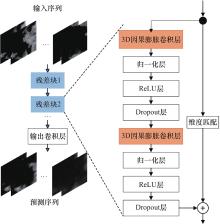
Fig.1
Architecture of the 3D-TCN for weather radar thunderstorm prediction network"
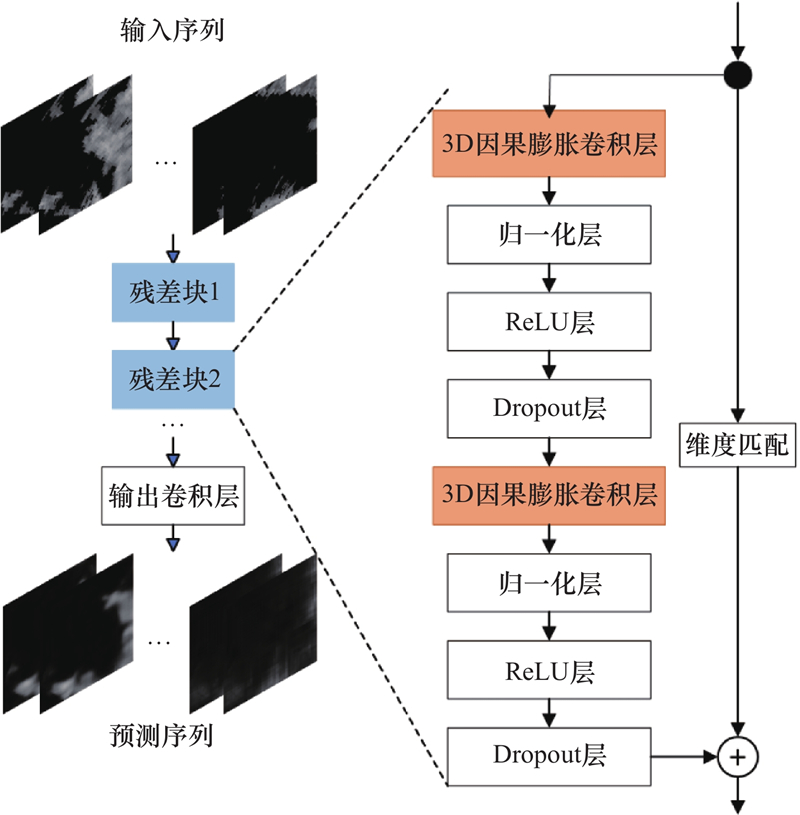
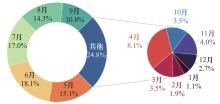
Fig.2
Monthly distribution diagram of selected data"
Fig.3
Annual distribution diagram of selected data"
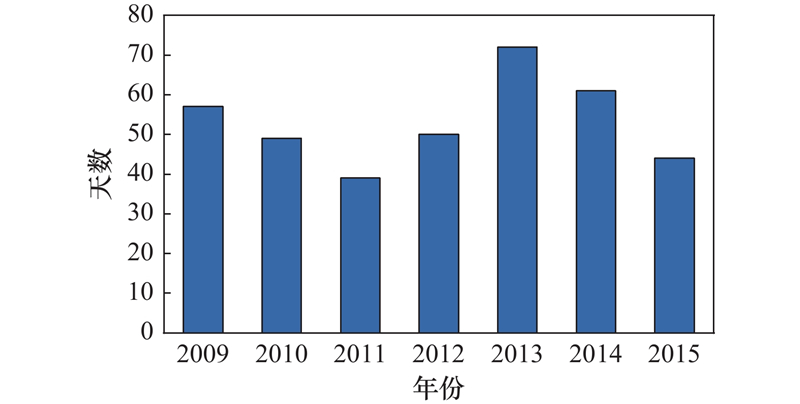
Fig.4
Dataset generation process"
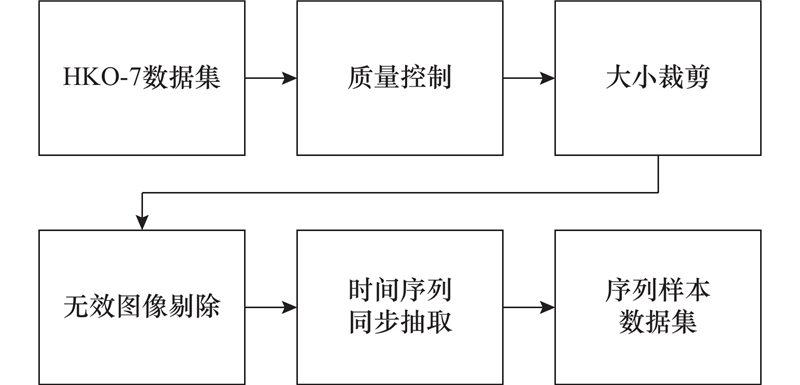
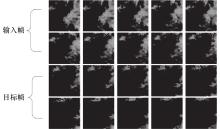
Fig.5
Sample sequence example"
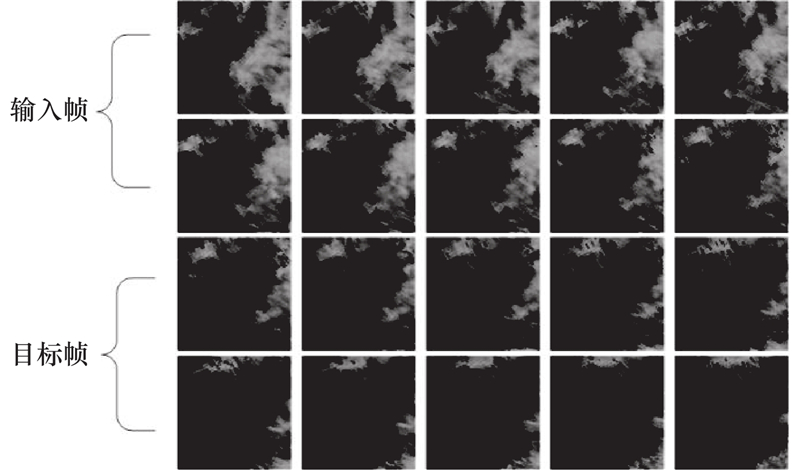
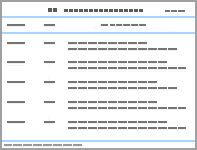
Table 1
Metrics for thunderstorm prediction assessment"
| 预测 | 真实 | |
| 有雷暴 | 无雷暴 | |
| 有雷暴 | NA | NB |
| 无雷暴 | NC | ND |
Table 2
Performance evaluation of the 3D-TCN on the test set"
| 预测时间/min | CSI | POD | FAR | ||||||||
| 30 dBz | 40 dBz | 50 dBz | 30 dBz | 40 dBz | 50 dBz | 30 dBz | 40 dBz | 50 dBz | |||
| 6 | 0.833 | 0.640 | 0.377 | 0.875 | 0.675 | 0.433 | 0.055 | 0.156 | 0.168 | ||
| 30 | 0.640 | 0.389 | 0.137 | 0.737 | 0.492 | 0.190 | 0.126 | 0.180 | 0.232 | ||
| 60 | 0.462 | 0.243 | 0.057 | 0.565 | 0.274 | 0.059 | 0.171 | 0.278 | 0.295 | ||
Table 3
Performance evaluation of the memory decoupling ST-LSTM network on the test set"
| 预测时间/min | CSI | POD | FAR | ||||||||
| 30 dBz | 40 dBz | 50 dBz | 30 dBz | 40 dBz | 50 dBz | 30 dBz | 40 dBz | 50 dBz | |||
| 6 | 0.815 | 0.653 | 0.360 | 0.865 | 0.715 | 0.428 | 0.069 | 0.130 | 0.170 | ||
| 30 | 0.590 | 0.358 | 0.135 | 0.649 | 0.412 | 0.164 | 0.131 | 0.203 | 0.308 | ||
| 60 | 0.335 | 0.149 | 0.053 | 0.475 | 0.228 | 0.054 | 0.148 | 0.240 | 0.309 | ||
Table 4
Evaluation metrics for four prediction methods at a 30 min forecast horizon"
| 预测方法 | CSI | POD | FAR |
| 交叉相关法 | 0.35 | 0.30 | 0.46 |
| MIM网络[ | 0.51 | 0.58 | 0.22 |
| ST-LSTM+记忆解耦网络 | 0.59 | 0.65 | 0.13 |
| 3D-TCN | 0.64 | 0.74 | 0.13 |
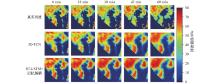
Fig.6
Result comparison of observed and predicted thunderstorm echo in Case 1"
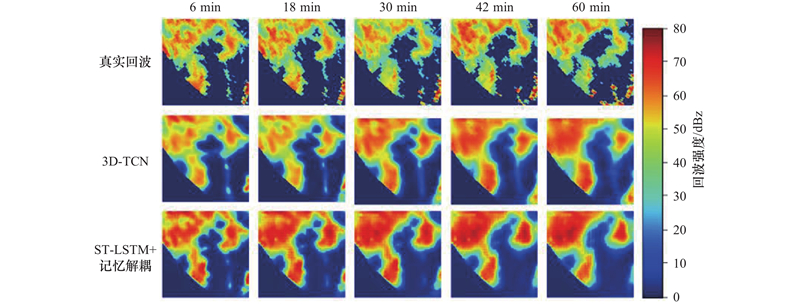
Fig.7
CSI curves of thunderstorm echo prediction results in Case 1"
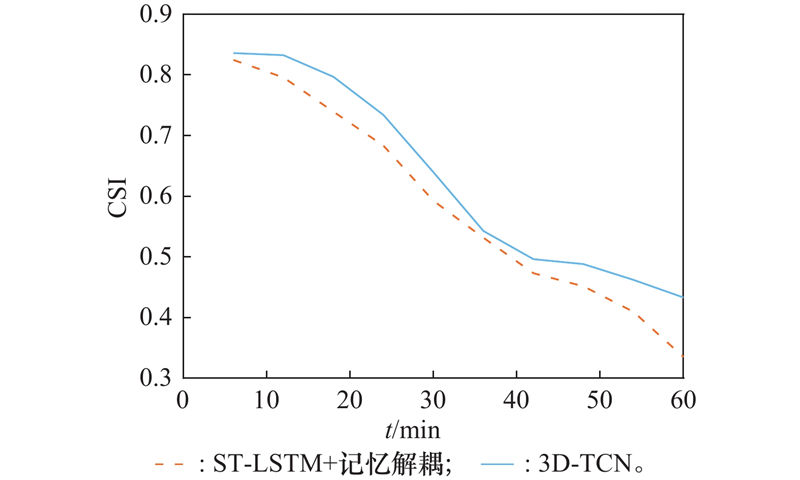
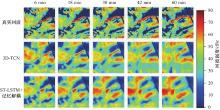
Fig.8
Result comparison of observed and predicted thunderstorm echo in Case 2"
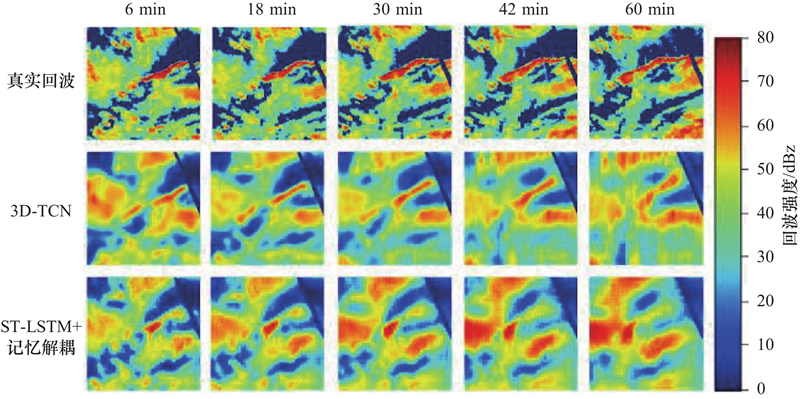
Fig.9
CSI curves of thunderstorm echo prediction results in Case 2"
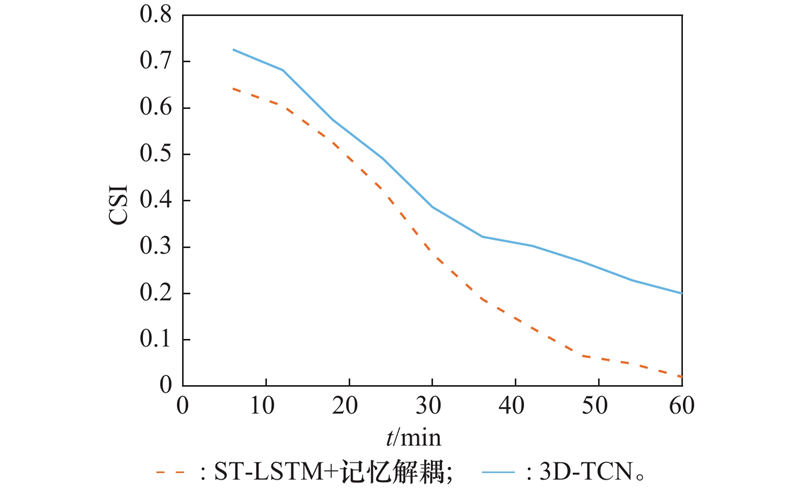
Table 5
Performance comparison of ablation experiment on dilated convolution"
| 模型 | CSI | POD | FAR |
| 无膨胀卷积版本 | 0.57 | 0.68 | 0.19 |
| 完整模型 | 0.64 | 0.74 | 0.13 |
Table 6
Performance comparison of ablation experiment on residual connection"
| 模型 | CSI | POD | FAR | 收敛 迭代数 |
| 无残差连接版本 | 0.58 | 0.68 | 0.16 | |
| 完整模型 | 0.64 | 0.74 | 0.13 |
| 4 |
RINEHART R E, GARVEY E T. Three-dimensional storm motion detection by conventional weather radar[J]. Nature, 1978, 273 (5660): 287- 289.
doi: 10.1038/273287a0 |
| 5 | SHI X J, CHEN Z R, WANG H, et al. Convolutional LSTM network: a machine learning approach for precipitation nowcasting[C]// Proc. of the 29th International Conference on Neural Information Processing Systems, 2015: 802−810. |
| 6 | JING J R, LI Q, PENG X, et al. HPRNN: a hierarchical sequence prediction model for long-term weather radar echo extrapolation[C]// Proc. of the IEEE International Conference on Acoustics, Speech and Signal Processing, 2020: 4142−4146. |
| 7 | WANG Y B, LONG M S, WANG J M, et al. PredRNN: recurrent neural networks for predictive learning using spatiotemporal LSTMs[C]// Proc. of the 31st International Conference on Neural Information Processing Systems, 2017: 879−888. |
| 8 | WANG Y B, GAO Z F, LONG M S, et al. PredRNN++: towards a resolution of the deep-in-time dilemma in spatiotemporal predictive learning[C]// Proc. of the 35th International Conference on Machine Learning, 2018, 80: 5123−5132. |
| 9 | WANG Y B, WU H X, ZHANG J J, et al. PredRNN: a recurrent neural network for spatiotemporal predictive learning [J]. IEEE Trans. on Pattern Analysis and Aachine Intelligence, 2023, 45(2): 2208−2225. |
| 10 | 何诗扬, 汪玲, 朱岱寅, 等. 基于时空记忆解耦RNN的雷暴预测方法[J]. 系统工程与电子技术, 2023, 45 (11): 3474- 3480. |
| HE S Y, WANG L, ZHU D Y, et al. Thunderstorm prediction method based on spatio temporal memory decoupling RNN[J]. Systems Engineering and Electronics, 2023, 45 (11): 3474- 3480. | |
| 11 |
CHEN Q, LIU Y B, GE M F, et al. A novel bayesian-optimization-based adversarial TCN for RUL prediction of bearings[J]. IEEE Sensors Journal, 2022, 22 (21): 20968- 20977.
doi: 10.1109/JSEN.2022.3209894 |
| 12 | TONG C, ZHANG L H, LI H, et al. Temporal inception convolutional network based on multi-head attention for ultra-short-term load forecasting [J]. IET Generation, Transmission & Distribution, 2022, 16(8): 1680−1696. |
| 13 | ALTAHERI H, MUHAMMAD G, ALSULAIMAN M. Physics-informed attention temporal convolutional network for EEG-based motor imagery classification[J]. IEEE Trans. on Industrial Informatics, 2022, 19 (2): 2249- 2258. |
| 14 | 李云峰, 高云鹏, 张蓬鹤, 等. 多目标优化时域卷积神经网络的窃电行为高准确检测算法 [J]. 电网技术, 2024, 48(8): 3449−3458. |
| LI Y F, GAO Y P, ZHANG P H, et al. High-accuracy detection algorithm of electricity theft behavior based on multi-objective optimization time-domain convolutional neural network [J]. Power System Technology, 2024, 48(8): 3449−3458. | |
| 15 |
ZHANG B, WANG S, DENG L, et al. Ship motion attitude prediction model based on IWOA-TCN-Attention[J]. Ocean Engineering, 2023, 272, 113911.
doi: 10.1016/j.oceaneng.2023.113911 |
| 16 |
SHU J, LIAO Y C, LI J H. Spatial-temporal attention TCN-based link prediction for opportunistic network[J]. Electronics, 2024, 13 (5): 957- 970.
doi: 10.3390/electronics13050957 |
| 17 | 张梦凡, 丁兵兵, 贾国栋, 等. 基于TCN-BiLSTM与LSTM模型对比预测北洛河径流[J]. 北京林业大学学报, 2024, 46 (4): 141- 148. |
| ZHANG M F, DING B B, JIA G D, et al. Comparative prediction of runoff in the Beiluo River, Shaanxi Province of Northwestern China based on TCN-BiLSTM and LSTM models[J]. Journal of Beijing Forestry University, 2024, 46 (4): 141- 148. | |
| 18 | 焦卫东, 杨蓓. MDAT-Net: 一种融合MSC和时空注意力的TCN航迹预测方法 [EB/OL]. [2024-09-27]. https://doi.org/10.13700/j.bh.1001-5965.2023.0717. |
| JIAO W D, YANG B. MDAT-Net: a TCN trajectory prediction method fusing MSC and spatio-temporal attention [EB/OL]. [2024-09-27]. https://doi.org/10.13700/j.bh.1001-5965.2023.0717. | |
| 19 | 杨达, 刘家威, 郑斌, 等. 基于时域卷积网络与注意力机制的车辆换道轨迹预测模型[J]. 交通运输系统工程与信息, 2024, 24 (2): 114- 126. |
| YANG D, LIU J W, ZHENG B, et al. A vehicle lane-changing trajectory prediction model based on temporal convolutional networks and attention mechanism[J]. Journal of Transportation Systems Engineering and Information Technology, 2024, 24 (2): 114- 126. | |
| 20 |
YE W, KUANG H, DENG K, et al. LGTCN: a spatial–temporal traffic flow prediction model based on local-global feature fusion temporal convolutional network[J]. Applied Sciences, 2024, 14 (19): 8847- 8862.
doi: 10.3390/app14198847 |
| 21 | SHI X J, GAO Z H, LAUSEN L, et al. Deep learning for precipitation nowcasting: a benchmark and a new model[C]//Proc. of the 31st International Conference on Neural Information Processing Systems, 2017: 5622−5632. |
| 22 |
AYZEL G, HEISTERMANN M, WINTERRATH T. Optical flow models as an open benchmark for radar-based precipitation nowcasting (rainymotion v0.1)[J]. Geoscientific Model Development, 2019, 12 (4): 1387- 1402.
doi: 10.5194/gmd-12-1387-2019 |
| 23 | QIN Y J, GAN F F, XIA B Z, et al. Remaining useful life estimation of bearing via temporal convolutional networks enhanced by a gated convolutional unit[J]. Engineering Applications of Artificial Intelligence, 2024 (133): 108308. |
| 1 |
MULLER R, BARLEBEN A, HAUSSLER S, et al. A novel approach for the global detection and nowcasting of deep convection and thunderstorms[J]. Remote Sensing, 2022, 14 (14): 3372- 3384.
doi: 10.3390/rs14143372 |
| 2 |
D’AMATO G, VITALE C, D’AMATO M, et al. Thunderstorm-related asthma: what happens and why[J]. Clinical and Experimental Allergy, 2016, 46 (3): 390- 396.
doi: 10.1111/cea.12709 |
| 3 |
ZHANG F G, LAI C, CHEN W J. Weather radar echo extrapolation method based on deep learning[J]. Atmosphere, 2022, 13 (5): 815- 834.
doi: 10.3390/atmos13050815 |
| 24 |
RAZA A, UDDIN J, ALMUHAIMEED A, et al. AIPs-SnTCN: predicting anti-inflammatory peptides using fastText and transformer encoder-based hybrid word embedding with self-normalized temporal convolutional networks[J]. Chemical Information and Modeling, 2023, 63 (21): 6537- 6554.
doi: 10.1021/acs.jcim.3c01563 |
| 25 | OORD D V A, KALCHBRENNER N, KAVUKCUOGLU K. Pixel recurrent neural networks [C]//Proc. of the International Conference on Machine Learning, 2016: 1747−1756. |
| 26 | CHEN L C, PAPANDREOU G, KOKKINOS I, et al. Deeplab: semantic image segmentation with deep convolutional nets, atrous convolution, and fully connected CRFS[J]. IEEE Trans. on Pattern Analysis and Machine Intelligence, 2017, 40 (4): 834- 848. |
| 27 | OORD D V A, DIELEMAN S, ZEN H, et al. WaveNet: a generative model for raw audio [EB/OL]. [2024-09-27]. https://www.arxiv.org.pdf.1609.03499. |
| 28 |
GILLELAND E, AHIJEVYCH D, BROWN B G, et al. Intercomparison of spatial forecast verification methods[J]. Weather and Forecasting, 2009, 24 (5): 1416- 1430.
doi: 10.1175/2009WAF2222269.1 |
| 29 |
MARZBAN C. Scalar measures of performance in rare-event situations[J]. Weather and Forecasting, 1998, 13 (3): 753- 763.
doi: 10.1175/1520-0434(1998)013<0753:SMOPIR>2.0.CO;2 |
| 30 | 龚勋, 胡嘉骏, 徐年平, 等. 基于深度学习的多普勒气象雷达回波外推短临预报对比研究[J]. 中国军转民, 2022 (13): 76- 80. |
| GONG X, HU J J, XU N P, et al. A comparative study of Doppler weather radar echo extrapolation short prognosis based on deep learning[J]. Defense Industry Conversion in China, 2022 (13): 76- 80. |
| [1] | Kaiming LI, Yuanpeng ZHANG, Ying LUO, Xiaonan DAI. Research progress on radar target recognition of ballistic missile [J]. Systems Engineering and Electronics, 2025, 47(9): 2870-2889. |
| [2] | Ce JI, Xiangyu MA, Xiaoyu MU, Jiayi ZHAO. TS-GRU-VTA: vehicle channel estimation scheme based on deep learning [J]. Systems Engineering and Electronics, 2025, 47(9): 3093-3098. |
| [3] | Xiaowei YAN, Chong LING, Shengbin SHI. Design and implementation of a rapid detection system for surface unexploded submunitions [J]. Systems Engineering and Electronics, 2025, 47(8): 2639-2645. |
| [4] | Wanying ZHANG, Youbing GAO, Zeyi LI, Pengfei LI, Wei ZHANG. Background signal suppression algorithm based on dual-path feature fusion net [J]. Systems Engineering and Electronics, 2025, 47(7): 2406-2413. |
| [5] | Xinzheng ZHANG, Mengke YAN, Xiaolin ZHU. Noise pseudo-label tolerant semi-supervised SAR target recognition [J]. Systems Engineering and Electronics, 2025, 47(6): 1796-1805. |
| [6] | Zhijie JIANG, Heng SONG, Nan HU, Lanxi DUAN, Ping CAO. Target recognition and classification algorithm of MMW radar in tunnel [J]. Systems Engineering and Electronics, 2025, 47(5): 1453-1460. |
| [7] | Qianqi NIE, Minghui SHA, Yingshen ZHU, Chongyu WANG, Nianqiang CUI. Radar multi-component signal recognition method based on blind source separation combined with singular spectrum analysis [J]. Systems Engineering and Electronics, 2025, 47(4): 1168-1175. |
| [8] | Lei YUAN, Yanjuan YANG, Yi GUO, Peng DAI. Deep learning-based semi-blind identification algorithm for code rates of LDPC codes with correlated noise [J]. Systems Engineering and Electronics, 2025, 47(4): 1335-1345. |
| [9] | Xiarun SHEN, Ruonan LI, Haotian ZHANG. Server KPI anomaly detection based on CVAE-LSTM [J]. Systems Engineering and Electronics, 2025, 47(3): 1019-1027. |
| [10] | Xiaolin LIU, Mengjiao GUO, Zhuo LI. Adaptive graph convolutional recurrent network prediction method for flight delay based on Dueling DQN optimization [J]. Systems Engineering and Electronics, 2025, 47(2): 568-579. |
| [11] | Weihong FU, Xinyu ZHANG, Naian LIU. Single-channel blind source separation algorithm for co-frequency and co-modulation based on multi-scale fusion neural network [J]. Systems Engineering and Electronics, 2025, 47(2): 641-649. |
| [12] | Wenzhong ZHANG, Changbo HOU, Pengqi ZHAO, Sicheng LIU. UAV target track correlation based on GCN [J]. Systems Engineering and Electronics, 2025, 47(12): 4005-4011. |
| [13] | Jie JIANG, Wenjun YAN, Qing LING, Limin ZHANG. Tiny objects detection method for unmanned aerial vehicle ship images based on STOD [J]. Systems Engineering and Electronics, 2025, 47(11): 3559-3567. |
| [14] | Fei GAO, Ruida XI, Xiangwei XING, Yan XING, Qiang ZHANG, Hongxing DANG. Image dataset simulation constructing for SAR active interference classification and recognition [J]. Systems Engineering and Electronics, 2025, 47(10): 3257-3269. |
| [15] | Yuyu ZHAO, Yaopeng LIU, Yuxiao WANG. Attitude measurement approach for gyrowheel based on integrating mechanism and data [J]. Systems Engineering and Electronics, 2025, 47(10): 3455-3463. |
| Viewed | ||||||
|
Full text |
|
|||||
|
Abstract |
|
|||||