Systems Engineering and Electronics ›› 2026, Vol. 48 ›› Issue (5): 1752-1764.doi: 10.12305/j.issn.1001-506X.2026.05.30
• Communications and Networks • Previous Articles Next Articles
High-order modulation and soft detection of multi-carrier underwater acoustic communication with colored noise
Rui XU1,2,3( ), Yanbo WU1,3,4,*(), Min ZHU1,3,4()
- 1. Ocean Acoustic Technology Center,Institute of Acoustics,Chinese Academy of Sciences,Beijing 100190,China
2. School of Electronic,Electrical and Communication Engineering,University of Chinese Academy of Sciences,Beijing 100049,China
3. Beijing Engineering Technology Research Center of Ocean Acoustic Equipment,Beijing 100190,China
4. State Key Laboratory of Acoustics,Institute of Acoustics,Chinese Academy of Sciences,Beijing 100190,China
-
Received:2024-12-30Online:2026-05-27Published:2026-05-27 -
Contact:Yanbo WU E-mail:xurui182@mail.ucas.edu.cn;wuyanbo@ioa.ac.cn;zhumin@mail.ioa.ac.com

CLC Number:
Cite this article
Rui XU, Yanbo WU, Min ZHU. High-order modulation and soft detection of multi-carrier underwater acoustic communication with colored noise[J]. Systems Engineering and Electronics, 2026, 48(5): 1752-1764.
share this article
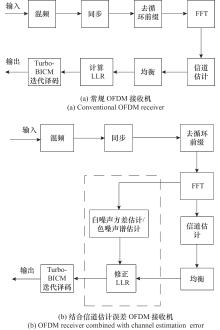
Fig.1
Receiver block diagram comparison"
Table 1
OFDM underwater acoustic communication simulation parameters"
| 试验参数 | 数值 |
| 中心频率 | 10 |
| 带宽 | 5 |
| 采样频率 | 80 |
| 调制阶数 | 16QAM/64QAM |
| 映射方式 | 格雷 |
| 系统总载波数 | 480 |
| 导频子载波数 | 160 |
| 空子载波数 | 40 |
| 编码速率 | 0.5 |
| 蒙特卡罗次数 | 100 |
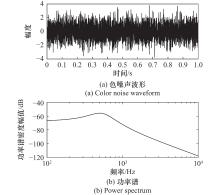
Fig.2
Color noise waveform and power spectrum"
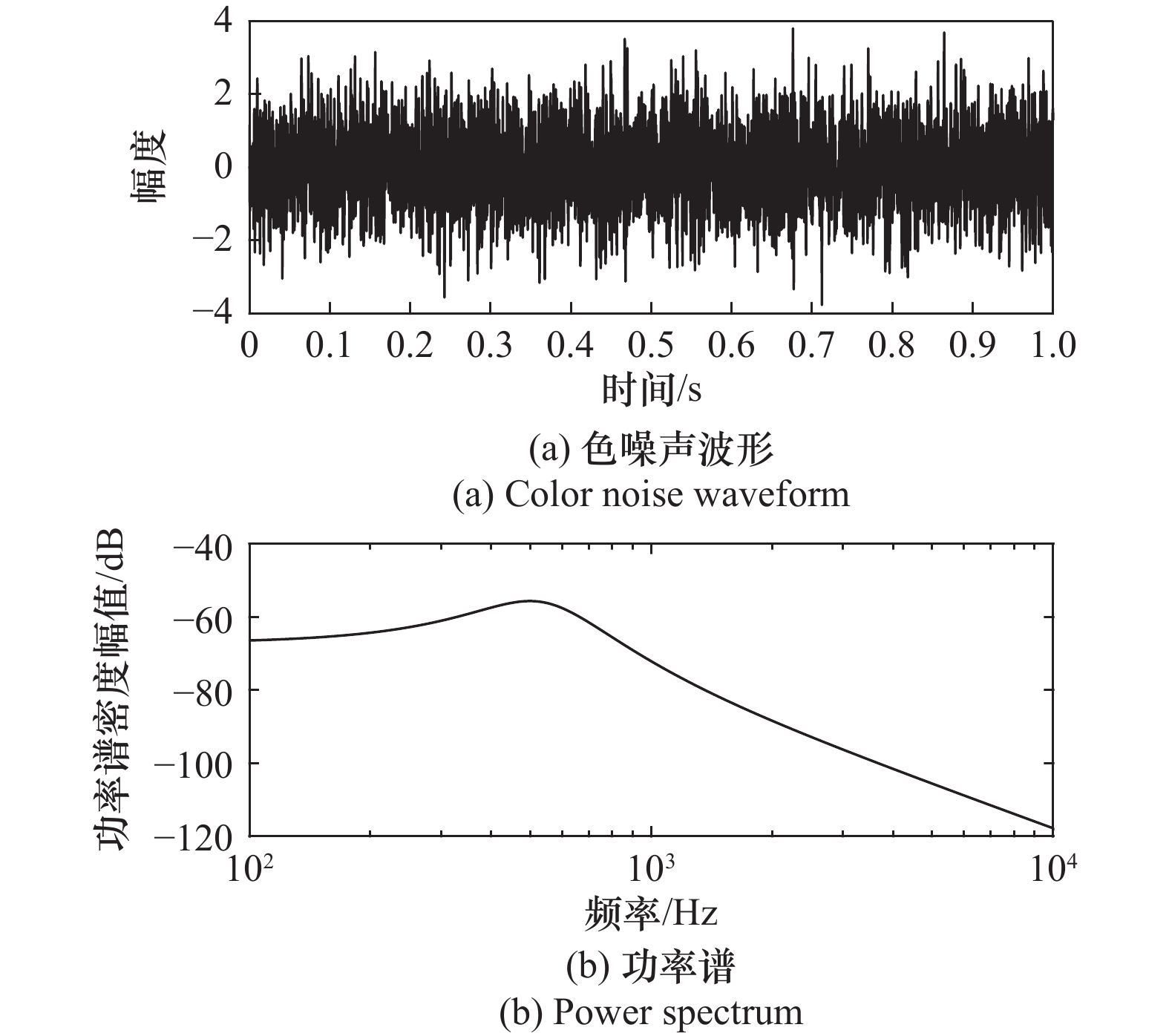
Fig.3
Sound velocity profile"
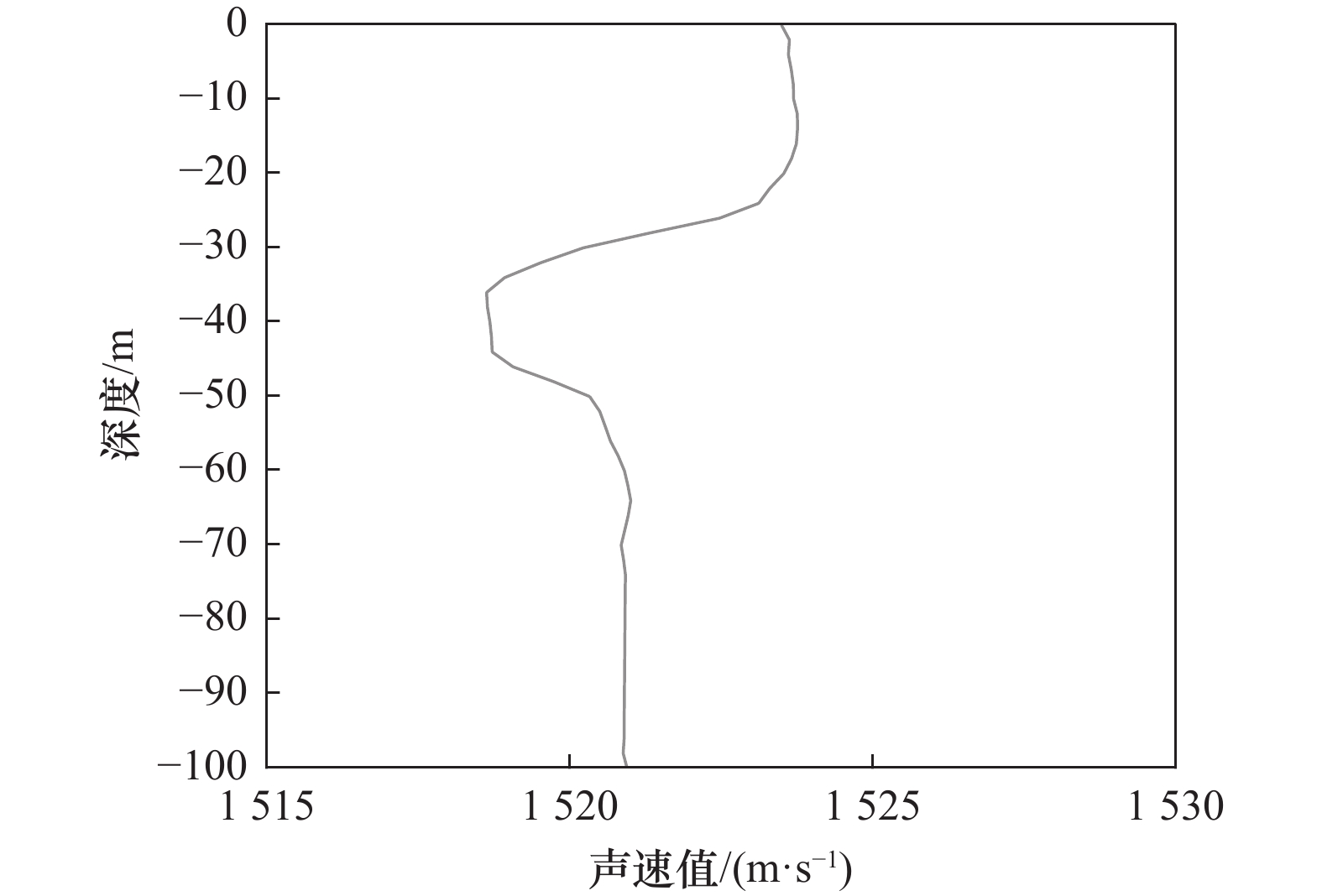
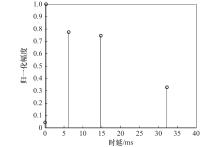
Fig.4
Normalized impulse response"
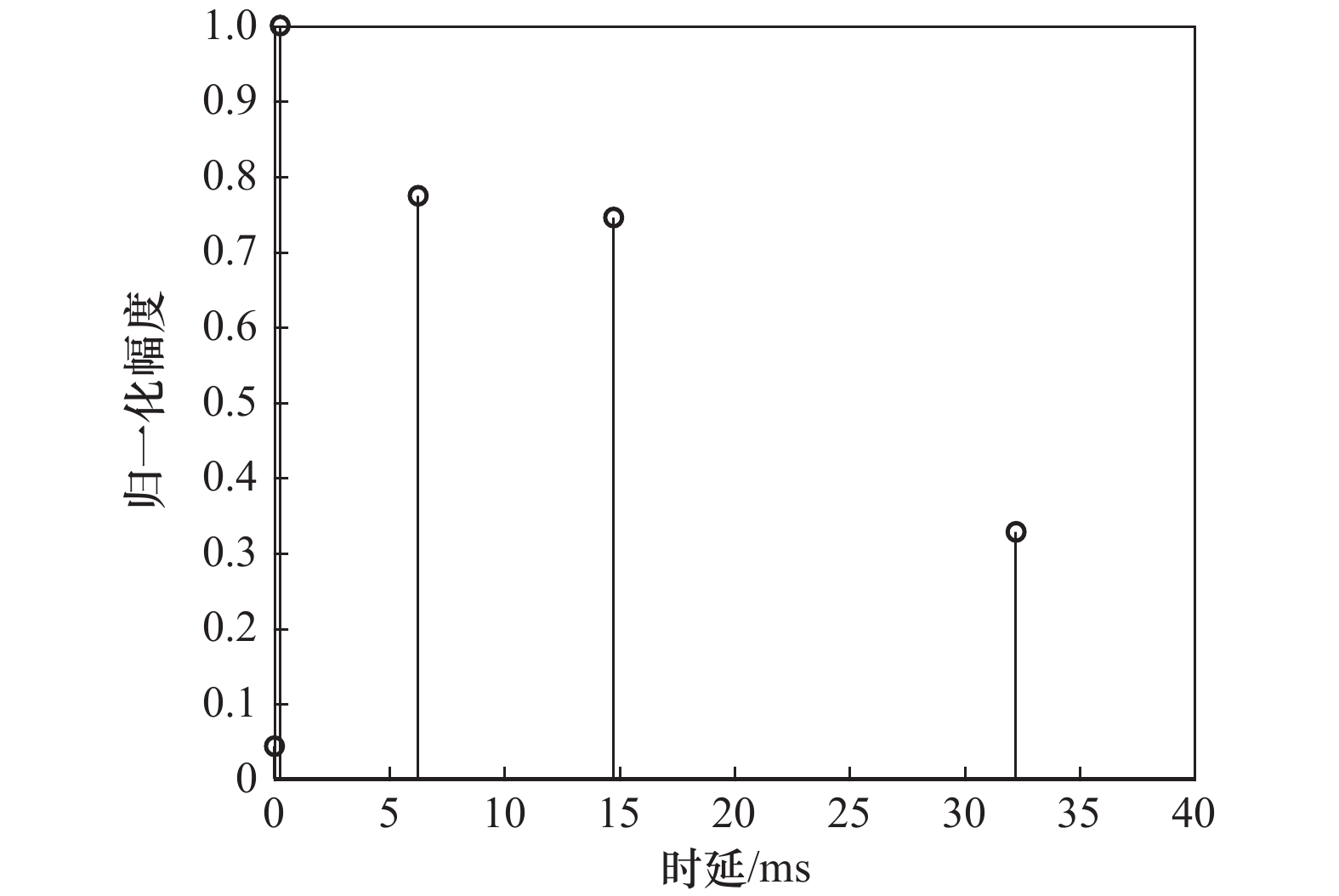
Table 2
Simulation channel parameters"
| 试验参数 | 数值 |
| 发射深度SD/m | 50 |
| 接收深度SR/m | 30 |
| 传输距离L/m | 300 |
| 水深D/m | 100 |
| 海底形状 | 平坦底面 |
| 海底介质密度/(g/cm3) | 1.84 |
| 声线发射角度 | [−30°,30°] |
Fig.5
Comparison of GMI curves of different decoding metrics in simulated channel and Esc noise background with 16QAM modulation"
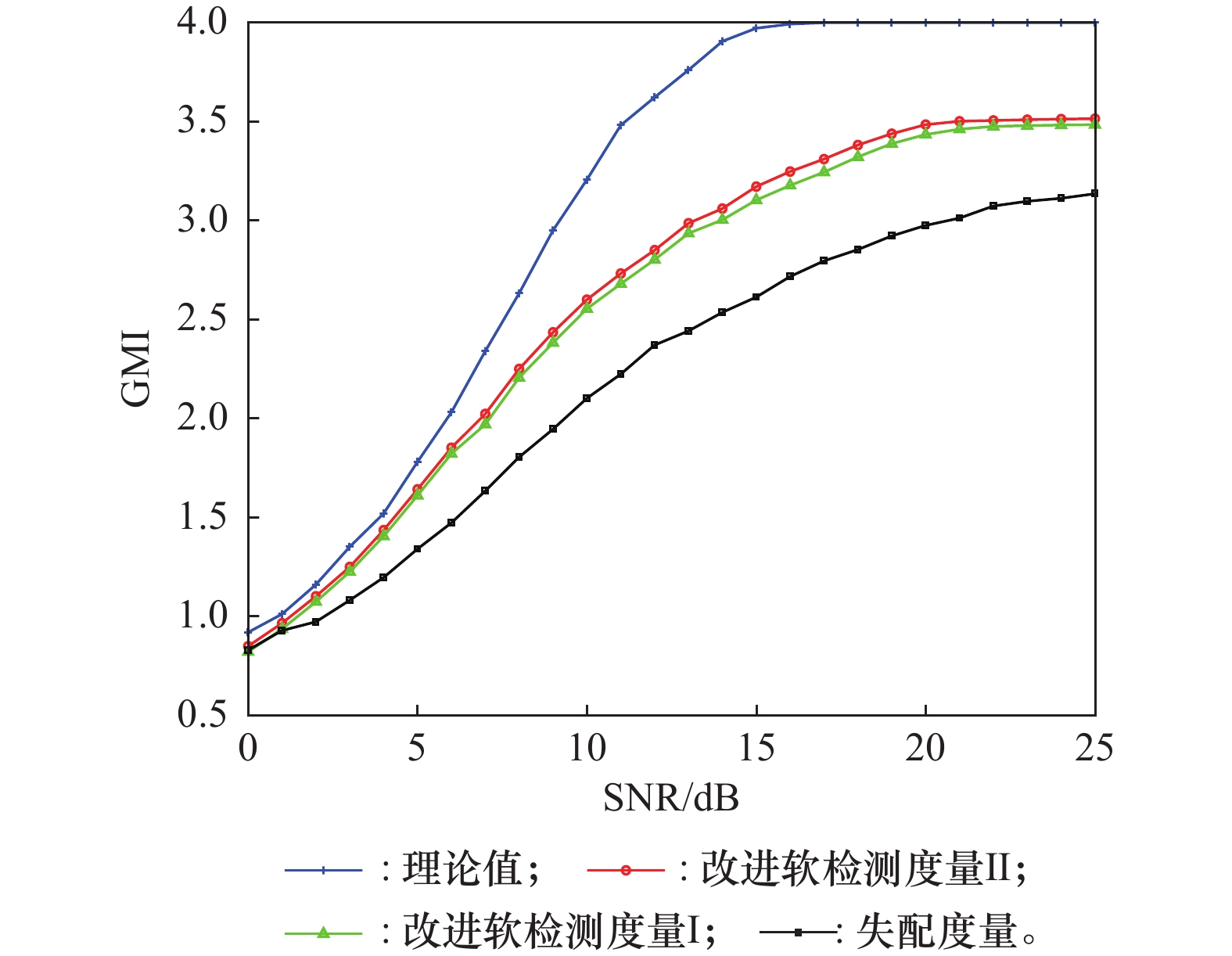
Fig.6
Comparison of GMI curves of different decoding metrics in simulated channel and Esc noise background with 64QAM modulation"
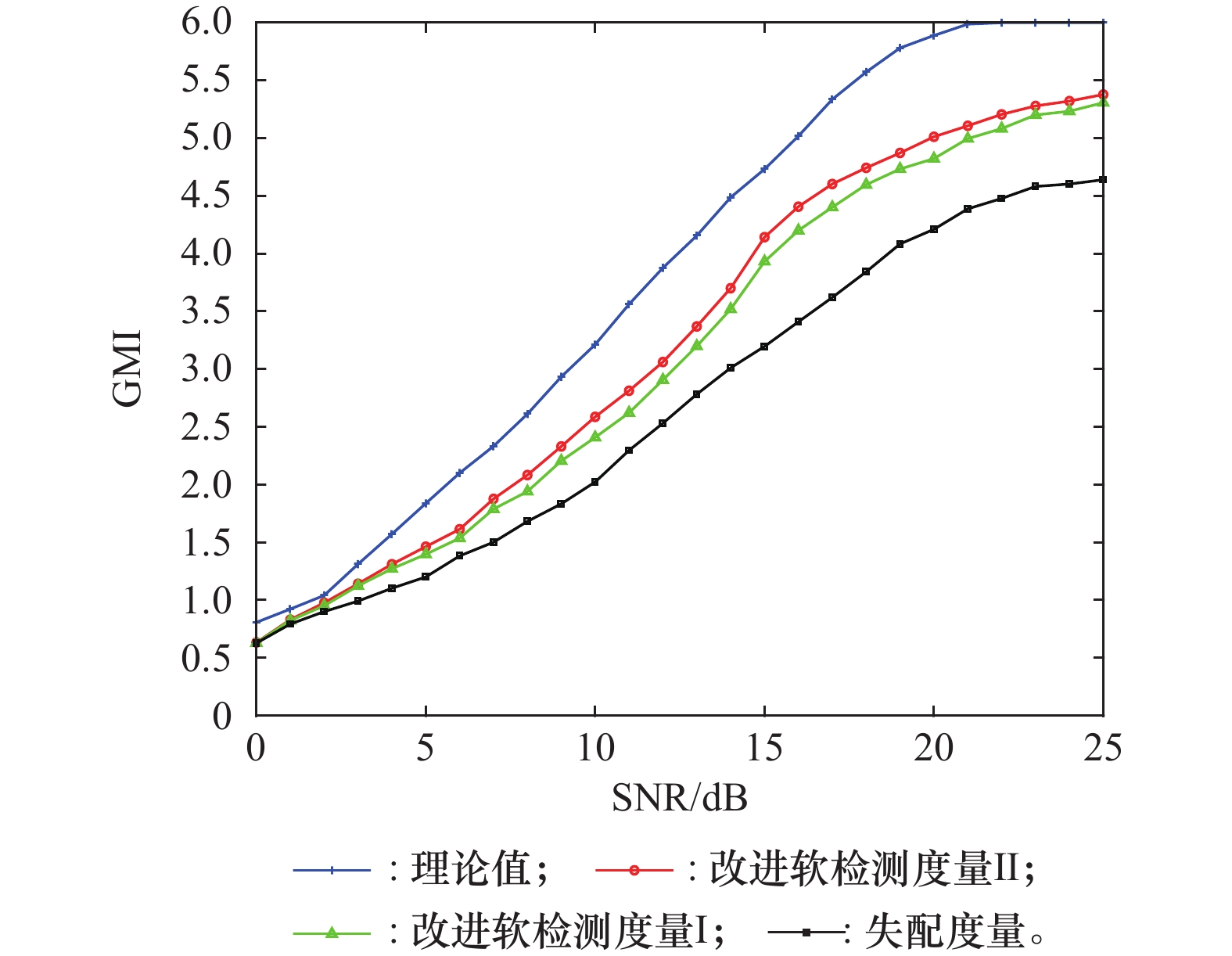
Fig.7
Effect of different number of pilots on decoding performance of three schemes"
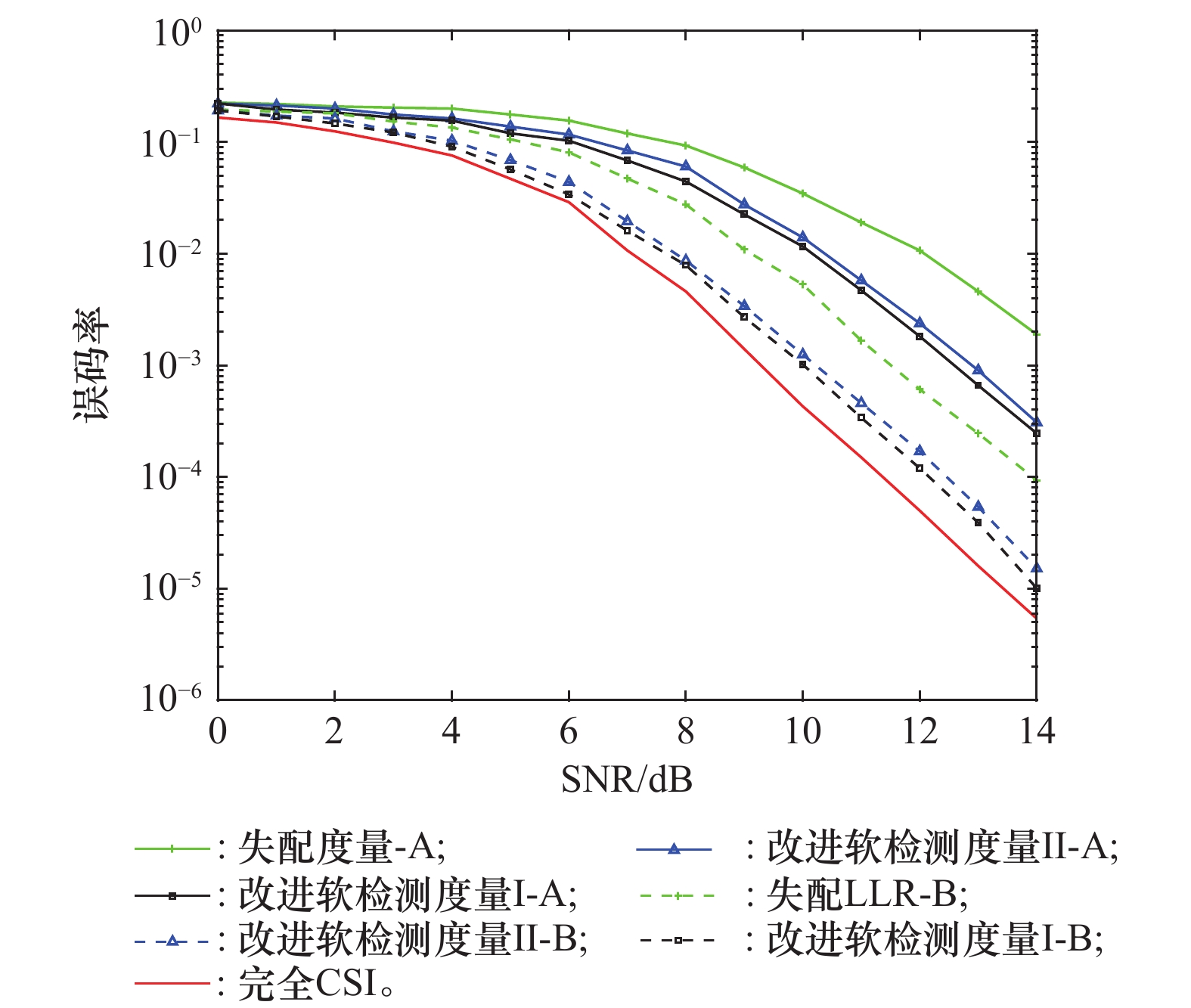
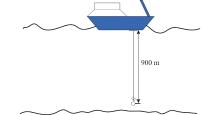
Fig.8
Deep sea vertical underwater acoustic communication test scenario"
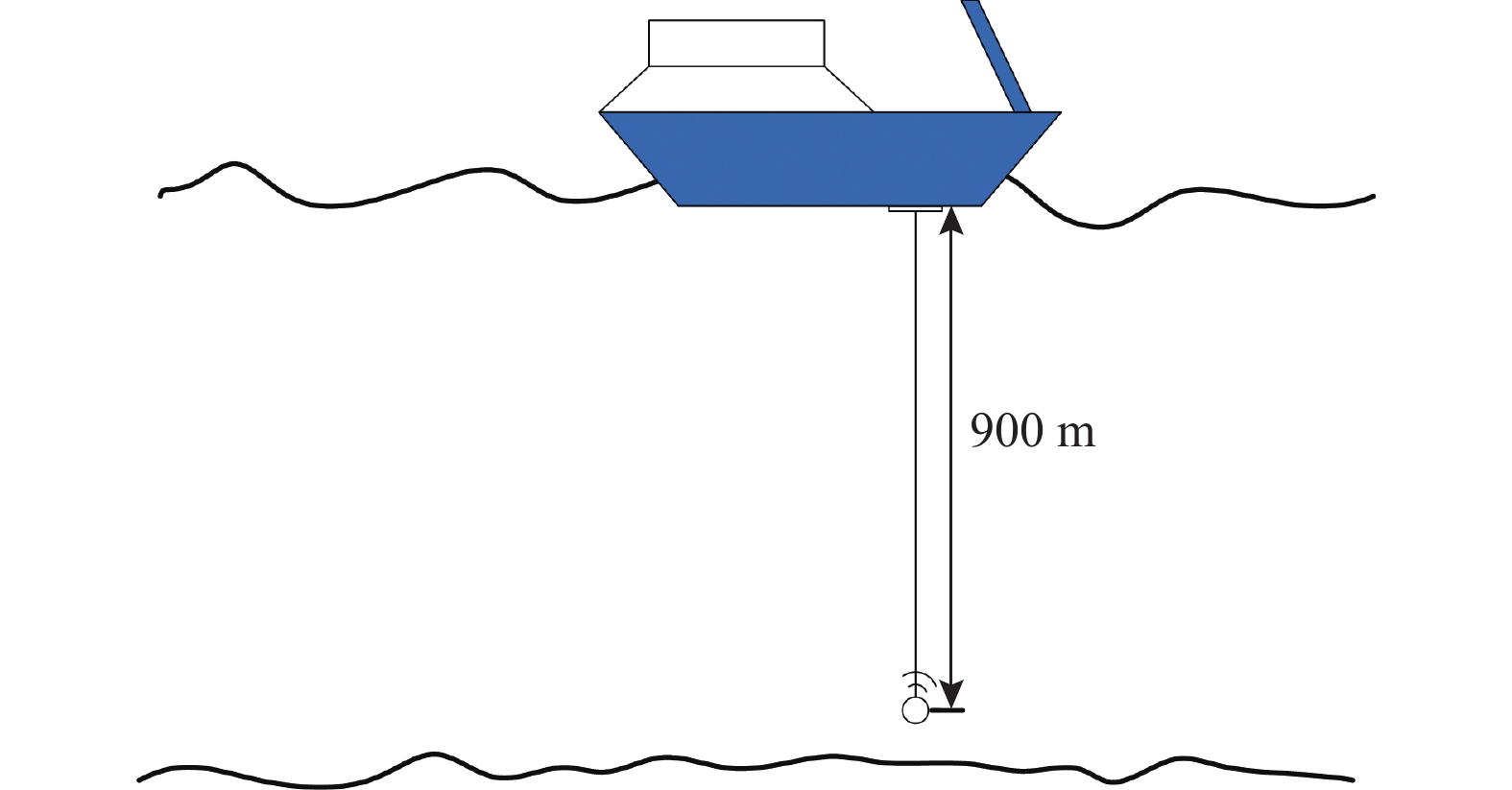
Fig.9
Packet framing structure"
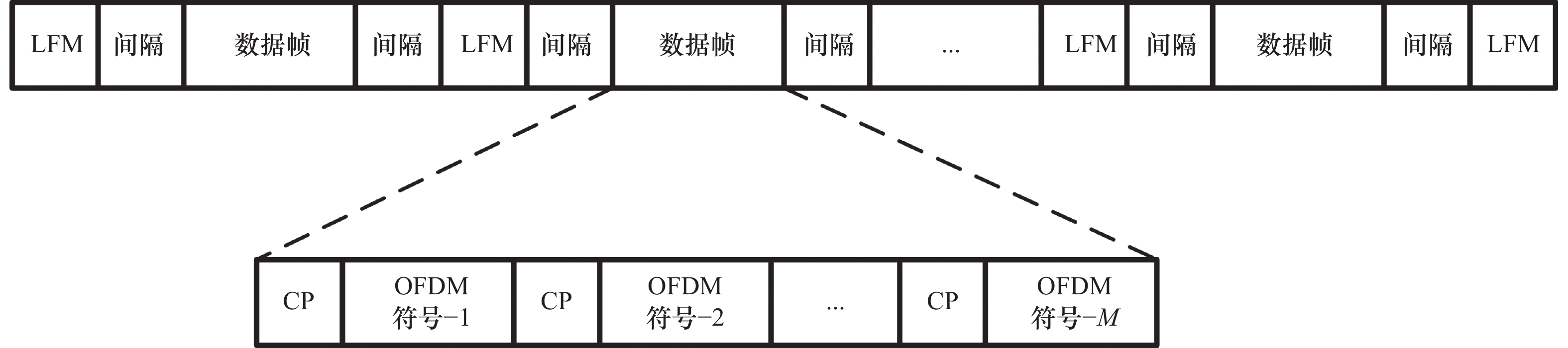
Fig.10
Data processing flow of OFDM underwater acoustic communication system"
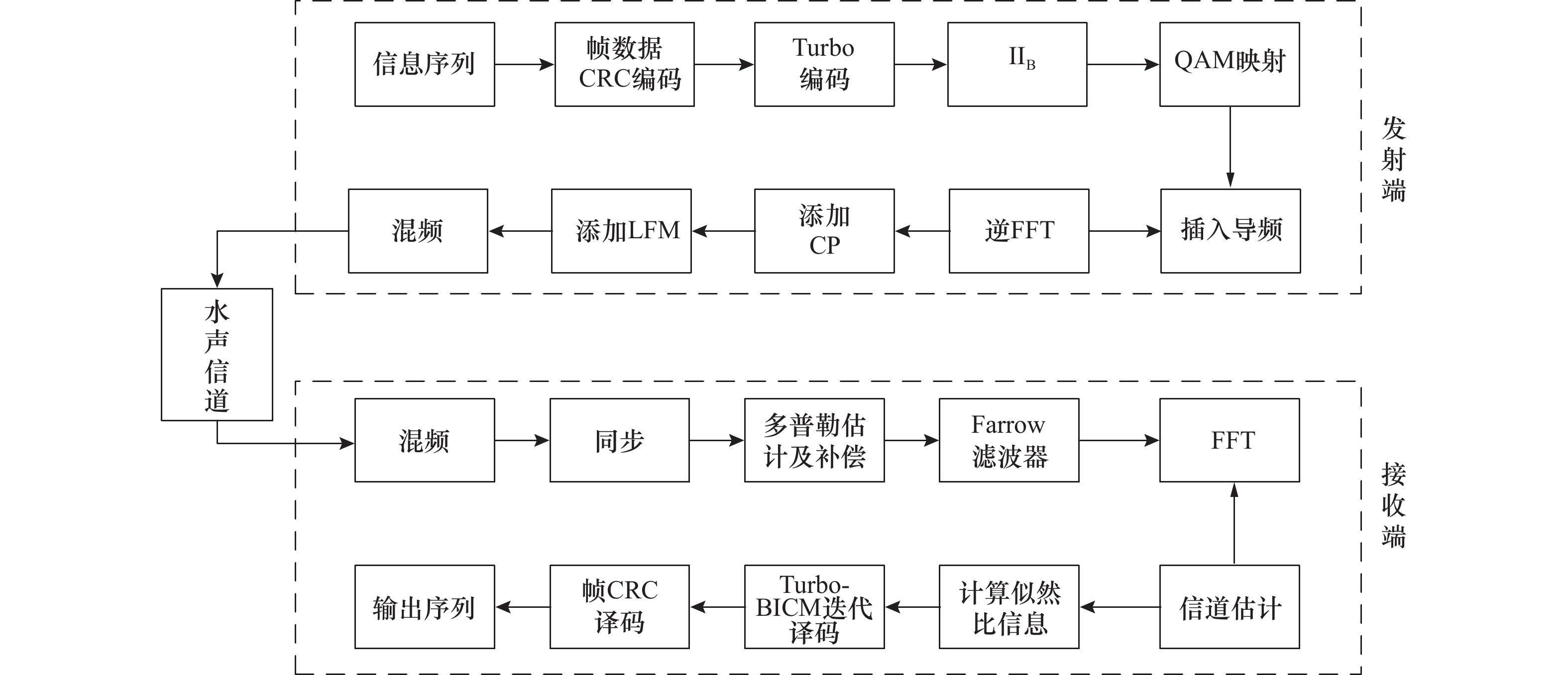
Table 3
Parameters of deep sea vertical underwater acoustic OFDM communication"
| 试验参数 | 数值 |
| 中心频率 | 10 |
| 带宽 | 5 |
| 采样频率 | 80 |
| 调制格式 | QPSK/16QAM/64QAM/256QAM |
| 系统总载波数 | 480 |
| 导频子载波数 | 160 |
| 空子载波数 | 40 |
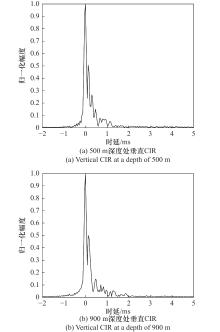
Fig.11
Vertical CIR at different depths"
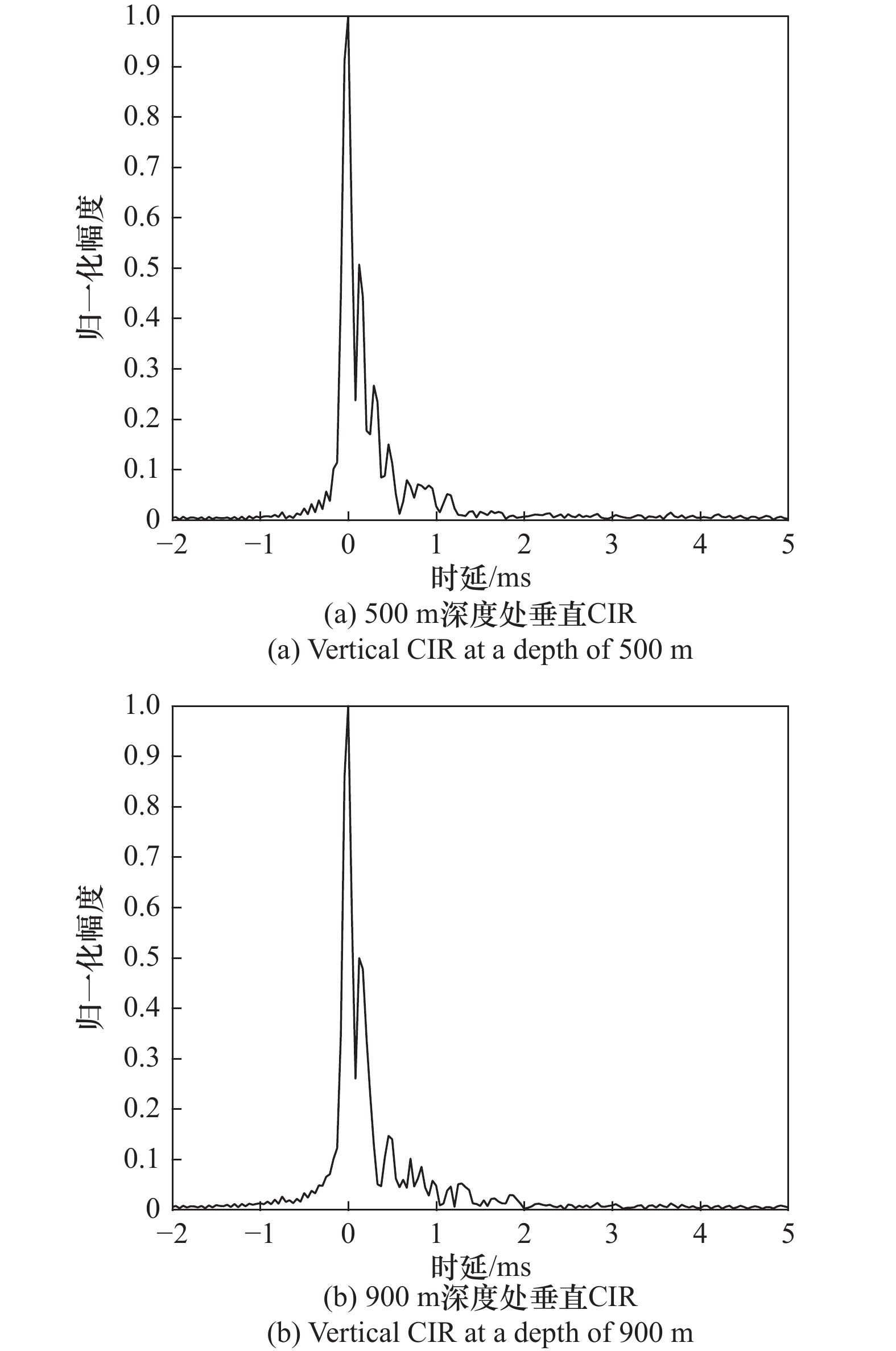
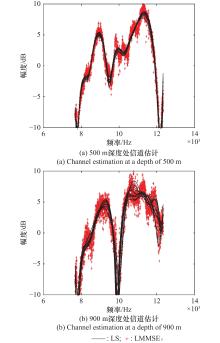
Fig.12
LMMSE estimation and LS estimation of vertical channel at different depths"

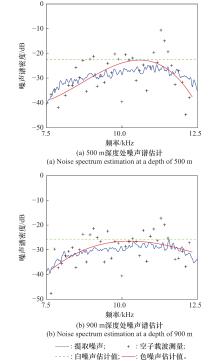
Fig.13
Noise spectrum estimation results at different depths"
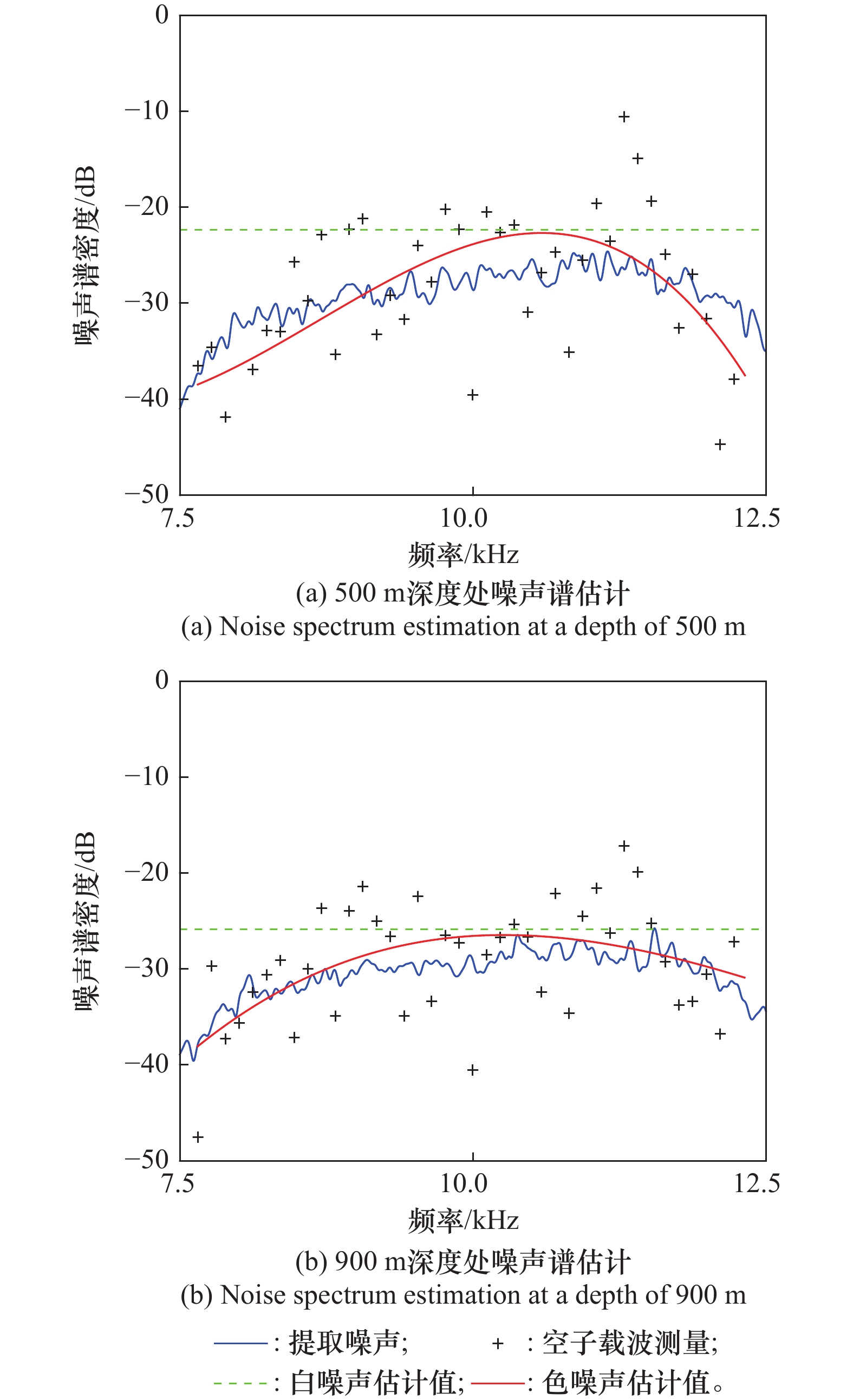
Table 4
Verification results of CRC frame with different depths"
| 方案 | QPSK | 16QAM | 64QAM | 256QAM |
| 失配度量(500 m) | 20 | 20 | 17 | 6 |
| 改进软译码度量I (500 m) | 20 | 20 | 19 | 13 |
| 失配度量(900 m) | 20 | 20 | 14 | 4 |
| 改进软译码度量I (900 m) | 20 | 20 | 17 | 9 |
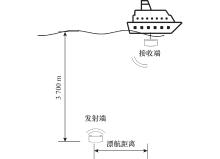
Fig.14
Approximate vertical communication test scenario"
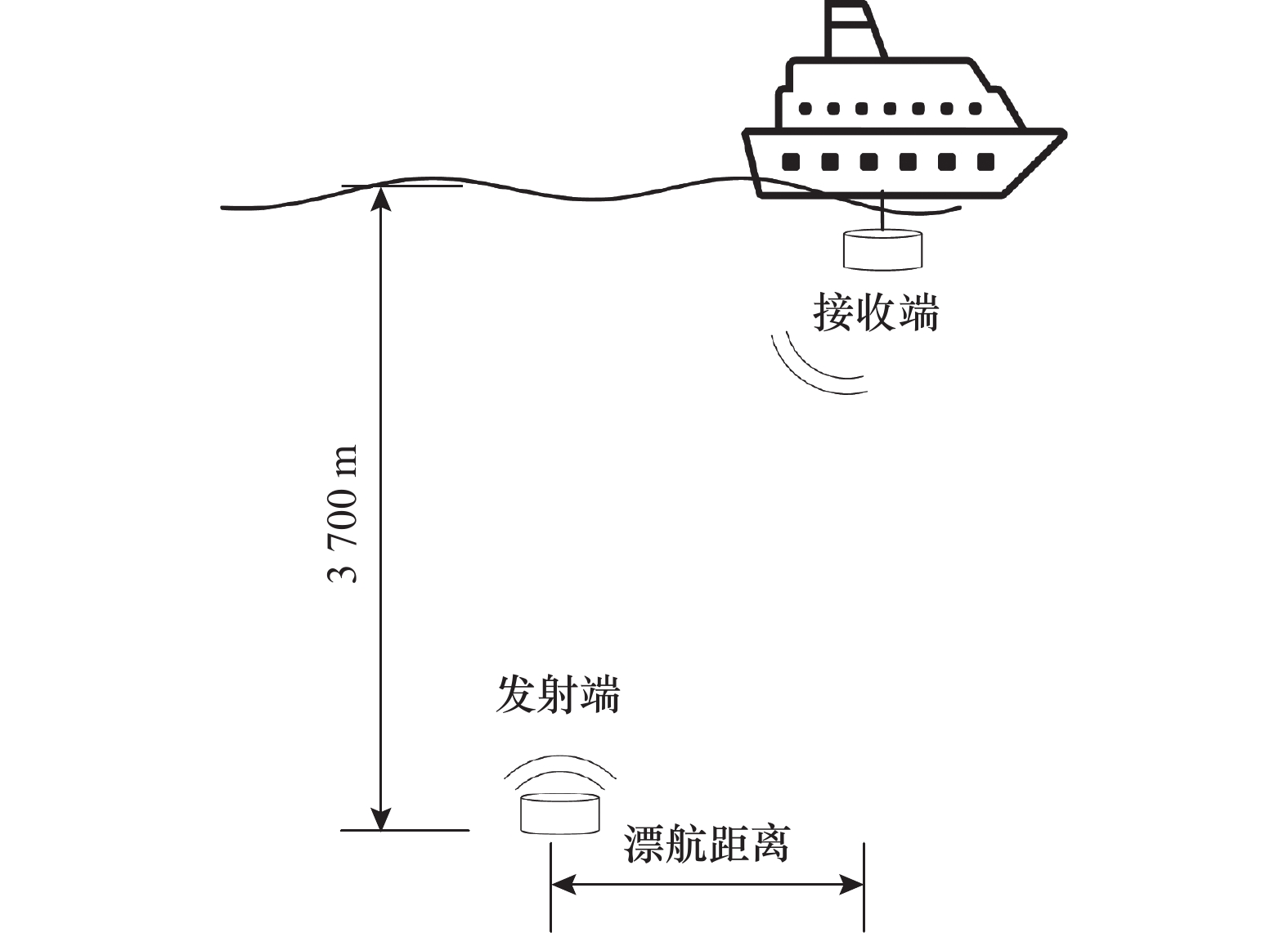
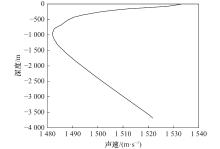
Fig.15
Sound velocity profile of the test sea area"
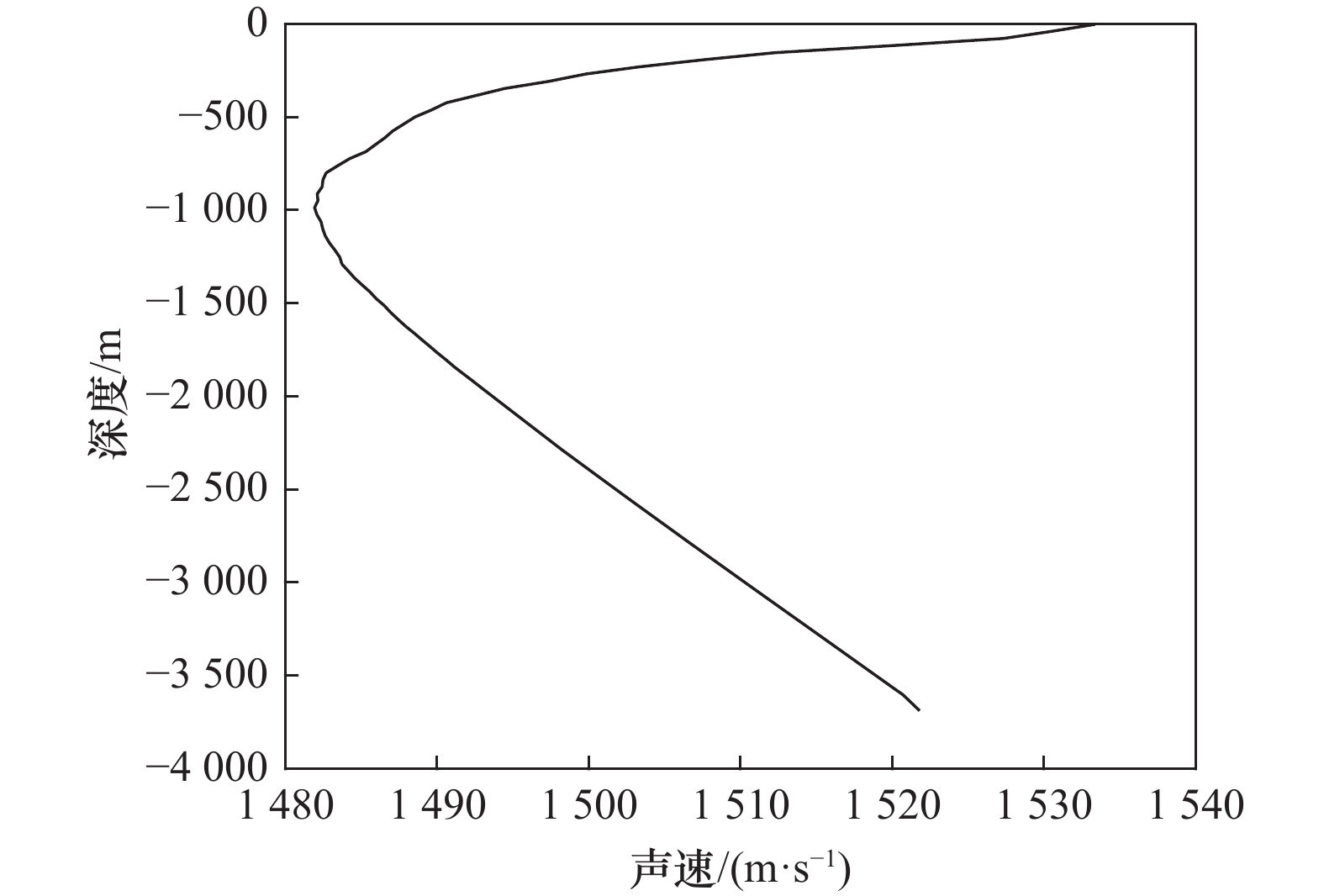
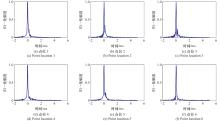
Fig.16
CIR at different point locations"

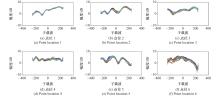
Fig.17
LMMSE channel estimates at different point locations"
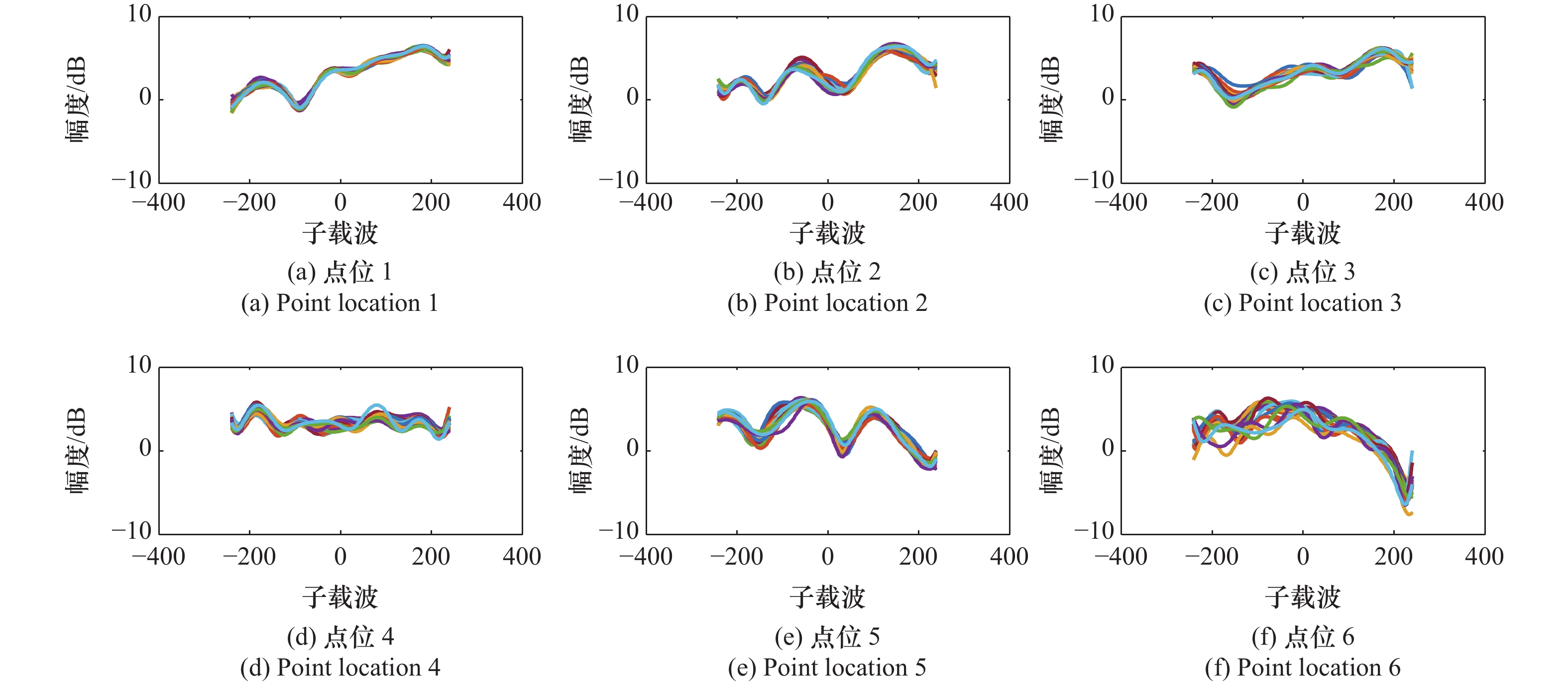
Table 5
CRC frame verification results at different point positions"
| 点位 | 水平距离/m | 通信距离/m | SNR/dB | 最大译码阶数 | 校验通过帧数(传统失配度量) | 校验通过帧数(改进译码度量) |
| 1 | 102 | 3 681 | 23.6 | 16QAM | 20 | 20 |
| 2 | 500 | 3 714 | 27.3 | 16QAM | 20 | 20 |
| 3 | 1 062 | 3 830 | 27.9 | 16QAM | 20 | 20 |
| 4 | 1 809 | 4 101 | 25.1 | 16QAM | 20 | 20 |
| 5 | 2 529 | 4 465 | 23.2 | 16QAM | 12 | 15 |
| 6 | 3 038 | 4 772 | 21.4 | 16QAM | 10 | 13 |
| 1 |
JUNEJO N U, SATTAR M, ADNAN S, et al. A survey on physical layer techniques and challenges in underwater communication systems[J]. Journal of Marine Science and Engineering, 2023, 11 (4): 885.
doi: 10.3390/jmse11040885 |
| 2 | 朱敏, 武岩波. 水声通信技术进展[J]. 中国科学院院刊, 2019, 34 (3): 289- 296. |
| ZHU M, WU Y B. Advances in underwater acoustic communication technology[J]. Bulletin of Chinese Academy of Sciences, 2019, 34 (3): 289- 296. | |
| 3 | 张舒然, 武岩波, 朱敏. 基于MCMC采样器的簇稀疏水声信道估计方法[J]. 仪器仪表学报, 2019, 40 (8): 201- 212. |
| ZHANG S R, WU Y B, ZHU M. An estimation method of clustered sparsity underwater acoustic channel based on MCMC sampler[J]. Chinese Journal of Scientific Instrument, 2019, 40 (8): 201- 212. | |
| 4 |
BELLO O, ZEADALLY S. Internet of underwater things communication: architecture, technologies, research challenges and future opportunities[J]. Ad Hoc Networks, 2022, 135, 102933.
doi: 10.1016/j.adhoc.2022.102933 |
| 5 | WEN M Q, HE C L, XING S Y. A bit-interleaved coded modulation scheme based on the polar code in underwater acoustic OFDM communication system[C]//Proc. of the 5th International Conference on Electronic Engineering and Informatics, 2023: 316−321. |
| 6 | PFLETSCHINGER S, DIETL G. Performance evaluation of compansion-based clipped OFDM systems[J]. EURASIP Journal on Wireless Communications and Networking, 2024, 83. |
| 7 |
ZHAN J, WANG L, KATZ M, et al. A differential chaotic bit-interleaved coded modulation system over multipath Rayleigh channels[J]. IEEE Trans. on Communications, 2017, 65 (12): 5257- 5265.
doi: 10.1109/TCOMM.2017.2719030 |
| 8 |
XU Z P, CHEN Q W, LI Y, et al. Designing protograph LDPC codes for differential chaotic bit-interleaved coded modulation system for underwater acoustic communications[J]. Journal of Marine Science and Engineering, 2023, 11 (5): 914.
doi: 10.3390/jmse11050914 |
| 9 | ABOTABL A A, NOSRATINIA A. Broadcast coded modulation: multilevel and bit interleaved construction[J]. IEEE Trans. on Communications, 2016, 65 (3): 969- 980. |
| 10 |
JIANG W H, DIAMANT R. Long-range underwater acoustic channel estimation[J]. IEEE Trans. on Wireless Communications, 2023, 22 (9): 6267- 6282.
doi: 10.1109/TWC.2023.3241230 |
| 11 |
CHEN W X, TAO J, MA L, et al. Vector-approximate-message-passing-based channel estimation for MIMO-OFDM underwater acoustic communications[J]. IEEE Journal of Oceanic Engineering, 2024, 49 (2): 496- 506.
doi: 10.1109/JOE.2023.3337349 |
| 12 |
JIA S Y, ZOU S C, ZHANG X C, et al. Underwater acoustic channel estimation based on sparse Bayesian learning algorithm[J]. IEEE Access, 2023, 11, 7829- 7836.
doi: 10.1109/ACCESS.2023.3238100 |
| 13 |
YANG Z G, WANG X D. A sequential Monte Carlo blind receiver for OFDM systems in frequency-selective fading channels[J]. IEEE Trans. on Signal Processing, 2002, 50 (2): 271- 280.
doi: 10.1109/78.978382 |
| 14 |
HUANG Y H, RITCEY J A. 16-QAM BICM-ID in fading channels with imperfect channel state information[J]. IEEE Trans. on Wireless Communications, 2003, 2 (5): 1000- 1007.
doi: 10.1109/TWC.2003.817432 |
| 15 |
GARG P, MALLIK R K, GUPTA H M. Performance analysis of space-time coding with imperfect channel estimation[J]. IEEE Trans. on Wireless Communications, 2005, 4 (1): 257- 265.
doi: 10.1109/TWC.2004.840202 |
| 16 | GOLDSMITH A. Wireless communications[M]. Cambridge: Cambridge University Press, 2005. |
| 17 |
WANG M M, XIAO W M, BROWN T. Soft decision metric generation for QAM with channel estimation error[J]. IEEE Trans. on Communications, 2002, 50 (7): 1058- 1061.
doi: 10.1109/TCOMM.2002.800828 |
| 18 |
ESPLUGA L O, AUBAULT-ROUDIER M, POULLIAT C, et al. LLR approximation for fading channels using a Bayesian approach[J]. IEEE Communications Letters, 2020, 24 (6): 1244- 1248.
doi: 10.1109/LCOMM.2020.2978832 |
| 19 | MORELLI M, MORETTI M. Improved decoding of BICM-OFDM transmissions plagued by narrowband interference[J]. IEEE Trans. on Wireless Communications, 2010, 10 (1): 20- 26. |
| 20 |
YUAN H F, KAM P Y. The LLR metric for q-ary LDPC codes with MPSK modulation over Rayleigh channels with imperfect CSI[J]. IEEE Trans. on Communications, 2012, 60 (7): 1793- 1799.
doi: 10.1109/TCOMM.2012.050812.110129 |
| 21 |
MARTINEZ A, I FABREGAS A G, CAIRE G, et al. Bit-interleaved coded modulation revisited: a mismatched decoding perspective[J]. IEEE Trans. on Information Theory, 2009, 55 (6): 2756- 2765.
doi: 10.1109/TIT.2009.2018177 |
| 22 | JALDEN J, FERTL P, MATZ G. On the generalized mutual information of BICM systems with approximate demodulation[C]//Proc. of the IEEE Information Theory Workshop on Information Theory, 2010. |
| 23 | NGUYEN T T, LAMPE L. Bit-interleaved coded modulation with mismatched decoding metrics[J]. IEEE Trans. on Communications, 2010, 59 (2): 437- 447. |
| 24 | 陶笃纯. 按辐射噪声平均功率谱形状识别船舶目标[J]. 声学学报, 1981, (4): 219- 228. |
| TAO D C. Recognition of ship targets according to the shape of average power spectrum of radiated noise[J]. Acta Acustica, 1981, (4): 219- 228. | |
| 25 | 姚帅, 方世良, 王晓燕. 有色噪声背景下的水声跳频信号参数估计[J]. 东南大学学报(自然科学版), 2014, 44 (1): 12- 18. |
| YAO S, FANG S L, WANG X Y. Parameter estimation of underwater acoustic frequency-hopping signals in colored noise[J]. Journal of Southeast University (Natural Science Edition), 2014, 44 (1): 12- 18. | |
| 26 |
YANG H, LI L L, LI G H. A new denoising method for underwater acoustic signal[J]. IEEE Access, 2020, 8, 201874- 201888.
doi: 10.1109/ACCESS.2020.3035403 |
| 27 |
BERGER C R, CHEN W A, ZHOU S L, et al. A simple and effective noise whitening method for underwater acoustic orthogonal frequency division multiplexing[J]. The Journal of the Acoustical Society of America, 2010, 127 (4): 2358- 2367.
doi: 10.1121/1.3309452 |
| 28 | GALLAGER R G. Information theory and reliable communication[M]. New York: Wiley, 1968. |
| [1] | Haiyuan PENG, Yu LI, Yu’nan ZHU, Zhanqing PU, Wei WANG. GPU-based fast Doppler estimation method for DSSS underwater acoustic communication [J]. Systems Engineering and Electronics, 2026, 48(6): 2105-2112. |
| [2] | Guangping WANG, Zhiquan BAI, Jian DAI, Heng WANG, Xinhong HAO, Xiaopeng YAN. Design of dual-mode 3D OFDM index modulation scheme and low complexity detection [J]. Systems Engineering and Electronics, 2026, 48(4): 1422-1430. |
| [3] | Yan LIANG, Weiyang TU, Junqing WANG, Fei LI. IRS assisted millimeter wave massive MIMO channel estimation based on TS-OMP [J]. Systems Engineering and Electronics, 2026, 48(3): 1083-1090. |
| [4] | Yan LIANG, Baolong LI, Haozhang WEI, Fei LI. Double IRS-assisted wideband channel estimation scheme for terahertz massive MIMO systems [J]. Systems Engineering and Electronics, 2026, 48(1): 361-371. |
| [5] | Ce JI, Xiangyu MA, Xiaoyu MU, Jiayi ZHAO. TS-GRU-VTA: vehicle channel estimation scheme based on deep learning [J]. Systems Engineering and Electronics, 2025, 47(9): 3093-3098. |
| [6] | Yongxing FAN, Yangfan ZHANG, Haining HUANG. Modulation method suitable for underwater acoustic mobile communication [J]. Systems Engineering and Electronics, 2025, 47(8): 2727-2736. |
| [7] | Bo GAO, Youhua FU, Chen LIU. Terahertz extremely large-scale MIMO hybrid field channel estimation [J]. Systems Engineering and Electronics, 2025, 47(8): 2744-2752. |
| [8] | Lin CHENG, Wei GE, Wei MEN. MIMO spread spectrum deep-sea underwater acoustic communication method based on M-ary cyclic shift keying [J]. Systems Engineering and Electronics, 2025, 47(3): 1010-1018. |
| [9] | Haiyuan PENG, Wei WANG, Derui LI, Yanjun LIU, Yu LI, Cheng CHI, Yanan TIAN. GPU-based parallel implementation of M-ary despreading algorithm for OMCSS underwater acoustic communication [J]. Systems Engineering and Electronics, 2025, 47(3): 978-986. |
| [10] | Gang TAN, Shefeng YAN, Linlin MAO, Jirui YANG. Joint channel and impulsive noise estimation for underwater acoustic OFDM systems based on sparse Bayesian learning [J]. Systems Engineering and Electronics, 2025, 47(10): 3482-3491. |
| [11] | Ting LI, Chunjie ZHANG, Shanglong LIU, Peizhong XIE. Joint domain channel estimation in UCA-OAM communication system [J]. Systems Engineering and Electronics, 2025, 47(10): 3492-3503. |
| [12] | Mingxiu MO, Lei YUAN, Yan LEI, Huahua YUAN. Impact of imperfect hardware implementation on downlink NOMA short packet communication [J]. Systems Engineering and Electronics, 2025, 47(1): 296-306. |
| [13] | Yongqi SHAO, Lihua YANG, Ao CHANG, Lulu REN. Time-varying channel estimation in RIS-assisted OFDM system [J]. Systems Engineering and Electronics, 2025, 47(1): 324-331. |
| [14] | Fangzheng LIU, Ruiqi ZENG, Yang GONG, Zhenzhong HAN. ZC-OFDM-based radar interference integrated waveform design and processing method [J]. Systems Engineering and Electronics, 2024, 46(9): 2999-3011. |
| [15] | Gang TAN, Shefeng YAN, Zihao YE, Jirui YANG. Iterative impulsive noise mitigation and channel estimation method for OFDM system [J]. Systems Engineering and Electronics, 2024, 46(8): 2841-2849. |
| Viewed | ||||||
|
Full text |
|
|||||
|
Abstract |
|
|||||