Systems Engineering and Electronics ›› 2025, Vol. 47 ›› Issue (10): 3482-3491.doi: 10.12305/j.issn.1001-506X.2025.10.31
• Communications and Networks • Previous Articles
Joint channel and impulsive noise estimation for underwater acoustic OFDM systems based on sparse Bayesian learning
Gang TAN1,2( ), Shefeng YAN1,2,*, Linlin MAO1, Jirui YANG1,2
- 1. Key Laboratory of Information Technology for Autonomous Underwater Vehicles, Institute of Acoustics, Chinese Academy of Sciences, Beijing 100190, China
2. School of Electronic, Electrical and Communication Engineering, University of Chinese Academy of Sciences, Beijing 100049, China
-
Received:2024-08-06Online:2025-10-25Published:2025-10-23 -
Contact:Shefeng YAN E-mail:tangang16@mails.ucas.ac.cn

CLC Number:
Cite this article
Gang TAN, Shefeng YAN, Linlin MAO, Jirui YANG. Joint channel and impulsive noise estimation for underwater acoustic OFDM systems based on sparse Bayesian learning[J]. Systems Engineering and Electronics, 2025, 47(10): 3482-3491.
share this article
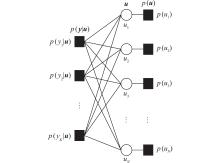
Fig.1
GAMP factor graph"
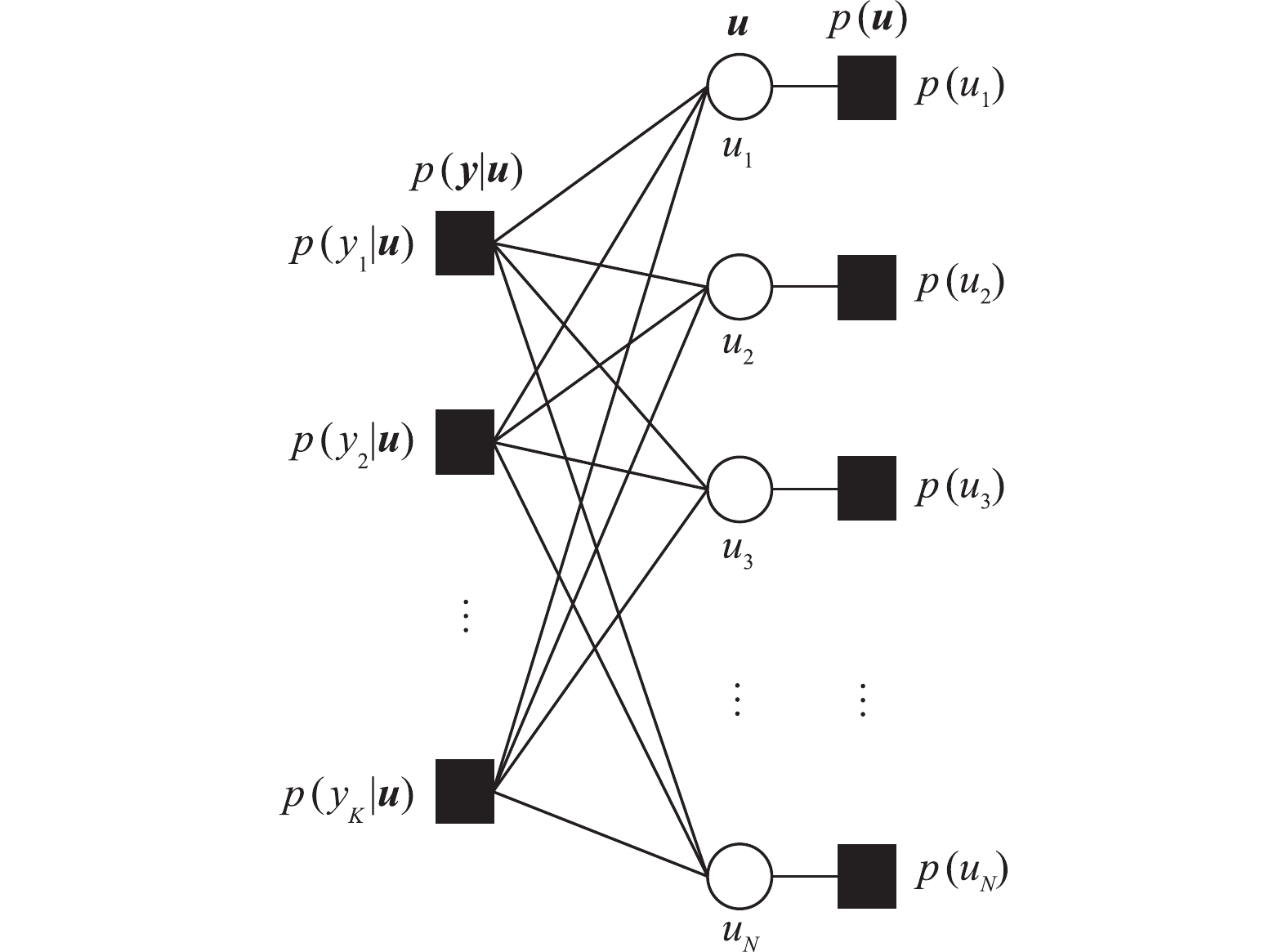
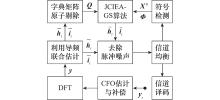
Fig.2
Block diagram of the JCIE algorithm using all subcarriers"
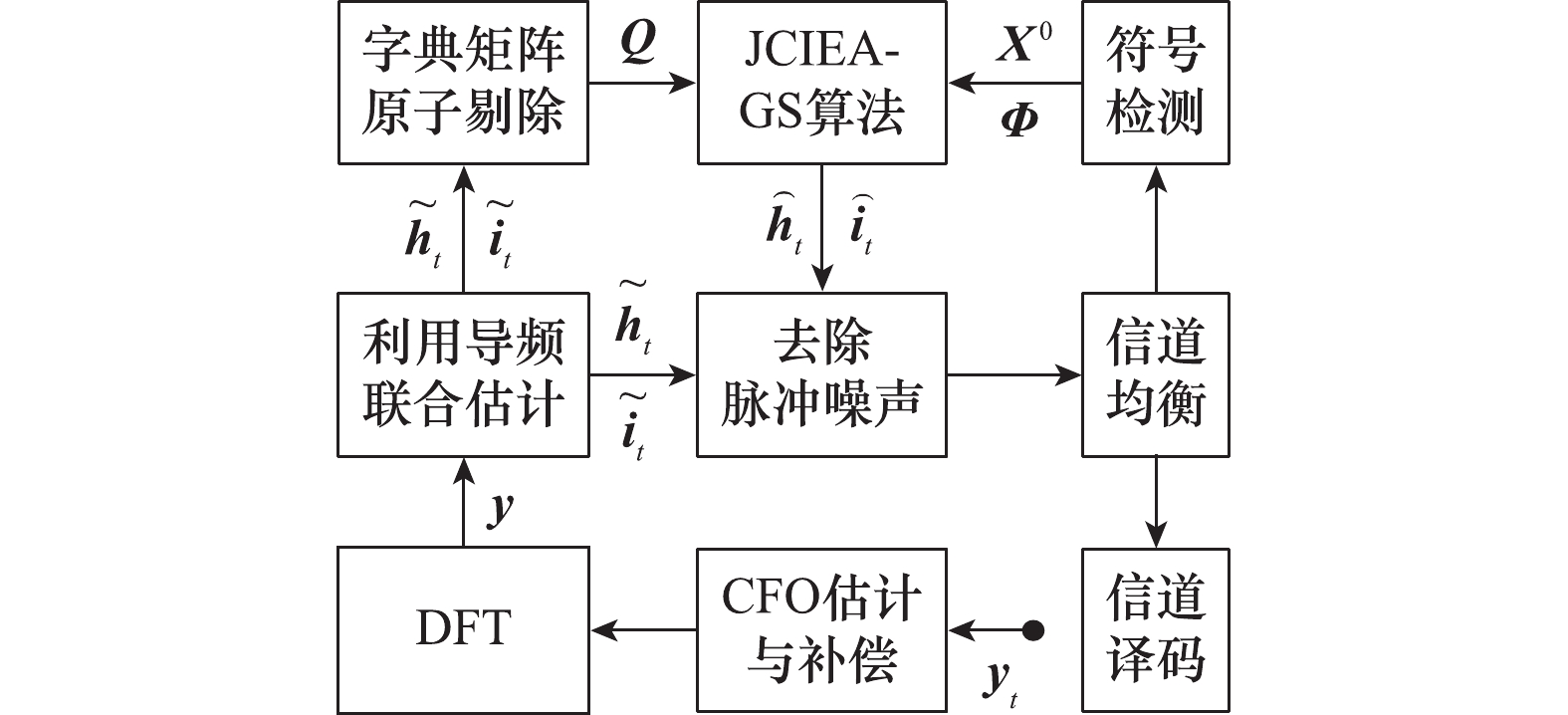
Table 1
Complexity comparisons of channel and IN estimation algorithms"
| 估计算法 | 复杂度 | 文献 | |
| SBL类(-S) | SCIE-S | O(UK2+PL2) | [ |
| JCIE-S | O(PN2) | [ | |
| JCIEA-S | O(PN2+KN2) | [ | |
| GAMP-SBL类(-GS) | SCIE-GS | O(UK+PL) | [ |
| JCIE-GS | O(PN) | [ | |
| JCIEA-GS | O(PN+KN) | 本文 | |
| JCIEA-GSP | O(PN+KM) | 本文 | |
Table 2
OFDM system parameters"
| 参数 | 值 |
| 带宽B/kHz | 4 |
| 中心频率fc/kHz | 12 |
| 采样频率fs/kHz | 96 |
| 子载波数K | 512 |
| 子载波间隔Δf/Hz | 7.8 |
| OFDM符号周期T/ms | 128 |
| 循环前缀Tcp/ms | 25 |
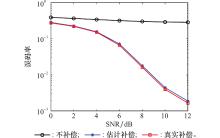
Fig.3
CFO estimation and compensation"
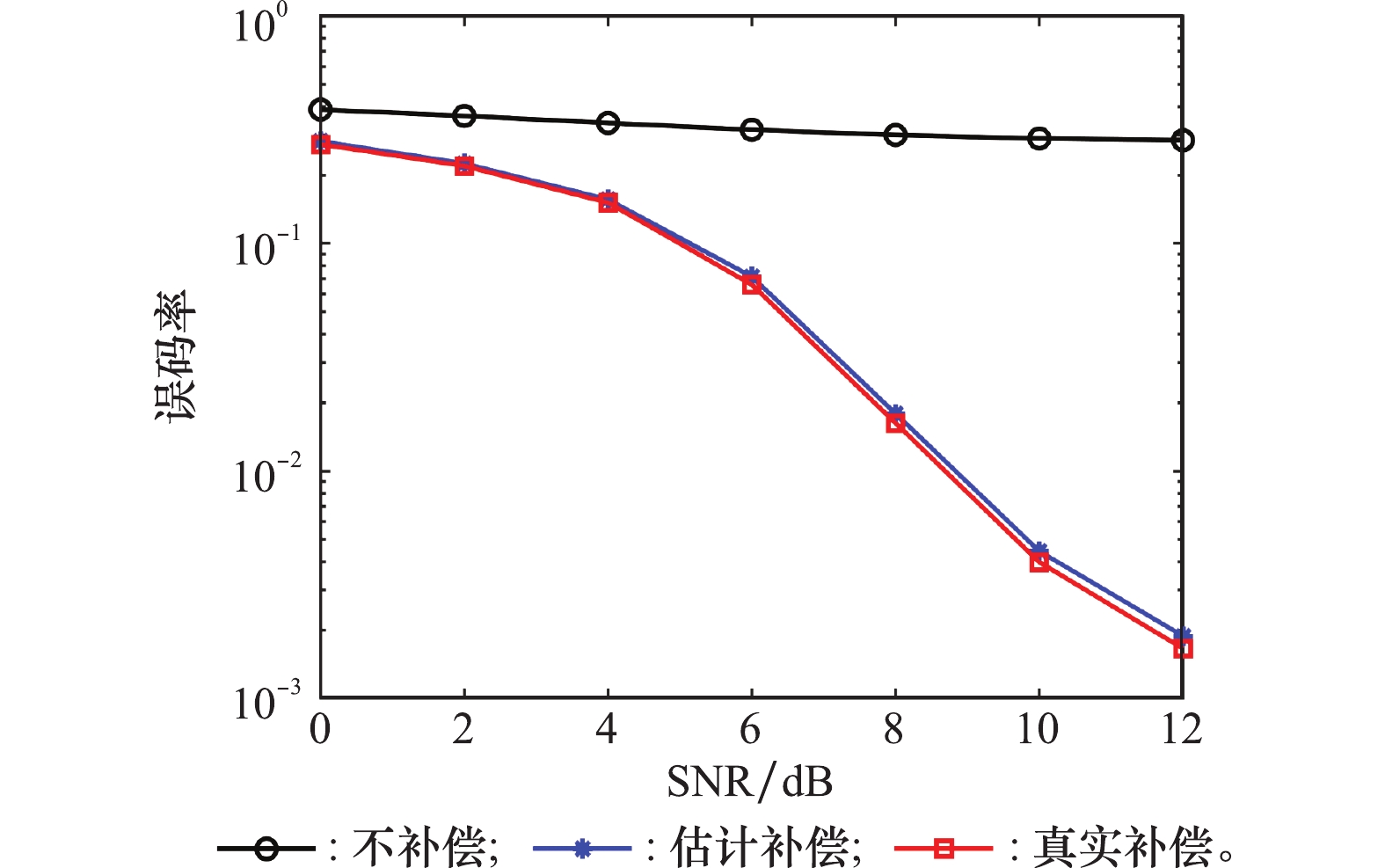
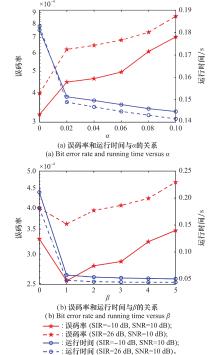
Fig.4
System bit error rate and algorithm running time versus threshold parameters"
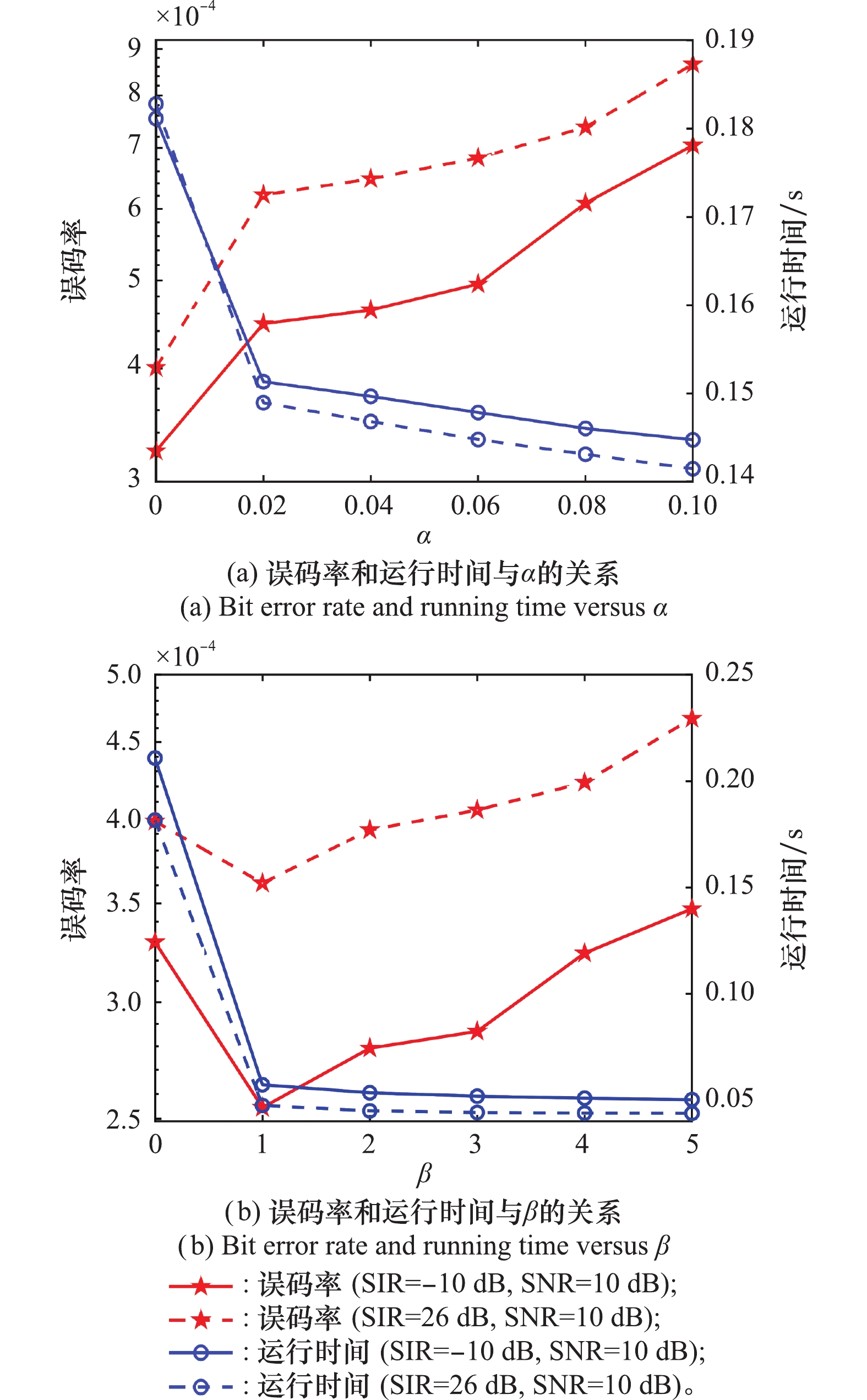
Fig.5
NMSE of channel estimation and IN estimation"
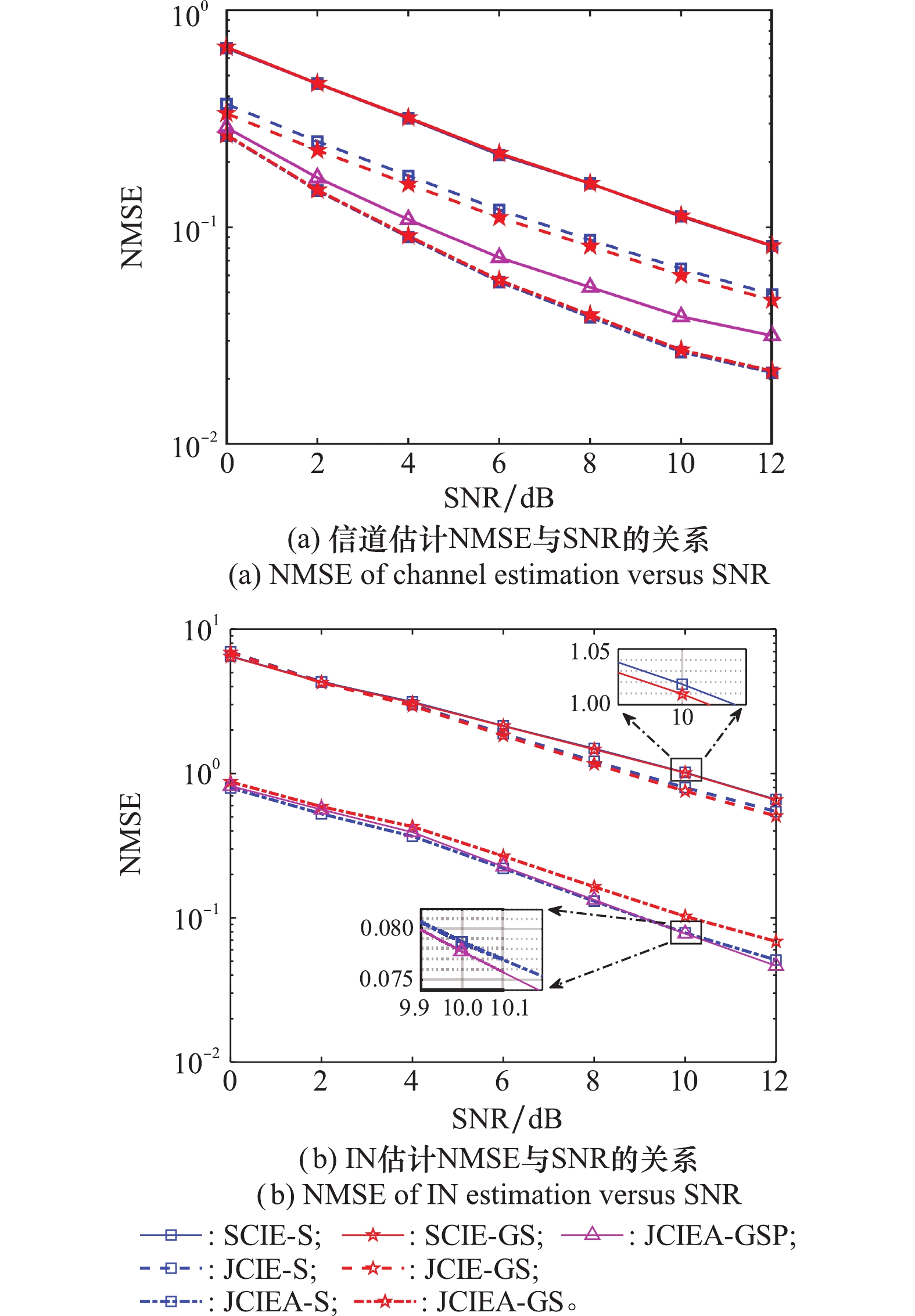
Fig.6
System bit error rate comparisons"

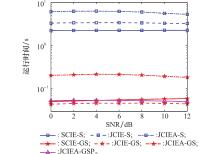
Fig.7
Running time comparisons"
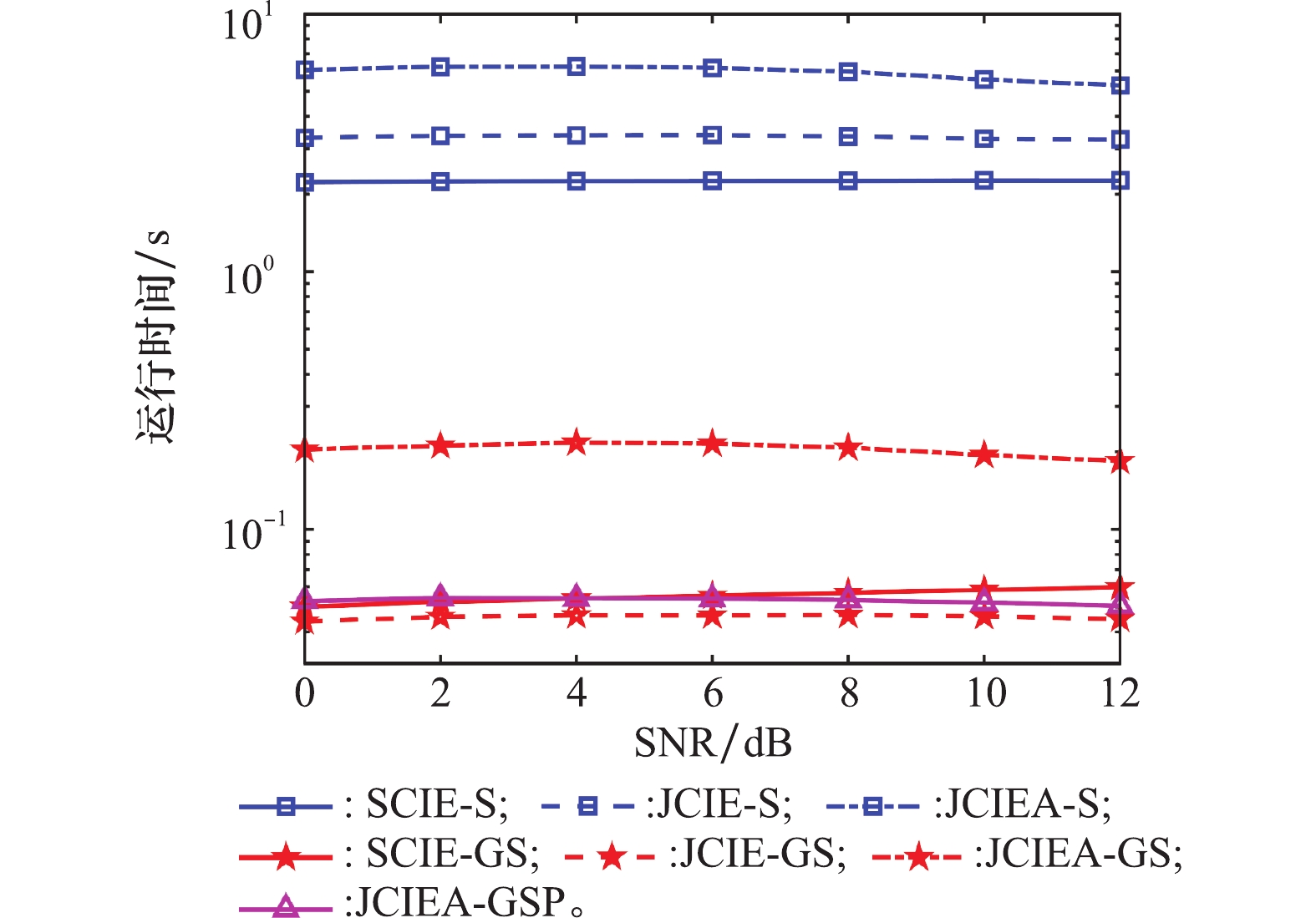
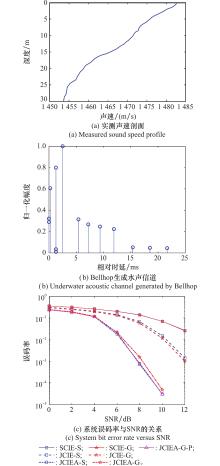
Fig.8
System bit error rate comparisons with Bellhop generated underwater acoustic channel"

| 1 |
BERGER C R, WANG Z H, HUANG J Z, et al. Application of compressive sensing to sparse channel estimation[J]. IEEE Communications Magazine, 2010, 48 (11): 164- 174.
doi: 10.1109/MCOM.2010.5621984 |
| 2 |
WANG D Y, ZHANG Y L, TAI Y P, et al. Cluster-aware channel estimation with deep learning method in deep-water acoustic communications[J]. The Journal of the Acoustical Society of America, 2023, 154 (3): 1757- 1769.
doi: 10.1121/10.0020861 |
| 3 |
CHEN W X, TAO J, MA L, et al. Vector-approximate-message-passing-based channel estimation for MIMO-OFDM underwater acoustic communications[J]. IEEE Journal of Oceanic Engineering, 2024, 49 (2): 496- 506.
doi: 10.1109/JOE.2023.3337349 |
| 4 |
TIAN Y N, HAN X, YIN J W, et al. Group sparse underwater acoustic channel estimation with impulsive noise: simulation results based on Arctic ice cracking noise[J]. The Journal of the Acoustical Society of America, 2019, 146 (4): 2482- 2491.
doi: 10.1121/1.5129056 |
| 5 |
TIAN Y N, HAN X, VOROBYOV S A, et al. Wideband signal detection in multipath environment affected by impulsive nois e[J]. The Journal of the Acoustical Society of America, 2022, 152 (1): 445- 455.
doi: 10.1121/10.0012352 |
| 6 | 冯晓, 周明章, 张学波, 等. 浅海非高斯噪声下基于变分贝叶斯推断的波达角估计[J]. 电子与信息学报, 2022, 44 (6): 1887- 1896. |
| FENG X, ZHOU M Z, ZHANG X B, et al. Variational Bayesian inference based direction of arrival estimation in presence of shallow water non-Gaussian noise[J]. Journal of Electronics & Information Technology, 2022, 44 (6): 1887- 1896. | |
| 7 | BAI T, ZHANG H M, WANG J J, et al. Fifty years of noise modeling and mitigation in power-line communications[J]. IEEE Communications Surveys & Tutorials, 2021, 23 (1): 41- 69. |
| 8 | 李冬霞, 刘国庆, 刘海涛. 基于MCMC的OFDM系统脉冲噪声检测与抑制方法[J]. 系统工程与电子技术, 2018, 40 (10): 2348- 2353. |
| LI D X, LIU G Q, LIU H T. Impulsive noise detection and mitigation method based on MCMC in OFDM system[J]. Systems Engineering and Electronics, 2018, 40 (10): 2348- 2353. | |
| 9 |
HE Y, ZOU C, LI D J, et al. Adaptive impulsive noise suppression: a deep learning-based parameters estimation approach[J]. IEEE Trans. on Broadcasting, 2023, 69 (2): 505- 515.
doi: 10.1109/TBC.2022.3224249 |
| 10 | 谭钢, 鄢社锋, 叶子豪, 等. OFDM系统迭代脉冲噪声抑制与信道估计方法[J]. 系统工程与电子技术, 2024, 46 (8): 2841- 2849. |
| TAN G, YAN S F, YE Z H, et al. Iterative impulsive noise mitigation and channel estimation method for OFDM system[J]. Systems Engineering and Electronics, 2024, 46 (8): 2841- 2849. | |
| 11 |
LI Q Y, ZHANG J, EPPLE U. Design and EXIT chart analysis of a doubly iterative receiver for mitigating impulsive interference in OFDM systems[J]. IEEE Trans. on Communications, 2016, 64 (4): 1726- 1738.
doi: 10.1109/TCOMM.2016.2535344 |
| 12 |
KUAI X Y, SUN H X, ZHOU S L, et al. Impulsive noise mitigation in underwater acoustic OFDM systems[J]. IEEE Trans. on Vehicular Technology, 2016, 65 (10): 8190- 8202.
doi: 10.1109/TVT.2016.2516539 |
| 13 |
CHEN P, RONG Y, NORDHOLM S, et al. Joint channel estimation and impulsive noise mitigation in underwater acoustic OFDM communication systems[J]. IEEE Trans. on Wireless Communications, 2017, 16 (9): 6165- 6178.
doi: 10.1109/TWC.2017.2720580 |
| 14 |
CHEN P, RONG Y, NORDHOLM S, et al. Joint channel and impulsive noise estimation in underwater acoustic OFDM systems[J]. IEEE Trans. on Vehicular Technology, 2017, 66 (11): 10567- 10571.
doi: 10.1109/TVT.2017.2743220 |
| 15 |
DARSENA D, GELLI G, MELITO F, et al. ICI-free equalization in OFDM systems with blanking preprocessing at receiver for impulsive noise mitigation[J]. IEEE Signal Processing Letters, 2015, 22 (9): 1321- 1325.
doi: 10.1109/LSP.2015.2398366 |
| 16 |
LI H, DONG Y Y, GONG C H, et al. A non-Gaussianity-aware receiver for impulsive noise mitigation in underwater communications[J]. IEEE Trans. on Vehicular Technology, 2021, 70 (6): 6018- 6028.
doi: 10.1109/TVT.2021.3079469 |
| 17 | SUN H X, XU X K, MA L, et al. Carrier frequency offset and impulse noise estimation for underwater acoustic orthogonal frequency division multiplexing[J]. Chinese Journal of Acoustics, 2014, 33 (3): 289- 298. |
| 18 |
LIN J, NASSAR M, EVANS B L. Impulsive noise mitigation in powerline communications using sparse Bayesian learning[J]. IEEE Journal on Selected Areas in Communications, 2013, 31 (7): 1172- 1183.
doi: 10.1109/JSAC.2013.130702 |
| 19 | 吕新荣. 低压电力线通信系统抗干扰理论与方法研究[D]. 宁波: 宁波大学, 2019. |
| LYU X R. Interference mitigation methods for low voltage power line communication systems[D]. Ningbo: Ningbo University, 2019. | |
| 20 |
WANG S C, HE Z Q, NIU K, et al. New results on joint channel and impulsive noise estimation and tracking in underwater acoustic OFDM systems[J]. IEEE Trans. on Wireless Communications, 2020, 19 (4): 2601- 2612.
doi: 10.1109/TWC.2020.2966622 |
| 21 |
AI-SHOUKAIRI M, SCHNITER P, RAO B D. A GAMP-based low complexity sparse Bayesian learning algorithm[J]. IEEE Trans. on Signal Processing, 2018, 66 (2): 294- 308.
doi: 10.1109/TSP.2017.2764855 |
| 22 | 殷敬伟, 高新博, 韩笑, 等. 稀疏贝叶斯学习水声信道估计与脉冲噪声抑制方法[J]. 声学学报, 2021, 46 (6): 813- 824. |
| YIN J W, GAO X B, HAN X, et al. Underwater acoustic channel estimation and impulsive noise mitigation based on sparse Bayesian learning[J]. Chinese Journal of Acoustics, 2021, 46 (6): 813- 824. | |
| 23 |
FENG X, WANG J F, KUAI X Y, et al. Message passing-based impulsive noise mitigation and channel estimation for underwater acoustic OFDM communications[J]. IEEE Trans. on Vehicular Technology, 2022, 71 (1): 611- 625.
doi: 10.1109/TVT.2021.3130061 |
| 24 | 洪丹阳, 王巍, 尹力, 等. 改进的时序多重稀疏贝叶斯学习冰下水声信道估计方法[J]. 声学学报, 2022, 47 (5): 591- 602. |
| HONG D Y, WANG W, YIN L, et al. An improved temporal multiple sparse Bayesian learning under-ice acoustic channel estimation method[J]. Chinese Journal of Acoustics, 2022, 47 (5): 591- 602. | |
| 25 |
WAN L, ZHU J, CHENG E, et al. Joint CFO, gridless channel estimation and data detection for underwater acoustic OFDM systems[J]. IEEE Journal of Oceanic Engineering, 2022, 47 (4): 1215- 1230.
doi: 10.1109/JOE.2022.3162025 |
| 26 | 叶子豪, 鄢社锋, 杨斌斌. 基于子载波间干扰深度估计的MIMO-OFDM水声通信接收机[J]. 电子与信息学报, 2023, 45 (7): 2519- 2527. |
| YE Z H, YAN S F, YANG B B. MIMO-OFDM underwater acoustic communication receiver based on intercarrier interfe-rence depth estimation[J]. Journal of Electronics & Information Technology, 2023, 45 (7): 2519- 2527. | |
| 27 |
YU H, LIANG Y K, MA H N, et al. Joint impulsive noise mitigation and sparse channel estimation for mobile underwater acoustic communication[J]. IEEE Wireless Communications Letters, 2024, 13 (8): 2095- 2099.
doi: 10.1109/LWC.2024.3401695 |
| 28 |
PANAYIRCI E, ALTABBAA M T, UYSAL M, et al. Sparse channel estimation for OFDM-based underwater acoustic systems in Rician fading with a new OMP-MAP algorithm[J]. IEEE Trans. on Signal Processing, 2019, 67 (6): 1550- 1565.
doi: 10.1109/TSP.2019.2893841 |
| 29 |
WANG J J, YAN Z Q, SHI W, et al. Underwater acoustic sparse channel estimation based on DW-SACoSaMP reconstruction algorithm[J]. IEEE Communications Letters, 2019, 23 (11): 1985- 1988.
doi: 10.1109/LCOMM.2019.2933426 |
| 30 |
TADAYON A, STOJANOVIC M. Iterative sparse channel estimation and spatial correlation learning for multichannel acoustic OFDM systems[J]. IEEE Journal of Oceanic Engineering, 2019, 44 (4): 820- 836.
doi: 10.1109/JOE.2019.2932662 |
| [1] | Ce JI, Xiangyu MA, Xiaoyu MU, Jiayi ZHAO. TS-GRU-VTA: vehicle channel estimation scheme based on deep learning [J]. Systems Engineering and Electronics, 2025, 47(9): 3093-3098. |
| [2] | Yongxing FAN, Yangfan ZHANG, Haining HUANG. Modulation method suitable for underwater acoustic mobile communication [J]. Systems Engineering and Electronics, 2025, 47(8): 2727-2736. |
| [3] | Bo GAO, Youhua FU, Chen LIU. Terahertz extremely large-scale MIMO hybrid field channel estimation [J]. Systems Engineering and Electronics, 2025, 47(8): 2744-2752. |
| [4] | Mingxiu MO, Lei YUAN, Yan LEI, Huahua YUAN. Impact of imperfect hardware implementation on downlink NOMA short packet communication [J]. Systems Engineering and Electronics, 2025, 47(1): 296-306. |
| [5] | Yongqi SHAO, Lihua YANG, Ao CHANG, Lulu REN. Time-varying channel estimation in RIS-assisted OFDM system [J]. Systems Engineering and Electronics, 2025, 47(1): 324-331. |
| [6] | Fangzheng LIU, Ruiqi ZENG, Yang GONG, Zhenzhong HAN. ZC-OFDM-based radar interference integrated waveform design and processing method [J]. Systems Engineering and Electronics, 2024, 46(9): 2999-3011. |
| [7] | Gang TAN, Shefeng YAN, Zihao YE, Jirui YANG. Iterative impulsive noise mitigation and channel estimation method for OFDM system [J]. Systems Engineering and Electronics, 2024, 46(8): 2841-2849. |
| [8] | Gang LIU, Yuhang LI, Qingxin YANG, Yi GUO. Channel estimation on intelligent reflecting surface based on compressed sensing [J]. Systems Engineering and Electronics, 2024, 46(7): 2490-2497. |
| [9] | Gang ZHANG, Xi CHEN, Zhongjun JIANG. High-rate permutation index differential chaos shift keying communication system [J]. Systems Engineering and Electronics, 2024, 46(3): 1125-1133. |
| [10] | Bowen GU, Lin LI, Chuanjin DAI, Bo ZANG, Zhigang ZHU, Xiangpu LIU, Junlin TANG. Research on concealed positioning algorithm based on LEO satellites OFDM signal investigation and detection [J]. Systems Engineering and Electronics, 2024, 46(12): 3957-3964. |
| [11] | Lutao LIU, Guoheng XU, Zhen WANG. Fast and high precision DOA estimation algorithm based on sparse recovery [J]. Systems Engineering and Electronics, 2024, 46(11): 3631-3638. |
| [12] | Lihua YANG, Lulu REN, Bo HU, Yongqi SHAO, Qian NIE. Meta-learning based time-varying channel estimation method [J]. Systems Engineering and Electronics, 2023, 45(6): 1872-1879. |
| [13] | Ce JI, Boyan TIAN, Rong GENG, Boqun LI. FBMC/OQAM system channel estimation based on VSCBOMP algorithm [J]. Systems Engineering and Electronics, 2023, 45(4): 1193-1199. |
| [14] | Ce JI, Bohan SONG, Rong GENG, Minjun LIANG. Deep learning based channel estimation for OFDM systems in fast time-varying channel [J]. Systems Engineering and Electronics, 2023, 45(11): 3649-3655. |
| [15] | Yan LYU, Fei CAO, Jianfeng XU, Xiaowei FENG. Robust beamforming algorithm for monostatic MIMO radar based on FRFT [J]. Systems Engineering and Electronics, 2023, 45(1): 79-85. |
| Viewed | ||||||
|
Full text |
|
|||||
|
Abstract |
|
|||||