

系统工程与电子技术 ›› 2026, Vol. 48 ›› Issue (8): 2761-2781.doi: 10.12305/j.issn.1001-506X.2026.08.22
• 系统工程 • 上一篇
刘鹏华, 史宪铭, 王亚龙, 杨密芬
收稿日期:2025-05-27
修回日期:2025-07-30
出版日期:2026-01-24
发布日期:2026-01-24
通讯作者:
史宪铭
作者简介:刘鹏华(1996—),男,硕士研究生,主要研究方向为系统工程、弹药供应链Penghua LIU, Xianming SHI, Yalong WANG, Mifen YANG
Received:2025-05-27
Revised:2025-07-30
Online:2026-01-24
Published:2026-01-24
Contact:
Xianming SHI
摘要:
针对弹药保障节点受打击后因供应任务再分配引发邻居节点吞吐量增多,被发现并打击概率增大,进而导致弹药供应链易发生级联失效的问题,提出一种用于动态识别弹药供应链关键节点的方法。首先,分析节点失效、级联失效过程,构建基于节点失效概率服从两阶段Gompertz分布的弹药供应链级联失效模型。其次,从供应能力和供应效率角度出发,选取敏捷性、稳定性、负荷度和鲁棒性构建节点重要性评价指标体系。再次,考虑当前任务完成情况和后续任务完成能力,选取阵地缺供率、供应任务完成率和供应链路存活率作为弹药供应链综合供应能力评价指标。最后,构建弹药供应链系统动力学模型,采用移除节点法对所提方法和 5 种时序网络关键节点识别方法进行验证,并从外部环境与内部参数两个维度对所提方法进行敏感性分析。结果显示,所提方法较其他方法弹药供应链综合供应能力下降最快,表明所识别节点对弹药供应影响最大、重要度最高;同时发现所提方法对弹药供应任务和敏捷性指标的变化较为敏感。结论显示,所提方法能够有效识别弹药供应链中的关键节点,有助于制定抗打击预案,提高弹药供应效能。
中图分类号:
刘鹏华, 史宪铭, 王亚龙, 杨密芬. 考虑级联失效的弹药供应链关键节点分析[J]. 系统工程与电子技术, 2026, 48(8): 2761-2781.
Penghua LIU, Xianming SHI, Yalong WANG, Mifen YANG. Analysis of key nodes in the ammunition supply chain considering cascading failure[J]. Systems Engineering and Electronics, 2026, 48(8): 2761-2781.
图1
研究思路"
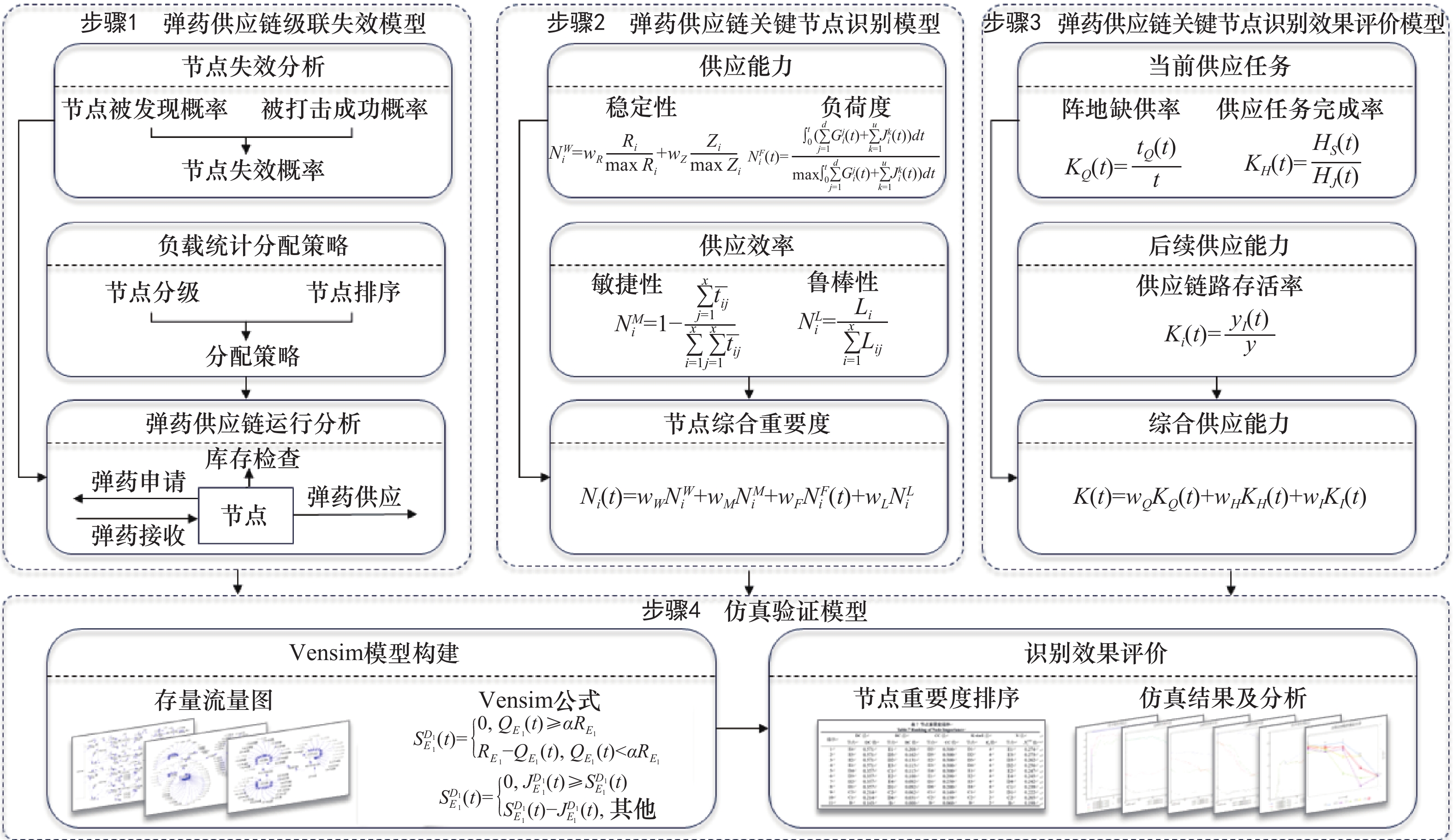
图2
弹药供应链多层防空力量示意图"
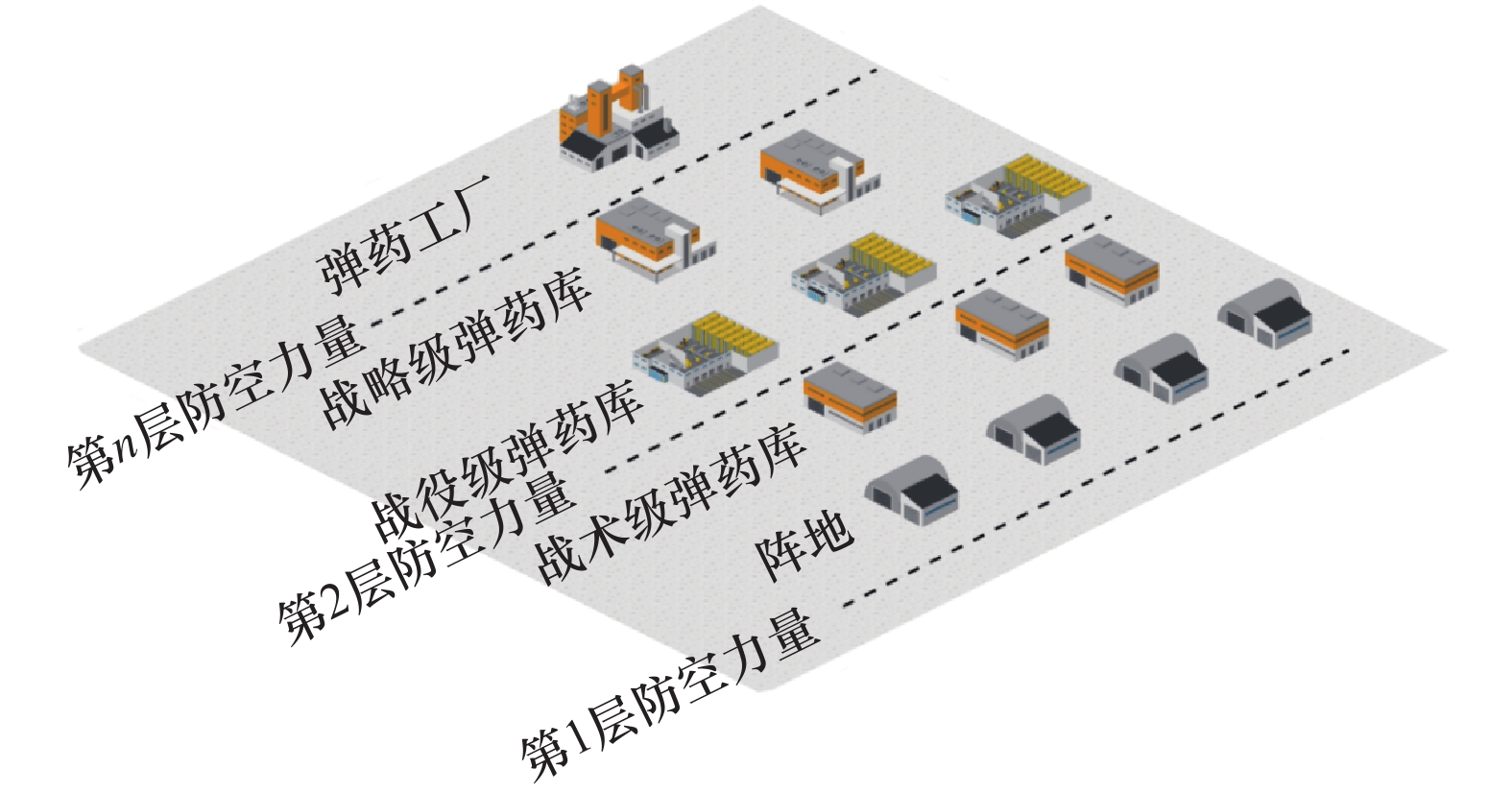
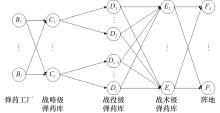
图3
弹药供应链结构示意图"
图4
级联失效过程示意图"
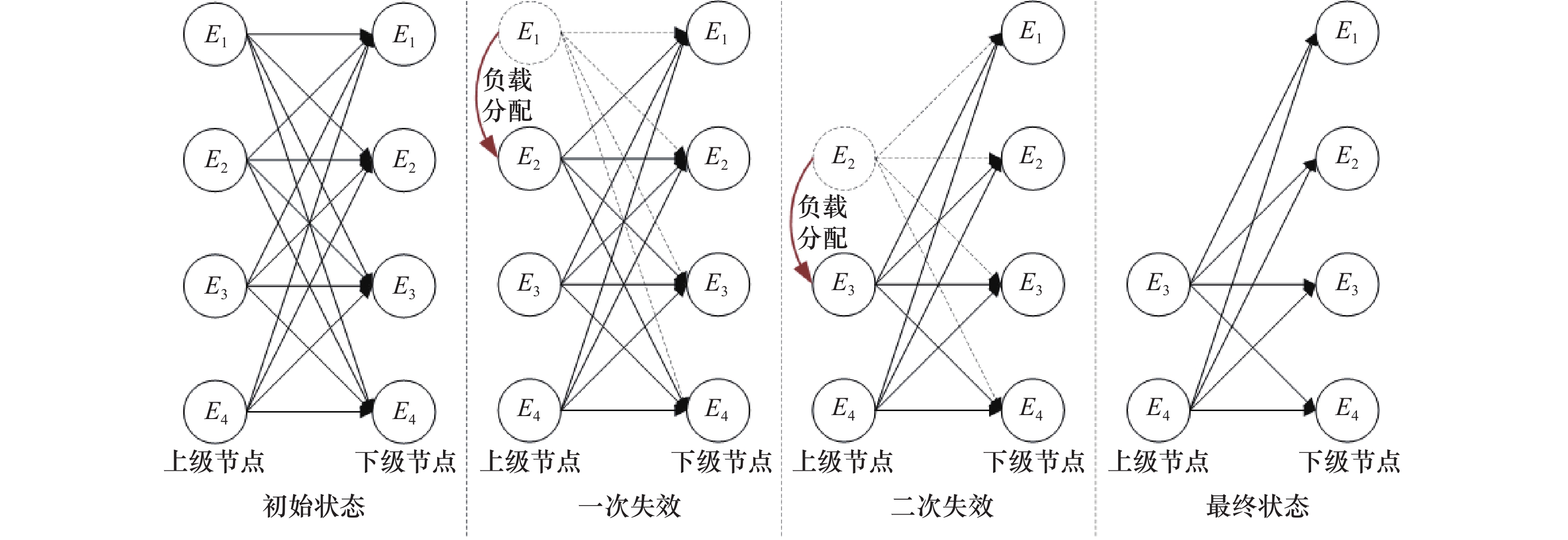
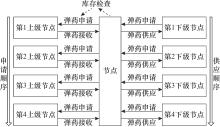
图5
弹药供应活动"
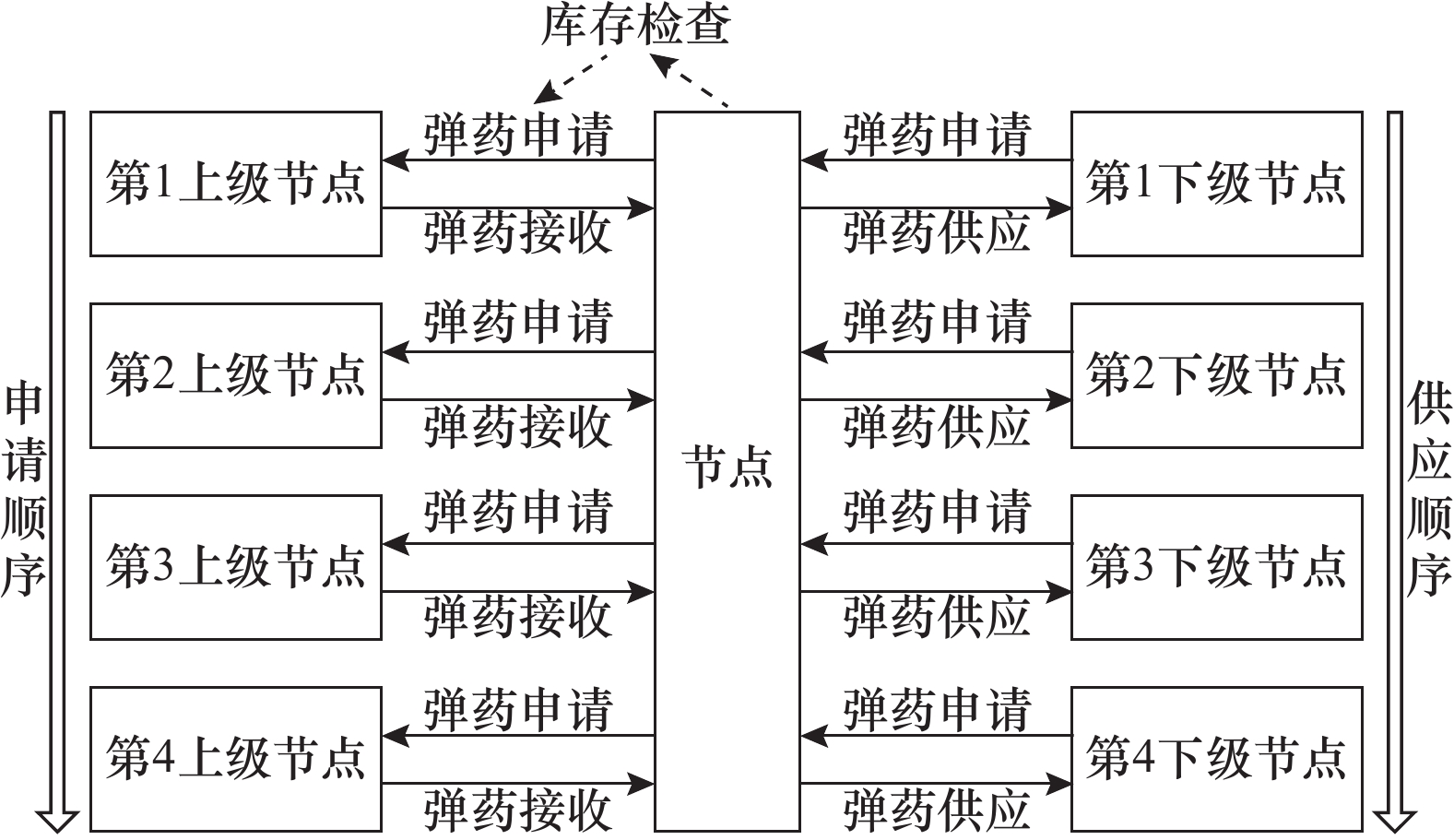
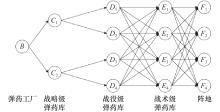
图6
弹药供应链结构"
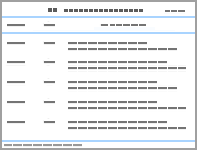
表1
各节点装卸载作业线数量"
| 节点 | 装卸载作业线数量 | 节点 | 装卸载作业线数量 | ||
| 2 | 3 | ||||
| 2 | 3 | ||||
| 2 | 3 | ||||
| 2 | 4 | ||||
| 3 | 4 |
表2
各节点之间运输时间"
| 节点 | 运输时间 | ||||||||||||||
| 2 | 2 | 3 | 3 | 0 | — | — | — | 3 | 3 | 4 | 5 | — | — | — | |
| 2 | 2 | 4 | 4 | — | 0 | — | — | 4 | 3 | 4 | 4 | — | — | — | |
| 3 | 3 | 2 | 2 | — | — | 0 | — | 4 | 5 | 3 | 3 | — | — | — | |
| 3 | 4 | 2 | 2 | — | — | — | 0 | 5 | 5 | 3 | 3 | — | — | — | |
| 10 | 11 | 17 | 18 | 3 | 4 | 4 | 5 | 0 | — | — | — | 6 | — | — | |
| 11 | 10 | 16 | 17 | 3 | 3 | 5 | 5 | — | 0 | — | — | 6 | — | — | |
| 18 | 17 | 10 | 12 | 4 | 4 | 3 | 3 | — | — | 0 | — | — | 6 | — | |
| 16 | 17 | 10 | 10 | 5 | 4 | 3 | 3 | — | — | — | 0 | — | 7 | — | |
| 16 | 16 | — | — | — | — | — | — | 6 | 6 | — | — | 0 | — | 9 | |
| — | — | 16 | 16 | — | — | — | — | — | — | 6 | 7 | — | 0 | 9 | |
| — | — | — | — | — | — | — | — | — | — | — | — | 9 | 9 | 0 | |
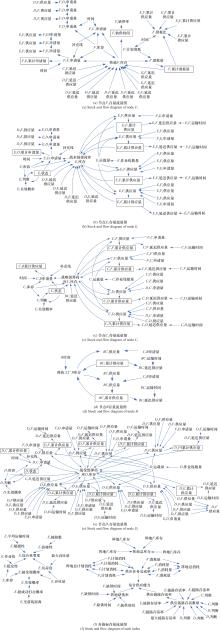
图7
存量流量图"

表3
各阵地每小时弹药计划消耗量"
| 阵地 | 最小值/发 | 最大值/发 | 期望/发 | 方差 | 随机种子 |
| F1 | 0 | 200 | 100 | 1 | |
| F2 | 10 | 200 | 100 | 1 | |
| F3 | 10 | 200 | 100 | 1 | |
| F4 | 10 | 200 | 100 | 1 |
表4
各节点库容和初始库存"
| 节点 | 库容 | 初始库存 | 节点 | 库容 | 初始库存 | ||
| F1 | 600 | 600 | D1 | 2 000 | 2 000 | ||
| F2 | 600 | 600 | D2 | 2 000 | 2 000 | ||
| F3 | 600 | 600 | D3 | ||||
| F4 | 600 | 600 | D4 | 2 000 | 2 000 | ||
| E1 | C1 | ||||||
| E2 | C2 | ||||||
| E3 | B | ||||||
| E4 | — | — | — |
表5
节点重要度排序"
| 排序 | TC | TB | TDD | TK | INE | N法 | |||||||||||
| 节点 | 值 | 节点 | 值 | 节点 | 值 | 节点 | 值 | 节点 | 值 | 节点 | 值 | ||||||
| 1 | 2.026 | 0.133 | 4.165 | 4 | 4.698 | 0.650 | |||||||||||
| 2 | 1.299 | 0.108 | 3.843 | 4 | 4.473 | 0.590 | |||||||||||
| 3 | 1.014 | 0.094 | 2.923 | 4 | 4.282 | 0.446 | |||||||||||
| 4 | 0.965 | 0.079 | 2.380 | 4 | 4.282 | 0.436 | |||||||||||
| 5 | 0.849 | 0.072 | 1.244 | 3 | 4.282 | 0.422 | |||||||||||
| 6 | 0.790 | 0.068 | 0.753 | 2 | 4.241 | 0.420 | |||||||||||
| 7 | 0.736 | 0.032 | 0.753 | 0 | 3.970 | 0.403 | |||||||||||
| 8 | 0.736 | 0.032 | 0.619 | 0 | 3.738 | 0.395 | |||||||||||
| 9 | 0.694 | 0.031 | 0.499 | 0 | 3.258 | 0.391 | |||||||||||
| 10 | 0.658 | 0.016 | 0.276 | 0 | 1.573 | 0.382 | |||||||||||
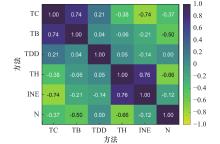
图8
平均系数相关矩阵"
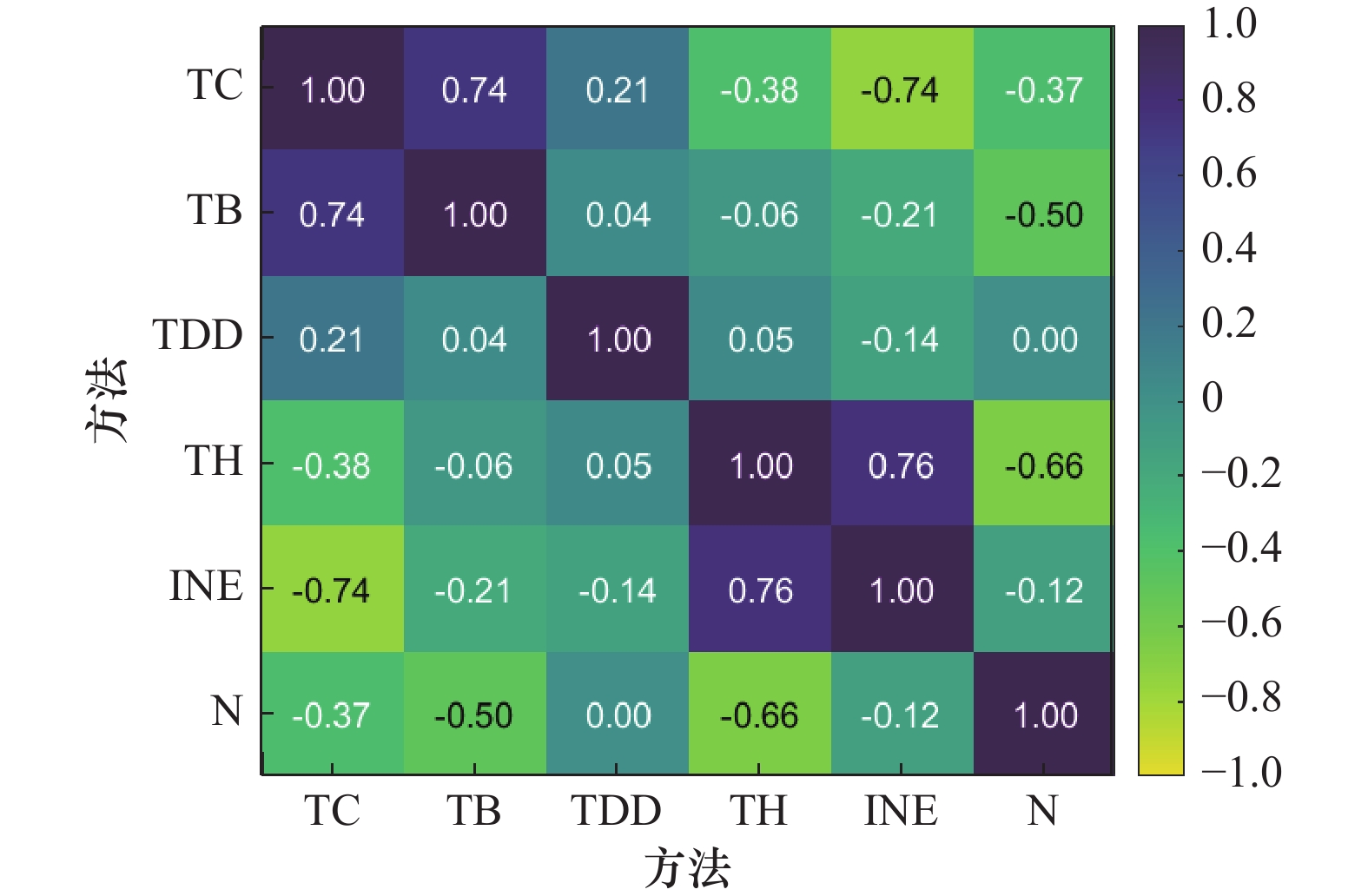
表6
各方法平均综合供应能力"
| 移除节点个数 | TC法 | TB法 | TDD法 | TK法 | INE法 | N法 |
| 0 | 0.694 | 0.694 | 0.694 | 0.694 | 0.694 | 0.694 |
| 1 | 0.613 | 0.602 | 0.657 | 0.613 | 0.613 | 0.592 |
| 2 | 0.550 | 0.552 | 0.564 | 0.573 | 0.550 | 0.452 |
| 3 | 0.425 | 0.420 | 0.525 | 0.491 | 0.464 | 0.407 |
| 4 | 0.399 | 0.387 | 0.439 | 0.464 | 0.440 | 0.377 |
| 5 | 0.378 | 0.372 | 0.412 | 0.431 | 0.431 | 0.348 |
| 6 | 0.332 | 0.352 | 0.384 | 0.383 | 0.383 | 0.319 |
| 7 | 0.311 | 0.328 | 0.344 | 0.357 | 0.357 | 0.293 |
| 8 | 0.280 | 0.302 | 0.321 | 0.333 | 0.333 | 0.271 |
| 9 | 0.258 | 0.257 | 0.257 | 0.258 | 0.251 | 0.255 |
| 10 | 0.233 | 0.233 | 0.233 | 0.233 | 0.233 | 0.233 |
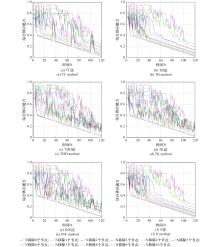
图9
各方法综合供应能力"
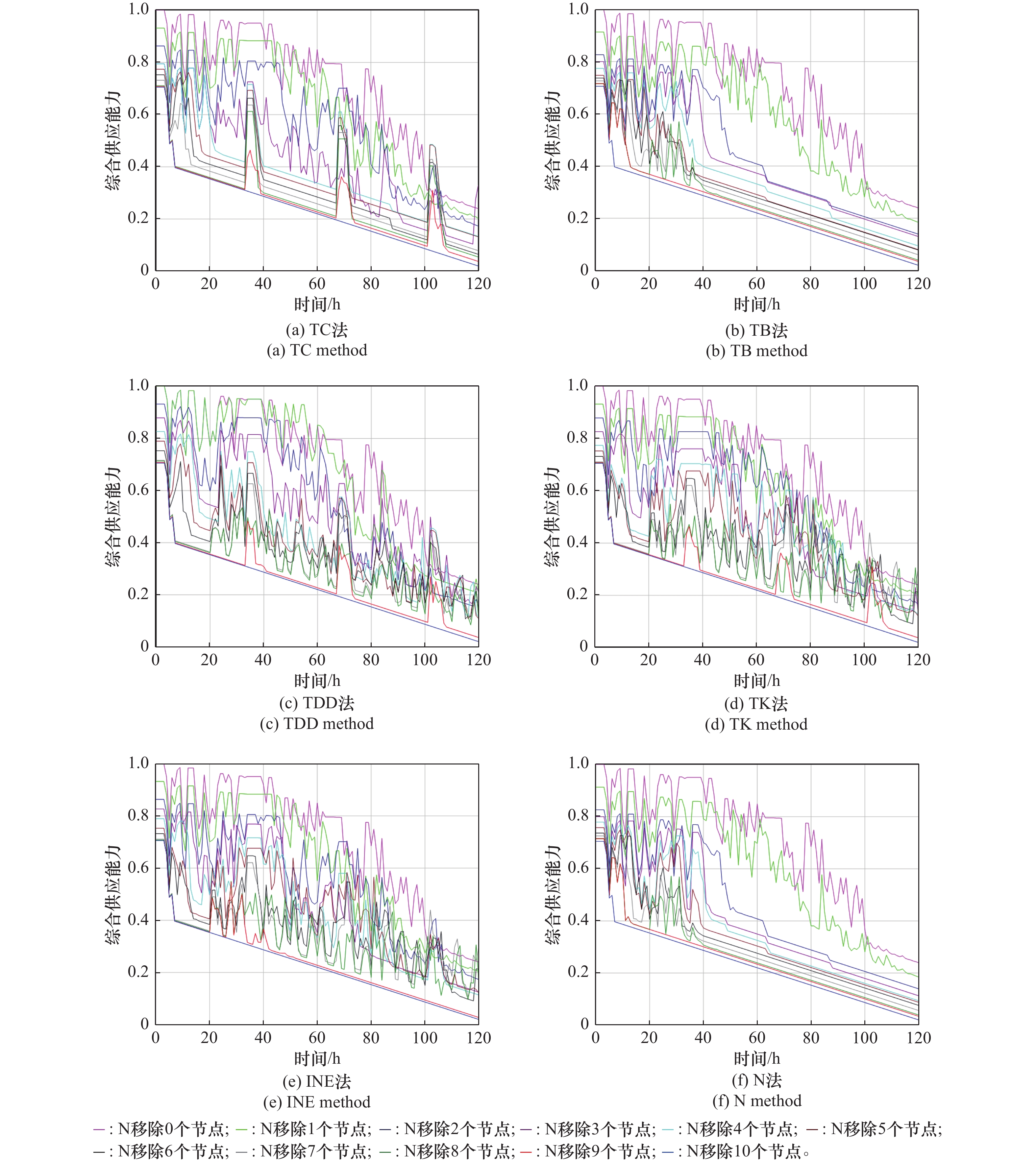
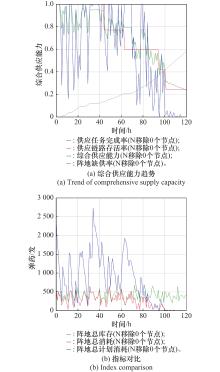
图10
N法结果图"
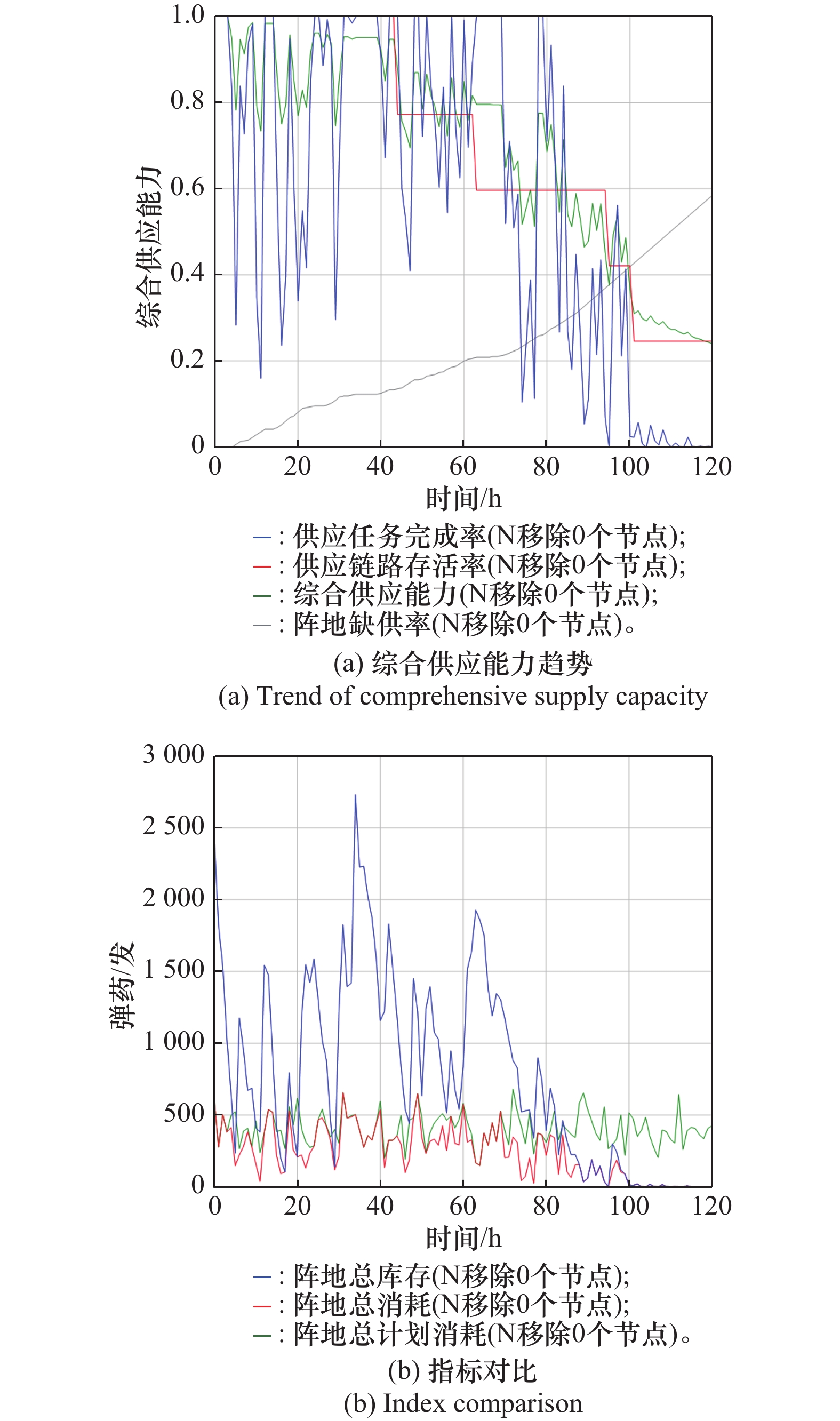
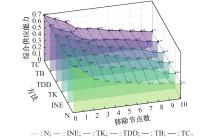
图11
各方法平均综合供应能力"
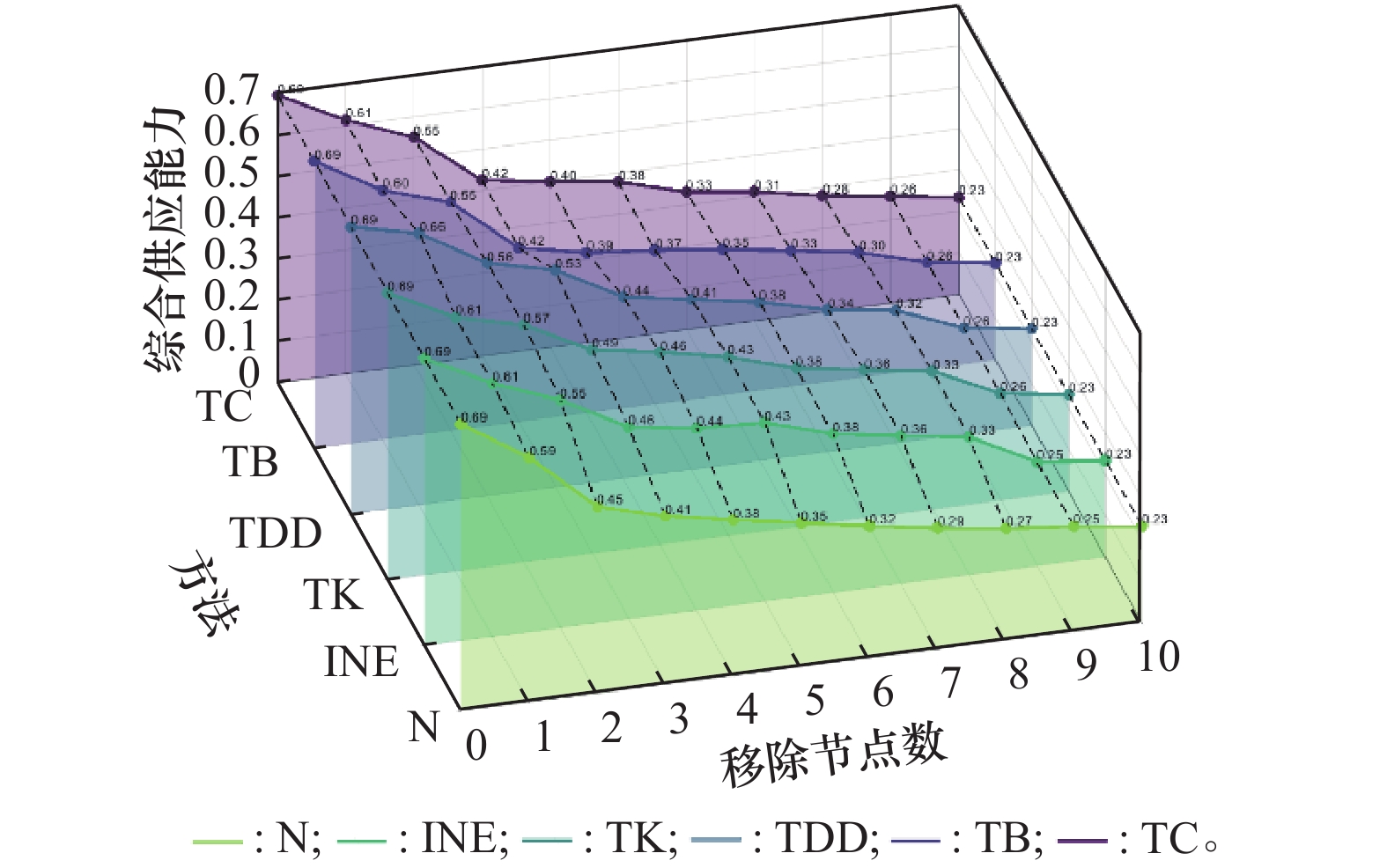
表7
阵地弹药计划消耗量想定"
| 想定 | 阵地 | 最小值/发 | 最大值/发 | 期望/发 | 方差 | 随机种子 |
| 初始想定 | F1 | 0 | 200 | 100 | 1 | |
| F2 | 10 | 200 | 100 | 1 | ||
| F3 | 10 | 200 | 100 | 1 | ||
| F4 | 10 | 200 | 100 | 1 | ||
| 想定1 | F1 | 0 | 300 | 200 | 1 | |
| F2 | 10 | 300 | 200 | 1 | ||
| F3 | 10 | 300 | 200 | 1 | ||
| F4 | 10 | 300 | 200 | 1 | ||
| 想定2 | F1 | 0 | 200 | 160 | 1 | |
| F2 | 10 | 200 | 80 | 1 | ||
| F3 | 10 | 200 | 80 | 1 | ||
| F4 | 10 | 200 | 80 | 1 | ||
| 想定3 | F1 | 0 | 200 | 80 | 1 | |
| F2 | 10 | 200 | 160 | 1 | ||
| F3 | 10 | 200 | 80 | 1 | ||
| F4 | 10 | 200 | 80 | 1 | ||
| 想定4 | F1 | 0 | 200 | 80 | 1 | |
| F2 | 10 | 200 | 80 | 1 | ||
| F3 | 10 | 200 | 160 | 1 | ||
| F4 | 10 | 200 | 80 | 1 | ||
| 想定5 | F1 | 0 | 200 | 80 | 1 | |
| F2 | 10 | 200 | 80 | 1 | ||
| F3 | 10 | 200 | 80 | 1 | ||
| F4 | 10 | 200 | 160 | 1 |
表8
节点重要度排序"
| 排序 | 初始想定 | 想定1 | 想定2 | 想定3 | 想定4 | 想定5 | |||||||||||
| 节点 | N法 | 节点 | N法 | 节点 | N法 | 节点 | N法 | 节点 | N法 | 节点 | N法 | ||||||
| 1 | 0.650 | 0.625 | 0.630 | 0.625 | 0.646 | 0.658 | |||||||||||
| 2 | 0.590 | 0.603 | 0.608 | 0.618 | 0.551 | 0.499 | |||||||||||
| 3 | 0.446 | 0.521 | 0.510 | 0.498 | 0.431 | 0.438 | |||||||||||
| 4 | 0.436 | 0.438 | 0.451 | 0.455 | 0.425 | 0.426 | |||||||||||
| 5 | 0.422 | 0.432 | 0.439 | 0.433 | 0.422 | 0.421 | |||||||||||
| 6 | 0.420 | 0.413 | 0.422 | 0.421 | 0.416 | 0.402 | |||||||||||
| 7 | 0.403 | 0.394 | 0.414 | 0.416 | 0.388 | 0.386 | |||||||||||
| 8 | 0.395 | 0.390 | 0.413 | 0.405 | 0.366 | 0.386 | |||||||||||
| 9 | 0.391 | 0.387 | 0.389 | 0.389 | 0.362 | 0.368 | |||||||||||
| 10 | 0.382 | 0.256 | 0.316 | 0.328 | 0.321 | 0.337 | |||||||||||
表9
相似性指标结果"
| 想定 | Jaccard(k=3) | Jaccard(k=5) | Spearman |
| 想定1 | 0.5 | 0.429 | 0.394 |
| 想定2 | 0.5 | 0.667 | 0.406 |
| 想定3 | 0.5 | 1.000 | 0.830 |
| 想定4 | 0.5 | 0.667 | 0.455 |
| 想定5 | 1.0 | 0.667 | 0.806 |
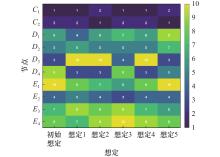
图12
节点排名热力图"
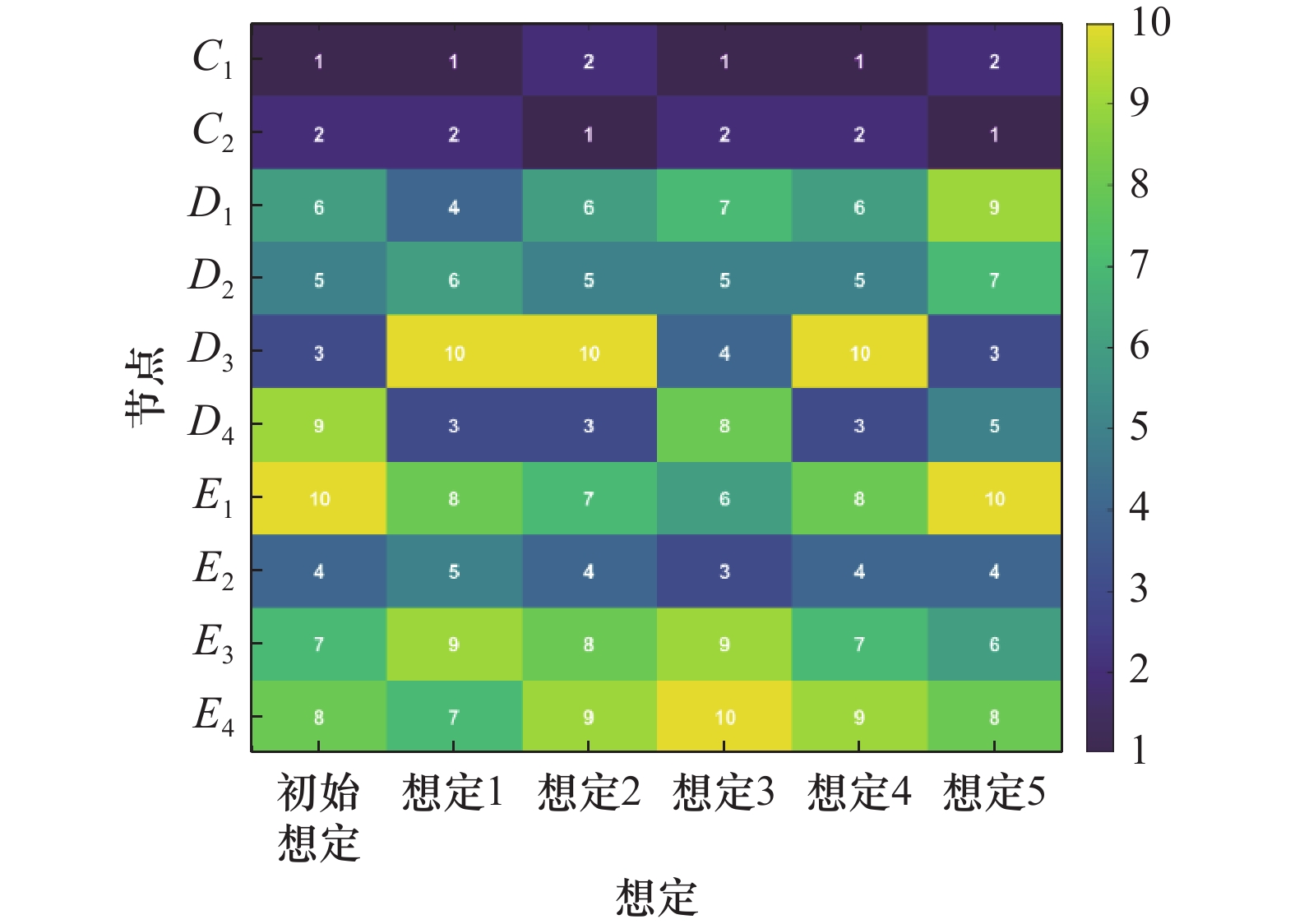
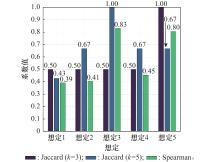
图13
相似性指标结果"
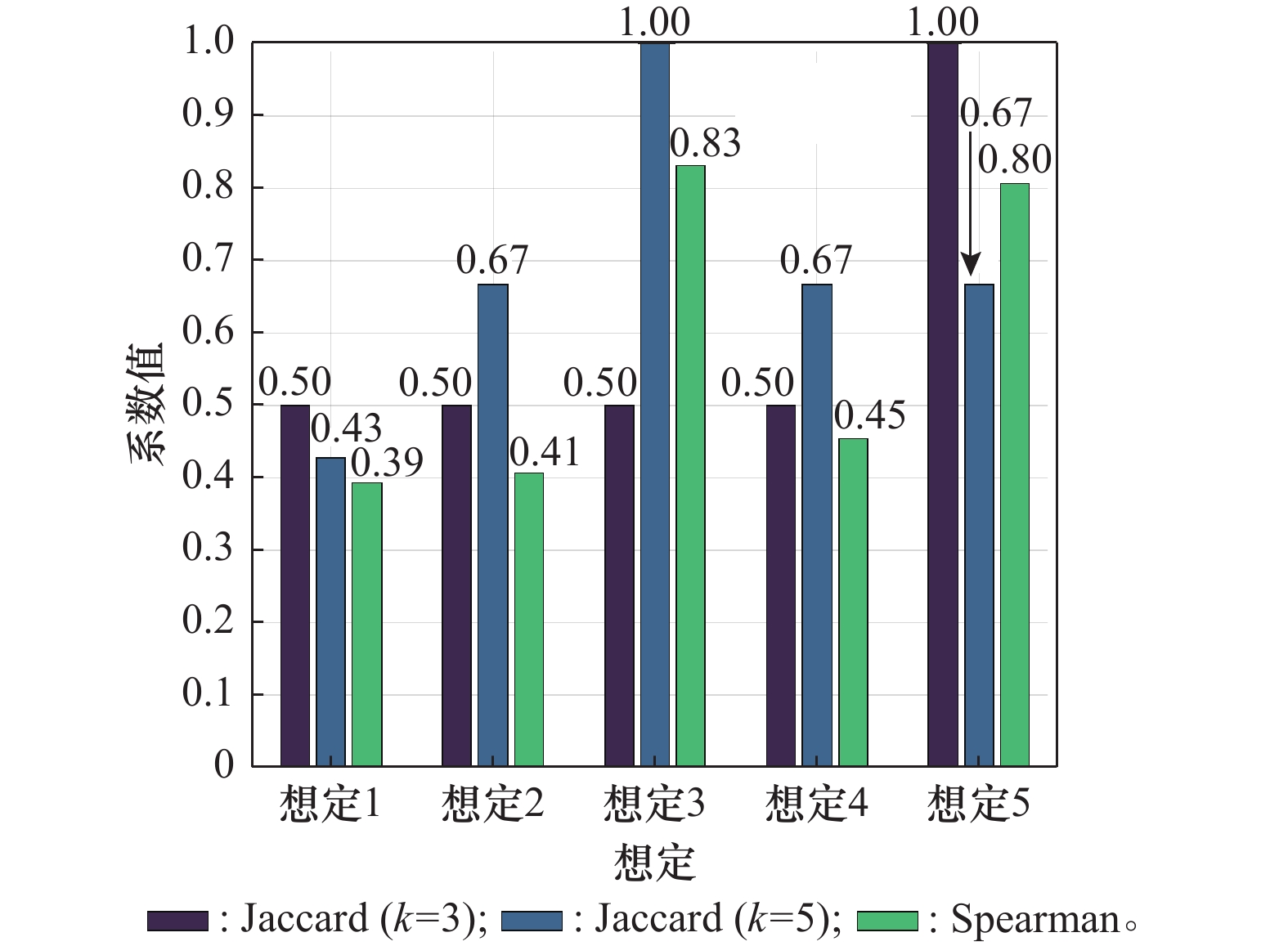
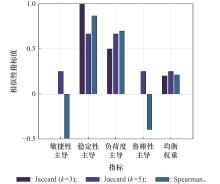
图14
单指标主导实验结果"
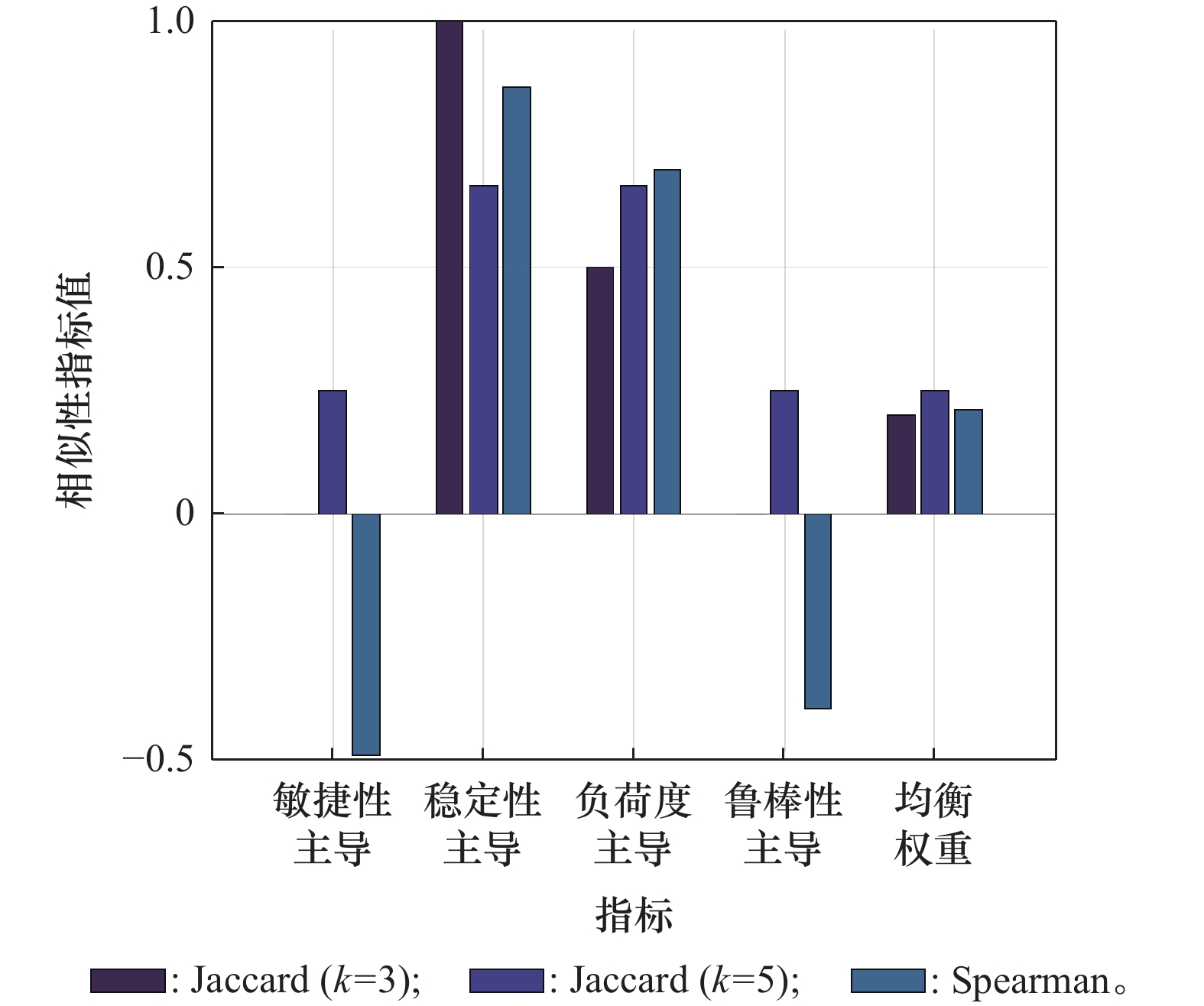
表10
权重设定"
| 分组 | 方案 | 敏捷性 | 稳定性 | 负荷度 | 鲁棒性 |
| — | 初始方案 | 0.100 | 0.500 | 0.300 | 0.100 |
| 单指标主导实验 | 方案1.1 | 0.700 | 0.100 | 0.100 | 0.100 |
| 方案1.2 | 0.100 | 0.700 | 0.100 | 0.100 | |
| 方案1.3 | 0.100 | 0.100 | 0.700 | 0.100 | |
| 方案1.40 | 0.100 | 0.100 | 0.100 | 0.700 | |
| 方案1.5 | 0.250 | 0.250 | 0.250 | 0.250 | |
| 局部权重变动实验 | 方案2.1 | 0.000 | 0.556 | 0.333 | 0.111 |
| 方案2.2 | 0.200 | 0.444 | 0.267 | 0.089 | |
| 方案2.3 | 0.300 | 0.389 | 0.233 | 0.078 | |
| 方案3.1 | 0.140 | 0.300 | 0.420 | 0.140 | |
| 方案3.2 | 0.080 | 0.600 | 0.240 | 0.080 | |
| 方案3.3 | 0.060 | 0.700 | 0.180 | 0.060 | |
| 方案4.1 | 0.143 | 0.714 | 0.100 | 0.143 | |
| 方案4.2 | 0.086 | 0.429 | 0.400 | 0.086 | |
| 方案4.3 | 0.071 | 0.357 | 0.500 | 0.071 | |
| 方案5.1 | 0.111 | 0.556 | 0.333 | 0.000 | |
| 方案5.2 | 0.089 | 0.444 | 0.267 | 0.200 | |
| 方案5.3 | 0.078 | 0.389 | 0.233 | 0.300 |
表11
节点排序"
| 分组 | 方案 | 节点排序 | |||||||||
| 1 | 2 | 3 | 4 | 5 | 6 | 7 | 8 | 9 | 10 | ||
| — | 初始方案 | ||||||||||
| 单指标主导实验 | 方案1.1 | ||||||||||
| 方案1.2 | |||||||||||
| 方案1.3 | |||||||||||
| 方案1.4 | |||||||||||
| 方案1.5 | |||||||||||
| 局部权重变动实验 | 方案2.1 | ||||||||||
| 方案2.2 | |||||||||||
| 方案2.3 | |||||||||||
| 方案3.1 | |||||||||||
| 方案3.2 | |||||||||||
| 方案3.3 | |||||||||||
| 方案4.1 | |||||||||||
| 方案4.2 | |||||||||||
| 方案4.3 | |||||||||||
| 方案5.1 | |||||||||||
| 方案5.2 | |||||||||||
| 方案5.3 | |||||||||||
表12
方案评价"
| 分组 | 方案 | Jaccard(k=3) | Jaccard(k=5) | Spearman |
| 单指标主导实验 | 方案1.1 | 0 | 0.25 | −0.49 |
| 方案1.2 | 1.0 | 0.67 | 0.87 | |
| 方案1.3 | 0.5 | 0.67 | 0.70 | |
| 方案1.4 | 0 | 0.25 | −0.39 | |
| 方案1.5 | 0.2 | 0.25 | 0.21 | |
| 局部权重变动实验 | 方案2.1 | 1.0 | 0.67 | 0.87 |
| 方案2.2 | 0.5 | 0.43 | 0.66 | |
| 方案2.3 | 0.2 | 0.43 | 0.49 | |
| 方案3.1 | 0.5 | 0.67 | 0.72 | |
| 方案3.2 | 1.0 | 0.67 | 0.93 | |
| 方案3.3 | 1.0 | 0.67 | 0.87 | |
| 方案4.1 | 1.0 | 0.67 | 0.87 | |
| 方案4.2 | 0.5 | 1.00 | 0.98 | |
| 方案4.3 | 0.5 | 0.67 | 0.94 | |
| 方案5.1 | 1.0 | 1.00 | 1.00 | |
| 方案5.2 | 1.0 | 1.00 | 1.00 | |
| 方案5.3 | 1.0 | 1.00 | 1.00 |
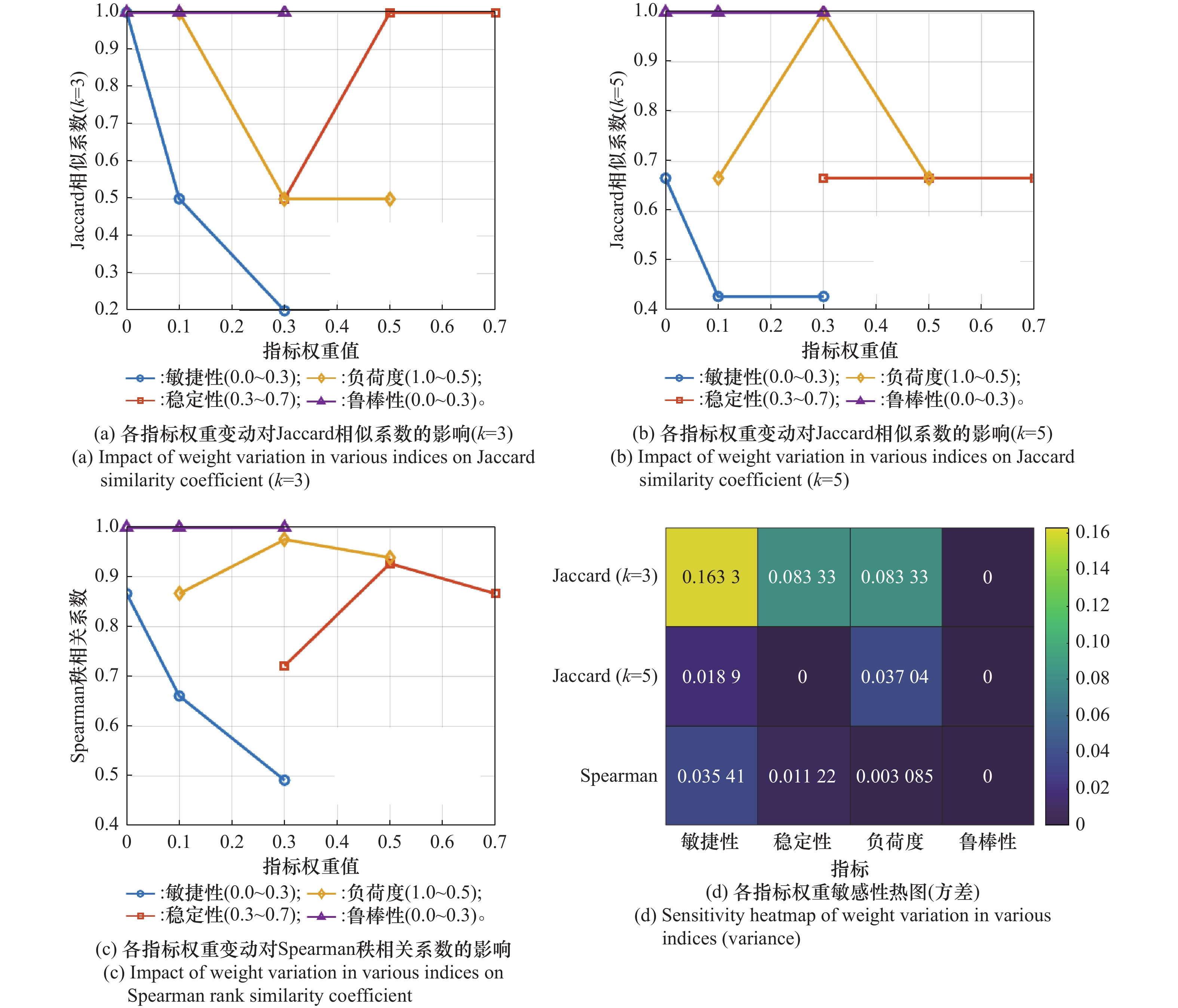
图15
局部权重变动实验结果"
| 1 | 刘昊邦, 史宪铭, 华斌, 等. 基于DoDAF的弹药供应保障体系构建与效能评估[J]. 兵器装备工程学报, 2023, 44 (1): 80- 85,174. |
| LIU H B, SHI X M, HUA B, et al. Construction and effectiveness evaluation of ammunition supply support system based on DoDAF[J]. Journal of Ordnance Equipment Engineering, 2023, 44 (1): 80- 85,174. | |
| 2 | 刘洪娟, 叶层程, 邓群, 等. 军事物流基础设施网络级联失效抗毁性研究[J]. 军事交通学报, 2022, 1 (4): 28- 33. |
| LIU H J, YE C C, DENG Q, et al. Research on cascading failure invulnerability of military logistics infrastructure network[J]. Journal of Military Transportation, 2022, 1 (4): 28- 33. | |
| 3 | 王琮, 沈会良, 夏永祥, 等. 装备保障体系关键节点分析[J]. 系统工程与电子技术, 2022, 44 (10): 3134- 3142. |
| WANG C, SHEN H L, XIA Y X, et al. Key node analysis of equipment support system[J]. Systems Engineering and Electronics, 2022, 44 (10): 3134- 3142. | |
| 4 | 熊志华, 姚智胜. 轨道交通网络级联失效影响范围研究[J]. 交通运输系统工程与信息, 2020, 20 (1): 12- 18. |
| XIONG Z H, YAO Z S. Impact scope of cascading failure in rail transit network[J]. Journal of Transportation Systems Engineering and Information Technology, 2020, 20 (1): 12- 18. | |
| 5 |
郝羽成, 李成兵, 魏磊. 考虑节点过载的复杂网络级联失效模型[J]. 系统工程与电子技术, 2018, 40 (10): 2282- 2287.
doi: 10.3969/j.issn.1001-506X.2018.10.19 |
|
HAO Y C, LI C B, WEI L. Cascading failure model for complex networks considering node overload[J]. Systems Engineering and Electronics, 2018, 40 (10): 2282- 2287.
doi: 10.3969/j.issn.1001-506X.2018.10.19 |
|
| 6 | YIN R R, LI L H, WANG Y M, et al. Robustness of networks with dependence clusters against hybrid cascading failure induced by fluctuating load[J]. Physica A: Statistical Mechanics and its Applications, 2025, 660: 130367. |
| 7 | 刘凤增, 肖兵, 刘俊杰, 等. 级联失效下非对称依赖网络鲁棒性研究[J]. 国防科技大学学报, 2021, 43 (1): 49- 56. |
| LIU F Z, XIAO B, LIU J J, et al. Robustness of interdependent asymmetric networks under cascading failures[J]. Journal of National University of Defense Technology, 2021, 43 (1): 49- 56. | |
| 8 | 李淑敏, 王旭. 欠载级联失效对网络抗毁性的影响——以生鲜农产品供应链网络为例[J]. 科学技术与工程, 2022, 22 (18): 7746- 7756. |
| LI S M, WANG X. Impact of underload cascading failure on network invulnerability: case study of fresh agricultural product supply chain network[J]. Science Technology and Engineering, 2022, 22 (18): 7746- 7756. | |
| 9 |
FU X W, YANG Y S. Modeling and analyzing cascading failures for internet of things[J]. Information Sciences, 2021, 545, 753- 770.
doi: 10.1016/j.ins.2020.09.054 |
| 10 | GJORGIEV B, SANSAVINI G. Identifying and assessing power system vulnerabilities to transmission asset outages via cascading failure analysis[J]. Reliability Engineering & System Safety, 2022, 217, 108085. |
| 11 | LU Q C, ZhANG L, XU P C, et al. Modeling network vulnerability of urban rail transit under cascading failures: a coupled map lattices approach[J]. Reliability Engineering & System Safety, 2022, 221, 108320. |
| 12 | 许波桅, 唐灿璇, 李军军. 级联失效下海港-陆港集装箱运输网络鲁棒性分析[J]. 交通运输系统工程与信息, 2023, 23 (3): 265- 279. |
| XU B W, TANG C X, LI J J. Robustness analysis of seaport-dry port container transportation network under cascading failure[J]. Journal of Transportation Systems Engineering and Information Technology, 2023, 23 (3): 265- 279. | |
| 13 | 王威, 狄鹏, 胡斌. 基于随机行走介数的级联失效模型[J]. 系统工程与电子技术, 2012, 34 (9): 1914- 1917. |
| WANG W, DI P, HU B. Cascading failure model based on random walk betweenness[J]. Systems Engineering and Electronics, 2012, 34 (9): 1914- 1917. | |
| 14 | 王宏宇, 吴纬, 魏艳艳. 基于超网络模型武器装备体系抗毁性分析[J]. 系统工程与电子技术, 2017, 39 (8): 1782- 1787. |
| WANG H Y, WU W, WEI Y Y. Invulnerability analysis of weapon equipment system-of-systems based on supernetwork model[J]. Systems Engineering and Electronics, 2017, 39 (8): 1782- 1787. | |
| 15 | 冯芬玲, 蔡明旭, 贾俊杰. 基于多层复杂网络的中欧班列运输网络关键节点识别研究[J]. 交通运输系统工程与信息, 2022, 22 (6): 191- 200. |
| FENG F L, CAI M X, JIA J J. Key node identification in China-Europe railway express transportation network based on multi-layer complex network[J]. Journal of Transportation Systems Engineering and Information Technology, 2022, 22 (6): 191- 200. | |
| 16 |
BAEK E C, HYON R, LÓPEZ K, et al. In-degree centrality in a social network is linked to coordinated neural activity[J]. Nature Communications, 2022, 13, 1118.
doi: 10.1038/s41467-022-28432-3 |
| 17 |
LIAO H Y, YI J Y, CAI S N, et al. Changes in degree centrality of network nodes in different frequency bands in Parkinson’s disease with depression and without depression[J]. Frontiers in Neuroscience, 2021, 15, 638554.
doi: 10.3389/fnins.2021.638554 |
| 18 |
WU X, CAO W, WANG J, et al. A spatial interaction incorporated betweenness centrality measure[J]. PloS One, 2022, 17 (5): e0268203.
doi: 10.1371/journal.pone.0268203 |
| 19 | LIU Z F, YE J X, ZOU Z N. Closeness centrality on uncertain graphs[J]. ACM Transactions on the Web, 2023, 17 (4): 1- 29. |
| 20 | 谢丽霞, 孙红红, 杨宏宇, 等. 基于K-shell的复杂网络关键节点识别方法[J]. 清华大学学报(自然科学版), 2022, 62 (5): 849- 861. |
| XIE L X, SUN H H, YANG H Y, et al. K-shell based method for identifying key nodes in complex networks[J]. Journal of Tsinghua University (Science and Technology), 2022, 62 (5): 849- 861. | |
| 21 |
KIM H, ANDERSON R. Temporal node centrality in complex networks[J]. Physical Review E, 2012, 85 (2): 026107.
doi: 10.1103/PhysRevE.85.026107 |
| 22 | WANG Z Q, PEI X B, WANG Y B, et al. Ranking the key nodes with temporal degree deviation centrality on complex networks[C]//Proc.of the 29th Chinese Control and Decision Conference, 2017: 1484−1489. |
| 23 | YE Z H, ZHAN X X, ZHOU Y Z, et al. Identifying vital nodes on temporal networks: an edge-based k-shell decomposition[C]//Proc.of the 36th Chinese Control Conference, 2017: 1402−1407. |
| 24 | 洪成, 蒋沅, 严玉为, 等. 基于层间邻域信息熵的时序网络节点重要性评估方法[J]. 复杂系统与复杂性科学, 2024, 21 (1): 20- 27,42. |
| HONG C, JIANG Y, YAN Y W, et al. Node importance evaluation in temporal networks based on inter-layer neighborhood information entropy[J]. Complex Systems and Complexity Science, 2024, 21 (1): 20- 27,42. | |
| 25 | 王亭, 张永, 周明妮, 等. 融合网络拓扑结构特征与客流量的城市轨道交通关键节点识别研究[J]. 交通运输系统工程与信息, 2022, 22 (6): 201- 211. |
| WANG T, ZHANG Y, ZHOU M N, et al. Key node identification in urban rail transit combining network topology and passenger flow[J]. Journal of Transportation Systems Engineering and Information Technology, 2022, 22 (6): 201- 211. | |
| 26 |
HE Z Y, ABBES A, JAHANSHAHI H, et al. Fractional-order discrete-time SIR epidemic model with vaccination: chaos and complexity[J]. Mathematics, 2022, 10 (2): 165.
doi: 10.3390/math10020165 |
| 27 |
AVRAM F, ADENANE R, KETCHESON D I. A review of matrix SIR arino epidemic models[J]. Mathematics, 2021, 9 (13): 1513.
doi: 10.3390/math9131513 |
| 28 |
LI B, ESKANDARI Z. Dynamical analysis of a discrete-time SIR epidemic model[J]. Journal of the Franklin Institute, 2023, 360 (12): 7989- 8007.
doi: 10.1016/j.jfranklin.2023.06.006 |
| 29 |
ABDY M, SIDE S, ANNAS S, et al. An SIR epidemic model for COVID-19 spread with fuzzy parameter: the case of Indonesia[J]. Advances in Difference Equations, 2021, 2021, 105.
doi: 10.1186/s13662-020-03162-2 |
| 30 |
LI B, ESKANDARI Z, AVAZZADEH Z. Dynamical behaviors of an SIR epidemic model with discrete time[J]. Fractal and Fractional, 2022, 6 (11): 659.
doi: 10.3390/fractalfract6110659 |
| 31 |
NAIK P A, ESKANDARI Z, MADZVAMUSE A, et al. Complex dynamics of a discrete-time seasonally forced SIR epidemic model[J]. Mathematical Methods in the Applied Sciences, 2023, 46 (6): 7045- 7059.
doi: 10.1002/mma.8955 |
| 32 | 秦长江, 吴克宇, 成清, 等. 基于杀伤网贡献率的动态体系节点重要度评估[J]. 系统工程与电子技术, 2023, 45 (6): 1732- 1742. |
| QIN C J, WU K Y, CHENG Q, et al. Dynamic system-of-systems node importance evaluation based on kill-web contribution rate[J]. Systems Engineering and Electronics, 2023, 45 (6): 1732- 1742. | |
| 33 | 赵美, 王海丹, 王立欣, 等. 基于系统动力学的战时弹药供应链可靠性仿真分析[J]. 装甲兵工程学院学报, 2013, 27 (6): 13- 17. |
| ZHAO M, WANG H D, WANG L X, et al. Reliability simulation analysis of wartime ammunition supply chain based on system dynamics[J]. Journal of Academy of Armored Force Engineering, 2013, 27 (6): 13- 17. | |
| 34 |
JOHNSON J. Automating the OODA loop in the age of intelligent machines: reaffirming the role of humans in command-and-control decision-making in the digital age[J]. Defence Studies, 2023, 23 (1): 43- 67.
doi: 10.1080/14702436.2022.2102486 |
| 35 | KRESS M. On the attrition of attacking missiles by defensive interceptors[J]. Naval Research Logistics, 1991, 38 (1): 29- 46. |
| 36 | RICHARDS M. Fundamentals of radar signal processing[M]. 2nd ed. New York: McGraw-Hill Education, 2014. |
| 37 | ROTMAN S , ADAR E, GU R. Statistical detection of targets in clutter using optical sensors[J]. Optical Engineering, 1991, 30(6): 811–819. |
| 38 | DELL R F, EAGLE J N. Optimizing defense of a border[J]. Military Operations Research, 2000, 5 (3): 27- 40. |
| 39 |
CAI K, WU L F. Using grey Gompertz model to explore the carbon emission and its peak in 16 provinces of China[J]. Energy and Buildings, 2022, 277, 112545.
doi: 10.1016/j.enbuild.2022.112545 |
| 40 | CLARK R . Intelligence analysis: a target-centric approach[M]. 6th ed. Washington D.C.: Congressional Quarterly Press, 2020. |
| 41 | WANG J L, GUO X. The Gompertz model and its applications in microbial growth and bioproduction kinetics: past, present and future[J]. Biotechnology Advances, 2024, 72: 108335. |
| 42 | 单子丹, 侯成, 陈佳鑫, 等. 级联失效下考虑节点过载的作业车间云网络鲁棒性研究[EB/OL]. [2025-04-20]. https://www.cnki.com.cn/Article/CJFDTotal-JSJJ20240426007.htm |
| SHAN Z D, HOU C, CHEN J X, et al. Robustness of job-shop cloud network considering node overload under cascading failure[EB/OL]. [2025-04-20]. https://www.cnki.com.cn/Article/CJFDTotal-JSJJ20240426007.htm | |
| 43 | 高磊, 高军, 刘晓蕾. 战时弹药供应链系统结构设计[J]. 火力与指挥控制, 2014, 39 (7): 155- 159,163. |
| GAO L, GAO J, LIU X L. Structural design of wartime ammunition supply chain system[J]. Fire Control & Command Control, 2014, 39 (7): 155- 159,163. | |
| 44 |
XIAO F, LI J, WEI B. Cascading failure analysis and critical node identification in complex networks[J]. Physica A: Statistical Mechanics and its Applications, 2022, 596, 127117.
doi: 10.1016/j.physa.2022.127117 |
| 45 | SANCHEZ-OCAMPO A, RAMIREZ J M, PATERNINA M R A, et al. Critical nodes detection and dynamic vulnerability analysis in power grids[C]//Proc. of the IEEE 7th Student Conference on Electric Machines and Systems, 2024. |
| [1] | 胡钢, 康凯, 胡俊杰, 徐翔, 任勇军. 基于弧有向加权时序网络超邻接矩阵列的节点重要性序结构演化辨识[J]. 系统工程与电子技术, 2026, 48(3): 970-985. |
| [2] | 陈国卫, 周雨菁, 任蕾. 面向系统性能最大化的装备经费结构SD优化[J]. 系统工程与电子技术, 2021, 43(4): 1022-1029. |
| [3] | 潘星, 左督军, 张跃东. 基于系统动力学的装备体系贡献率评估方法[J]. 系统工程与电子技术, 2021, 43(1): 112-120. |
| [4] | 齐小刚, 翟豆豆, 刘学星. 基于系统动力学的海上反舰兵力损耗分析[J]. 系统工程与电子技术, 2020, 42(4): 836-842. |
| [5] | 柳玉鹏, 杨宇涛, 闫相斌, 田耀丽, 李一军. 载人航天空间应用利益相关者系统动力学模型[J]. 系统工程与电子技术, 2019, 41(12): 2807-2819. |
| [6] | 周中良, 程越, 寇添, 呙鹏程. 基于两阶段DEA的空中突防兵力方案评价方法[J]. 系统工程与电子技术, 2018, 40(4): 797-804. |
| [7] | 郝羽成, 李成兵, 魏磊. 考虑节点过载的复杂网络级联失效模型[J]. 系统工程与电子技术, 2018, 40(10): 2282-2287. |
| [8] | 崔文岩, 孟相如, 康巧燕, 李纪真. 基于复合边权重的加权复杂网络级联抗毁性优化[J]. 系统工程与电子技术, 2017, 39(2): 355-361. |
| [9] | 张杰勇, 易侃, 王珩, 张金锋, 周翔翔. 考虑级联失效的C4ISR系统结构动态鲁棒性度量方法[J]. 系统工程与电子技术, 2016, 38(9): 2072-2079. |
| [10] | 陆余良, 杨斌. 域间路由系统级联失效分析与建模[J]. 系统工程与电子技术, 2016, 38(1): 172-178. |
| [11] | 沈迪, 李建华, 张强, 朱瑞. 军事信息栅格级联失效模型及鲁棒性策略研究[J]. 系统工程与电子技术, 2015, 37(2): 310-317. |
| [12] | 张超,张凤鸣,王瑛,吴虎胜. 基于复杂网络视角的航空通信网络鲁棒性分析[J]. 系统工程与电子技术, 2015, 37(1): 180-184. |
| [13] | 赵娟,郭平,邓宏钟,谭跃进. 节点相依失效下的方格网络可靠性建模与分析[J]. Journal of Systems Engineering and Electronics, 2013, 35(7): 1576-1583. |
| [14] | 岳奎志, 孙聪, 罗明强, 苏珉, 赵红超. 载机军舰回收舰载机的运行模型[J]. 系统工程与电子技术, 2013, 35(12): 2527-2532. |
| [15] | 王威,狄鹏,胡斌. 基于随机行走介数的级联失效模型[J]. Journal of Systems Engineering and Electronics, 2012, 34(9): 1914-1917. |
| 阅读次数 | ||||||
|
全文 |
|
|||||
|
摘要 |
|
|||||
