

系统工程与电子技术 ›› 2026, Vol. 48 ›› Issue (3): 1091-1101.doi: 10.12305/j.issn.1001-506X.2026.03.33
• 通信与网络 • 上一篇
黄宇1( ), 张鑫2,*, 田威3, 范崧伟1, 余立志1
收稿日期:2024-12-18
出版日期:2026-03-25
发布日期:2026-04-13
通讯作者:
张鑫
E-mail:xinyu.diamond@163.com
作者简介:黄 宇(1983—),男,高级工程师,博士,主要研究方向为大数据与智能化基金资助:
Yu HUANG1(), Xin ZHANG2,*, Wei TIAN3, Songwei FAN1, Lizhi YU1
Received:2024-12-18
Online:2026-03-25
Published:2026-04-13
Contact:
Xin ZHANG
E-mail:xinyu.diamond@163.com
摘要:
针对通信辐射源个体识别面临信号特征提取受噪声干扰的问题,构建测量信号数学模型,针对船舶自动识别系统辐射源信号研究。首先,运用短时傅里叶变换推导信号周期平稳特征的时频能量谱,分析其统计量与循环平稳特征关系;其次,提出构建深度学习训练数据集的方法,通过外场实测,表明了循环平稳特征的时频能量谱的差异性、稳定性以及抑制噪声干扰的有效性;最后,利用不同网络和时频特征对训练和测试样本进行比较实验,验证了基于循环平稳特征的累积时频能量谱方法对通信辐射源个体识别准确率的提升效果。针对船舶自动识别系统信号,在10种典型网络模型下的平均Top-1识别准确率为75.92%,相对传统的非累积识别方法性能提高约25%。该方法能有效应对不同时空场景下的噪声干扰,为非合作条件下通信辐射源个体识别提供了一种新的解决方案。
中图分类号:
黄宇, 张鑫, 田威, 范崧伟, 余立志. 基于时频循环平稳特征的通信辐射源个体识别[J]. 系统工程与电子技术, 2026, 48(3): 1091-1101.
Yu HUANG, Xin ZHANG, Wei TIAN, Songwei FAN, Lizhi YU. Individual identification of communication emitter based on time-frequency cyclostationary features[J]. Systems Engineering and Electronics, 2026, 48(3): 1091-1101.

图1
循环平稳特征的STFT累积时频能量谱提取流程图"

图2
循环平稳特征的STFT时频能量谱对比"
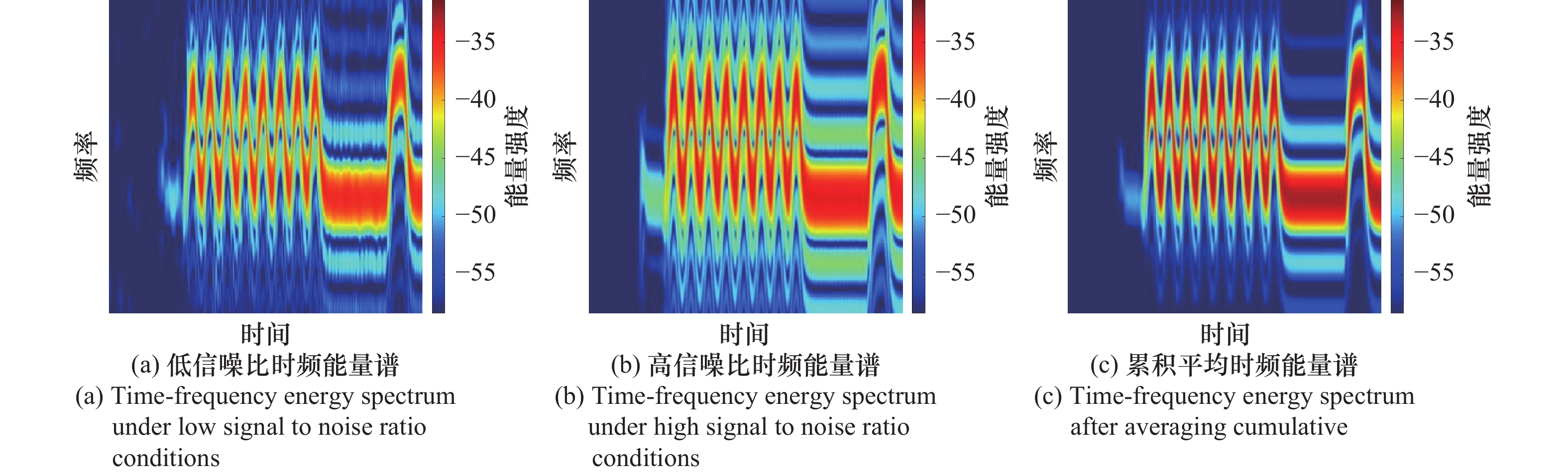
图3
10艘船舶的AIS信号STFT累积时频能量谱(相同部位特征)"
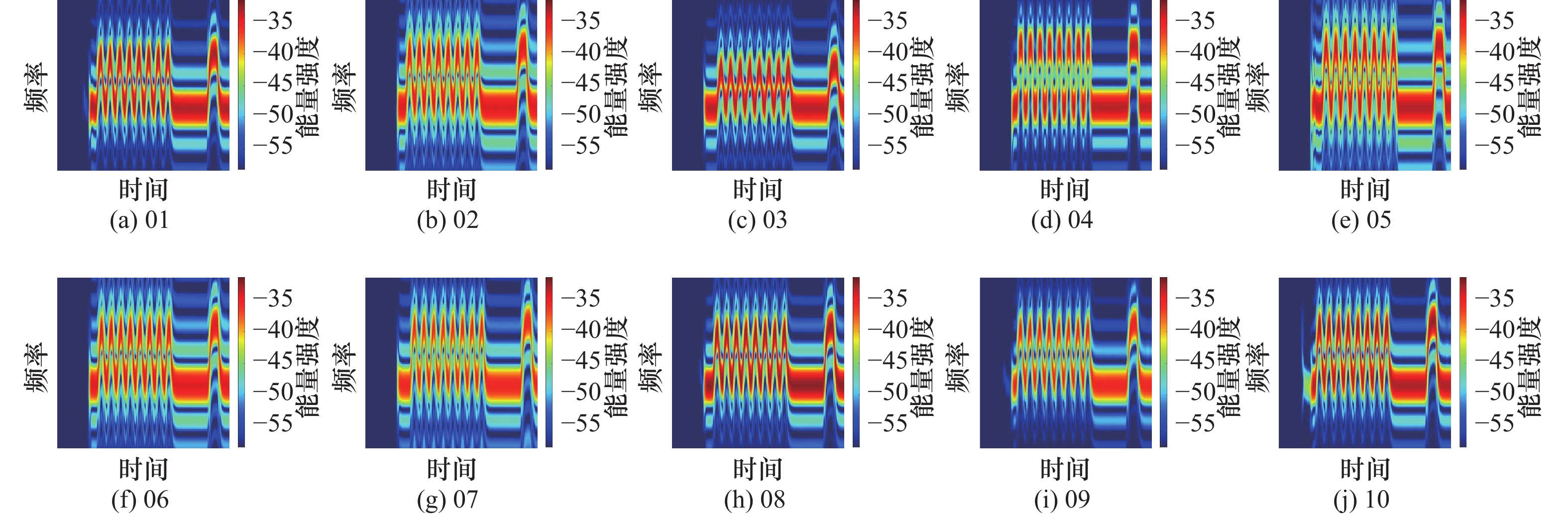
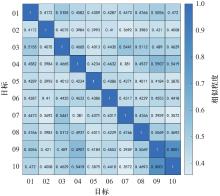
图4
10个目标的SSIM相似矩阵"
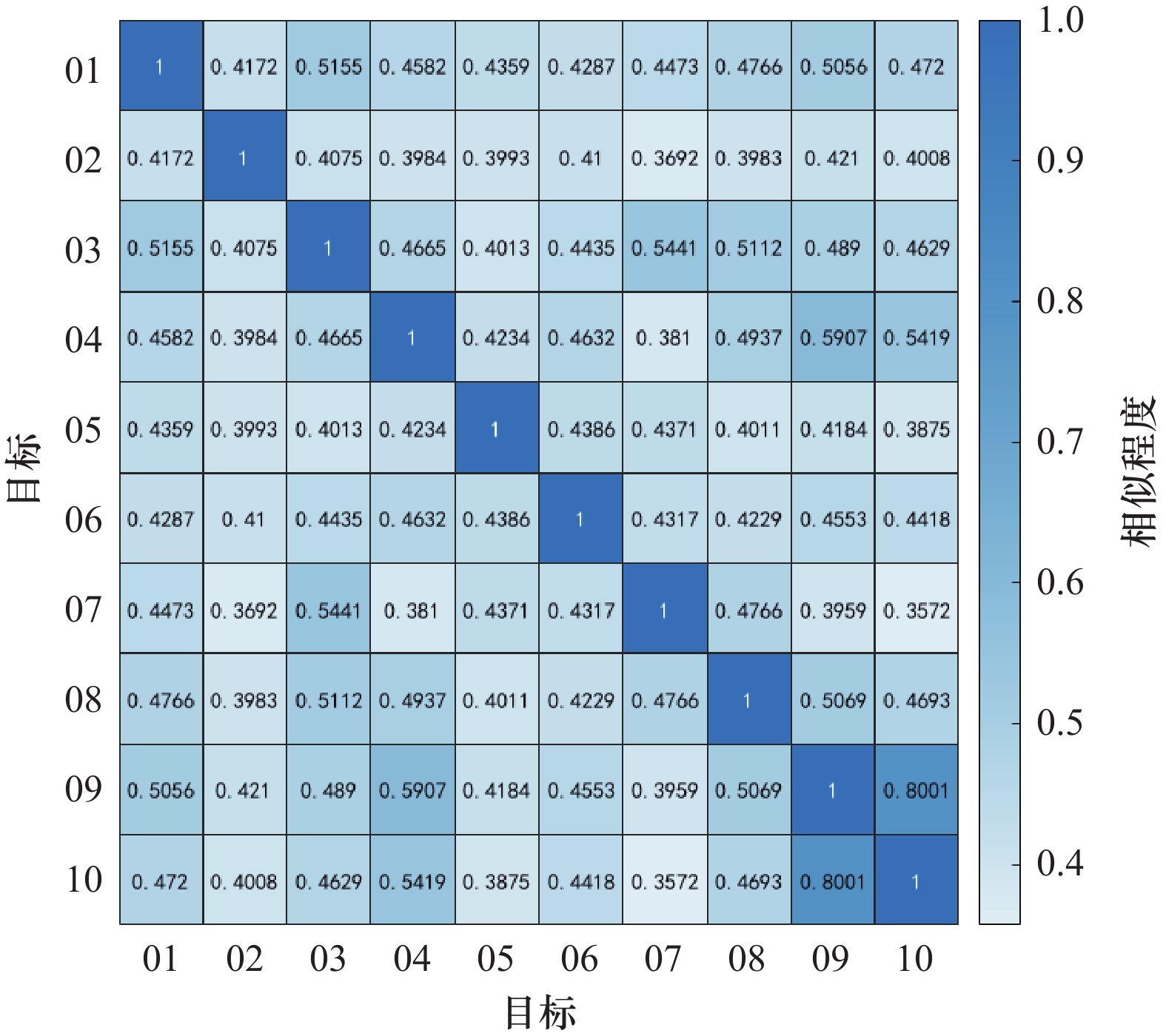
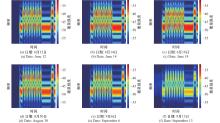
图5
同一船舶在不同时空的AIS信号STFT累积时频能量谱(相同部位特征)"
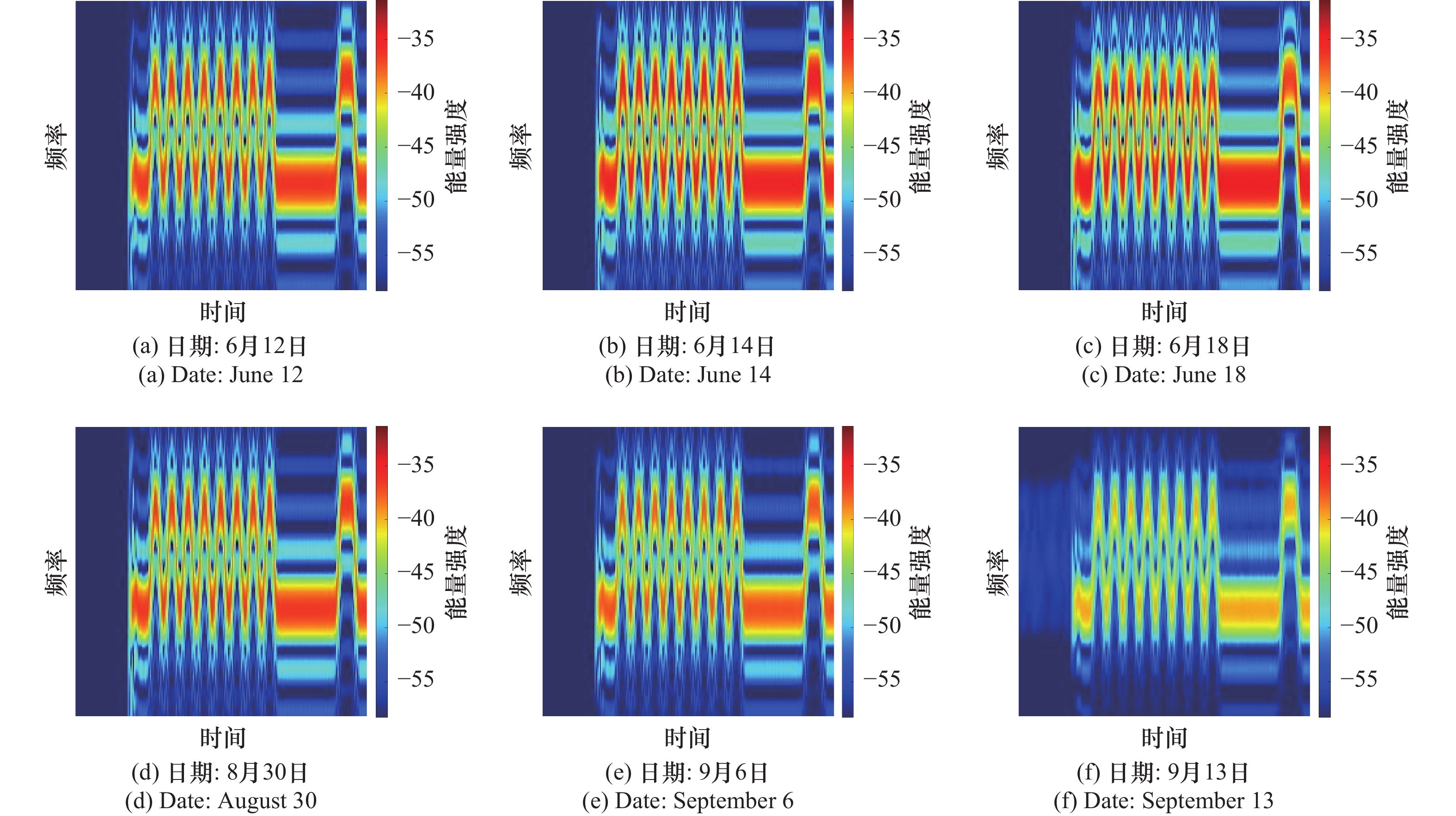
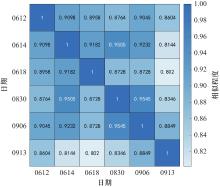
图6
同一辐射源信号在不同日期的SSIM相似矩阵"
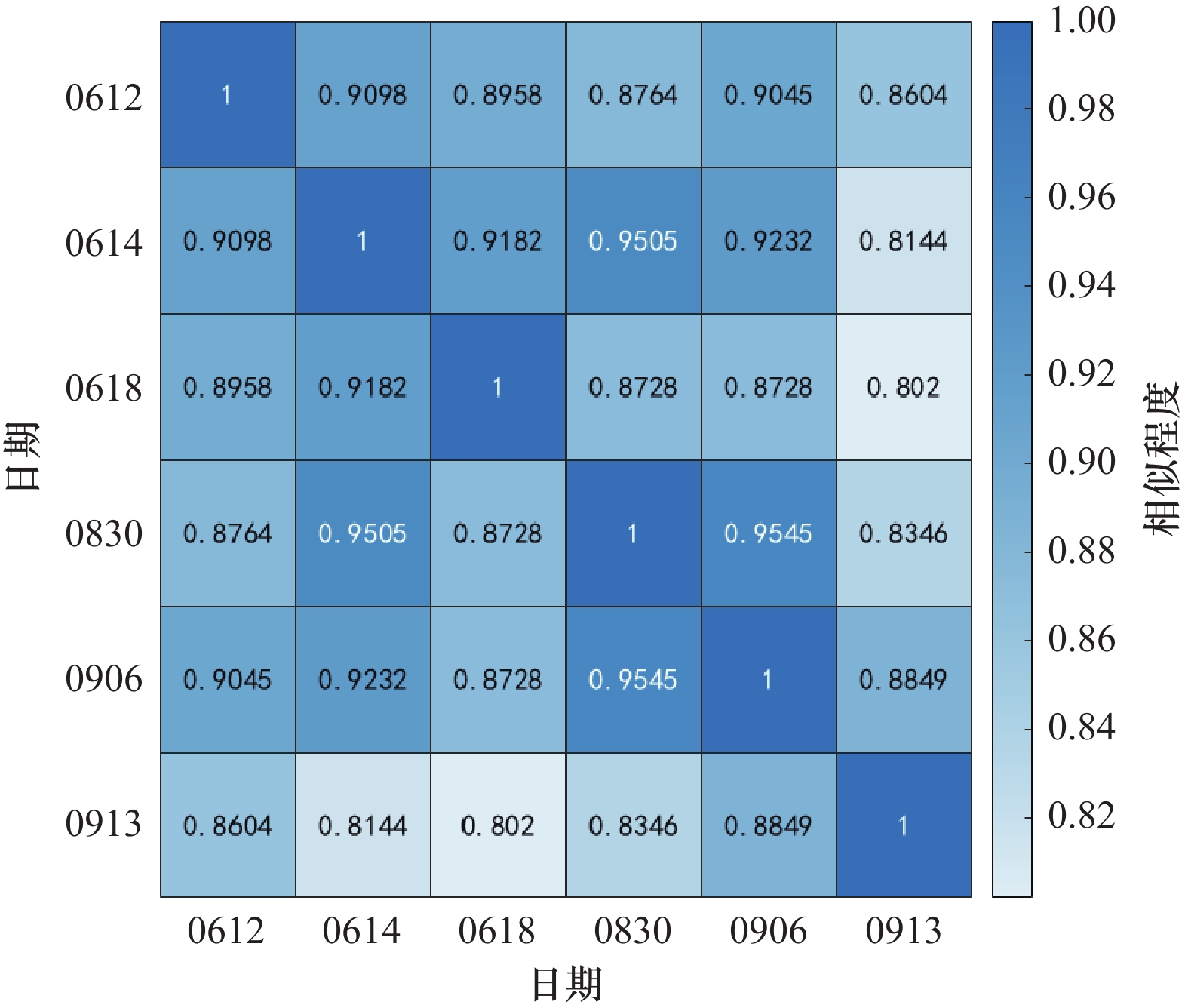
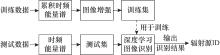
图7
基于深度学习的通信辐射源个体识别流程图"
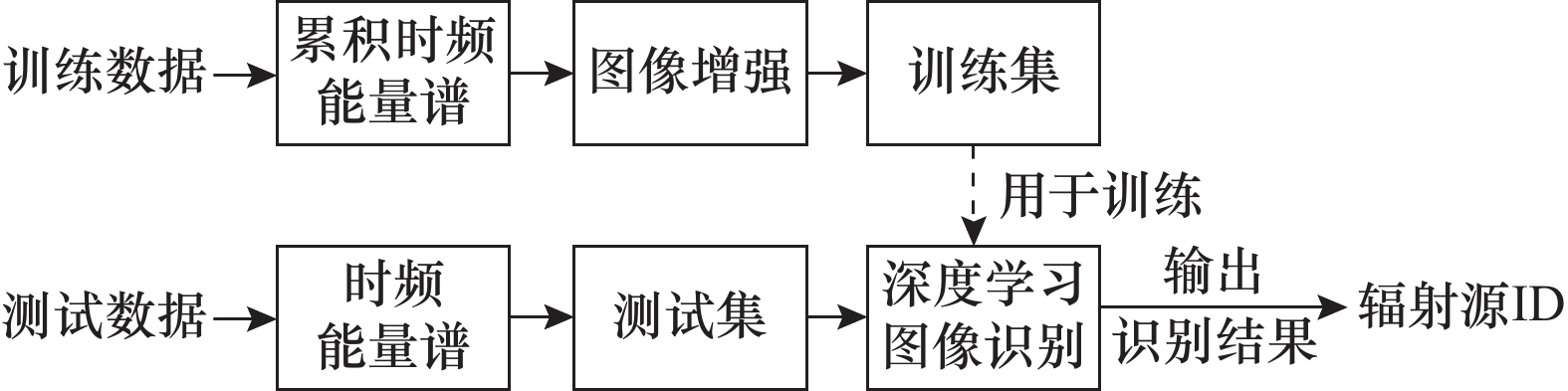
图8
训练集和验证集中各辐射源的时域局部波形(随机抽取)"
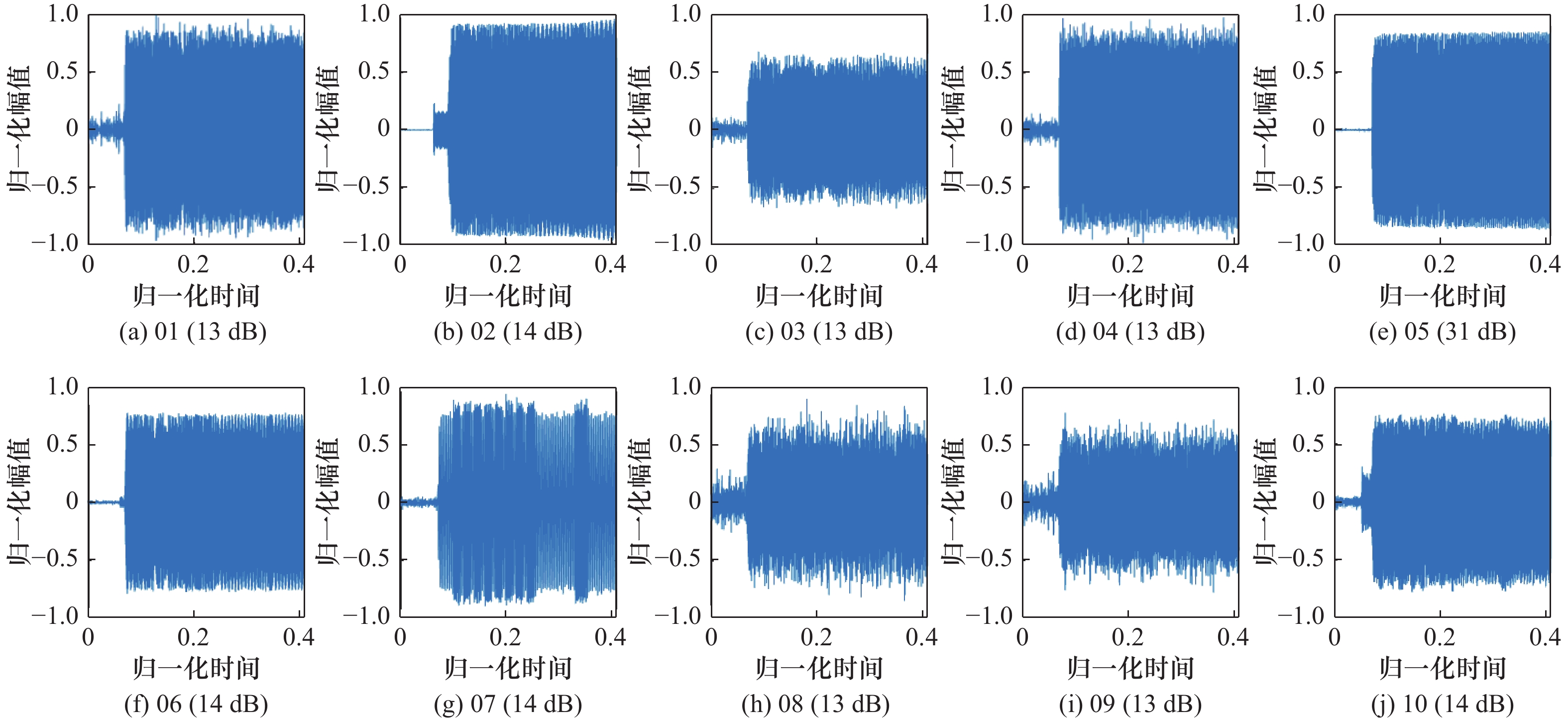
图9
测试集中各辐射源的时域局部波形(随机抽取)"
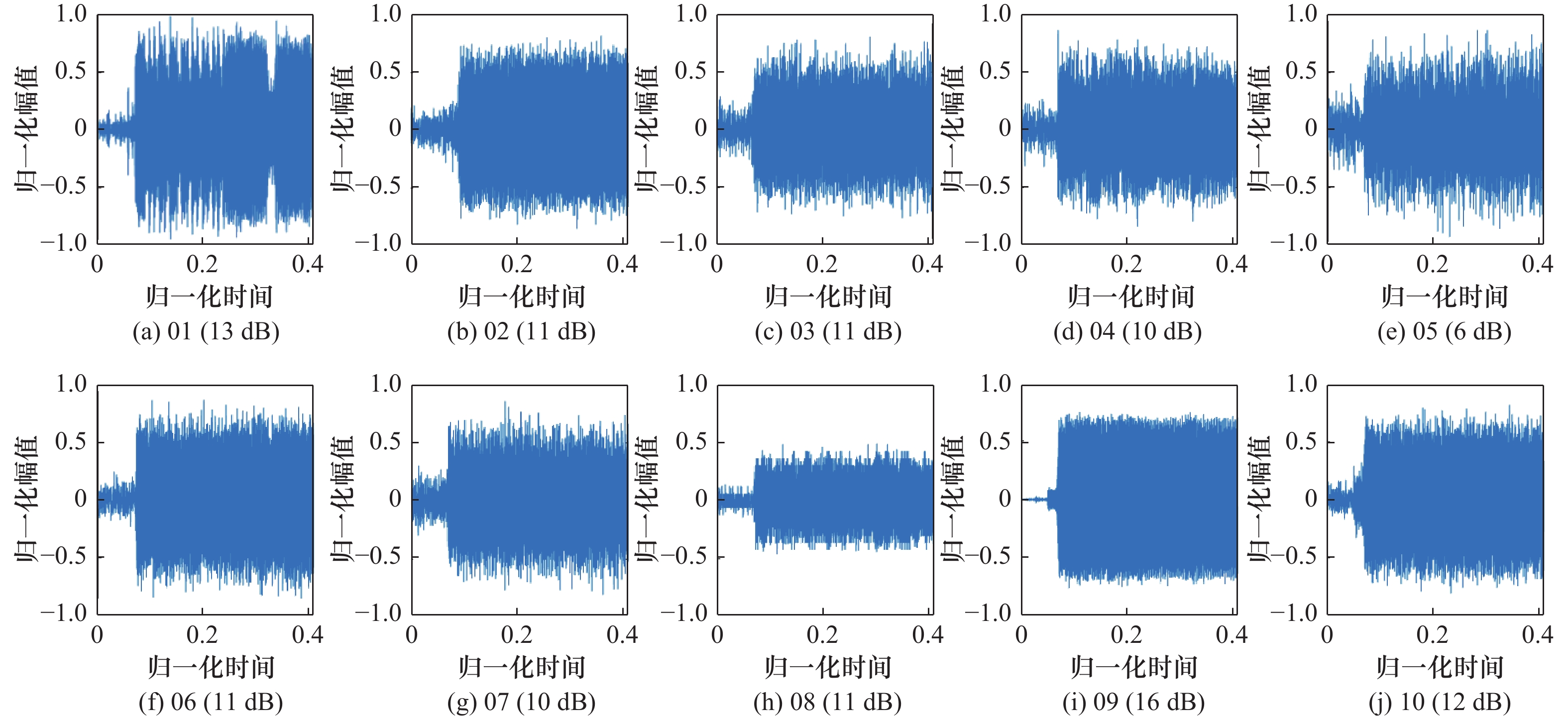
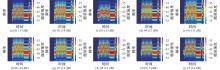
图10
训练集中各辐射源的局部单周期STFT时频能量谱(随机抽取)"
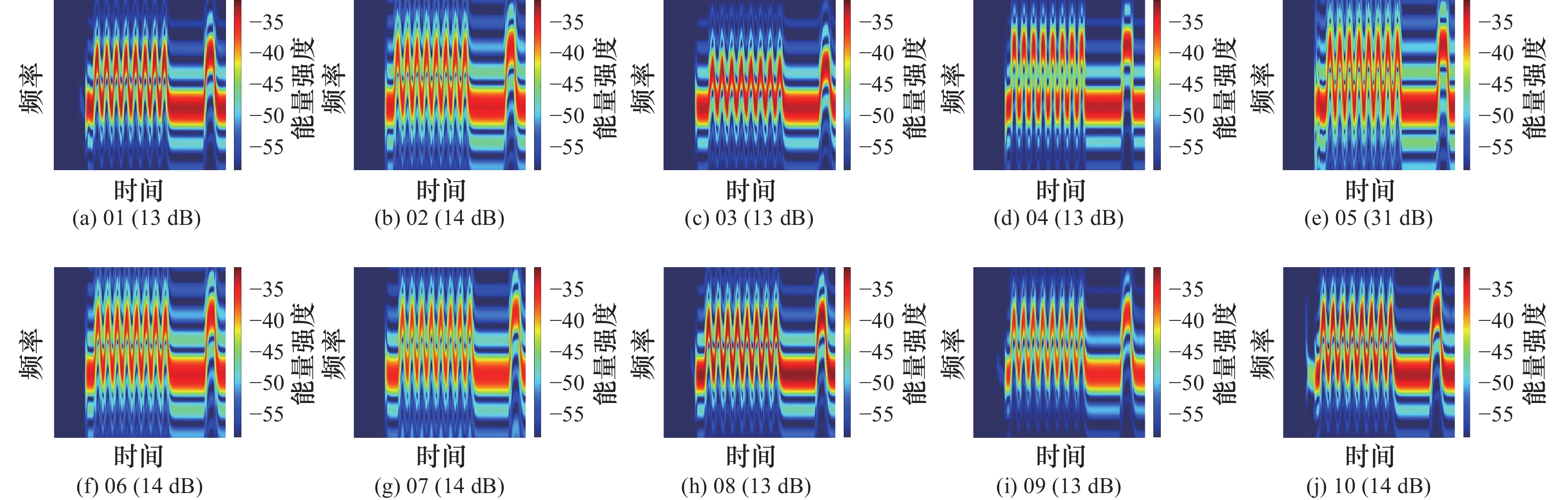
表1
不同时频特征的Top-1识别正确率"
| 方法 | 平均 | Google Net | ResNet 50 | DarkNet 53 | VGG 16 | VGG 19 | Inception Resnetv2 | Incept ionv3 | NasNet Mobile | ResNet101 | DenseNet201 |
| HOSA | |||||||||||
| WVD | |||||||||||
| STFT | |||||||||||
| STFT累积 |
表2
不同网络参数"
| 参数 | Google Net | ResNet 50 | DarkNet 53 | VGG 16 | VGG 19 | Inception Resnetv2 | Incept ionv3 | NasNet Mobile | ResNet101 | DenseNet201 |
| 深度 | 22 | 50 | 53 | 16 | 19 | 164 | 48 | — | 101 | 201 |
| 大小/MB | 27 | 96 | 155 | 515 | 535 | 209 | 89 | 20 | 167 | 77 |
| 参数(×105) | 7 | 25.6 | 41.6 | 138 | 144 | 55.9 | 23.9 | 5.3 | 44.6 | 20 |
| 输入大小 | 224×224×3 | 256×256×3 | 224×224×3 | 299×299×3 | 224×224×3 | |||||
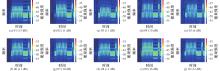
图11
测试集中各辐射源的局部单周期STFT时频能量谱(随机抽取)"
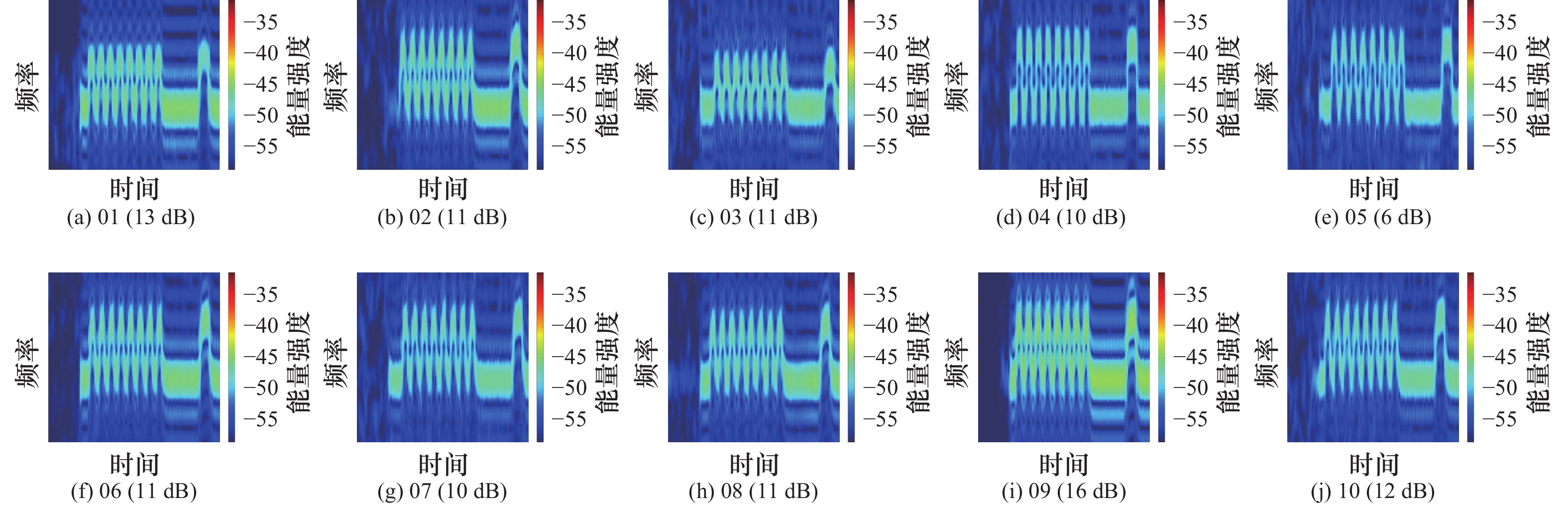
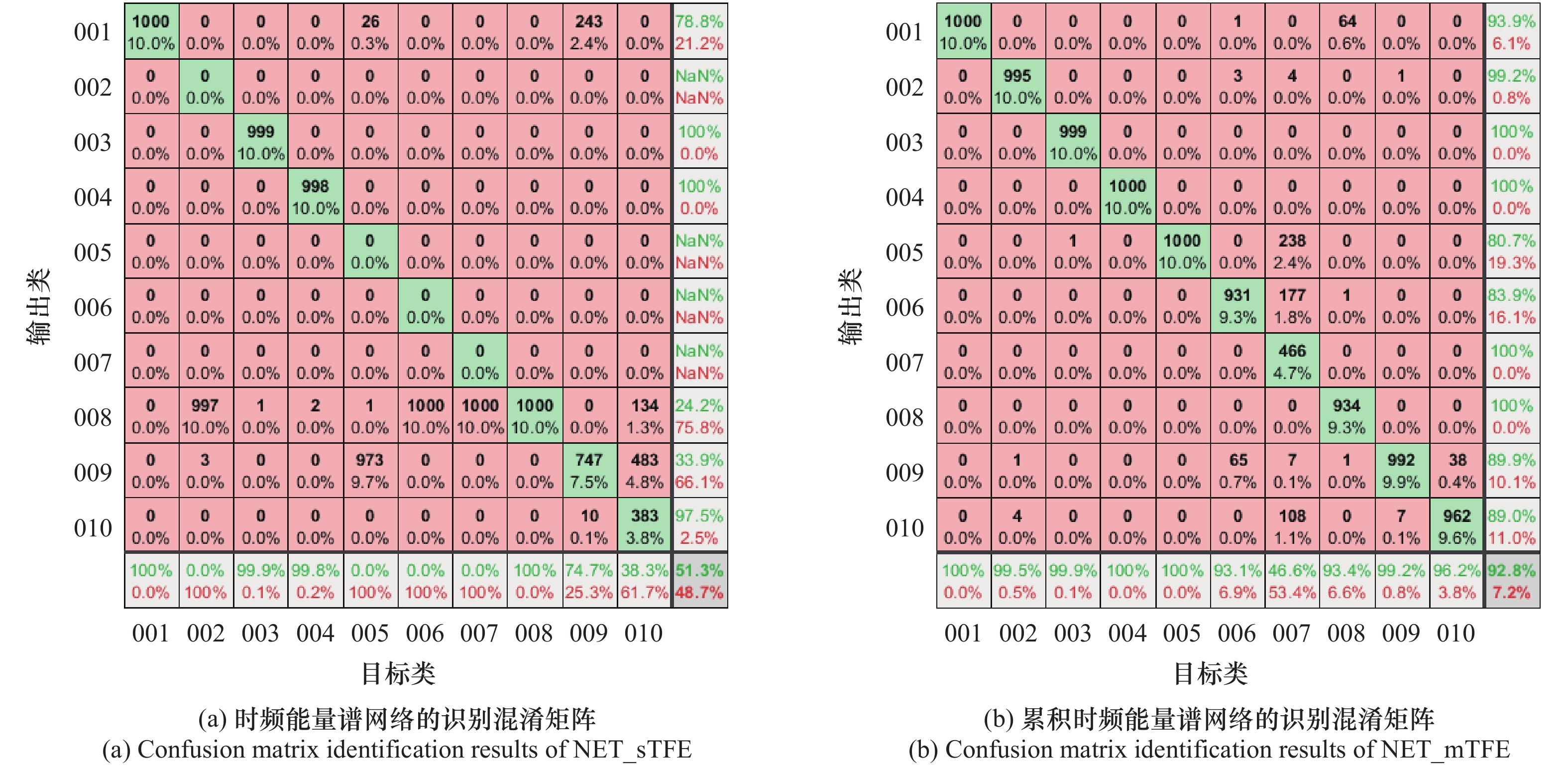
图12
NET_sTFE和NET_mTFE的DenseNet201网络对测试集的识别结果"
| 1 | 闫文君, 段可欣, 凌青, 等. 数据恶劣条件下的辐射源个体识别方法综述[J]. 海军航空大学学报, 2024, 39 (5): 523- 534. |
| YAN W J, DUAN K X, LING Q, et al. Overview of individual identification methods for radiation sources under harsh data conditions[J]. Journal of Naval Aviation University, 2024, 39 (5): 523- 534. | |
| 2 |
LI Q L, WANG F S, ZHANG Y B, et al. Novel micro-UAV identification approach assisted by combined RF fingerprint[J]. IEEE Sensors Journal, 2024, 24 (16): 26802- 26813.
doi: 10.1109/JSEN.2024.3411106 |
| 3 |
LU Q, YANG Z K, ZHANG H L, et al. MRFE: a deep-learning-based multidimensional radio frequency fingerprinting enhancement approach for IoT device identification[J]. IEEE Internet of Things Journal, 2024, 11 (18): 30442- 30454.
doi: 10.1109/JIOT.2024.3414195 |
| 4 | LIN Y, ZHA H R, TU Y, et al. GLR-SEI: green and low resource specific emitter identification based on complex networks and fisher pruning[J]. IEEE Trans. on Emerging Topics in Computational Intelligence, 2024, 8 (5): 3239- 3250. |
| 5 |
YAO H M, ZHANG H H, JIANG L J, et al. Enhanced deep learning approach for electromagnetic forward modeling of dielectric target within the wide frequency band using deep residual convolutional neural network[J]. IEEE Antennas and Wireless Propagation Letters, 2024, 23 (6): 1884- 1888.
doi: 10.1109/LAWP.2024.3372437 |
| 6 |
ZHANG J N, LIU Y S, DING G R, et al. Adaptive decomposition and extraction network of individual fingerprint features for specific emitter identification[J]. IEEE Trans. on Information Forensics and Security, 2024, 19, 8515- 8528.
doi: 10.1109/TIFS.2024.3427361 |
| 7 |
张顺生, 丁宦城, 王文钦. 面向辐射源识别的多尺度特征提取与特征选择网络[J]. 国防科技大学学报, 2024, 46 (6): 141- 148.
doi: 10.11887/j.cn.202406015 |
|
ZHANG S S, DING H C, WANG W Q. Multi-scale feature extraction and feature selection network for radiation source identification[J]. Journal of National University of Defense Technology, 2024, 46 (6): 141- 148.
doi: 10.11887/j.cn.202406015 |
|
| 8 |
PENG Y, LIU P F, ZHANG Q Y, et al. Dynamic adaptation RFF identification method leveraging cognitive representation learning[J]. IEEE Trans. on Information Forensics and Security, 2024, 19, 7939- 7951.
doi: 10.1109/TIFS.2024.3451710 |
| 9 |
CHAI Z, PENG X Y, HUANG X R, et al. Channel-robust RF fingerprint identification using multi-task learning and receiver collaboration[J]. IEEE Signal Processing Letters, 2024, 31, 2510- 2514.
doi: 10.1109/LSP.2024.3460654 |
| 10 |
ZHANG T T, XU D Y, REN P Y, et al. DFLNet: deep federated learning network with privacy preserving for vehicular LoRa nodes fingerprinting[J]. IEEE Trans. on Vehicular Technology, 2024, 73 (2): 2901- 2905.
doi: 10.1109/TVT.2023.3316639 |
| 11 | 张多纳, 赵宏佳, 鲁远耀, 等. 融入注意力机制的小样本遥感图像场景分类[J]. 计算机工程与应用, 2024, 60 (4): 173- 182. |
| ZHANG D N, ZHAO H J, LU Y Y, et al. Few-shot scene classification with attention mechanism in remote sensing[J]. Computer Engineering and Applications, 2024, 60 (4): 173- 182. | |
| 12 |
FAN R, SI C K, HAN Y, et al. RFFsNet-SEI: a multidimensional balanced-RFFs deep neural network framework for specific emitter identification[J]. Journal of Systems Engineering and Electronics, 2024, 35 (3): 558- 574.
doi: 10.23919/JSEE.2023.000069 |
| 13 |
ABDURRAHMAN E, BECHIR H. Distinguishable IQ feature representation for domain-adaptation learning of WiFi device fingerprints[J]. IEEE Trans. on Machine Learning in Communications and Networking, 2024, 2, 1404- 1423.
doi: 10.1109/TMLCN.2024.3446743 |
| 14 |
谢存祥, 张立民, 钟兆根. 基于Hilbert-Huang变换与对抗训练的特定辐射源识别[J]. 系统工程与电子技术, 2021, 43 (12): 3478- 3487.
doi: 10.12305/j.issn.1001-506X.2021.12.08 |
|
XIE C X, ZHANG L M, ZHONG Z G. Specific emitter identification based on Hilbert-Huang transform and adversarial training[J]. Systems Engineering and Electronics, 2021, 43 (12): 3478- 3487.
doi: 10.12305/j.issn.1001-506X.2021.12.08 |
|
| 15 |
LI B, CETIN E. A graphical deep learning approach to RF fingerprinting in the time-frequency domain[J]. IEEE Sensors Journal, 2024, 24 (10): 16984- 16990.
doi: 10.1109/JSEN.2024.3383437 |
| 16 |
SHEN G X, ZHANG J Q, ALAN M, et al. Towards scalable and channel-robust radio frequency fingerprint identification for LoRa[J]. IEEE Trans. on Information Forensics and Security, 2022, 17, 774- 787.
doi: 10.1109/TIFS.2022.3152404 |
| 17 | 王磊, 张志勇, 胥辉旗, 等. 基于VMD分解和多域联合分布的雷达辐射源识别[J]. 系统工程与电子技术, 2023, 45 (8): 2479- 2488. |
| WANG L, ZHANG Z Y, XU H Q, et al. Radar emitter identification based on VMD and multi-domain jointed distribution[J]. Systems Engineering and Electronics, 2023, 45 (8): 2479- 2488. | |
| 18 |
JIANG Q, SHA J. RF fingerprinting identification in low SNR scenarios for automatic identification system[J]. IEEE Trans. on Wireless Communications, 2024, 23 (3): 2070- 2081.
doi: 10.1109/TWC.2023.3294988 |
| 19 |
FU H, SUN Y F, PENG L N, et al. Channel-resilient RF fingerprint identification based on nonlinear features with memory effect[J]. IEEE Communications Letters, 2024, 28 (4): 798- 802.
doi: 10.1109/LCOMM.2024.3364494 |
| 20 | AMEYA S R, JACOB D R, LENNART M H, et al. Robust measurements for RF fingerprinting with constellation patterns of radiated waveforms [C]//Proc. of the IEEE Physical Assurance and Inspection of Electronics, 2023. |
| 21 |
YIN P C, PENG L N, SHEN G X, et al. Multi-channel CNN-based open-set RF fingerprint identification for LTE devices[J]. IEEE Trans. on Communications and Networking, 2024, 10 (5): 1788- 1800.
doi: 10.1109/TCCN.2024.3391293 |
| 22 |
PENG L N, WU Z N, ZHANG J Q, et al. Hybrid RFF identification for LTE using wavelet coefficient graph and differential spectrum[J]. IEEE Trans. on Vehicular Technology, 2024, 73 (8): 11621- 11636.
doi: 10.1109/TVT.2024.3380671 |
| 23 | AMANI AS, FRANCESCO R, SALVATORE DO, et al. Exposing the fingerprint: dissecting the impact of the wireless channel on radio fingerprinting [C]//Proc. of the IEEE Conference on Computer Communications, 2020: 646−655. |
| 24 |
QI X Y, HU A Q, CHEN T S. Lightweight radio frequency fingerprint identification scheme for V2X based on temporal correlation[J]. IEEE Trans. on Information Forensics and Security, 2024, 19, 1056- 1070.
doi: 10.1109/TIFS.2023.3329683 |
| 25 |
PENG L N, PENG H C, FU H. Channel-robust radio frequency fingerprint identification for cellular uplink LTE devices[J]. IEEE Internet of Things Journal, 2024, 11 (10): 17154- 17169.
doi: 10.1109/JIOT.2024.3358904 |
| 26 |
HUANG L, BI S Z, ZHANG Y J. Deep reinforcement learning for online computation offloading in wireless powered mobile-edge computing networks[J]. IEEE Trans. on Mobile Computing, 2020, 19 (11): 2581- 2593.
doi: 10.1109/TMC.2019.2928811 |
| 27 |
BRAEDEN P M, LAUREN J W, ALAN J M. Sensitivity analysis of RFML applications[J]. IEEE Access, 2024, 12, 80327- 80344.
doi: 10.1109/ACCESS.2024.3409471 |
| 28 |
GAO Y, WU Q Q, CHEN W, et al. Exploiting intelligent reflecting surfaces for interference channels with SWIPT[J]. IEEE Trans. on Wireless Communications, 2024, 23 (5): 4442- 4458.
doi: 10.1109/TWC.2023.3318795 |
| 29 |
CAI Z X, WANG Y, JIANG Q, et al. Toward intelligent lightweight and efficient UAV identification with RF fingerprinting[J]. IEEE Internet of Things Journal, 2024, 11 (15): 26329- 26339.
doi: 10.1109/JIOT.2024.3395466 |
| 30 |
TANG P, DING G R, XU Y T, et al. Causal learning for robust specific emitter identification over unknown channel statistics[J]. IEEE Trans. on Information Forensics and Security, 2024, 19, 5316- 5329.
doi: 10.1109/TIFS.2024.3393237 |
| 31 |
BAI N, INWHEE J. Deep learning methods with the improved attention for explainable image recognition[J]. IEEE Access, 2024, 12, 70559- 70567.
doi: 10.1109/ACCESS.2024.3397323 |
| 32 | ZHOU Q, GAO J Y, YUAN Y, et al. Single-stream extractor network with contrastive pre-training for remote-sensing change captioning[J]. IEEE Trans. on Geoscience and Remote Sensing, 2024, 62, 5624514. |
| 33 |
CHEN J Y, GENG Y X, CHEN Z, et al. Zero-shot and few-shot learning with knowledge graphs: a comprehensive survey[J]. Proceedings of the IEEE, 2023, 111 (6): 653- 685.
doi: 10.1109/JPROC.2023.3279374 |
| [1] | 钟琦, 魏绍仁, 贺志毅, 刘建欣. 基于时频域行聚类的抗间歇采样转发干扰方法[J]. 系统工程与电子技术, 2026, 48(1): 106-118. |
| [2] | 陈宇鹏, 黄科举, 刘辉, 邝龙坤, 杨俊安. 基于信号递归图和卷积宽度学习的小样本辐射源个体识别方法[J]. 系统工程与电子技术, 2025, 47(9): 3086-3092. |
| [3] | 赵正义, 南普龙. 基于短时傅里叶变换的高效空频自适应抗干扰方法[J]. 系统工程与电子技术, 2025, 47(6): 1778-1785. |
| [4] | 刘佳楠, 宋志群, 李勇, 刘丽哲, 夏金涛, 王斌, 李行健, 汪畅. 基于深度学习的复合干扰信号识别[J]. 系统工程与电子技术, 2025, 47(10): 3512-3519. |
| [5] | 杨磊, 孙卫天, 毛欣瑶, 夏亚波, 桑婧隺. 雷达鸟类目标微多普勒贝叶斯增强算法[J]. 系统工程与电子技术, 2024, 46(2): 505-516. |
| [6] | 王春升, 王永民, 许华, 朱华丽. 基于残差原型网络的辐射源个体识别[J]. 系统工程与电子技术, 2023, 45(7): 2249-2258. |
| [7] | 吕勤哲, 全英汇, 沙明辉, 董淑仙, 邢孟道. 基于集成深度学习的有源干扰智能分类[J]. 系统工程与电子技术, 2022, 44(12): 3595-3602. |
| [8] | 陈晓威, 杨文革. 基于时变白化滤波器的DSSS系统干扰盲检测[J]. 系统工程与电子技术, 2021, 43(7): 1981-1988. |
| [9] | 王曼颖, 龚晓峰, 雒瑞森, 边彤, 王之远. 基于自适应形态学的跳频信号参数联合盲估计[J]. 系统工程与电子技术, 2021, 43(5): 1398-1405. |
| [10] | 陈浩, 杨俊安, 刘辉. 基于深度残差适配网络的通信辐射源个体识别[J]. 系统工程与电子技术, 2021, 43(3): 603-609. |
| [11] | 刘海涛, 李广雪, 孙海霞, 王磊. L-DACS1系统干扰抑制与循环自适应波束形成方法[J]. 系统工程与电子技术, 2020, 42(8): 1850-1856. |
| [12] | 吴子龙, 陈红, 雷迎科, 李昕, 熊颢. 基于堆栈式LSTM网络的通信辐射源个体识别[J]. 系统工程与电子技术, 2020, 42(12): 2915-2923. |
| [13] | 方章闻, 张金艺, 李科, 姜玉稀. 小样本条件下的通信辐射源半监督特征提取[J]. 系统工程与电子技术, 2020, 42(10): 2381-2389. |
| [14] | 刘明骞, 颜志文, 张俊林. 空中目标辐射源的个体识别方法[J]. 系统工程与电子技术, 2019, 41(11): 2408-2415. |
| [15] | 王桂良, 黄渊凌. 多普勒及多普勒变化率对辐射源个体识别性能的影响分析[J]. 系统工程与电子技术, 2017, 39(12): 2671-2676. |
| 阅读次数 | ||||||
|
全文 |
|
|||||
|
摘要 |
|
|||||
