Systems Engineering and Electronics ›› 2026, Vol. 48 ›› Issue (8): 2638-2647.doi: 10.12305/j.issn.1001-506X.2026.08.12
• Sensors and Signal Processing • Previous Articles
Ballistic missile target recognition technology based on track residuals
Jun SUN1( ), Kun QIN1,2(), Ming FANG1(), Junjie XUE1(), Shoujiang YU1,2()
- 1. Shanghai Aerospace Electronic Technology Institute,Shanghai 201109,China
2. School of Electronic Engineering,Xidian University,Xi’an 710071,China
-
Received:2025-04-24Revised:2025-06-14Accepted:2025-07-01Online:2026-03-06Published:2026-03-06 -
Contact:Ming FANG E-mail:sj15222968357@163.com;35415505@qq.com;zj02065119@163.com;2576102591@qq.com;18121077076@163.com

CLC Number:
Cite this article
Jun SUN, Kun QIN, Ming FANG, Junjie XUE, Shoujiang YU. Ballistic missile target recognition technology based on track residuals[J]. Systems Engineering and Electronics, 2026, 48(8): 2638-2647.
share this article
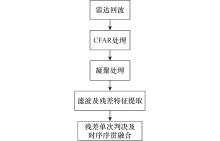
Fig.1
Overall flowchart"
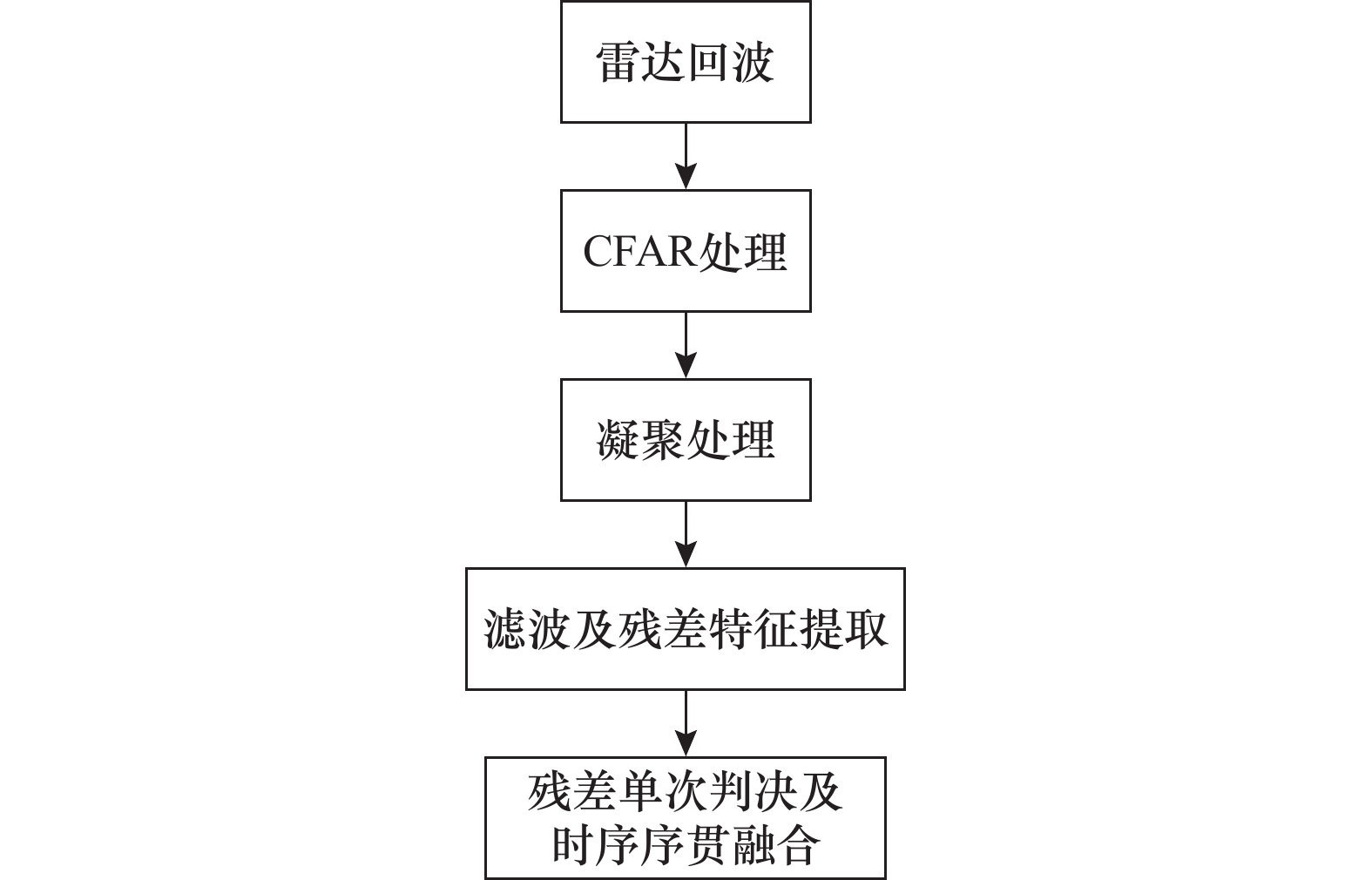
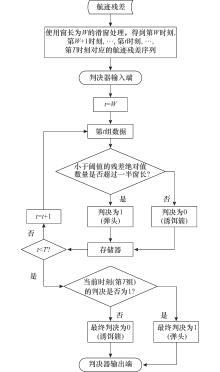
Fig.2
Flowchart of temporal sequential fusion decision"
Table 1
Trajectory modeling parameters"
| 名称 | 参数 |
| 地球半径/m | 6.378×10⁶ |
| 地球扁率摄动 | 1.082 63×10−3 |
| 弹道系数/(m2/kg) | 1/250 00 |
| 地心引力常数/(m3/s2) | 3.986 004 7×10¹⁴ |
| 地球自转角速度/(rad/s) | 7.292×10⁻⁵ |
| 诱饵个数 | 6 |
| 目标初始LLA坐标/(°E, °N, km) | (36.5, 29, 140) |
| 雷达LLA坐标/(°E, °N, km) | (35.361 7, 28.593 8, 10) |
| 弹头ECEF初始速度/(m/s) | (350, −800, −500) |
| 诱饵1的ECEF初始速度/(m/s) | (370.955 5, −832.805, −429.430 6) |
| 诱饵2的ECEF初始速度/(m/s) | (370.455 5, −831.805, −428.930 6) |
| 诱饵3的ECEF初始速度/(m/s) | (406.455 5, −895.805, −460.430 6) |
| 诱饵4的ECEF初始速度/(m/s) | (406.955 5, −894.805, −460.930 6) |
| 诱饵5的ECEF初始速度/(m/s) | (395.65, −848.01, −396.592) |
| 诱饵6的ECEF初始速度/(m/s) | (395.01, −848.95, −396.3) |
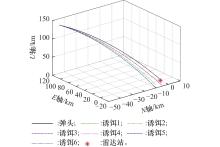
Fig.3
Trajectory of ballistic target in ENU coordinate system"
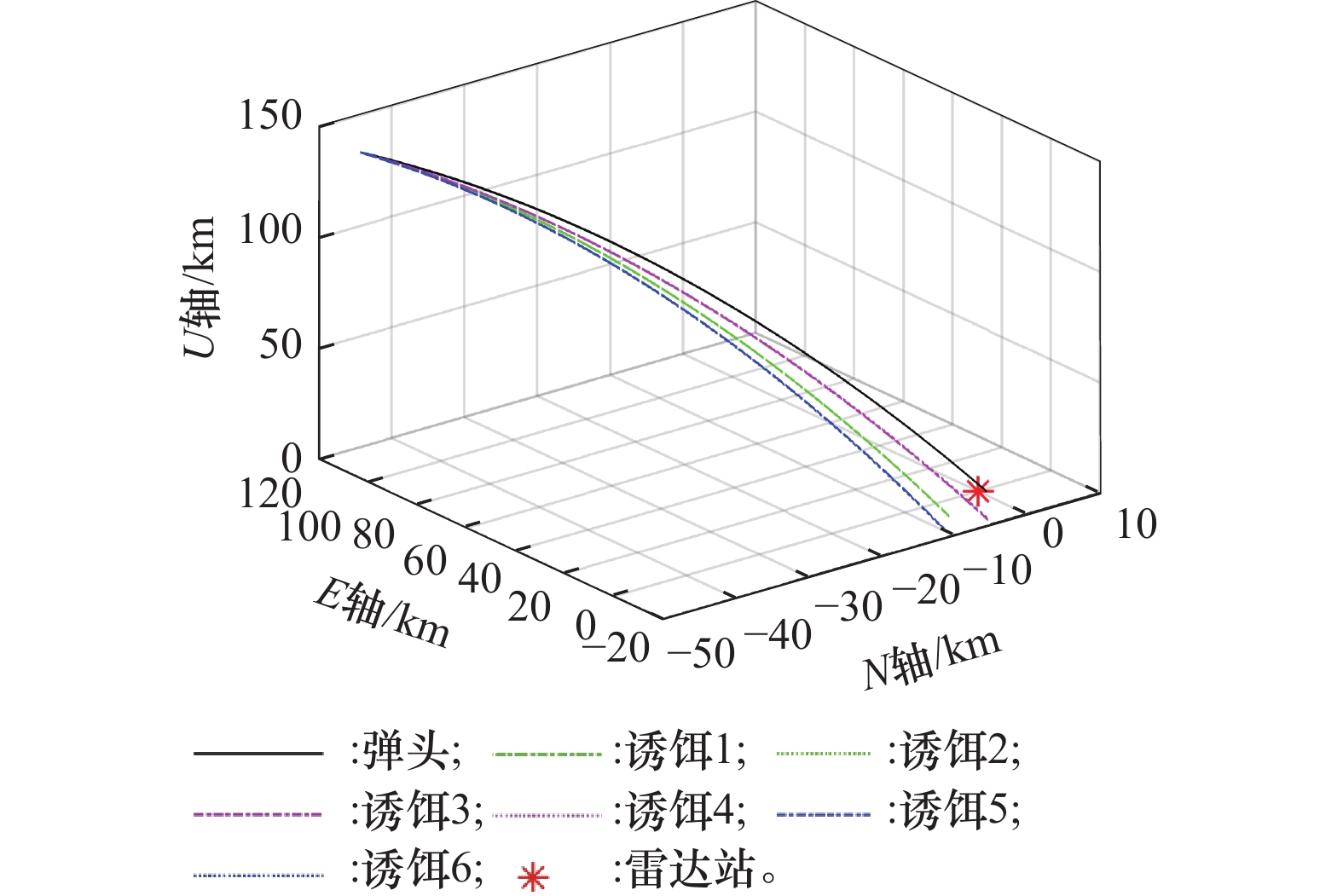
Table 2
Radar echo simulation parameters"
| 名称 | 参数 |
| 信号波形 | LFM |
| 中心频率/GHz | 10 |
| 光速/(m/s) | 3×10⁸ |
| 调频带宽/MHz | 10 |
| 采样频率/MHz | 10 |
| 雷达探测最小距离/km | 3 |
| 雷达探测最大距离/km | 198 |
| 脉宽/μs | 50 |
| 雷达数据率/Hz | 8 |
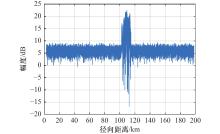
Fig.4
Echo baseband signal of ballistic target"
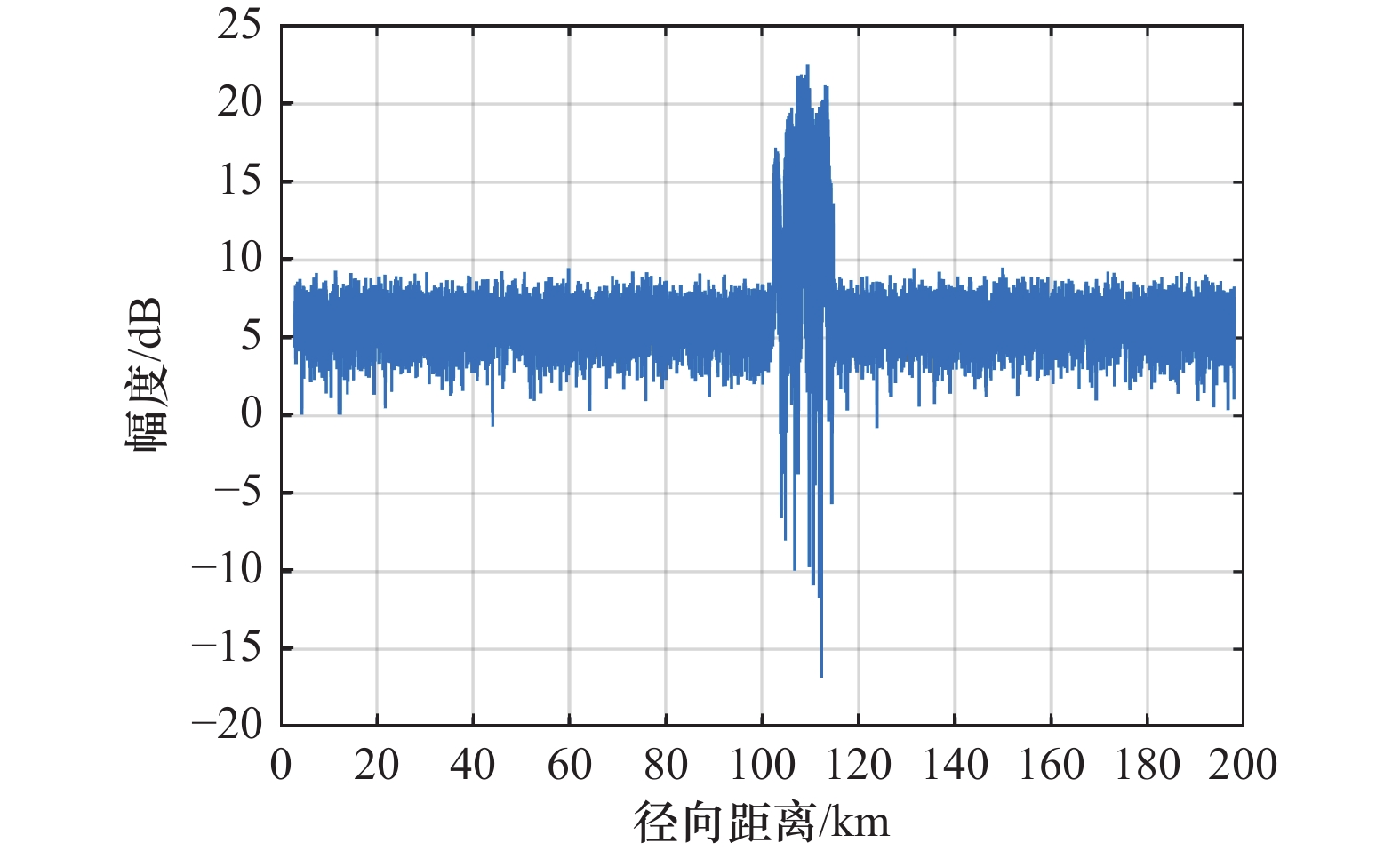
Table 3
OS-CFAR detection parameters"
| 名称 | 参数 |
| 单边参考单元长度 | 16 |
| 单边保护单元长度 | 2 |
| 背景噪声估计所选取的单元序号 | 16 |
| 虚警概率 | 10−6 |
Fig.5
OS-CFAR detection of pulse compression echo"
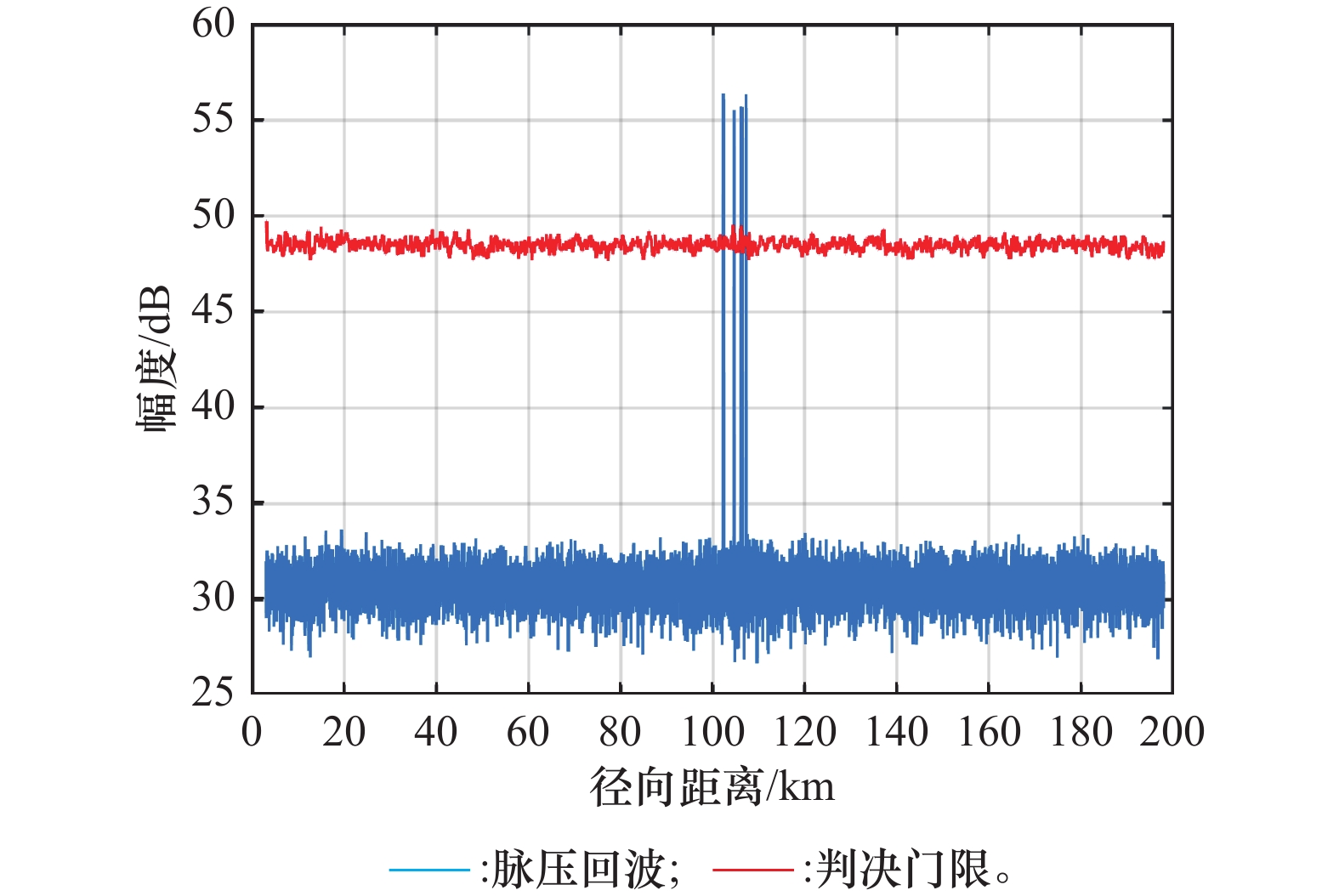
Fig.6
Initial track points of ballistic target"
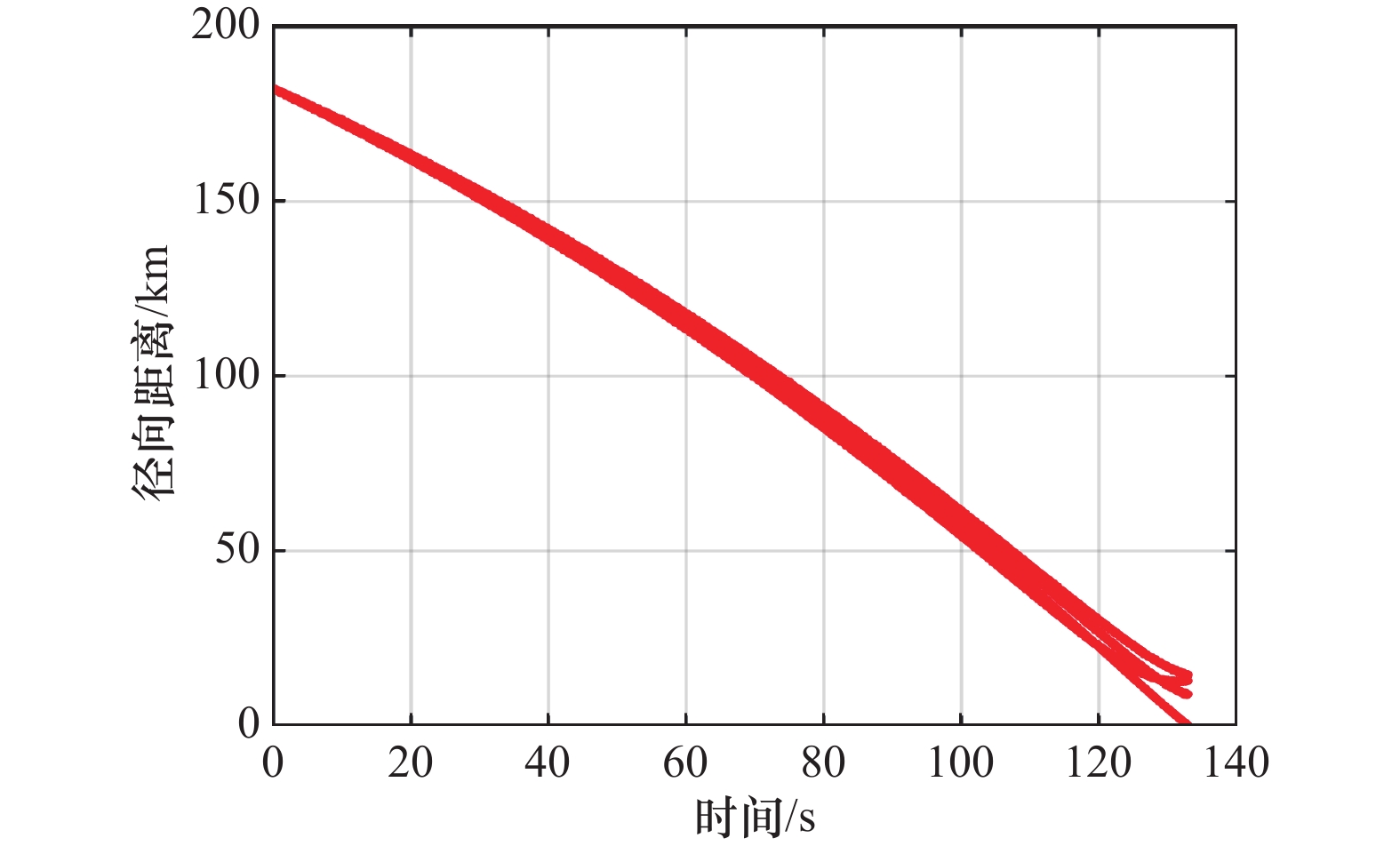
Fig.7
Track points of ballistic target before aggregation"
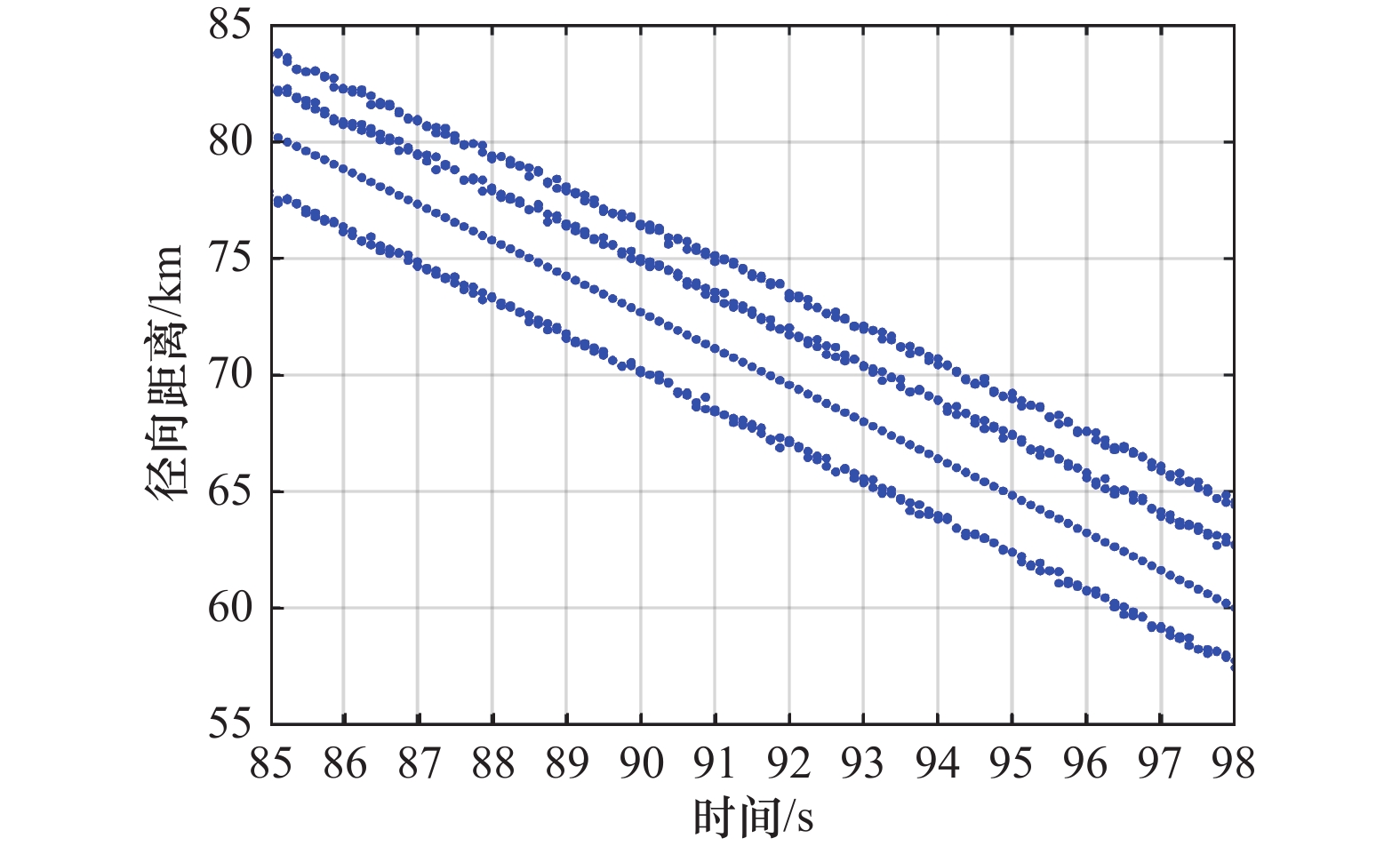
Fig.8
Track points of ballistic target after aggregation"
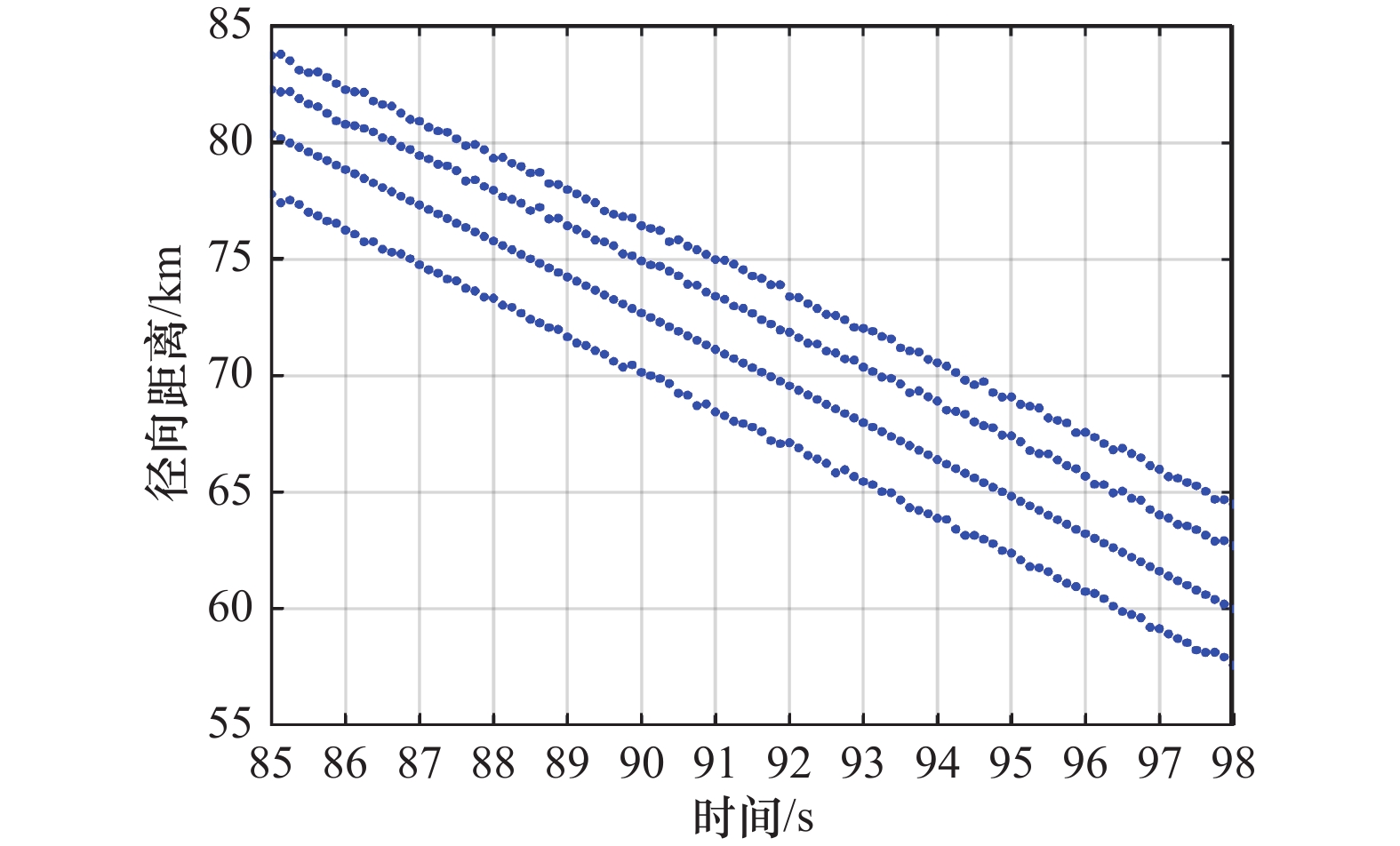
Table 4
α-β filter parameters"
| 名称 | 参数 |
| 点迹采样周期/s | 0.125 |
| 状态转移矩阵 | |
| 观测噪声协方差 | 0.04 |
| α | 0.7 |
| β | 0.35 |
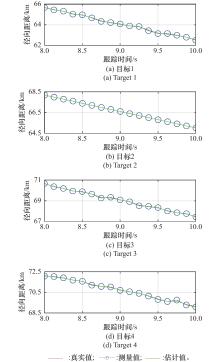
Fig.9
Tracking results of different ballistic targets using α-β filter"
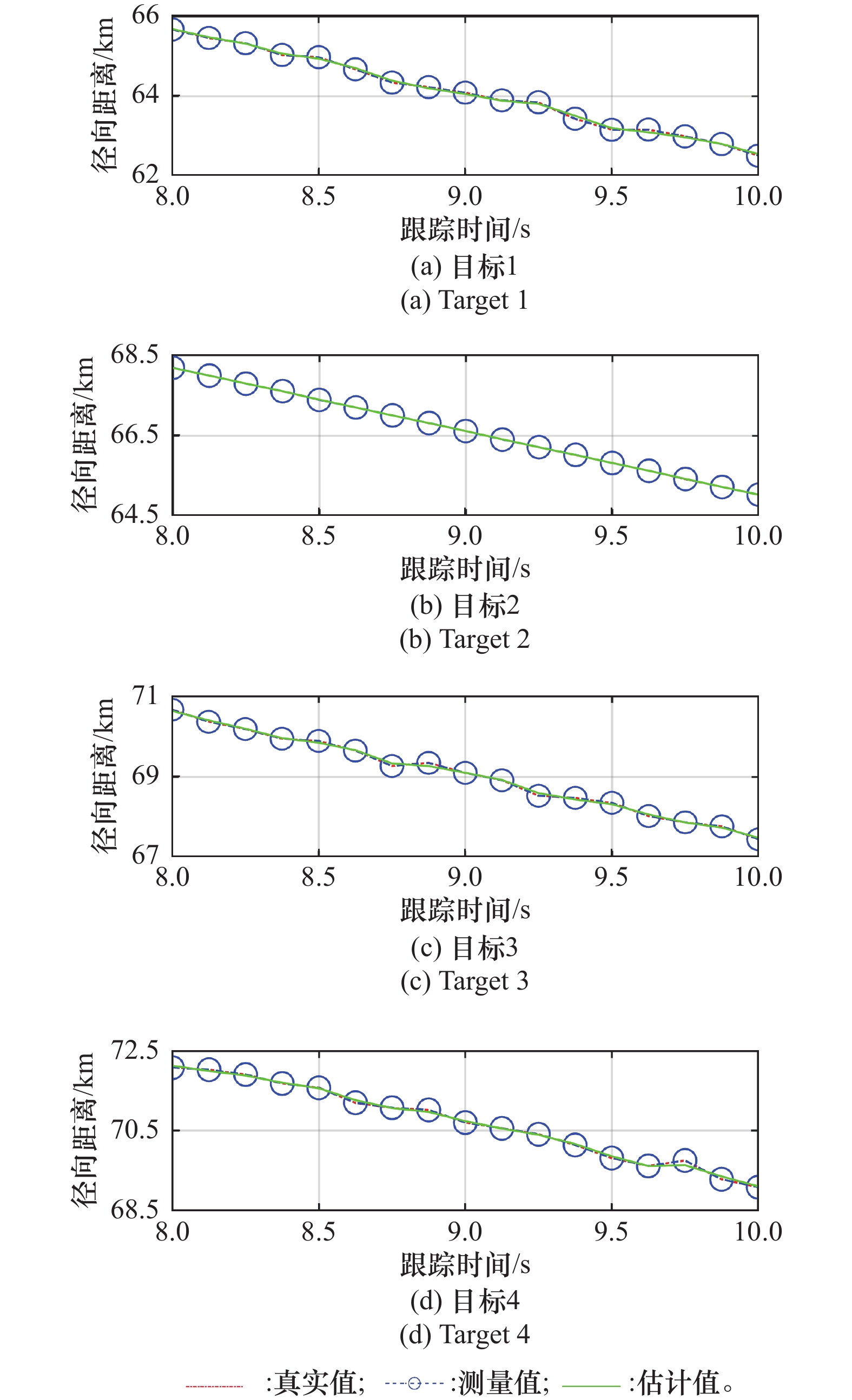
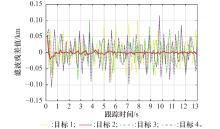
Fig.10
Track residuals of ballistic target"
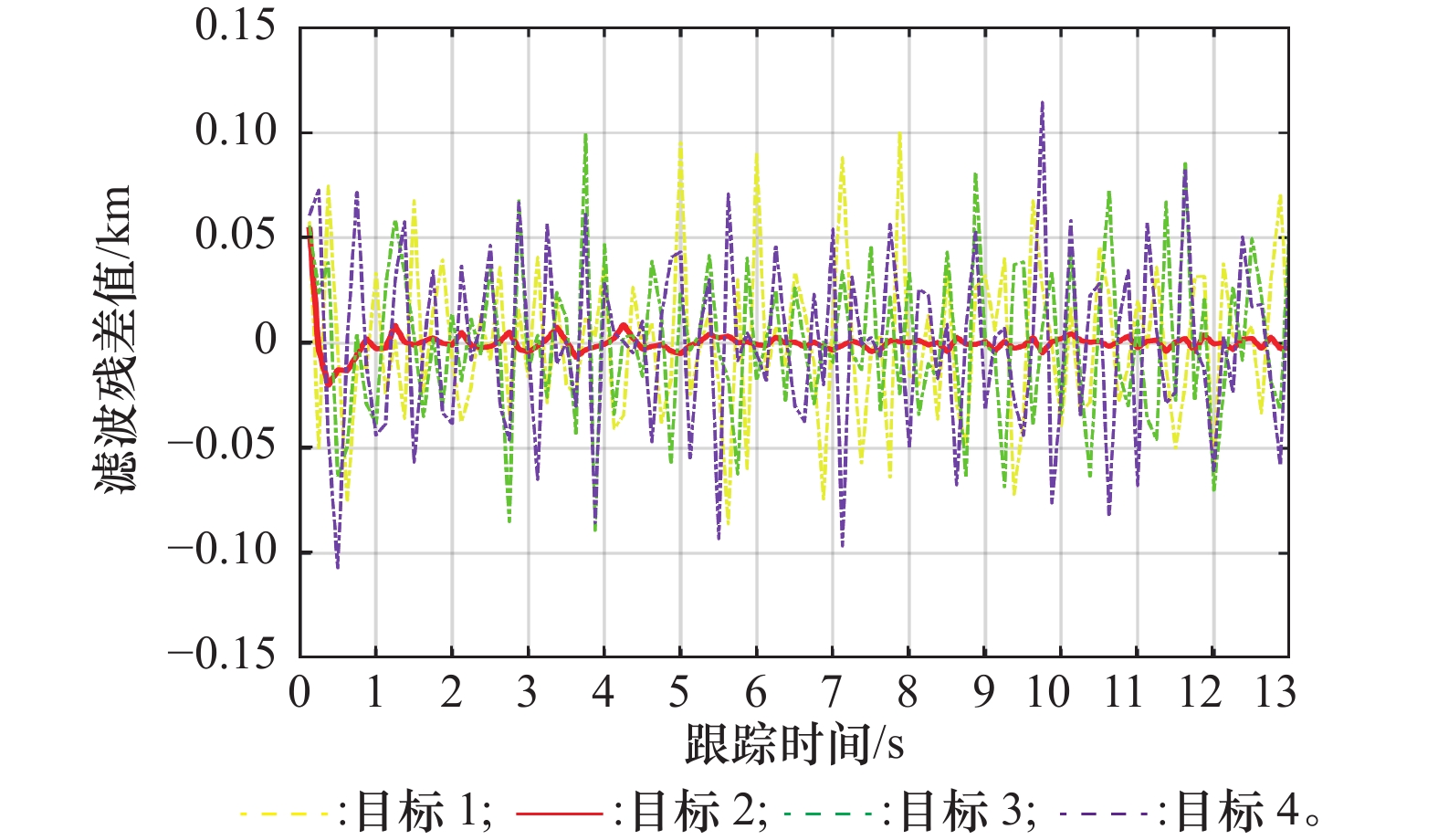
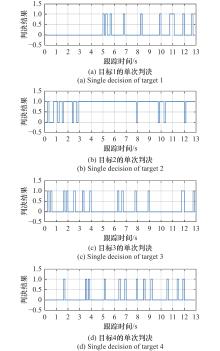
Fig.11
Single decision of ballistic targets in the test set by SVM"
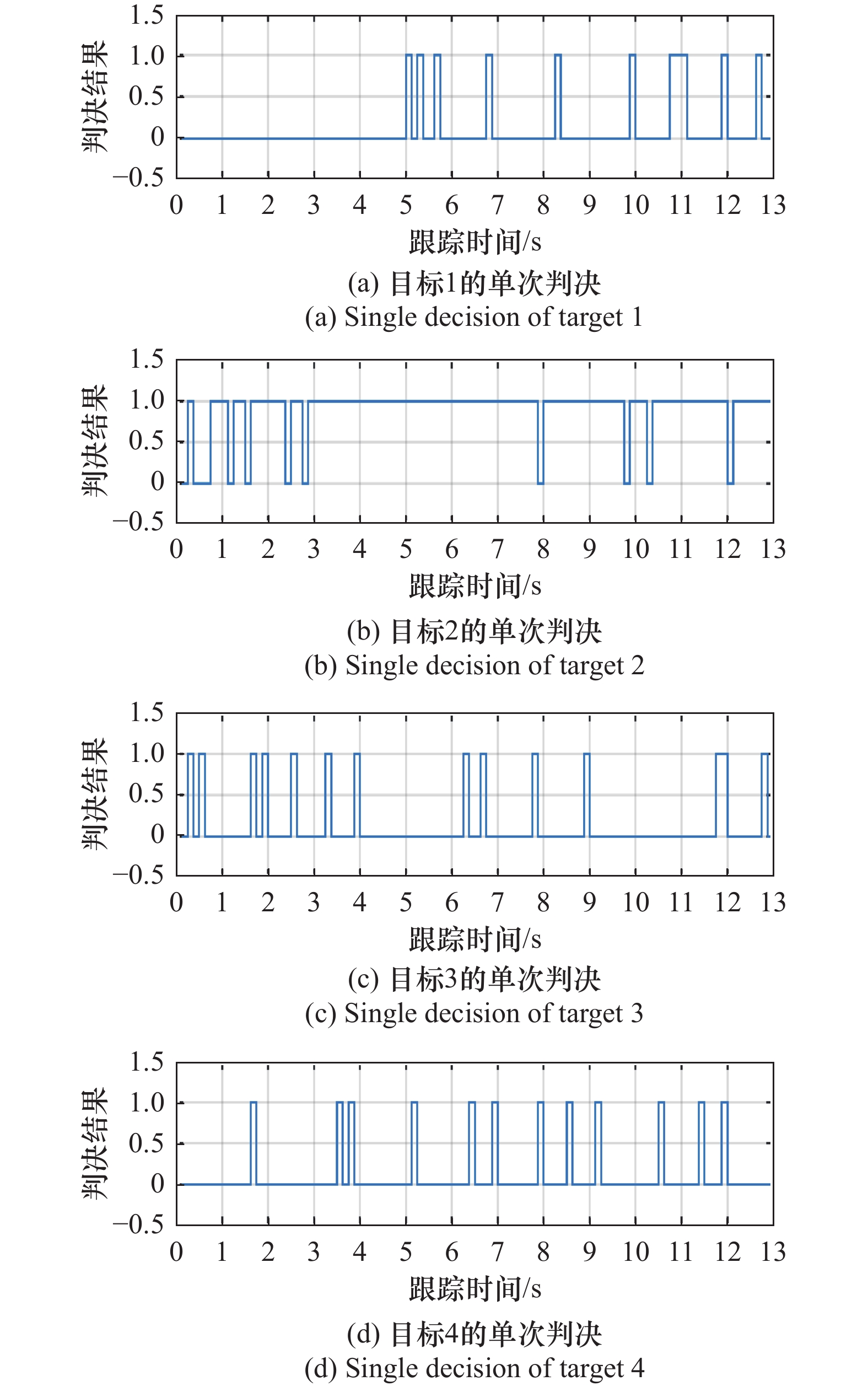
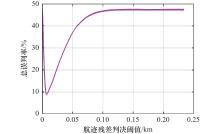
Fig.12
Curve of the relationship between the overall misjudgment rate and the track residual decision threshold"
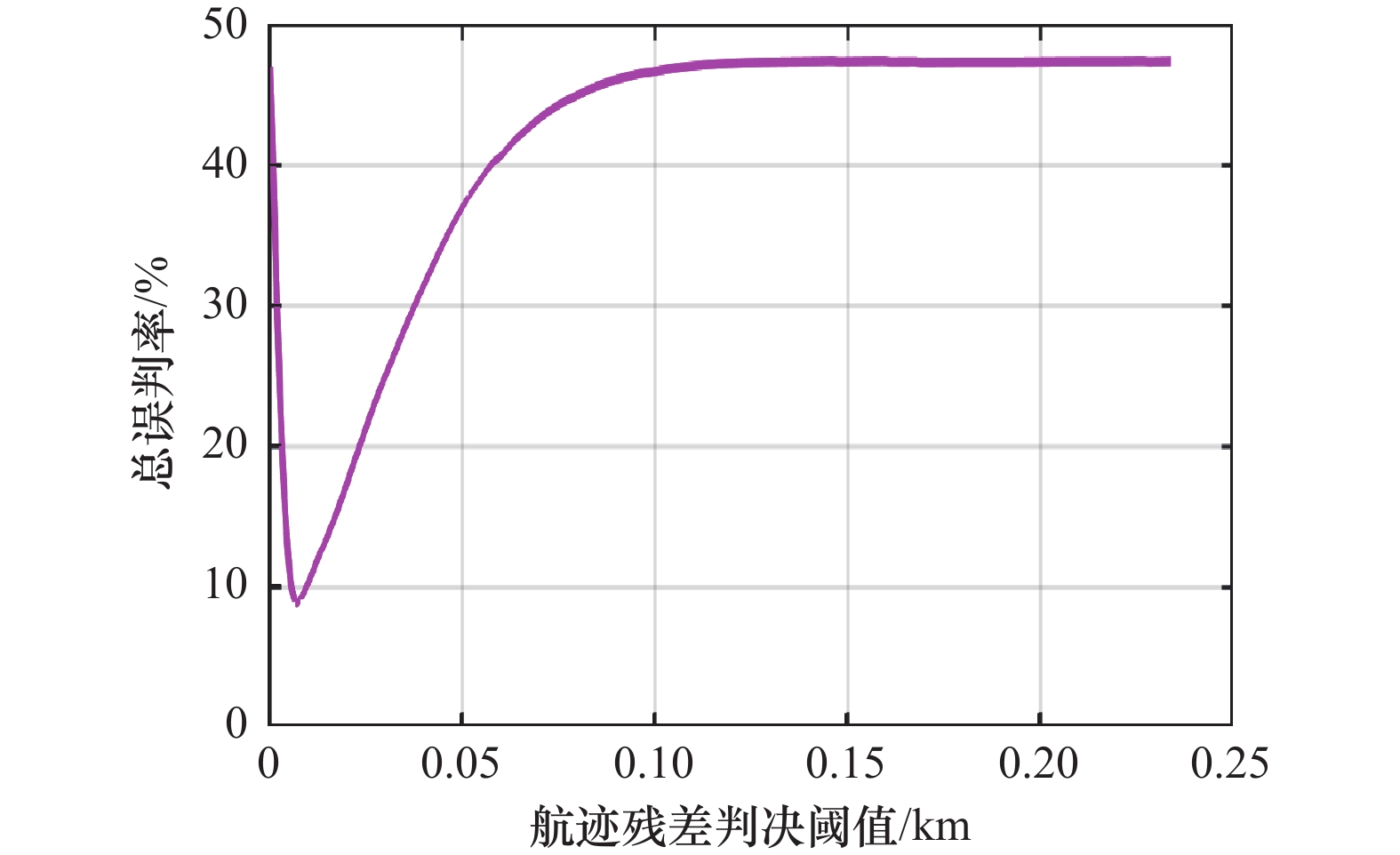
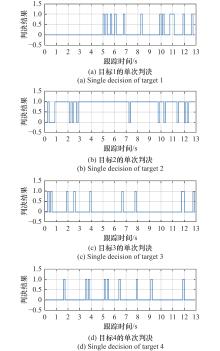
Fig.13
Threshold single decision of ballistic targets in the test set"
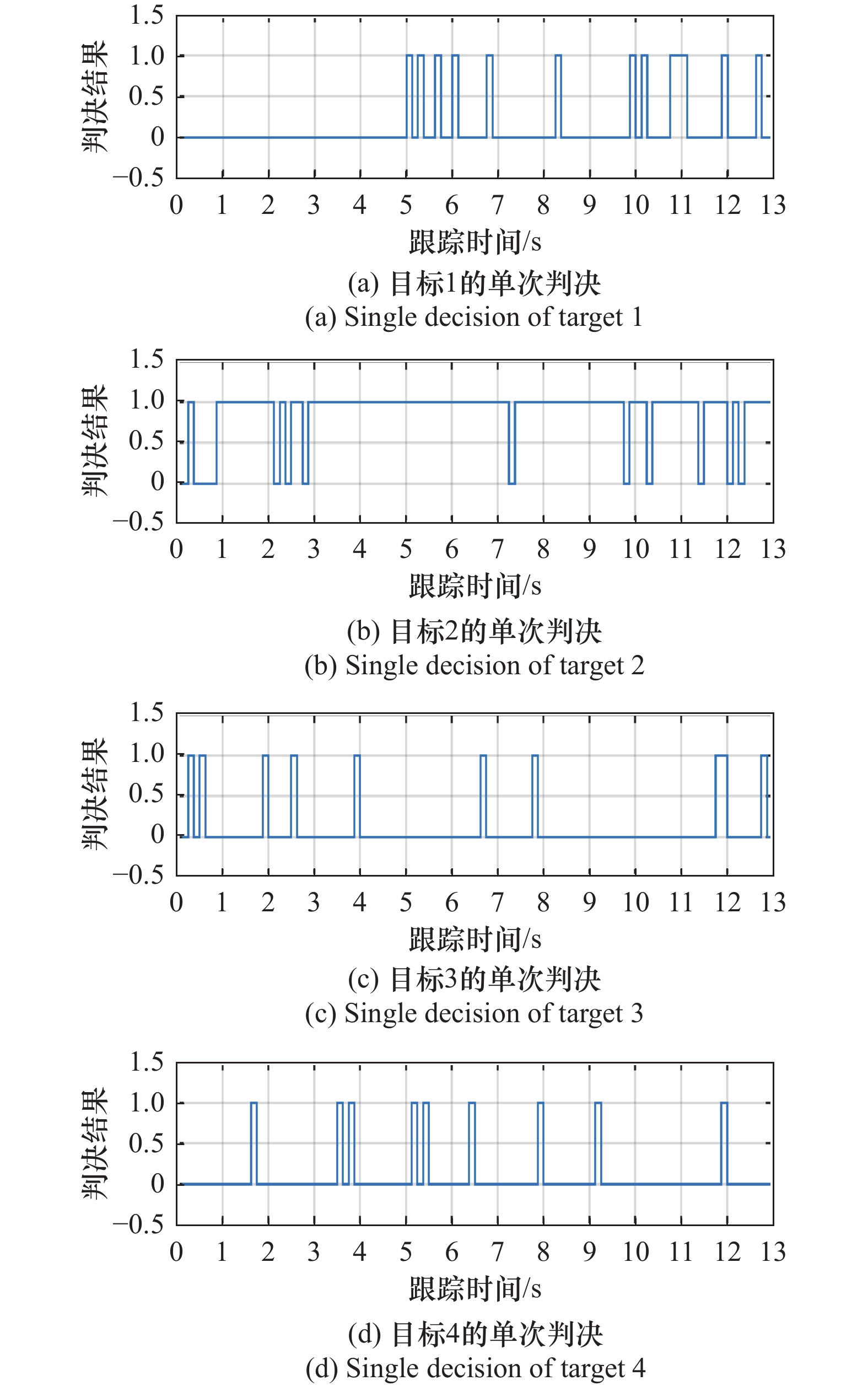
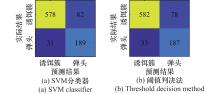
Fig.14
Confusion matrix of single decision"
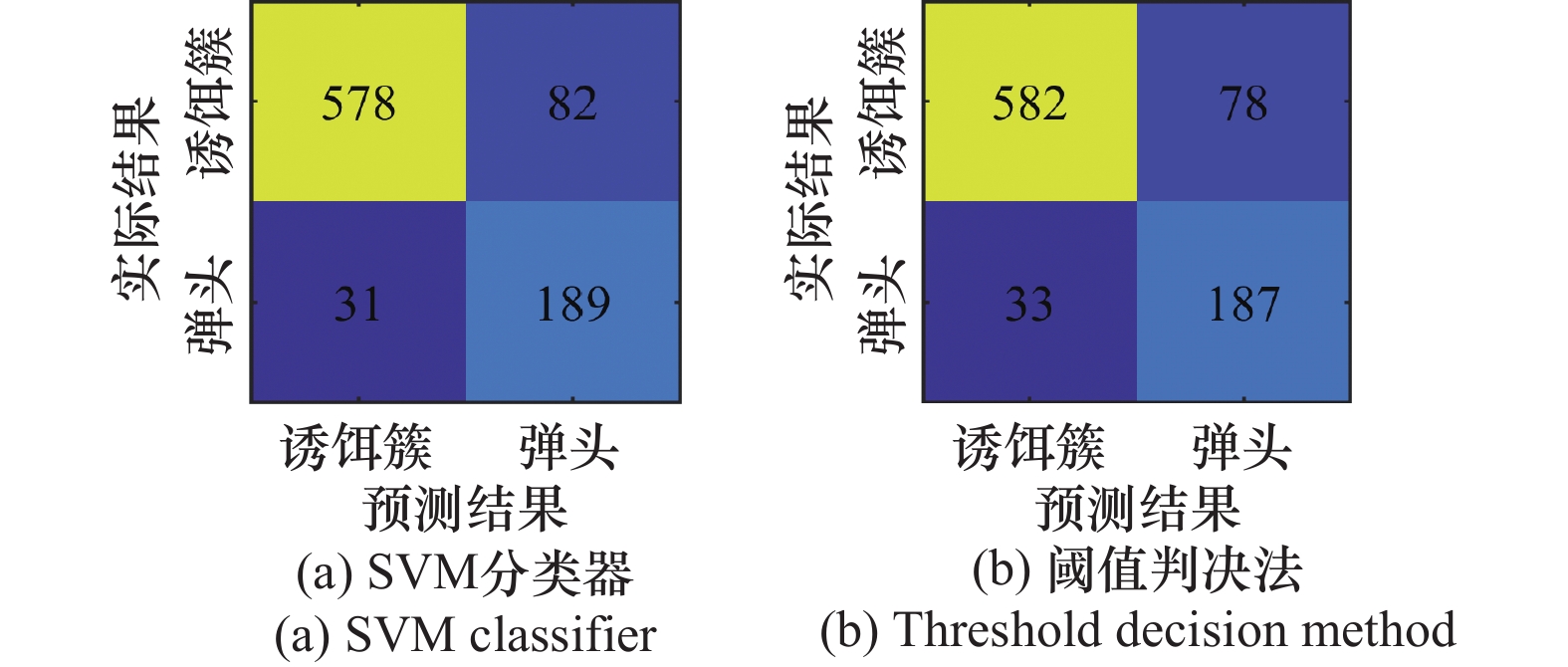
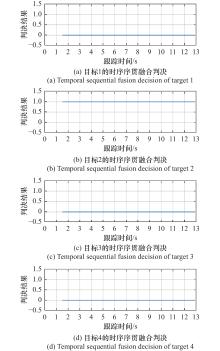
Fig.15
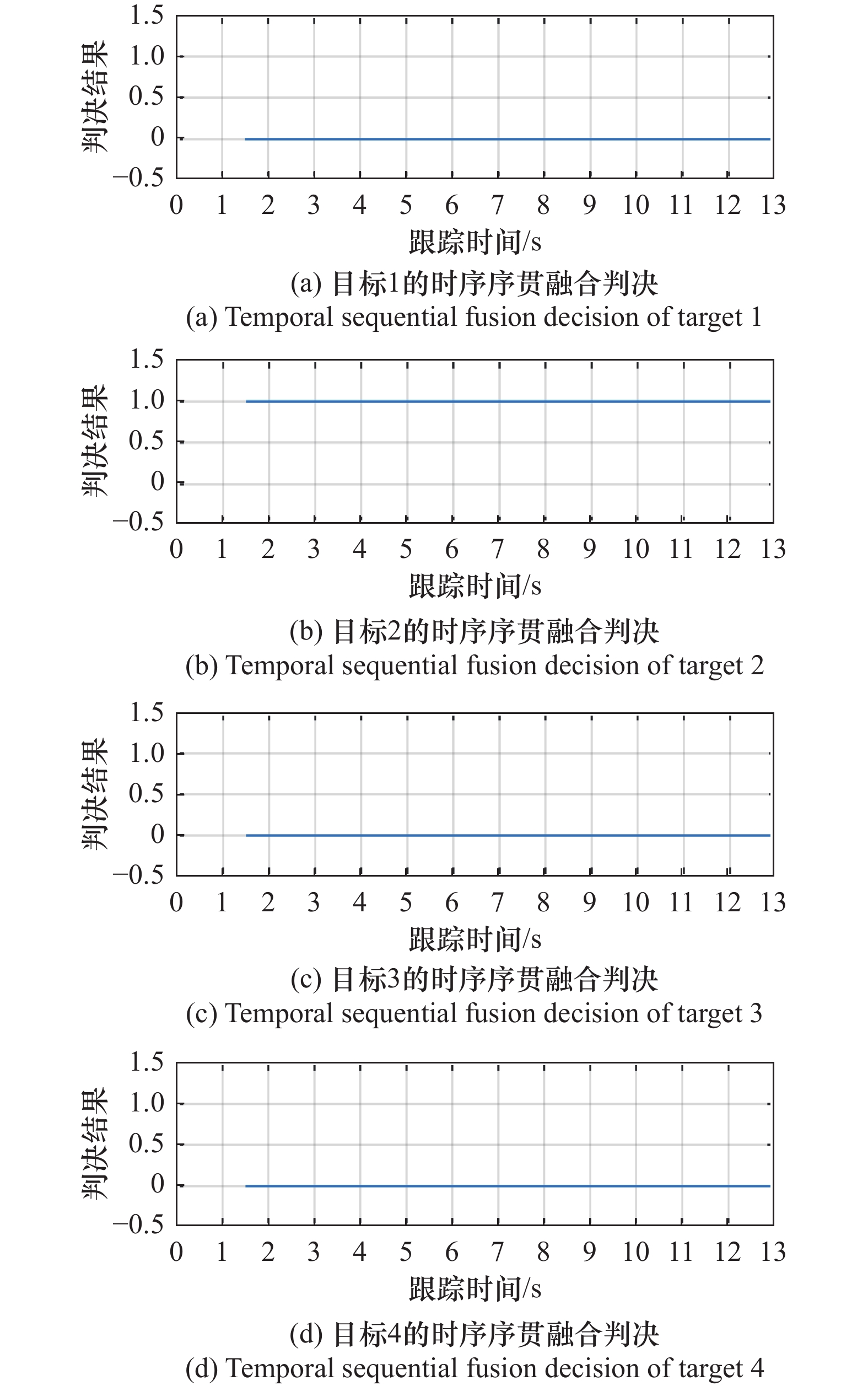
Temporal sequential fusion decision based on D-S evidence theory"
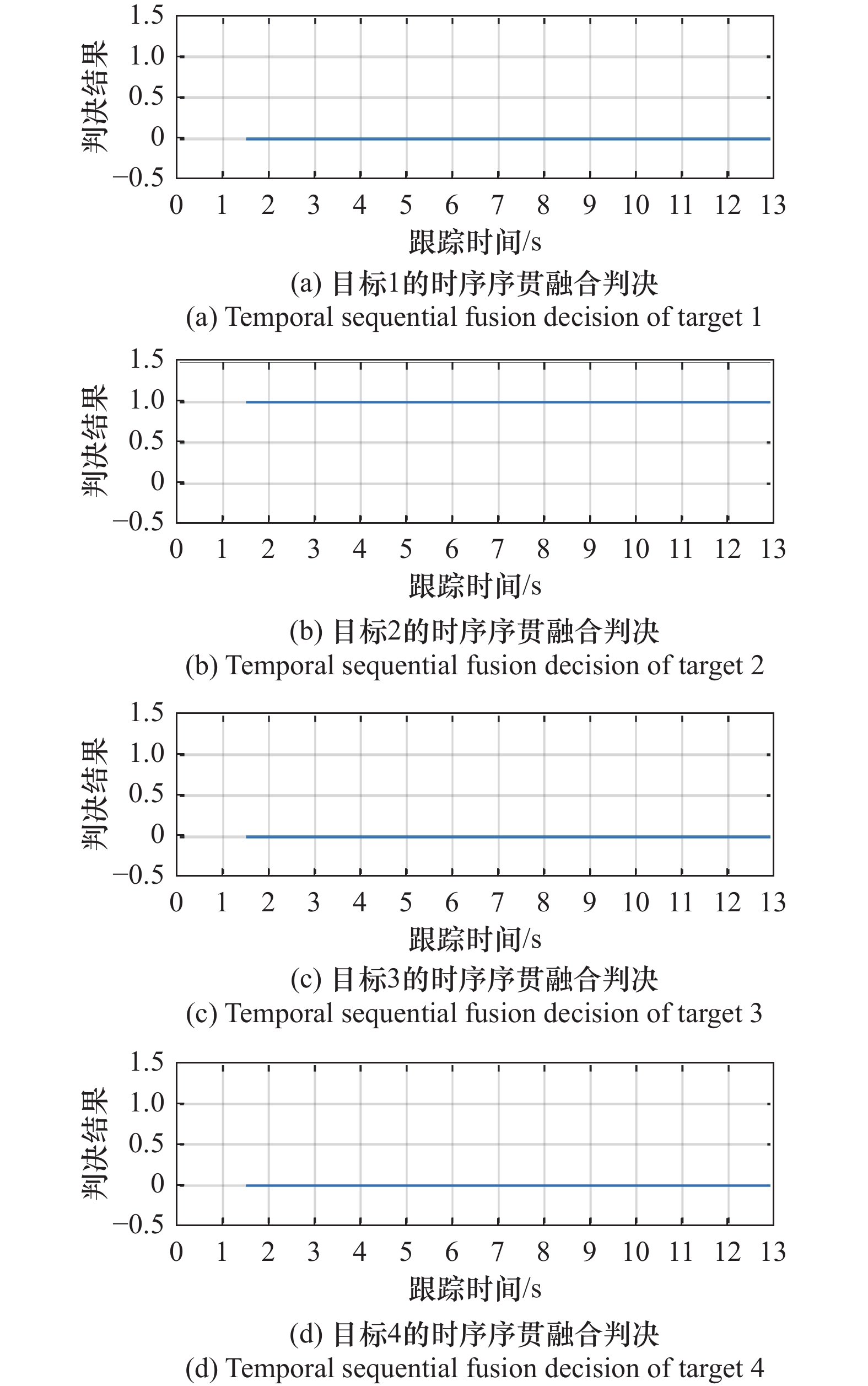
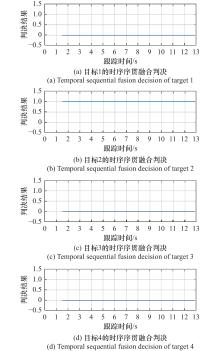
Fig.16
Temporal sequential fusion decision based on sliding window voting"
| 1 |
周桢, 蔡玉洁, 杨阳, 等. 2022年世界防空反导综述及对我国发展启示[J]. 现代防御技术, 2023, 51 (6): 26- 35.
doi: 10.3969/j.issn.1009-086x.2023.06.004 |
|
ZHOU Z, CAI Y J, YANG Y, et al. Review of world air and missile defense in 2022 and enlightenment to China’s development[J]. Modern Defense Technology, 2023, 51 (6): 26- 35.
doi: 10.3969/j.issn.1009-086x.2023.06.004 |
|
| 2 | 唐毓燕, 李芳芳, 张振宇, 等. 美国弹道导弹防御系统中的杀伤链与杀伤网解析[J]. 现代防御技术, 2023, 51 (1): 1- 10. |
| TANG Y Y, LI F F, ZHANG Z Y, et al. Analysis of kill chain and kill net inside the US ballistic missile defense system[J]. Modern Defense Technology, 2023, 51 (1): 1- 10. | |
| 3 |
ZHAO C C, WANG L, LIU Y M. Ballistic target recognition based on 4-D point cloud using randomized stepped frequency radar[J]. IEEE Trans. on Aerospace and Electronic Systems, 2022, 58 (6): 5711- 5729.
doi: 10.1109/TAES.2022.3178971 |
| 4 | GAO T, LV J, SONG J J, et al. Comprehensive identification algorithm of ballistic missile based on affiliation degree and GA[C]//Proc. of the 4th International Conference on Big Data & Artificial Intelligence & Software Engineering, 2023: 307−313. |
| 5 | LI J X, DONG J, XIAO C W. False target anti-recognition method based on kinematic parameter modulation[C]//Proc. of the International Conference on Microwave and Millimeter Wave Technology, 2024. |
| 6 |
HAN L X, FENG C Q, HU X W, et al. Ballistic target recognition based on multiple data representations and deep-learning algorithms[J]. Chinese Journal of Aeronautics, 2024, 37 (6): 167- 181.
doi: 10.1016/j.cja.2024.01.029 |
| 7 | WU Z F, ZHU Y B, WANG Y B, et al. Extracting static and dynamic features in joint GAF-MTF image for space target recognition[C]//Proc. of the International Geoscience and Remote Sensing Symposium, 2024: 9840−9843. |
| 8 |
KIM A R, KIM H S, KANG C H, et al. The design of the 1D CNN–GRU network based on the RCS for classification of multiclass missiles[J]. Remote Sensing, 2023, 15 (3): 577.
doi: 10.3390/rs15030577 |
| 9 |
CIMMINO N, OPROMOLLA R, FASANO G. Machine learning-based approach for ballistic coefficient estimation of resident space objects in LEO[J]. Advances in Space Research, 2023, 71 (12): 5007- 5025.
doi: 10.1016/j.asr.2023.02.007 |
| 10 | PUTTASUWAN K, SAINGYEN P, CHANNUMSIN S, et al. Investigations of the ballistic coefficient estimation methods to improve accuracy of reentry analysis[C]//Proc. of the International Electrical Engineering Congress, 2022. |
| 11 | HE J, ZHOU H, XU W G, et al. Infrared polarization imaging test of typical background in missile range[C]//Proc. of the 6th Conference on Frontiers in Optical Imaging and Technology: Imaging Detection and Target Recognition, 2024, 13156: 190−195. |
| 12 | WANG Q H, XU X J. Discriminating polarimetric backscattering characteristics between chaff jamming and ships[C]//Proc. of the 14th International Symposium on Antennas, Propagation and EM Theory, 2024. |
| 13 |
ZHANG R Z, WANG Y, MAO J. Three-dimensional reconstruction of precession warhead based on multi-view micro-Doppler analysis[J]. Journal of Systems Engineering and Electronics, 2024, 35 (3): 541- 548.
doi: 10.23919/JSEE.2024.000030 |
| 14 |
ZHANG R Z, WANG Y, YEH C M, et al. Precession parameter estimation of warhead with fins based on micro-Doppler effect and radar network[J]. IEEE Trans. on Aerospace and Electronic Systems, 2022, 59 (1): 443- 459.
doi: 10.1109/taes.2022.3182635 |
| 15 | ZHANG Y P, XIE Y, KANG L, et al. Feature-level fusion recognition of space targets with composite micromotion[J]. IEEE Trans. on Aerospace and Electronic Systems, 2023, 60 (1): 934- 951. |
| 16 | LIU Y S, WANG J, CUI D K, et al. High-resolution range profile recognition of midcourse ballistic targets based on AMTrans[C]//Proc. of the International Conference on Image Processing, Computer Vision and Machine Learning, 2023. |
| 17 | XIANG Q, WANG X D, LAI J, et al. Snapshot ensemble one-dimensional convolutional neural networks for ballistic target recognition[C]//Proc. of the 6th World Conference on Computing and Communication Technologies, 2023: 187−193. |
| 18 | 戴奉周. 宽带雷达信号处理-检测、杂波抑制与认知跟踪[D]. 西安: 西安电子科技大学, 2010. |
| DAI F Z. Wideband radar signal processing-detection, clutter suppression and cognitive tracking[D]. Xi’an: Xidian University, 2010. | |
| 19 |
孙佳佳, 童创明, 彭鹏, 等. 弹道中段进动目标动态RCS仿真研究[J]. 科学技术与工程, 2013, 13 (16): 4562- 4566.
doi: 10.3969/j.issn.1671-1815.2013.16.017 |
|
SUN J J, TONG C M, PENG P, et al. Dynamic RCS simulation of midcourse precession targets[J]. Science Technology and Engineering, 2013, 13 (16): 4562- 4566.
doi: 10.3969/j.issn.1671-1815.2013.16.017 |
|
| 20 | WANG Z H, WANG J X. An improved CFAR algorithm based on maximum selection and ordered statistics[C]//Proc. of the 6th Advanced Information Management, Communicates, Electronic and Automation Control Conference, 2024: 1459−1462. |
| [1] | Dianxing SUN, Yuecong DOU, Ruihui PENG, Guohong WANG. Radar-infrared feature fusion target recognition method with complex jamming [J]. Systems Engineering and Electronics, 2026, 48(8): 2626-2637. |
| [2] | Jian DONG, Junjie ZOU, Feifei HOU, Chengwang XIAO. Radar target recognition method based on statistical properties of HRRP features [J]. Systems Engineering and Electronics, 2026, 48(7): 2206-2217. |
| [3] | Ruijia FAN, Jie LIU, Junming YU, Xiaofeng FENG, Wenjing XU, Liang YIN. Small sample 3D point cloud target recognition method based on shape and skeleton feature matching [J]. Systems Engineering and Electronics, 2026, 48(1): 76-86. |
| [4] | Mingyu JIANG, Shunsheng ZHANG, Siyao XIAO. SAR target recognition based on lightweight cross-attention convolutional neural network [J]. Systems Engineering and Electronics, 2025, 47(9): 2853-2861. |
| [5] | Kaiming LI, Yuanpeng ZHANG, Ying LUO, Xiaonan DAI. Research progress on radar target recognition of ballistic missile [J]. Systems Engineering and Electronics, 2025, 47(9): 2870-2889. |
| [6] | Xinzheng ZHANG, Mengke YAN, Xiaolin ZHU. Noise pseudo-label tolerant semi-supervised SAR target recognition [J]. Systems Engineering and Electronics, 2025, 47(6): 1796-1805. |
| [7] | Caiyun WANG, Yifan JIA, Xiaofei LI, Jianing WANG, Yida WU. Ballistic target HRRP recognition method based on improved whale algorithm and BiGRU [J]. Systems Engineering and Electronics, 2025, 47(6): 1824-1832. |
| [8] | Zhijie JIANG, Heng SONG, Nan HU, Lanxi DUAN, Ping CAO. Target recognition and classification algorithm of MMW radar in tunnel [J]. Systems Engineering and Electronics, 2025, 47(5): 1453-1460. |
| [9] | Zekun GUO, Hongfei YANG, Zheng LIU, Rong XIE, Lei RAN, Jia'nan LI. Narrow-band radar airborne target recognition method based on MGMD space [J]. Systems Engineering and Electronics, 2025, 47(4): 1136-1145. |
| [10] | Jiakuan LI, Bo FENG, Hongliang LIU, Chunmao YE, Jizhou YU. Angle-guided attention-based wideband PD recognition method for aerodynamic targets [J]. Systems Engineering and Electronics, 2025, 47(3): 807-816. |
| [11] | Jianguo YIN, Wen SHENG, Wei JIANG. Radar air target recognition based on deep residual shrinkage network [J]. Systems Engineering and Electronics, 2024, 46(9): 3012-3018. |
| [12] | Caiyun WANG, Huiwen ZHANG, Jianing WANG, Yida WU, Yun CHANG. Ballistic midcourse target RCS recognition based on DTCWT-VAE [J]. Systems Engineering and Electronics, 2024, 46(7): 2269-2275. |
| [13] | Yida WU, Caiyun WANG, Jianing WANG, Xiaofei LI. Infrared multi-sensor fusion recognition method based on ISVM-DS [J]. Systems Engineering and Electronics, 2024, 46(5): 1555-1560. |
| [14] | Tong OUYANG, Ling WANG, Daiyin ZHU, Yong LI. Fine-grained recognition method for meteorological targets in ResNeXt fused with LightGBM [J]. Systems Engineering and Electronics, 2024, 46(12): 4034-4043. |
| [15] | Caiyun WANG, Yun CHANG, Xiaofei LI, Jianing WANG, Yida WU, Huiwen ZHANG. Infrared spatial cone-shaped target recognition based on improved MKELM [J]. Systems Engineering and Electronics, 2024, 46(10): 3257-3264. |
| Viewed | ||||||
|
Full text |
|
|||||
|
Abstract |
|
|||||