Systems Engineering and Electronics ›› 2026, Vol. 48 ›› Issue (7): 2457-2468.doi: 10.12305/j.issn.1001-506X.2026.07.29
• Guidance, Navigation and Control • Previous Articles
Cooperative navigation method for UAV/ USV based on the improved PPO algorithm
Wei GUAN, Tongbo HU, Xianku ZHANG, Chunqi LUO, Sheng QU, Zhewen CUI
- Navigation Academy,Dalian Maritime University,Dalian 116026,China
-
Received:2025-04-29Revised:2025-08-19Online:2025-11-06Published:2025-11-06 -
Contact:Wei GUAN

CLC Number:
Cite this article
Wei GUAN, Tongbo HU, Xianku ZHANG, Chunqi LUO, Sheng QU, Zhewen CUI. Cooperative navigation method for UAV/ USV based on the improved PPO algorithm[J]. Systems Engineering and Electronics, 2026, 48(7): 2457-2468.
share this article
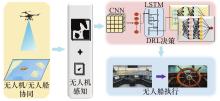
Fig.1
Unmanned aerial vehicle/unmanned surface vessel cooperative navigation system"
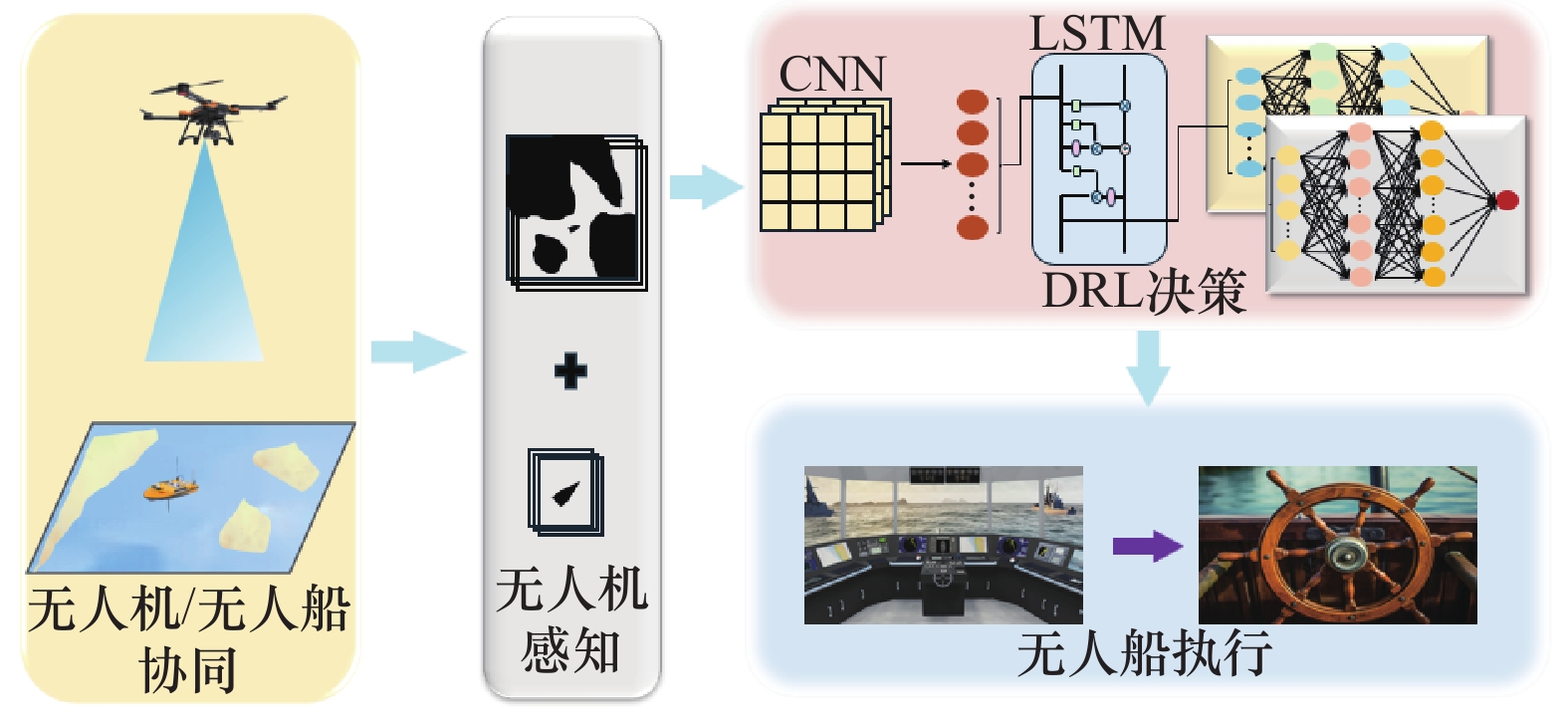
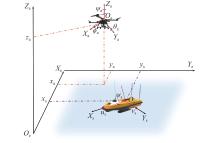
Fig.2
Unmanned aerial vehicle/unmanned surface vessel cooperative coordination system"
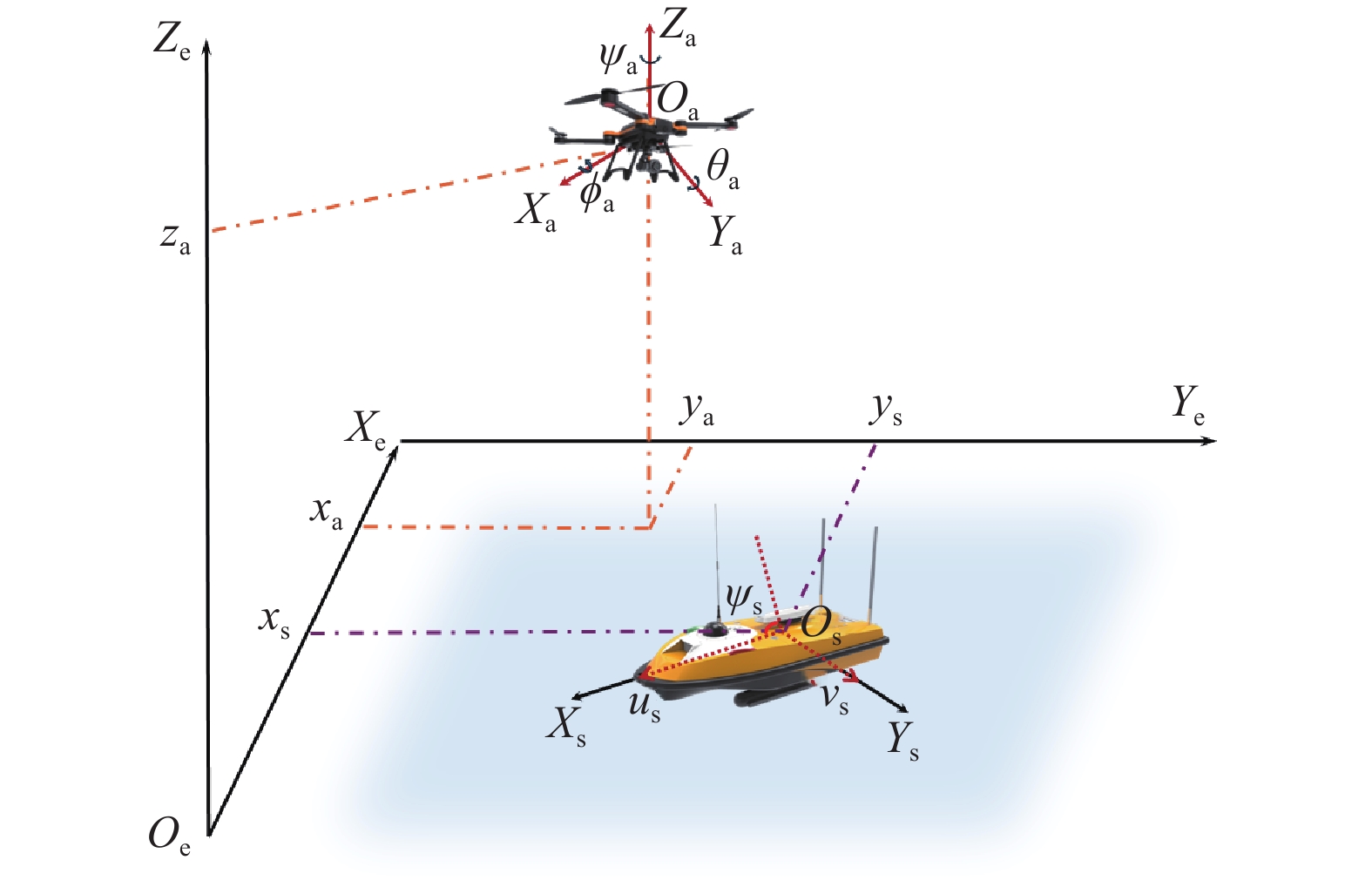
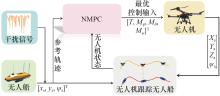
Fig.3
Unmanned aerial vehicle/unmanned surface vessel cooperative tracking framework"
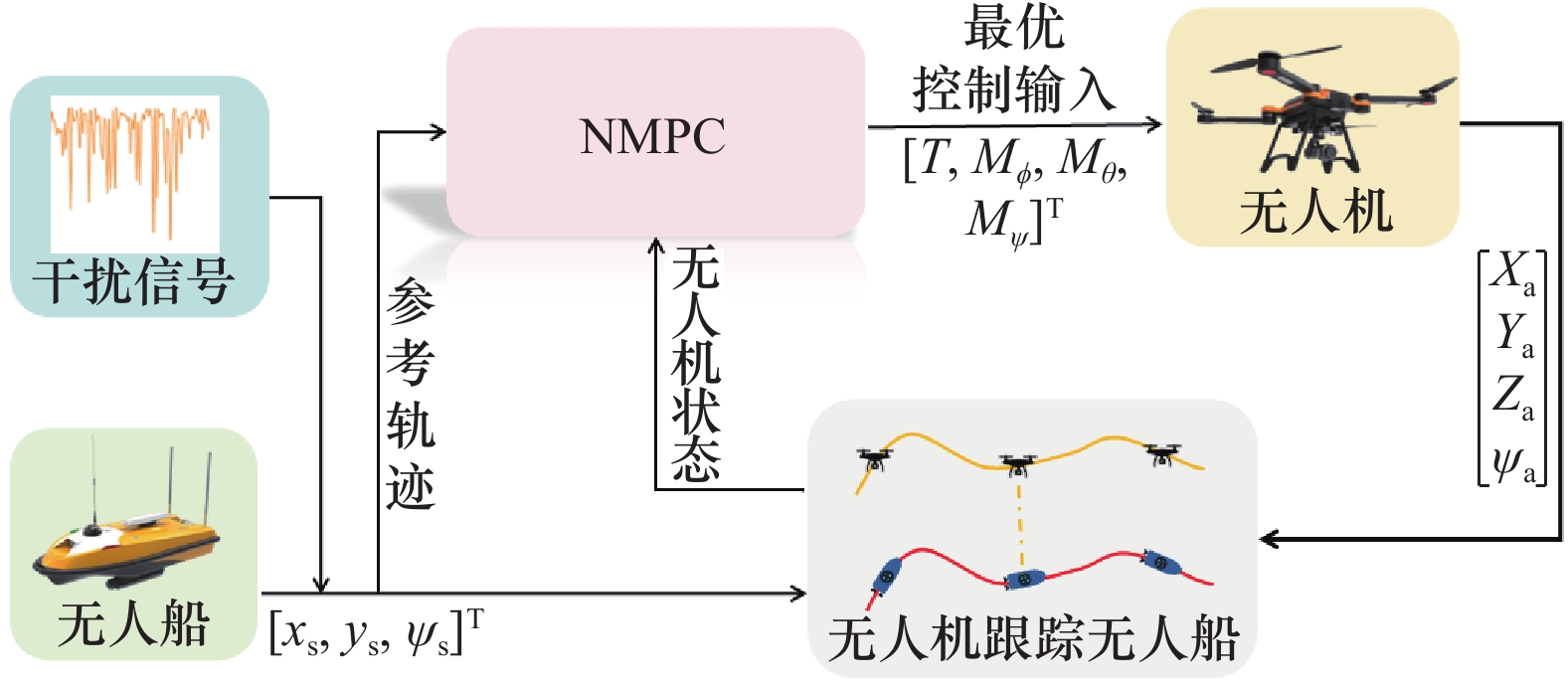
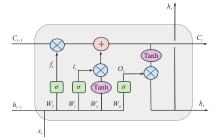
Fig.4
LSTM network structure"
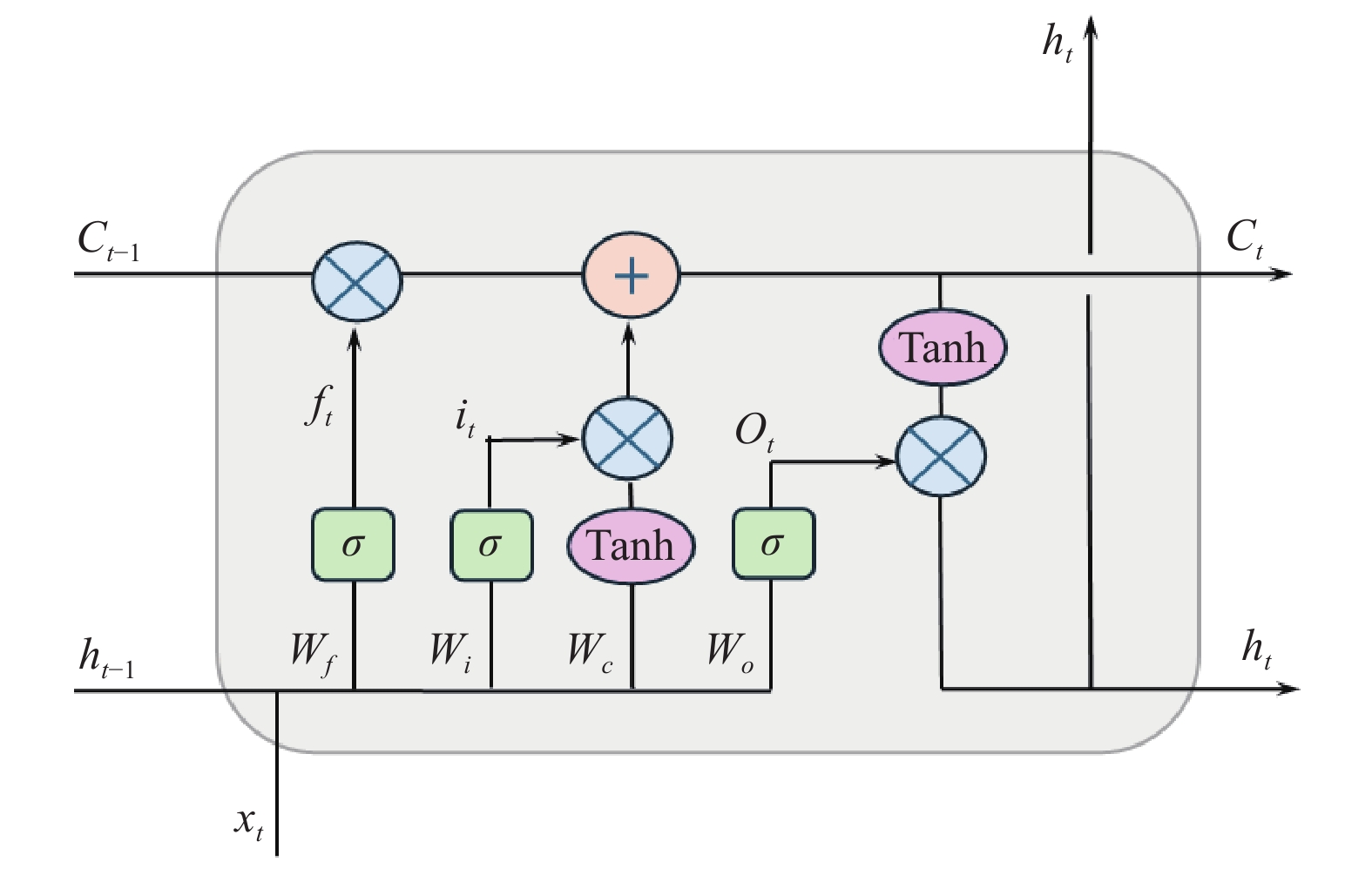
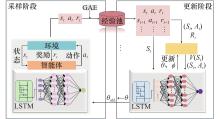
Fig.5
Interaction process between improved PPO algorithm and environment"
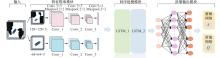
Fig.6
Network structure of the improved PPO algorithm"
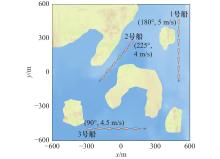
Fig.7
Training environment"
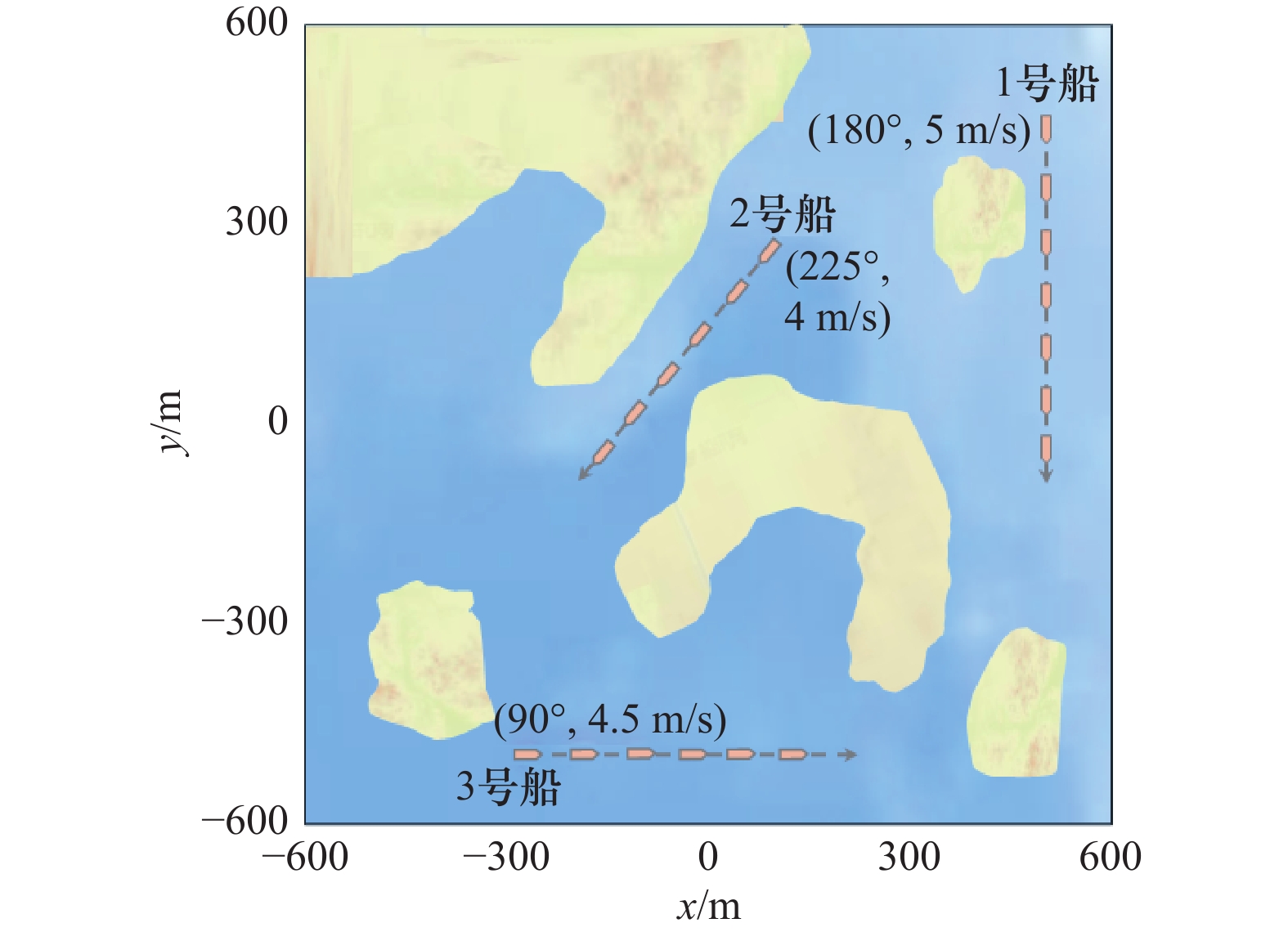
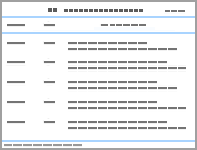
Table 1
Key experimental parameters setting"
| 参数 | 数值 | 参数 | 数值 | |
| 折扣率 | 0.97 | 有效波高/m | 0.35 | |
| 策略网络学习率 | 波浪周期/s | 3.2 | ||
| 价值网络学习率 | 平均风速/(m/s) | 3.8 | ||
| 舵角阈值 | 2 | 批量大小Batch | 256 | |
| 安全距离 | 50 | 直航奖励系数 | 2 | |
| LSTM单元数 | 64/32 | GAE权衡参数 | 0.97 | |
| 舵角正则化奖励系数 | 5 | 舵角变化率奖励系数 | 3 | |
| 目标引导奖励系数 | 8 | 路径曲率约束奖励系数 | 2 |
Table 2
Effect of LSTM unit configuration on convergence performance"
| LSTM结构配置(LSTM_1/LSTM_2) | 收敛步数 | 收敛值 |
| 单层LSTM(64) | 1 940 | |
| 双层LSTM(32/16) | ||
| 双层LSTM(64/32) | ||
| 双层LSTM(128/64) |
Table 3
Effect of GAE parameter $\lambda $ on convergence performance"
| GAE权衡参数 | 收敛步数 | 收敛值 |
| 0.90 | ||
| 0.95 | 1 880 | |
| 0.97 | ||
| 0.99 | 1 810 |
Table 4
Effect of image resolution of environmental perception layer on navigation performance"
| 像素配置 | 平均决策时间/ms | 成功率/% |
| 64×64 | 12.5 | 82.3 |
| 128×128 | 18.3 | 98.8 |
| 256×256 | 34.6 | 96.2 |
| 512×512 | 72.9 | 84.6 |
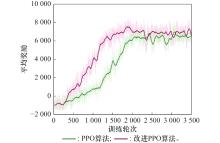
Fig.8
Average reward change curve"
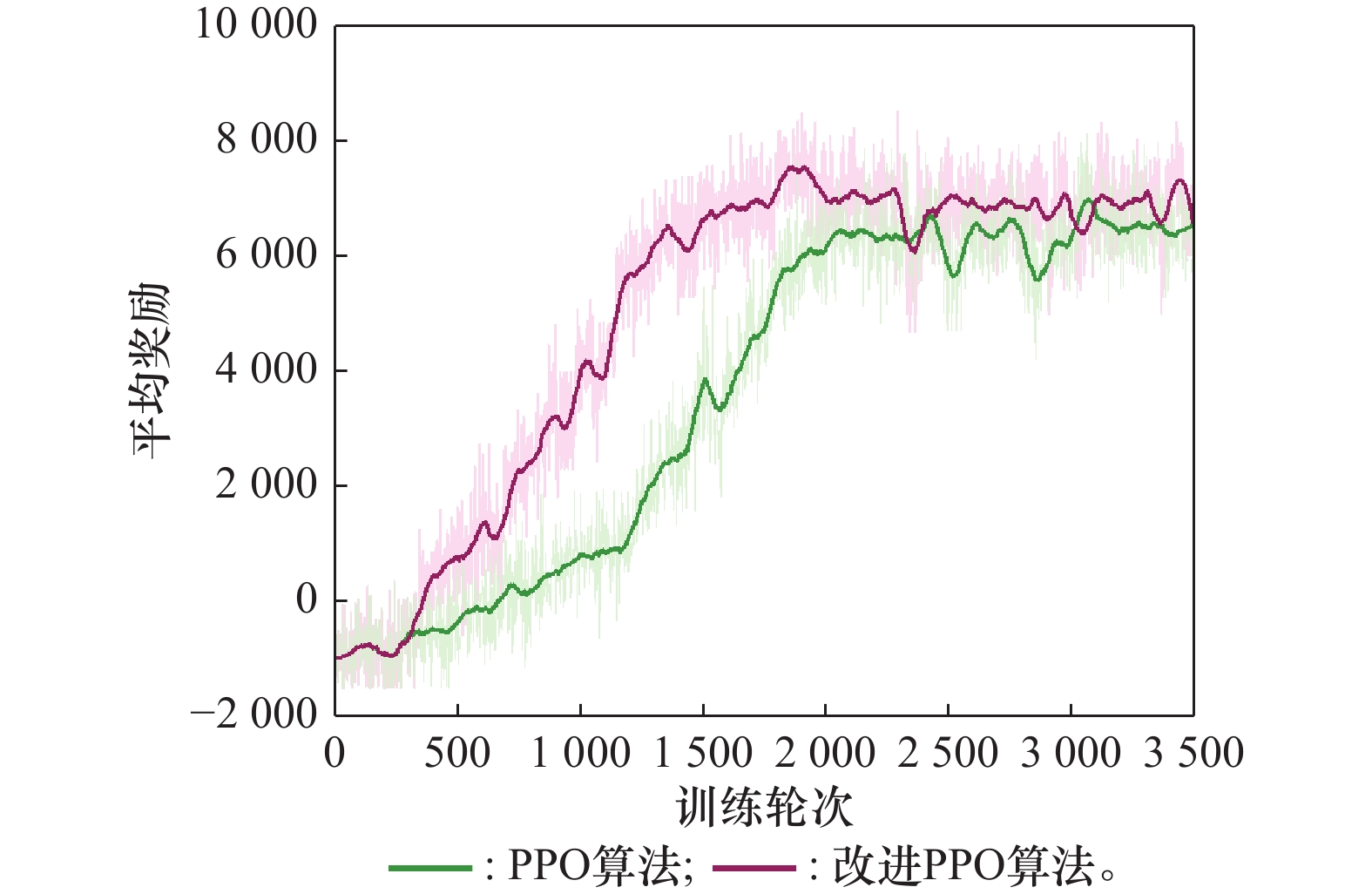
Fig.9
Cooperative tracking experiment of unmanned aerial vehicle/unmanned surface vessel"
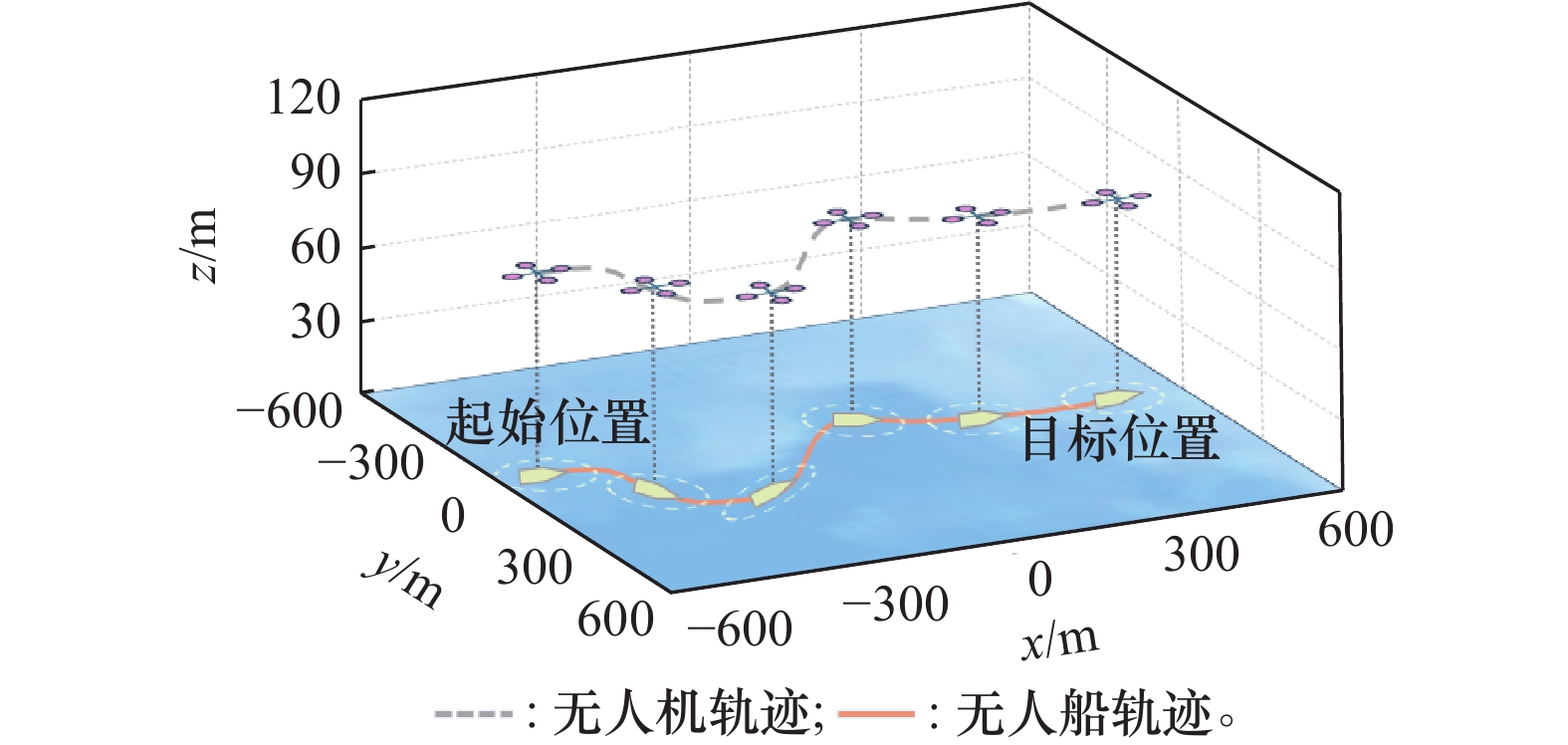
Fig.10
Tracking distance error curve"
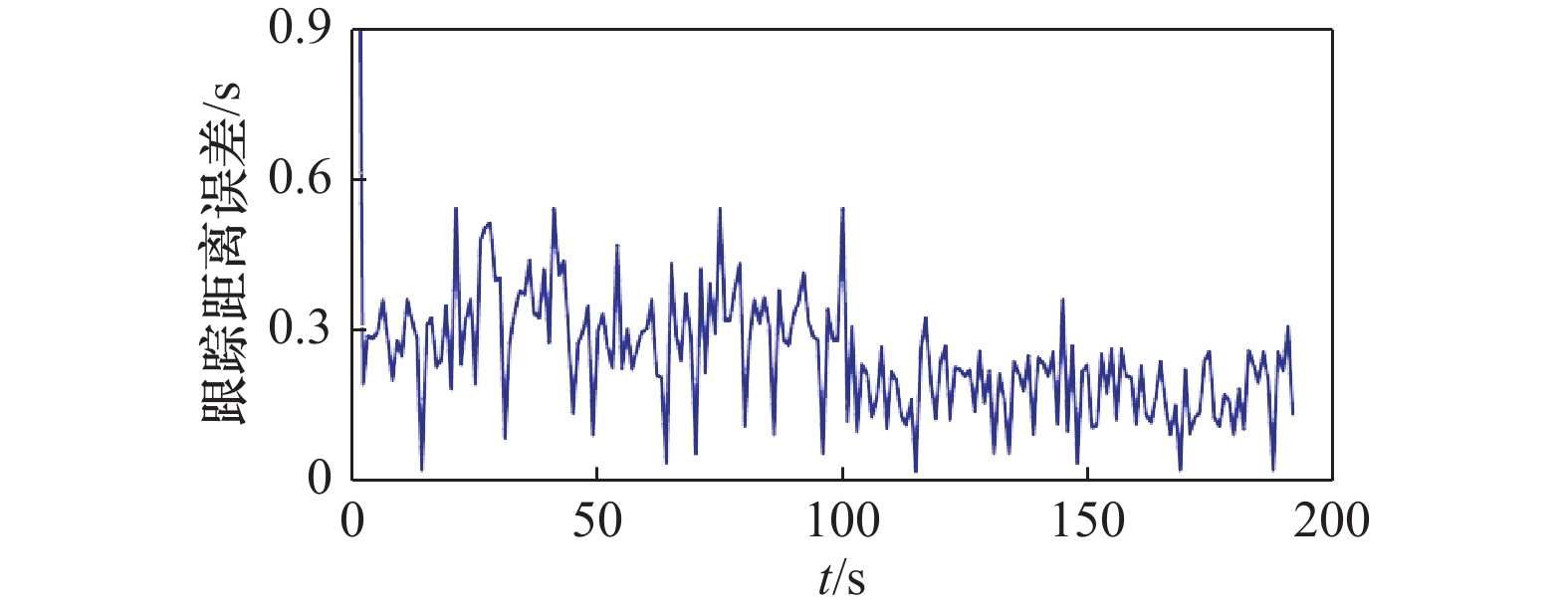
Table 5
Simulation environment information m"
| 实验场景 | 起始位置 | 目标位置 |
| “U型”场景 | (−500, −500) | (450, 450) |
| 动态遮挡场景 | (150, −550) | (150, 500) |
| 狭窄场景 | (−450, −450) | (450, 450) |
| 密集障碍场景 | (−350, −500) | (400, 450) |
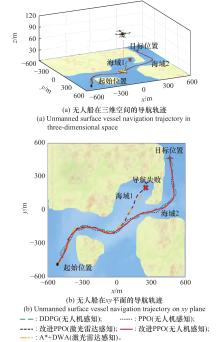
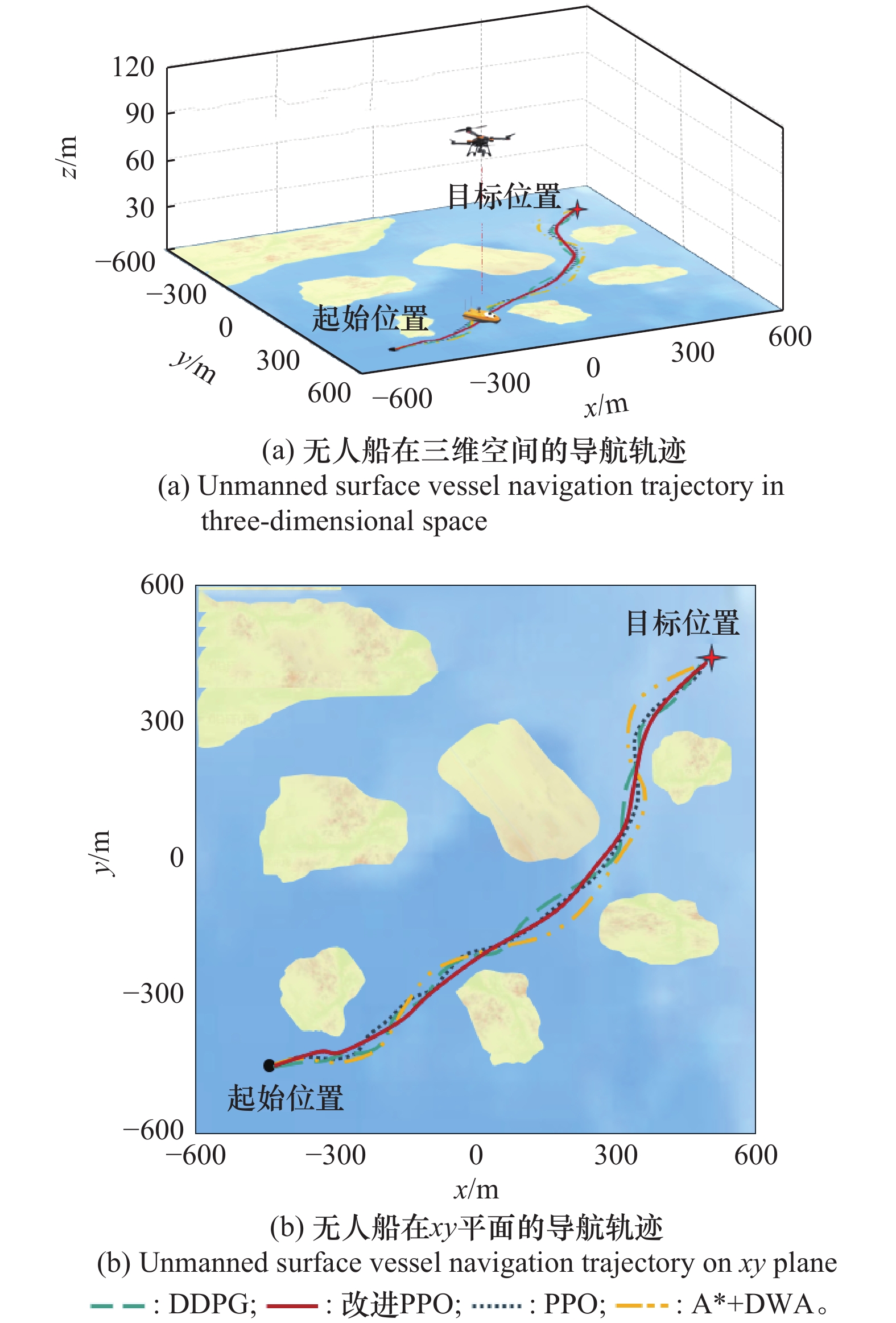
Fig.11
“U-shaped” obstacle scenario experiment"
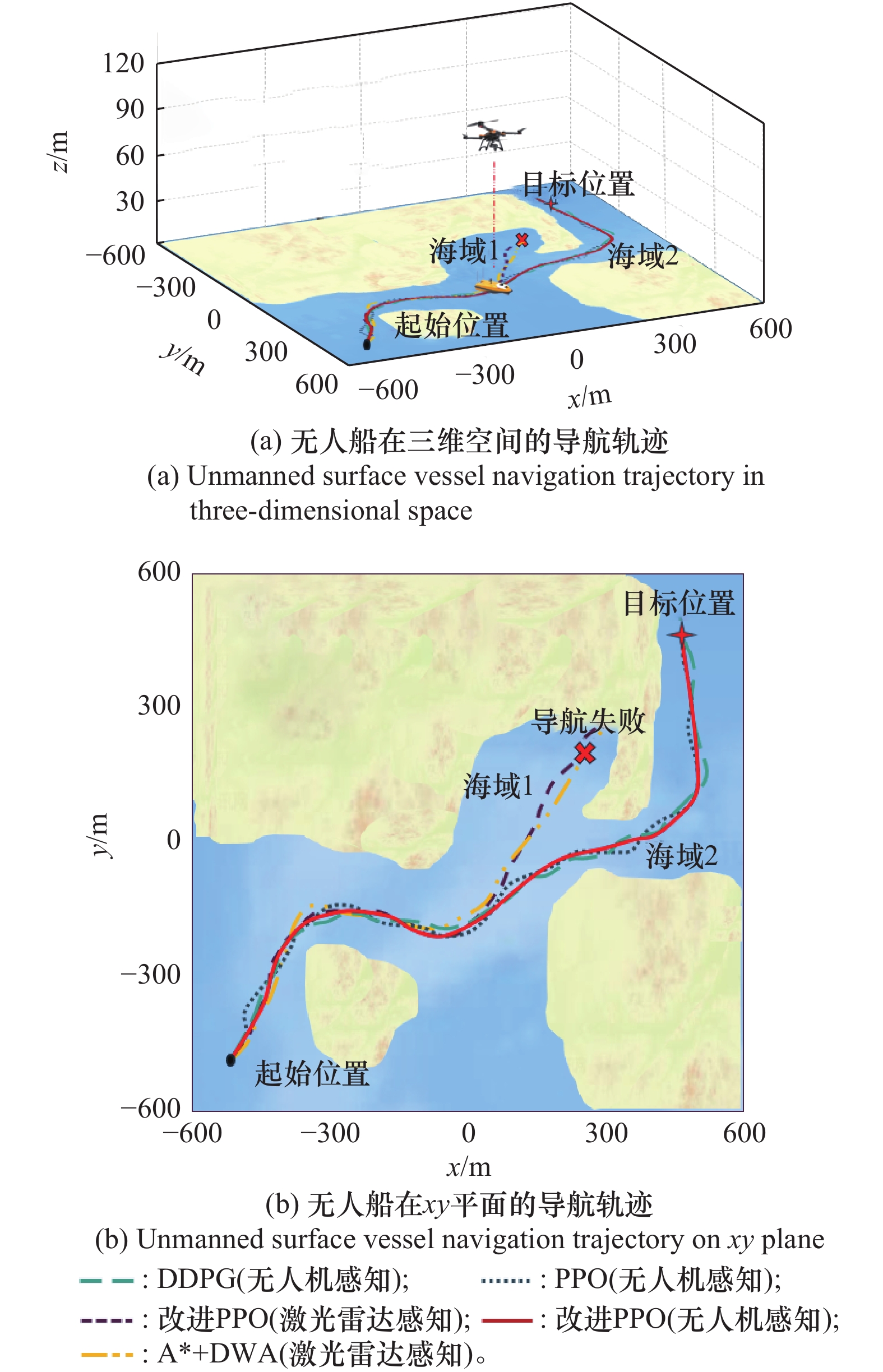
Table 6
Algorithm performance comparison"
| 实验场景 | 算法 | 路径长度/m | 舵角变化率标准差/(°/s) |
| “U型”障碍场景 | DDPG | 1.68 | |
| PPO | 1.62 | ||
| 改进PPO | 1.46 | ||
| 动态障碍遮挡场景 | DDPG | 1.53 | |
| PPO | 1.48 | ||
| 改进PPO | 1.34 | ||
| 狭窄场景 | A*+DWA | 1.21 | |
| DDPG | 1.17 | ||
| PPO | 1.14 | ||
| 改进PPO | 1.03 | ||
| 密集障碍场景 | A*+DWA | 1.33 | |
| DDPG | 1.27 | ||
| PPO | 1.23 | ||
| 改进PPO | 1.12 |
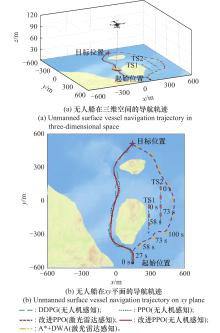
Fig.12
Dynamic occlusion obstacle scenario experiment"
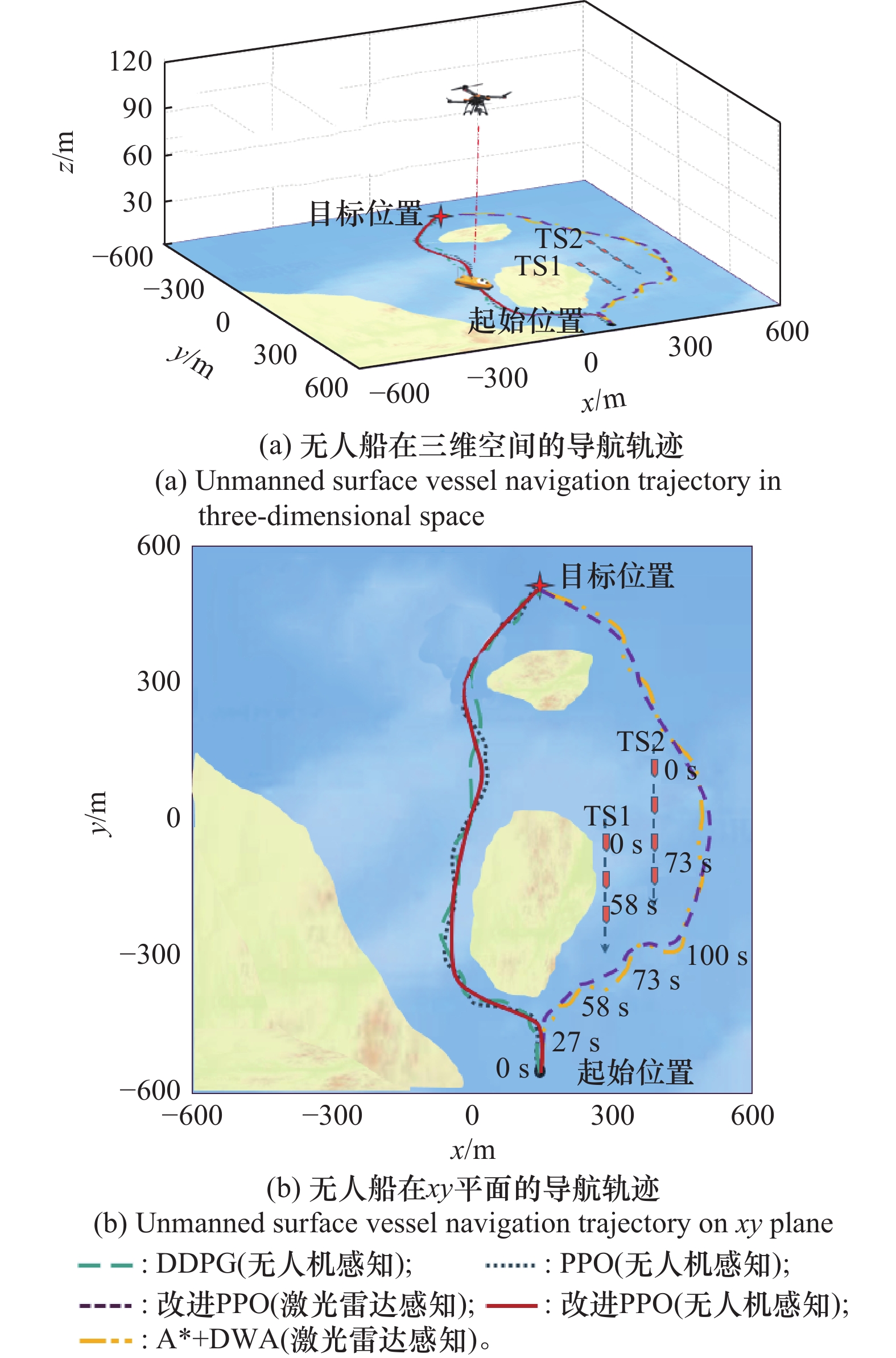
Fig.13
Narrow obstacle scenario experiment"
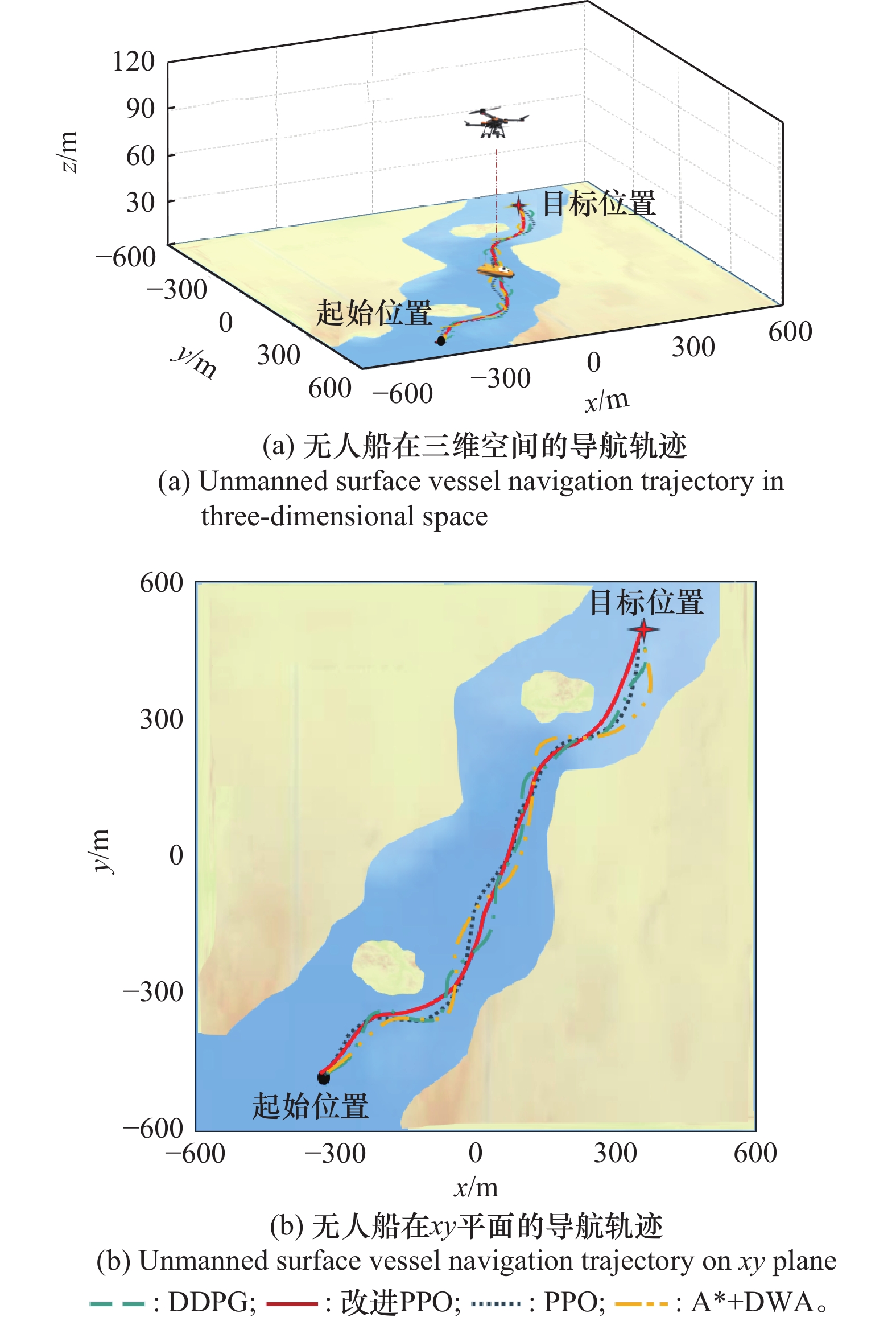
Fig.14
Dense obstacle scenario experiment"
| 1 |
李远芳, 张莉, 陈钜龙. 水下无人船构建海洋环境监测系统研究[J]. 舰船科学技术, 2021, 43 (10): 166- 168.
doi: 10.3404/j.issn.1672-7649.2021.5A.056 |
|
LI Y F, ZHANG L, CHEN J L. Research on the construction of marine environmental monitoring system for unmanned underwater ships[J]. Ship Science and Technology, 2021, 43 (10): 166- 168.
doi: 10.3404/j.issn.1672-7649.2021.5A.056 |
|
| 2 | XIE Y C, NANLAL C, LIU Y C. Reliable LiDAR-based ship detection and tracking for autonomous surface vehicles in busy maritime environments[J]. Ocean Engineering, 2024, 312 (3): 119288. |
| 3 | SUN S, LYU H G, GAO Z J, et al. Grid map assisted radar target tracking in a detection occluded maritime environment[J]. IEEE Trans. on Instrumentation and Measurement, 2024, 73 |
| 4 | WEI W, WANG J J, FANG Z R, et al. 3-U: joint design of UAV-USV-UUV networks for cooperative target hunting[J]. IEEE Trans. on Vehicular Technology, 2022, 72 (3): 4085- 4090. |
| 5 | REN Z G, ZHENG H, CHEN J, et al. Integrating UAV, UGV and UAV-UGV collaboration in future industrialized agriculture: analysis, opportunities and challenges[J]. Computers and Electronics in Agriculture, 2024, 227 (2): 109631. |
| 6 |
YAN J, LIN J S, XIAN Y, et al. Cooperation detection and tracking of underwater target via aerial-surface-underwater vehicles[J]. IEEE Trans. on Automatic Control, 2025, 70 (2): 1068- 1083.
doi: 10.1109/TAC.2024.3447976 |
| 7 |
WANG Y D, LIU W Z, LIU J, et al. Cooperative USV/UAV marine search and rescue with visual navigation and reinforcement learning based control[J]. ISA Transactions, 2023, 137, 222- 235.
doi: 10.1016/j.isatra.2023.01.007 |
| 8 | NIU H L, JI Z, PIETRO L, et al. Design, integration and sea trials of 3D printed unmanned aerial vehicle and unmanned surface vehicle for cooperative missions[C]// Proc. of the IEEE/SICE International Symposium on System Integration, 2021: 2747−2325. |
| 9 |
SHAO G M, MA Y, REZA M, et al. A novel cooperative platform design for coupled USV-UAV systems[J]. IEEE Trans. on Industrial Informatics, 2019, 15 (9): 4913- 4922.
doi: 10.1109/TII.2019.2912024 |
| 10 |
GUAN W, WANG K. Autonomous collision avoidance of unmanned surface vehicles based on improved a-star and dynamic window approach algorithms[J]. IEEE Intelligent Transportation Systems Magazine, 2023, 15 (3): 36- 50.
doi: 10.1109/MITS.2022.3229109 |
| 11 |
ZHANG W L, SHAN L, CHANG L, et al. SVF-RRT*: a stream-based VF-RRT* for USVs path planning considering ocean currents[J]. IEEE Robotics and Automation Letters, 2023, 8 (4): 2413- 2420.
doi: 10.1109/LRA.2023.3245409 |
| 12 |
李文刚, 汪流江, 方德翔, 等. 联合A*与动态窗口法的路径规划算法[J]. 系统工程与电子技术, 2021, 43 (12): 3694- 3702.
doi: 10.12305/j.issn.1001-506X.2021.12.33 |
|
LI W G, WANG L J, FANG D X, et al. A path planning algorithm combining A* and dynamic window method[J]. Systems Engineering and Electronics, 2021, 43 (12): 3694- 3702.
doi: 10.12305/j.issn.1001-506X.2021.12.33 |
|
| 13 |
YANG C P, PAN J C, WEI K, et al. A novel unmanned surface vehicle path planning algorithm based on A* and artificial potential field in ocean currents[J]. Journal of Marine Science and Engineering, 2024, 12 (2): 285.
doi: 10.3390/jmse12020285 |
| 14 |
CHEN Z H, YU J B, ZHAO Z Y, et al. A path planning method considering environmental disturbance based on VPF-RRT[J]. Drones, 2023, 7 (2): 145.
doi: 10.3390/drones7020145 |
| 15 | 夏雨奇, 黄炎焱, 陈恰. 基于深度Q网络的无人车侦察路径规划[J]. 系统工程与电子技术, 2024, 46 (9): 3070- 3081. |
| XIA Y Q, HUANG Y Y, CHEN Q. Unmanned vehicle reconnaissance path planning based on deep Q network[J]. Systems Engineering and Electronics, 2024, 46 (9): 3070- 3081. | |
| 16 | 关巍, 曲胜, 张显库, 等. 基于改进DQN算法的船舶全局路径规划研究[J]. 中国舰船研究, 2025, 20 (1): 107- 114. |
| GUAN W, QU S, ZHANG X K, et al. Global path planning for ships based on improved DQN algorithm[J]. Chinese Journal of Ship Research, 2025, 20 (1): 107- 114. | |
| 17 |
ZHAO J, WANG P R, LI B Y, et al. A DDPG based USV path planning algorithm[J]. Applied Sciences, 2023, 13 (19): 10567.
doi: 10.3390/app131910567 |
| 18 | CUI Z, GUAN W, ZHANG X K, et al. Autonomous collision avoidance decision-making method for USV based on ATL-TD3 algorithm[J]. Ocean Engineering, 2024, 312 (3): 119297. |
| 19 |
SUN P Q, YANG C X, ZHOU X J, et al. Path planning for unmanned surface vehicles with strong generalization ability based on improved proximal policy optimization[J]. Sensors, 2023, 23 (21): 8864.
doi: 10.3390/s23218864 |
| 20 |
LI W Z, GE Y, GUAN Z H, et al. Synchronized motion based UAV–USV cooperative autonomous landing[J]. Journal of Marine Science and Engineering, 2022, 10 (9): 1214.
doi: 10.3390/jmse10091214 |
| 21 |
LI W Z, GE Y, GUAN Z H, et al. NMPC-based UAV-USV cooperative tracking and landing[J]. Journal of the Franklin Institute, 2023, 360 (11): 7481- 7500.
doi: 10.1016/j.jfranklin.2023.06.023 |
| 22 |
LUO W B, WANG X, HAN F, et al. Research on LSTM-PPO obstacle avoidance algorithm and training environment for unmanned surface vehicles[J]. Journal of Marine Science and Engineering, 2025, 13 (3): 479.
doi: 10.3390/jmse13030479 |
| 23 |
LIU L S, CHEN J H, ZHANG Y Y, et al. Unmanned ground vehicle path planning based on improved DRL algorithm[J]. Electronics, 2024, 13 (13): 2479.
doi: 10.3390/electronics13132479 |
| 24 | 王涛, 张卫华, 蒲亦非. 适用于强化学习惯性环境的分数阶改进OU噪声[J]. 四川大学学报(自然科学版), 2023, 60 (2): 63- 69. |
| WANG T, ZHANG W H, PU Y F, et al. Fractional order improved OU noise for reinforcement learning inertial environments[J]. Journal of Sichuan University (Natural Science Edition), 2023, 60 (2): 63- 69. | |
| 25 | CHEN Y A, YE R S, TAO Z Y, et al. Reinforcement learning for robot navigation with adaptive forward simulation time (AFST) in a semi-Markov model[C]//Proc. of the IEEE/RSJ International Conference on Intelligent Robots and Systems, 2023: 3597−3604. |
| 26 | 乔志洋, 余娅荣. 压缩感知理论在图像处理中的应用[J]. 云南大学学报(自然科学版), 2017, 39 (S1): 63- 69. |
| QIAO Z Y, YU Y R. Application of compressive sensing theory in image processing[J]. Journal of Yunnan University (Natural Science Edition), 2017, 39 (S1): 63- 69. | |
| 27 |
LIANG C Q, LIU L, LIU C. Multi-UAV autonomous collision avoidance based on PPO-GIC algorithm with CNN–LSTM fusion network[J]. Neural Networks, 2023, 162, 21- 33.
doi: 10.1016/j.neunet.2023.02.027 |
| 28 | CHRISTIANO P F, LEIKE J, BROWN T, et al. Deep reinforcement learning from human preferences[C]//Proc. of the 31st Annual Conference on Neural Information Processing Systems, 2017: 4299−4307. |
| 29 | YU K, LIANG X F, LI M Z, et al. USV path planning method with velocity variation and global optimization based on AIS service platform[J]. Ocean Engineering, 2021, 236 (15): 109560. |
| 30 | CUI Z W, GUAN W, ZHANG X K. Collision avoidance decision-making strategy for multiple USVs based on deep reinforcement learning algorithm[J]. Ocean Engineering, 2024, 308 (15): 118323. |
| [1] | Honghui BAN, Jifei PAN, Zheng WANG, Rui CUI. Trajectory deception error analysis based on multi-UAV collaboration [J]. Systems Engineering and Electronics, 2026, 48(7): 2195-2205. |
| [2] | Wenbin LIN, Chenguang SHI, Mu YAN, Fei WANG, Jianjiang ZHOU. Robust trajectory planning algorithm for UAVs swarm facing deceptive jamming networked radar [J]. Systems Engineering and Electronics, 2026, 48(5): 1551-1563. |
| [3] | Jie HU, Ruifeng CHU, Yixian ZHU, Ping CHEN, Fan BAO. Three-dimensional trajectory planning of UAV based on VPPSO algorithm [J]. Systems Engineering and Electronics, 2026, 48(5): 1738-1751. |
| [4] | Zhi YANG, Feng YU, Siying LIN, Zijun ZHOU. Swarm autonomous navigation technology based on visual collaboration [J]. Systems Engineering and Electronics, 2026, 48(4): 1396-1403. |
| [5] | Xuping GU, Xianjun SHI. Reconfigurability analysis and design of UAV based on structural analysis and tree-seed optimization algorithm [J]. Systems Engineering and Electronics, 2026, 48(3): 932-945. |
| [6] | Sen ZHANG, Yan PANG, Fuliang ZHOU. Three-dimensional path planning for UAV based on improved Informed-RRT* algorithm [J]. Systems Engineering and Electronics, 2026, 48(2): 660-668. |
| [7] | Xu WANG, Guangbin CAI, Xiaoya YU, Ziqi YE, Bin SHAN. Attitude control of hypersonic vehicle based on dual-dynamic PPO algorithm [J]. Systems Engineering and Electronics, 2026, 48(2): 694-704. |
| [8] | Xuxin YANG, Wei JI. Optimization strategy for energy consumption in unmanned aerial vehicle assisted safe MEC systems [J]. Systems Engineering and Electronics, 2026, 48(2): 719-726. |
| [9] | Zeyu LU, Yao WANG, Weinan WU, Yiming SUN, Chunlin GONG. Two-layered path planning for unmanned aerial vehicle swarm in three-dimensional dynamic environment [J]. Systems Engineering and Electronics, 2026, 48(1): 132-143. |
| [10] | Qichen XU, Zhaohui ZHANG, Jing LI. Distributed adaptive multi-UAV collaborative path planning in unknown denial environments [J]. Systems Engineering and Electronics, 2026, 48(1): 172-184. |
| [11] | Xiaolong WEI, Yarong WU, Dengkai YAO, Guhao ZHAO. Hierarchical decision-making algorithm for UAV air combat maneuvering based on deep reinforcement learning [J]. Systems Engineering and Electronics, 2025, 47(9): 2993-3003. |
| [12] | Dapeng YANG, Zihao GONG, Xiaoye WANG, Zhengyu GUO, Delin LUO. Research on UAV cooperative interception maneuver decision-making based on multi-agent reinforcement learning [J]. Systems Engineering and Electronics, 2025, 47(9): 3076-3085. |
| [13] | Zhao YANG, Jinbiao HU, Yan WANG, Hongbiao QI. UAV coverage path planning for mountain patrol considering different takeoff and landing nests [J]. Systems Engineering and Electronics, 2025, 47(8): 2622-2631. |
| [14] | Xiaowei YAN, Chong LING, Shengbin SHI. Design and implementation of a rapid detection system for surface unexploded submunitions [J]. Systems Engineering and Electronics, 2025, 47(8): 2639-2645. |
| [15] | Xiaowei FU, Xinyi WANG, Zhe QIAO. Attack-defense confrontation strategy of multi-UAV based on APIQ algorithm [J]. Systems Engineering and Electronics, 2025, 47(7): 2205-2215. |
| Viewed | ||||||
|
Full text |
|
|||||
|
Abstract |
|
|||||