Systems Engineering and Electronics ›› 2026, Vol. 48 ›› Issue (5): 1465-1473.doi: 10.12305/j.issn.1001-506X.2026.05.02
• Electronic Technology • Previous Articles Next Articles
Underdetermined blind source separation algorithm based on DBSCAN-R
Ce JI1,2( ), Linshan WANG1,*(), Hui MOU1()
- 1. School of Computer Science and Engineering,Northeastern University,Shenyang 110169,China
2. Key Laboratory of Intelligent Computing in Medical Image,Ministry of Education,Northeastern University,Shenyang 110169,China
-
Received:2025-04-03Online:2026-05-27Published:2026-05-27 -
Contact:Linshan WANG E-mail:jice@ise.neu.edu.cn;2401787@stu.neu.edu.cn;2249488897@qq.com

CLC Number:
Cite this article
Ce JI, Linshan WANG, Hui MOU. Underdetermined blind source separation algorithm based on DBSCAN-R[J]. Systems Engineering and Electronics, 2026, 48(5): 1465-1473.
share this article
Fig.1
Uniform linear array"
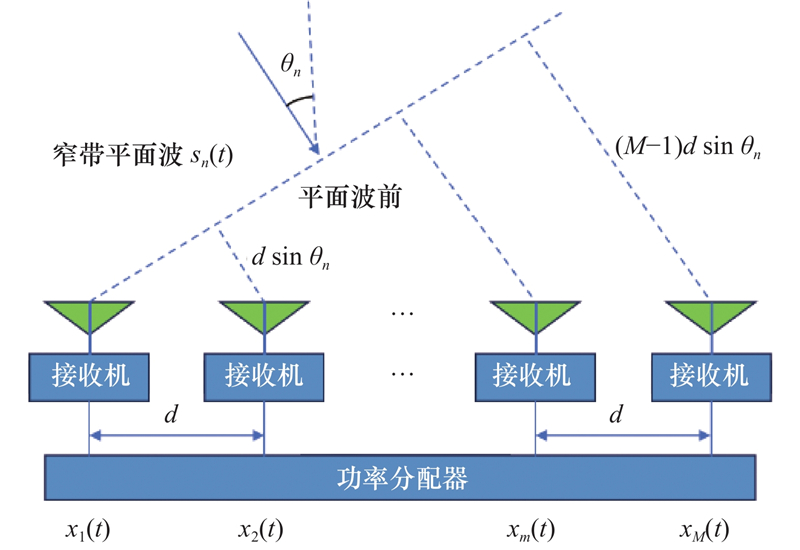
Fig.2
Performance comparison of mixed matrix estimation with different MinPts"
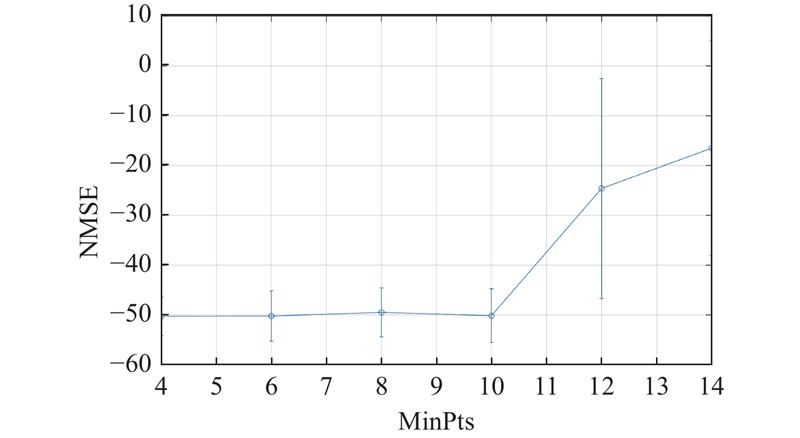
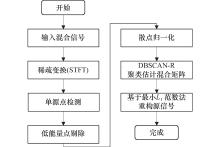
Fig.3
Flow chart of underdetermined blind source separation algorithm based on DBSCAN-R"
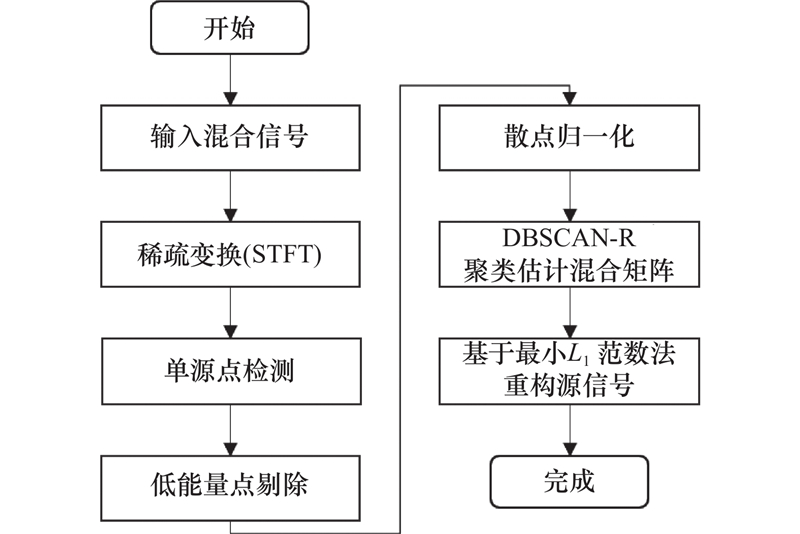
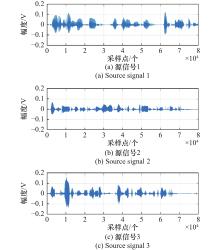
Fig.4
Time domain oscillogram of source signal"
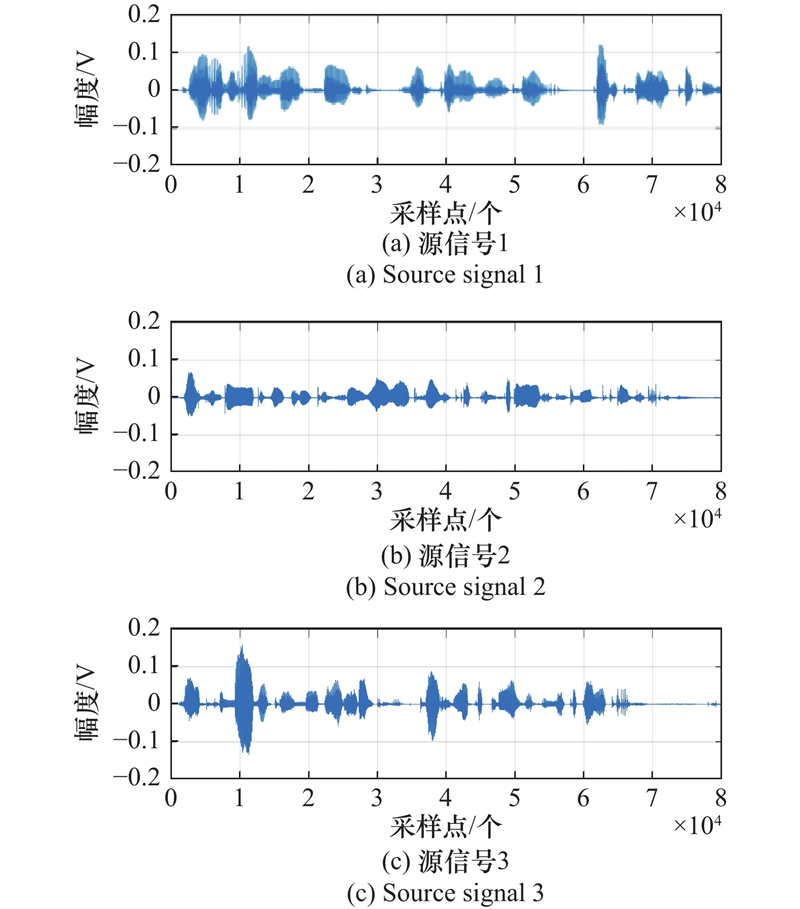
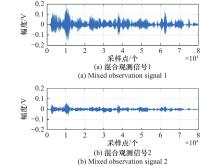
Fig.5
Time domain oscillogram of mixed observation signal"
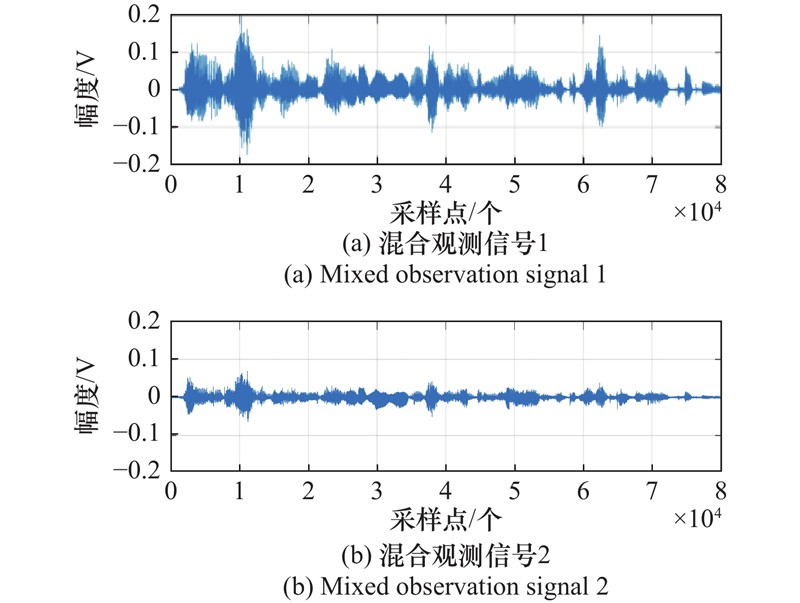
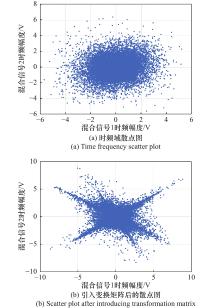
Fig.6
Time frequency scatter plots of mixed signal"
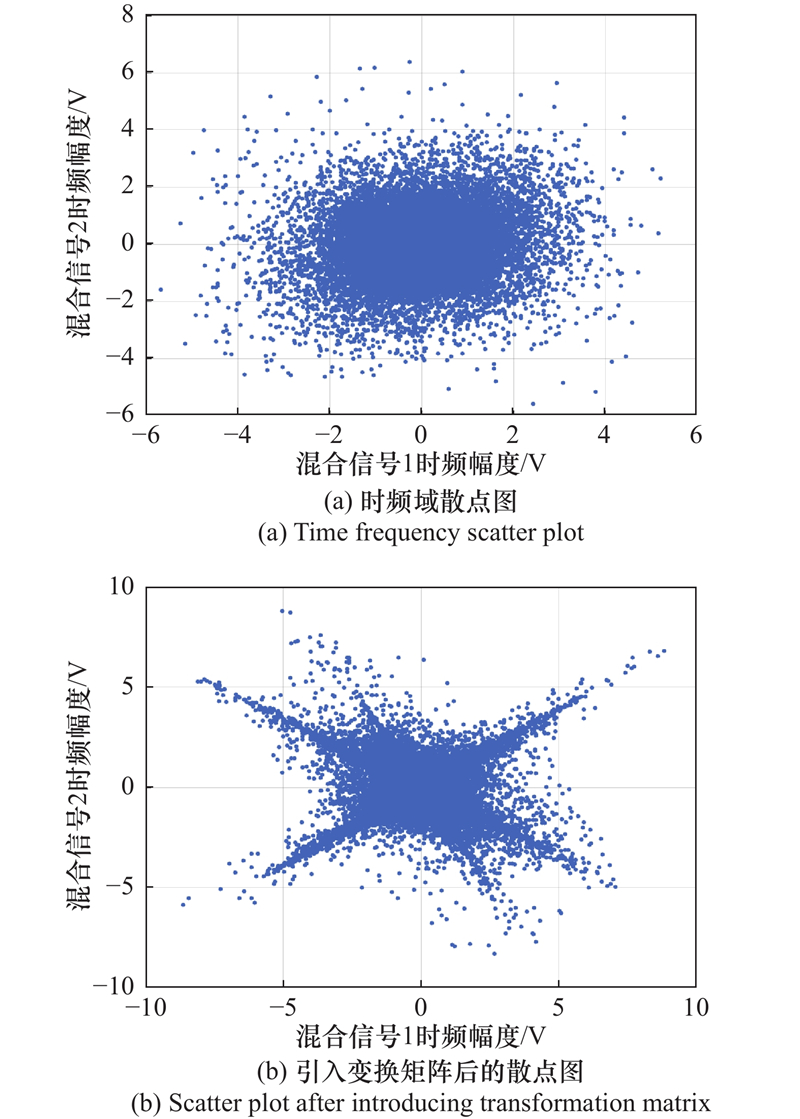
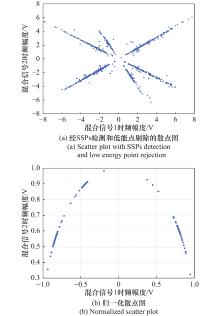
Fig.7
Time frequency scatter sparse process diagram"
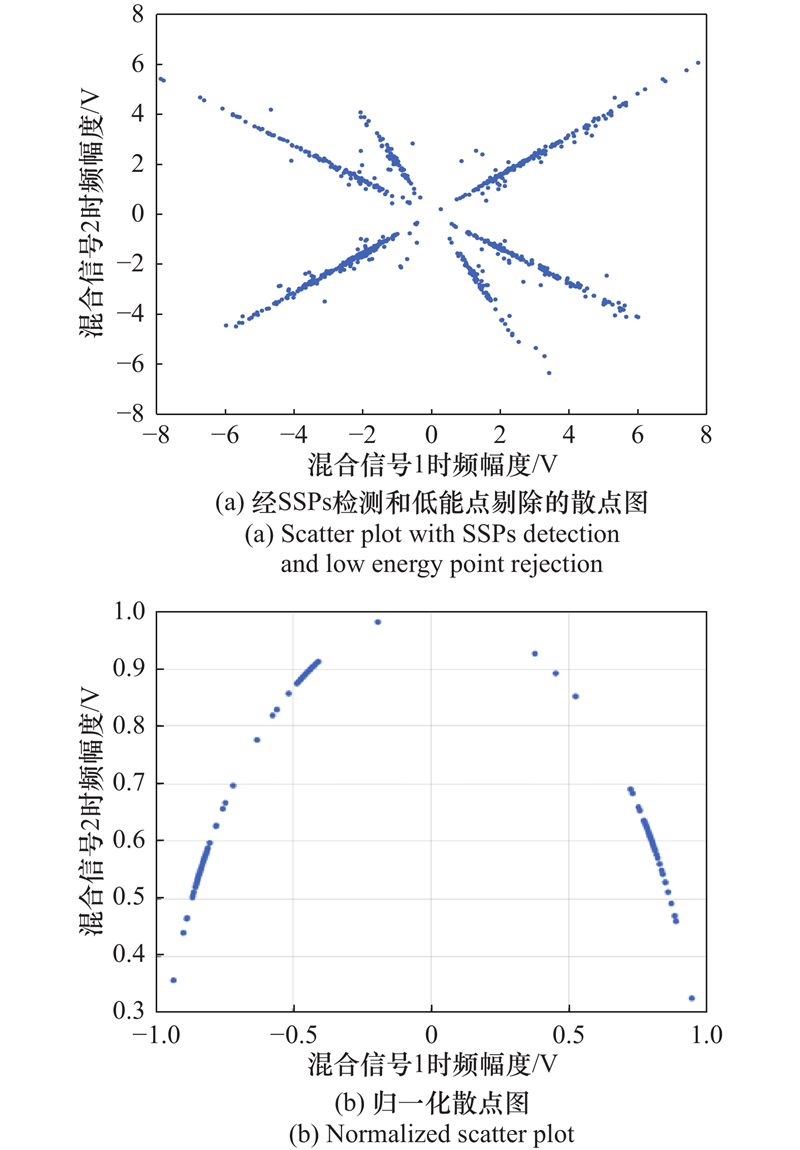
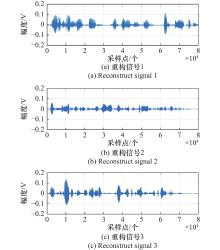
Fig.8
Time domain oscillogram of reconstructed signal"
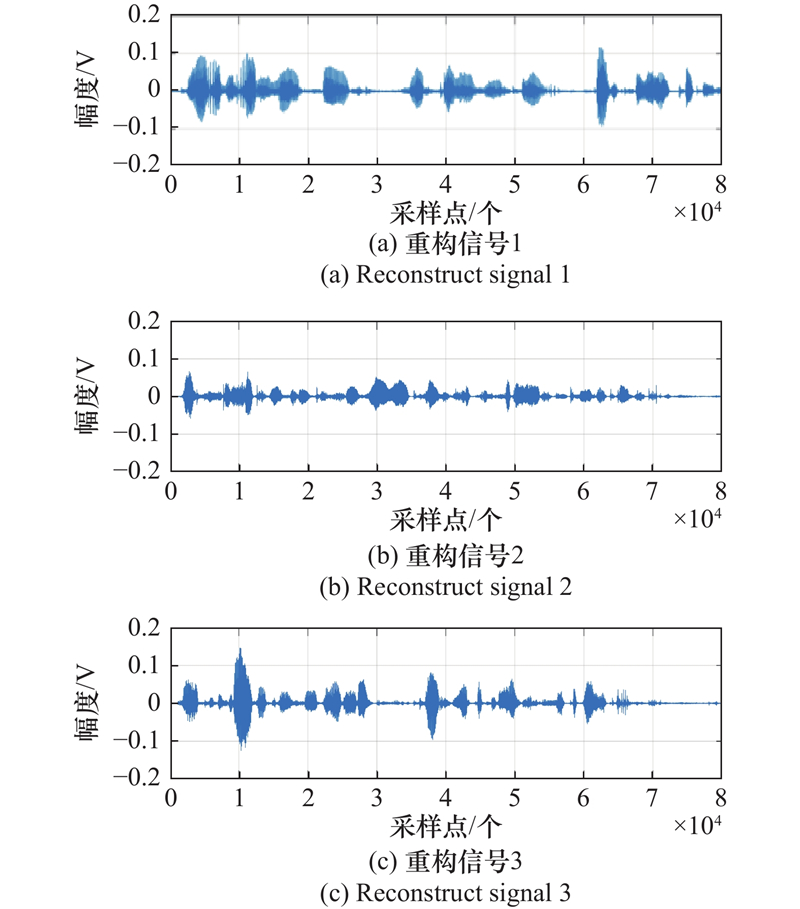
Fig.9
DBSCAN reconstructed signal waveform"
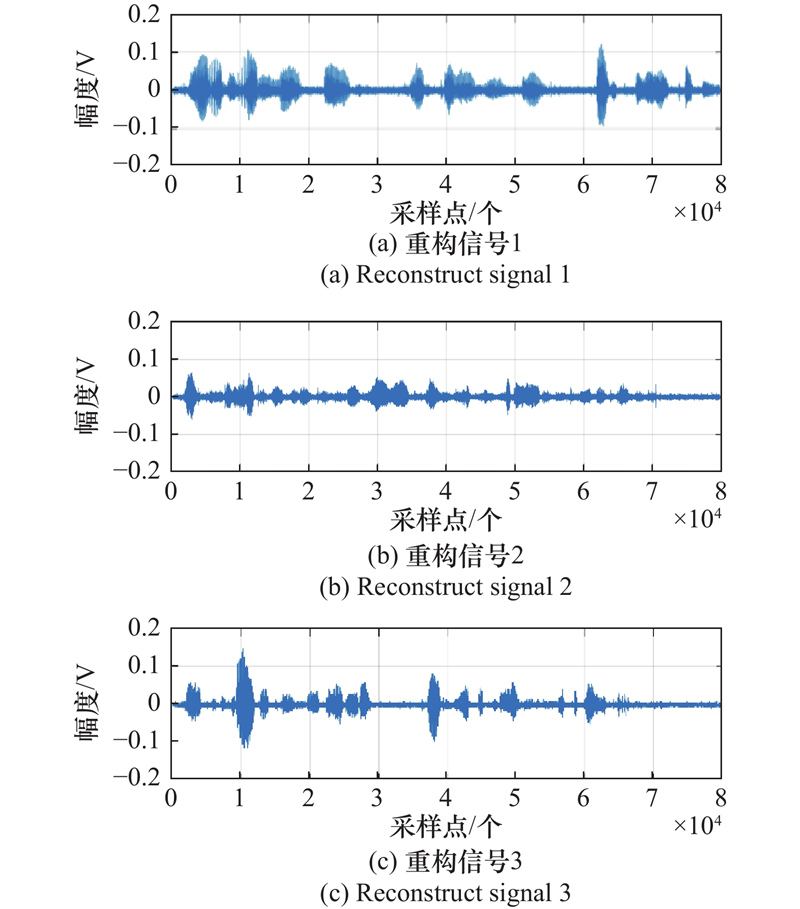
Fig.10
KM reconstructed signal waveform"
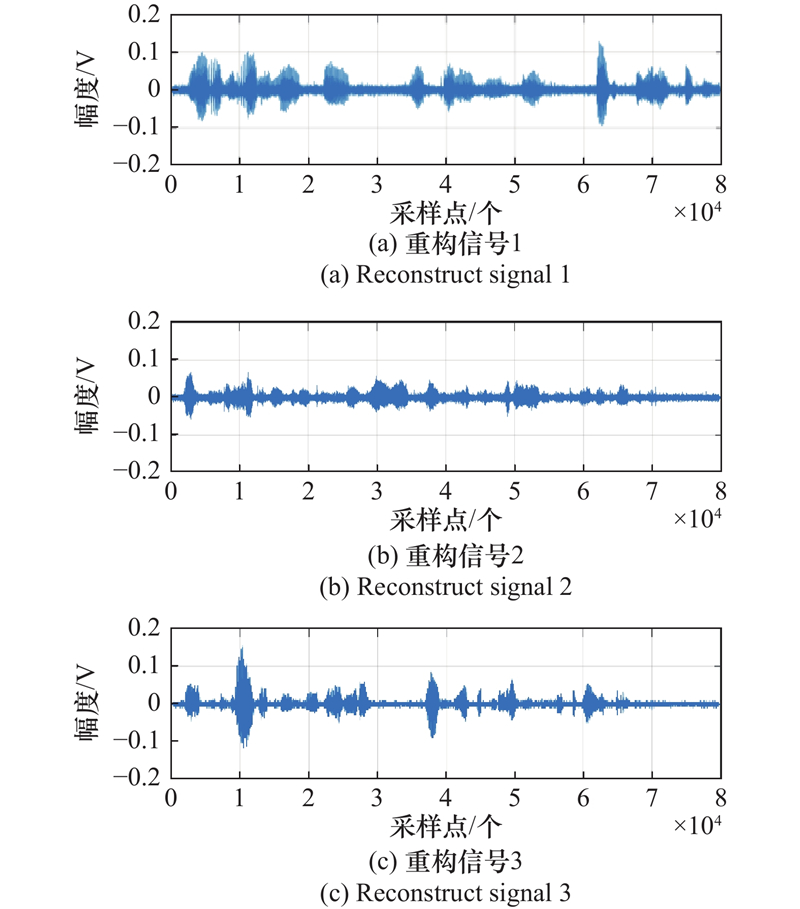
Fig.11
Hierarchical+KM reconstructed signal waveform"
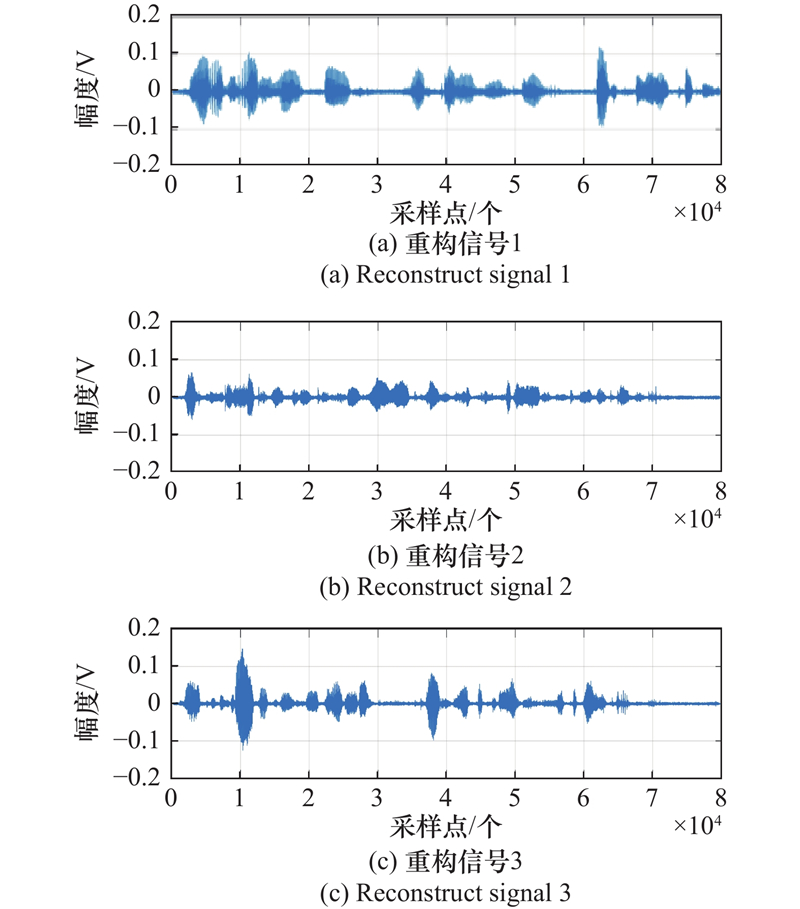
Fig.12
Performance comparison of different algorithms for hybrid matrix estimation"
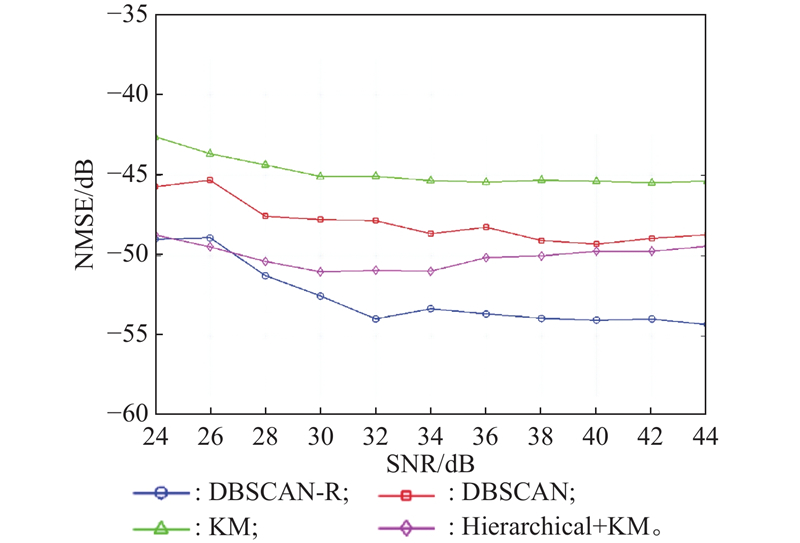
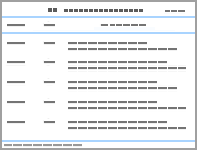
Table 1
Similarity coefficient of reconstructed signal"
| 源信号 | DBSCAN-R | DBSCAN | KM | Hierarchical+KM |
| 0.986 9 | 0.974 2 | 0.973 7 | 0.959 5 | |
| 0.891 9 | 0.870 3 | 0.873 2 | 0.851 9 | |
| 0.930 2 | 0.930 2 | 0.932 1 | 0.921 7 |
| 1 |
DONG T B, LEI Y K, YANG J S. An algorithm for underdetermined mixing matrix estimation[J]. Neurocomputing, 2013, 104, 26- 34.
doi: 10.1016/j.neucom.2012.09.018 |
| 2 |
LI Y B, NIE W, YE F, et al. A mixing matrix estimation algorithm for underdetermined blind source separation[J]. Circuits, Systems, and Signal Processing, 2016, 35, 3367- 3379.
doi: 10.1007/s00034-015-0198-y |
| 3 |
GUO Q, RUAN G Q, QI L G. A complex-valued mixing matrix estimation algorithm for underdetermined blind source separation[J]. Circuits, Systems, and Signal Processing, 2018, 37, 3206- 3226.
doi: 10.1007/s00034-018-0796-6 |
| 4 | 董天宝, 杨景曙. 基于孤立点检测的欠定混合矩阵盲辨识[J]. 电子学报, 2012, 40 (12): 2367- 2373. |
| DONG T B, YANG J S. Blind identification of underdetermined mixtures based on outlier detection[J]. Acta Electronica Sinica, 2012, 40 (12): 2367- 2373. | |
| 5 |
GUO Q, RUAN G Q, NAN P L. Underdetermined mixing matrix estimation algorithm based on single source points[J]. Circuits, Systems, and Signal Processing, 2017, 36, 4453- 4467.
doi: 10.1007/s00034-017-0522-9 |
| 6 |
LI Y B, NIE W, YE F, et al. A complex mixing matrix estimation algorithm in under-determined blind source separation problems[J]. Signal, Image and Video Processing, 2017, 11 (2): 301- 308.
doi: 10.1007/s11760-016-0937-y |
| 7 |
JIANG H, LI J, YI S H, et al. A new hybrid method based on partitioning-based DBSCAN and ant clustering[J]. Expert Systems with Applications, 2011, 38 (8): 9373- 9381.
doi: 10.1016/j.eswa.2011.01.135 |
| 8 |
MEDINA A, GARON A, DIAZ-BEDOYA A, et al. Aerial vehicle detection and DBSCAN-based interchange region identification for urban traffic analysis[J]. IEEE Access, 2025, 13, 65183- 65197.
doi: 10.1109/ACCESS.2025.3558717 |
| 9 |
MARDANI K, MAGHOOLI K, FAROKHI F. Segmentation of coronary arteries from X-ray angiographic images using density based spatial clustering of applications with noise (DBSCAN)[J]. Biomedical Signal Processing and Control, 2025, 101, 107175.
doi: 10.1016/j.bspc.2024.107175 |
| 10 |
SONG C Y, CUI J Y, CUI Y F, et al. Integrated STL-DBSCAN algorithm for online hydrological and water quality monitoring data cleaning[J]. Environmental Modelling and Software, 2025, 183, 106262.
doi: 10.1016/j.envsoft.2024.106262 |
| 11 | MAI X D, CHENG J K, WANG S N. Retracted article: research on semi supervised K-means clustering algorithm in data mining[J]. Cluster Computing, 2019, 22 (2): 3513- 3520. |
| 12 |
XIE S L, YANG L, YANG J M, et al. Time-frequency approach to underdetermined blind source separation[J]. IEEE Trans. on Neural Networks and Learning Systems, 2012, 23 (2): 306- 316.
doi: 10.1109/TNNLS.2011.2177475 |
| 13 |
WU Q H, LIU J C, GAO C, et al. Improved RANSAC point cloud spherical target detection and parameter estimation method based on principal curvature constraint[J]. Sensors, 2022, 22 (15): 5850.
doi: 10.3390/s22155850 |
| 14 | 季策, 姜雨田. 基于方向幅值比的欠定盲源分离算法[J]. 东北大学学报(自然科学版), 2019, 40 (7): 920- 924. |
| JI C, JIANG Y T. Underdetermined blind source separation algorithm based on directional amplitude ratio[J]. Journal of Northeastern University (Natural Science), 2019, 40 (7): 920- 924. | |
| 15 |
FU W H, BAI X W, SHI F, et al. Mixing matrix estimation algorithm for underdetermined blind source separation[J]. IEEE Access, 2021, 9, 136284- 136291.
doi: 10.1109/ACCESS.2021.3114169 |
| 16 |
SUN J D, LI Y X, WEN J T, et al. Novel mixing matrix estimation approach in underdetermined blind source separation[J]. Neurocomputing, 2016, 173, 623- 632.
doi: 10.1016/j.neucom.2015.08.008 |
| 17 | JAIN P K, BAJPAI M S, PAMULA R. A modified DBSCAN algorithm for anomaly detection in time-series data with seasonality[J]. The International Arab Journal of Information Technology, 2022, 19 (1): 23- 28. |
| 18 | SAWANT K. Adaptive methods for determining DBSCAN parameters[J]. International Journal of Innovative Science, Engineering and Technology, 2014, 1 (4): 329- 334. |
| 19 |
季策, 穆文欢, 耿蓉. 基于A-DBSCAN的欠定盲源分离算法[J]. 系统工程与电子技术, 2020, 42 (12): 2676- 2683.
doi: 10.3969/j.issn.1001-506X.2020.12.02 |
|
JI C, MU W H, GENG R. Underdetermined blind source separation algorithm based on A-DBSCAN[J]. Systems Engineering and Electronics, 2020, 42 (12): 2676- 2683.
doi: 10.3969/j.issn.1001-506X.2020.12.02 |
|
| 20 |
YANG L N, LI Y C, LI X C, et al. Efficient plane extraction using normal estimation and RANSAC from 3D point cloud[J]. Computer Standards and Interfaces, 2022, 82, 103608.
doi: 10.1016/j.csi.2021.103608 |
| 21 |
MA S H, GUO P K, YOU H R, et al. An image matching optimization algorithm based on pixel shift clustering RANSAC[J]. Information Sciences, 2021, 562, 452- 474.
doi: 10.1016/j.ins.2021.03.023 |
| 22 | 付宁, 彭喜元. 基于改进l1范数最小化组合算法的欠定盲源分离[J]. 电子测量与仪器学报, 2009, 23 (7): 4- 8. |
| FU N, PENG X Y. Underdetermined blind source separation based on improved combinatorial algorithm for l1-norm minimization[J]. Journal of Electronic Measurement and Instrumentation, 2009, 23 (7): 4- 8. | |
| 23 |
GUO Q, LI C, RUAN G Q. Mixing matrix estimation of underdetermined blind source separation based on data field and improved FCM clustering[J]. Symmetry, 2018, 10 (1): 21.
doi: 10.3390/sym10010021 |
| 24 | ZHEN L L, PENG D Z, YI Z, et al. Underdetermined blind source separation using sparse coding[J]. IEEE Trans. on Neural Networks and Learning Systems, 2016, 28 (12): 3102- 3108. |
| 25 | FIORI S. On vector averaging over the unit hypersphere[J]. Digital Signal Processing, 2008, 19 (4): 715- 725. |
| 26 | BAI P C, YANG Y X, XUE F T, et al. Underdetermined mixing matrix estimation based on time-frequency single source points detection and eigenvalue decomposition[J]. Signal, Image and Video Processing, 2022, 16 (4): 1061- 1069. |
| 27 |
WANG J D, CHEN X, ZHAO H Y, et al. An effective two-stage clustering method for mixing matrix estimation in instantaneous underdetermined blind source separation and its application in fault diagnosis[J]. IEEE Access, 2021, 9, 115256- 115269.
doi: 10.1109/ACCESS.2021.3105538 |
| [1] | Zicong WANG, Jian ZHANG. Electromagnetic signal no-targeted smooth adversarial attack method based on Jacobian saliency map [J]. Systems Engineering and Electronics, 2025, 47(7): 2127-2135. |
| [2] | Pingbo WANG, Yaojun JIA, Hongkai WEI, Qiang CHEN. Weighted beamforming method study with end directional interferences suppression and constant low side-lobe level for uniform linear array [J]. Systems Engineering and Electronics, 2025, 47(3): 709-719. |
| [3] | Zhen DAI, Qingwei HAN, Pingbo WANG, Wendou JIA. Research on robust detection of weak signals in impulsive noise [J]. Systems Engineering and Electronics, 2025, 47(11): 3551-3558. |
| [4] | Jianguo YIN, Wen SHENG, Wei JIANG. Radar air target recognition based on deep residual shrinkage network [J]. Systems Engineering and Electronics, 2024, 46(9): 3012-3018. |
| [5] | Chenghao LIU, Xiaolin ZHANG, Rongchen SUN, Ming LI. Estimation of mixture matrix of density clustering algorithm based on improved particle swarm optimization algorithm [J]. Systems Engineering and Electronics, 2024, 46(7): 2211-2219. |
| [6] | Jiyuan CHEN, Zhenhai XU, Shunping XIAO. Robust interference suppression of wideband irregular subarrayed phased array based on subarray level processing [J]. Systems Engineering and Electronics, 2024, 46(2): 367-380. |
| [7] | Tao CHEN, Yaopeng LIANG, Yuwei YU. Parameter estimation method based on NYFR sampling uniform linear array structure [J]. Systems Engineering and Electronics, 2024, 46(12): 3965-3972. |
| [8] | Yun ZHONG, Lujun WAN, Peiyang YAO, Jieyong ZHANG. Measurement and optimization of generation and evolution of agile C2 organization [J]. Systems Engineering and Electronics, 2023, 45(4): 1090-1097. |
| [9] | Tianqi ZHANG, Shaopeng YE, Jianxing LIU, Haojun BAI. Frequency centroid zero watermarking algorithm based on Tetrolet transform of color image [J]. Systems Engineering and Electronics, 2023, 45(1): 41-48. |
| [10] | Haoyang LI, Jianjun XIANG, Fang PENG, Shuai WANG, Zhijun LI. Beam space generalized sidelobe canceller algorithm based on particle swarm optimization [J]. Systems Engineering and Electronics, 2022, 44(10): 3037-3045. |
| [11] | Mengchen ZHAO, Xiujuan YAO, Jing WANG, Suhui DONG. Single-channel blind source separation method of spatial aliasing signal based on Stacked-TCN [J]. Systems Engineering and Electronics, 2021, 43(9): 2628-2636. |
| [12] | Zhirou YANG, Hu ZHANG, Jing LIU, Tonglin LIU. Optimization algorithm of military communication network structure under node attack strategy [J]. Systems Engineering and Electronics, 2021, 43(7): 1848-1855. |
| [13] | Zhe WANG, Jianhua LI, Dong KANG. Robustness of two-layer heterogeneous interdependent network model for networked information system of system [J]. Systems Engineering and Electronics, 2021, 43(4): 961-969. |
| [14] | Chao WANG, Jilian GUO, Anwei SHEN. Analysis of cascading failures of interdependent networks based on asymmetric dependency [J]. Systems Engineering and Electronics, 2020, 42(5): 1093-1101. |
| [15] | Ce JI, Wenhuan MU, Rong GENG. Underdetermined blind source separation algorithm based on A-DBSCAN [J]. Systems Engineering and Electronics, 2020, 42(12): 2676-2683. |
| Viewed | ||||||
|
Full text |
|
|||||
|
Abstract |
|
|||||