Systems Engineering and Electronics ›› 2026, Vol. 48 ›› Issue (3): 787-794.doi: 10.12305/j.issn.1001-506X.2026.03.06
• Sensors and Signal Processing • Previous Articles
Radar sea surface weak target detection technology based on correlation
Wei WANG, Yong YANG, Jingwen HAN
- College of Electronic Science and Technology,National University of Defense Technology,Changsha 410073,China
-
Received:2024-09-12Online:2026-03-25Published:2026-04-13 -
Contact:Yong YANG

CLC Number:
Cite this article
Wei WANG, Yong YANG, Jingwen HAN. Radar sea surface weak target detection technology based on correlation[J]. Systems Engineering and Electronics, 2026, 48(3): 787-794.
share this article
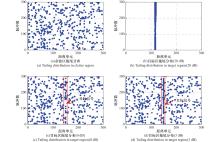
Fig.1
Spatial distribution of tailed datas"
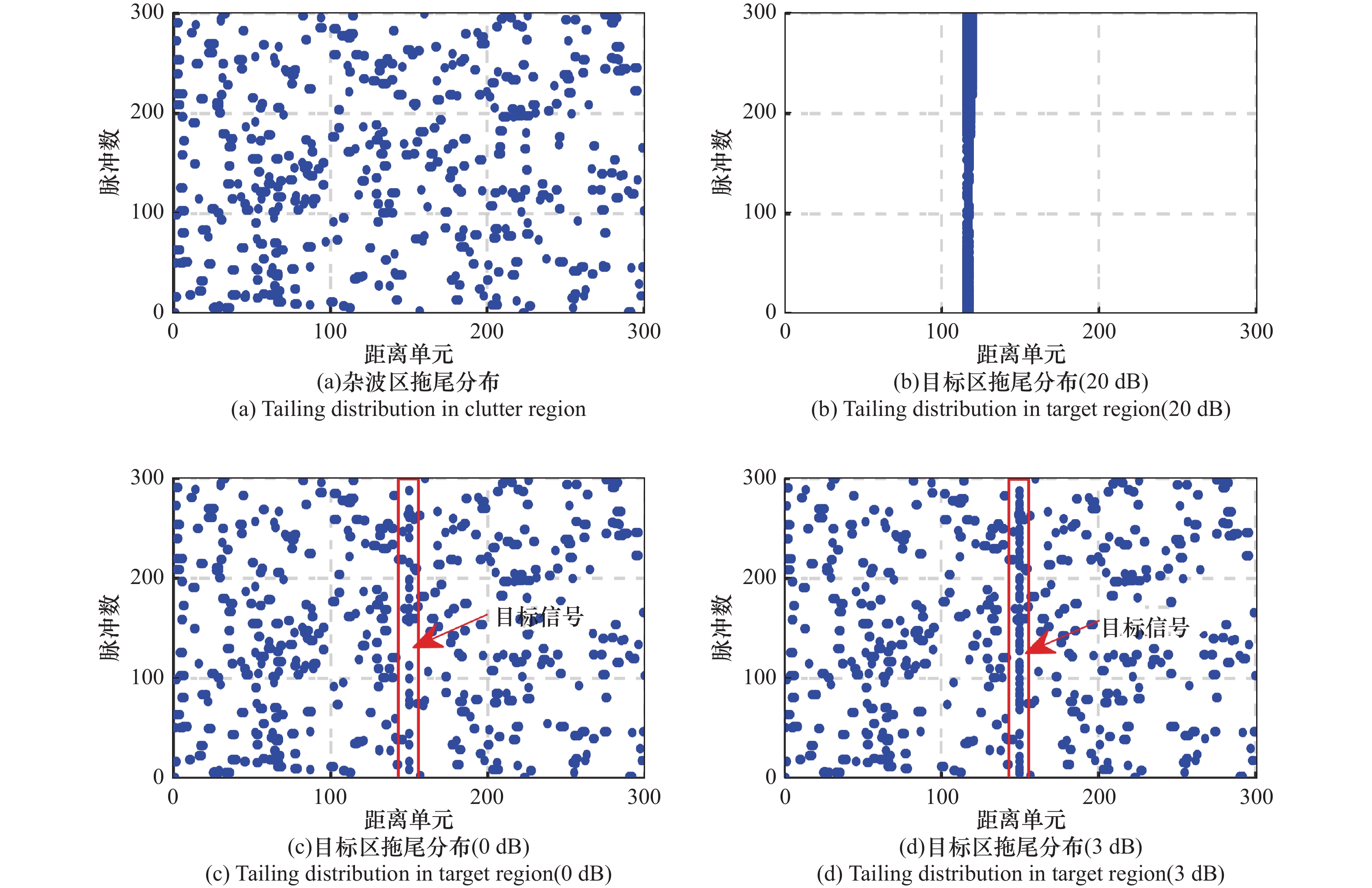
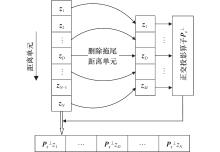
Fig.2
Diagram of de-tailed orthogonal projection"
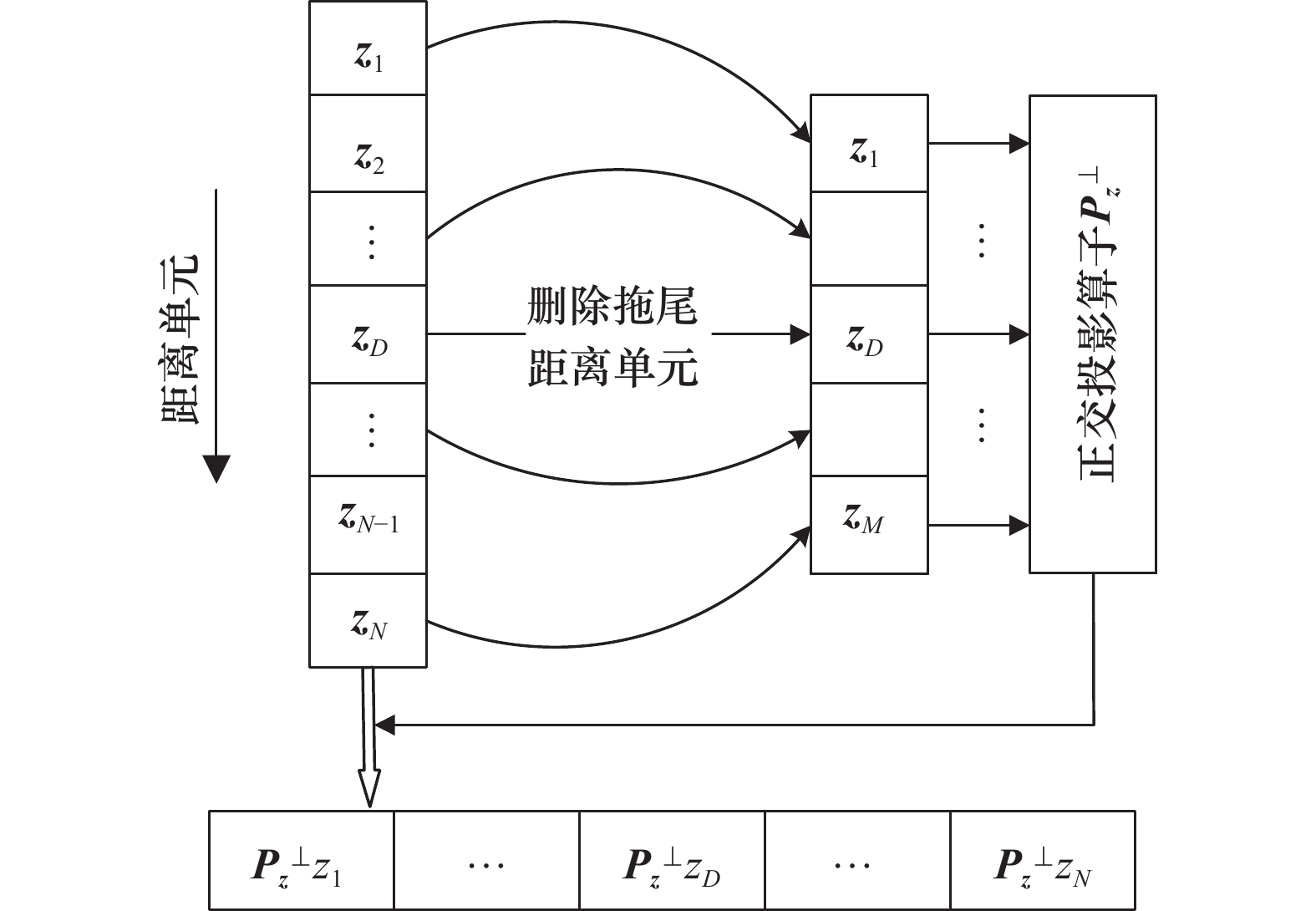
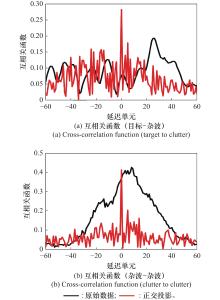
Fig.3
Cross-correlation function between different range cells"
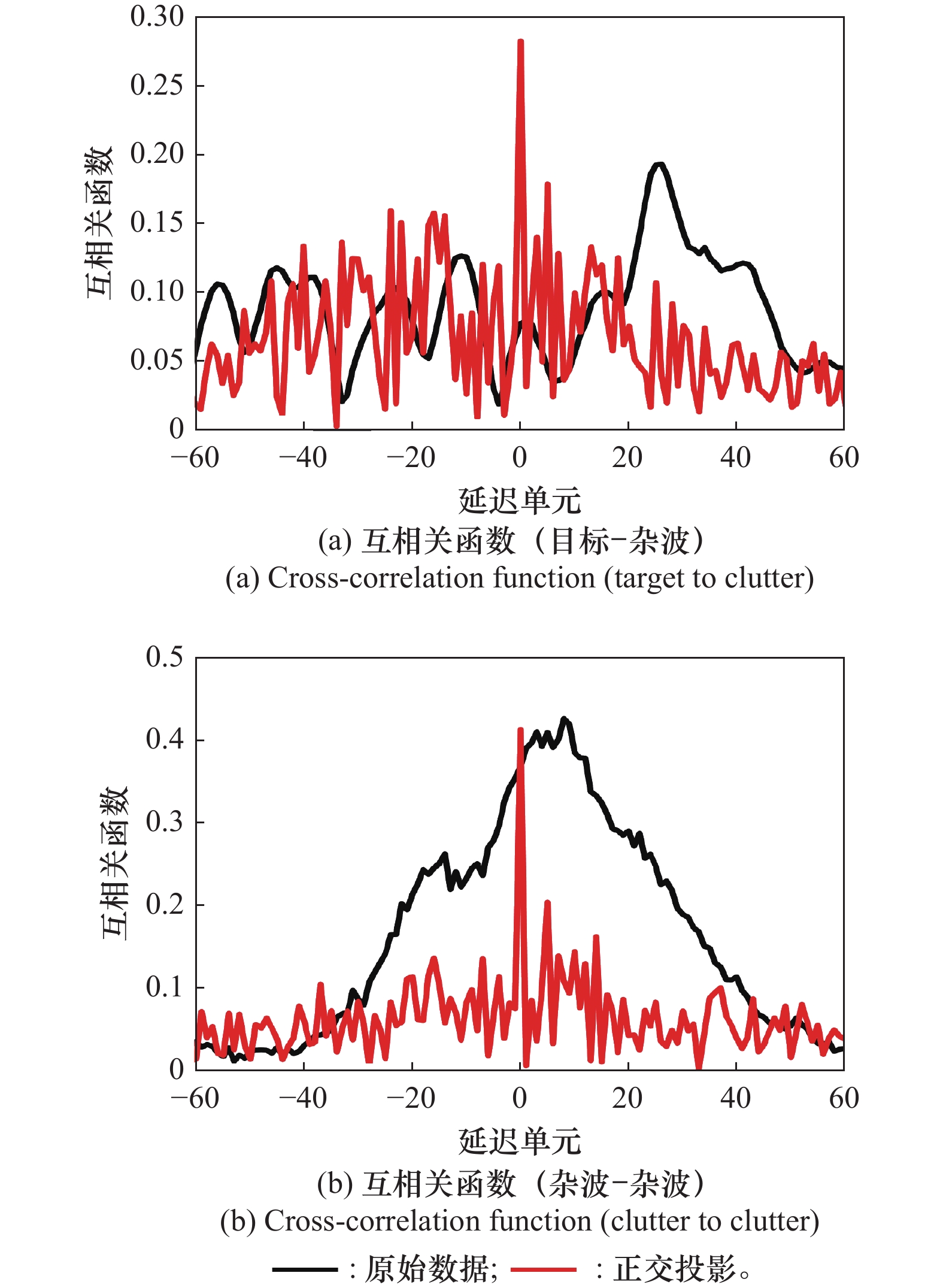
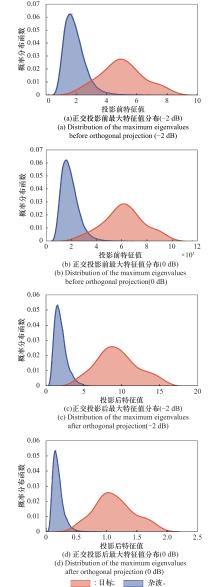
Fig.4
Comparison of the maximum eigenvalues before and after projection with low signal-to-clutter ratio"
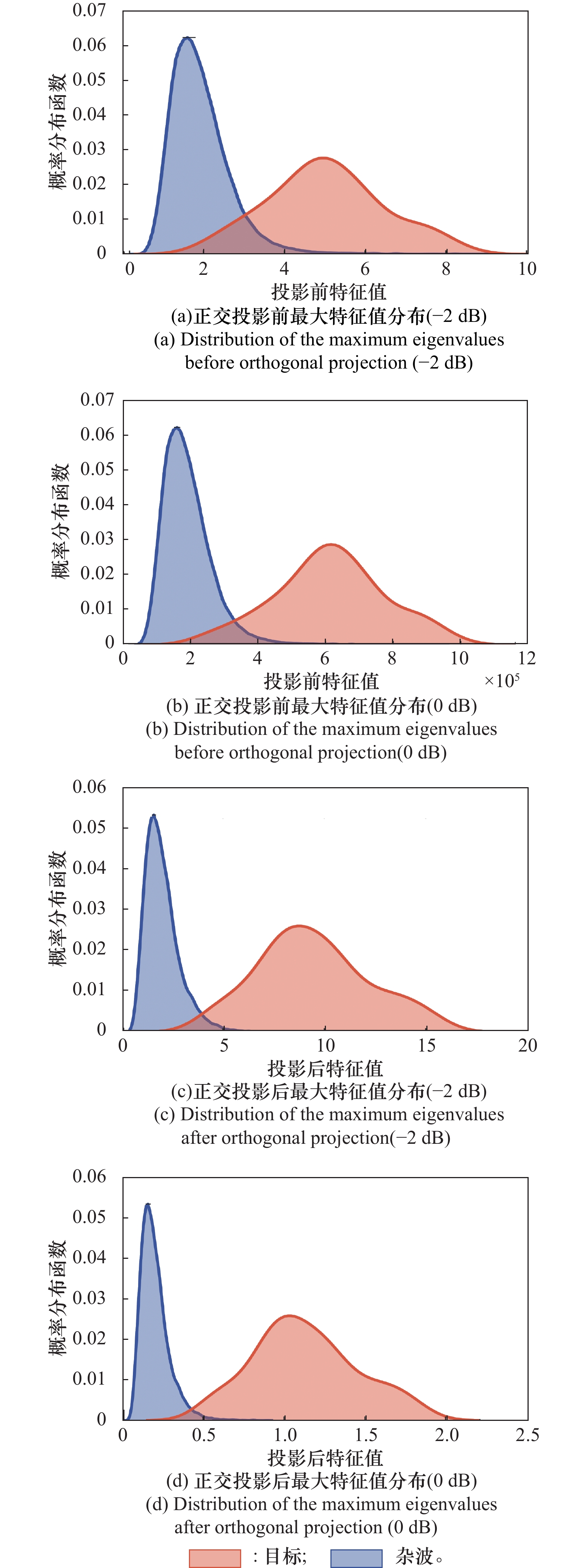
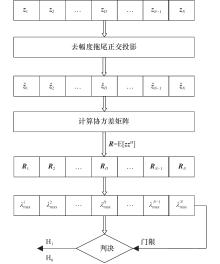
Fig.5
Diagram of algorithm flowchart"
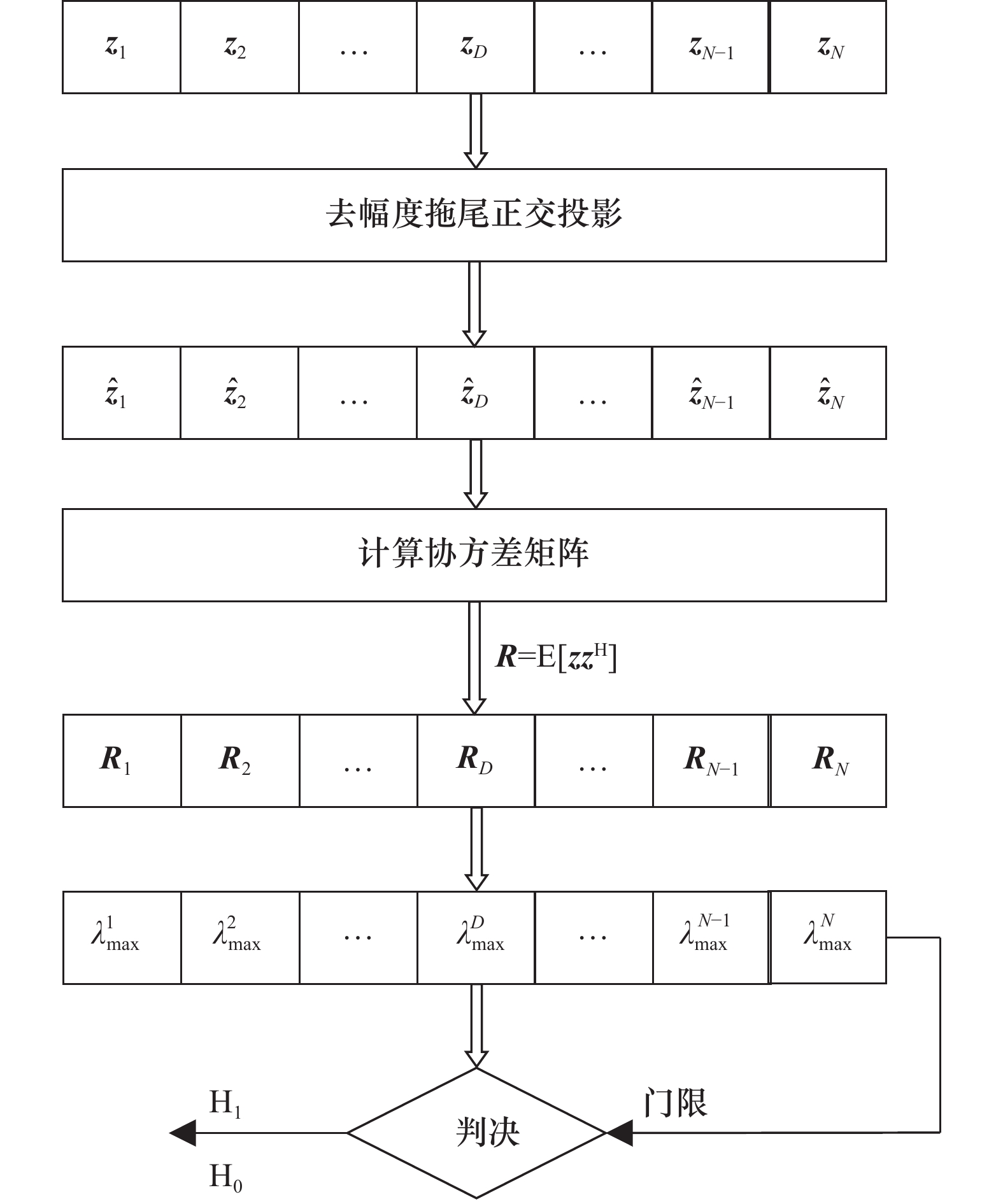
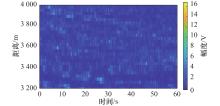
Fig.6
Sea clutter data measured by IPIX radar"
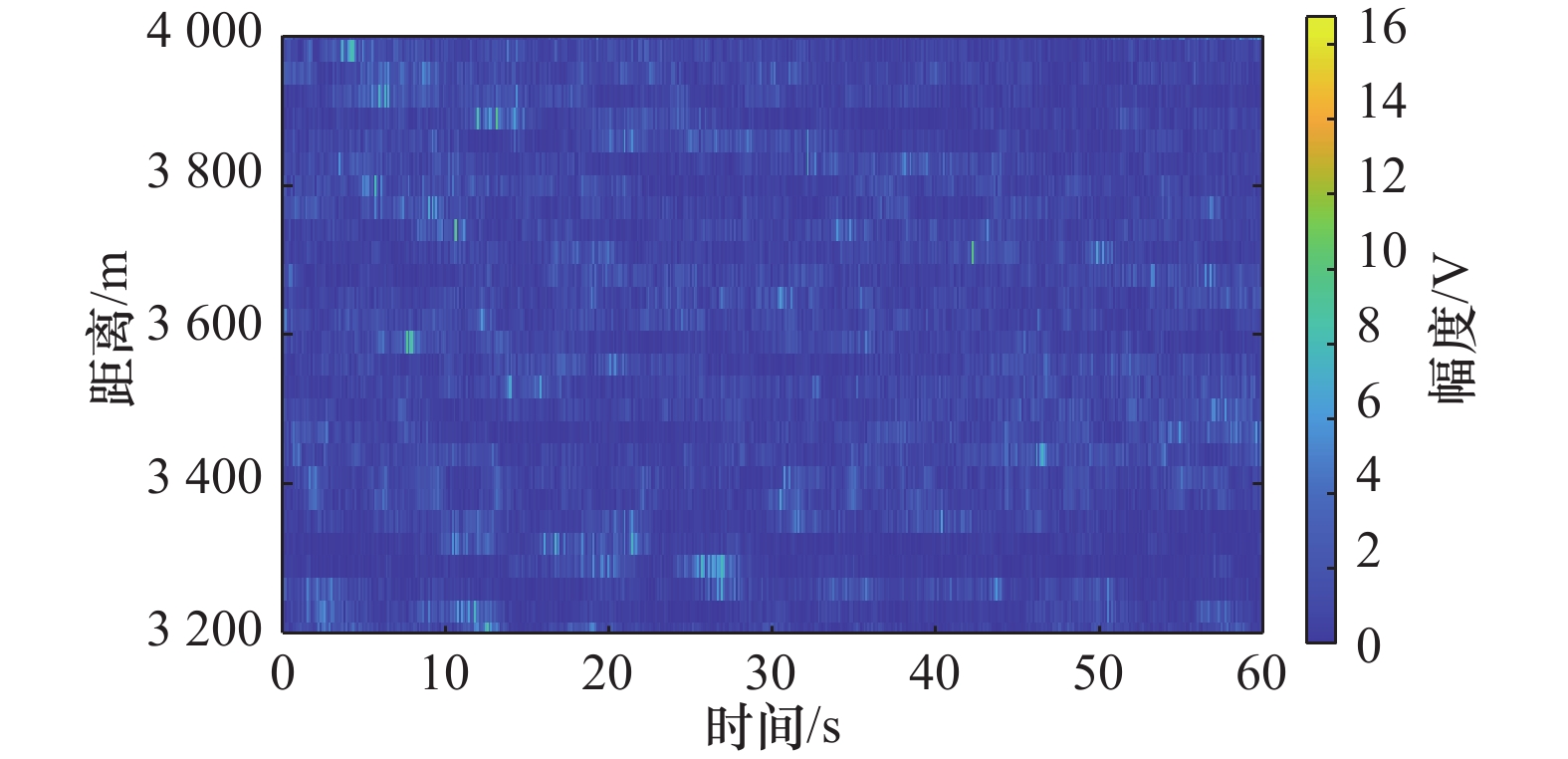
Fig.7
IPIX data test statistics of different algorithms"
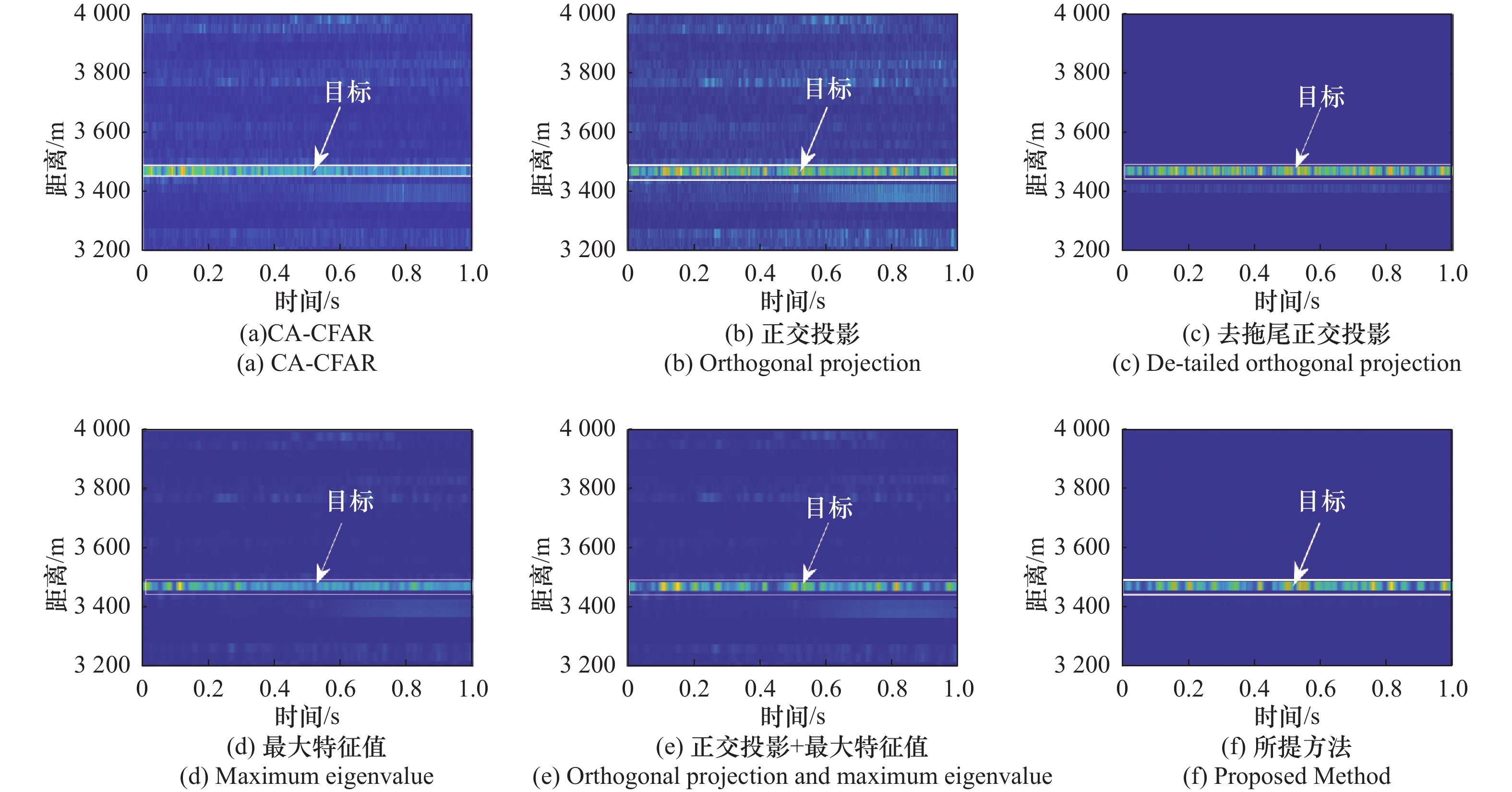
Fig.8
Comparison of detection performance using IPIX data"
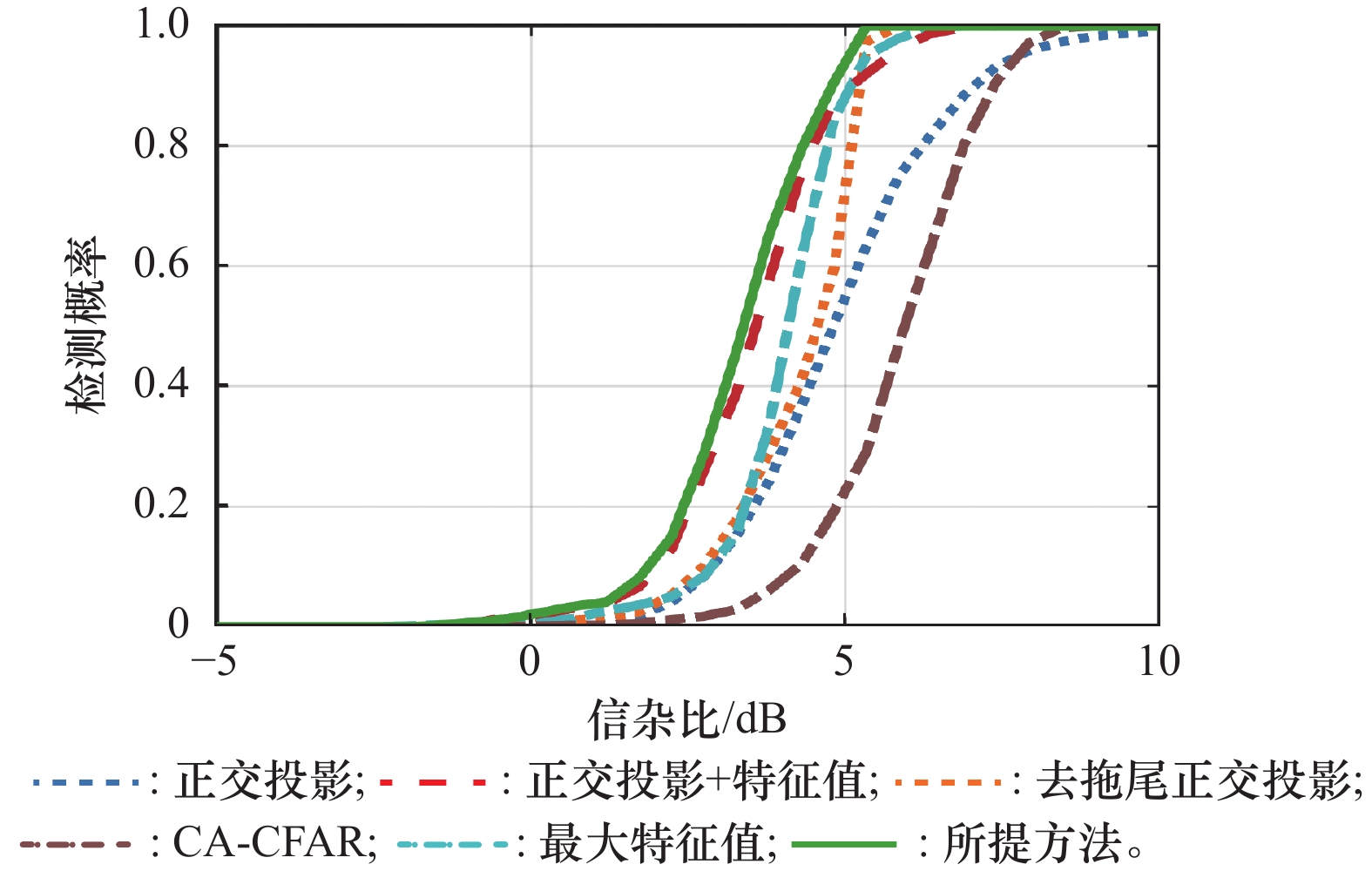
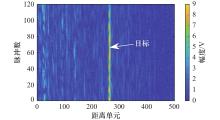
Fig.9
Data measured from SDRDSP"
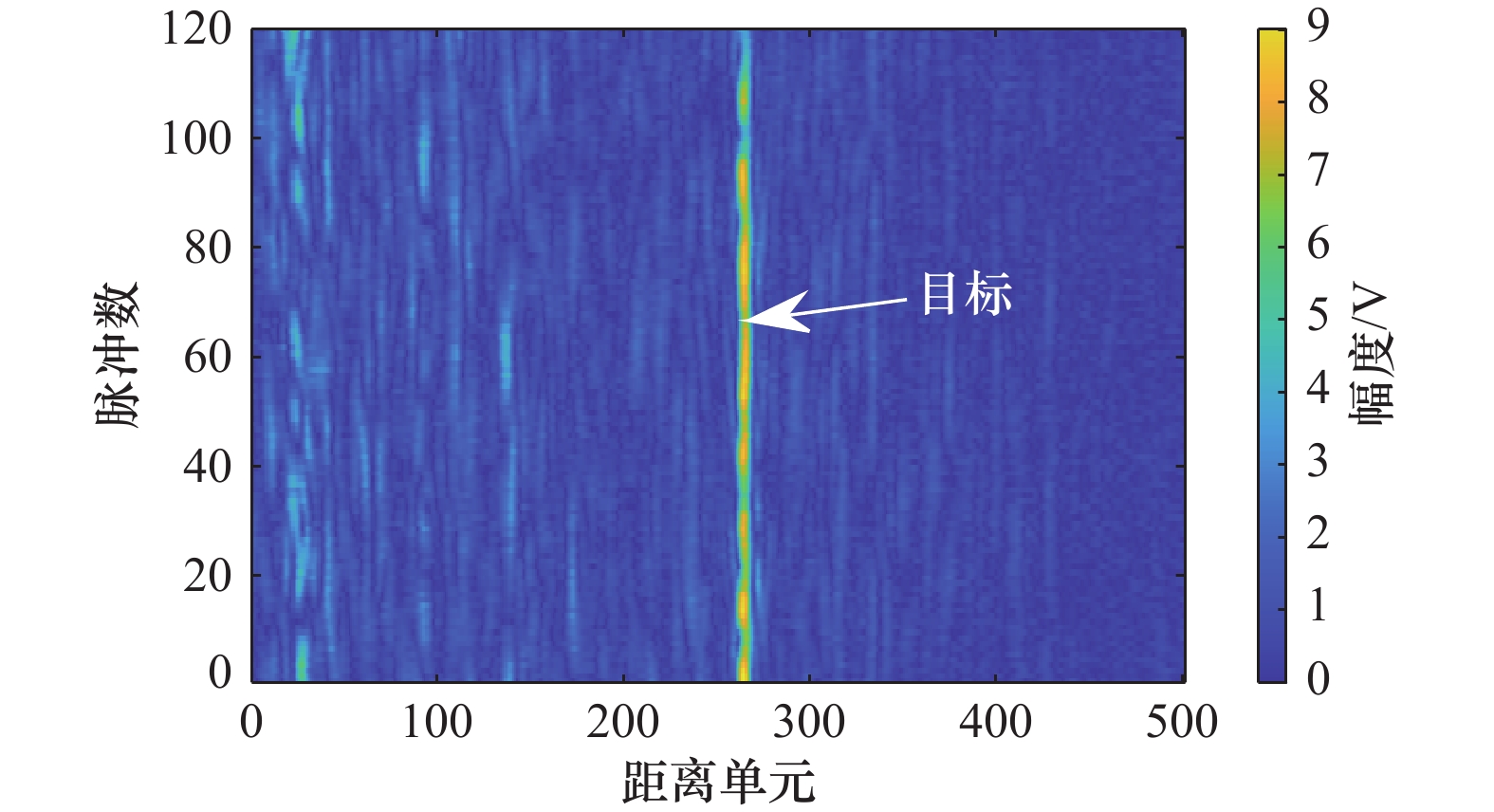
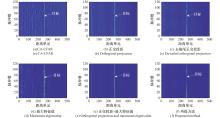
Fig.10
SDRDSP data test statistics of different algorithms"
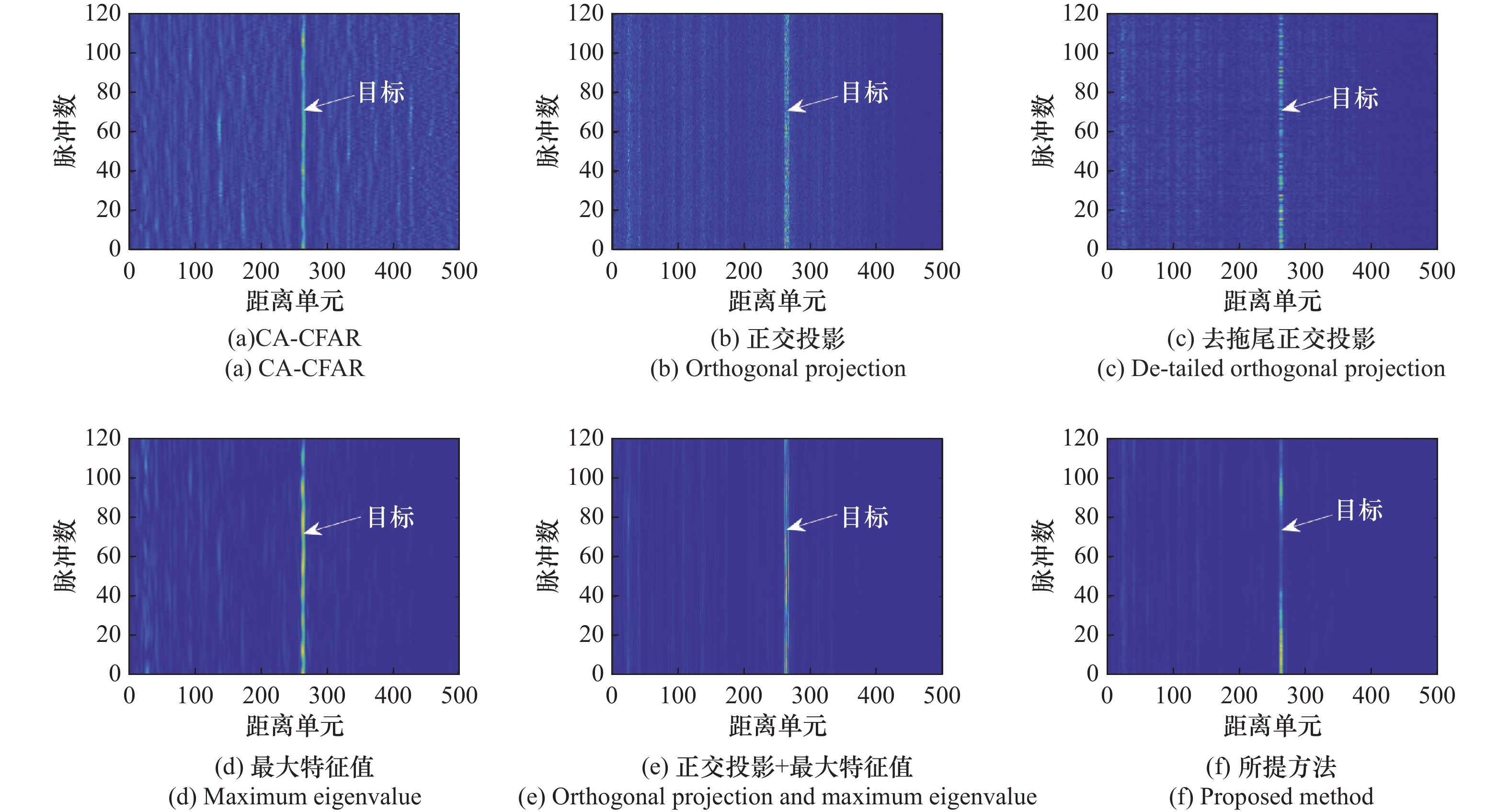
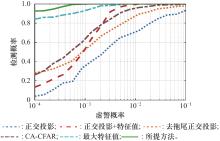
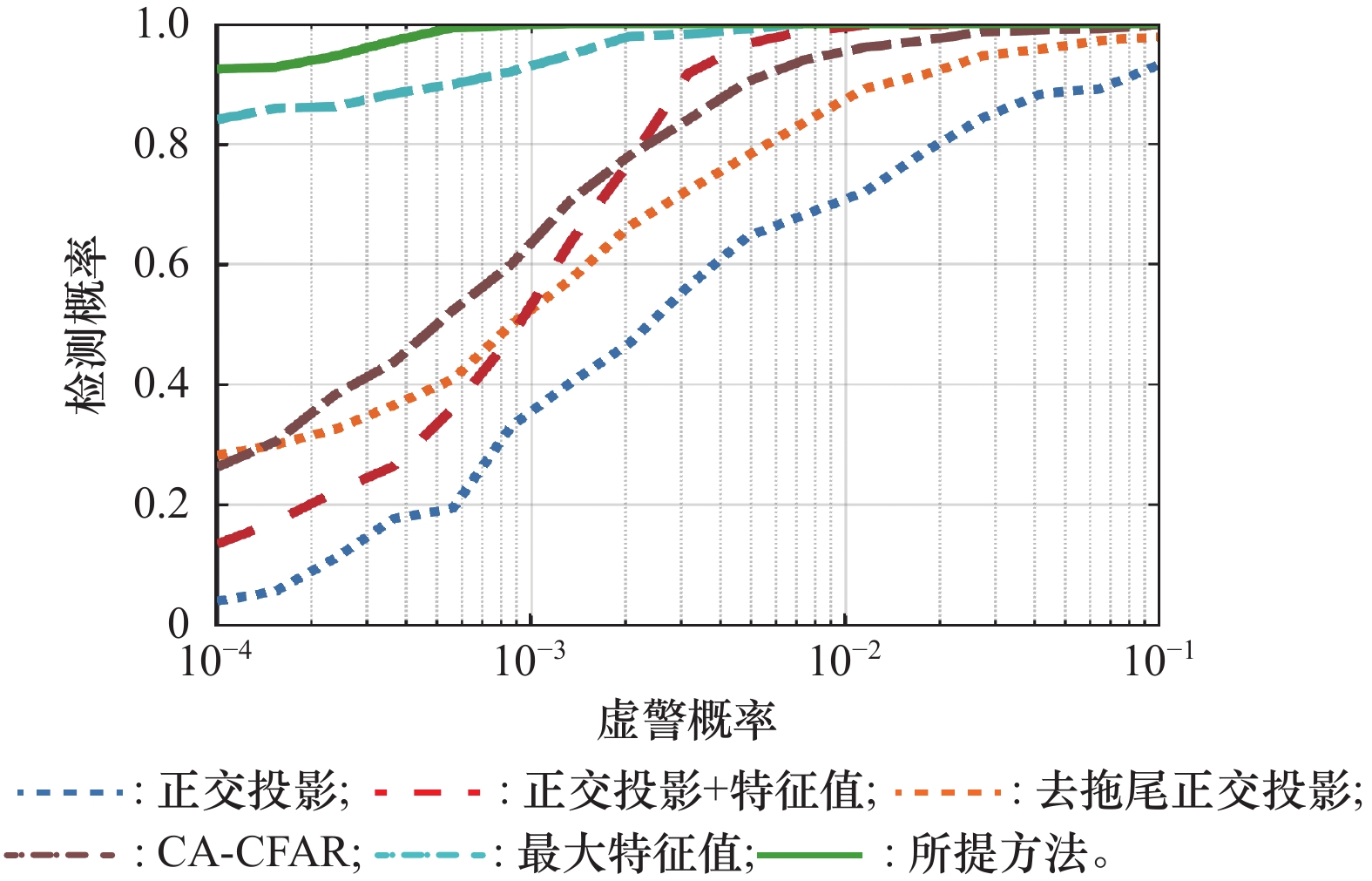
Fig.11
SDRDSP data ROC curves of different algorithms"
| 1 |
ROSENBERG L. Sea-spike detection in high grazing angle X-band sea-clutter[J]. IEEE Trans. on Geoscience and Remote Sensing, 2013, 51 (8): 4556- 4562.
doi: 10.1109/TGRS.2013.2239112 |
| 2 | XU S W, BAI X H, GUO Z X, et al. Status and prospects of feature-based detection methods for floating targets on the sea surface[J]. Journal of Radars, 2020, 9 (4): 684- 714. |
| 3 | CHEN X L, LIU K, ZHANG Z B. A point net-based CFAR detection method for radar target detection in sea clutter[J]. IEEE Geoscience and Remote Sensing Letters, 2024, 21, 1- 5. |
| 4 |
SEVGI L. Modeling and simulation challenges in wide ocean area surveillance[J]. IEEE Access, 2019, 7, 117692- 117698.
doi: 10.1109/ACCESS.2019.2924261 |
| 5 |
WANG J G, SHI K, LI S B. Two-stage collaborative sea clutter suppression based on subregion gazing and reconstruction[J]. IEEE Geoscience and Remote Sensing Letters, 2024, 21, 3505705.
doi: 10.1109/lgrs.2024.3397834 |
| 6 |
杨勇, 王雪松. 基于杂波拖尾分布的雷达无人机检测性能分析[J]. 系统工程与电子技术, 2024, 46 (1): 113- 120.
doi: 10.12305/j.issn.1001-506X.2024.01.13 |
|
YANG Y, WANG X S. Analysis of radar detection performance for UAV based on clutter tail distribution[J]. Journal of Systems Engineering and Electronics, 2024, 46 (1): 113- 120.
doi: 10.12305/j.issn.1001-506X.2024.01.13 |
|
| 7 | SONG D, SARIKAYA T B, SERKAN S T, et al. Heavy-tailed sea clutter modeling for shore-based radar detection[C]//Proc. of the IEEE Radar Conference, 2018: 1504–1509. |
| 8 |
YAO Y, LI X, WU L N. Study of range-extended target detection performance based optimized EBSPK signals[J]. Cluster Computing, 2019, 22 (3): 6781- 6793.
doi: 10.1007/s10586-018-2650-9 |
| 9 |
CAI L P, QIAN H N, XING L, et al. A software-defined radar for low-altitude slow-moving small targets detection using transmit beam control[J]. Remote Sensing, 2023, 15 (13): 3371.
doi: 10.3390/rs15133371 |
| 10 |
CONTE E, DE-MAIO A, RICCI G. Covariance matrix estimation for adaptive CFAR detection in compound-Gaussian clutter[J]. IEEE Trans. on Aerospace and Electronic Systems, 2002, 38 (2): 415- 426.
doi: 10.1109/TAES.2002.1008976 |
| 11 |
CHANG J Y, FU X J, ZHAO C X, et al. Sea surface moving target detection using a modified keystone transform on wideband radar data[J]. Remote Sensing, 2023, 15 (9): 2284.
doi: 10.3390/rs15092284 |
| 12 |
HERMANN R. Radar CFAR thresholding in clutter and multiple target situations[J]. IEEE Trans. on Aerospace and Electronic Systems, 1983, 19 (4): 608- 621.
doi: 10.1109/taes.1983.309350 |
| 13 |
MBOUNGAM A H M, ZHI Y F, MONGUEN C K F. Constant false alarm rate detection method in mixed Weibull distribution sea clutter[J]. Digital Signal Processing, 2024, 149, 104494.
doi: 10.1016/j.dsp.2024.104494 |
| 14 |
CHALABICA I. Application of CFAR detection to multiple pulses for Gamma distributed clutter[J]. Remote Sensing Letters, 2022, 13 (10): 1011- 1019.
doi: 10.1080/2150704X.2022.2120777 |
| 15 | 陈建军, 黄孟俊, 赵宏钟, 等. 相参雷达时频域CFAR检测门限获取方法研究[J]. 电子学报, 2013, 41 (8): 1634- 1639. |
| CHEN J J, HUANG M J, ZHAO H Z, et al. Research on estimated threshold of CFAR detection in time-frequency domain for coherent radar[J]. Acta Electronica Sinica, 2013, 41 (8): 1634- 1639. | |
| 16 | YUAN Y N, LI W H, SUN Z S, et al. Two-dimensional FFT and two-dimensional CA-CFAR based on ZYNQ[J]. The Journal of Engineering, 2019, 2019 (20): 6483- 6486. |
| 17 | XU C M, LI Y, JI C, et al. An improved CFAR algorithm for target detection[C]//Proc. of the International Symposium on Intelligent Signal Processing and Communication Systems, 2017: 883–888. |
| 18 |
LIU T, YANG Z Y, MARINO A, et al. Joint polarimetric subspace detector based on modified linear discriminant analysis[J]. IEEE Trans. on Geoscience and Remote Sensing, 2022, 60, 5223519.
doi: 10.1109/tgrs.2022.3148979 |
| 19 |
GAO G, SHI G T. CFAR ship detection in nonhomogeneous sea clutter using polarimetric SAR data based on the notch filter[J]. IEEE Trans. on Geoscience and Remote Sensing, 2017, 55 (8): 4811- 4824.
doi: 10.1109/TGRS.2017.2701813 |
| 20 |
LIU T, JIANG Y N, MARINO A, et al. The polarimetric detection optimization filter and its statistical test for ship detection[J]. IEEE Trans. on Geoscience and Remote Sensing, 2022, 60, 5202218.
doi: 10.1109/tgrs.2021.3055801 |
| 21 |
时艳玲, 王磊, 李君豪. 基于投影空间下奇异值分解的海面小目标CFAR检测[J]. 系统工程与电子技术, 2022, 44 (2): 512- 519.
doi: 10.12305/j.issn.1001-506X.2022.02.20 |
|
SHI Y L, WANG L, LI J H. CFAR detection for small targets on sea surface based on singular value decomposition in projection space[J]. Systems Engineering and Electronics, 2022, 44 (2): 512- 519.
doi: 10.12305/j.issn.1001-506X.2022.02.20 |
|
| 22 |
杨政, 程永强, 吴昊, 等. 基于正交投影的子带信息几何雷达弱小目标检测方法[J]. 雷达学报, 2023, 12 (4): 776- 792.
doi: 10.12000/JR23079 |
|
YANG Z, CHENG Y Q, WU H, et al. Subband information geometry detection method based on orthogonal projection for weak radar targets[J]. Journal of Radars, 2023, 12 (4): 776- 792.
doi: 10.12000/JR23079 |
|
| 23 | 徐友根, 刘志文. 阵列信号处理基础[M]. 北京: 北京理工大学出版社, 2020. |
| XU Y G, LIU Z W. Fundamentals of array signal processing[M]. Beijing: Beijing Institute of Technology Press, 2020. | |
| 24 |
LEVER J, KRZYWINSKI M, ALTMAN N. Principal component analysis[J]. Nat Methods, 2017, 14, 641- 642.
doi: 10.1038/nmeth.4346 |
| 25 | ZHANG X D. Matrix analysis and applications[M]. Cambridge: Cambridge University Press, 2017. |
| 26 | LIU N B, DONG Y L, WANG G Q, et al. Sea-detecting X-band radar and data acquisition program[J]. Journal of Radars, 2019, 8 (5): 656- 667. |
| 27 |
YANG Y, XIAO S P, WANG X S. Radar detection of small target in sea clutter using orthogonal projection[J]. IEEE Geoscience and Remote Sensing Letters., 2019, 16 (3): 382- 386.
doi: 10.1109/LGRS.2018.2875705 |
| 28 | VAN T, HARRY L. Optimum array processing[M]. New York : Wiley, 2004. |
| 29 | ZHAO W J, LIU C, LIU W L, et al. Maximum eigenvalue-based target detection for the K-distributed clutter environment[J]. IET Radar, Sonar & Navigation, 2018, 12(11): 1294–1306. |
| 30 | IPIX Radar. IPIX radar dataset files in Grimsby on the shores of Lake Ontario[EB/OL]. [2024-08-12]. http://soma.mcmaster.ca/ipix. |
| [1] | Bo WANG, Wenya ZHOU, Zhaojie KE, Fei ZONG, Jun LIU. Improved entropy weight and grey correlation model for equipment capability evaluation [J]. Systems Engineering and Electronics, 2026, 48(2): 524-534. |
| [2] | Qingyang YUAN, Jiajie HAN, Ke XUE, Weijie SUN, Bo ZHANG. Correlation coefficient filtering method for optimizing system limited sensor layout [J]. Systems Engineering and Electronics, 2025, 47(9): 2925-2938. |
| [3] | Chunyu LI, Hubing XIN, Yanqin SONG. A distributed multi-station real-time track processing method for space launch mission [J]. Systems Engineering and Electronics, 2025, 47(7): 2185-2193. |
| [4] | Ziqing ZHEN, Dong HUANG, Song HAN, Haoming FENG. Construction of economic evaluating indicator system for service life of ships [J]. Systems Engineering and Electronics, 2025, 47(7): 2275-2282. |
| [5] | Pengcheng ZHANG, Bo PENG, Mingxing FANG. An analysis of jamming method based on the correlation characteristics of modulation sequences [J]. Systems Engineering and Electronics, 2025, 47(6): 1729-1738. |
| [6] | Yu XUE, Xi'an FENG. Optimal arithmetic average fusion and its application in different fields of view [J]. Systems Engineering and Electronics, 2025, 47(6): 1739-1745. |
| [7] | Junhao JIA, Xuebin CHEN, Zhangfeng LI, Chunmao YE. ISAR imaging and detection method for space group target [J]. Systems Engineering and Electronics, 2025, 47(6): 1843-1854. |
| [8] | Wenzhong ZHANG, Changbo HOU, Pengqi ZHAO, Sicheng LIU. UAV target track correlation based on GCN [J]. Systems Engineering and Electronics, 2025, 47(12): 4005-4011. |
| [9] | Zhiqiang CUI, Hongli JIA, Bing HAO, Lili GAO. Research on selection of equipment substitute storage plant based on combination weighting VIKOR [J]. Systems Engineering and Electronics, 2025, 47(10): 3353-3366. |
| [10] | Xiaohui BA, Zhekai XU, Dongwei HU, Baigen CAI, Jian WANG, Wei JIANG, Jiang LIU, Debiao LU, Kun LIANG, Linguo CHAI. Integration acquisition method of low earth orbit augmentation signal and GNSS signal [J]. Systems Engineering and Electronics, 2025, 47(10): 3433-3445. |
| [11] | Tao HU, Haobang LIU, Tong CHEN, Yujiang WANG, Minggui LI, Kai DU. Evaluation of ship power system resilience based on two-dimensional cloud model of IAHP-CRITIC [J]. Systems Engineering and Electronics, 2025, 47(1): 217-229. |
| [12] | Duo CHEN, Yifei FAN, Jia SU, Zixun GUO, Mingliang TAO. Target detection algorithm based on generalized inverse Gaussian texture structure [J]. Systems Engineering and Electronics, 2024, 46(12): 4018-4025. |
| [13] | Wangjie CHEN, Weiqiang ZHU, Zhenhong FAN, Jian LIU. Realization of multi-station time difference measurement based on parameter characteristics mapping [J]. Systems Engineering and Electronics, 2024, 46(11): 3621-3630. |
| [14] | Li CUI, Chengqian XU. Construction of uncorrelated multiple-subset zero correlation zone sequence sets [J]. Systems Engineering and Electronics, 2024, 46(10): 3577-3585. |
| [15] | Qian SU, Yuanfu ZHONG, Zhiqin CAO, Yingchao ZHANG. Target threat assessment model based on operational situation and improved CRITIC-TOPSIS [J]. Systems Engineering and Electronics, 2023, 45(8): 2343-2352. |
| Viewed | ||||||
|
Full text |
|
|||||
|
Abstract |
|
|||||