Systems Engineering and Electronics ›› 2025, Vol. 47 ›› Issue (10): 3188-3198.doi: 10.12305/j.issn.1001-506X.2025.10.07
• Sensors and Signal Processing • Previous Articles
Coherent DOA estimation method based on angle interval separation learning
Jun WANG1( ), Zihan WU1,2(), Guangjiao ZHOU1, Zhiquan ZHOU1,*()
- 1. School of Electronics and Information Engineering,Harbin Institute of Technology (Weihai),Weihai 264209,China
2. School of Electronics and Information Engineering,Harbin Institute of Technology,Harbin 150001,China
-
Received:2024-12-17Online:2025-10-25Published:2025-10-23 -
Contact:Zhiquan ZHOU E-mail:jwang@hit.edu.cn;23b905043@stu.hit.edu.cn;zzq@hitwh.edu.cn

CLC Number:
Cite this article
Jun WANG, Zihan WU, Guangjiao ZHOU, Zhiquan ZHOU. Coherent DOA estimation method based on angle interval separation learning[J]. Systems Engineering and Electronics, 2025, 47(10): 3188-3198.
share this article
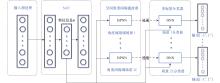
Fig.1
Block diagram of the AISL model"
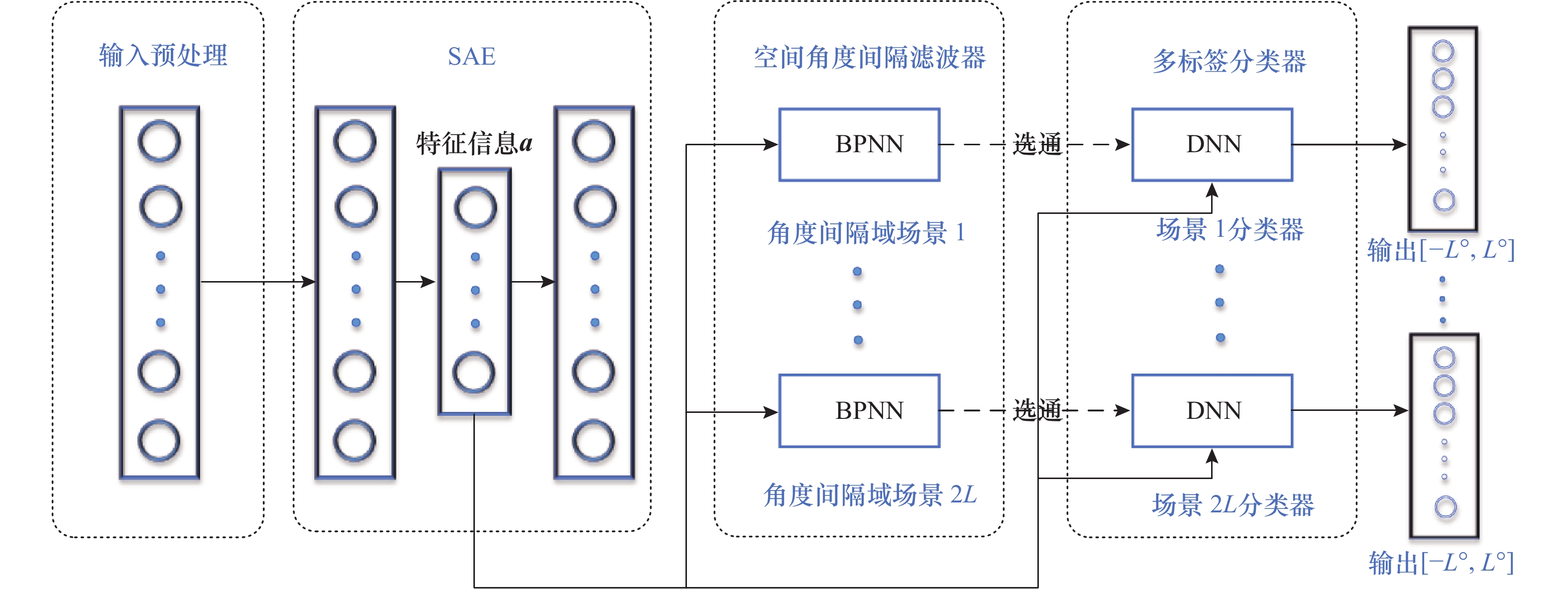
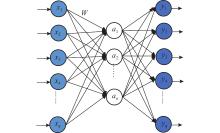
Fig.2
Illustration of the SAE model"
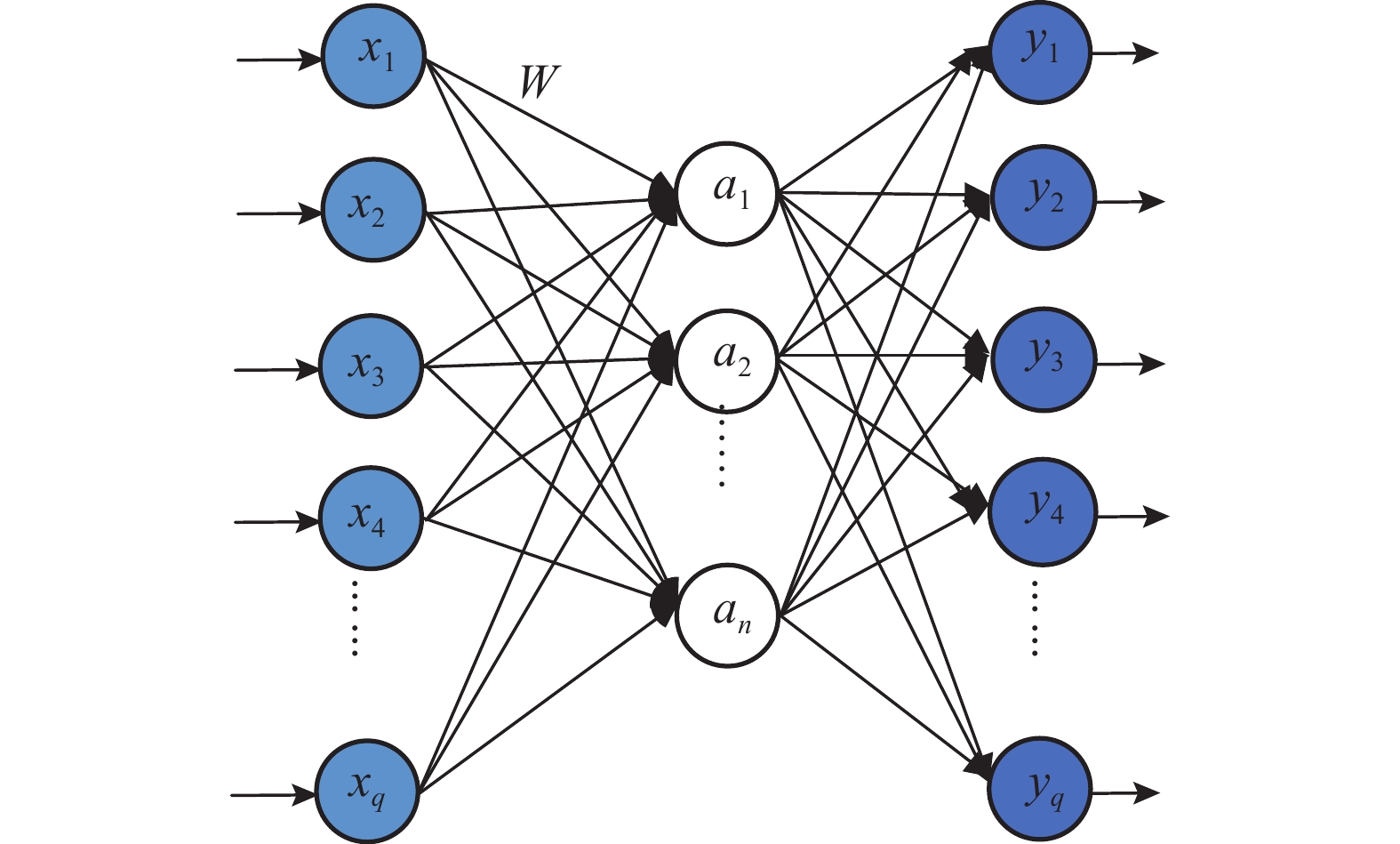
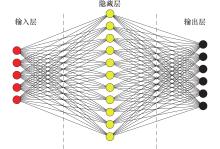
Fig.3
Two-layer BPNN spatial angle interval filter model"
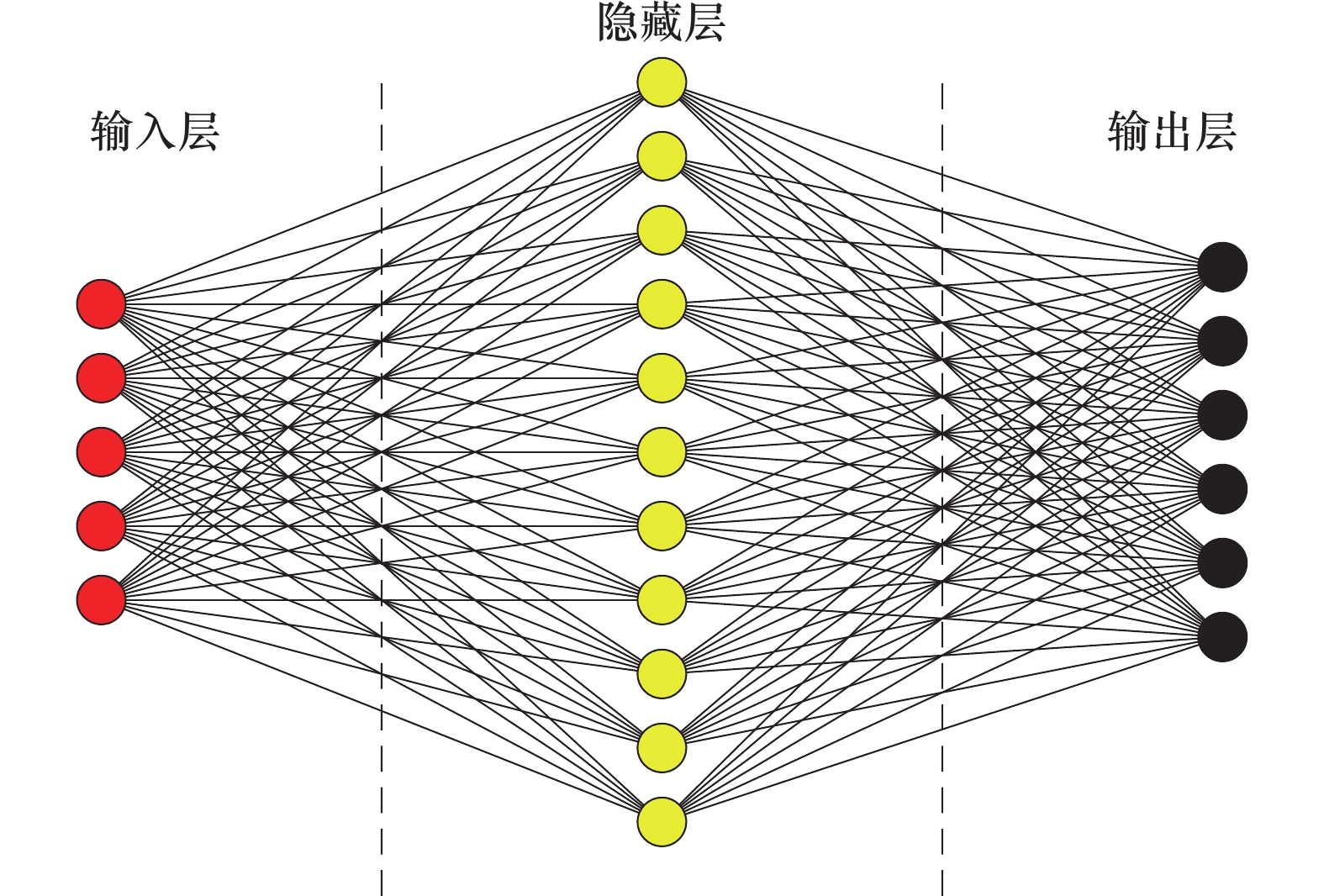
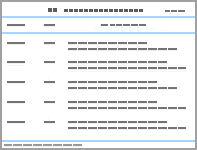
Table 1
Simulation parameter"
| 参数 | 取值 | 参数 | 取值 | |
| 阵元数M | 学习率 | |||
| 波长 | 训练样本数 | |||
| 波束宽度/(°) | 5 | 验证样本数 | ||
| 阵元间距 | 测试样本数 | |||
| 来波方向范围/ | 过拟合因子dropout | 0.5 | ||
| 量化单元 | 空域(场景)数 | 6 |
Table 2
Comparison of angular measurement errors of sparse and unsparse dimensionality reduction methods"
| 模型 | 输入信息维度 | RMSE/(°) |
| AISL(未稀疏降维) AISL(稀疏降维) | 420 160 |
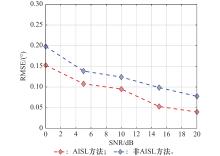
Fig.4
Angular measurement error plots with and without AISL"
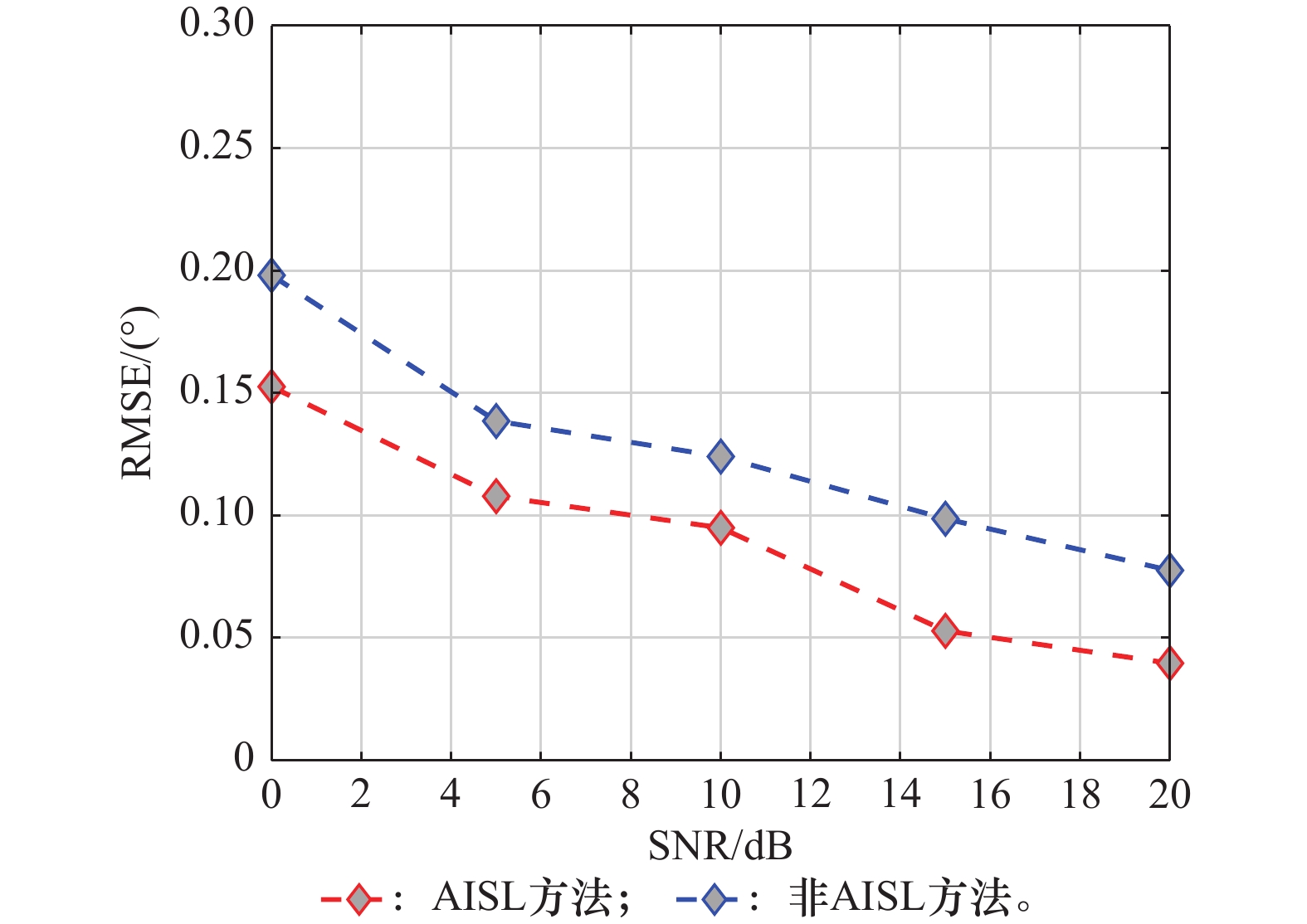
Fig.5
Angular measurement error plots with and without AISL methods for each scene type"
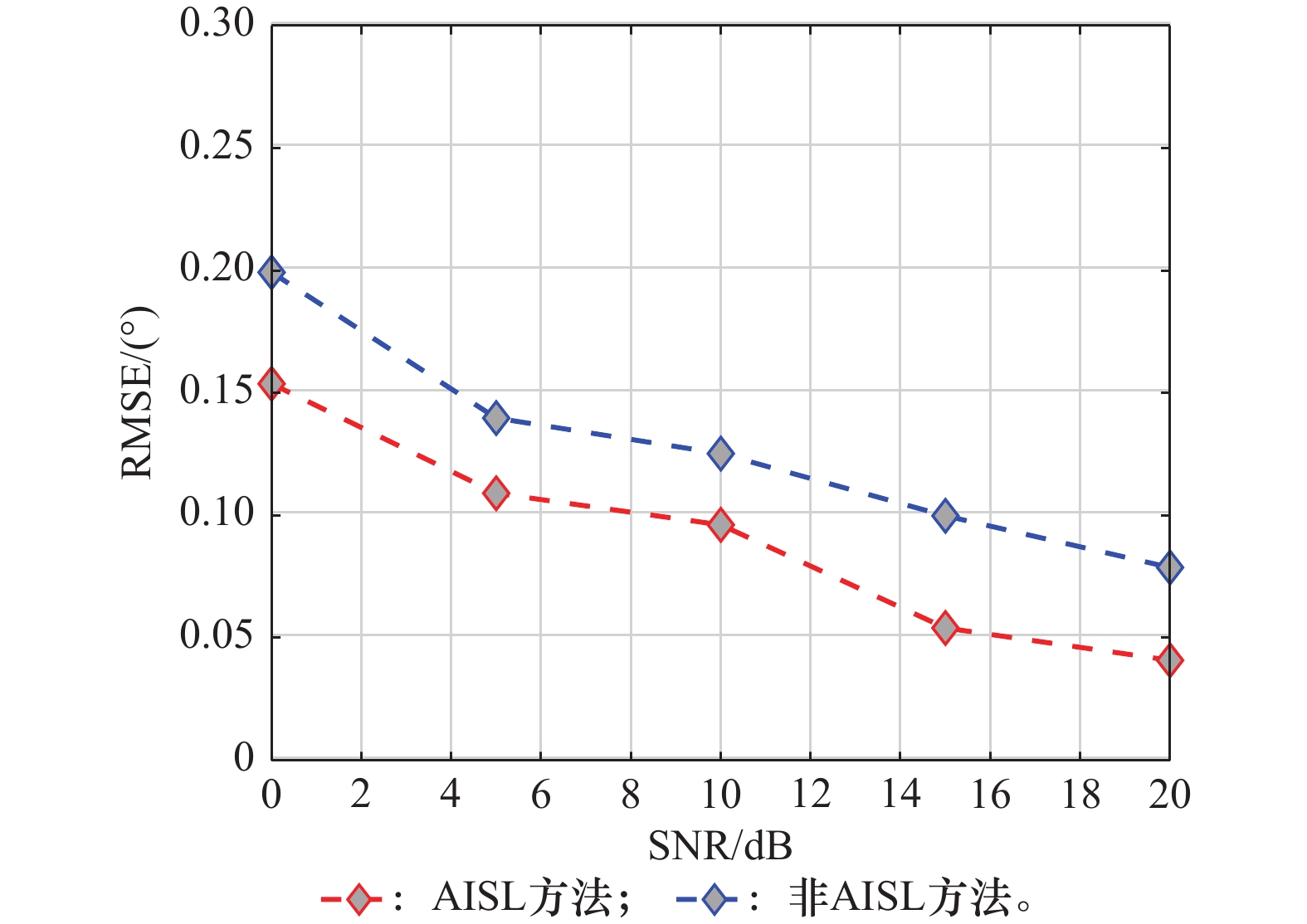
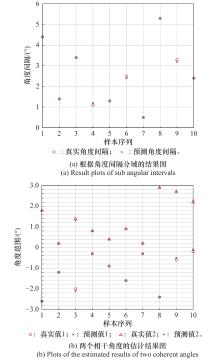
Fig.6
Result plot of testing two signals under two signal models"
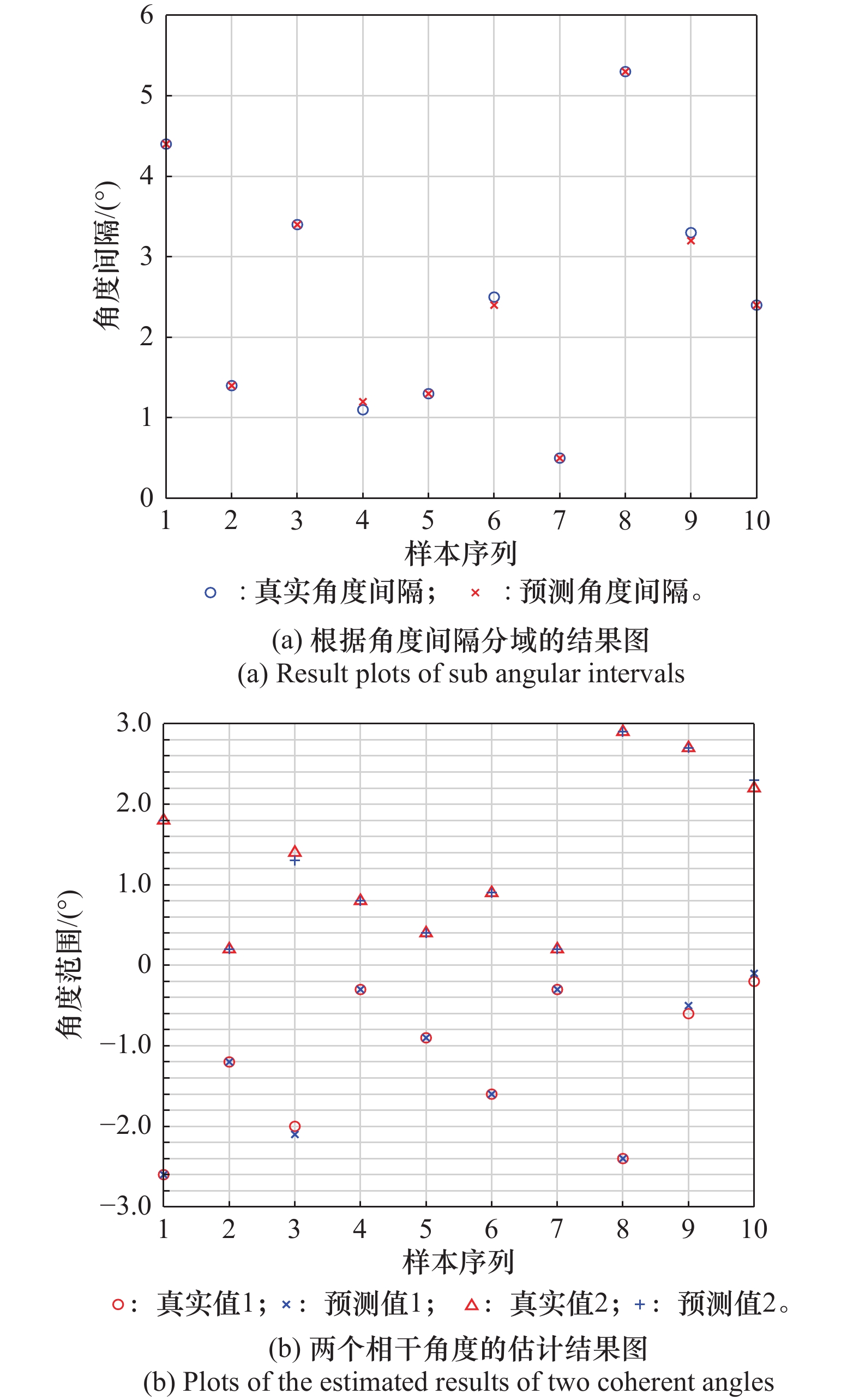
Fig.7
Accuracy of the spatial angular spacer filter domain seperation under different SNRs"
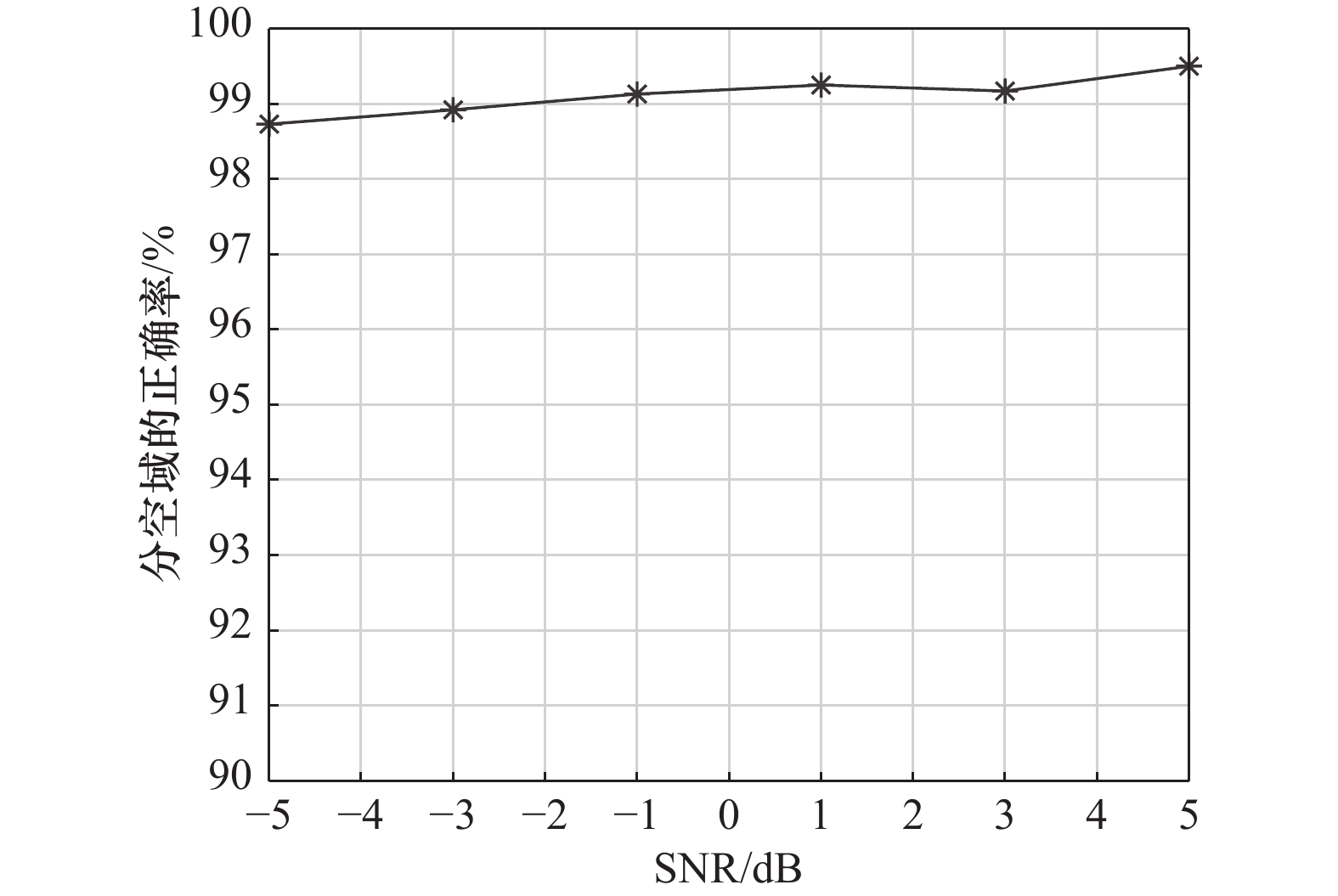
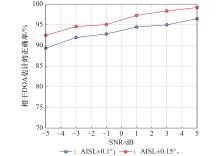
Fig.8
Accuracy of DOA estimation under different SNRs"
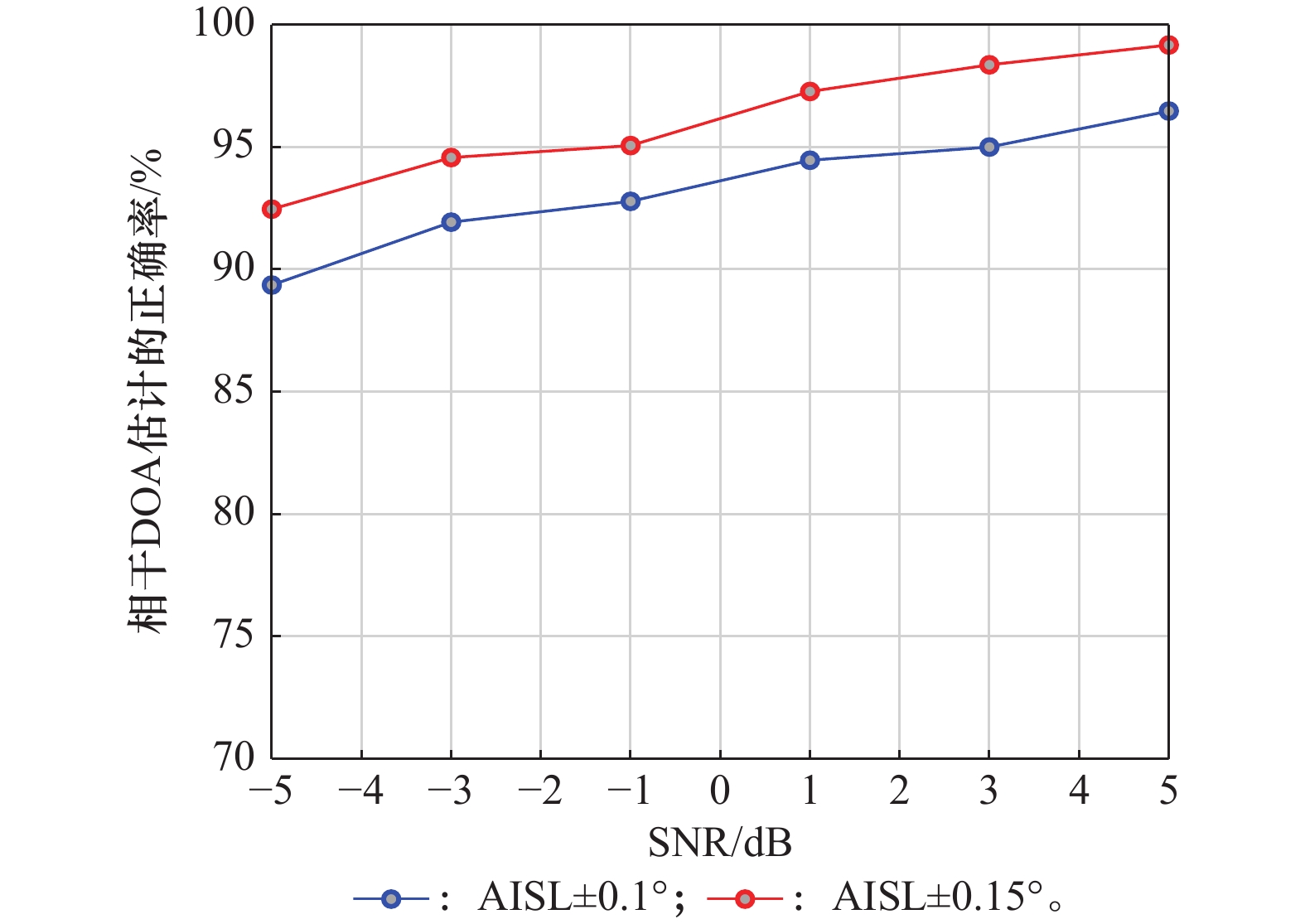
Fig.9
Accuracy of DOA estimation under different snapshot numbers"
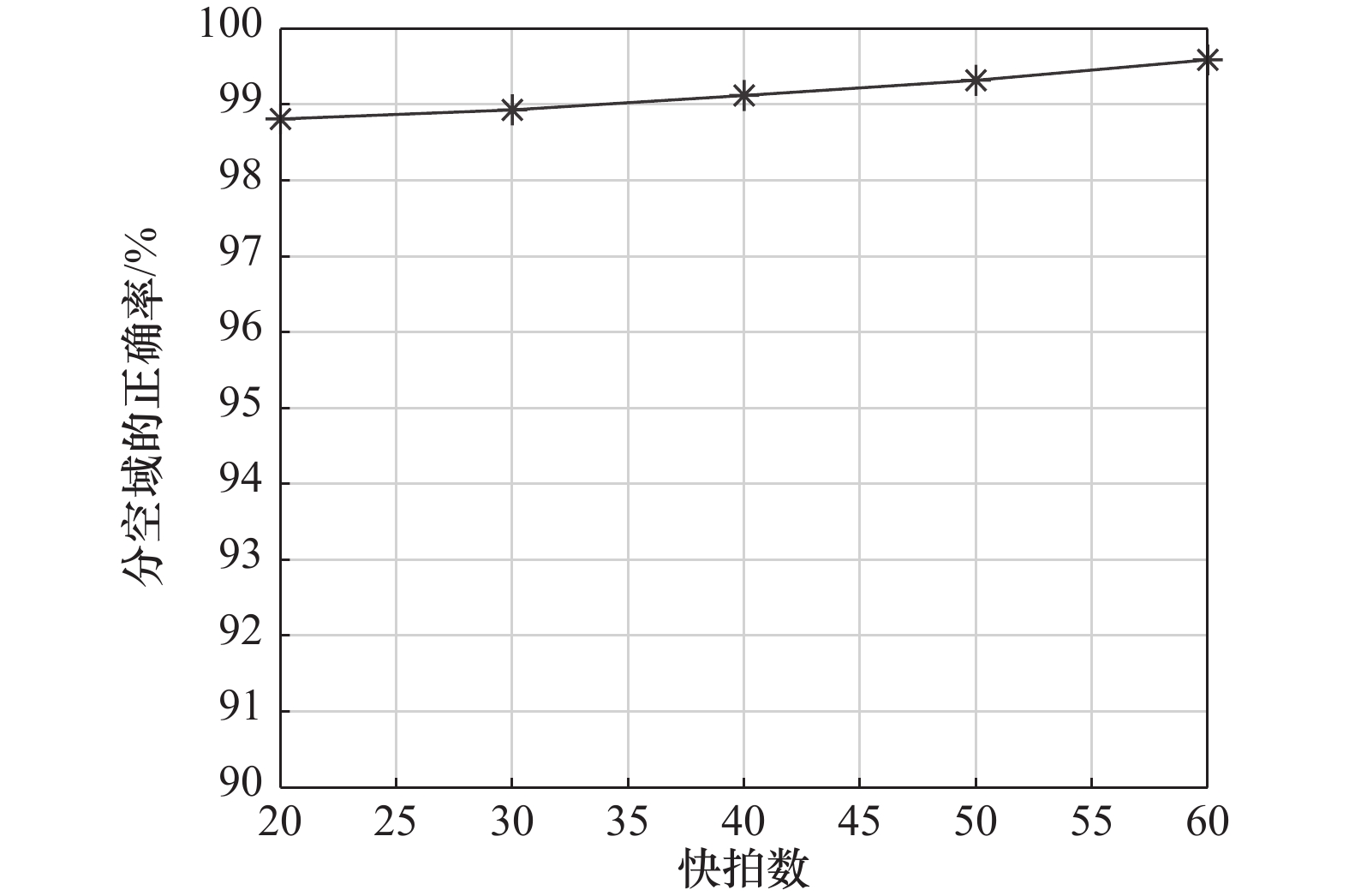
Fig.10
Accuracy of DOA estimation under different snapshot numbers"
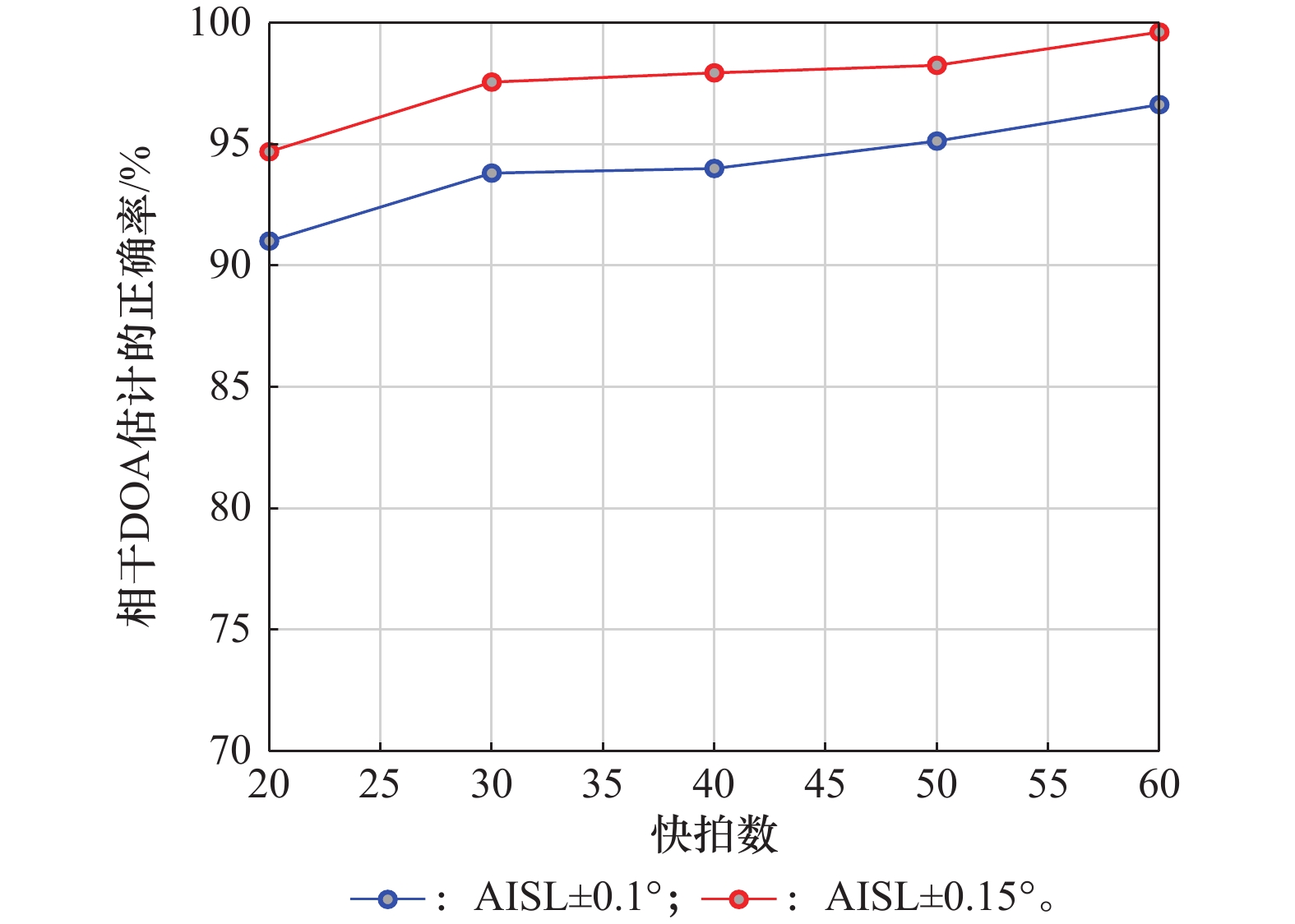
Fig.11
Angle measurement error curve under matching SNR test conditions"
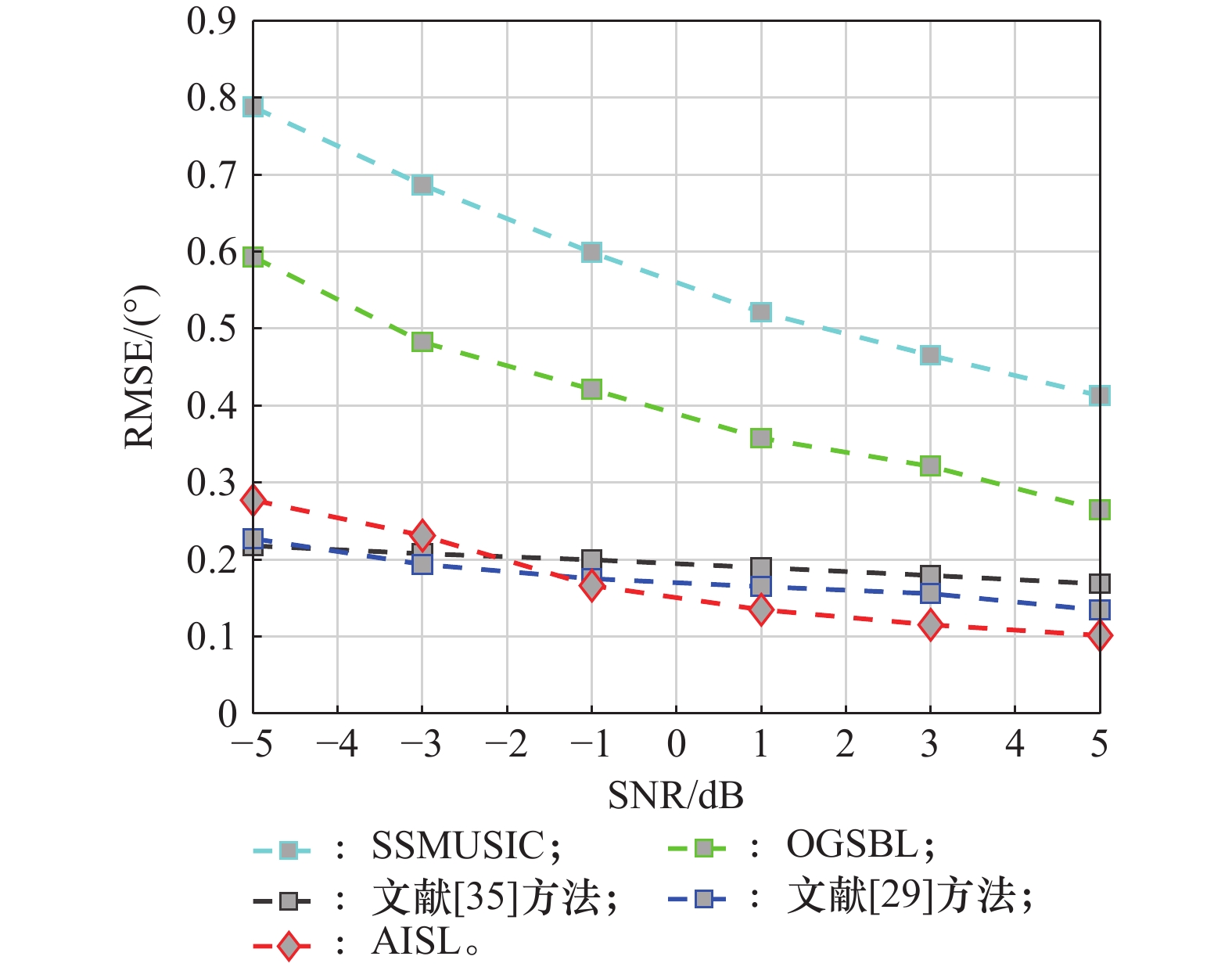
Fig.12
Angular measurement error curve under the condition of unmatched SNR tests"
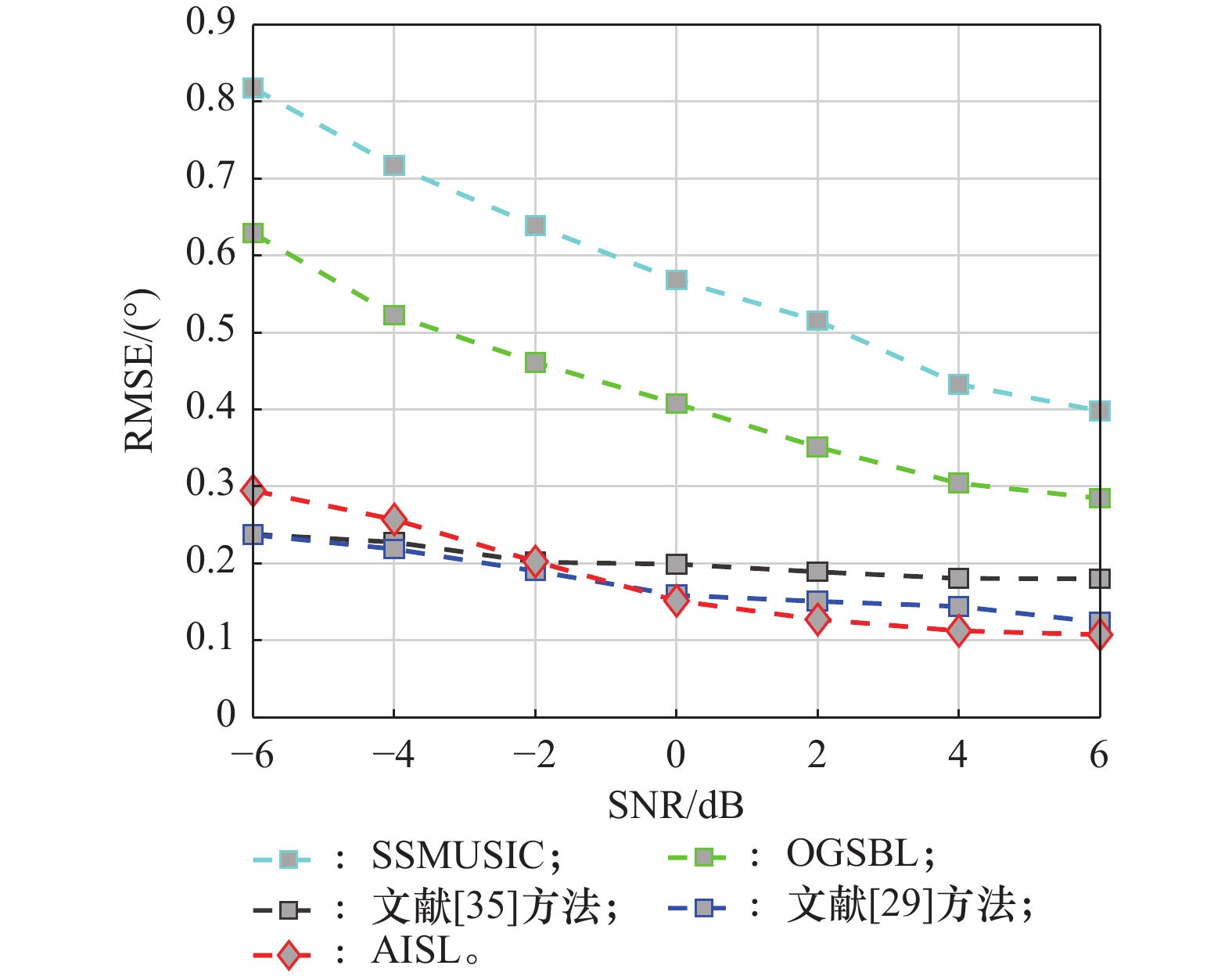
Fig.13
Angle measurement error curve under the test condition of matching number of snapshots"
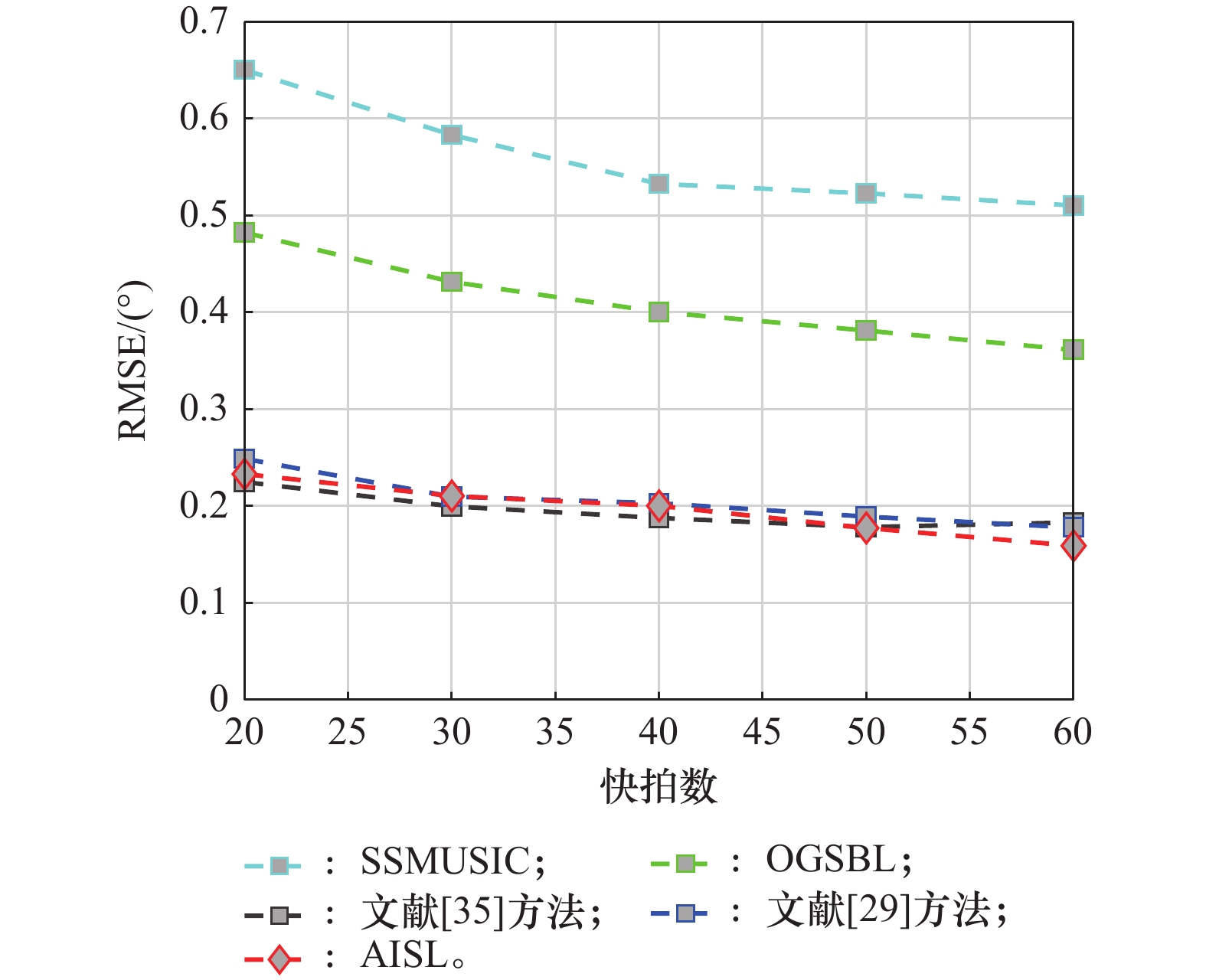
Fig.14
Angular measurement error curve under the condition of unmatched number of snapshots"
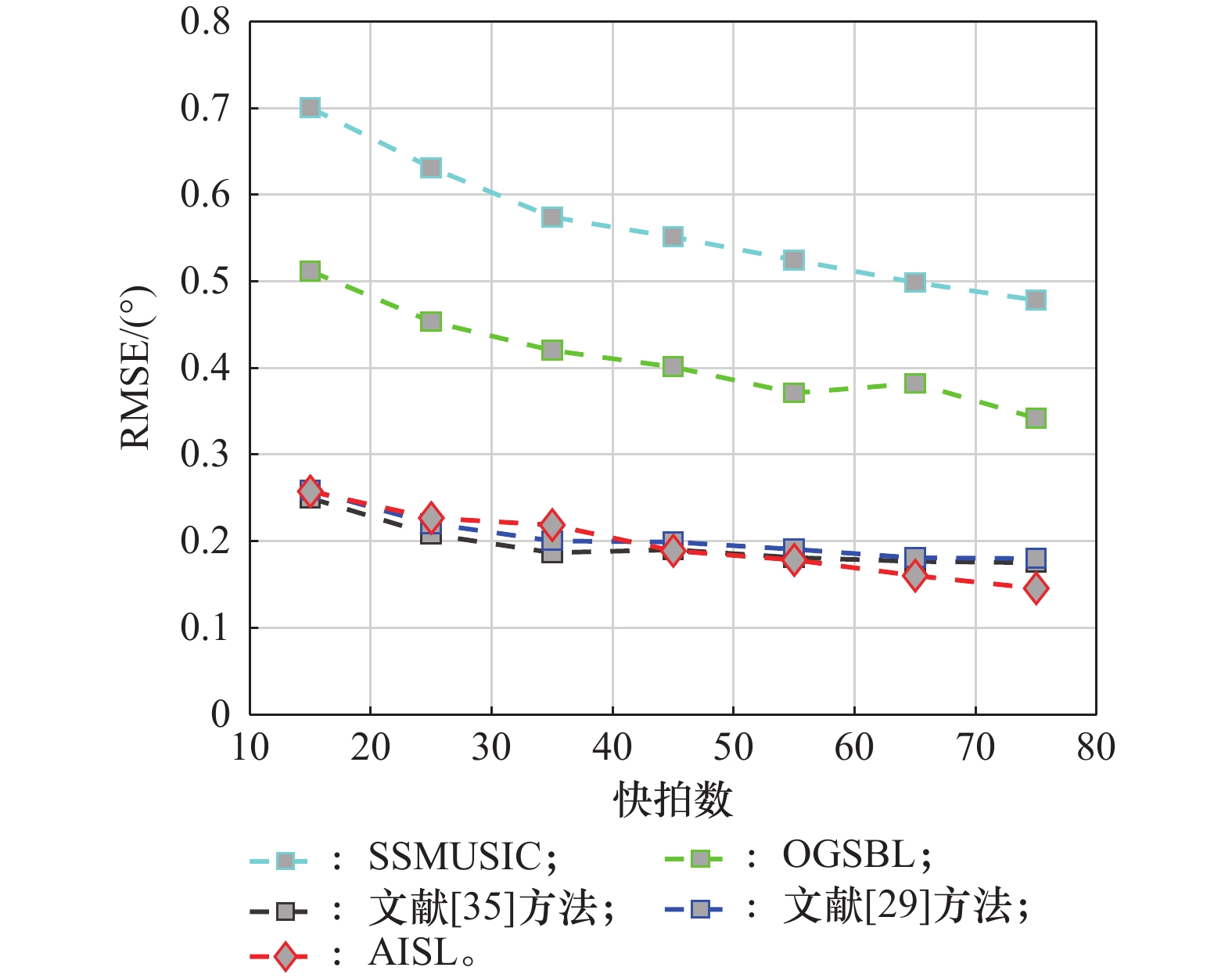
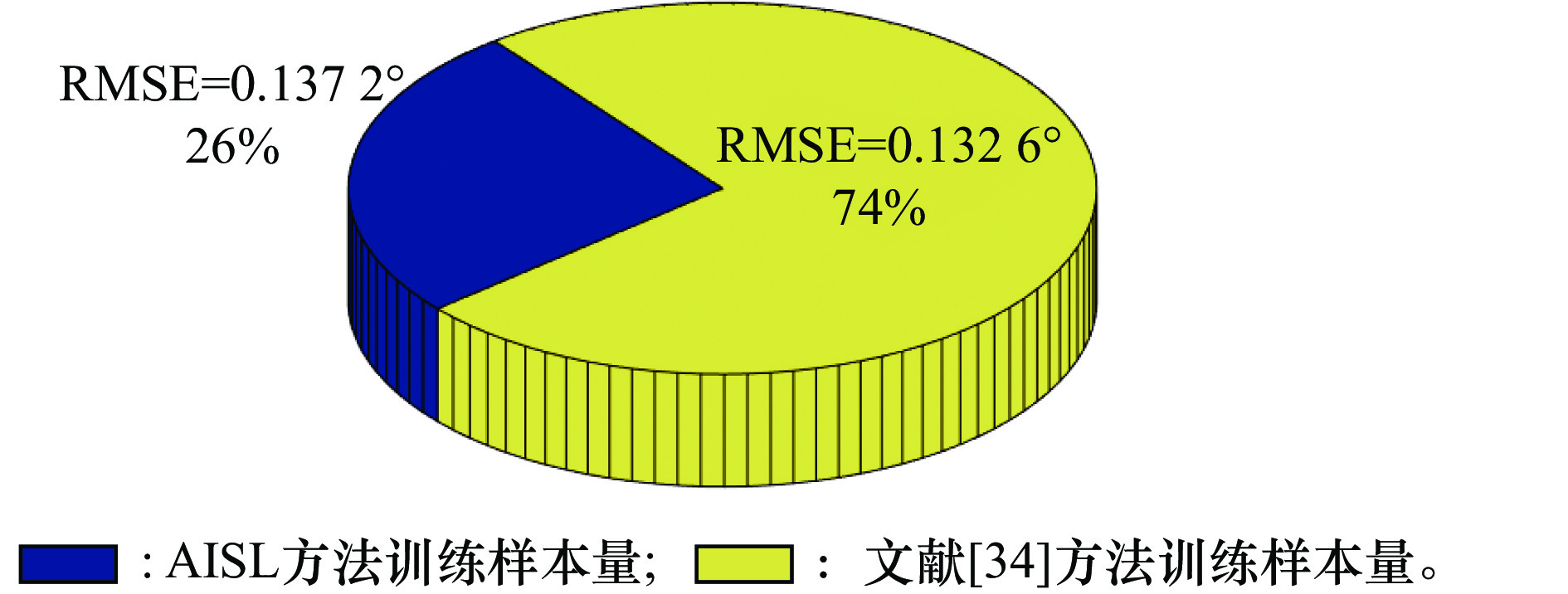
Fig.15
Comparison of training sample size of AISL method and other data-driven methods (under similar estimation accuracy conditions)"
| 1 |
SCHMIDT R. Multiple emitter location and signal parameter estimation[J]. IEEE Trans. on Antennas and Propagation, 1986, 34 (3): 276- 280.
doi: 10.1109/TAP.1986.1143830 |
| 2 | HAYKIN S, GREENLAY T, LITVA J. Performance evaluation of the modified FBLP method for angle of arrival estimation using real radar multipath data[J]. Communications, Radar and Signal Processing, 1985, 132 (3): 159- 174. |
| 3 |
SHAN T J, WAX M, KAILATH T. On spatial smoothing for direction-of-arrival estimation of coherent signals[J]. IEEE Trans. on Acoustics, Speech, and Signal Processing, 1985, 33 (4): 806- 811.
doi: 10.1109/TASSP.1985.1164649 |
| 4 |
RAO B D, HARI K V S. Weighted subspace methods and spatial smoothing: analysis and comparison[J]. IEEE Trans. on Signal Processing, 1993, 41 (2): 788- 803.
doi: 10.1109/78.193218 |
| 5 |
ROY R, KAILATH T. ESPRIT-estimation of signal parameters via rotational invariance techniques[J]. IEEE Trans. on Acoustics, Speech, and Signal Processing, 1989, 37 (7): 984- 995.
doi: 10.1109/29.32276 |
| 6 | KUMAR A A, ZHANG D Y, LIN Z P, et al. Direction finding and multipath mitigation using single antenna[C]//Proc. of the IEEE International Symposium on Circuits and Systems, 2018. |
| 7 | WANG Y L, CHEN H, PENG Y N, et al. Spatial spectrum estimation theory and algorithm[M]. Beijing: Tsinghua University Press, 2004. |
| 8 | PAN J J, SUN M, WANG Y D, et al. Simplified spatial smoothing for DOA estimation of coherent signals[J]. IEEE Trans. on Circuits and Systems II: Express Briefs, 2022, 70 (2): 841- 845. |
| 9 |
ZHAGYPAR R, ZHAGYPAROVA K, AKHTAR M T. Spatially smoothed TF-root-MUSIC for DOA estimation of coherent and non-stationary sources under noisy conditions[J]. IEEE Access, 2021, 9, 95754- 95766.
doi: 10.1109/ACCESS.2021.3095345 |
| 10 | YOU C Y, ZHANG D H. Research on DOA estimation based on spatial smoothing algorithm and optimal smoothing times[C]//Proc. of the IEEE International Conference on Data Science and Computer Application, 2021: 824−829. |
| 11 | TIAN G G, ZHAO C L, LI J X, et al. The DOA estimation method based on improved SSMUSIC algorithm[C]//Proc. of the 3rd China International SAR Symposium, 2022. |
| 12 |
WANG K D, SHI L, CHEN T. Two-dimensional separable gridless direction-of-arrival estimation based on finite rate of innovation[J]. IEEE Access, 2021, 9, 17275- 17283.
doi: 10.1109/ACCESS.2021.3054660 |
| 13 |
QI B B.. DOA estimation of the coherent signals using beamspace matrix reconstruction[J]. Signal Processing, 2022, 191, 108349.
doi: 10.1016/j.sigpro.2021.108349 |
| 14 | 高世伟, 保铮. 利用数据矩阵分解实现对空间相关信号源的超分辨处理[J]. 通信学报, 1988, 9 (1): 4- 13. |
| GAO S W, BAO Z. Using data matrix decomposition to achieve super resolution processing of spatial correlation signal sources[J]. Journal of Communications, 1988, 9 (1): 4- 13. | |
| 15 |
YOU Z Y, HU G P, ZHOU H M, er al. Joint estimation method of DOD and DOA of bistatic coprime array MIMO radar for coherent targets based on low-rank matrix reconstruction[J]. Sensors, 2022, 22 (12): 4625.
doi: 10.3390/s22124625 |
| 16 |
VIBERG M, OTTERSTEN B, KAILATH T. Detection and estimation in sensor arrays using weighted subspace fitting[J]. IEEE Trans. on Signal Processing, 1991, 39 (11): 2436- 2449.
doi: 10.1109/78.97999 |
| 17 | CHEN Q, LIU R L. On the explanation of spatial smoothing in MUSIC algorithm for coherent sources[C]//Proc. of the International Conference on Information Science and Technology, 2011: 699−702. |
| 18 |
王鸿帧, 郑桂妹, 陈晨, 等. 米波雷达低仰角估计技术分析与展望[J]. 火力与指挥控制, 2023, 48 (11): 6- 16.
doi: 10.3969/j.issn.1002-0640.2023.11.002 |
|
WANG H Z, ZHENG G M, CHEN C, et al. Analysis and prospect of VHF radar low elevation angle estimation technology[J]. Fire Control & Command Control, 2023, 48 (11): 6- 16.
doi: 10.3969/j.issn.1002-0640.2023.11.002 |
|
| 19 |
RAIGURU P, ROUT S K, SAHANI M, et al. Machine learning aided sparse direction of arrival estimation[J]. IEEE Sensors Journal, 2024, 24 (22): 38125- 38134.
doi: 10.1109/JSEN.2024.3453996 |
| 20 | PAVEL S R, CHOWDHURY M W T S, ZHANG Y D, et al. Machine learning-based direction-of-arrival estimation exploiting distributed sparse arrays[C]//Proc. of the 55th Asilomar Conference on Signals, Systems, and Computers, 2021: 241−245. |
| 21 |
MASSIMO D, VIANI F, ROCCA P, et al. An innovative multiresolution approach for DOA estimation based on a support vector classification[J]. IEEE Trans. on Antennas and Propagation, 2009, 57 (8): 2279- 2292.
doi: 10.1109/TAP.2009.2024485 |
| 22 | RAHMAN S, MANDALAM Y, ADHIKARI K. Performance analysis of SVM-based DOA estimation for uniform linear arrays[C]//Proc. of the IEEE 14th Annual Ubiquitous Computing, Electronics & Mobile Communication Conference, 2023: 339−345. |
| 23 |
AL KASSIR H, KANTARTZIS N V, LAZARIDIS P I, et al. Improving DOA Estimation via an optimal deep residual neural network classifier on uniform linear arrays[J]. IEEE Open Journal of Antennas and Propagation, 2024, 5 (2): 460- 473.
doi: 10.1109/OJAP.2024.3362061 |
| 24 |
WU Z H, WANG J, ZHOU Z Q. Two-dimensional coherent polarization-direction-of-arrival estimation based on sequence-embedding fusion transformer[J]. Remote Sensing, 2024, 16 (21): 3977.
doi: 10.3390/rs16213977 |
| 25 | GUO Y, ZHANG Z, HUANG Y H. Dual class token vision transformer for direction of arrival estimation in low SNR[J]. IEEE Signal Processing Letters, 2023, 31, 76- 80. |
| 26 | ZHANG Y H, ZENG R, ZHANG S C, et al. Complex-valued neural network with multi-step training for single-snapshot DOA estimation[J]. IEEE Geoscience and Remote Sensing Letters, 2024, 21, 1- 5. |
| 27 | 刘其有, 何瑞, 施伟. 基于深度学习的波达方向估计方法综述[J]. 中国电子科学研究院学报, 2025, 20(1): 1−9. |
| LIU Q Y, HE R, SHI W. A survey on direction of arrival estimation methods based on deep learning[J]. Journal of China Academy of Electronics and Information Technology, 2025, 20(1): 1−9. | |
| 28 | 王鸿帧, 郑桂妹, 宋玉伟. 基于深度学习的米波雷达低仰角估计方法[J]. 现代雷达, 2022, 44 (12): 15- 24. |
| WANG H Z, ZHENG G M, SONG Y W. Deep learning-based VHF radar low elevation angle estimation method[J]. Modern Radar, 2022, 44 (12): 15- 24. | |
| 29 |
WU L, LIU Z M, HUANG Z T. Deep convolution network for direction of arrival estimation with sparse prior[J]. IEEE Signal Process Letters, 2019, 26 (11): 1688- 1692.
doi: 10.1109/LSP.2019.2945115 |
| 30 |
QIN Y H. Deep networks for direction of arrival estimation with sparse prior in low SNR[J]. IEEE Access, 2023, 11, 44637- 44648.
doi: 10.1109/ACCESS.2023.3273126 |
| 31 | MERKOFER J P, REVACH G, SHLEZINGER N, et al. DA-MUSIC: data-driven DoA estimation via deep augmented MUSIC algorithm[J]. IEEE Trans. on Vehicular Technology, 2023, 73 (2): 2771- 2785. |
| 32 | CHEN P, CHEN Z M, LIU L, et al. SDOA-Net: an efficient deep learning-based DOA estimation network for imperfect array[J]. IEEE Trans. on Instrumentation and Measurement, 2024, 73 |
| 33 |
CHEN D W, SHI S, GU X M, et al. Robust DoA estimation using denoising autoencoder and deep neural networks[J]. IEEE Access, 2022, 10, 52551- 52564.
doi: 10.1109/ACCESS.2022.3164897 |
| 34 |
YAO Y Y, LEI H, HE W J. A-CRNN-based method for coherent DOA estimation with unknown source number[J]. Sensors, 2020, 20 (8): 2296.
doi: 10.3390/s20082296 |
| 35 |
LIU Z M, ZHANG C, YU P S. Direction-of-arrival estimation based on deep neural networks with robustness to array imperfections[J]. IEEE Trans. on Antennas and Propagation, 2018, 66 (12): 7315- 7327.
doi: 10.1109/TAP.2018.2874430 |
| 36 |
XIANG H H, CHEN B X, YANG T, et al. Phase enhancement model based on supervised convolutional neural network for coherent DOA estimation[J]. Applied Intelligence, 2020, 50, 2411- 2422.
doi: 10.1007/s10489-020-01678-4 |
| 37 |
XIANG H H, CHEN B X, YANG M L, et al. Angle separation learning for coherent DOA estimation with deep sparse prior[J]. IEEE Communications Letters, 2021, 25 (2): 465- 469.
doi: 10.1109/LCOMM.2020.3032733 |
| 38 |
SAVARGAONKAR M, OYEWOLE I, CHEHADE A, et al. Uncorrelated sparse autoencoder with long short-term memory for state-of-charge estimations in lithium-ion battery cells[J]. IEEE Trans. on Automation Science and Engineering, 2024, 21 (1): 15- 26.
doi: 10.1109/TASE.2022.3222759 |
| 39 | 刘恺忻, 付进, 邹男, 等. 利用协方差矩阵拟合的阵列孔径扩展方法[J]. 声学学报, 2023, 48 (5): 911- 919. |
| LIU K X, FU J, ZOU N, et al. Array aperture extension method using covariance matrix fitting[J]. Acta Acustica, 2023, 48 (5): 911- 919. |
| [1] | Ruibin ZHANG, Mengtao ZHU, Yunjie LI. Radar transmitting signal generation method for modulation recognition network stealth [J]. Systems Engineering and Electronics, 2024, 46(7): 2256-2268. |
| [2] | Yongsheng CUI, Yafeng ZHAN, Taiyi CHEN, Xin FANG. Low-complexity iterative synchronization algorithm incorporating DNN for joint demodulation decoding [J]. Systems Engineering and Electronics, 2024, 46(11): 3893-3900. |
| [3] | Guan WANG, Haizhong RU, Dali ZHANG, Guangcheng MA, Hongwei XIA. Design of intelligent control system for flexible hypersonic vehicle [J]. Systems Engineering and Electronics, 2022, 44(7): 2276-2285. |
| [4] | Buhua LIU, Dan DING, Liu YANG, Naiyang XUE, Zhongqian LIU. OFDM data transmission technology of UAV based on deep neural network [J]. Systems Engineering and Electronics, 2022, 44(2): 696-702. |
| [5] | Yaohua XU, Chenglong ZHU, Yi WANG, Fang JANG, Mengqin DING, Huiping WANG. Neural network-based algorithm for high-parallelism massive MIMO signal detection [J]. Systems Engineering and Electronics, 2022, 44(12): 3843-3849. |
| [6] | ZHANG Jun, HU Shengliang, YANG Qing, FAN Xueman. RCS statistical features and recognition model of air floating corner reflector [J]. Systems Engineering and Electronics, 2019, 41(4): 780-786. |
| Viewed | ||||||
|
Full text |
|
|||||
|
Abstract |
|
|||||