Systems Engineering and Electronics ›› 2025, Vol. 47 ›› Issue (12): 3877-3889.doi: 10.12305/j.issn.1001-506X.2025.12.14
• Model-Based System Architecture Design and Verification •
MBSE approach for spatial intelligence
Jinzhi LU1,*, Guoxin WANG2, Xijin TANG3, Junjie TANG4, Yuejie WEN5, Jian TANG6, Yangyang ZHANG7, Xiaoping LAN8, Qi LIU9, Junlin LI10, Junda MA11, Shouxuan WU2,12, Xiaodu HU1
- 1. School of Aeronautical Science and Engineering,Beihang University,Beijing 100191,China
2. School of Mechanical Engineering,Beijing Institute of Technology,Beijing 100081,China
3. Academy of Mathematics and System Science,Chinese Academy of Sciences,Beijing 100190,China
4. Information Center of China Aerospace Science and Technology Corporation,Beijing 100048,China
5. Institute of Spacecraft System Engineering,Beijing 100094,China
6. Beijing Aircraft Technology Research Institute,COMAC,Beijing 102211,China
7. China Electronics Standardization Institute,Beijing 100176,China
8. Information Center of China North Industries Group Corporation,Beijing 100089,China
9. Suzhou Tongyuan Software & Control Technology Co.,Ltd.,Suzhou 215123,China
10. No.208 Research Institute of China Ordnance Industries,Beijing 102202,China
11. Yangtze Delta Region Institute,Beijing Institute of Technology,Jiaxing 314019,China
12. Department of Informatics,University of Oslo,Oslo 0373,Norway
-
Received:2025-03-18Revised:2025-05-13Online:2025-11-28Published:2025-11-28 -
Contact:Jinzhi LU

CLC Number:
Cite this article
Jinzhi LU, Guoxin WANG, Xijin TANG, Junjie TANG, Yuejie WEN, Jian TANG, Yangyang ZHANG, Xiaoping LAN, Qi LIU, Junlin LI, Junda MA, Shouxuan WU, Xiaodu HU. MBSE approach for spatial intelligence[J]. Systems Engineering and Electronics, 2025, 47(12): 3877-3889.
share this article
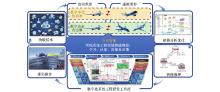
Fig.1
Spatial intelligence in the field of systems engineering"
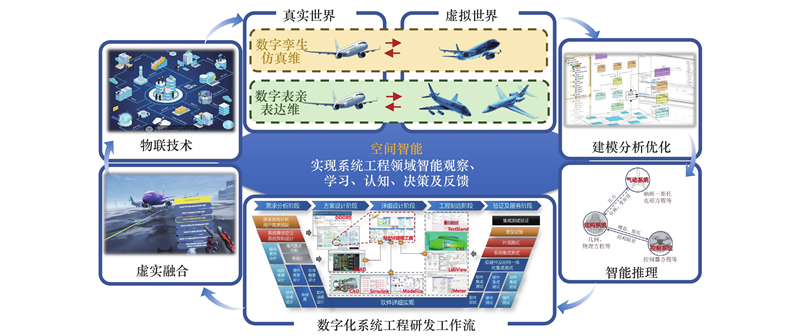
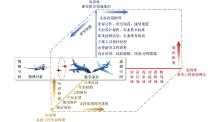
Fig.2
Digital cousin in the field of systems engineering"
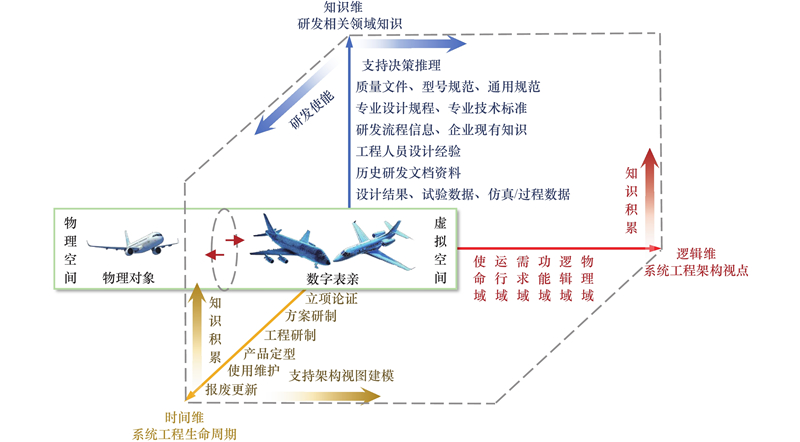
Fig.3
Workflow in systems engineering spatial intelligence"
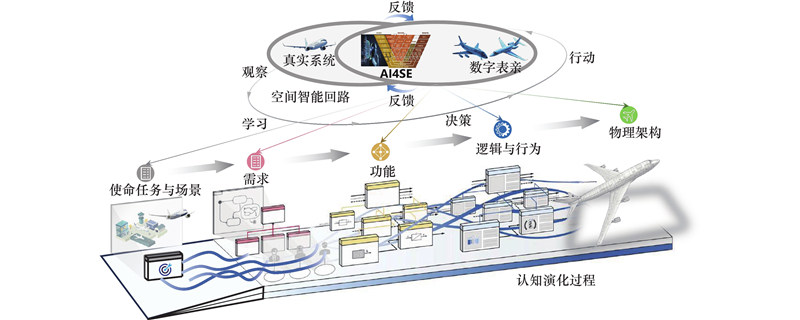
Fig.4
Systems engineering spatial intelligence approach based on KARMA language"
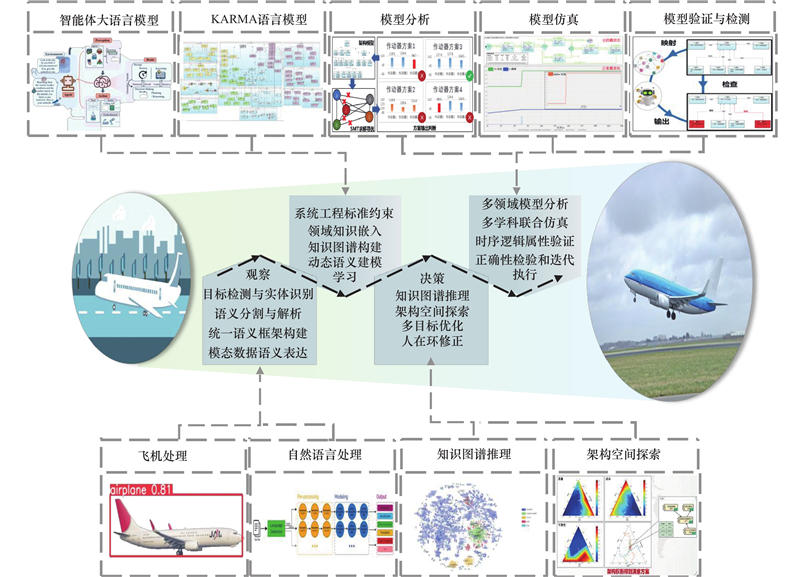
Fig.5
Digital cousin supporting decision-making in systems engineering"
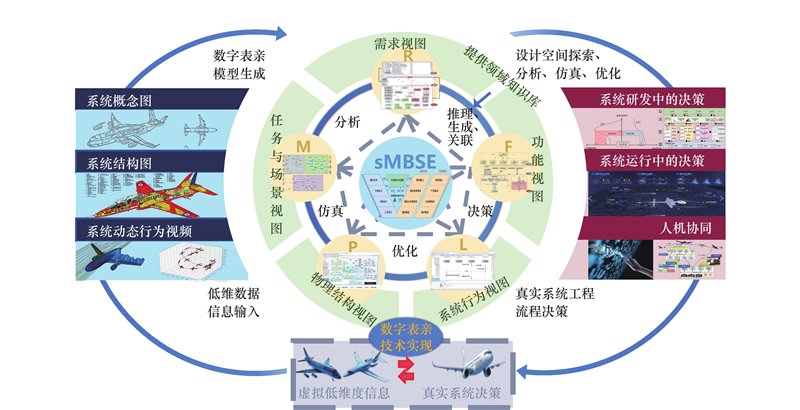
Fig.6
Overall scheme"
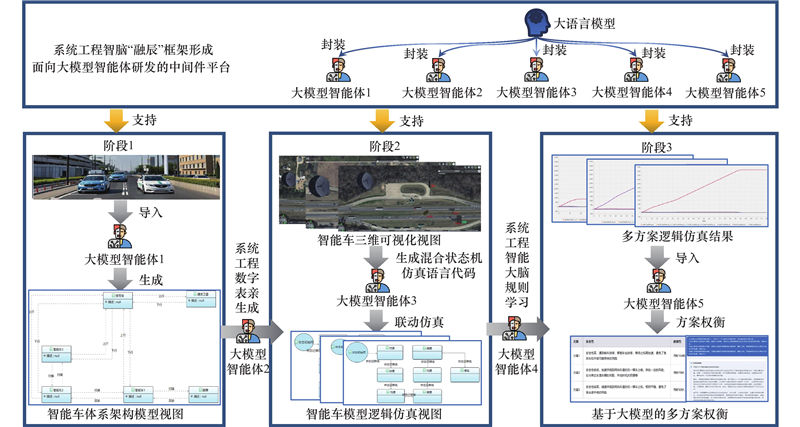
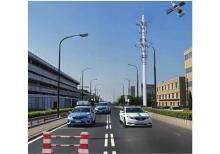
Fig.7
Intelligent vehicle driving scenario"
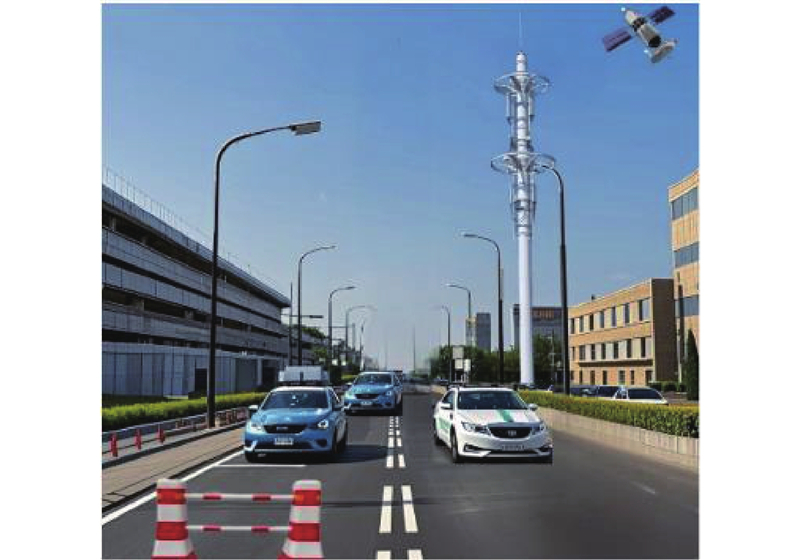
Fig.8
Visual recognition results"
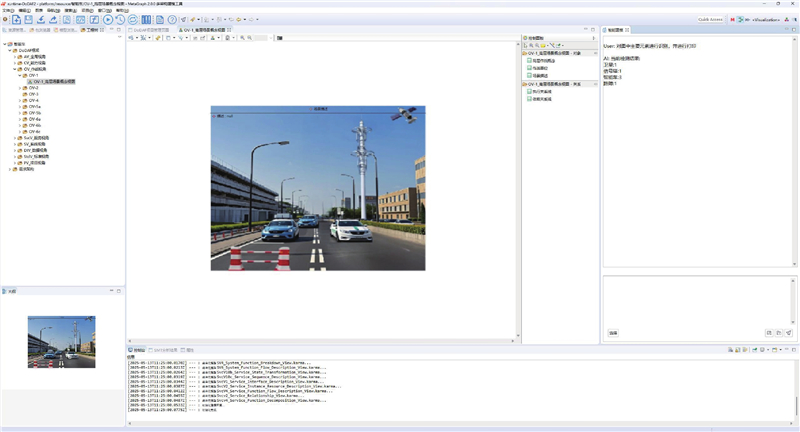
Fig.9
Resource flow description view of DoDAF OV-2 intelligent vehicle"
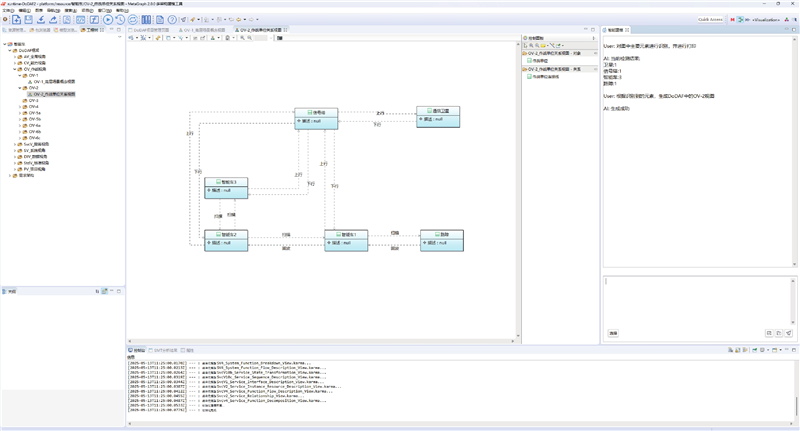
Fig.10
Three-dimensional view generated by the large model"
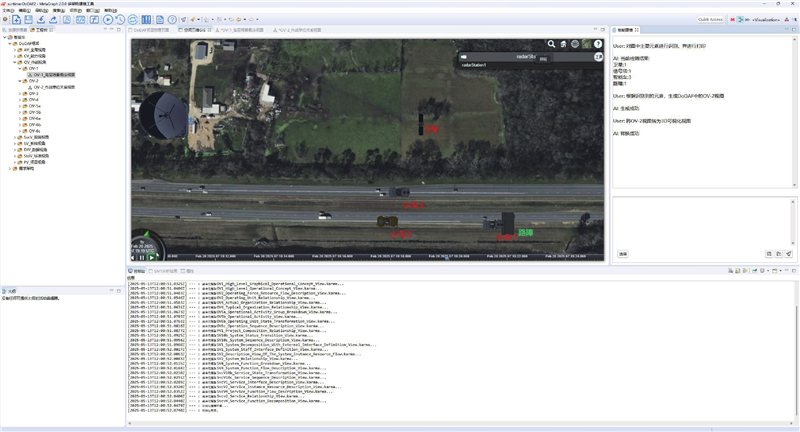
Fig.11
Three-dimensional visualization scenario of intelligent vehicle"
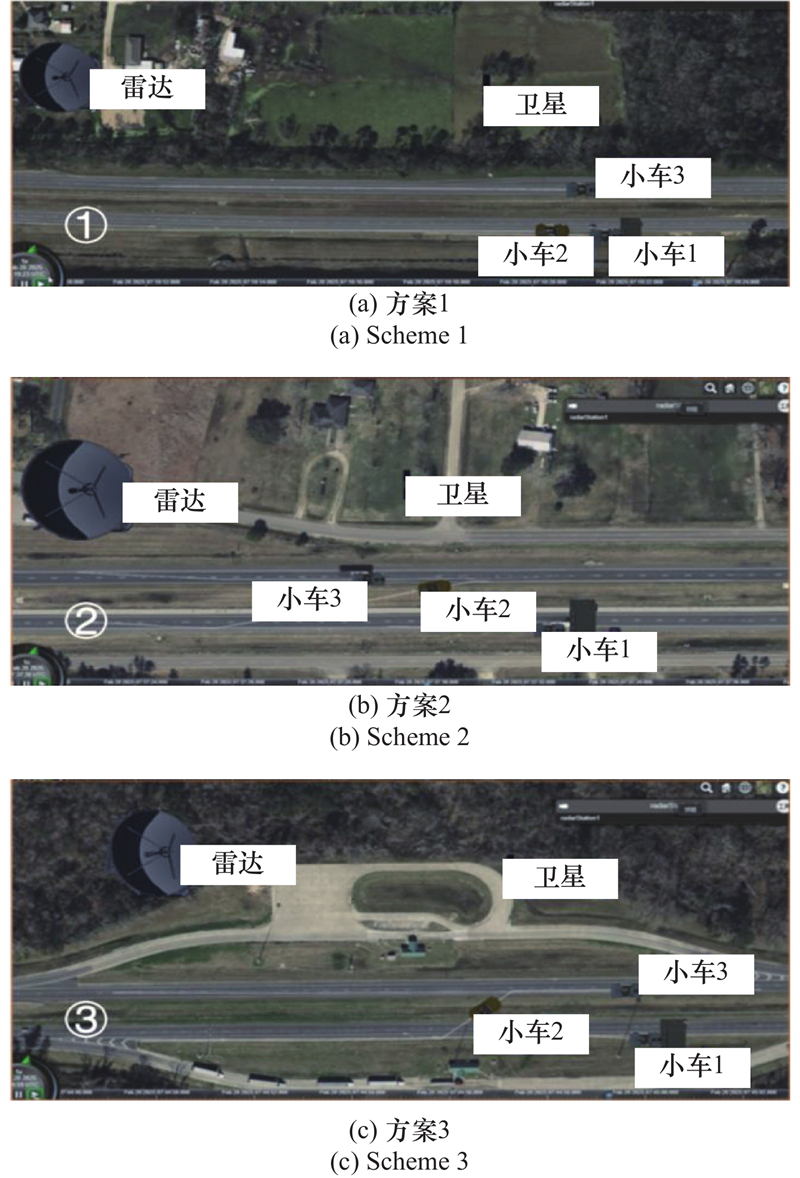
Fig.12
Generated OV-6b state transition description for DoDAF view by the large model"
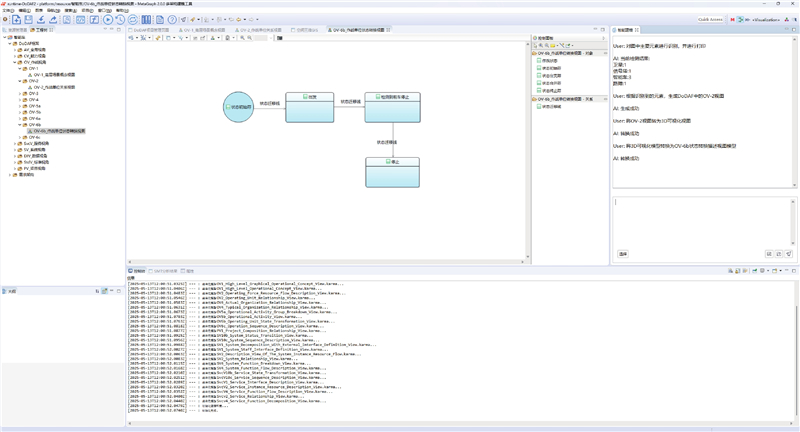
Fig.13
State machine diagram of intelligent vehicle 2 of three scenarios in DoDAF view"
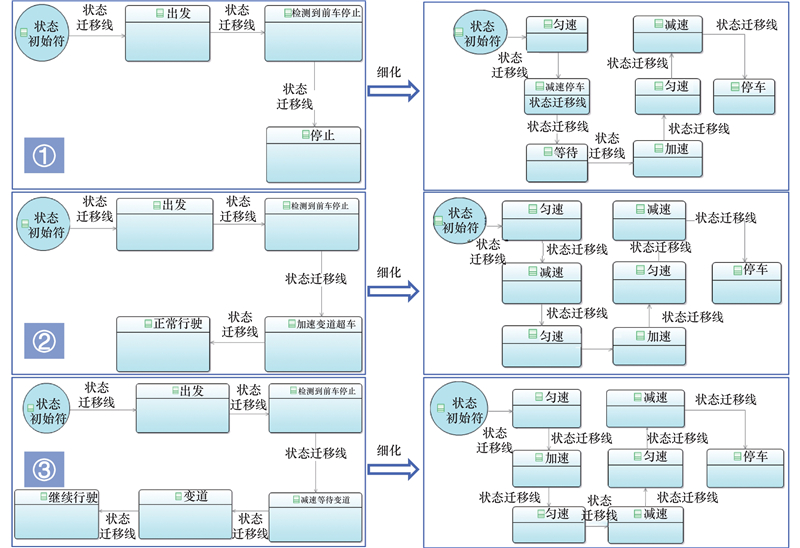
Fig.14
Mixed state machine simulation results of different schemes"
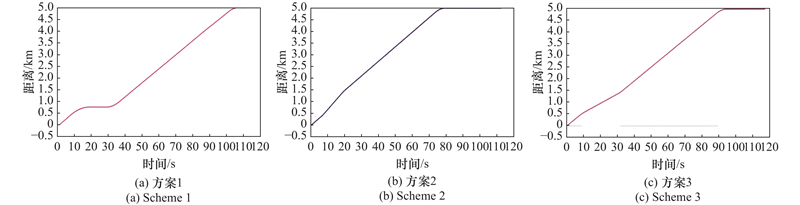
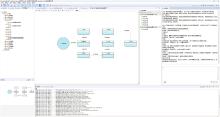
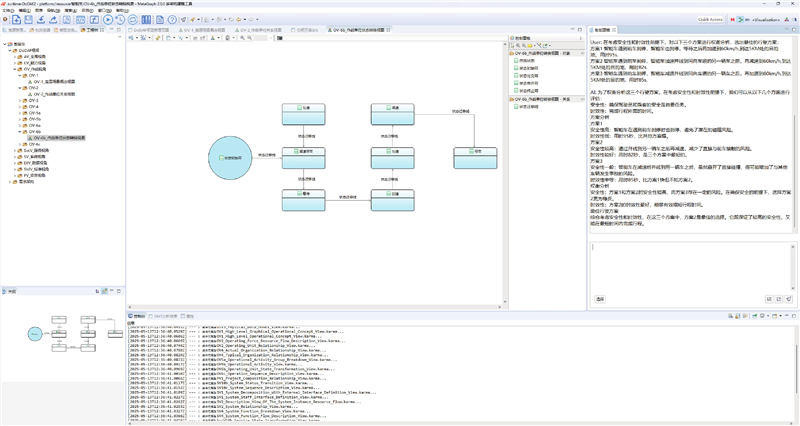
Fig.15
Large language model scenario trade-offs"
| 1 |
吴轩宇, 洪兆溪, 刘继红, 等. 复杂定制产品智能化设计与验证协同模式[J]. 计算机集成制造系统, 2022, 28 (9): 2700- 2717.
doi: 10.13196/j.cims.2022.09.005 |
|
WU X Y, HONG Z X, LIU J H, et al. Collaborative intelligent design and verification mode for complex customized products[J]. Computer Integrated Manufacturing Systems, 2022, 28 (9): 2700- 2717.
doi: 10.13196/j.cims.2022.09.005 |
|
| 2 | 苗学问, 董骁雄, 钱征文, 等. 基于DoDAF的航空装备智能保障系统体系结构建模[J]. 系统工程与电子技术, 2024, 46 (2): 640- 648. |
| MIAO X W, DONG X X, QIAN Z W, et al. Architecture modeling of intelligent support systems for aviation equipment based on DoDAF[J]. Systems Engineering and Electronics, 2024, 46 (2): 640- 648. | |
| 3 | 任浩亮, 张建超, 程会川. 基于SysML的武器装备体系能力需求建模分析方法[J]. 系统工程与电子技术, 2023, 45 (9): 2843- 2851. |
| REN H L, ZHANG J C, CHENG H C, et al. Modeling and analysis method for capability requirements of weapon equipment systems based on SysML[J]. Systems Engineering and Electronics, 2023, 45 (9): 2843- 2851. | |
| 4 | 陈成, 张祥瑞, 杨中源, 等. 基于DoDAF的舰船实战化需求建模与分析方法[J]. 系统工程与电子技术, 2025, 47 (10): 3389- 3400. |
| CHEN C, ZHANG X R, YANG Z Y, et al. Modeling and analysis method of ship combat-oriented requirements based on DoDAF[J]. Systems Engineering and Electronics, 2025, 47 (10): 3389- 3400. | |
| 5 |
MCDERMOTT T, DELAURENTIS D, BELING P, et al. AI4SE and SE4AI: a research roadmap[J]. Insight, 2020, 23 (1): 8- 14.
doi: 10.1002/inst.12278 |
| 6 | CHAMI M, ZOGHBI C, BRUEL J M. A first step towards ai for MBSE: generating a part of SysML models from text using AI[C]//Proc. of the INCOSE Artificial Intelligence for Systems Engineering, 2019: 123−136. |
| 7 | CRABB E S, JONES M T. Accelerating model-based systems engineering by harnessing generative AI[C]//Proc. of the19th Annual System of Systems Engineering Conference, 2024: 110−115. |
| 8 |
TIMPERLEY R L, BERTHOUD L, SNIDER C, et al. Assessment of large language models for use in generative design of model-based spacecraft system architectures[J]. Journal of Engineering Design, 2025, 36 (4): 550- 570.
doi: 10.1080/09544828.2025.2453401 |
| 9 | VANGUNDY B, PHOJANAMONGKOLKIJ N, BROWN B, et al. Requirement discovery using embedded knowledge graph with ChatGPT[C]//Proc. of the 34th Annual INCOSE International Symposium Hybrid Event, 2024, 34(1): 2011−2027. |
| 10 | BADER E, VERENO D, NEUREITER C. Facilitating user-centric model-based systems engineering using generative AI[C]//Proc. of the International Conference on Model Engineering and Software Development, 2024: 371−377. |
| 11 |
TIKAYAT R A, COLE B F, PINON F O J, et al. Agile methodology for the standardization of engineering requirements using large language models[J]. Systems, 2023, 11 (7): 352.
doi: 10.3390/systems11070352 |
| 12 |
ZHU Y M, ZHANG Y Z, PENG X D, et al. SSMBERT: a space science mission requirement classification method based on BERT[J]. Aerospace, 2024, 11 (12): 1031.
doi: 10.3390/aerospace11121031 |
| 13 |
MCDERMOTT T, COLLOPY P, NADOLSKI M, et al. The future exchange of digital engineering data and models: an enterprise systems analysis[J]. Procedia Computer Science, 2019, 153, 260- 267.
doi: 10.1016/j.procs.2019.05.078 |
| 14 |
鲁金直, 王国新, 阎艳, 等. 基于多架构建模语言的系统工程建模方法[J]. 系统工程学报, 2023, 38 (2): 146- 160.
doi: 10.13383/j.cnki.jse.2023.02.001 |
|
LU J Z, WANG G X, YAN Y, et al. System engineering modeling methodology based on multi-architectural modeling language[J]. Journal of Systems Engineering, 2023, 38 (2): 146- 160.
doi: 10.13383/j.cnki.jse.2023.02.001 |
|
| 15 |
兰小平, 姚志强, 吴绶玄, 等. 面向MBSE的复杂系统研发模型追溯管理方法[J]. 系统工程学报, 2023, 38 (3): 289- 303.
doi: 10.13383/j.cnki.jse.2023.03.01 |
|
LAN X P, YAO Z Q, WU S X, et al. Traceability management approach for complex system development based on MBSE[J]. Journal of Systems Engineering, 2023, 38 (3): 289- 303.
doi: 10.13383/j.cnki.jse.2023.03.01 |
|
| 16 | WU S X, LU J Z, HU Z C, et al. Cognitive thread supports system of systems for complex system development[C]//Proc. of the 16th International Conference of System of Systems Engineering, 2021: 82−87. |
| 17 |
WU S X, WANG G X, LU J Z, et al. Digital thread in engineering: concept, state of art, and enabling framework[J]. Advanced Engineering Informatics, 2025, 65, 103258.
doi: 10.1016/j.aei.2025.103258 |
| 18 | DAI T T, WONG J, JIANG Y F, et al. Automated creation of digital cousins for robust policy learning[EB/OL]. [2025-02-18]. https://arxiv.org/abs/2410.07408. |
| 19 | DATTA S. Digital twins: digital twin meets digital cousin[M]. Berlin: Springer, 2022. |
| 20 |
WU S X, WANG G X, LU J Z, et al. Design ontology for cognitive thread supporting traceability management in model-based systems engineering[J]. Journal of Industrial Information Integration, 2024, 40, 100619.
doi: 10.1016/j.jii.2024.100619 |
| 21 | YANG P F, LU J Z, FENG L, et al. A knowledge management approach supporting model-based systems engineering[M]//Trends and applications in information systems and technologies. ROCHA Á, ADELI H, DZEMYDA G, ed. Cham: Springer, 2021: 581−590. |
| 22 | LU J Z, WANG G X, YAN Y, et al. Semantic model-based systems engineering based on KARMA: a research and practice roadmap 2025[C]//Proc. of the 32nd Annual INCOSE International Symposium, 2022, 32(1): 706−720. |
| 23 | HEGARTY M. Components of spatial intelligence[M]//Psychology of learning and motivation. Pittsburgh: Academic Press, 2010, 52: 265−297. |
| 24 | HALL A D. Three-dimensional morphology of systems engineering[J]. IEEE Trans. on Systems Science and Cybernetics, 2007, 5 (2): 156- 160. |
| 25 |
陶飞, 刘蔚然, 张萌, 等. 数字孪生五维模型及十大领域应用[J]. 计算机集成制造系统, 2019, 25 (1): 1- 18.
doi: 10.13196/j.cims.2019.01.001 |
|
TAO F, LIU W R, ZHANG M, et al. Five-dimension digital twin and its ten applications[J]. Computer Integrated Manufacturing Systems, 2019, 25 (1): 1- 18.
doi: 10.13196/j.cims.2019.01.001 |
|
| 26 | VOULODIMOS A, DOULAMIS N, DOULAMIS A, et al. Deep learning for computer vision: a brief review[J]. Computational Intelligence and Neuroscience, 2018: 7068349. |
| 27 | CHOWDHARY K R. Natural language processing[M]//Fundamentals of artificial intelligence. New Delhi: Springer, 2020: 603−649. |
| 28 | CHANG Y P, WANG X, WANG J D, et al. A survey on evaluation of large language models[J]. ACM Transactions on Intelligent Systems and Technology, 2024, 15 (3): 1- 45. |
| 29 | GE Z, LIU S, WANG F, et al. Yolox: exceeding yolo series in 2021[EB/OL]. [2025-02-18]. https: //arxiv.org/abs/2107.08430. |
| 30 |
PIASZCZYK C. Model based systems engineering with department of defense architectural framework[J]. Systems Engineering, 2011, 14 (3): 305- 326.
doi: 10.1002/sys.20180 |
| 31 | WANG S C, LI Z B, WANG B T, et al. Collision avoidance motion planning for connected and automated vehicle platoon merging and splitting with a hybrid automaton architecture[J]. IEEE Trans. on Intelligent Transportation Systems, 2023, 25 (2): 1445- 1464. |
| [1] | Qingchun MENG, Fei DU, Biao WANG, Qin ZHANG, Wen HAN, Chang XU. Design of monitoring and warning system for hazardous chemical transport vehicles based on MBSE [J]. Systems Engineering and Electronics, 2025, 47(7): 2224-2236. |
| [2] | Te LI, Qiang GUO, Peng ZHAN. Architecture design method of heterogeneous probe systems based on MBSE [J]. Systems Engineering and Electronics, 2025, 47(6): 1930-1940. |
| [3] | Xinfang CUI, Xiangwen CHEN. Application of MBSE in manned space in-orbit material supply mission [J]. Systems Engineering and Electronics, 2025, 47(5): 1551-1560. |
| [4] | Cheng CHEN, Xiangrui ZHANG, Zhongyuan YANG, Huawei ZHOU, Qin HE, Can HAN. Modeling and analysis approach for actual combat requirements of warships based on DoDAF [J]. Systems Engineering and Electronics, 2025, 47(10): 3389-3400. |
| [5] | Qian WANG, Dangdang ZHENG, Ruiting TONG, Bing HAN, Xiaohui YANG. Design of civil aircraft flight control system architecture based on MBSE [J]. Systems Engineering and Electronics, 2024, 46(9): 3050-3059. |
| [6] | Xuewen MIAO, Xiaoxiong DONG, Zhengwen QIAN, Yang HU, Mudong LI. Architecture modeling of aviation equipment intelligent support system based on DoDAF [J]. Systems Engineering and Electronics, 2024, 46(2): 640-648. |
| [7] | Mengru DONG, Guoxin WANG, Jinzhi LU, Junda MA, Yan YAN. Research on the development trend of MBSE based on WordCloud technology [J]. Systems Engineering and Electronics, 2024, 46(2): 534-548. |
| [8] | Ran HUANG, Qibo PENG, Xinfeng WU, Qing NI. Architecture modeling for manned lunar landing based on DoDAF [J]. Systems Engineering and Electronics, 2023, 45(7): 2131-2137. |
| [9] | Qibo PENG, Hailian ZHANG. Model-based requirements analysis method for manned space engineering [J]. Systems Engineering and Electronics, 2023, 45(11): 3532-3543. |
| [10] | Wenqing SHI, Haifeng WANG, Haixin CHEN. Fighter-drone teaming system requirements elicitation and verification [J]. Systems Engineering and Electronics, 2023, 45(1): 108-118. |
| [11] | Qiucen FAN, Wenhao BI, An ZHANG, Wenhao WANG. MBSE modeling method of civil aircraft altitude control system [J]. Systems Engineering and Electronics, 2022, 44(1): 164-171. |
| [12] | Hongchen JIAO, Yong LEI, Hongyu ZHANG, Guobin ZHANG, Yaodong WANG. Research on modeling and design method of spacecraft system based on MBSE [J]. Systems Engineering and Electronics, 2021, 43(9): 2516-2525. |
| [13] | Wenhao WANG, Wenhao BI, An ZHANG, Qiucen FAN. Function modeling method of civil aircraft system based on MBSE [J]. Systems Engineering and Electronics, 2021, 43(10): 2884-2892. |
| [14] | Zhiwei MAO, Zhanwen QU, Tong ZHANG, Yi LU, Shan FU, Dan HUANG. Design of civil aircraft certification test flight scenario based on MBSE [J]. Systems Engineering and Electronics, 2020, 42(8): 1768-1775. |
| [15] | REN Bingxuan, LU Yi, FU Shan, HUANG Dan. Identification and verification of civil aircraft functional requirements through MBSE [J]. Systems Engineering and Electronics, 2019, 41(9): 2016-2024. |
| Viewed | ||||||
|
Full text |
|
|||||
|
Abstract |
|
|||||