Systems Engineering and Electronics ›› 2025, Vol. 47 ›› Issue (9): 3031-3040.doi: 10.12305/j.issn.1001-506X.2025.09.24
• Guidance, Navigation and Control • Previous Articles
Modified SOLEM model based on semi-analytical method and long-term evolution analysis of space debris
Fengchun ZHENG1, Yao ZHANG1,2,*, Jing LIU1,2, Qingbo GAN1,2, Haowen CHENG1,2, Jingshi TANG3
- 1. National Astronomical Observatories,Chinese Academy of Sciences,Beijing 100101,China
2. School of Astronomy and Space Science,University of Chinese Academy of Sciences,Beijing 100101,China
3. School of Astronomy and Space Science,Nanjing University,Nanjing 210023,China
-
Received:2024-08-08Online:2025-09-25Published:2025-09-16 -
Contact:Yao ZHANG

CLC Number:
Cite this article
Fengchun ZHENG, Yao ZHANG, Jing LIU, Qingbo GAN, Haowen CHENG, Jingshi TANG. Modified SOLEM model based on semi-analytical method and long-term evolution analysis of space debris[J]. Systems Engineering and Electronics, 2025, 47(9): 3031-3040.
share this article
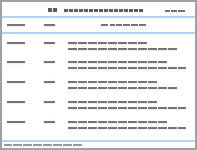
Table 1
Perturbation model setting for different orbit types in semi-analytical prediction"
| 摄动力 | 低轨 | 中轨 | 地球同步轨道 | 大偏心率轨道 |
| 地球非球形引力 | ||||
| 日、月引力 | √ | √ | √ | √ |
| 大气阻力 | √ | × | × | √ |
| 太阳光压 | √ | √ | √ | √ |
Table 2
Initial orbits"
| 轨道类型 | 初始轨道 |
| LEO | [7 500 km, |
| MEO | [26 500 km, |
| GEO | [42 378 km, |
| HEO | [26 500 km, 0.2, 50°, 50°, 50°, 50°] |
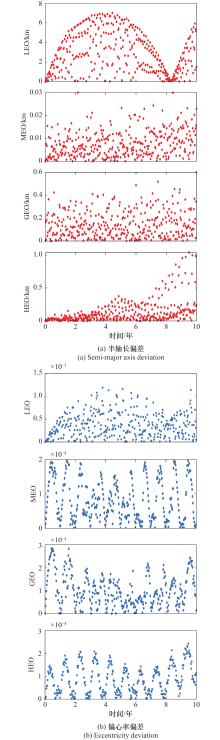
Fig.1
Semi-major axis and eccentricity deviations predicted by semi-analytical and numerical methods"
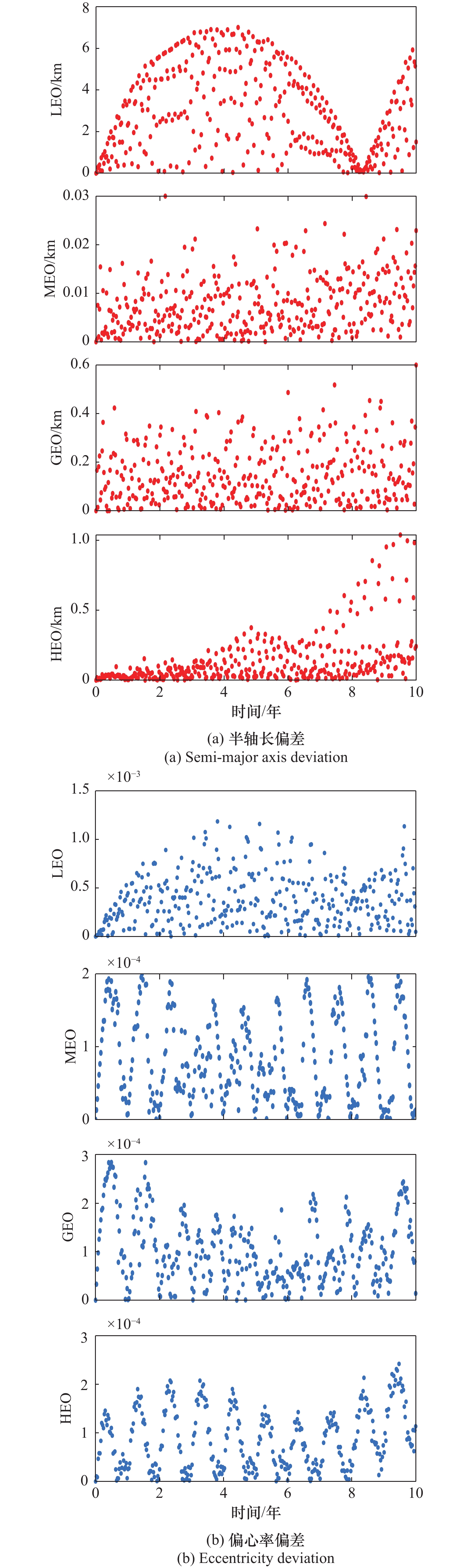
Table 3
Comparation of consumed time of orbital prediction"
| 轨道类型 | 分析法/s | 半分析法/s | 数值法/s | 耗时比例/% |
| LEO | 0.53 | 2.48 | 2 310.90 | 0.11 |
| MEO | 0.44 | 1.57 | 2 281.40 | 0.07 |
| GEO | 0.32 | 0.27 | 2 290.26 | 0.01 |
| HEO | 0.46 | 2.58 | 2 376.85 | 0.11 |
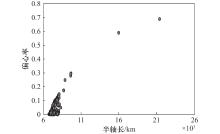
Fig.2
Initial orbital distribution of space debris in 1980"
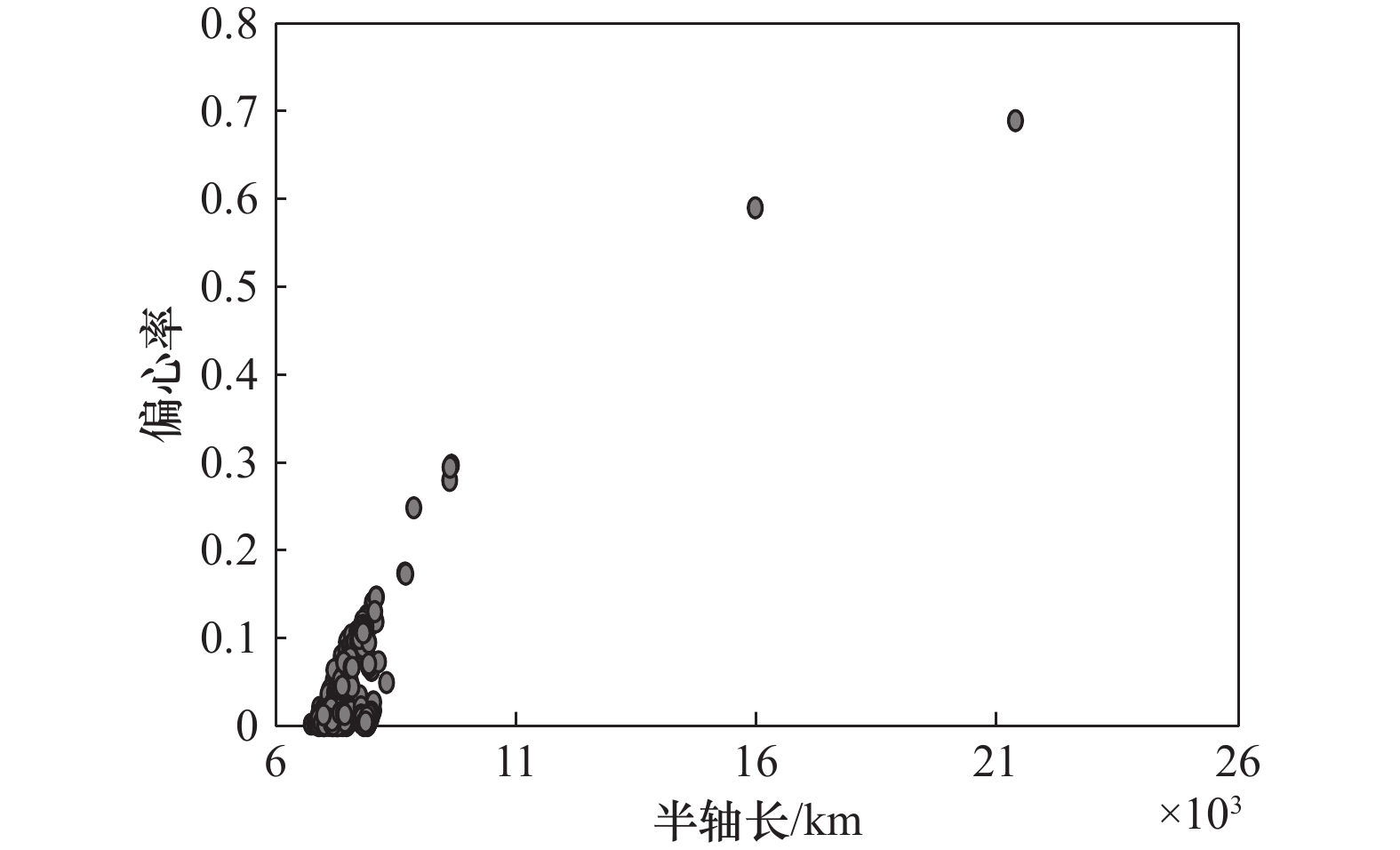
Fig.3
Evolutionary results of the number of debris in orbit through semi-analytical and analytical prediction and comparation with actual evolutionary trend"
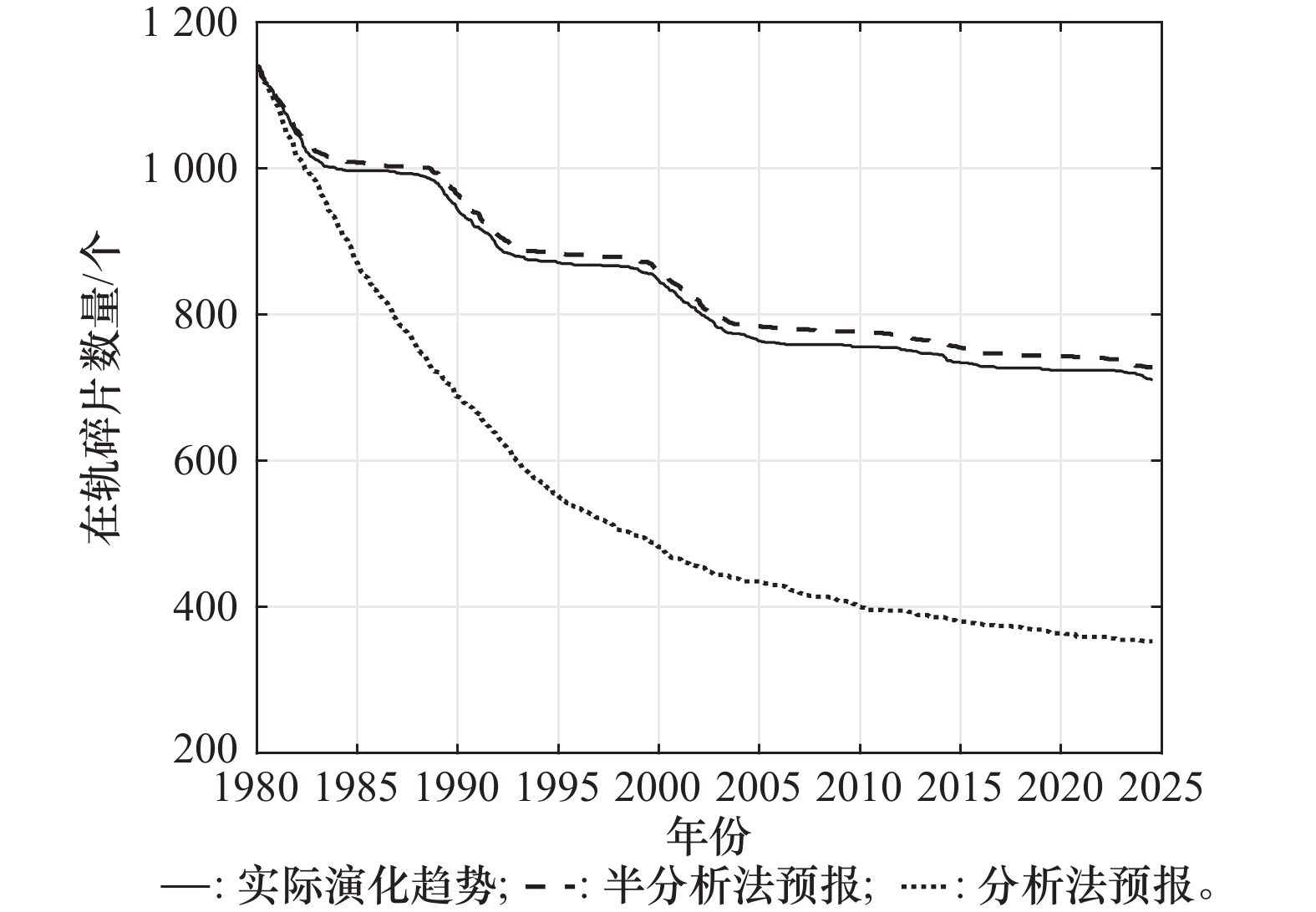
Fig.4
Error of semi-major axis and corresponding quantity distribution diagram"
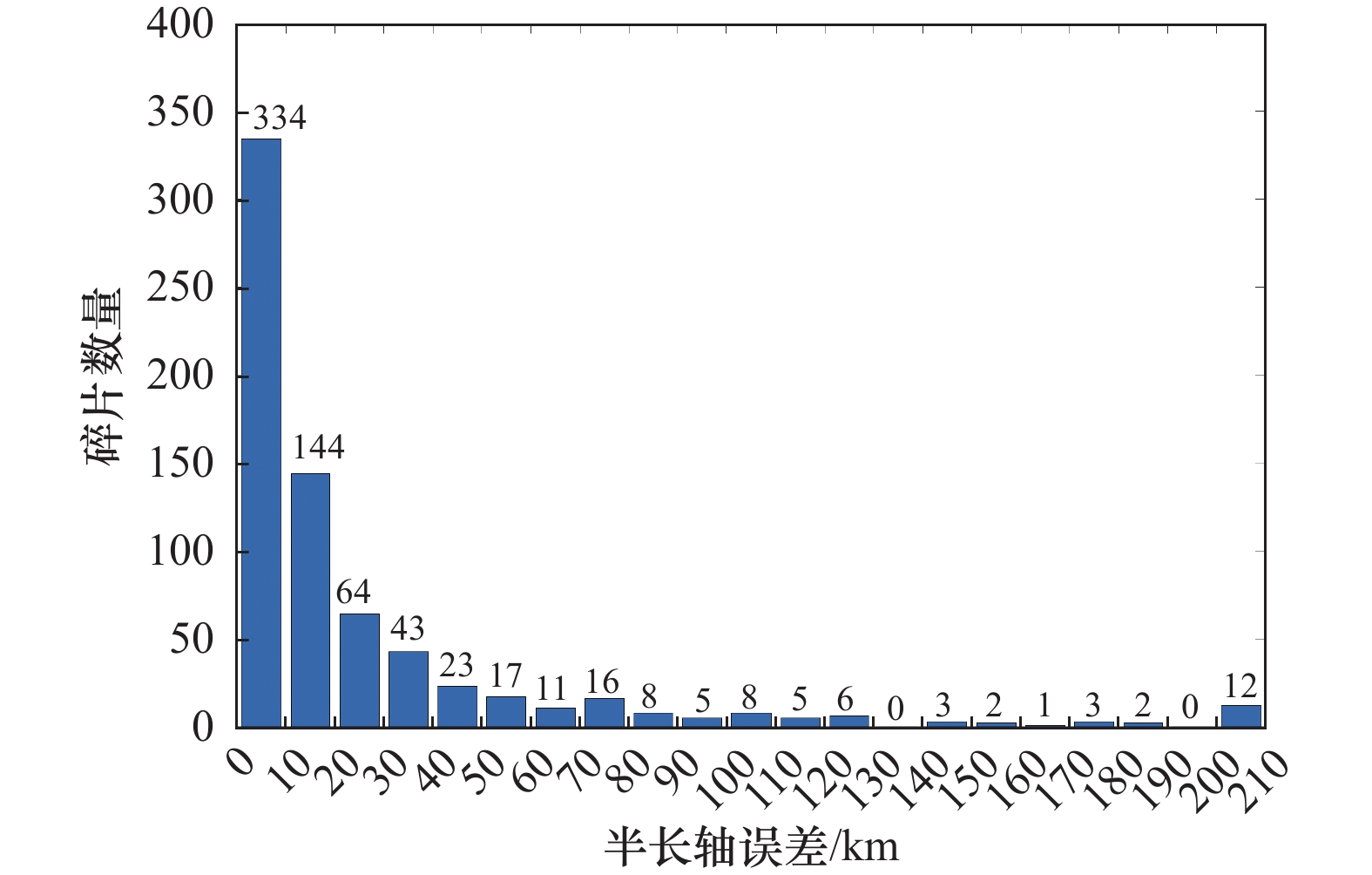
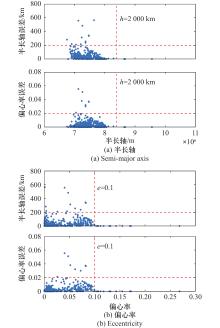
Fig.5
Distribution of prediction error with respect to semi-major axis and eccentricity"
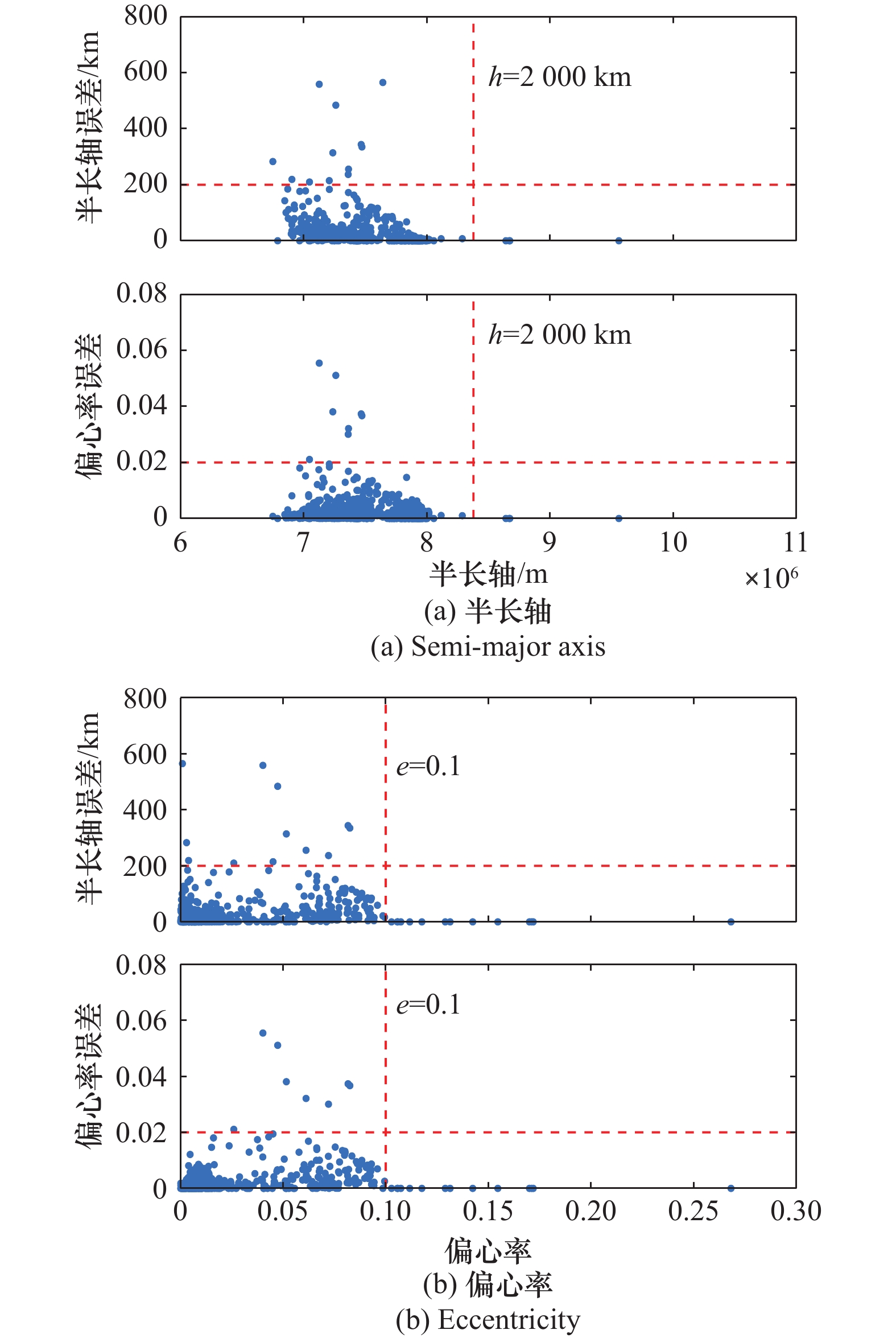
Table 4
Setting of SOLEM without constellation scheme"
| 模型参数 | 说明 |
| 演化时长/年 | 200 |
| 初始空间碎片 环境数据 | 2018年2月1日的空间碎片环境,包括LEO和穿过 LEO轨道的尺寸大于10 cm的物体,总计26 317个 |
| 卫星发射模型 | 2010年1月1日至2017年12月31日的卫星 发射信息,在演化期间每隔8年循环发射 |
| 卫星在轨任务期/年 | 8 |
| 任务后处置成功率/% | 90 |
| 空间环境参数 | F10.7具有11年周期,且每月更新1次;Ap=9 |
| 蒙特卡罗仿真次数 | 50 |
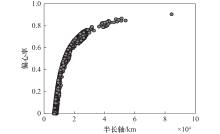
Fig.6
Initial orbital distribution of space debris on February 1, 2018"
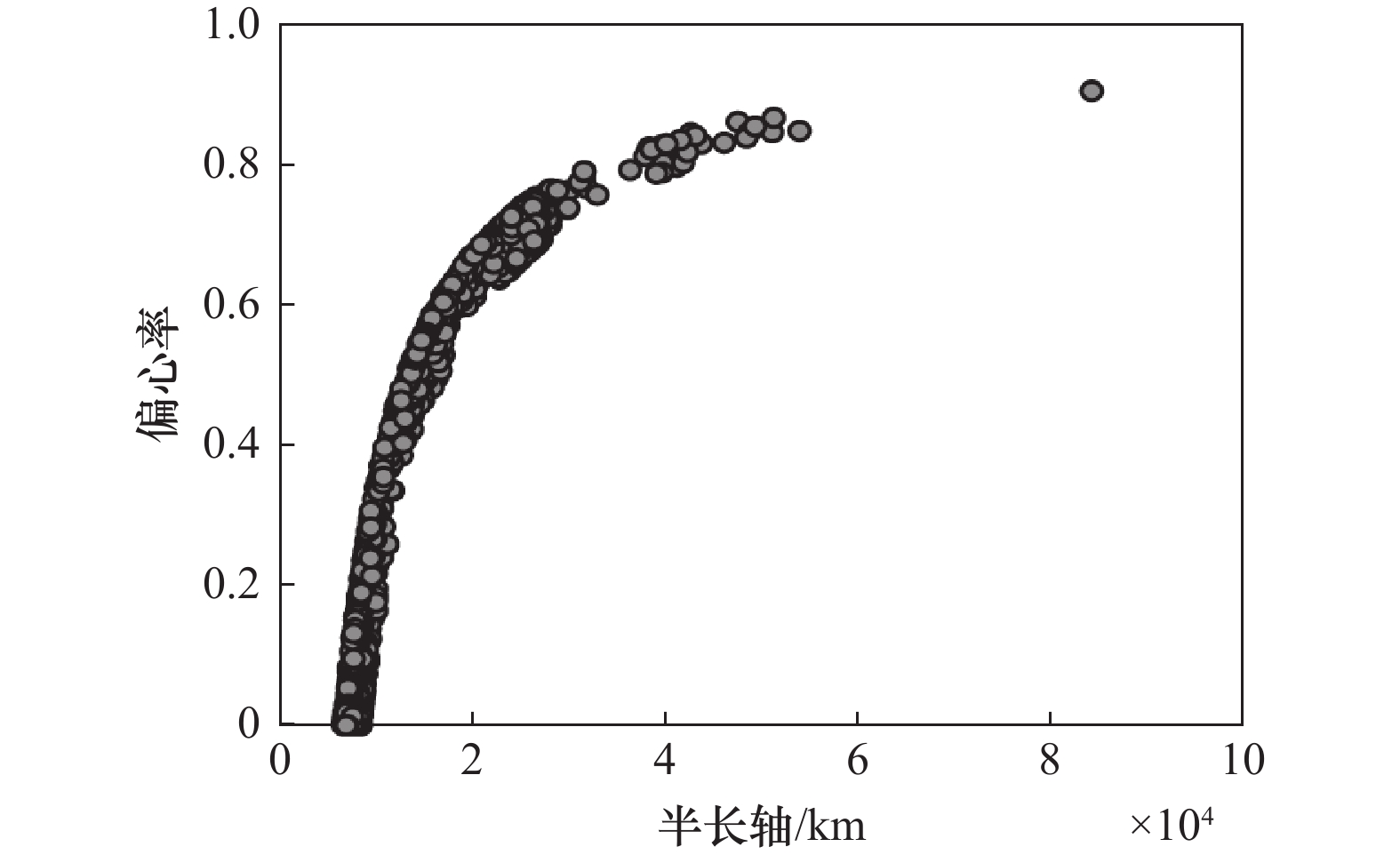
Fig.7
Evolution result of total debris number without consideration of constellation"
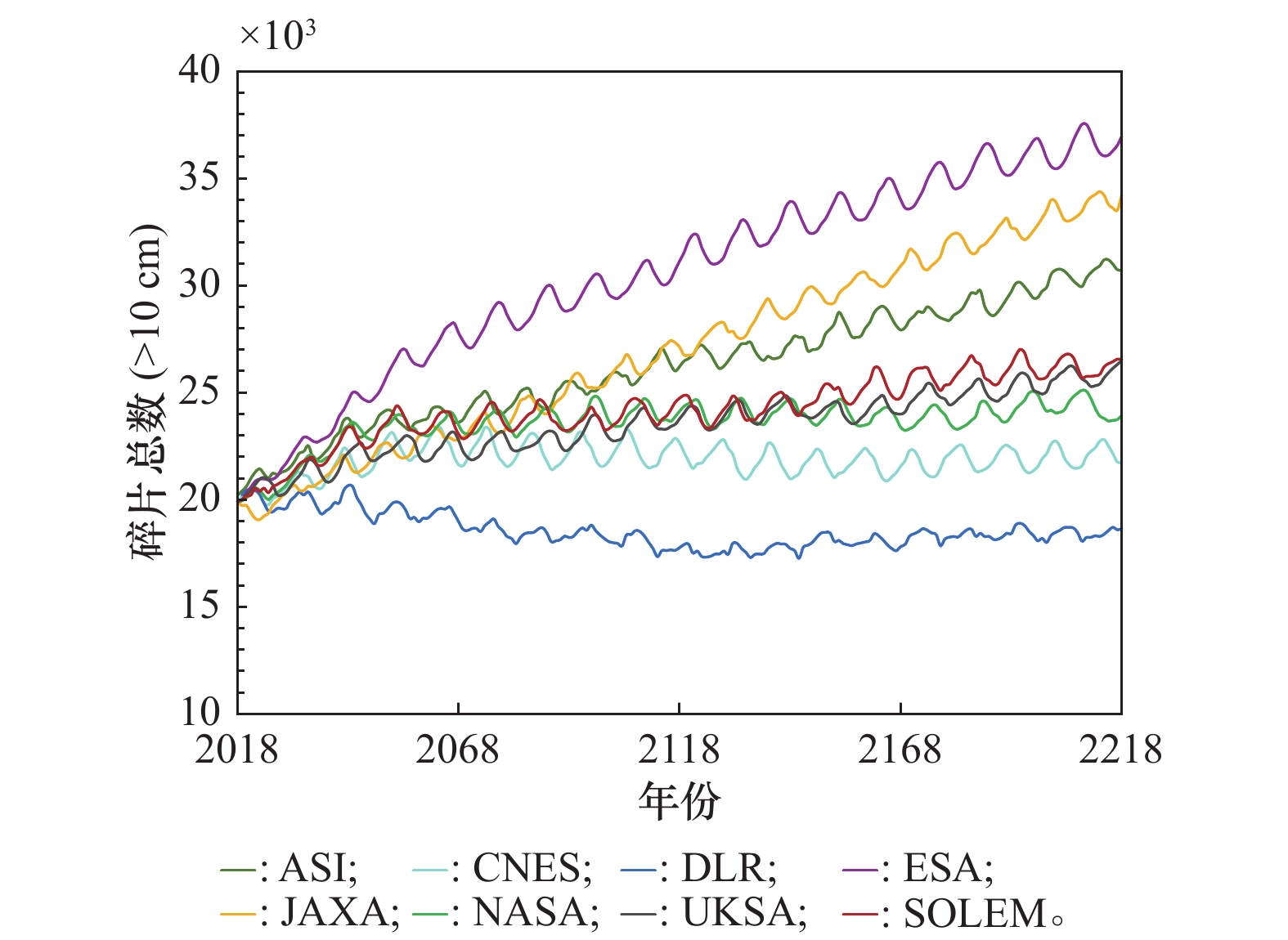
Fig.8
Evolution result of cumulative collision number without consideration of constellation"
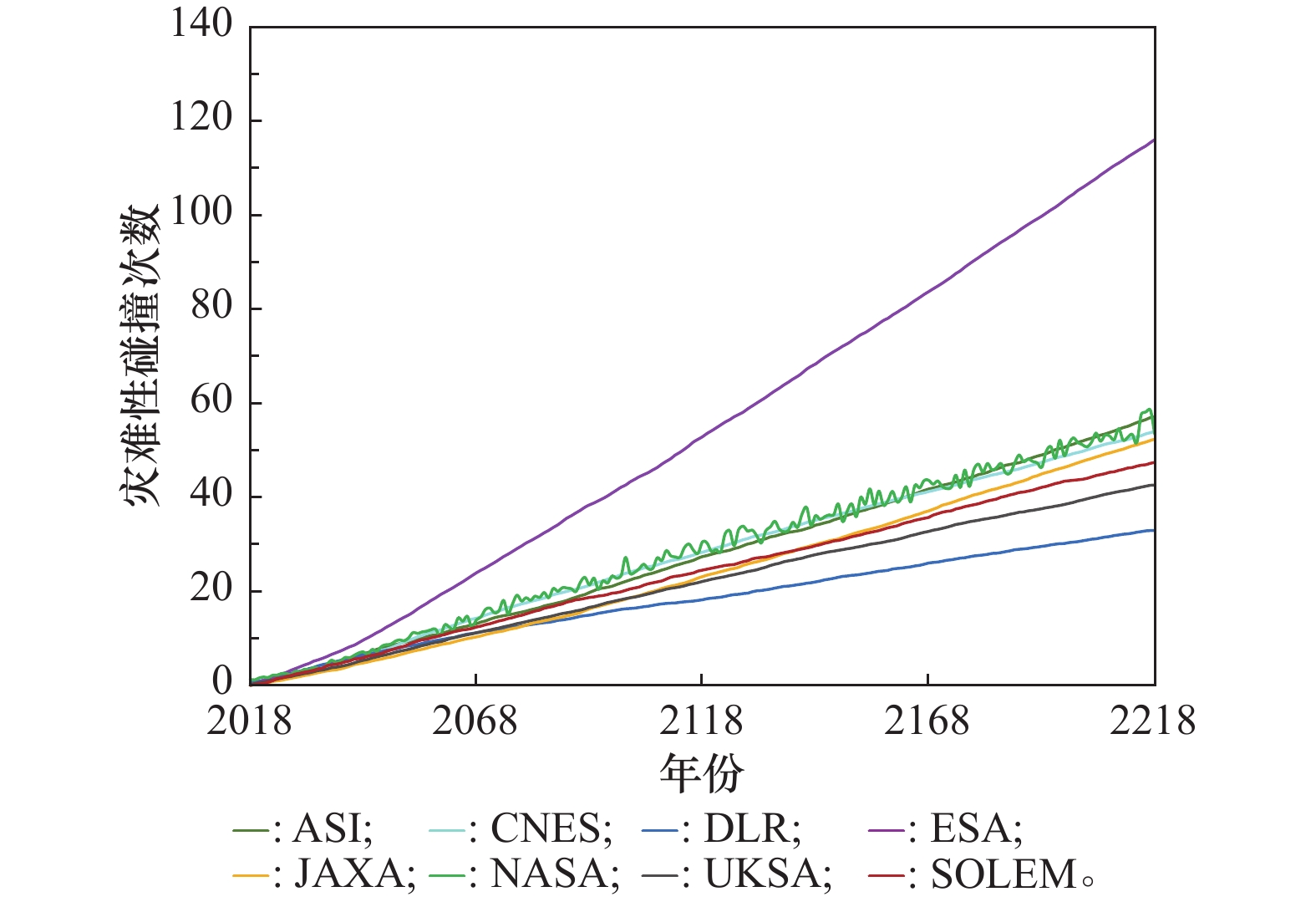
Table 5
Setting of SOLEM considering constellation scheme"
| 模型 | 说明 |
| 初始空间碎片 环境数据 | 2023年1月1日的空间碎片环境,包括LEO和穿过 LEO轨道的尺寸大于10 cm的物体,总计25 980个 |
| 卫星发射模型 | 2017年1月1日至2022年12月31日的 卫星发射信息,在演化期间循环发射 |
| 星座发射模型 | 2023—2223年总计发射244 708颗 |
| 星座中卫星任务期/年 | 5 |
| 星座碰撞规避 | 任务期间考虑人工碰撞规避, 与其他碎片不产生碰撞 |
| 蒙特卡罗仿真次数 | 50 |
Fig.9
Launch model of constellation"
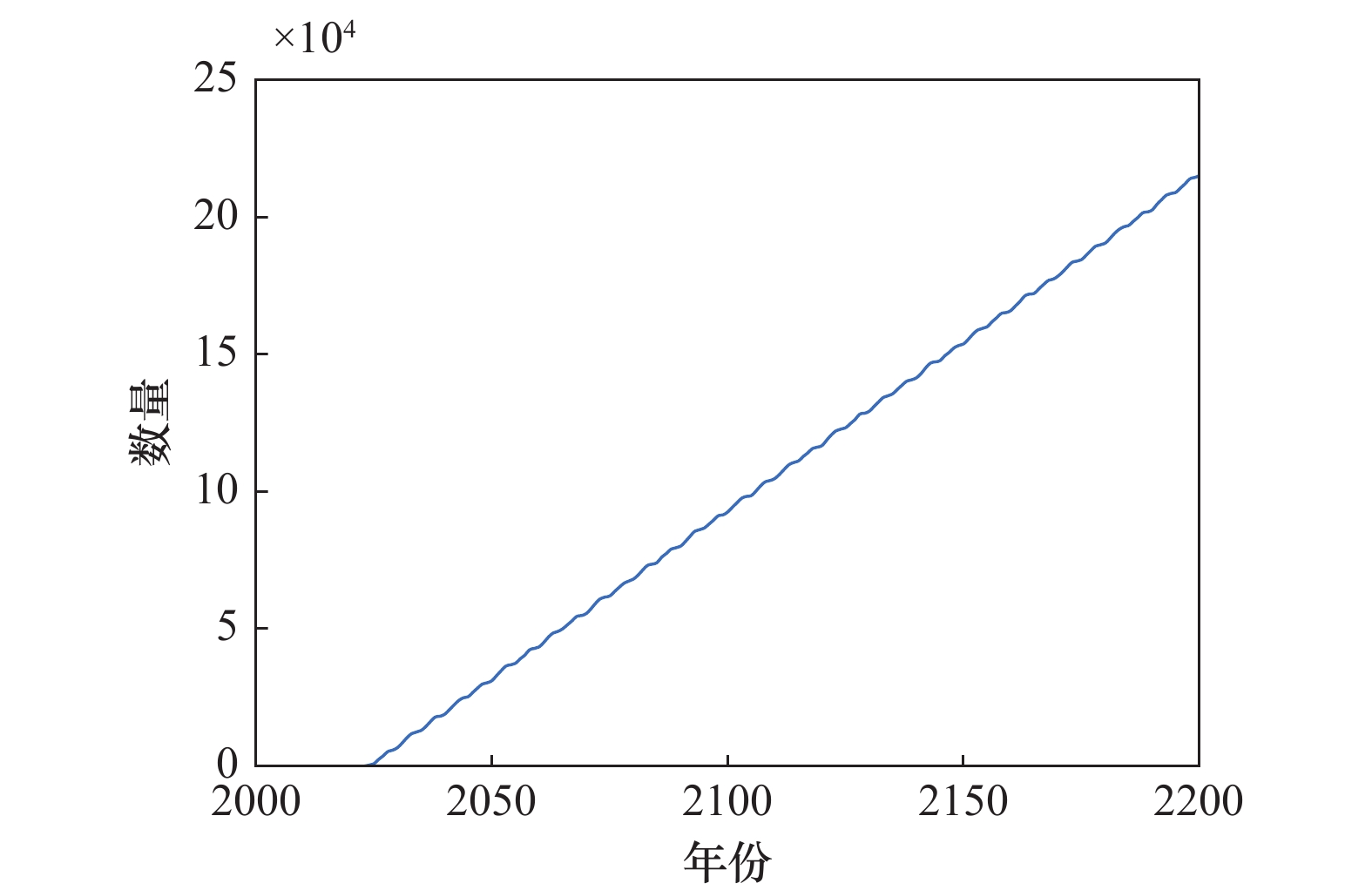
Fig.10
Evolution result of total debris number considering constellation launch"
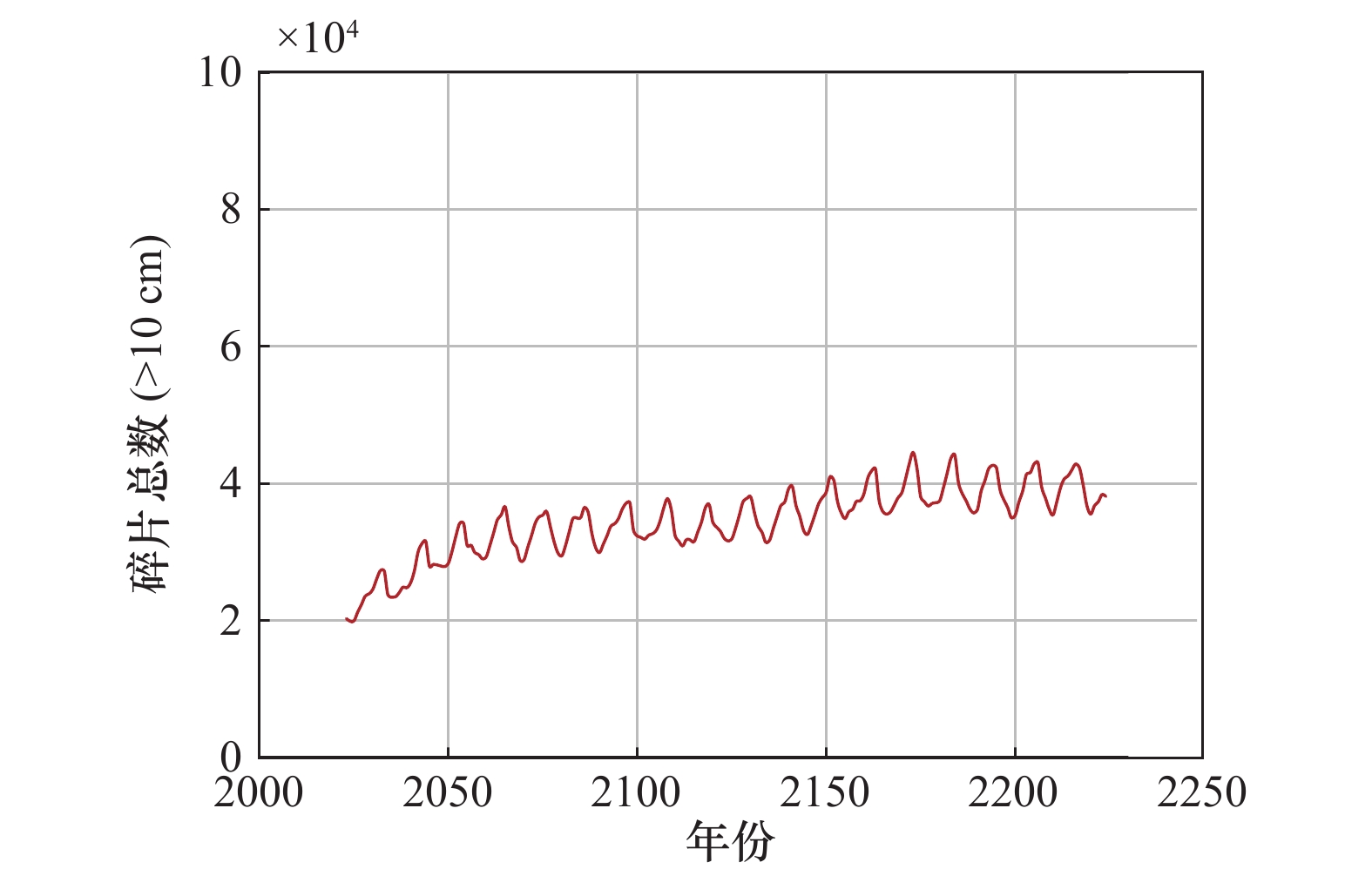
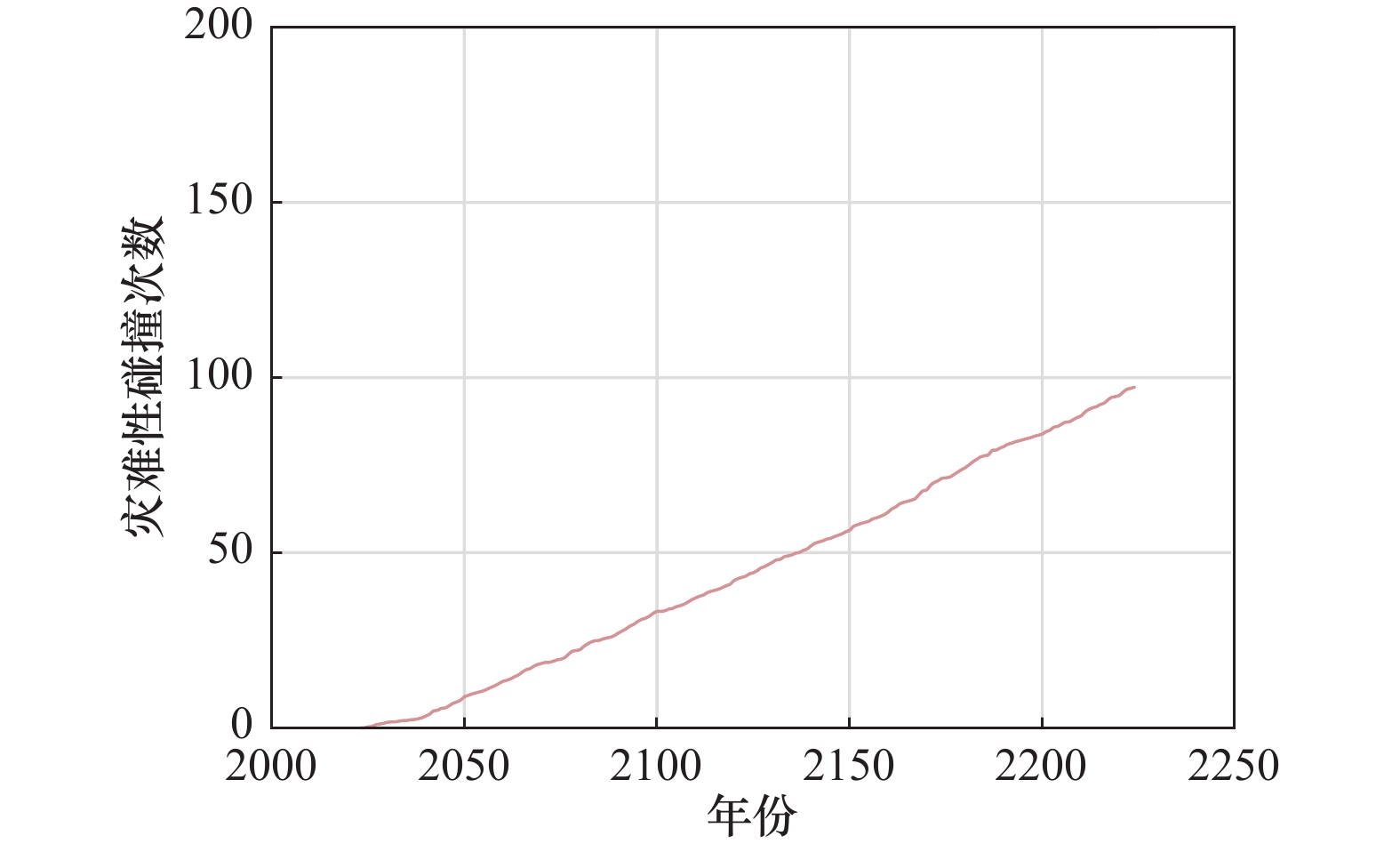
Fig.11
Evolution result of cumulative collision number considering constellation launch"
| 1 | European Space Agency Space Debris Office. ESA’s annual space environment report[R]. Darmstadt: European Space Agency, 2024. |
| 2 | Space Forces-Space. The satellite situation report[EB/OL]. [2024-08-01]. https: //www.space-track.org/#ssr. |
| 3 | ROSSI A, ANSELMO L, PARDINI C, et al. The new space debris mitigation (SDM 4.0) long term evolution code[C]//Proc. of the 5th European Conference on Space Debris, 2009. |
| 4 | DOLADO-PEREZ J C, DI-COSTANZO R, REVELIN B. Introducing MEDEE-a new orbital debris evolutionary model[C]//Proc. of the 6th European Conference on Space Debris, 2013. |
| 5 | BENDISCH J, WEGENER P, REX D. The long-term evolution of debris orbits in view of spatial object accumulation[C]//Proc. of the 2nd European Conference on Space Debris, 1997. |
| 6 |
WALKER R, MARTIN C E, STOKES P H, et al. Analysis of the effectiveness of space debris mitigation measures using the DELTA model[J]. Advances in Space Research, 2001, 28 (9): 1437- 1445.
doi: 10.1016/S0273-1177(01)00445-8 |
| 7 |
HARADA R, KAWAMOTO S, HANADA T. Assessments of the impacts of orbital fragmentations using the near-earth orbital debris environment evolutionary model (NEODEEM)[J]. Journal of Space Safety Engineering, 2024, 11 (3): 395- 402.
doi: 10.1016/j.jsse.2024.07.008 |
| 8 |
LIOU J C, HALL D T, KRISKO P H, et al. LEGEND-a three-dimensional LEO-to-GEO debris evolutionary model[J]. Advances in Space Research, 2004, 34 (5): 981- 986.
doi: 10.1016/j.asr.2003.02.027 |
| 9 | LEWIS H G, SWINERD G, WILLIAMS N, et al. DAMAGE: a dedicated GEO debris model framework[C]//Proc. of the 3rd European Conference on Space Debris, 2001. |
| 10 | 王大为, 汤靖师, 刘林, 等. 半分析方法在地球卫星100 yr尺度长期预报中的性能评估[J]. 天文学报, 2017, 58 (1): 20- 45. |
| WANG D W, TANG J S, LIU L, et al. The assessment of the semi-analytical method in the 100-year orbit prediction of earth satellites[J]. Acta Astronomica Sinica, 2017, 58 (1): 20- 45. | |
| 11 | KOZAI Y. The motion of a close earth satellite[J]. The Astronomical Journal, 1959, 64 (8): 367- 377. |
| 12 | 刘林. 卫星轨道力学算法[M]. 南京: 南京大学出版社, 2019. |
| LIU L. Algorithms for satellite orbital dynamics[M]. Nanjing: Nanjing University Press, 2019. | |
| 13 | 吴连大, 王昌彬, 童傅. 人造卫星二阶摄动理论的半分析、半数值方法[J]. 天文学报, 1978, 19 (2): 131- 151. |
| WU L D, WANG C B, TONG F. A new semi-analytical and semi-numerical method for computation of the second order perturbation of artificial Earth satellites[J]. Acta Astronomica Sinica, 1978, 19 (2): 131- 151. | |
| 14 | CEFOLA P J. Equinoctial orbit elements-application to artificial satellite orbits[C]//Proc. of the Astrodynamics Conference, 1972. |
| 15 | CEFOLA P J, FOLCIK Z, DI-COSTANZO R, et al. Revisiting the DSST standalone orbit propagator[C]//Proc. of the Space Flight Mechanics Meeting, 2014. |
| 16 | OBRIEN R T, SANG J Z. Semi-analytic satellite theory using the method of multiple scales[C]//Proc. of the Astrodynamics Specialist Conference and Exhibit, 2004. |
| 17 |
WANG Y, LUO X H, XU X J. Long-term evolution and lifetime analysis of geostationary transfer orbits with solar radiation pressure[J]. Acta Astronautica, 2020, 175, 405- 420.
doi: 10.1016/j.actaastro.2020.06.007 |
| 18 | LUO X H, WANG Y. Long-term orbital lifetime prediction of highly eccentric orbits: a statistical approach[J]. Journal of Spacecraft and Rockets, 2023, 60 (6): 1712- 1723. |
| 19 | CAZABONNE B, CEFOLA P J. Towards accurate orbit determination using semi-analytical satellite theory[C]//Proc. of the 31st AAS/AIAA Space Flight Mechanics Meeting, 2021. |
| 20 |
SUN P, COLOMBO C, TRISOLINI M, et al. Comparison of continuity equation and Gaussian mixture model for long-term density propagation using semi-analytical methods[J]. Celestial Mechanics and Dynamical Astronomy, 2022, 134, 22.
doi: 10.1007/s10569-022-10066-8 |
| 21 | KHATRI Y, SCHEERES D J. Near-earth semi-analytical uncertainty propagation toolkit for conjunction analysis[C]//Proc. of the Advanced Maui Optical and Space Surveillance Technologies Conference, 2023. |
| 22 |
DUTT P, ANILKUMAR A K. Orbit propagation using semi-analytical theory and its applications in space debris field[J]. Astrophysics and Space Science, 2017, 362 (2): 35.
doi: 10.1007/s10509-017-3008-0 |
| 23 | LIOU J C, ANILKUMAR A K, VIRGILI B B, et al. Stability of the future LEO environment-an IADC comparison study[C]//Proc. of the 6th European Conference on Space Debris, 2013. |
| 24 |
VAN-DER-HA J C. Long-term evolution of near-geostationary orbits[J]. Journal of Guidance, 1986, 9 (3): 363- 370.
doi: 10.2514/3.20115 |
| 25 | MORAND V, DOLADO-PEREZ J C, FRAYSSE H, et al. Semi-analytical computation of partial derivatives and transition matrix using STELA software[C]//Proc. of the 6th European Conference on Space Debris, 2013. |
| 26 |
XAVIER J R, RAM K S. Prediction of satellite orbits contraction due to diurnally varying oblate atmosphere and altitude-dependent scale height using KS canonical elements[J]. Planetary and Space Science, 2009, 57 (11): 1312- 1320.
doi: 10.1016/j.pss.2009.05.007 |
| 27 | WANG X W, LIU J. An introduction to a new space debris evolution model: SOLEM[J]. Advances in Astronomy, 2019, 2019, 2738276. |
| 28 | 沈丹. 空间碎片碰撞预警置信度和长期演化建模影响因素研究[D]. 北京: 中国科学院大学, 2020. |
| SHEN D. Research on confidence level of space debris collision warning and factors in long-term evolution model[D]. Beijing: University of Chinese Academy of Sciences, 2020. | |
| 29 | 王晓伟. 空间碎片环境长期演化模型与减缓清除策略分析研究[D]. 北京: 中国科学院大学, 2019. |
| WANG X W. Space debris environment long-term evolution model and mitigation and remediation strategies analysis[D]. Beijing: University of Chinese Academy of Sciences, 2019. | |
| 30 |
JOHNSON N L, KRISKO P H, LIOU J C, et al. NASA’s new breakup model of EVOLVE 4.0[J]. Advances in Space Research, 2001, 28 (9): 1377- 1384.
doi: 10.1016/S0273-1177(01)00423-9 |
| 31 | Inter-Agency Space Debris Coordination Committee. IADC report on the status of the space debris environment[EB/OL]. [2024-08-01]. https://www.iadc-home.org/documents_public. |
| [1] | Enhui WU, Jing LIU, Xu YANG. Minimum orbital intersection distance based space index [J]. Systems Engineering and Electronics, 2024, 46(11): 3784-3791. |
| [2] | Dawei LI, Jing LIU, Xiyan PENG, Yao ZHANG, Yanhao XIE. Initial orbit determination for a near-circular orbit of space debris with space-based short-arcs method and experiment [J]. Systems Engineering and Electronics, 2022, 44(8): 2601-2611. |
| [3] | Huachao WANG, Jing LIU, Haowen CHENG, Xiyan PENG. Fast star map recognition algorithm based on fuzzy decision [J]. Systems Engineering and Electronics, 2022, 44(5): 1447-1453. |
| [4] | Dan SHEN, Jing LIU. Analysis of the impact of large LEO constellation deployment on the space debris environment [J]. Systems Engineering and Electronics, 2020, 42(9): 2041-2051. |
| [5] | Zhitao YANG, Jing LIU, Lin LIU. Improved method of orbit analytical solution and its application [J]. Systems Engineering and Electronics, 2020, 42(2): 427-433. |
| [6] | WANG Weijie, LI Yiyong, LUO Wen, ZHANG Feizhou, ZHANG Jiang. Mission analysis on removal of space debris with spacebased laser [J]. Systems Engineering and Electronics, 2019, 41(6): 1374-1382. |
| [7] | AN Kai. Space debris positioning technology based on stereo vision [J]. Systems Engineering and Electronics, 2013, 35(9): 1841-1845. |
| Viewed | ||||||
|
Full text |
|
|||||
|
Abstract |
|
|||||