Systems Engineering and Electronics ›› 2026, Vol. 48 ›› Issue (7): 2172-2183.doi: 10.12305/j.issn.1001-506X.2026.07.05
• Electronic Technology • Previous Articles
Enhanced recognition method for complex battlefield scenarios
Xiaosong ZHANG( ), Dingheng WANG(), Haofei LI(), Yipeng WANG(), Yue ZHANG(), Baorong LIU(), Shicheng JIA()
- Northwest Institute of Mechanical and Electrical Engineering,Xianyang 712000,China
-
Received:2025-05-27Revised:2025-11-17Accepted:2025-11-25Online:2026-01-20Published:2026-01-20 -
Contact:Dingheng WANG E-mail:1392403744@qq.com;wangdai11@163.com;muzifsky@163.com;wyp03170923@163.com;244836765@qq.com;liu.baorong@foxmail.com;jsc991019@163.com

CLC Number:
Cite this article
Xiaosong ZHANG, Dingheng WANG, Haofei LI, Yipeng WANG, Yue ZHANG, Baorong LIU, Shicheng JIA. Enhanced recognition method for complex battlefield scenarios[J]. Systems Engineering and Electronics, 2026, 48(7): 2172-2183.
share this article
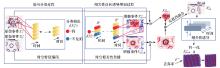
Fig.1
Data augmentation architecture based on target correlation induction and spatiotemporal domain mixup drop"
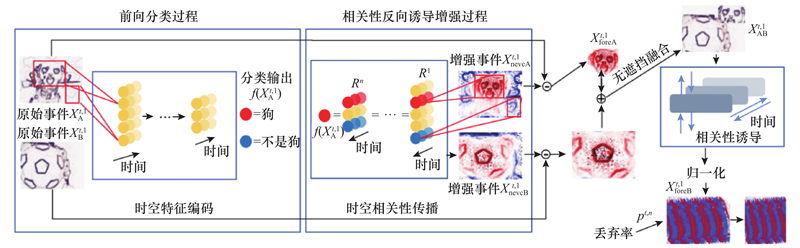
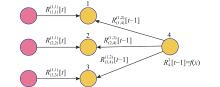
Fig.2
Schematic diagram of correlation score propagation"
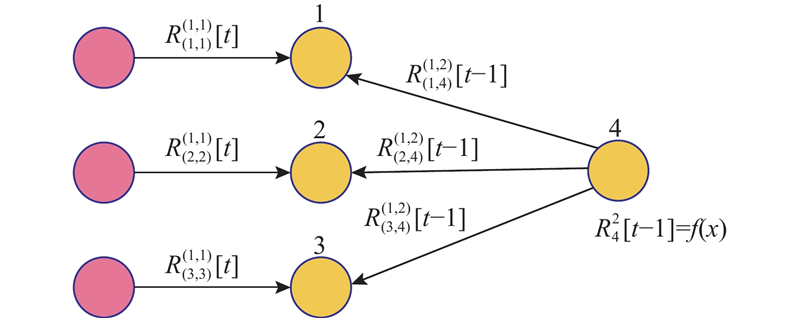
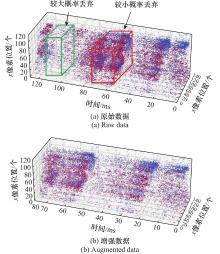
Fig.3
Diagram of adaptive drop"
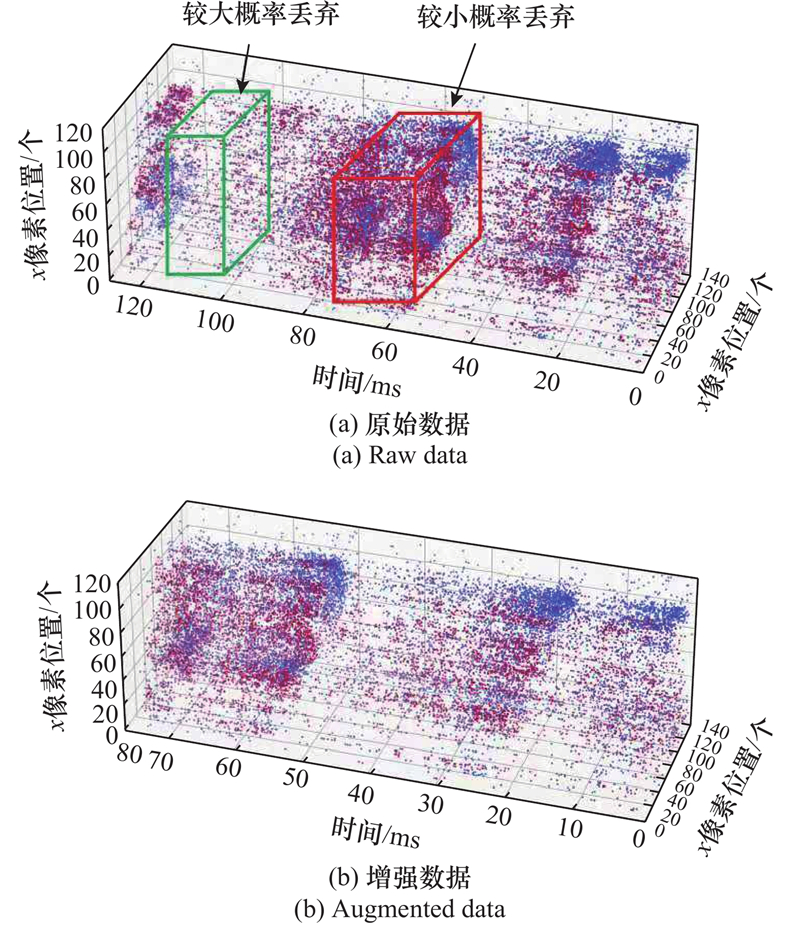

Table 1
Experimental settings"
| 数据集 | 训练轮数 | 批大小 | 时间步 | 学习率 |
| N-Cars | 100 | 32 | 10 | 0.001 |
| N-Caltech101 | 100 | 4 | 10 | 0.001 |
| CIFAR10-DVS | 100 | 32 | 10 | 0.001 |
Table 2
Layer-wise input, output, and parameter computation way in Spike-VGG19"
| 层索引 | 层类型 | 参数描述 | 特征数据尺寸 | |
| N-Caltech101 | N-Cars和CIFAR10-DVS | |||
| 1 | 卷积 | 64通道,3×3核 | 128×128→128×128 | 48×48→48×48 |
| 2 | 卷积 | 64通道,3×3核 | 128×128→128×128 | 48×48→48×48 |
| 3 | 最大池化 | 2×2核, 步长2 | 128×128 → 64×64 | 48×48 → 24×24 |
| 4 | 卷积 | 128通道, 3×3核 | 64×64 → 64×64 | 24×24 → 24×24 |
| 5 | 卷积 | 128通道, 3×3核 | 64×64 → 64×64 | 24×24 → 24×24 |
| 6 | 最大池化 | 2×2核, 步长2 | 64×64 → 32×32 | 24×24 → 12×12 |
| 7 | 卷积 | 256通道, 3×3核 | 32×32 → 32×32 | 12×12 → 12×12 |
| 8 | 卷积 | 256通道, 3×3核 | 32×32 → 32×32 | 12×12 → 12×12 |
| 9 | 卷积 | 256通道, 3×3核 | 32×32 → 32×32 | 12×12 → 12×12 |
| 10 | 卷积 | 256通道, 3×3核 | 32×32 → 32×32 | 12×12 → 12×12 |
| 11 | 最大池化 | 2×2核, 步长2 | 32×32 → 16×16 | 12×12 → 6×6 |
| 12 | 卷积 | 512通道, 3×3核 | 16×16 → 16×16 | 6×6 → 6×6 |
| 13 | 卷积 | 512通道, 3×3核 | 16×16 → 16×16 | 6×6 → 6×6 |
| 14 | 卷积 | 512通道, 3×3核 | 16×16 → 16×16 | 6×6 → 6×6 |
| 15 | 卷积 | 512通道, 3×3核 | 16×16 → 16×16 | 6×6 → 6×6 |
| 16 | 最大池化 | 2×2核, 步长2 | 16×16 → 8×8 | 6×6 → 3×3 |
| 17 | 卷积 | 512通道, 3×3核 | 8×8 → 8×8 | 3×3 → 3×3 |
| 18 | 卷积 | 512通道, 3×3核 | 8×8 → 8×8 | 3×3 → 3×3 |
| 19 | 卷积 | 512通道, 3×3核 | 8×8 → 8×8 | 3×3 → 3×3 |
| 20 | 卷积 | 512通道, 3×3核 | 8×8 → 8×8 | 3×3 → 3×3 |
| 21 | 最大池化 | 2×2核, 步长2 | 8×8 → 4×4 | 3×3 → 1×1 |
| 22 | 展平 | 空间维度展平 | 4×4 → 16 | 1×1 → 1 |
| 23 | 全连接 | 输入尺寸×512 → | 16×512 → | 1×512 → |
| 24 | 全连接 | |||
| 25 | 全连接 | |||
Table 3
Comparative experimental results %"
| 数据集 | 增强方式 | 准确率 |
| 不增强 | 94.92 | |
| NDA | 90.10 | |
| N-Cars | Eventmix | 96.29 |
| EventDrop | 95.46 | |
| 本文方法 | 98.02 | |
| 不增强 | 75.70 | |
| NDA | 83.70 | |
| N-Caltech101 | Eventmix | 79.40 |
| EventDrop | 74.30 | |
| 本文方法 | 85.50 | |
| 不增强 | 78.85 | |
| NDA | 79.60 | |
| CIFAR10-DVS | Eventmix | 81.45 |
| EventDrop | 77.73 | |
| 本文方法 | 82.33 |
Table 4
Ablation study results %"
| 数据集 | 增强方式 | 准确率 |
| 加权增强 | 95.00 | |
| N-Cars | 加权增强+无遮挡mixup | 96.31 |
| 加权增强+自适应drop | 97.00 | |
| 加权增强 | 77.30 | |
| N-Caltech101 | 加权增强+无遮挡mixup | 83.70 |
| 加权增强+自适应drop | 79.60 | |
| 加权增强 | 79.10 | |
| CIFAR10-DVS | 加权增强+无遮挡mixup | 82.25 |
| 加权增强+自适应drop | 79.70 |
Fig.4
Visualization results examples of spatiotemporal feature quality enhancement"
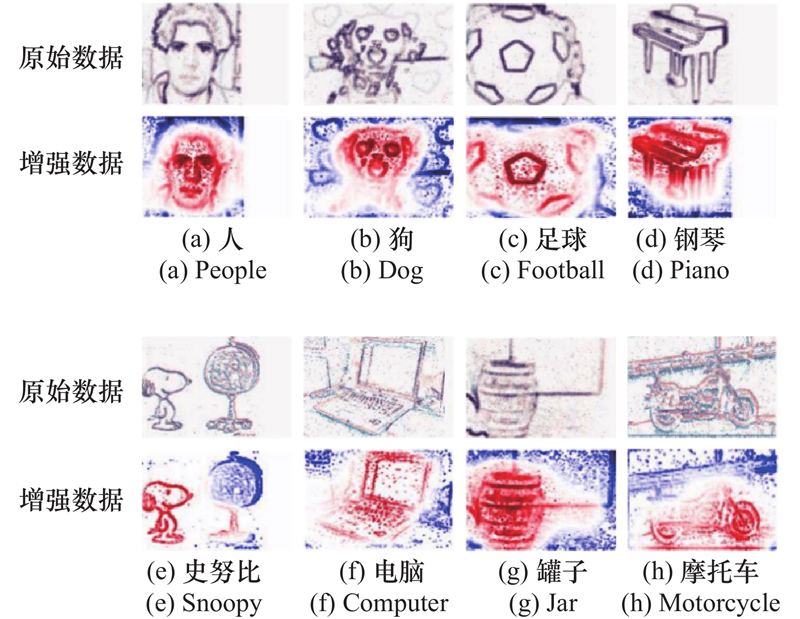
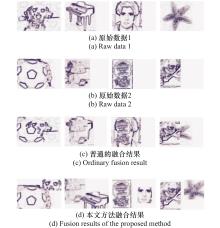
Fig.5
Visualization results results examples of event data mixup"
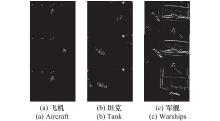
Fig.6
Battlefield scenario event data"
Table 5
Comparative experimental results in complex battlefield scenarios %"
| 数据集 | 增强方式 | 准确率 |
| 战场环境事件数据集 | 不增强 | 80.33 |
| NDA | 81.55 | |
| Eventmix | 82.58 | |
| EventDrop | 81.92 | |
| 本文的方法 | 86.47 |
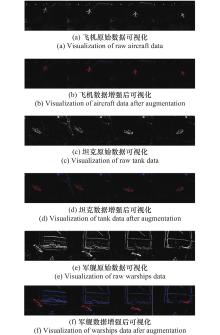
Fig.7
Visualization results examples of spatiotemporal feature quality augmentation for event data in battlefield scenarios"
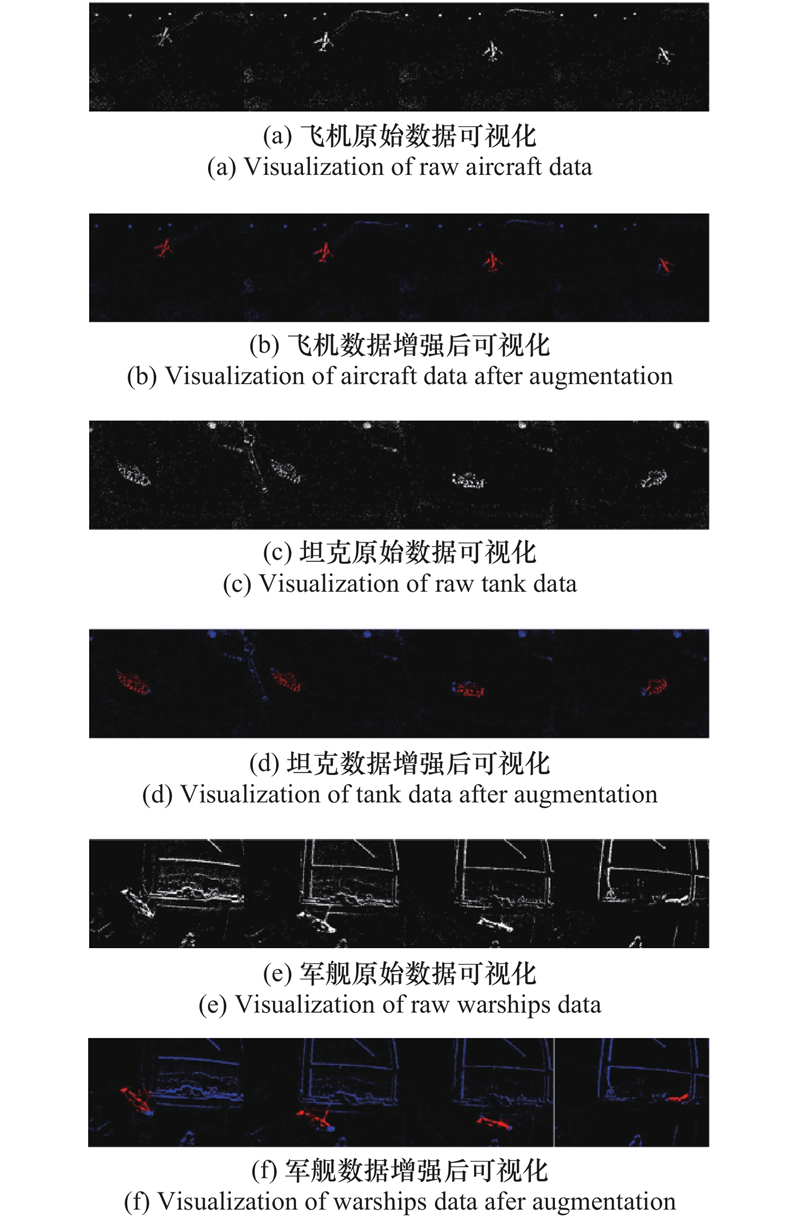
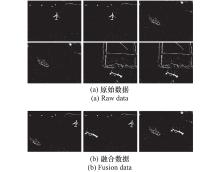
Fig.8
Visualization results examples of unobstructed event data mixup in battlefield scenarios"
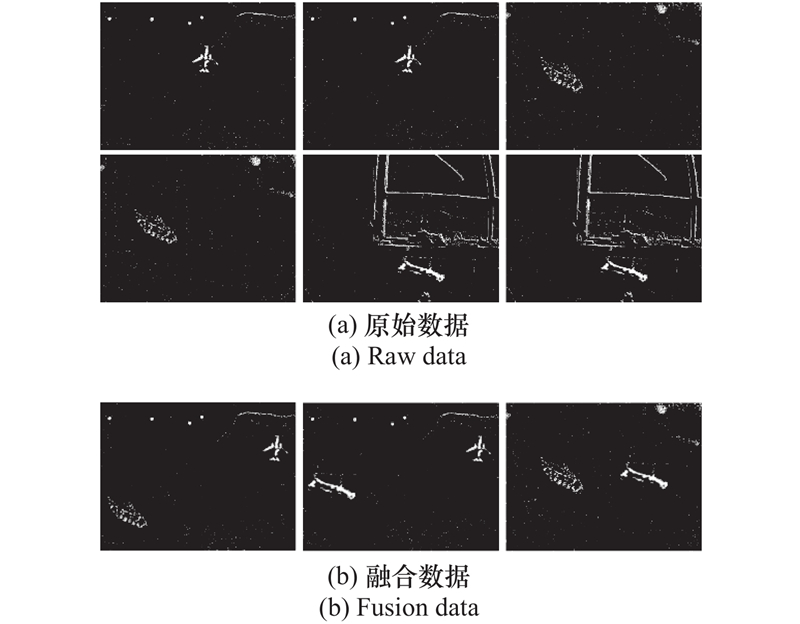
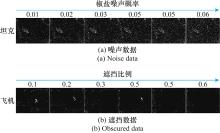
Fig.9
Example of noise data and occlusion data"
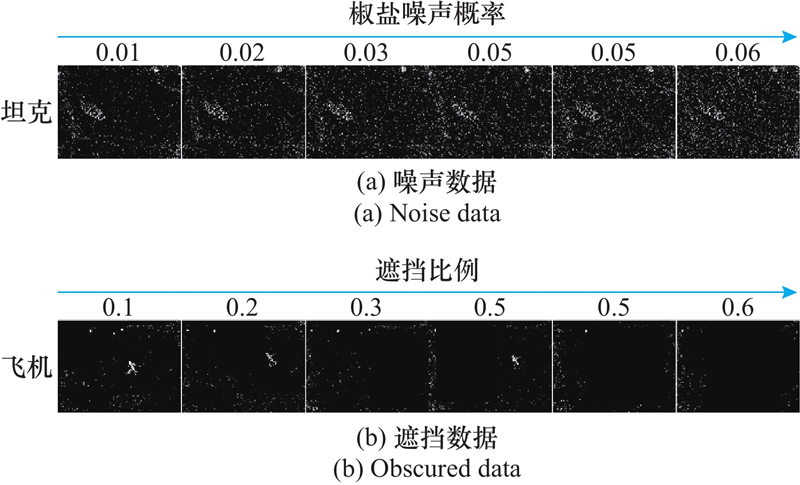
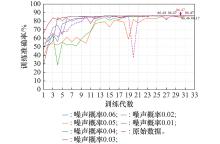
Fig.10
Line chart of algorithm convergence in different noise levels"
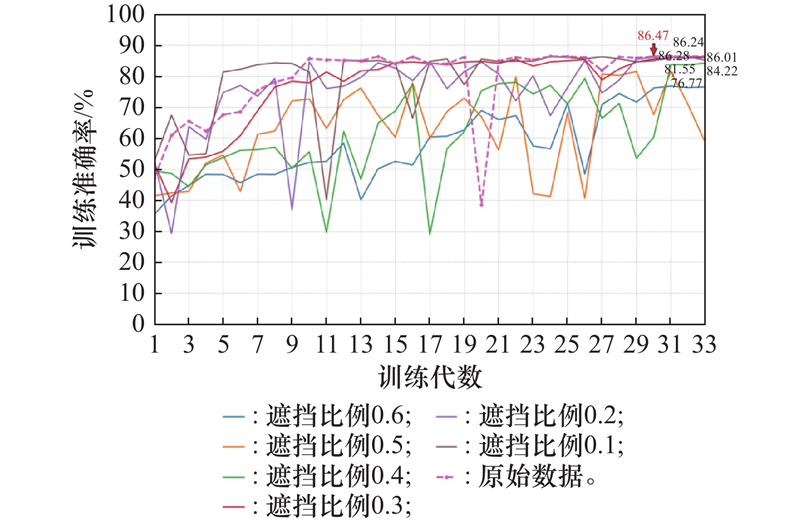
Fig.11
Line chart of algorithm convergence in different occlusion ratio data"
| 1 | 张亚丽, 冯伟, 全英汇, 等. 基于多源遥感图像多级协同融合的舰船识别算法[J]. 系统工程与电子技术, 2024, 46 (2): 407- 418. |
| ZHANG Y L, FENG W, QUAN Y H, et al. Ship recognition algorithm based on multi-level collaborative fusion of multi-source remote sensing image[J]. Systems Engineering and Electronics, 2024, 46 (2): 407- 418. | |
| 2 | 姜杰, 张立民, 刘凯, 等. 基于任务对齐学习的红外船舶目标检测方法[J]. 系统工程与电子技术, 2025, 47 (1): 34- 40. |
| JIANG J, ZHANG L M, LIU K, et al. Infrared ship target detection method based on task alignment learning[J]. Systems Engineering and Electronics, 2025, 47 (1): 34- 40. | |
| 3 | 霍永青, 彭启琮. 高动态范围图像及反色调映射算子[J]. 系统工程与电子技术, 2012, 34 (4): 820- 826. |
| HUO Y Q, PENG Q Z. High dynamic range images and reverse tone mapping operators[J]. Systems Engineering and Electronics, 2012, 34 (4): 820- 826. | |
| 4 | GALLEGO G, DELBRUCK T, ORCHARD G M, et al. Event-based vision: a survey[J]. IEEE Trans. on Pattern Analysis and Machine Intelligence, 2020, 44 (1): 154- 180. |
| 5 | 王宝宇, 李汉棠, 陈希用, 等. 融合渐进空间金字塔的YOLOv8芒果目标检测算法研究[J]. 激光与光电子学进展, 2025, 62 (14): 183- 190. |
| WANG B Y, LI H T, CHEN X Y, et al. Research on mango detection algorithm in YOLOv8 with integrated progressive spatial pyramid[J]. Laser & Optoelectronics Progress, 2025, 62 (14): 183- 190. | |
| 6 | 李扬, 李现国, 陈莲, 等. FDLIE-YOLO: 频域增强的端到端低照度图像目标检测方法[J]. 红外与激光工程, 2025, 54 (1): 266- 278. |
| LI Y, LI X G, CHEN L, et al. FDLIE-YOLO: frequency domain enhanced end-to-end low-light image target detection method[J]. Infrared and Laser Engineering, 2025, 54 (1): 266- 278. | |
| 7 | 陈红阳, 曾上游, 赵俊博, 等. 基于Retinex改进的低照度图像增强网络[J]. 计算机应用与软件, 2025, 42 (1): 158- 166. |
| CHEN H Y, ZENG S Y, ZHAO J B, et al. Improved low-light image enhancement network based on Retinex[J]. Computer Applications and Software, 2025, 42 (1): 158- 166. | |
| 8 |
宋建辉, 刘鑫, 庄爽, 等. 面向无人驾驶的多任务环境感知算法研究[J]. 电子测量与仪器学报, 2025, 39 (1): 122- 132.
doi: 10.13382/j.jemi.B2407565 |
|
SONG J H, LIU X, ZHUANG S, et al. Research on multi-task environment perception algorithm for unmanned driving[J]. Journal of Electronic Measurement and Instrumentation, 2025, 39 (1): 122- 132.
doi: 10.13382/j.jemi.B2407565 |
|
| 9 |
伍谷馨, 胡异丁, 杨栋. 基于数据增强的深度学习声学场景分类算法[J]. 现代信息科技, 2024, 8 (23): 76- 81.
doi: 10.19850/j.cnki.2096-4706.2024.23.016 |
|
WU G X, HU Y D, YANG D, et al. Deep learning acoustic scene classification algorithm based on data enhancement[J]. Modern Information Technology, 2024, 8 (23): 76- 81.
doi: 10.19850/j.cnki.2096-4706.2024.23.016 |
|
| 10 | ZHANG H, CISSE M, DAUPHIN Y N, et al. Mixup: beyond empirical risk minimization [EB/OL]. [2025-04-27]. https: //arxiv.org/abs/1710.09412. |
| 11 | LI Y, KIM Y, PARK H, et al. Neuromorphic data augmentation for training spiking neural networks[C]//Proc. of the European Conference on Computer Vision, 2022: 631−649. |
| 12 | BENDIG K, SCHUSTER R, STRICKER D. Shapeaug: occlusion augmentation for event camera data[EB/OL]. [2025-04-27]. https: //arxiv.org/abs/2404.11718. |
| 13 |
SHEN G, ZHAO D, ZENG Y. Eventmix: an efficient data augmentation strategy for event-based learning[J]. Information Sciences, 2023, 644, 119170.
doi: 10.1016/j.ins.2023.119170 |
| 14 | YUN S, HAN D, OH S G, et al. Cutmix: regularization strategy to train strong classifiers with localizable features[C]//Proc. of the IEEE/CVF International Conference on Computer Vision, 2019: 6023-6032. |
| 15 | GU F Q, SNG W C, HU X K, et al. Eventdrop: data augmentation for event-based learning [EB/OL]. [2025-04-27]. https: //arxiv.org/abs/2106.05836. |
| 16 |
胡一凡, 李国齐, 吴郁杰, 等. 脉冲神经网络研究进展综述[J]. 控制与决策, 2021, 36 (1): 1- 26.
doi: 10.13195/j.kzyjc.2020.1006 |
|
HU Y F, LI G Q, WU Y J, et al. Spiking neural networks: a survey on recent advances and new directions[J]. Control and Decision, 2021, 36 (1): 1- 26.
doi: 10.13195/j.kzyjc.2020.1006 |
|
| 17 |
WU Y J, DENG L, LI G Q, et al. Spatio-temporal backpropagation for training high-performance spiking neural networks[J]. Frontiers in NeuroScience, 2018, 12, 331.
doi: 10.3389/fnins.2018.00331 |
| 18 | SIRONI A, BRAMBILLA M, BOURDIS N, et al. HATS: histograms of averaged time surfaces for robust event-based object classification[C]//Proc. of the IEEE Conference on Computer Vision and Pattern Recognition, 2018: 1731-1740. |
| 19 | GARRICK O, AJINKYA J, COHEN G K, et al. Converting static image datasets to spiking neuromorphic datasets using saccades[J]. Frontiers in Neuroscience, 2015, 9, 437. |
| 20 |
LI H M, LIU H C, JI X Y, et al. Cifar10-DVS: an event-stream dataset for object classification[J]. Frontiers in Neuroscience, 2017, 11, 309.
doi: 10.3389/fnins.2017.00309 |
| 21 |
BACH S, BINDER A, MONTANON G, et al. On pixel-wise explanations for non-linear classifier decisions by layer-wise relevance propagation[J]. PLOS ONE, 2015, 10 (7): e0130140.
doi: 10.1371/journal.pone.0130140 |
| 22 |
LIU Y H, WANG X J. Spike-frequency adaptation of a generalized leaky integrate-and-fire model neuron[J]. Journal of Computational NeuroScience, 2001, 10 (1): 25- 45.
doi: 10.1023/A:1008916026143 |
| 23 |
MONTAVON G, LAPUSCHKIN S, BINDER A, et al. Explaining nonlinear classification decisions with deep taylor decomposition[J]. Pattern Recognition, 2017, 65, 211- 222.
doi: 10.1016/j.patcog.2016.11.008 |
| 24 | LEE J R, KIM S, PARK I, et al. Relevance-cam: your model already knows where to look[C]//Proc. of the IEEE/CVF Conference on Computer Vision and Pattern Recognition, 2021: 14944−14953. |
| 25 |
KIM Y, PANDA P. Visual explanations from spiking neural networks using inter-spike intervals[J]. Scientific Reports, 2021, 11 (1): 19037.
doi: 10.1038/s41598-021-98448-0 |
| 26 | KINGMA D P, BA J. Adam: a method for stochastic optimization [EB/OL]. [2025-04-27]. https://arxiv.org/abs/1412.6980. |
| 27 | ZHANG J Q, DONG B, ZHANG H W, et al. Spiking transformers for event-based single object tracking[C]//Proc. of the IEEE/CVF Conference on Computer Vision and Pattern Recognition, 2022: 8801−8810. |
| [1] | Caiyun WANG, Yida WU, Jianing WANG, Lu MA, Huanyue ZHAO. SAR image target recognition based on combinatorial optimization convolutional neural network [J]. Systems Engineering and Electronics, 2022, 44(8): 2483-2487. |
| [2] | Shiyan SUN, Gang ZHANG, Weige LIANG, Bo SHE, Fuqing TIAN. Remaining useful life prediction method of rolling bearing based on time series data augmentation and BLSTM [J]. Systems Engineering and Electronics, 2022, 44(3): 1060-1068. |
| Viewed | ||||||
|
Full text |
|
|||||
|
Abstract |
|
|||||