Systems Engineering and Electronics ›› 2026, Vol. 48 ›› Issue (4): 1349-1359.doi: 10.12305/j.issn.1001-506X.2026.04.23
• Systems Engineering • Previous Articles
Research on multiple agile earth observation satellite scheduling based on Q-learning memetic algorithm considering task clustering
Jingxian LUO1, Guanghui ZHOU1,*, Jinyue YU1, Yang ZHANG2
- 1. School of Economics and Management,University of Chinese Academy of Sciences,Beijing 100190,China
2. Aerospace Information Research Institute,Chinese Academy of Sciences,Beijing 100094,China
-
Received:2025-07-02Revised:2025-10-02Online:2026-03-20Published:2026-03-20 -
Contact:Guanghui ZHOU

CLC Number:
Cite this article
Jingxian LUO, Guanghui ZHOU, Jinyue YU, Yang ZHANG. Research on multiple agile earth observation satellite scheduling based on Q-learning memetic algorithm considering task clustering[J]. Systems Engineering and Electronics, 2026, 48(4): 1349-1359.
share this article
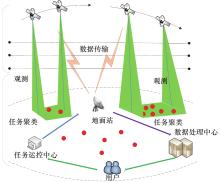
Fig.1
Multiple AEOS Earth observation scheduling considering task clustering"
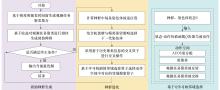
Fig.2
Framework of QLMA"

Fig.3
Chromosome encoding"

Fig.4
Crossover operator based on historical clustering information"
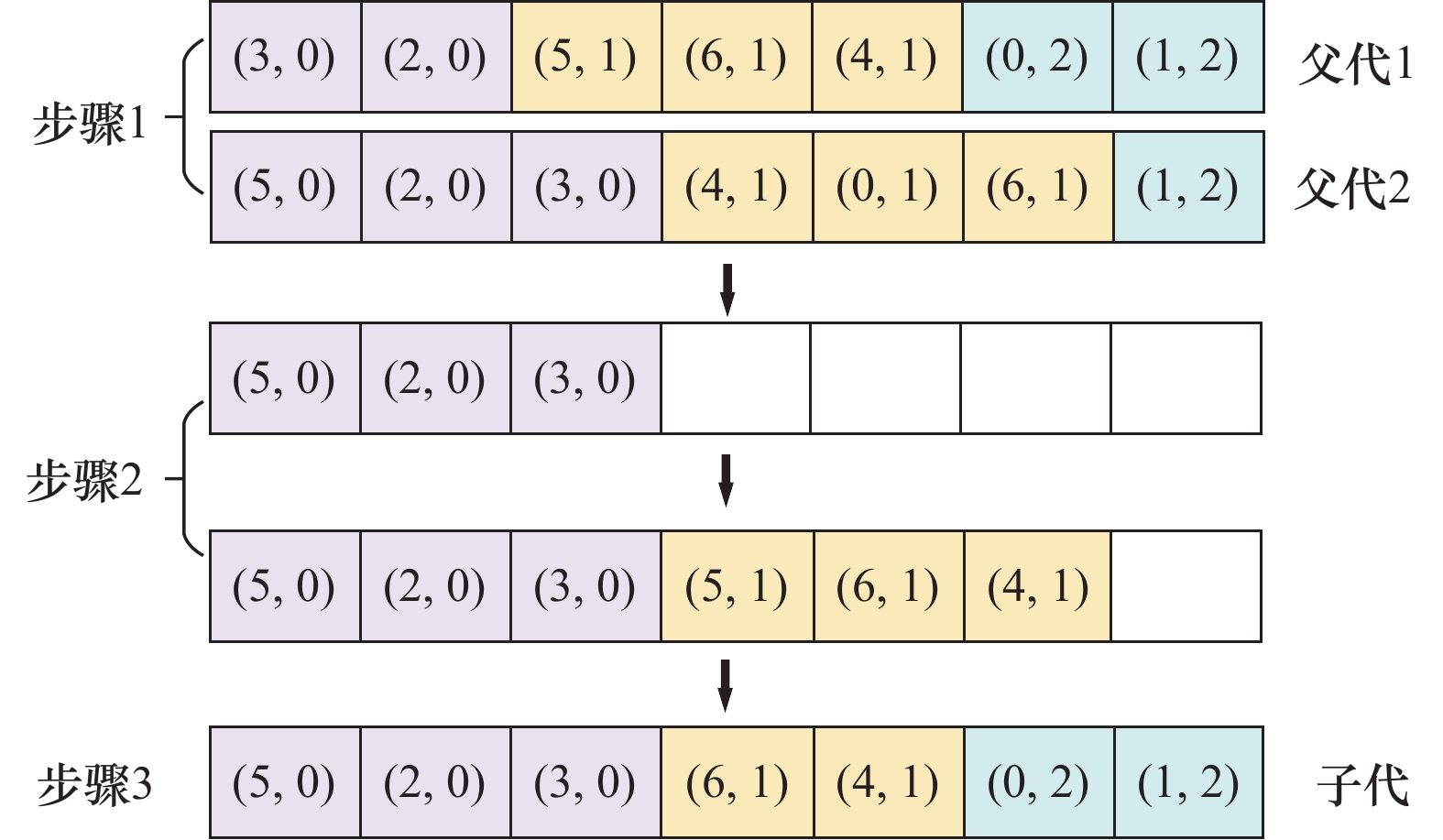

Table 1
Orbital elements of AEOS"
| 序号 | 半长轴/km | 轨道倾角/(°) | 升交点赤经/(°) | 离心率 | 近地点辐角/(°) |
| 1 | 100.74 | 83.24 | 10.97 | ||
| 2 | 63.40 | 338.34 | 4.93 | ||
| 3 | 100.63 | 39.86 | 260.43 | ||
| 4 | 63.40 | 116.96 | 4.74 | ||
| 5 | 98.41 | 280.69 | 60.33 | ||
| 6 | 98.30 | 84.10 | 218.13 | ||
| 7 | 100.28 | 190.60 | 30.916 | ||
| 8 | 100.05 | 283.20 | 207.72 |
Table 2
Locations of ground stations"
| 地面站 | 经纬度 |
| 地面站1 | (116.98°E, 40.57°N) |
| 地面站2 | (75.95°E, 39.51°N) |
| 地面站3 | (109.33°E, 18.31°N) |
| 地面站4 | (102.80°E, 25.03°N) |
| 地面站5 | (20.30°E, 67.90°N) |
Table 3
Parameter value ranges and tuning"
| 参数名称 | 取值范围 | 调优结果 |
| 种群规模 | 20 | |
| 交叉概率 | 0.6 | |
| 邻域观测任务临界值 | 3 | |
| 任务分配均衡性阈值 | 0.5 | |
| 种群多样性阈值 | 0.6 | |
| 最大迭代次数 | 300 | |
| 最大无改进代数 | 20 |
Table 4
Experimental results of QLMA and Gurobi based on small-scale instances"
| AEOS数量 | 观测任务数量 | QLMA | Gurobi | QLMA与Gurobi总收益的差值/% | |||||
| 最大总收益 | 平均总收益 | 最小总收益 | 计算时间/s | 总收益 | 计算时间/s | ||||
| 1 | 10 | 2.69 | 2.69 | 2.69 | 1.49 | 2.69 | 4.63 | 0.00 | |
| 30 | 7.20 | 6.97 | 6.62 | 5.68 | 3.03 | 57.92 | |||
| 50 | 9.34 | 8.80 | 8.47 | 6.99 | − | − | − | ||
| 70 | 11.18 | 10.48 | 9.67 | 9.57 | − | − | − | ||
| 90 | 12.25 | 11.49 | 10.73 | 15.72 | − | − | − | ||
| 2 | 10 | 4.64 | 4.64 | 4.64 | 2.08 | 4.64 | 138.47 | 0.00 | |
| 30 | 12.58 | 12.58 | 12.58 | 7.31 | − | − | − | ||
| 50 | 20.90 | 19.92 | 19.00 | 18.17 | − | − | − | ||
| 70 | 26.67 | 25.78 | 24.37 | 26.45 | − | − | − | ||
| 90 | 32.73 | 30.89 | 29.82 | 43.77 | − | − | − | ||
| 3 | 10 | 4.73 | 4.73 | 4.73 | 2.42 | 4.73 | 738.20 | 0.00 | |
| 30 | 13.28 | 13.28 | 13.28 | 8.81 | − | − | − | ||
| 50 | 21.99 | 21.91 | 21.86 | 22.92 | − | − | − | ||
| 70 | 32.15 | 31.75 | 30.77 | 58.97 | − | − | − | ||
| 90 | 39.13 | 38.49 | 37.95 | 65.66 | − | − | − | ||
| 4 | 10 | 5.40 | 5.40 | 5.40 | 3.46 | 5.40 | 107.78 | 0.00 | |
| 30 | 14.84 | 14.83 | 14.79 | 14.39 | − | − | − | ||
| 50 | 25.22 | 25.22 | 25.21 | 25.57 | − | − | − | ||
| 70 | 36.76 | 36.74 | 36.70 | 39.32 | − | − | − | ||
| 90 | 46.90 | 46.82 | 46.72 | 142.84 | − | − | − | ||
Table 5
Experimental results of QLMA and MA based on large-scale instances"
| AEOS数量 | 观测任务 数量 | QLMA | MA | QLMA与MA 平均总收益的差值/% | |||||||
| 最大 总收益 | 平均 总收益 | 最小 总收益 | 计算时间/ s | 最大 总收益 | 平均 总收益 | 最小 总收益 | 计算时间/ s | ||||
| 2 | 100 | 35.27 | 34.03 | 32.61 | 56.30 | 32.36 | 31.47 | 30.52 | 34.46 | 7.51 | |
| 200 | 46.27 | 43.56 | 39.97 | 64.43 | 41.52 | 40.54 | 39.40 | 48.95 | 6.94 | ||
| 300 | 52.65 | 48.68 | 44.33 | 146.70 | 46.46 | 44.77 | 43.34 | 105.96 | 8.03 | ||
| 400 | 55.46 | 53.50 | 50.71 | 203.52 | 51.02 | 48.75 | 46.09 | 174.86 | 8.89 | ||
| 500 | 57.21 | 53.70 | 48.93 | 201.46 | 52.39 | 49.74 | 44.30 | 178.31 | 7.38 | ||
| 4 | 100 | 50.57 | 50.46 | 50.35 | 57.53 | 50.53 | 50.39 | 50.10 | 77.17 | 0.14 | |
| 200 | 87.02 | 83.92 | 81.16 | 243.35 | 81.64 | 80.26 | 76.55 | 223.16 | 4.36 | ||
| 300 | 99.91 | 96.98 | 91.01 | 444.22 | 94.00 | 91.82 | 90.12 | 395.74 | 5.33 | ||
| 400 | 116.39 | 112.44 | 108.43 | 694.62 | 101.60 | 99.77 | 97.96 | 647.07 | 11.27 | ||
| 500 | 129.05 | 121.34 | 116.06 | 113.87 | 104.98 | 93.90 | 609.74 | 13.48 | |||
| 6 | 100 | 50.59 | 50.57 | 50.54 | 65.11 | 50.57 | 50.57 | 50.57 | 53.65 | 0.00 | |
| 200 | 99.61 | 99.40 | 98.89 | 325.31 | 99.26 | 98.18 | 97.55 | 284.81 | 1.23 | ||
| 300 | 135.71 | 132.15 | 129.44 | 722.52 | 126.55 | 124.83 | 122.61 | 725.40 | 5.54 | ||
| 400 | 157.51 | 151.76 | 145.87 | 152.14 | 148.94 | 144.17 | 1.86 | ||||
| 500 | 174.36 | 171.48 | 165.94 | 158.76 | 155.74 | 152.70 | 9.18 | ||||
| 8 | 100 | 50.59 | 50.58 | 50.57 | 78.74 | 50.59 | 50.58 | 50.57 | 60.66 | 0.00 | |
| 200 | 99.84 | 99.84 | 99.83 | 278.60 | 99.78 | 99.42 | 99.04 | 250.86 | 0.42 | ||
| 300 | 143.23 | 141.38 | 139.98 | 936.23 | 138.60 | 135.34 | 131.64 | 794.88 | 4.27 | ||
| 400 | 177.20 | 173.39 | 171.39 | 163.37 | 160.04 | 158.70 | 7.70 | ||||
| 500 | 206.38 | 201.18 | 197.31 | 185.71 | 178.91 | 169.03 | 11.07 | ||||
Fig.5
Difference in average total reward of QLMA and MA based on large-scale instances"
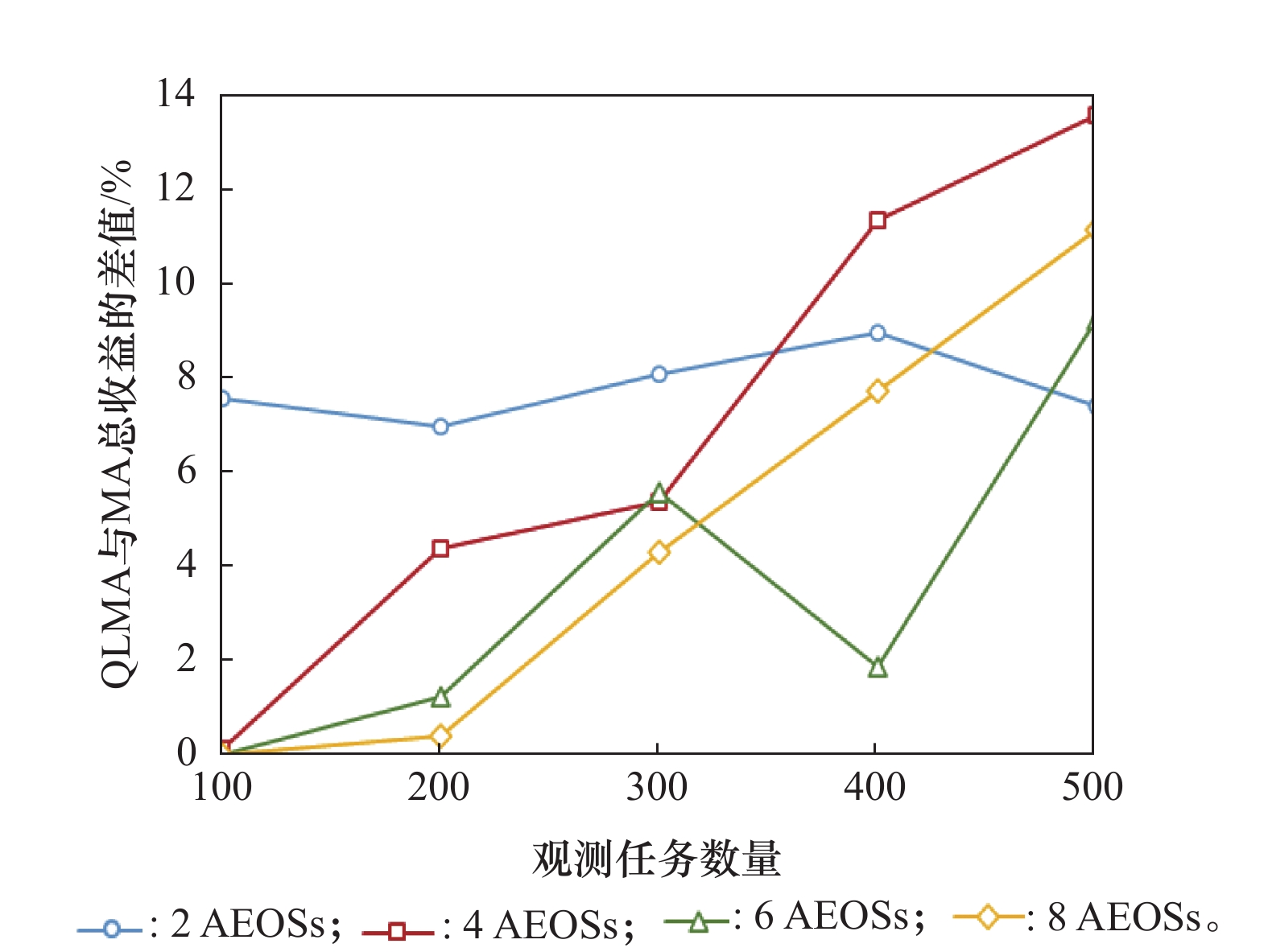
Table 6
Experimental results of QLMA and QLMA_NC based on large-scale instances"
| AEOS 数量 | 观测任务 数量 | QLMA | QLMA_NC | QLMA与QLMA_NC 平均总收益的差值/% | |||||||
| 最大 总收益 | 平均 总收益 | 最小 总收益 | 计算时间/ s | 最大 总收益 | 平均 总收益 | 最小 总收益 | 计算时间/ s | ||||
| 2 | 100 | 35.27 | 34.03 | 32.61 | 56.30 | 32.77 | 32.25 | 31.86 | 45.03 | 5.22 | |
| 200 | 46.27 | 43.56 | 39.97 | 64.43 | 42.65 | 42.31 | 41.95 | 85.45 | 2.88 | ||
| 300 | 52.65 | 48.68 | 44.33 | 146.70 | 44.59 | 42.87 | 40.07 | 126.72 | 11.94 | ||
| 400 | 55.46 | 53.50 | 50.71 | 203.52 | 45.66 | 45.05 | 44.73 | 152.96 | 15.81 | ||
| 500 | 57.21 | 53.70 | 48.93 | 201.46 | 47.39 | 46.58 | 45.62 | 229.01 | 13.26 | ||
| 4 | 100 | 50.57 | 50.46 | 50.35 | 57.53 | 50.54 | 50.40 | 50.45 | 91.12 | 0.12 | |
| 200 | 87.02 | 83.92 | 81.16 | 243.35 | 80.30 | 78.91 | 77.15 | 231.68 | 5.97 | ||
| 300 | 99.91 | 96.98 | 91.01 | 444.22 | 89.67 | 87.57 | 84.09 | 572.59 | 9.71 | ||
| 400 | 116.39 | 112.44 | 108.43 | 694.62 | 94.15 | 91.66 | 88.98 | 624.79 | 18.48 | ||
| 500 | 129.05 | 121.34 | 116.06 | 95.06 | 93.79 | 91.55 | 643.49 | 22.71 | |||
| 6 | 100 | 50.59 | 50.58 | 50.54 | 65.11 | 50.59 | 50.57 | 50.54 | 80.86 | 0.01 | |
| 200 | 99.61 | 99.40 | 98.89 | 325.31 | 98.81 | 97.23 | 96.00 | 350.40 | 2.18 | ||
| 300 | 135.71 | 132.15 | 129.44 | 722.52 | 118.78 | 117.53 | 116.17 | 666.29 | 11.06 | ||
| 400 | 157.51 | 151.76 | 145.87 | 139.96 | 132.91 | 125.64 | 12.42 | ||||
| 500 | 174.36 | 171.48 | 165.94 | 141.67 | 139.16 | 136.41 | 18.85 | ||||
| 8 | 100 | 50.59 | 50.58 | 50.57 | 78.74 | 50.59 | 50.58 | 50.57 | 83.85 | 0.00 | |
| 200 | 99.84 | 99.84 | 99.83 | 278.60 | 99.84 | 99.77 | 99.64 | 284.40 | 0.06 | ||
| 300 | 143.23 | 141.38 | 139.98 | 936.23 | 136.20 | 134.43 | 131.60 | 968.10 | 4.92 | ||
| 400 | 177.20 | 173.39 | 171.39 | 156.97 | 154.16 | 150.19 | 11.09 | ||||
| 500 | 206.38 | 201.18 | 197.31 | 172.74 | 167.35 | 161.33 | 16.82 | ||||
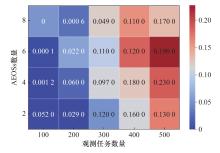
Fig.6
Difference in average total reward of QLMA and QLMA_NC based on large-scale instances"
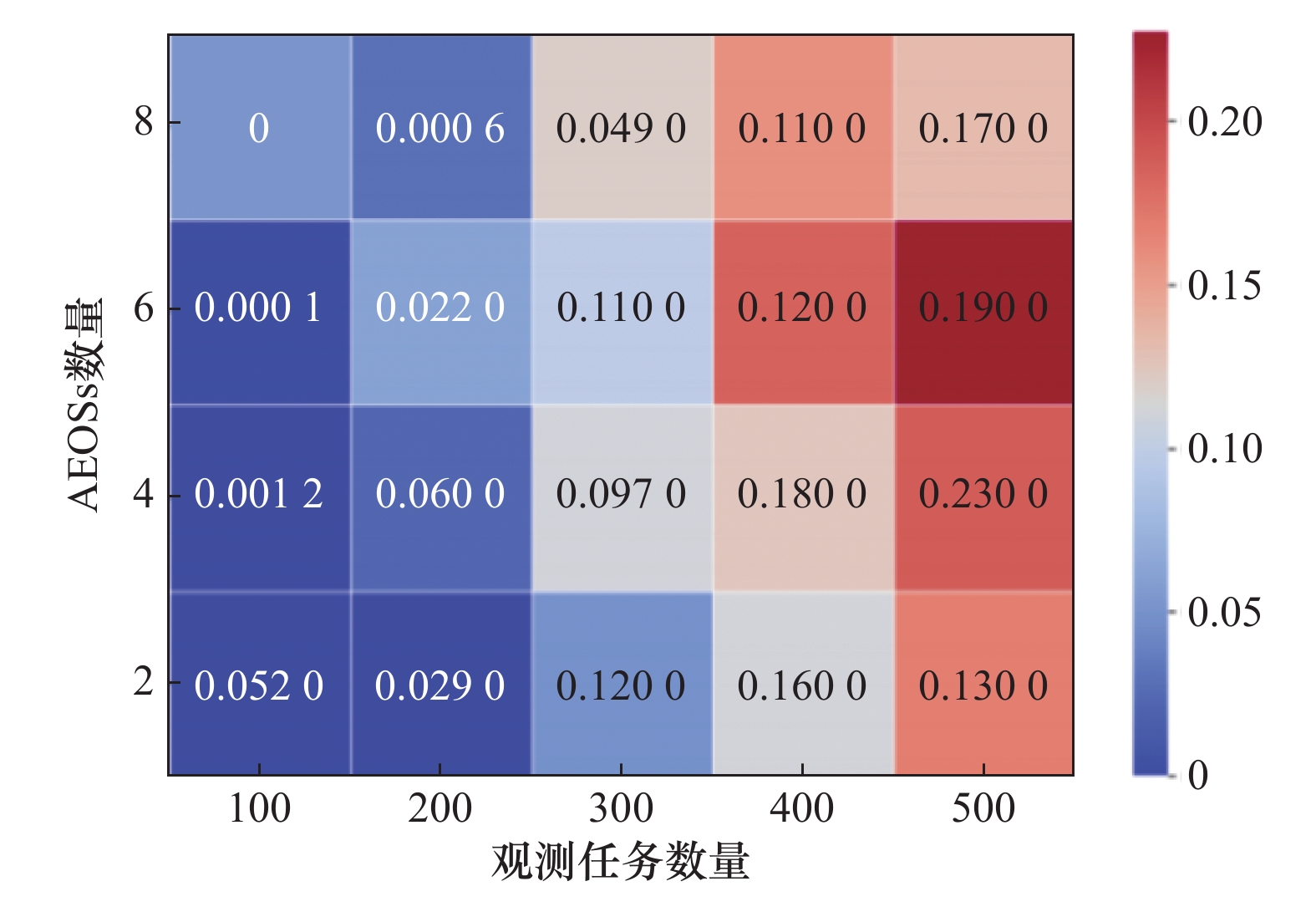
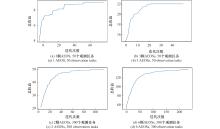
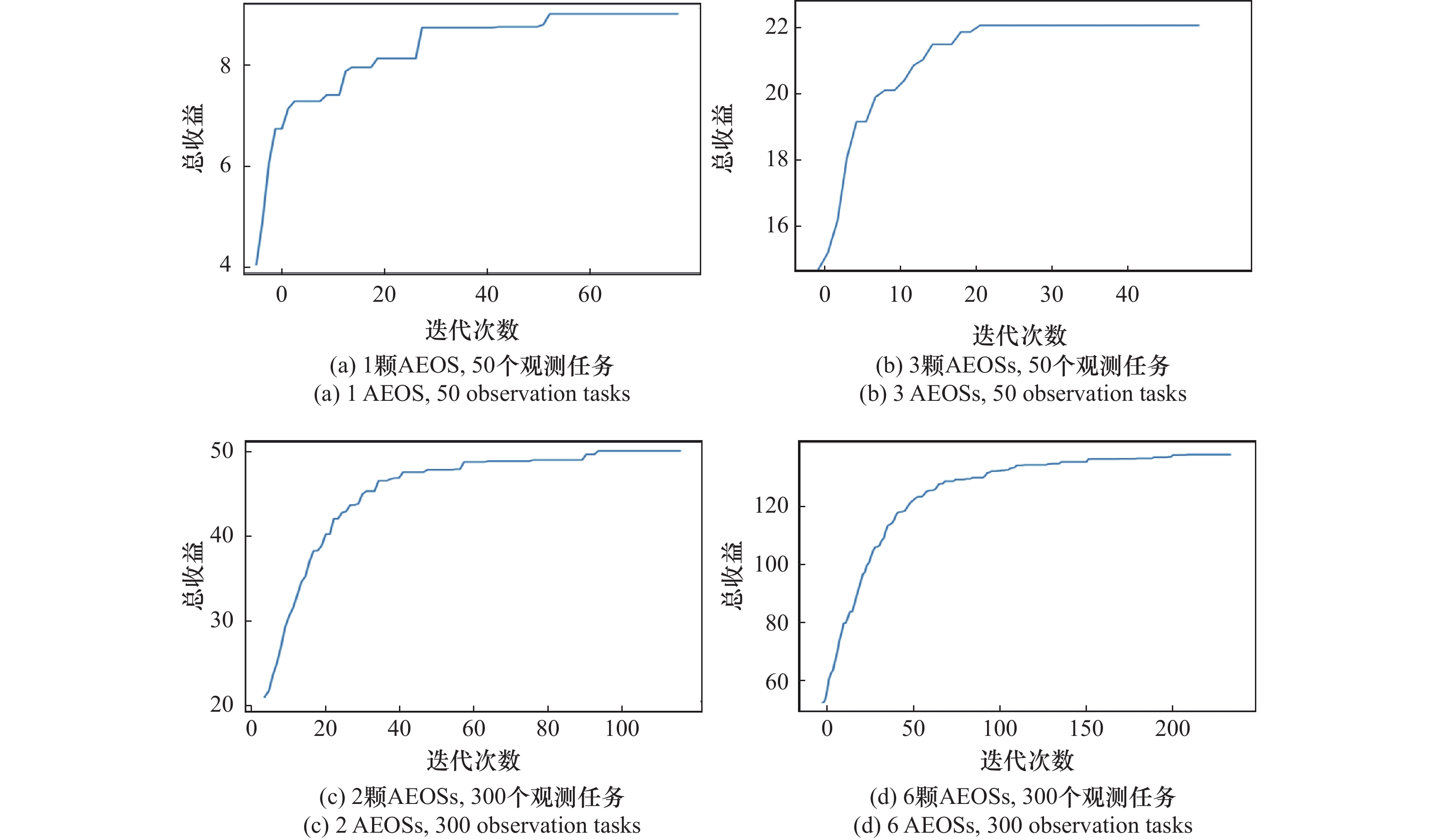
Fig.7
Illustration of QLMA optimization process"
| 1 | National Aeronautics and Space Administration. Landsat science. [EB/OL]. [2025-04-06]. https: //landsat.gsfc.nasa.gov/. |
| 2 | European Space Agency. Europe’s eyes on Earth: the EU’s Copernicus Programme [EB/OL]. [2025-04-08]. https://omcs.atlassian.net/wiki/spaces/CSWK/pages/407404661/Copernicus+Programme. |
| 3 | China National Space Administration. High-resolution Earth observation syetem [EB/OL]. [2025-03-09]. https://www.cnsa.gov.cn/n6758824/n6759009/n6759041/c6780463/content.html. |
| 4 |
LEMAITRE M, VERFAILLIE G, JOUHAUD F, et al. Selecting and scheduling observations of agile satellites[J]. Aerospace Science and Technology, 2002, 6 (5): 367- 381.
doi: 10.1016/S1270-9638(02)01173-2 |
| 5 |
WOLFE W J, SORENSEN S E. Three scheduling algorithms applied to the Earth observing systems domain[J]. Management Science, 2000, 46 (1): 148- 166.
doi: 10.1287/mnsc.46.1.148.15134 |
| 6 |
WANG Z L, HU X X, MA H W, et al. Learning multi-satellite scheduling policy with heterogeneous graph neural network[J]. Advances in Space Research, 2024, 73 (6): 2921- 2938.
doi: 10.1016/j.asr.2023.12.036 |
| 7 |
LI P Y, WANG H Q, ZHANG Y X, et al. Mission planning for distributed multiple agile Earth observing satellites by attention-based deep reinforcement learning method[J]. Advances in Space Research, 2024, 74 (5): 2388- 2404.
doi: 10.1016/j.asr.2024.06.003 |
| 8 | CHANG Z X, ZHOU Z B. Three multi-objective memetic algorithms for observation scheduling problem of active-imaging agile Earth observation satellites[J]. Annals of Operations Research, 2024, 346, 861- 893. |
| 9 | CHEN M, DU Y H, TANG K, et al. Learning to construct a solution for the agile satellite scheduling problem with time-dependent transition times[J]. IEEE Trans. on Systems, Man, and Cybernetics: Systems, 2024, 54 (10): 5949- 5963. |
| 10 | 高天旸, 胡笑旋, 夏维. 基于分布式协同进化的星座自主任务规划算法[J]. 系统工程与电子技术, 2022, 44 (5): 1600- 1608. |
| GAO T Y, HU X X, XIA W. Constellation autonomous mission planning algorithm based on distributed co-evolution[J]. Systems Engineering and Electronics, 2022, 44 (5): 1600- 1608. | |
| 11 | WU G H, LIU J, MA M H, et al. A two-phase scheduling method with the consideration of task clustering for earth observing satellites[J]. Computers & Operations Research, 2013, 40 (7): 1884- 1894. |
| 12 | WU G H, WANG H L, WITOLD P, et al. Satellite observation scheduling with a novel adaptive simulated annealing algorithm and a dynamic task clustering strategy[J]. Computers & Industrial Engineering, 2017, 113, 576- 588. |
| 13 | WANG P, REINELT G, GAO P, et al. A model, a heuristic and a decision support system to solve the scheduling problem of an Earth observing satellite constellation[J]. Computers & Industrial Engineering, 2011, 61 (2): 322- 335. |
| 14 | SPANGELO S, CUTLER J, GILSON K, et al. Optimization-based scheduling for the single-satellite, multi-ground station communication problem[J]. Computers & Operations Research, 2015, 57, 1- 16. |
| 15 | PENG G S, DEWIL R, VERBEECK C, et al. Agile Earth observation satellite scheduling: an orienteering problem with time-dependent profits and travel times[J]. Computers & Operations Research, 2019, 111, 84- 98. |
| 16 | WOLSEY L A, NEMHAUSER G L. Integer and combinatorial optimization[M]. Hoboken: John Wiley & Sons, 1999. |
| 17 | WERTZ J R. Spacecraft attitude determination and control[M]. Berlin: Springer Science & Business Media, 2012. |
| 18 | GOLDEN B L, LEVY L, VOHRA R. The orienteering problem[J]. Naval Research Logistics, 1987, 34 (3): 307- 318. |
| 19 |
LI J J, ZHU J H, PENG G S, et al. Branch-price-and-cut algorithms for the team orienteering problem with interval-varying profits[J]. European Journal of Operational Research, 2024, 319 (3): 793- 807.
doi: 10.1016/j.ejor.2024.07.015 |
| 20 |
HE M, WU Q H, BENLIC U, et al. An effective multi-level memetic search with neighborhood reduction for the clustered team orienteering problem[J]. European Journal of Operational Research, 2024, 318 (3): 778- 801.
doi: 10.1016/j.ejor.2024.06.015 |
| 21 |
ZHAO J, POON M, TAN V Y F, et al. A hybrid genetic search and dynamic programming-based split algorithm for the multi-trip time-dependent vehicle routing problem[J]. European Journal of Operational Research, 2024, 317 (3): 921- 935.
doi: 10.1016/j.ejor.2024.04.011 |
| 22 | 卢弘, 王耀南, 乔非, 等. 面向可持续生产中多任务调度的双重增强模因算法[J]. 自动化学报, 2024, 50 (4): 731- 744. |
| LU H, WANG Y N, QIAO F, et al. Dual-enhanced memetic algorithm for multi-task scheduling in sustainable production[J]. Acta Automatica Sinica, 2024, 50 (4): 731- 744. | |
| 23 | 周光辉, 梁伟, 敬帅. 多飞艇协同对地观测和数据传输调度模型与算法研究[J]. 系统工程理论与实践, 2020, 40 (4): 1045- 1056. |
| ZHOU G H, LIANG W, JING S. Research on multi-airship cooperative earth observation and data transmission scheduling model and algorithm[J]. Systems Engineering − Theory & Practice, 2020, 40 (4): 1045- 1056. | |
| 24 | ESTER M, KRIEGEL H P, SANDER J, et al. A density-based algorithm for discovering clusters in large spatial databases with noise[C]//Proc. of the International Conference on Knowledge Discovery and Data Mining, 1996. |
| 25 | MICHALEWICZ Z. Genetic algorithms+data structures=evolution programs[M]. Berlin: Springer, 1992. |
| 26 | WATKINS C J C H, DAYAN P. Q-learning[J]. Machine Learning, 1992, 8, 279- 292. |
| 27 | KARIMI-MAMAGHAN M, MOHAMMADI M, PASDELOUP B, et al. Learning to select operators in meta-heuristics: an integration of Q-learning into the iterated greedy algorithm for the permutation flowshop scheduling problem[J]. European Journal of Operational Research, 2023, 304 (3): 1296- 1330. |
| 28 |
HU R, HUANG Y F, WU X, et al. Collaborative Q-learning hyper-heuristic evolutionary algorithm for the production and transportation integrated scheduling of silicon electrodes[J]. Swarm and Evolutionary Computation, 2024, 86, 101498.
doi: 10.1016/j.swevo.2024.101498 |
| 29 |
LÓPEZ-IBÁÑEZ M, DUBOIS-LACOSTE J, CÁCERES L P, et al. The irace package: iterated racing for automatic algorithm configuration[J]. Operations Research Perspectives, 2016, 3, 43- 58.
doi: 10.1016/j.orp.2016.09.002 |
| [1] | Peng JIN, Xiaoxi TANG. Multi-satellite emergency task scheduling with merging mechanism [J]. Systems Engineering and Electronics, 2022, 44(4): 1270-1281. |
| [2] | Bin ZENG, Quanxian ZHANG, Houpu LI. Optimal scheduling for cooperative support chain of logistics and equipment under uncertainty [J]. Systems Engineering and Electronics, 2021, 43(5): 1277-1286. |
| [3] | Songlian REN, Haiquan SUN, Peng JIN. Multi-satellite scheduling problem based on task merging mechanism [J]. Systems Engineering and Electronics, 2021, 43(1): 171-180. |
| [4] | Dewei LI, Liming JIANG, Houjun JIANG, Jinglong DONG, Hansheng WANG. System parameters analysis of the Moon-based SAR Earth observation [J]. Systems Engineering and Electronics, 2020, 42(4): 792-798. |
| [5] | Jingyu YAO, Peng JIN, Waiming ZHU, Xiaoxuan HU. Multi-satellite scheduling problem for regional targets with uneven income [J]. Systems Engineering and Electronics, 2020, 42(3): 638-645. |
| [6] | SU Xi-chao, HAN Wei, XIAO Wei, JIANG Ting-ting. Pit-stop support scheduling on deck of carrier plane based on Memetic algorithm [J]. Systems Engineering and Electronics, 2016, 38(10): 2303-2309. |
| [7] | QIU Dishan, WANG Jianjiang, WU Chaobo, LIU Gang. Emergency scheduling method of earth observation satellites based on task merging [J]. Journal of Systems Engineering and Electronics, 2013, 35(7): 1430-1437. |
| [8] | LIAN Zhen-yu,TAN Yue-jin,YAN Zhen-zhen. Temporal reasoning technology for AEOS scheduling [J]. Journal of Systems Engineering and Electronics, 2013, 35(6): 1206-1211. |
| [9] | SHEN Jia-jie, LIN Feng. Structure learning of Bayesian network using adaptive hybrid Memetic algorithm [J]. Journal of Systems Engineering and Electronics, 2012, 34(6): 1293-1298. |
| [10] | GUO Hao, WU Guohua, QIU Dishan. Intensive task clustering method for agile imaging satellites [J]. Journal of Systems Engineering and Electronics, 2012, 34(5): 931-935. |
| [11] | WANG Pei,LI Ju-fang,TAN Yue-jin. Comparison of earth observation scheduling model for satellite formation [J]. Journal of Systems Engineering and Electronics, 2010, 32(8): 1689-1694. |
| Viewed | ||||||
|
Full text |
|
|||||
|
Abstract |
|
|||||