Systems Engineering and Electronics ›› 2025, Vol. 47 ›› Issue (11): 3635-3643.doi: 10.12305/j.issn.1001-506X.2025.11.12
• Sensors and Signal Processing • Previous Articles
Interrupted-sampling repeater jamming suppression method based on non-optimal order FrFT
Zhenming WEN1,*, Guohong WANG1, Liang ZHANG2, Hongbo YU1
- 1. Aviation Combat Service College,Naval Aviation University,Yantai 264001,China
2. Unit 94326 of the PLA,Ji’nan 250000,China
-
Received:2024-02-01Online:2025-11-25Published:2025-12-08 -
Contact:Zhenming WEN

CLC Number:
Cite this article
Zhenming WEN, Guohong WANG, Liang ZHANG, Hongbo YU. Interrupted-sampling repeater jamming suppression method based on non-optimal order FrFT[J]. Systems Engineering and Electronics, 2025, 47(11): 3635-3643.
share this article
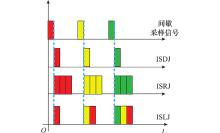
Fig.1
Diagram of jamming slice combination"

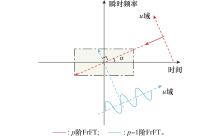
Fig.2
FrFT diagram of LFM signal"

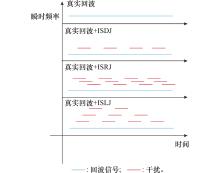
Fig.3
Time-frequency distribution diagram"

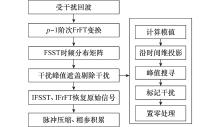
Fig.4
Jamming suppression process"

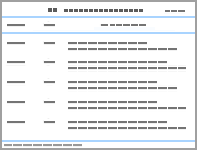
Table 1
Parameters of LFM signals and jamming"
| 参数 | 参数值 | 参数 | 参数值 | |
| 脉宽/μs | 80 | 干扰采样周期/μs | 20 | |
| 带宽/MHz | 10 | 干扰采样脉宽/μs | 5 | |
| 采样频率/MHz | 20 | 转发次数 | 4 | |
| 脉冲数 | 64 | 目标距离/km | 20 | |
| 信噪比/dB | −10 | 干信比/dB | 20 |
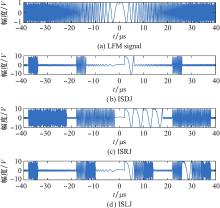
Fig.5
Time-domain waveform of jamming signal"

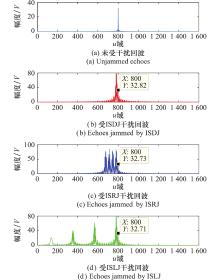
Fig.6
FrFT characteristics of echoes"
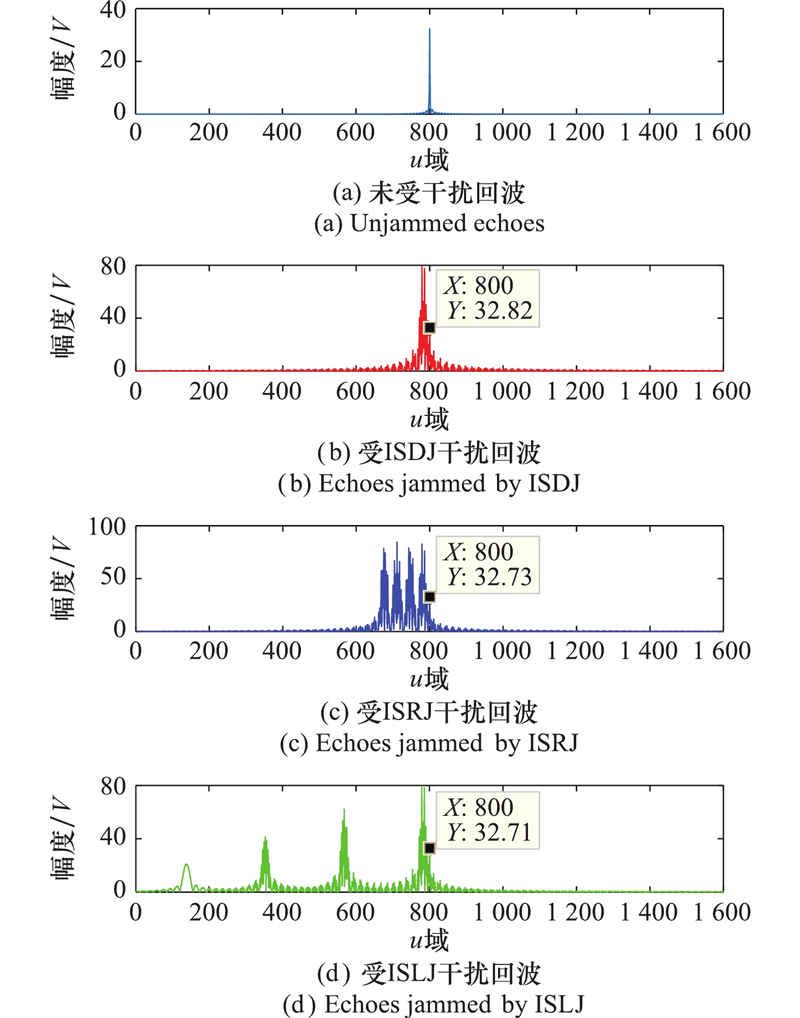
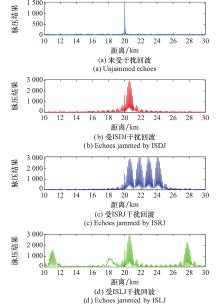
Fig.7
Results of pulse compression"


Fig.8
p?1 FrFT results and time-frequency distribution of LFM signal"
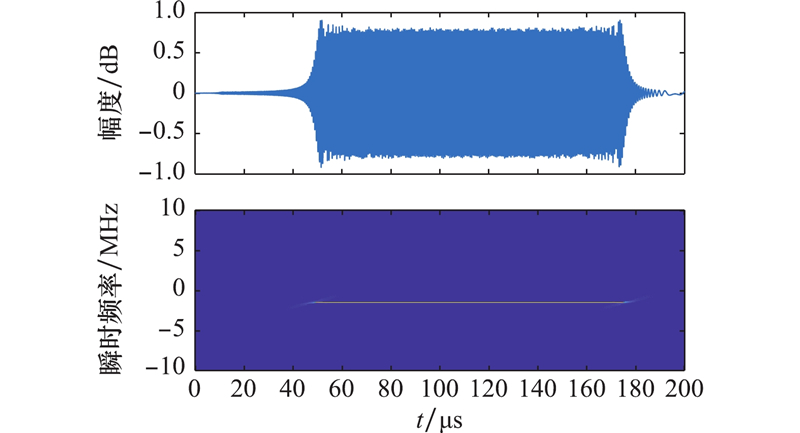
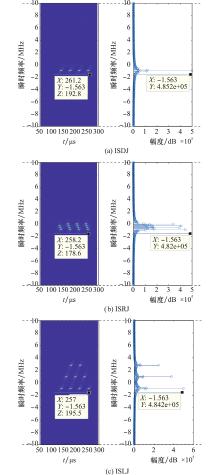
Fig.9
Time-frequency distribution diagram and frequency projection vector"
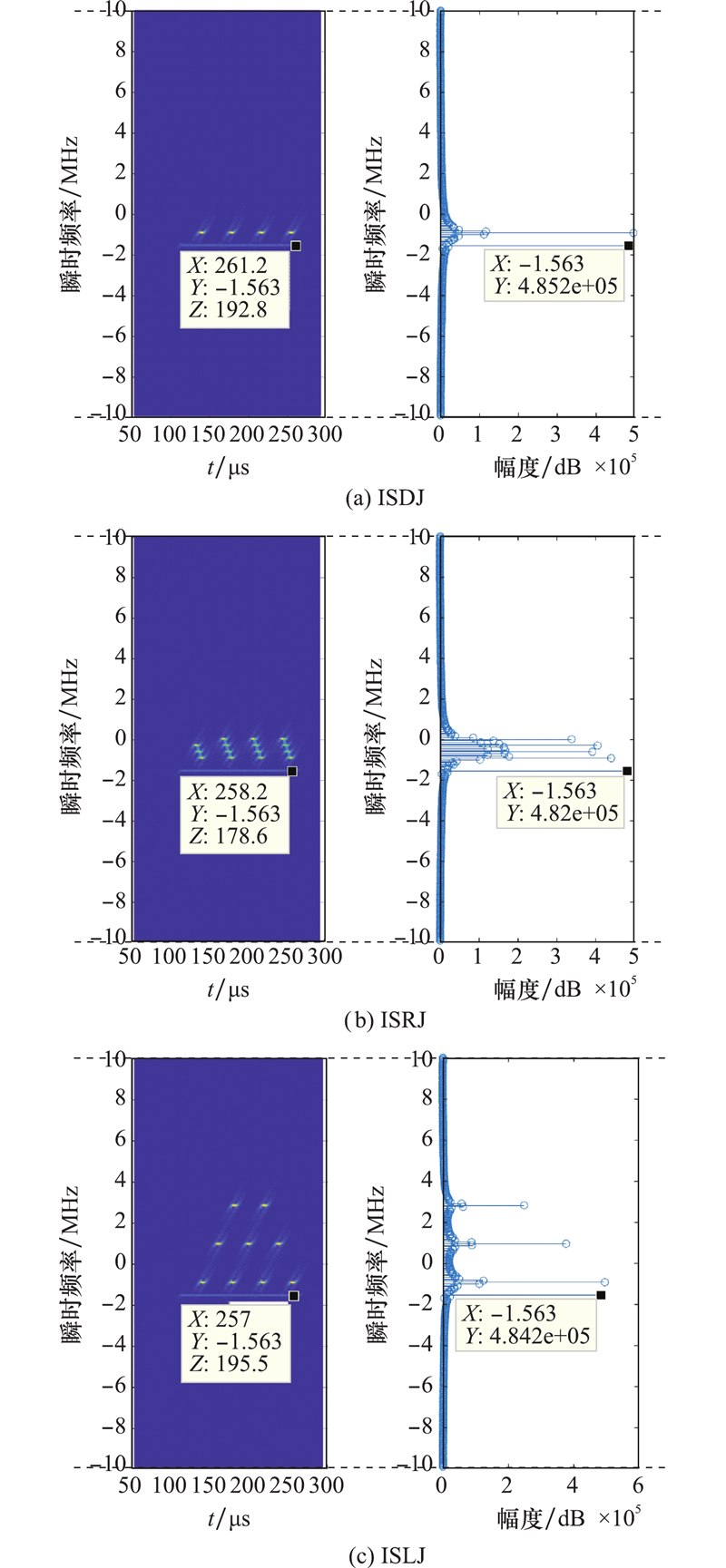
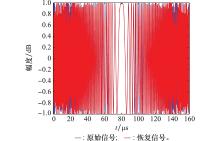
Fig.10
Effect of jamming suppression"

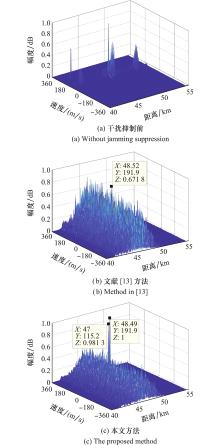
Fig.11
Results of coherent accumulation"

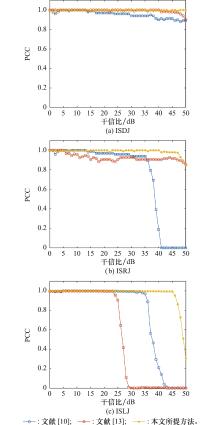
Fig.12
Variation curve of PCC versus JSR"

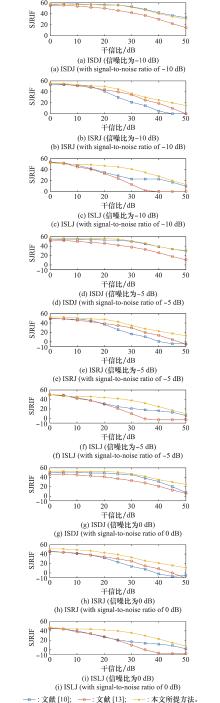
Fig.13
Variation curve of SJRIF versus JSR"
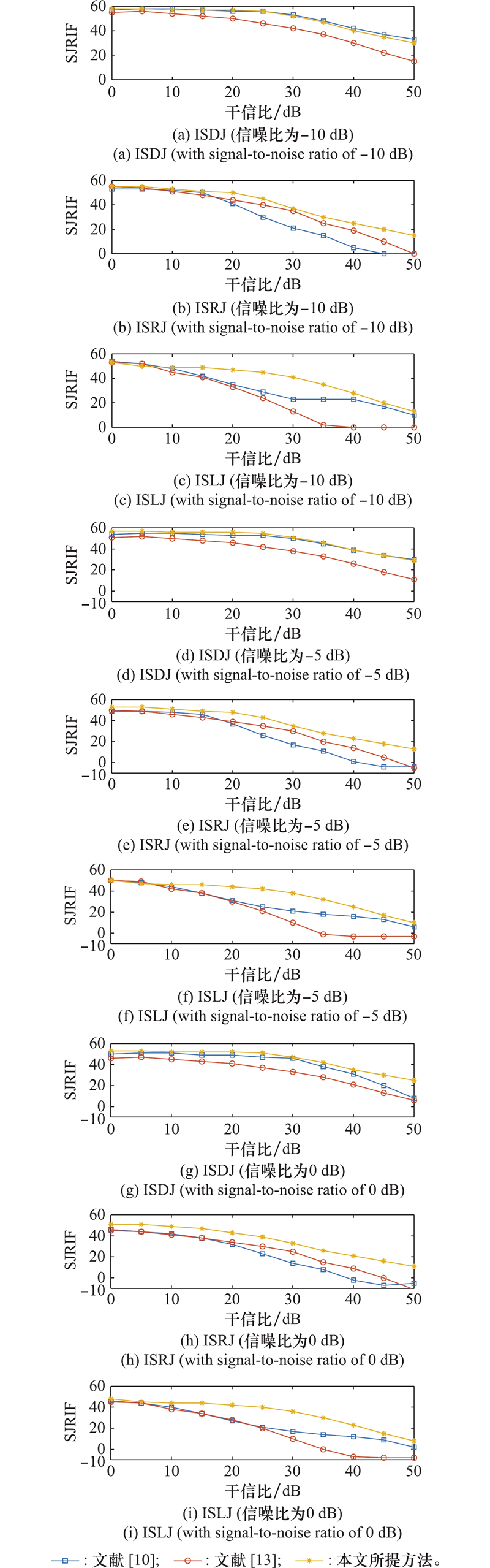
Fig.14
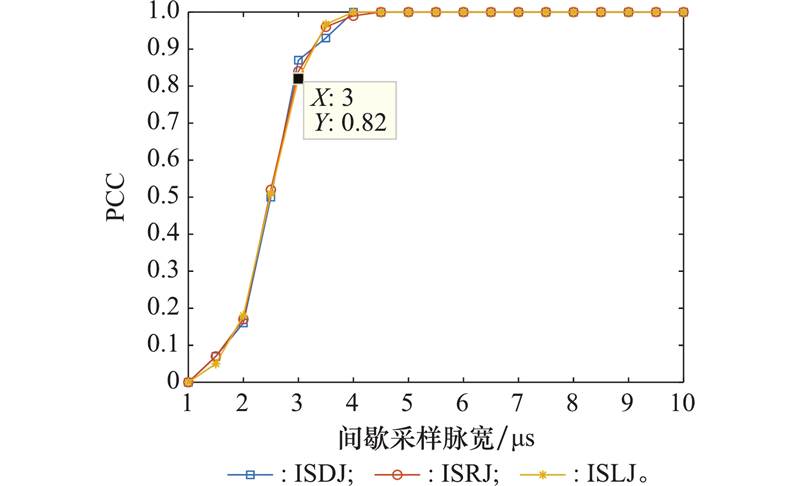
Variation curve of PCC versus τ"
| 1 |
GRECO M, GINI F, FARINA A. Radar detection and classification of jamming signals belonging to a cone class[J]. IEEE Trans.on Signal Processing, 2008, 56 (5): 1984- 1993.
doi: 10.1109/TSP.2007.909326 |
| 2 |
SUN Q Y, SHU T, YU K B, et al. A novel deceptive jamming method against two-channel SAR-GMTI based on two jammers[J]. IEEE Sensors Journal, 2019, 19 (14): 5600- 5610.
doi: 10.1109/JSEN.2019.2908030 |
| 3 |
BERGER S D. Digital radio frequency memory linear range gate stealer spectrum[J]. IEEE Trans.on Aerospace and Electronic Systems, 2003, 39 (2): 725- 735.
doi: 10.1109/TAES.2003.1207279 |
| 4 |
ZHANG J D, ZHU D Y, ZHANG G. New antivelocity deception jamming technique using pulses with adaptive initial phases[J]. IEEE Trans.on Aerospace and Electronic Systems, 2013, 49 (2): 1290- 1300.
doi: 10.1109/TAES.2013.6494414 |
| 5 | LIU Z, SU W M, MA C, et al. Improved interrupted sampling repeater jamming based on DRFM[C]//Proc.of the IEEE International Conference on Signal Processing, Communications and Computing, 2014: 254−257. |
| 6 | ZHOU C, LIU Q H, CHEN X L. Parameter estimation and supp-ression for DRFM-based interrupted sampling repeater jammer[J]. IET Radar, Sonar & Navigation, 2018, 12 (1): 56- 63. |
| 7 | YUAN H, WANG C Y, LAN X L. A method against interrupted-sampling repeater jamming based on energy function detection and band-pass filtering[J]. International Journal of Antennas and Propagation, 2017, 2017 (2): 6759169. |
| 8 | 王雪松, 刘建成, 张文明, 等. 间歇采样转发干扰的数学原理[J]. 中国科学: 信息科学, 2006, 36 (8): 891- 901. |
| WANG X S, LIU J C, ZHANG W M, et al. Mathematical principle of interrupted sampling and repeater jamming[J]. SCIENTIA SINICA Informationis, 2006, 36 (8): 891- 901. | |
| 9 |
周超, 刘泉华, 胡程. 间歇采样转发式干扰的时频域辨识与抑制[J]. 雷达学报, 2019, 8 (1): 100- 106.
doi: 10.12000/JR18080 |
|
ZHOU C, LIU Q H, HU C. Time-frequency analysis techniques for recognition and suppression of interrupted sampling repeater jamming[J]. Journal of Radars, 2019, 8 (1): 100- 106.
doi: 10.12000/JR18080 |
|
| 10 | 张亮, 王国宏, 张翔宇, 等. 基于分数阶字典的间歇采样转发干扰自适应抑制算法[J]. 系统工程与电子技术, 2020, 42 (7): 1439- 1448. |
| ZHANG L, WANG G H, ZHANG X Y. An interrupted-sampling repeater jamming adaptive suppression algorithm based on fractional dictionaries[J]. Systems Engineering and Electronics, 2020, 42 (7): 1439- 1448. | |
| 11 | 杜思予, 刘智星, 吴耀君, 等. 频率捷变波形联合时频滤波器抗间歇采样转发干扰[J]. 系统工程与电子技术, 2023, 45 (12): 3819- 3827. |
| DU S Y, LIU Z X, WU Y J, et al. Frequency agility waveform combined with time-frequency filter to suppress interrupted-sampling repeater jamming[J]. Systems Engineering and Electronics, 2023, 45 (12): 3819- 3827. | |
| 12 | 刘智星, 杜思予, 吴耀君, 等. 脉间-脉内捷变频雷达抗间歇采样干扰方法[J]. 雷达学报, 2022, 11 (2): 301- 312. |
| LIU Z X, DU S Y, WU Y J, et al. Anti-interrupted sampling repeater jamming method for interpulse and intrapulse frequency-agile radar[J]. Journal of Radars, 2022, 11 (2): 301- 312. | |
| 13 |
万鹏程, 白渭雄, 付孝龙. 基于FrFT的LFM间歇采样转发干扰对抗方法[J]. 火力与指挥控制, 2018, 43 (10): 35- 39.
doi: 10.3969/j.issn.1002-0640.2018.10.007 |
|
WAN P C, BAI W X, FU X L. Fractional Fourier transform-based LFM radars for countering interrupted-sampling repeater jamming[J]. Fire Control & Command Control, 2018, 43 (10): 35- 39.
doi: 10.3969/j.issn.1002-0640.2018.10.007 |
|
| 14 |
盖季妤, 姜维, 张凯翔, 等. 基于差分特征的间歇采样转发干扰辨识与抑制方法[J]. 雷达学报, 2023, 12 (1): 186- 196.
doi: 10.12000/JR22058 |
|
GAI J Y, JIANG W, ZHANG K X, et al. A method for interrupted sampling repeater jamming identification and suppression based on differential features[J]. Journal of Radars, 2023, 12 (1): 186- 196.
doi: 10.12000/JR22058 |
|
| 15 |
周凯, 李德鑫, 粟毅, 等. 基于雷达发射波形和非匹配滤波联合设计的间歇采样转发干扰抑制方法[J]. 电子与信息学报, 2021, 43 (7): 1939- 1946.
doi: 10.11999/JEIT200299 |
|
ZHOU K, LI D X, SU Y. Joint transmitted waveform and mismatched filter design against interrupted-sampling repeater jamming[J]. Journal of Electronics & Information Technology, 2021, 43 (7): 1939- 1946.
doi: 10.11999/JEIT200299 |
|
| 16 |
REN Z F, JIANG M, ZHANG L. Orthogonal phase-frequency coded signal in a pulse against interrupted sampling repeater jamming[J]. The Journal of Engineering, 2019, 2019 (21): 7573- 7576.
doi: 10.1049/joe.2019.0500 |
| 17 | ZHANG J X, ZHOU C. Interrupted sampling repeater jamming suppression method based on hybrid modulated radar signal[C]//Proc.of the IEEE International Conference on Signal, Information and Data Processing, 2019. |
| 18 |
张建中, 穆贺强, 文树梁, 等. 基于脉内LFM-Costas 频率步进的抗间歇采样干扰方法[J]. 系统工程与电子技术, 2019, 41 (10): 2170- 2177.
doi: 10.3969/j.issn.1001-506X.2019.10.03 |
|
ZHANG J Z, MU H Q, WEN S L, et al. Anti-intermittent sampling jamming method based on intra-pulse LFM-Costas frequency stepping[J]. Systems Engineering and Electronics, 2019, 41 (10): 2170- 2177.
doi: 10.3969/j.issn.1001-506X.2019.10.03 |
|
| 19 | 张建中, 穆贺强, 文树梁, 等. 基于 LFM 分段脉冲压缩的抗间歇采样转发干扰方法[J]. 电子与信息学报, 2019, 41 (7): 1712- 1720. |
| ZHANG J Z, MU H Q, WEN S L, et al. Anti-intermittent sampling repeater jamming method based on LFM segmented pulse compression[J]. Journal of Electronics & Information Technology, 2019, 41 (7): 1712- 1720. | |
| 20 | 张建中, 穆贺强, 文树梁, 等. 基于脉内步进LFM时频分析的抗间歇采样干扰方法[J]. 北京理工大学学报, 2020, 40 (5): 543- 551. |
| ZHANG J Z, MU H Q, WEN S L, et al. Anti-intermittent sampling repeater jamming method based on stepped LFM joint time-frequency analysis[J]. Transactions of Beijing Institute of Technology, 2020, 40 (5): 543- 551. | |
| 21 | 张建中, 穆贺强, 文树梁, 等. 基于脉内步进LFM波形的抗间歇采样转发干扰方法[J]. 系统工程与电子技术, 2019, 41 (5): 1013- 1020. |
| ZHANG J Z, MU H Q, WEN S L, et al. Anti intermittent-sampling repeater jamming method based on stepped LFM waveform[J]. Systems Engineering and Electronics, 2019, 41 (5): 1013- 1020. | |
| 22 | BULTHEEL A, MARTINEZ S H. Recent developments in the theory of the fractional Fourier transform and linear fractional transforms[J]. Bulletin of the Belgian Mathematical Society Simon Stevin, 2006, 13 (5): 971- 1005. |
| 23 | 王国宏, 白杰, 张翔宇, 等. 基于FrFT域特征差异的压制干扰检测与分类算法[J]. 北京航空航天大学, 2018, 44 (6): 1125- 1130. |
| WANG G H, BAI J, ZHANG X Y, et al. Detection and classification algorithm of suppression interference based on characteristic differences of FrFT domain[J]. Journal of Beijing University of Aeronautics and Astronautics, 2018, 44 (6): 1125- 1130. | |
| 24 | 白杰, 王国宏, 杨林. 基于FrFT域峰值特性的压制干扰检测算法[J]. 电光与控制, 2018, 25 (6): 17- 19. |
| BAI J, WANG G H, YANG L. Detection algorithm of suppression interference based on peak characteristic of FrFT domain[J]. Electronics Optics & Control, 2018, 25 (6): 17- 19. | |
| 25 | 王国宏, 白杰, 孙殿星, 等. 基于信号-数据联合处理的压制-距离欺骗复合干扰抑制算法[J]. 电子与信息学报, 2018, 40 (10): 149- 156. |
| WANG G H, BAI J, SUN D X, et al. A suppression algorithm of blanket-distance deception compound jamming based on joint signal-data processing[J]. Journal of Electronics & Information Technology, 2018, 40 (10): 149- 156. | |
| 26 | OBERLIN T, MEIGNEN S, PERRIER V. The Fourier-based synchrosqueezing transform[C]//Proc.of the International Conference on Acoustics Speech and Signal Processing, 2014: 315−319. |
| 27 | BARNETT V, LEWIS T. Outliers in statistical data[M]. New York: John Wiley & Sons, 1994: 210−214. |
| 28 | OZAKTAS H M, KUTAY M A. The fractional Fourier transform with applications in optics and signal processing[M]. New York: John Wiley & Sons, 2001: 892−901. |
| 29 |
HATEFFARD F, DOLATI P, HEIDARI A, et al. Assessing the performance of decision tree and neural models in mapping soil properties[J]. Journal of Mountain Science, 2019, 16 (8): 1833- 1847.
doi: 10.1007/s11629-019-5409-8 |
| 30 |
DENG L M, HU Y, CHENG J P Y, et al. A data-driven decision support system for scoliosis[J]. IEEE Access, 2017, 5, 7874- 7884.
doi: 10.1109/ACCESS.2017.2696704 |
| [1] | Yiding GAO, Min WU, Chengpeng HAO, Zhigang SHANG. Coherent integration and detection algorithm for high-speed weak targets in OFDM sonar based on FrFT-Keystone motion compensation [J]. Systems Engineering and Electronics, 2024, 46(4): 1157-1166. |
| [2] | Jinjie LI, Yunhe CAO, Yulin ZHANG, Meng WANG. Interrupted-sampling repeater jamming suppression based on STFrFT [J]. Systems Engineering and Electronics, 2024, 46(10): 3312-3324. |
| [3] | Jianlong TANG, Jialong XIE, Hongkai CHEN. Selection method for localization node without priori measurement error [J]. Systems Engineering and Electronics, 2024, 46(1): 35-41. |
| [4] | Kaiyu ZHANG, Haotian YU, Yu LU. A method of the time and frequency difference location based on duel-station cooperation [J]. Systems Engineering and Electronics, 2023, 45(9): 2698-2705. |
| [5] | Siyu DU, Zhixing LIU, Yaojun WU, Minghui SHA, Yinghui QUAN. Frequency agility waveform combined with time-frequency filter to suppress interrupted-sampling repeater jamming [J]. Systems Engineering and Electronics, 2023, 45(12): 3819-3827. |
| [6] | Yan LYU, Fei CAO, Jianfeng XU, Xiaowei FENG. Robust beamforming algorithm for monostatic MIMO radar based on FRFT [J]. Systems Engineering and Electronics, 2023, 45(1): 79-85. |
| [7] | Yichang CHEN, Xin XIONG, Wantian WANG. Target sortie identification method of narrow-band radar based on sparse fractional Fourier transform [J]. Systems Engineering and Electronics, 2021, 43(8): 2129-2136. |
| [8] | Xinxin OUYANG, Shanfeng YAO, Yuxiang YANG, Qing HE, Qun WAN. Coherent and non-coherent integration TDOA/FDOA estimation method of frequency-hopping signals [J]. Systems Engineering and Electronics, 2021, 43(5): 1184-1190. |
| [9] | Liang ZHANG, Guohong WANG, Xiangyu ZHANG, Siwen LI, Tingting XIN. Interrupted-sampling repeater jamming adaptive suppression algorithm based on fractional dictionary [J]. Systems Engineering and Electronics, 2020, 42(7): 1439-1448. |
| [10] | OUYANG Xinxin, YANG Yuxiang, YAO Shanfeng, HE Qing. TDOA/FDOA estimation algorithm of multi-carrier signals based on CAF coherent integration [J]. Systems Engineering and Electronics, 2019, 41(8): 1881-1886. |
| [11] | JIANG Yilin, LIU Mengnan, GAO Lipeng, CHEN Tao. Joint passive location method of TDOA and FDOA for moving multi-station [J]. Systems Engineering and Electronics, 2019, 41(7): 1441-1449. |
| [12] | ZHOU Gongqian, YANG Lujing, LIU Zhong. Improved incomplete constrained weighted least squares TDOA/FDOA passive location method#br# [J]. Systems Engineering and Electronics, 2018, 40(8): 1686-1692. |
| [13] | WU Yanhua, MA Qingli. Blind detection method of weak signals with Duffing oscillator [J]. Systems Engineering and Electronics, 2017, 39(11): 2414-2421. |
| [14] | LI Jun1,2, LIN Qiu-hua-1, YANG Xiu-ting2, KANG Chun-yu2. Passive DOA and range estimation method for nearfield#br# broadband LFM signals [J]. Systems Engineering and Electronics, 2016, 38(8): 1737-1743. |
| [15] | LI Zhenqiang1, HUANG Zhen2, CHEN Xi2, GE Ning1. Effect of timevarying characteristics on TDOA/FDOA accuracy and #br# compensation estimation method [J]. Systems Engineering and Electronics, 2016, 38(3): 481-486. |
| Viewed | ||||||
|
Full text |
|
|||||
|
Abstract |
|
|||||