Systems Engineering and Electronics ›› 2026, Vol. 48 ›› Issue (8): 2526-2534.doi: 10.12305/j.issn.1001-506X.2026.08.03
• Electronic Technology • Previous Articles
Simulation method of degradation effect for space target optical imaging in extreme space environment
Songjiang FENG1, Hong LIU1,2( ), Yanning ZHANG2(), Dou SUN1,3
- 1. Space Security Research Center,Space Engineering University,Beijing 101416,China
2. School of Computer Science,Northwestern Polytechnical University,Xi’an 710072,China
3. Key Laboratory of Electronic Information Countermeasure and Simulation Technology of Ministry of Education Xidian University,Xi’an 710071,China
-
Received:2025-06-03Revised:2025-10-28Online:2026-02-11Published:2026-02-11 -
Contact:Hong LIU E-mail:liuhong19870518@126.com;ynzhang@nwpu.edu.cn

CLC Number:
Cite this article
Songjiang FENG, Hong LIU, Yanning ZHANG, Dou SUN. Simulation method of degradation effect for space target optical imaging in extreme space environment[J]. Systems Engineering and Electronics, 2026, 48(8): 2526-2534.
share this article
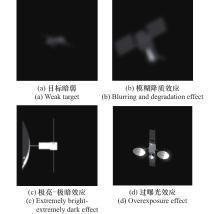
Fig.1
Typical space target degradation effect of optical images"
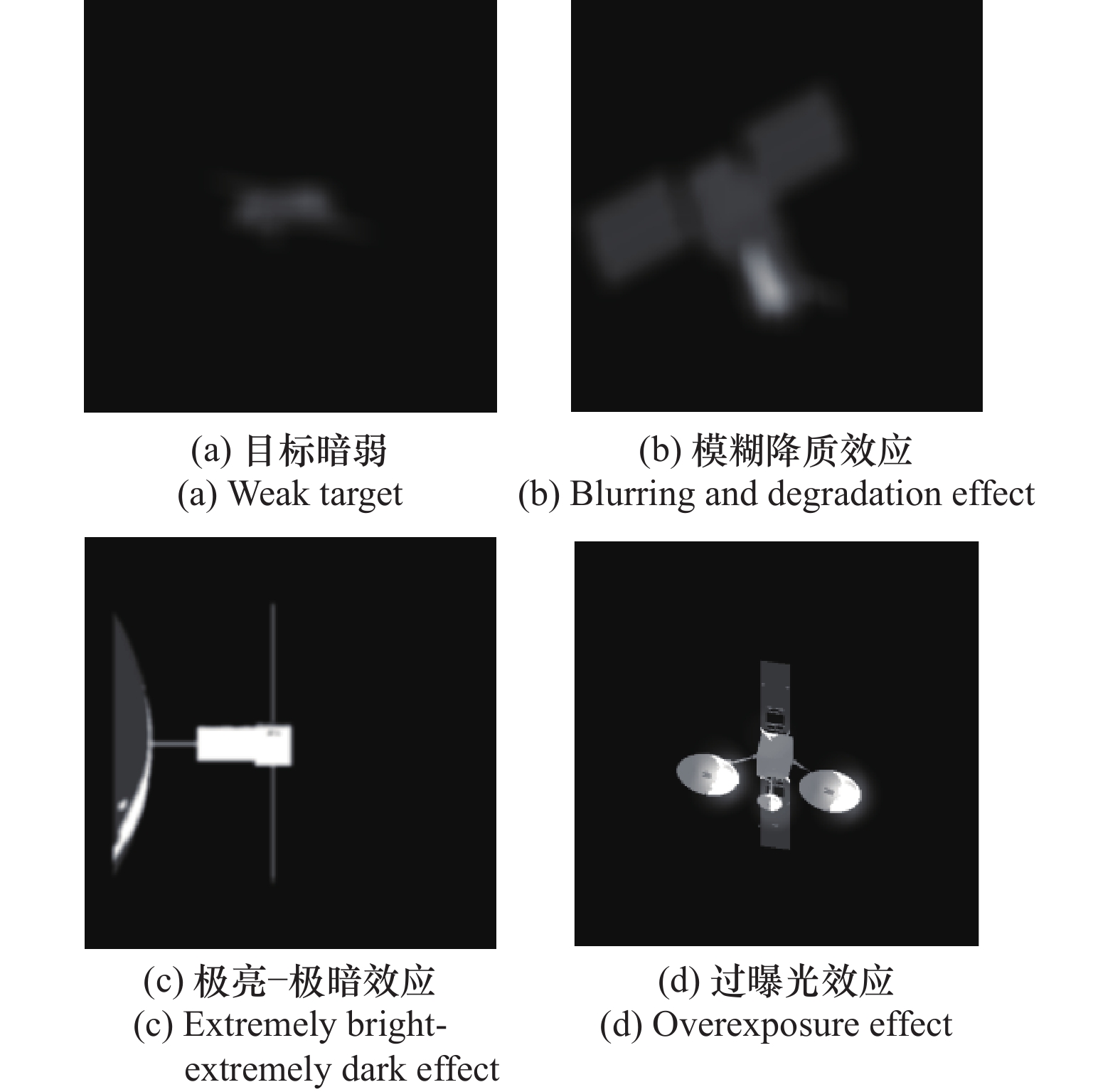
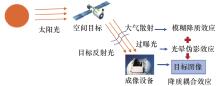
Fig.2
Schematic diagram of comprehensive degradation effects in space target optical imaging"
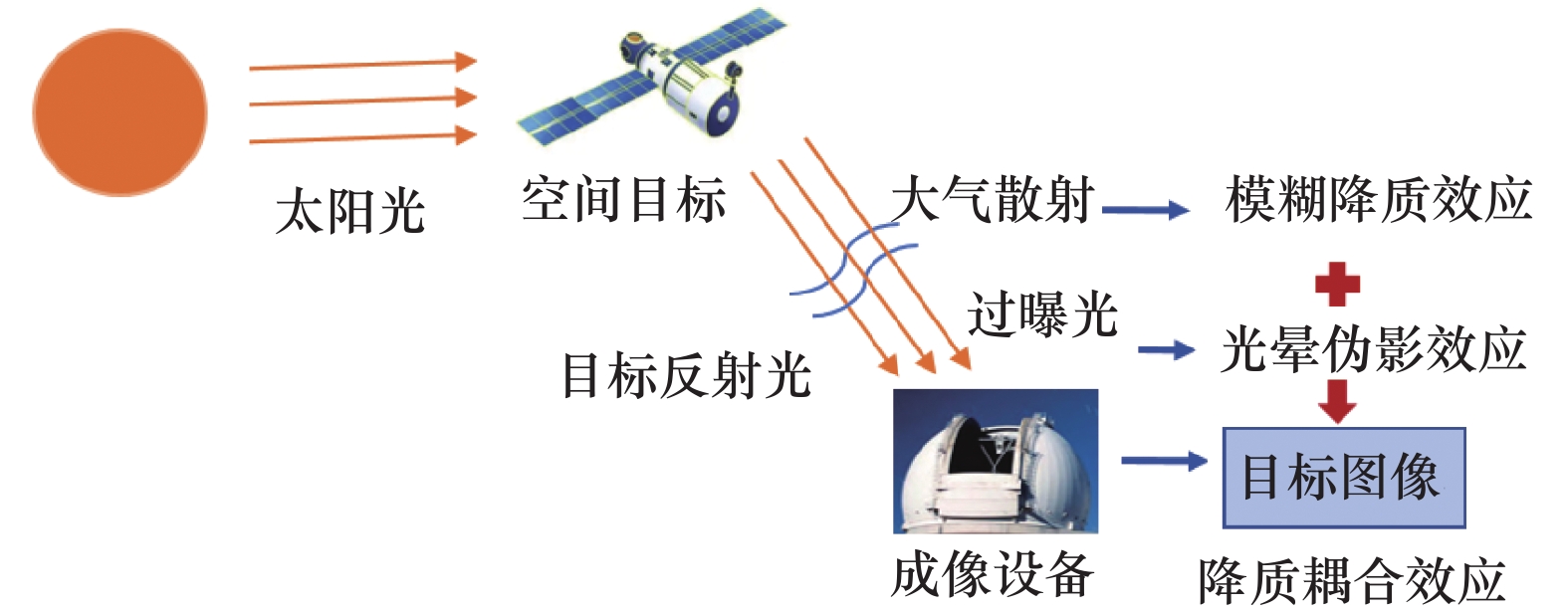
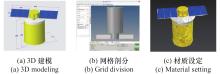
Fig.3
Space target 3D model construction"
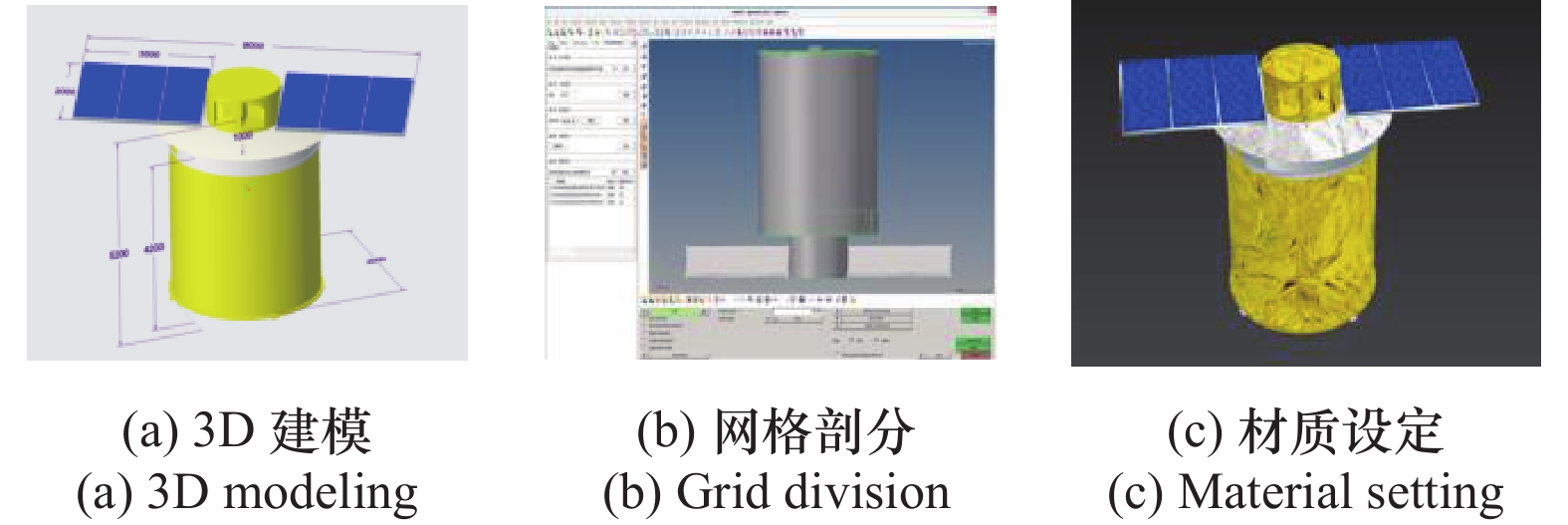
Fig.4
Space target imaging simulation effect for different source-detection orientations"
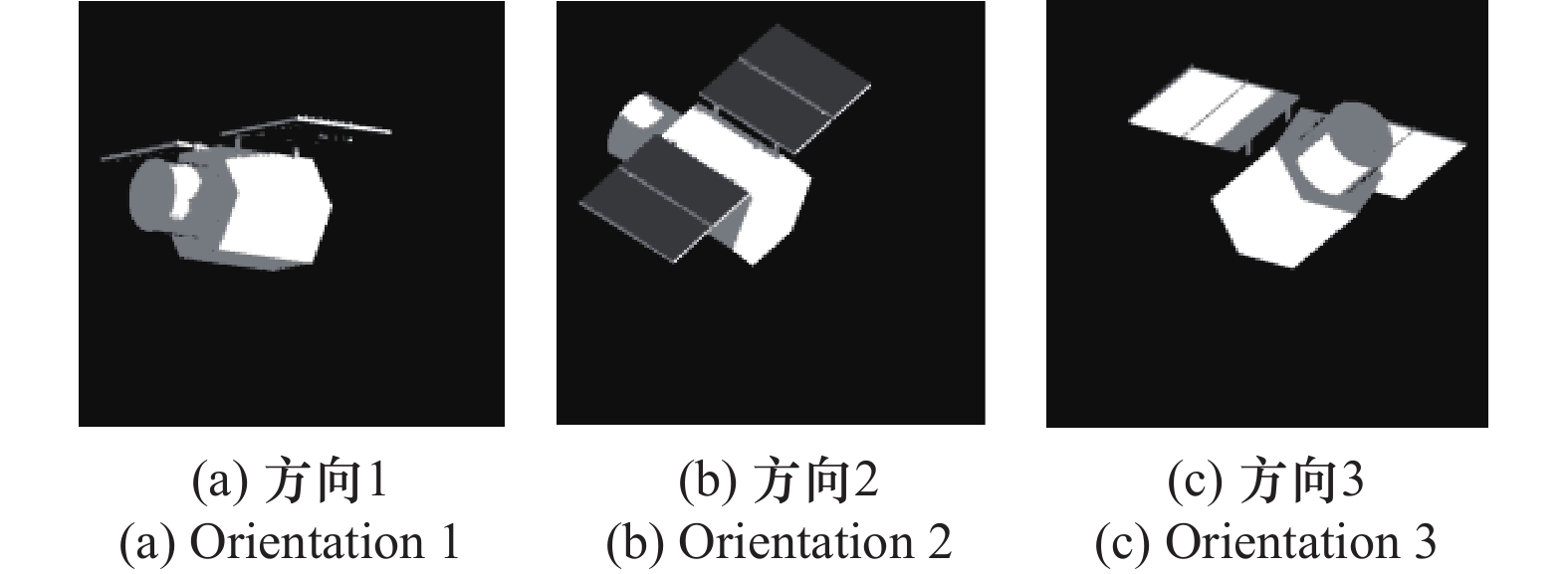
Fig.5
Degradation effect of blurring for Gaussian filter in different kernel functions"
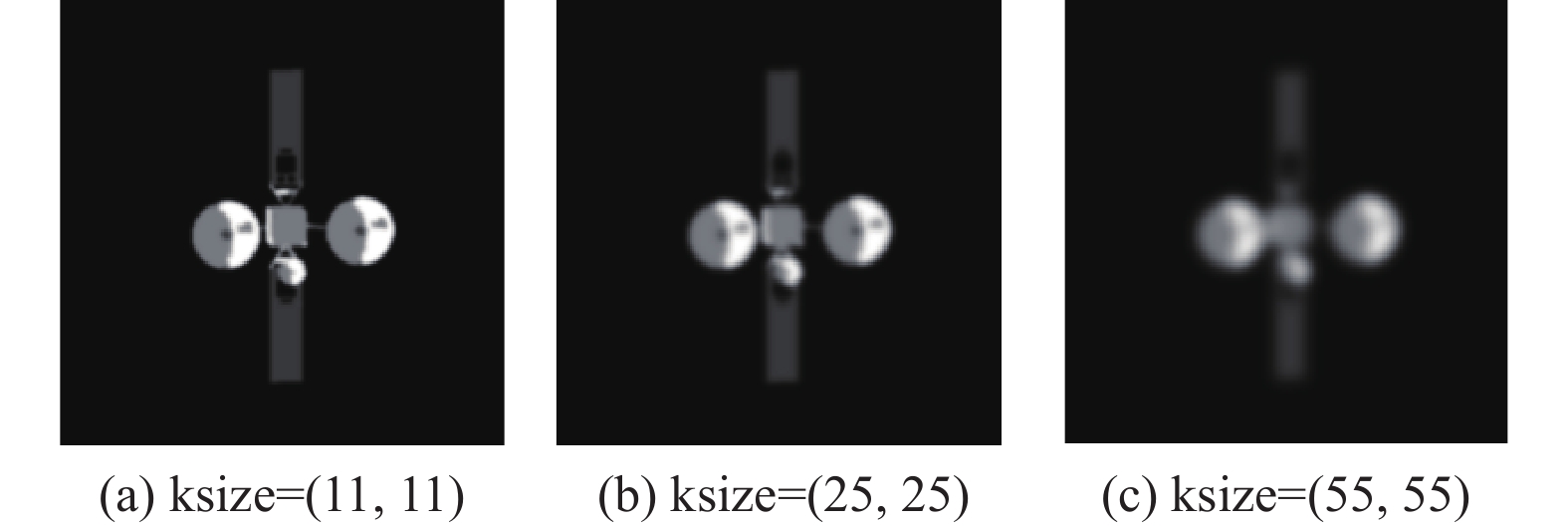
Fig.6
Schematic diagram of simulation generation of halo artifact effect"
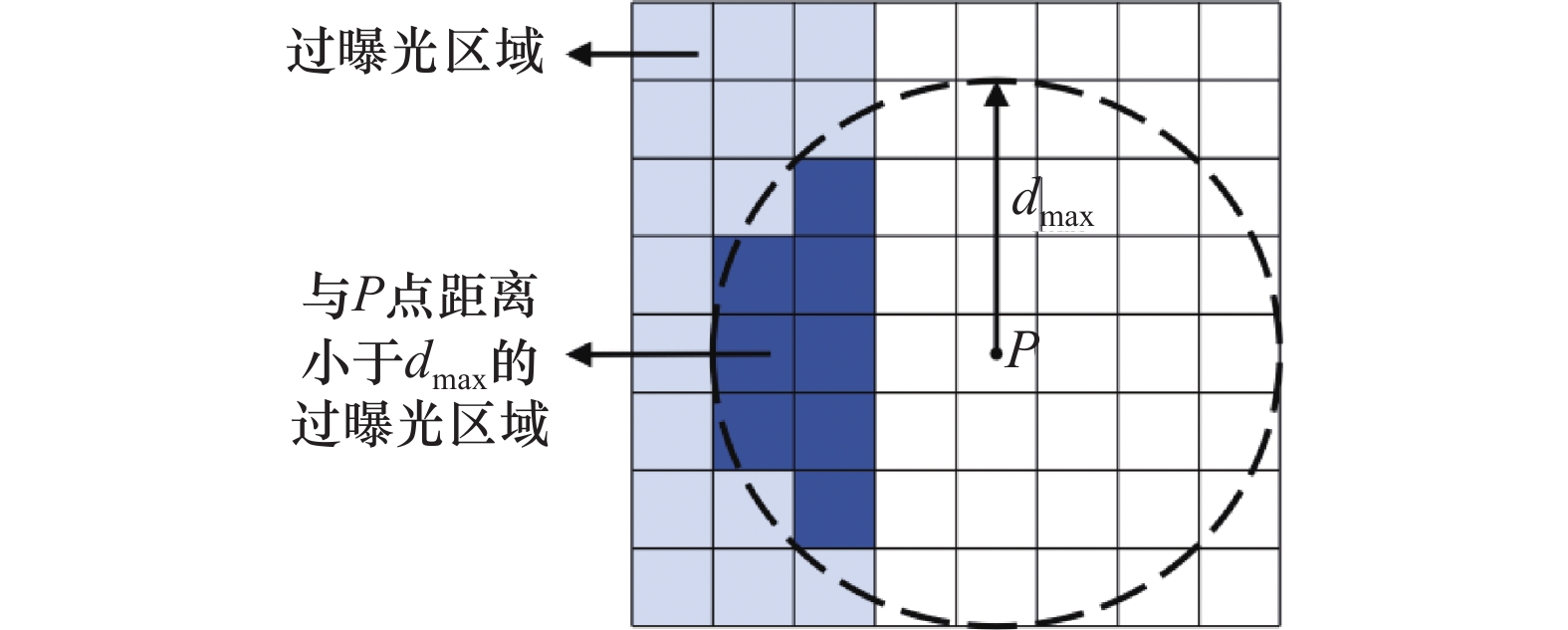
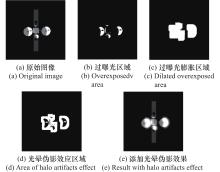
Fig.7
Simulation process of halo artifacts effect"
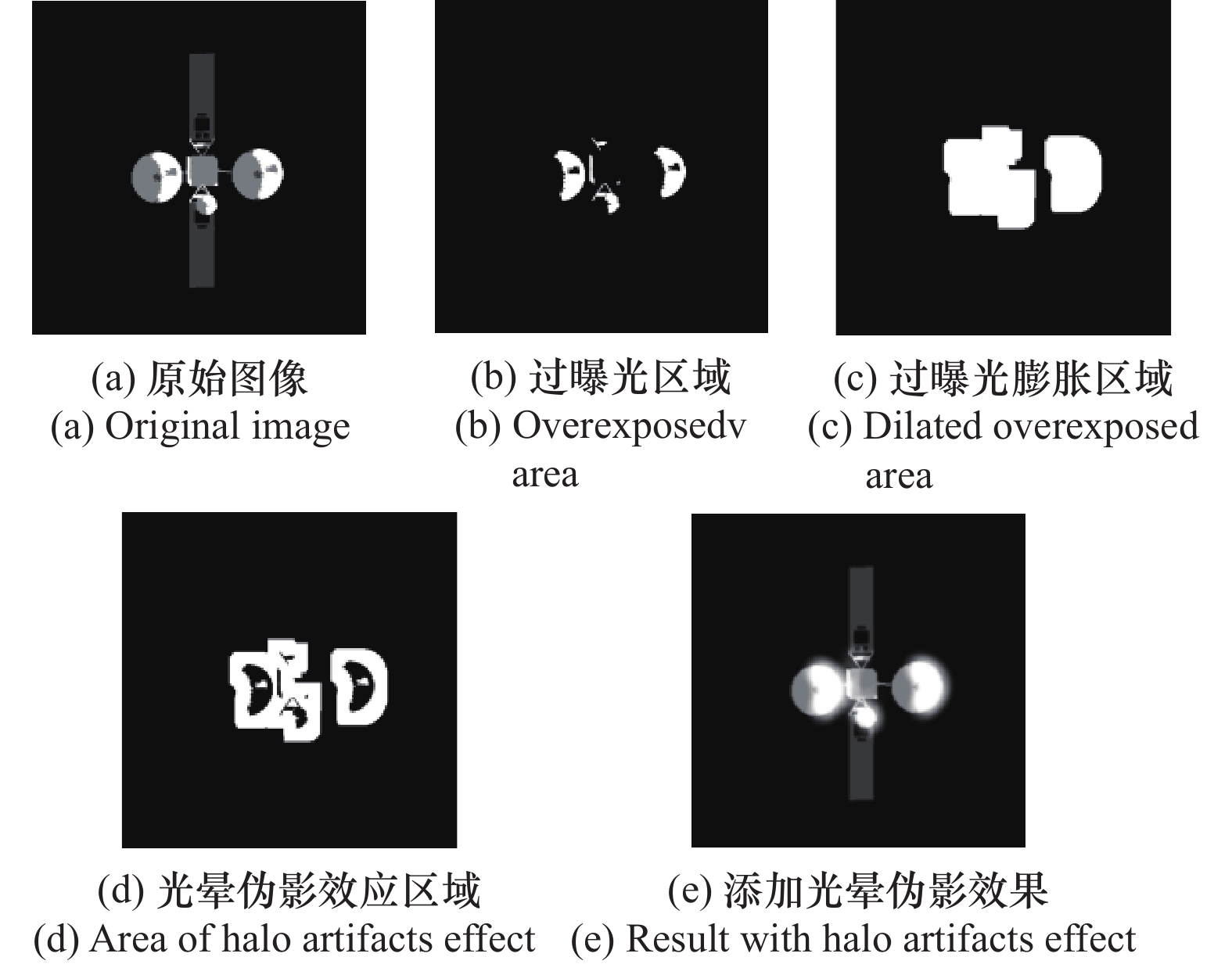
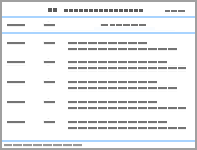
Table 1
MTF50 values of target 1 image with different degradation conditions"
| 图像MTF50值 | 无模糊效应 | 弱模糊效应 | 中模糊效应 | 强模糊效应 |
| 无光晕伪影 | 99 | 60 | 48 | 20 |
| 弱光晕伪影效应 | 98 | 37 | 47 | 19 |
| 强光晕伪影效应 | 92 | 34 | 18 | 14 |
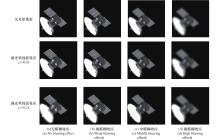
Fig.8
Optical imaging degradation simulation result of target 1 with different conditions"
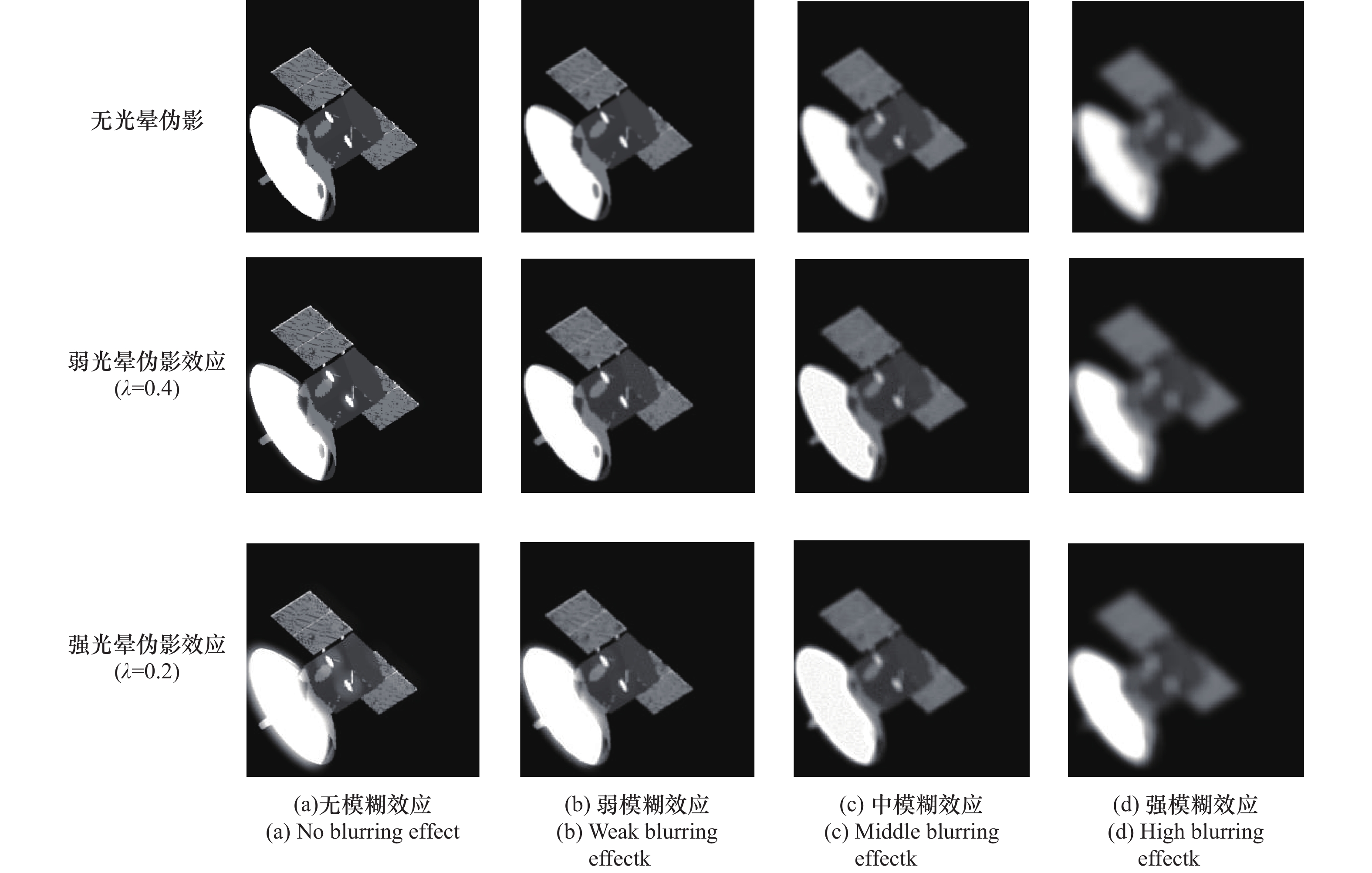
Fig.9
Optical imaging degradation simulation result of target 2 with different conditions"
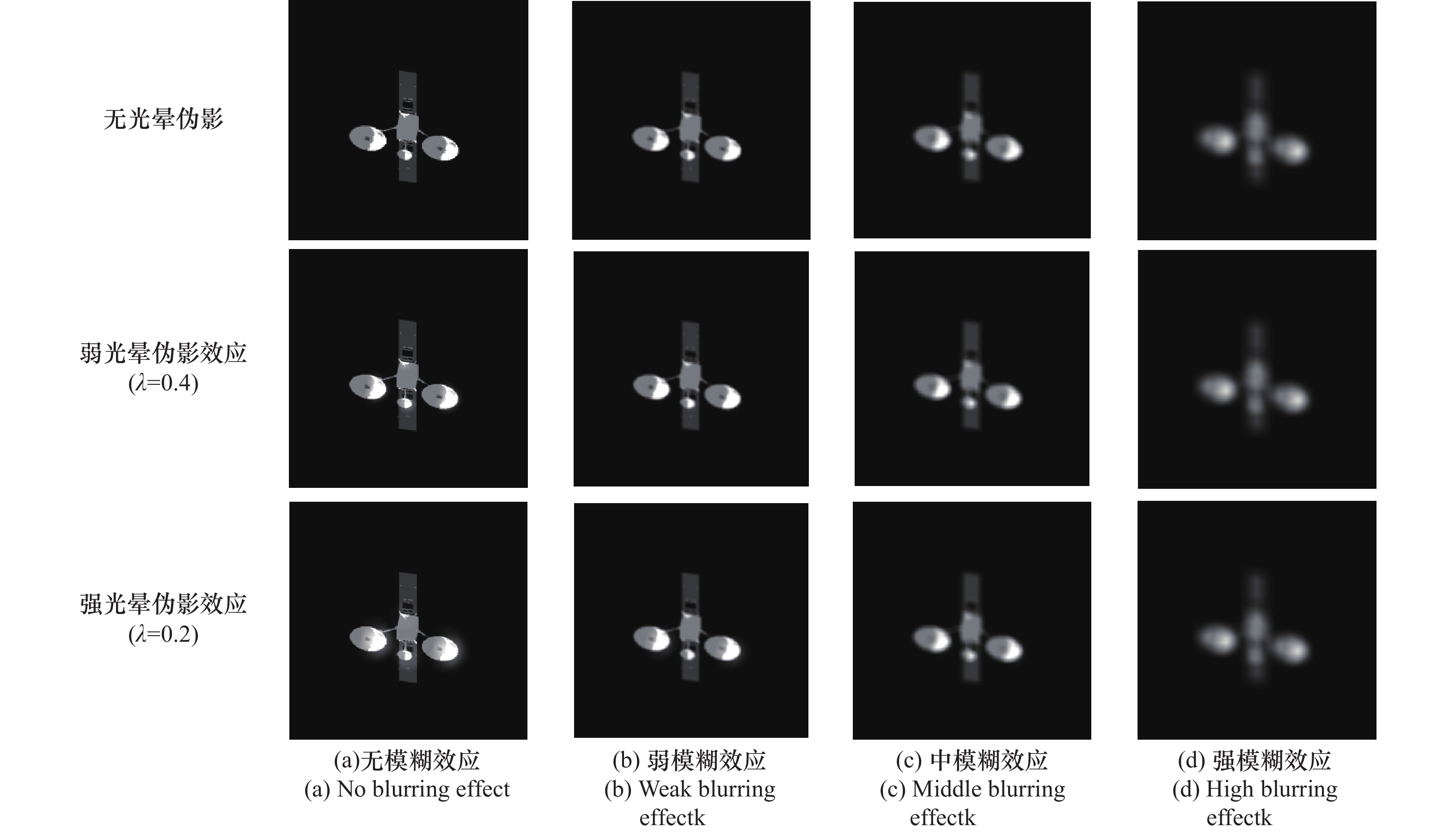
Table 2
MTF50 values of target 2 image with different degradation conditions"
| 图像MTF50值 | 无模糊效应 | 弱模糊效应 | 中模糊效应 | 强模糊效应 |
| 无光晕伪影 | 99 | 41 | 21 | 8 |
| 弱光晕伪影效应 | 98 | 40 | 21 | 8 |
| 强光晕伪影效应 | 89 | 37 | 20 | 8 |
Fig.10
Optical imaging degradation simulation result of target 3 with different conditions"
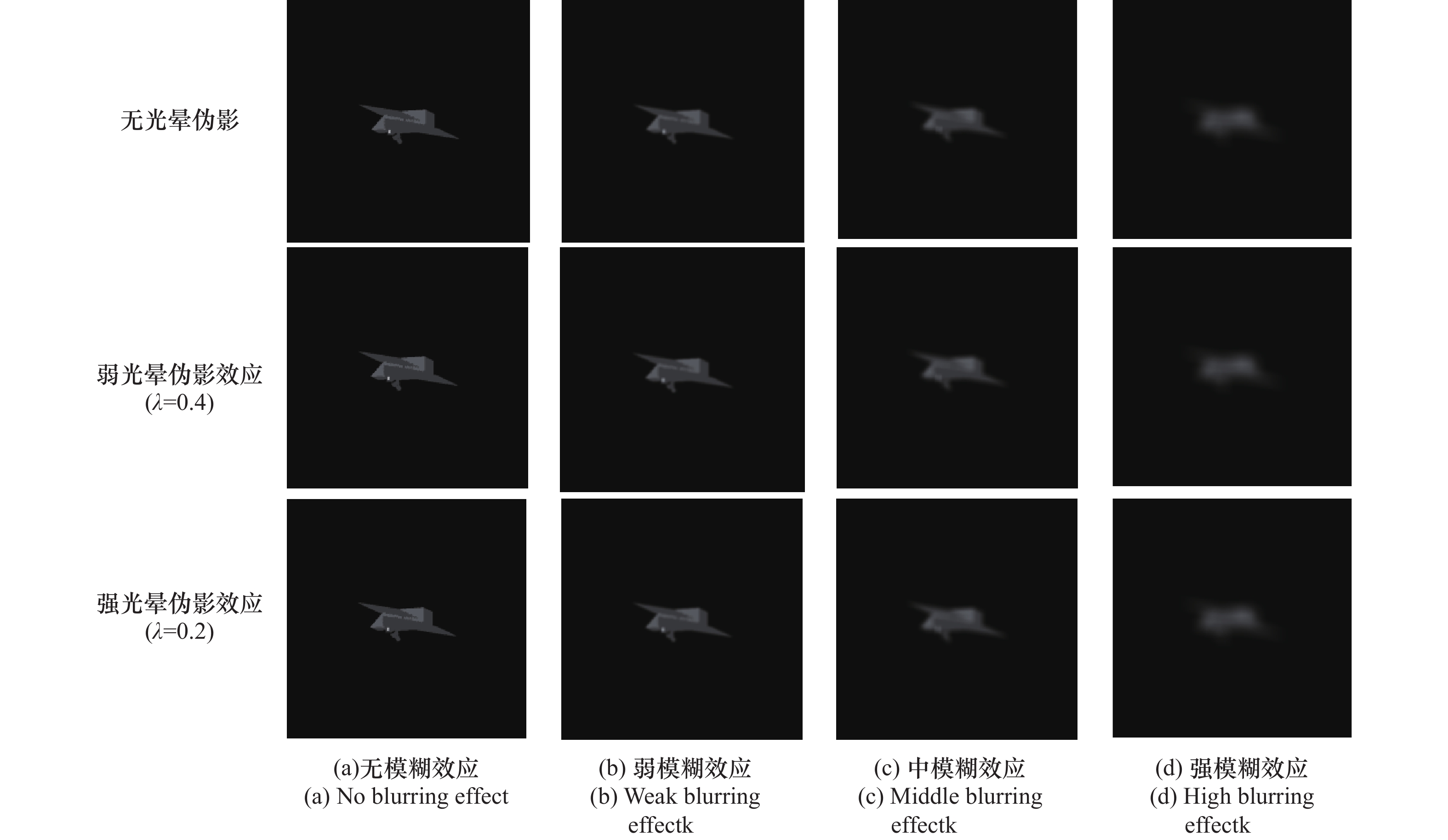
Table 3
MTF50 values of target 3 image with different degradation conditions"
| 图像MTF50值 | 无模糊效应 | 弱模糊效应 | 中模糊效应 | 强模糊效应 |
| 无光晕伪影 | 89 | 32 | 18 | 8 |
| 弱光晕伪影效应 | 89 | 32 | 18 | 8 |
| 强光晕伪影效应 | 89 | 32 | 18 | 8 |
| 1 | 李孟锡. 基于天基光学成像的空间目标姿态估计技术研究[D]. 长沙: 国防科技大学, 2022. |
| LI M X. Spaceborne optical image based space target pose estimation technology[D]. Changsha: National University of Defense Technology, 2022. | |
| 2 | 李思远, 郭旭睿, 张小荣, 等. 基于高光谱图像的空间非合作慢旋失稳目标旋转特性分析[J]. 先进小卫星技术(中英文), 2025, 2 (4): 7- 16. |
| LI S Y, GUO X R, ZHANG X R, et al. Analysis of rotational characteristics for non-cooperative slow-rotary unstable space targets based on hyperspectral image[J]. Advanced Small Satellite Technology, 2025, 2 (4): 7- 16. | |
| 3 | 高国庆. 基于自适应光学高分辨力图像的扩展目标三维重构技术研究[D]. 成都: 电子科技大学, 2024. |
| GAO G Q. Research on 3D reconstruction of extended targets based on adaptive optics high resolution images[D]. Chengdu: University of Electronic Science and Technology of China, 2024. | |
| 4 |
寇鹏, 智帅峰, 程耘, 等. 空间目标自适应光学图像椭圆部件检测[J]. 中国光学, 2022, 15 (3): 454- 463.
doi: 10.37188/CO.2021-0208 |
|
KOU P, ZHI S F, CHENG Y, et al. Detection of elliptical components in adaptive optical image of space target[J]. Chinese Optics, 2022, 15 (3): 454- 463.
doi: 10.37188/CO.2021-0208 |
|
| 5 | 郭新焱, 鲍其莲, 张徐玮, 等. 空间目标直线轮廓提取与位姿估计算法研究[J]. 计算机仿真, 2025, 42 (7): 580- 584. |
| GUO X Y, BAO Q L, ZHANG X W, et al. Research on linear contour extraction and pose estimation algorithm of space target[J]. Computer Simulation, 2025, 42 (7): 580- 584. | |
| 6 | 任笑圆. 基于参数化表示的空间目标结构反演与姿态估计方法研究[D]. 长沙: 国防科技大学, 2020. |
| REN X Y. Research on shape and pose estimation of space target based on parametric representation[D]. Changsha: National University of Defense Technology, 2020. | |
| 7 | 刘扬阳, 吕群波, 张文喜. 大气湍流畸变对空间目标清晰干涉成像仿真研究[J]. 物理学报, 2012, 61 (12): 225- 233. |
| LIU Y Y, LÜ Q B, ZHANG W X. Simulation for space target interference imaging system distorted by atmospheric turbulence[J]. Acta Physica Sinica, 2012, 61 (12): 225- 233. | |
| 8 | 王国聪, 王建立, 张振铎, 等. 大气湍流对空间目标偏振成像探测的影响[J]. 光子学报, 2016, 45 (4): 137- 143. |
| WANG G C, WANG J L, ZHANG Z D, et al. Influence on space target polarization imaging detection resulting from atmospheric turbulence[J]. Acta Photonica Sinica, 2016, 45 (4): 137- 143. | |
| 9 |
张楚艾, 杨佳琪, 闫庆森, 等. 极端空间环境目标精细感知综述[J]. 中国科学: 信息科学, 2025, 55 (9): 2193- 2249.
doi: 10.1360/SSI-2024-0394 |
|
ZHANG C A, YANG J Q, YAN Q S, et al. A review of fine-grained object perception in extreme space environments[J]. SCIENTIA SINICA Informations, 2025, 55 (9): 2193- 2249.
doi: 10.1360/SSI-2024-0394 |
|
| 10 |
罗秀娟, 郝伟. 天基空间态势感知数据仿真研究进展[J]. 中国光学, 2024, 17 (3): 501- 511.
doi: 10.37188/CO.2023-0156 |
|
LUO X J, HAO W. Advances in data simulation for space-based situational awareness[J]. Chinese Optics, 2024, 17 (3): 501- 511.
doi: 10.37188/CO.2023-0156 |
|
| 11 |
RIKER J F, CROCKETT G A, BRUNSON R L. Time-domain analysis simulation for advanced tracking[J]. Proceedings of SPIE, 1992, 1697, 297- 309.
doi: 10.1117/12.138181 |
| 12 |
BUSH K A, CROCKETT G A, BARNARD C C. Satellite discrimination from active and passive polarization signatures: simulation predictions using the TASAT satellite model[J]. Proceedings of SPIE, 2002, 4481, 46- 57.
doi: 10.1117/12.452906 |
| 13 |
CROCKETT G A, BRUNSON R L. Visualization tool for advanced laser system development[J]. Proceedings of SPIE, 2002, 4724, 69- 77.
doi: 10.1117/12.472363 |
| 14 | HAGERTY S P, ANSARI K. An innovative, near-real-time approach to space situational awareness (SSA) data simulation[C]//Proc. of the 35th Space Symposium, 2019: 118. |
| 15 | LEBRETON J, BROCHARD R, BAUDRY M, et al. Image simulation for space applications with the SurRender software[C]//Proc. of the 11th International ESA Conference on Guidance, Navigation & Control Systems, 2021. |
| 16 |
CLARK R, FU Y C, DAVE S, et al. Simulation of RSO images for space situation awareness (SSA) using parallel processing[J]. Sensors, 2021, 21 (23): 7868.
doi: 10.3390/s21237868 |
| 17 | 狄荣育. 基于PBRT渲染器的空间伴飞目标多光谱成像仿真[D]. 北京: 中国科学院大学(中国科学院国家空间科学中心), 2022. |
| DI R Y. Simulation of multispectral imaging of space accompanying flight targets based on PBRT[D]. Beijing: University of Chinese Academy of Sciences (National Space Science Center, CAS), 2022. | |
| 18 | 王霄, 高思莉, 李范鸣. 基于BRDF的空中目标红外成像建模与仿真[J]. 红外与毫米波学报, 2019, 38 (2): 182- 187. |
| WANG X, GAO S L, LI F M. Infrared imaging modeling and simulation of aerial target based on BRDF[J]. Journal of Infrared and Millimeter Waves, 2019, 38 (2): 182- 187. | |
| 19 | WEN G J, XU Y, LIU C H, et al. A simulation system of space object images for space situation awareness[C]//Proc. of the 15th International Congress on Image and Signal Processing, BioMedical Engineering and Informatics, 2022. |
| 20 | 刘丽萍. 基于现代OpenGL的天基空间目标在轨光学观测实时仿真技术研究[D]. 厦门: 厦门大学, 2022. |
| LIU L P. Research on real-time simulation technology of optical observation of space-based target based on modern OpenGL[D]. Xiamen: Xiamen University, 2022. | |
| 21 | 杨晋生, 李天骄. 天基空间目标场景成像仿真研究[J]. 激光与光电子学进展, 2022, 59 (8): 0811002. |
| YANG J S, LI T J. Simulation of space-based space target scene imaging[J]. Laser & Optoelectronics Progress, 2022, 59 (8): 0811002. | |
| 22 | 付一鸣. 空间目标场景成像仿真方法研究[D]. 哈尔滨: 哈尔滨工业大学, 2023. |
| FU Y M. Research on imaging simulation method for space target scenes[D]. Harbin: Harbin Institute of Technology, 2023. | |
| 23 | 高伟国. 空间目标红外成像特征精细化仿真研究[D]. 西安: 西安电子科技大学, 2023. |
| GAO W G. Research on fine simulation of infrared imaging characteristics of space targets[D]. Xi’an: Xidian University, 2023. | |
| 24 | 何烽. 数字成像曝光动态范围扩展算法与应用研究[D]. 杭州: 浙江大学, 2004. |
| HE F. Research on dynamic range expansion algorithm and application of digital imaging exposure[D]. Hangzhou: Zhejiang University, 2004. | |
| 25 | 刘永昌. 过曝图像序列增强与重现技术研究[D]. 南京: 南京邮电大学, 2021. |
| LIU Y C. Research on technologies of enhancement and reproduction of overexposure image sequence[D]. Nanjing: Nanjing University of Posts and Telecommunications, 2021. | |
| 26 | 曲杨, 王欣洋, 周泉, 等. TDI图像传感器横向抗晕栅极电压与满阱容量关系研究[J]. 半导体光电, 2020, 41 (2): 169- 172. |
| QU Y, WANG X Y, ZHOU Q, et al. Relationship between voltage of lateral anti-blooming gate and full well capacity in TDI image sensor[J]. Semiconductor Optoelectronics, 2020, 41 (2): 169- 172. |
| [1] | Songyao DOU, Ying CHEN, Yaobing LU. Space maneuvering target tracking based on TSUKF-MD [J]. Systems Engineering and Electronics, 2026, 48(5): 1564-1570. |
| [2] | Zeying YANG, Zhuo CHEN, Zhiming XU, Xiaofeng AI, Qihua WU, Ling WANG. Forward labeling method for ISAR image components of space targets [J]. Systems Engineering and Electronics, 2026, 48(4): 1165-1173. |
| [3] | Shuyu ZHENG, Qingwei YANG, Libing JIANG, Zhuang WANG. Research progress on space-based radar for early warning and surveillance task [J]. Systems Engineering and Electronics, 2025, 47(10): 3199-3217. |
| [4] | Lei DU, Zhen CHEN, Hengzai HU, Qiang ZHANG, Xiangdong LIU, Kemo ZHANG. Overview of contactless electromagnetic de-tumbling method for uncooperative space target [J]. Systems Engineering and Electronics, 2025, 47(1): 254-267. |
| [5] | Libing JIANG, Qingwei YANG, Shuyu ZHENG, Zhuang WANG. Multi-orbit targets ISAR imaging resource allocation algorithm for netted radar based on auction theory [J]. Systems Engineering and Electronics, 2025, 47(1): 81-93. |
| [6] | Baofeng GUO, Liting JIAO, Sheng LI, Xiaoxiu ZHU, Dongfang XUE, Huixian SUN. Multi-view fusion imaging algorithm for T/R-R radar of space targets [J]. Systems Engineering and Electronics, 2024, 46(9): 3019-3030. |
| [7] | Zhengwei LIU, Ying CHEN, Yaobing LU. A study on high resolution radar tracking method for space target [J]. Systems Engineering and Electronics, 2024, 46(2): 488-496. |
| [8] | Hongliang ZHAO, Yuanwen ZHANG, Leping YANG, Huan HUANG, Tian MA. Method and application analysis of remote magnetic controlling for space target [J]. Systems Engineering and Electronics, 2024, 46(1): 261-270. |
| [9] | Kexin ZHAO, Qingbo GAN, Zhitao YANG, Jing LIU. Multiple-roots problem of initial orbit determination of near-Earth object and space target [J]. Systems Engineering and Electronics, 2022, 44(9): 2914-2921. |
| [10] | Tao JIN, Di ZHU, Jieying HE, Wenyu WANG. Study on the characteristics of high terahertz band atmospheric background radiation observed from satellites [J]. Systems Engineering and Electronics, 2022, 44(10): 3003-3011. |
| [11] | ZHAO Huipeng, WANG Junling, GAO Meiguo, GUO Baofeng, MA Shaochuang. Bistatic ISAR envelope alignment algorithm based on orbit error search [J]. Systems Engineering and Electronics, 2017, 39(6): 1235-1243. |
| [12] | YU Xiang, ZHU Daiyin, LI Junqiang, YUN Tao, HUANG Xiangfei. Range alignment algorithm based on the range migration trajectory for the space target ISAR [J]. Systems Engineering and Electronics, 2017, 39(4): 775-781. |
| [13] | GUO Baofeng1,2, SHANG Chao-xuan1, WANG Jun-ling2, GAO Mei-guo2. Bistatic ISAR echo simulation of space target based on twobody model [J]. Systems Engineering and Electronics, 2016, 38(8): 1771-1779. |
| [14] | ZHU Jiang, LIAO Gui-sheng, ZHU Sheng-qi. High precision range compression based on FrFT for space target imaging [J]. Systems Engineering and Electronics, 2015, 37(2): 271-277. |
| [15] | ZHANG Jian, XI Xiao-liang, ZHOU Xiao-dong. Space target detection in star image based on motion information [J]. Systems Engineering and Electronics, 2014, 36(5): 838-845. |
| Viewed | ||||||
|
Full text |
|
|||||
|
Abstract |
|
|||||