Systems Engineering and Electronics ›› 2026, Vol. 48 ›› Issue (8): 2511-2519.doi: 10.12305/j.issn.1001-506X.2026.08.01
• Electronic Technology •
Magnetic anomaly detection technology for underwater vehicle
Hongjuan ZHOU1,2,3( ), Longqing CUI1(), Tao JIN1,2,3(), Zhiquan ZHOU1,2,3(), Chenxu WANG1,2,3()
- 1. School of Information Science and Engineering,Harbin Institute of Technology,Weihai 264209,China
2. Shandong Provincial Key Laboratory of Marine Electronic Information and Intelligent Unmanned Systems,Weihai 264209,China
3. Key Laboratory of Cross-Domain Synergy and Comprehensive Support for Unmanned Marine Systems,Ministry of Industry and Information Technology,Weihai 264209,China
-
Received:2025-06-03Revised:2025-08-12Accepted:2025-08-20Online:2025-10-28Published:2025-10-28 -
Contact:Tao JIN E-mail:zhouhongjuan821@hit.edu.cn;2948442633@qq.com;jintao@hit.edu.cn;zzq@hitwh.edu.cn;wangchenxu@hit.edu.cn

CLC Number:
Cite this article
Hongjuan ZHOU, Longqing CUI, Tao JIN, Zhiquan ZHOU, Chenxu WANG. Magnetic anomaly detection technology for underwater vehicle[J]. Systems Engineering and Electronics, 2026, 48(8): 2511-2519.
share this article
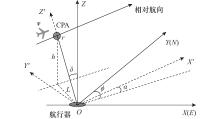
Fig.1
Detection coordinate system"
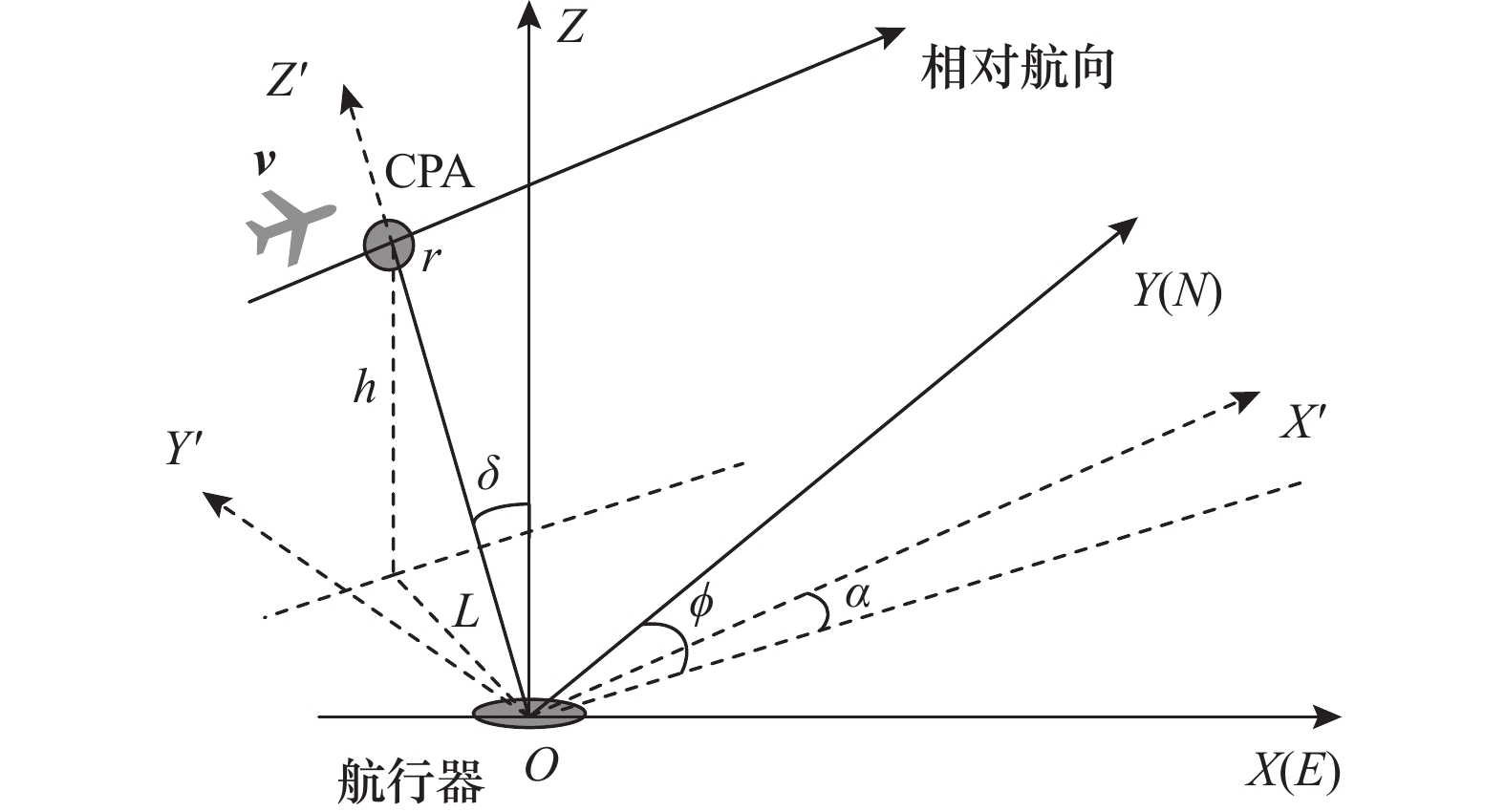
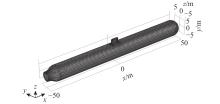
Fig.2
Underwater vehicle model and its grid division"
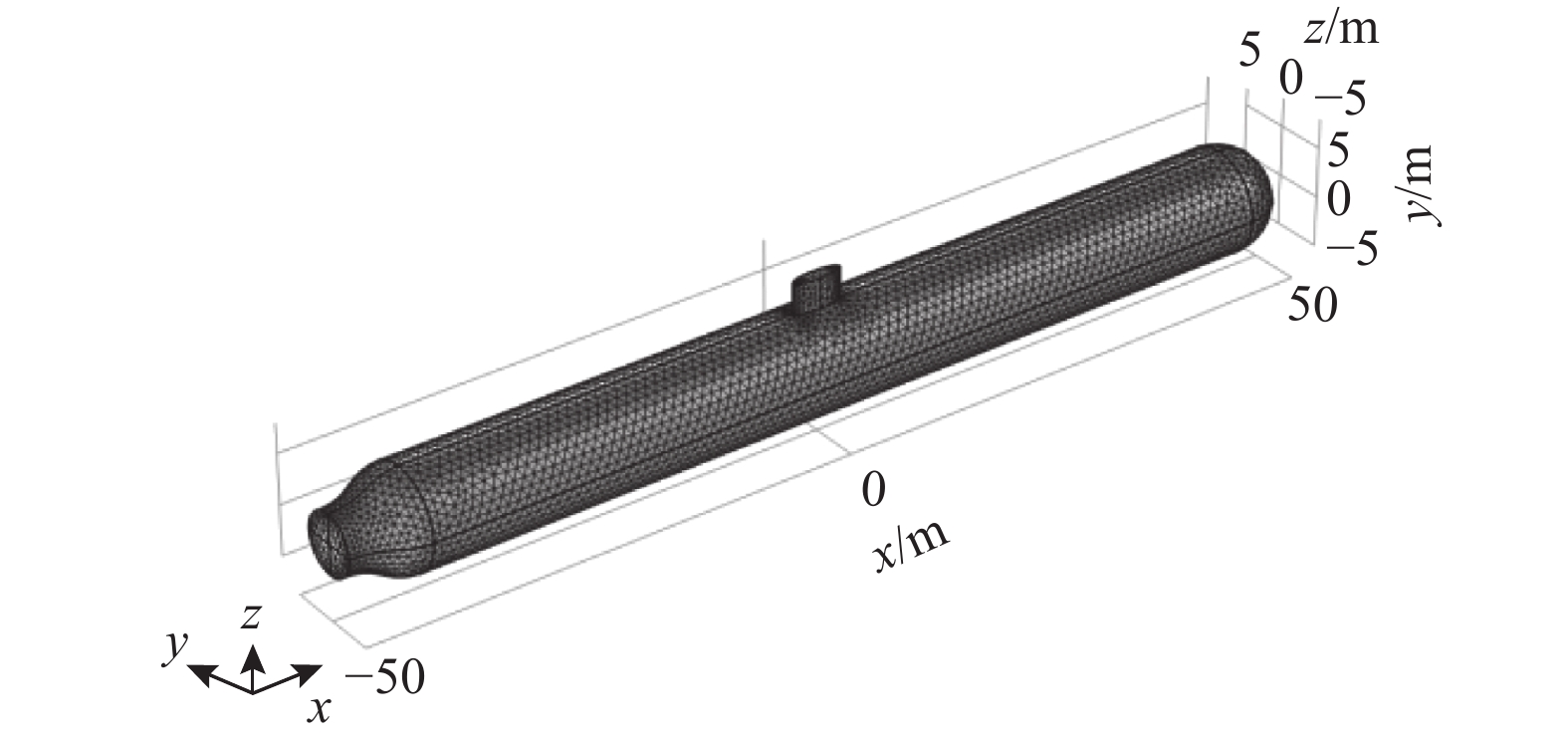
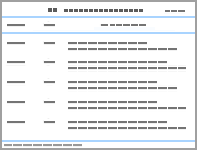
Table 1
Geomagnetic field parameters"
| 地磁场强度/nT | 地磁倾角/(°) | 地磁偏角/(°) |
| 20.5 | −2.1 |

Fig.3
Hybrid model of rotating ellipsoid and dipole array"

Table 2
Components of the magnetic moments obtained"
| 磁矩 | M0 | M1 | M2 | M3 | M4 | M5 |
| −5 433 | −8 025 | −6 795 | −5 464 | 4 051 | −2 634 | |
| 41 634 | 42 126 | 41 263 | 41 295 | 42 183 | 43 905 | |
| −16 185 | −15 148 | −16 283 | −16 566 | −15 885 | −14 127 |
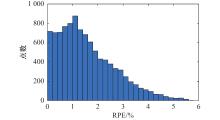
Fig.4
Relative error statistics of fitting magnetic field vector amplitude"
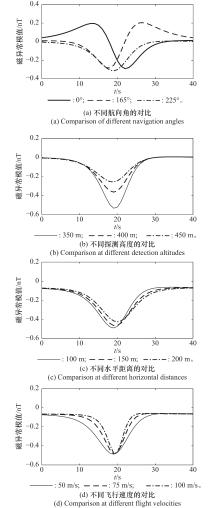
Fig.5
Comparison of magnetic anomaly curves with different detection conditions"
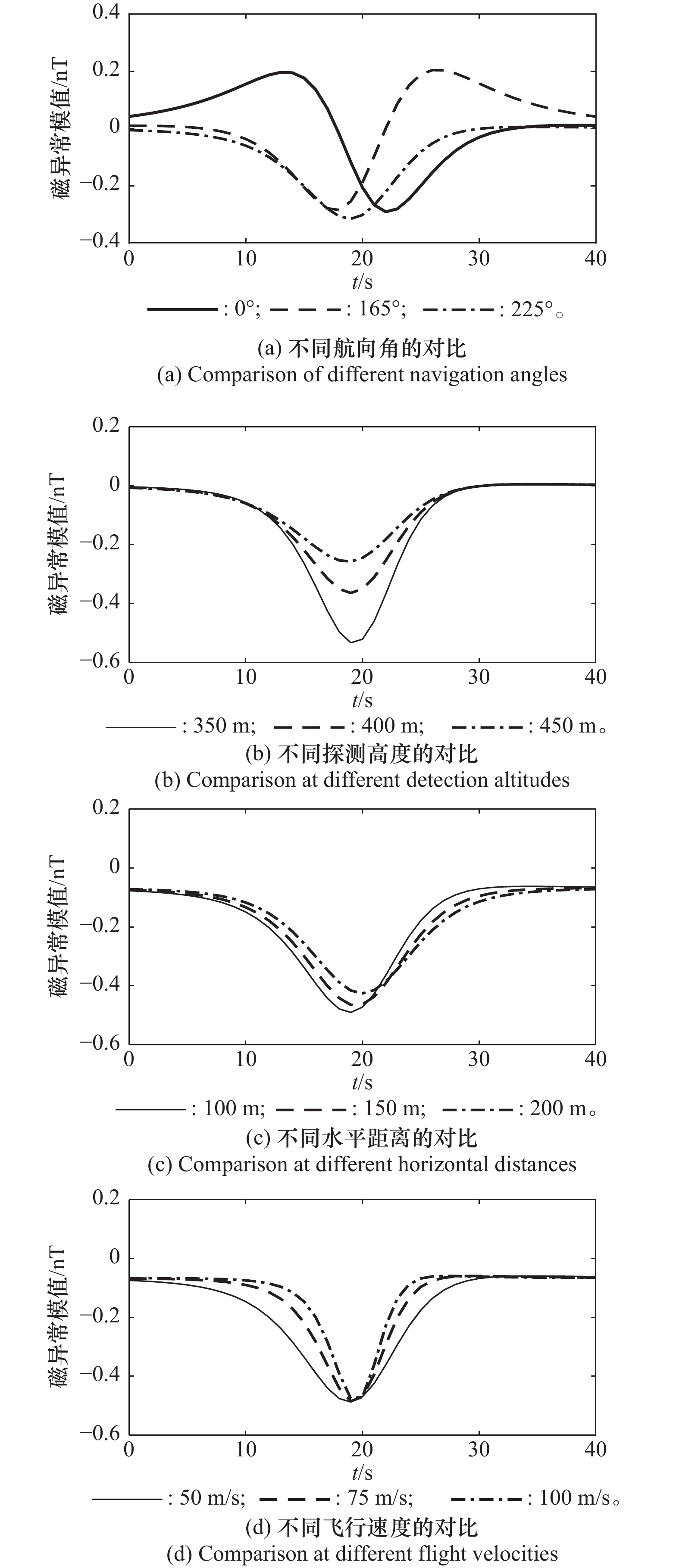
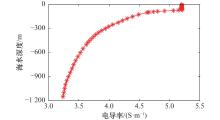
Fig.6
Longitudinal distribution of seawater conductivity at the target point"
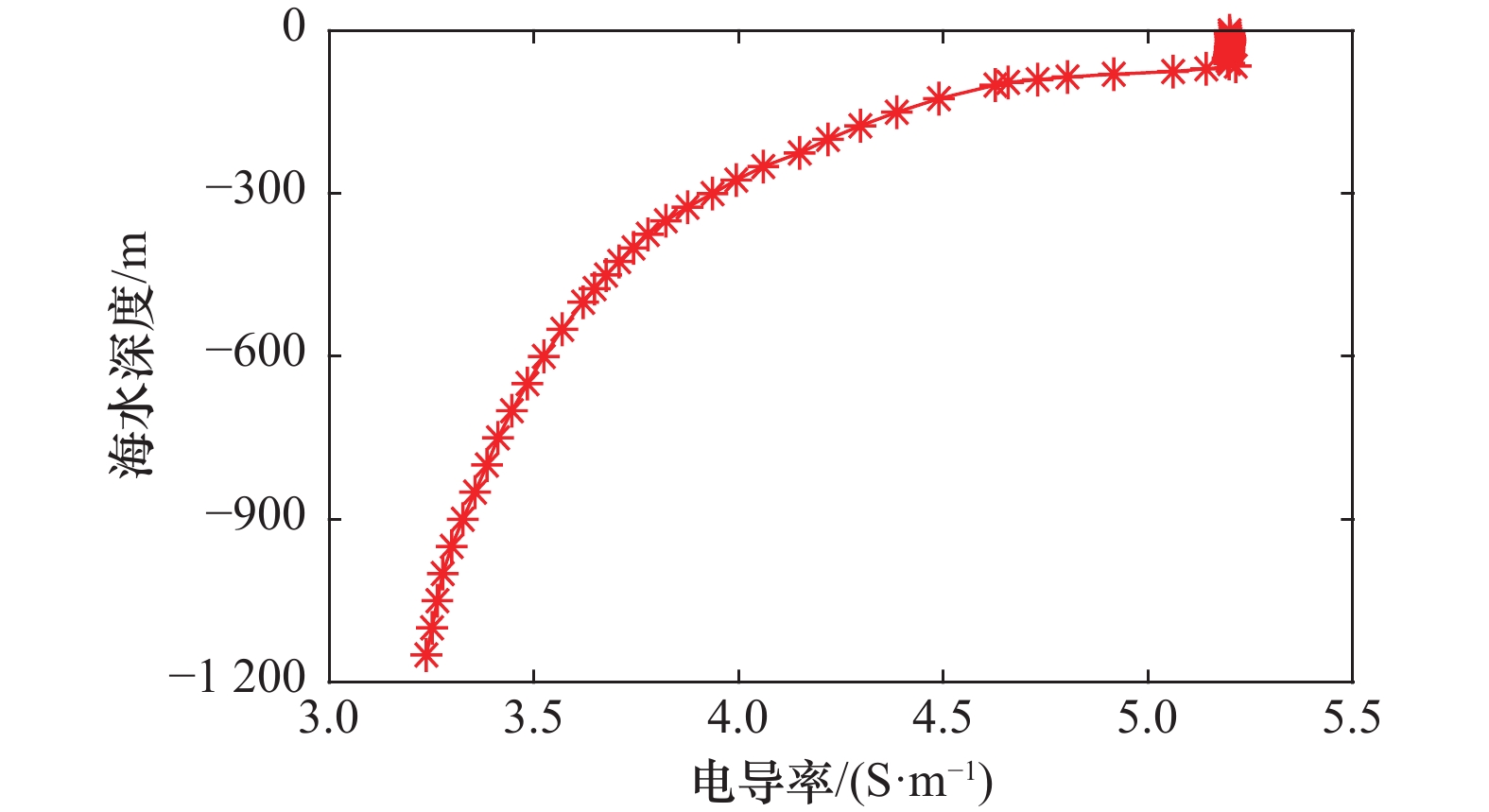
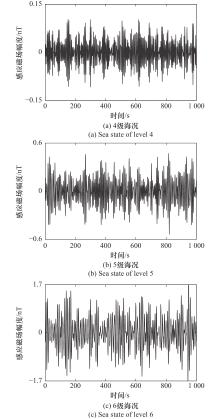
Fig.7
Simulation diagrams of magnetic fields induced by sea wave motion in different sea conditions"
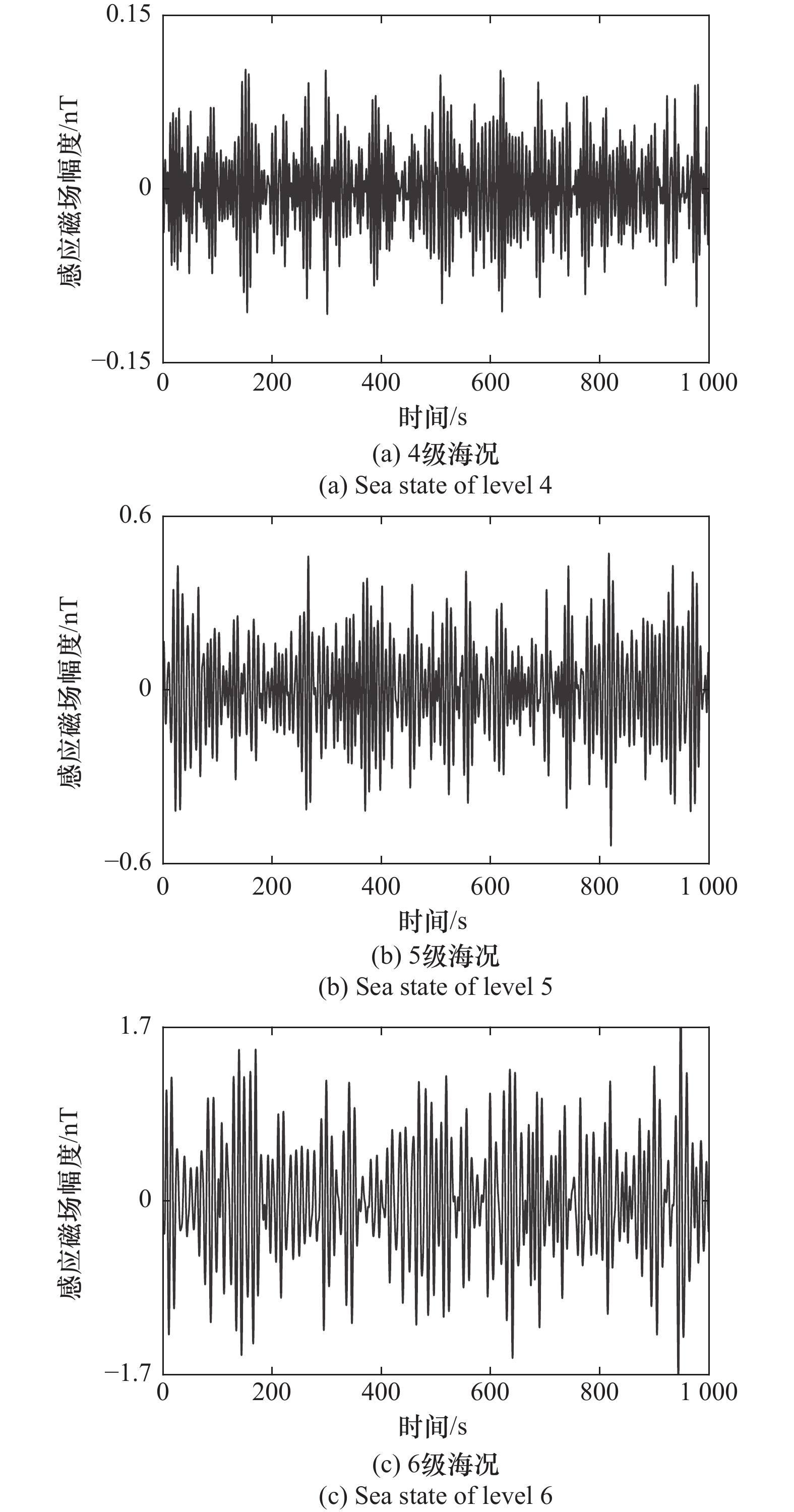
Fig.8
Magnetic anomaly detection signal at sea state of level 5"
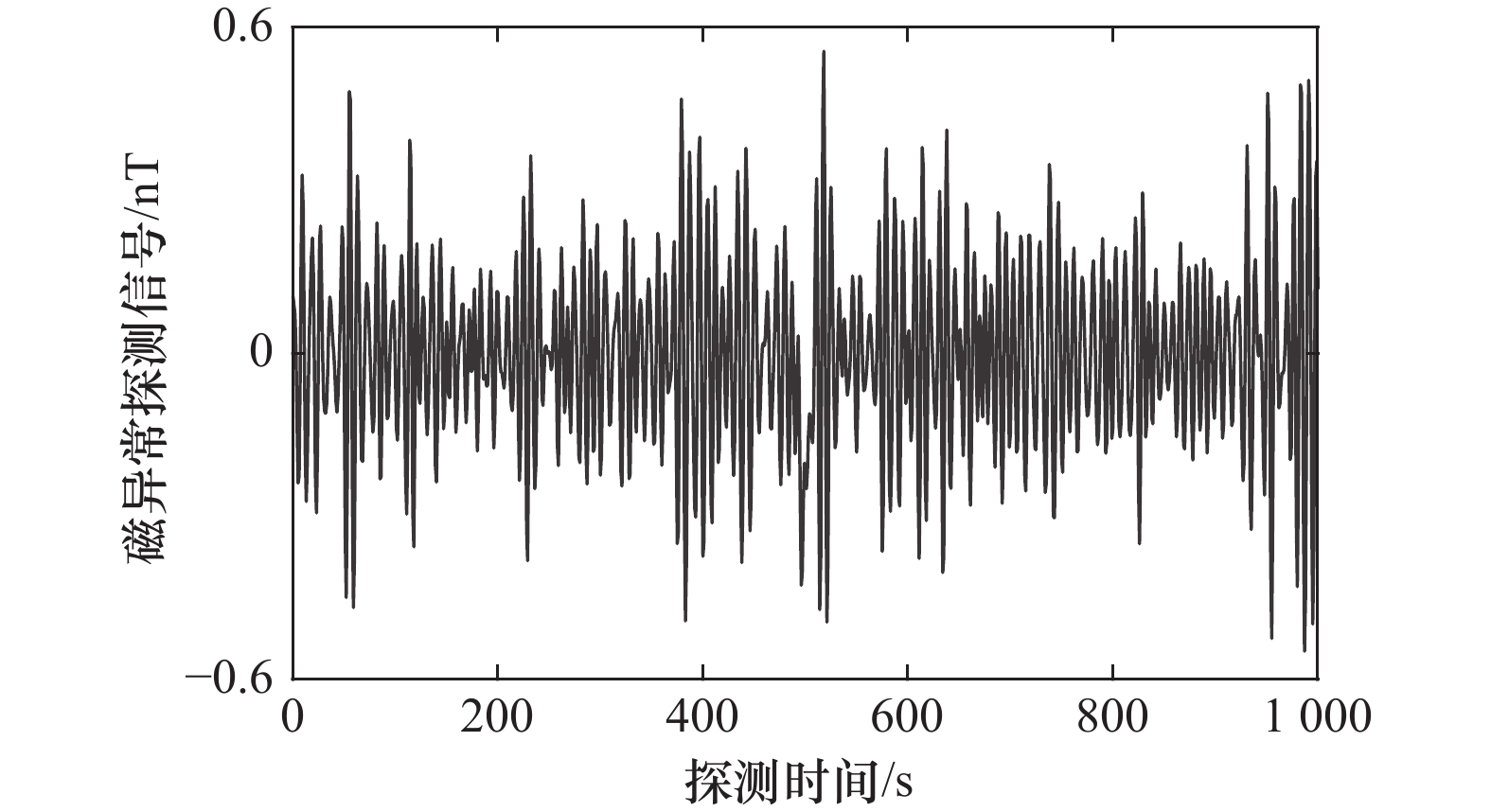
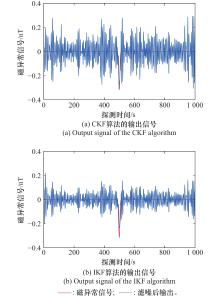
Fig.9
Comparison of output signals between CKF and IKF algorithms"
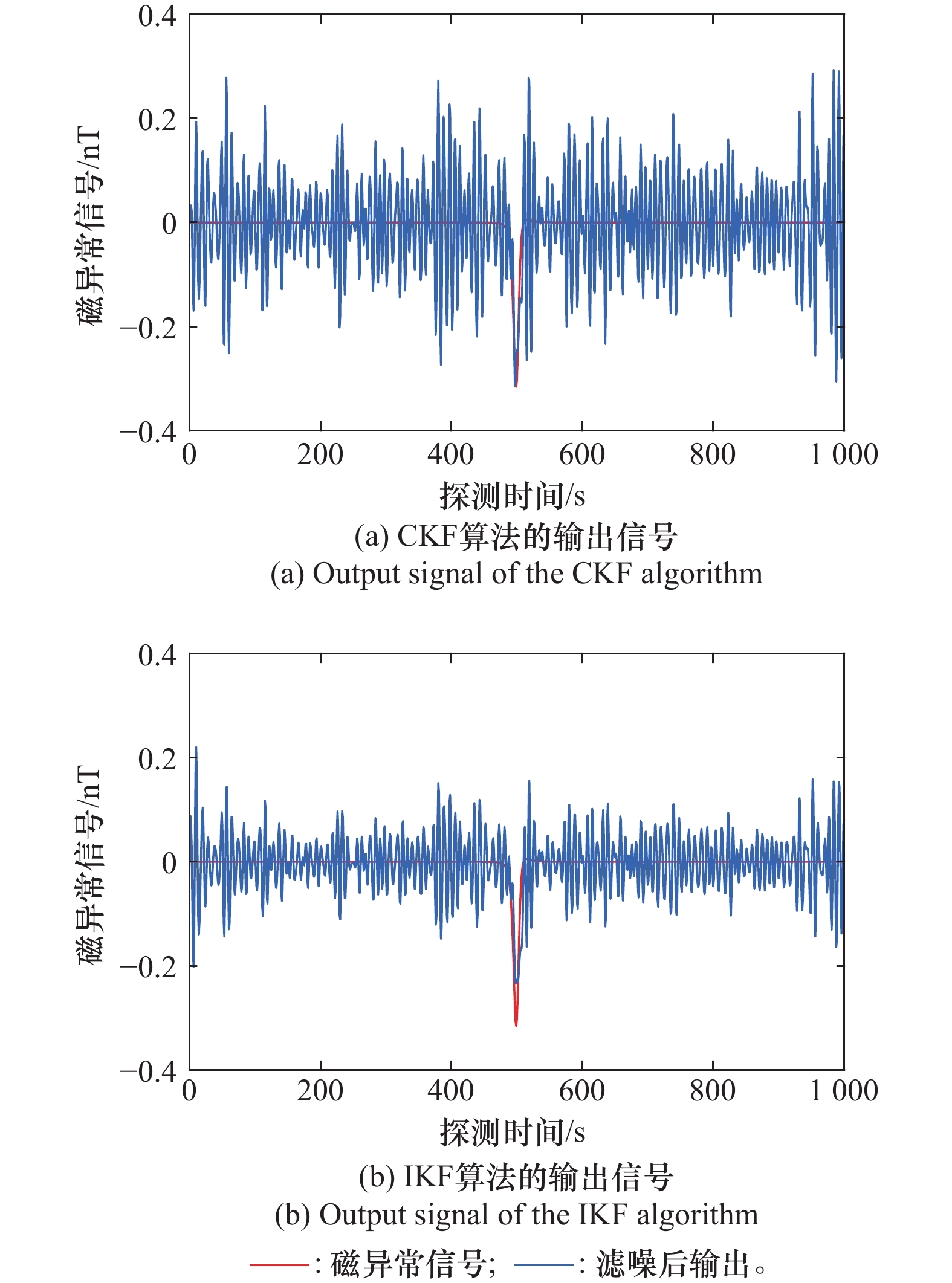
Table 3
Changes in signal-to-noise ratio before and after noise filtering"
| 海况等级 | 信噪比/dB | ||
| 滤噪前 | CKF后 | IKF后 | |
| 4 | −2.6 | 3.7 | 10.4 |
| 5 | −16.1 | −11.4 | −8.8 |
| 6 | −25.1 | −21.7 | −18.4 |
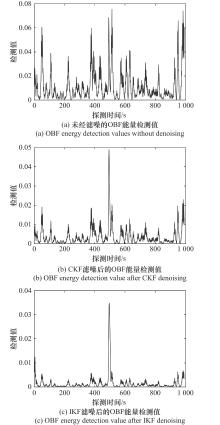
Fig.10
OBF energy detection values before and after denoising at sea state of level 5"
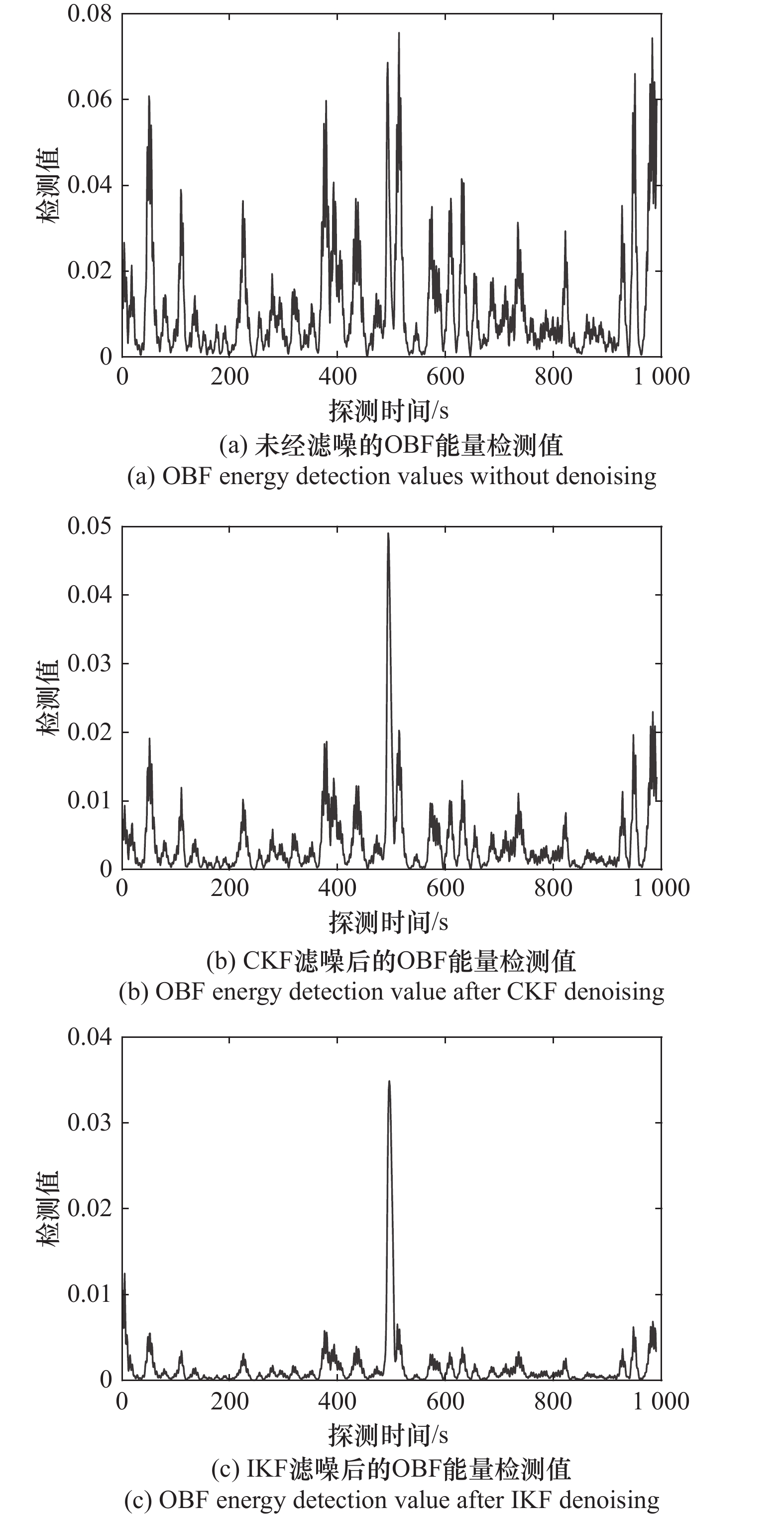
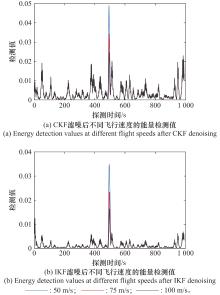
Fig.11
Energy detection results at different flight speeds after denoising at sea state of level 5"
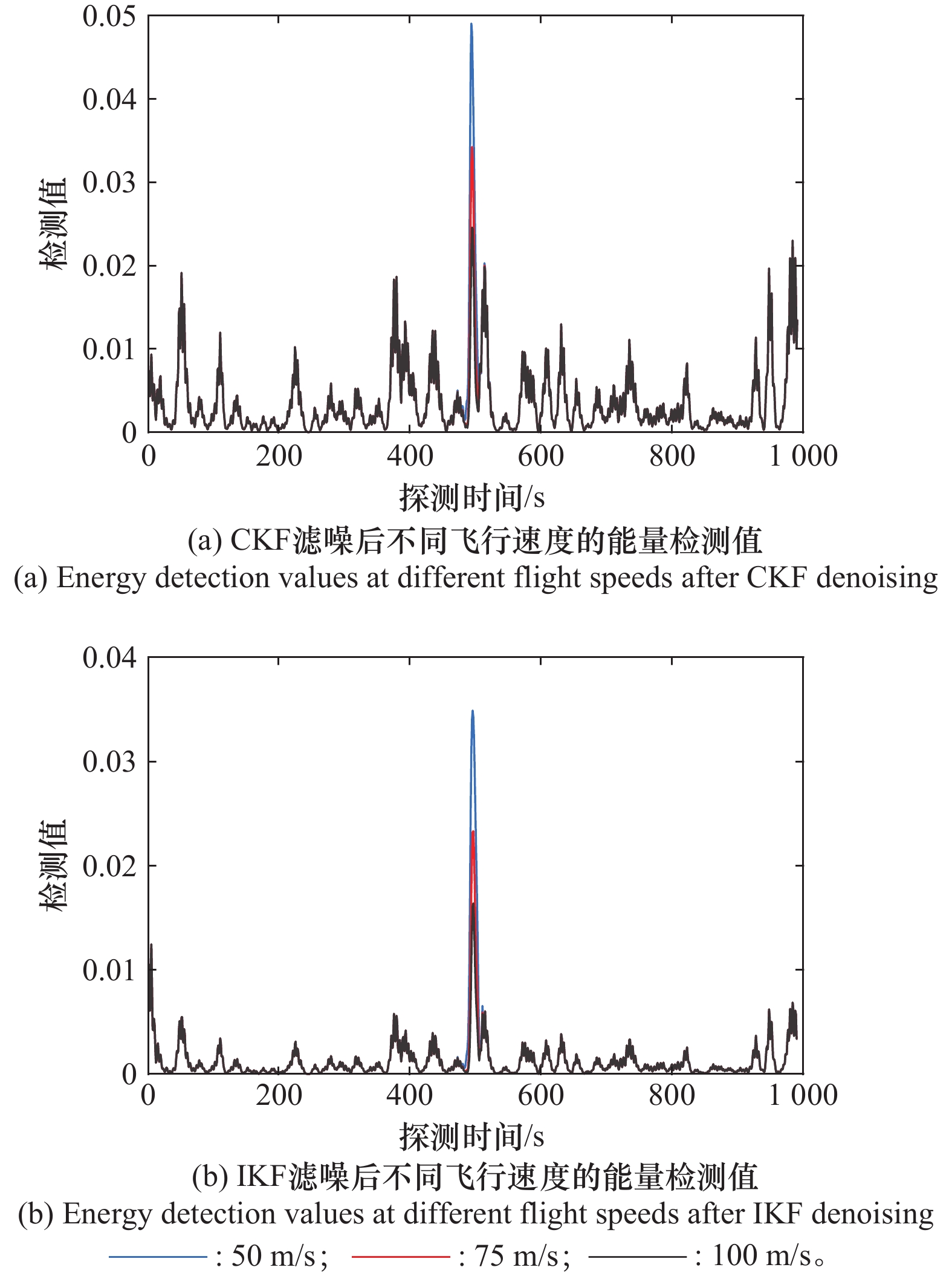
Table 4
Detection probability before and after denoising at different sea states"
| 信噪比/dB | 检测概率/% | ||
| 滤噪前 | CKF滤噪后 | IKF滤噪后 | |
| 0 | 100 | 100 | 100 |
| −15 | 13.7 | 61.2 | 99.7 |
| −25 | 1.3 | 1.3 | 1.5 |
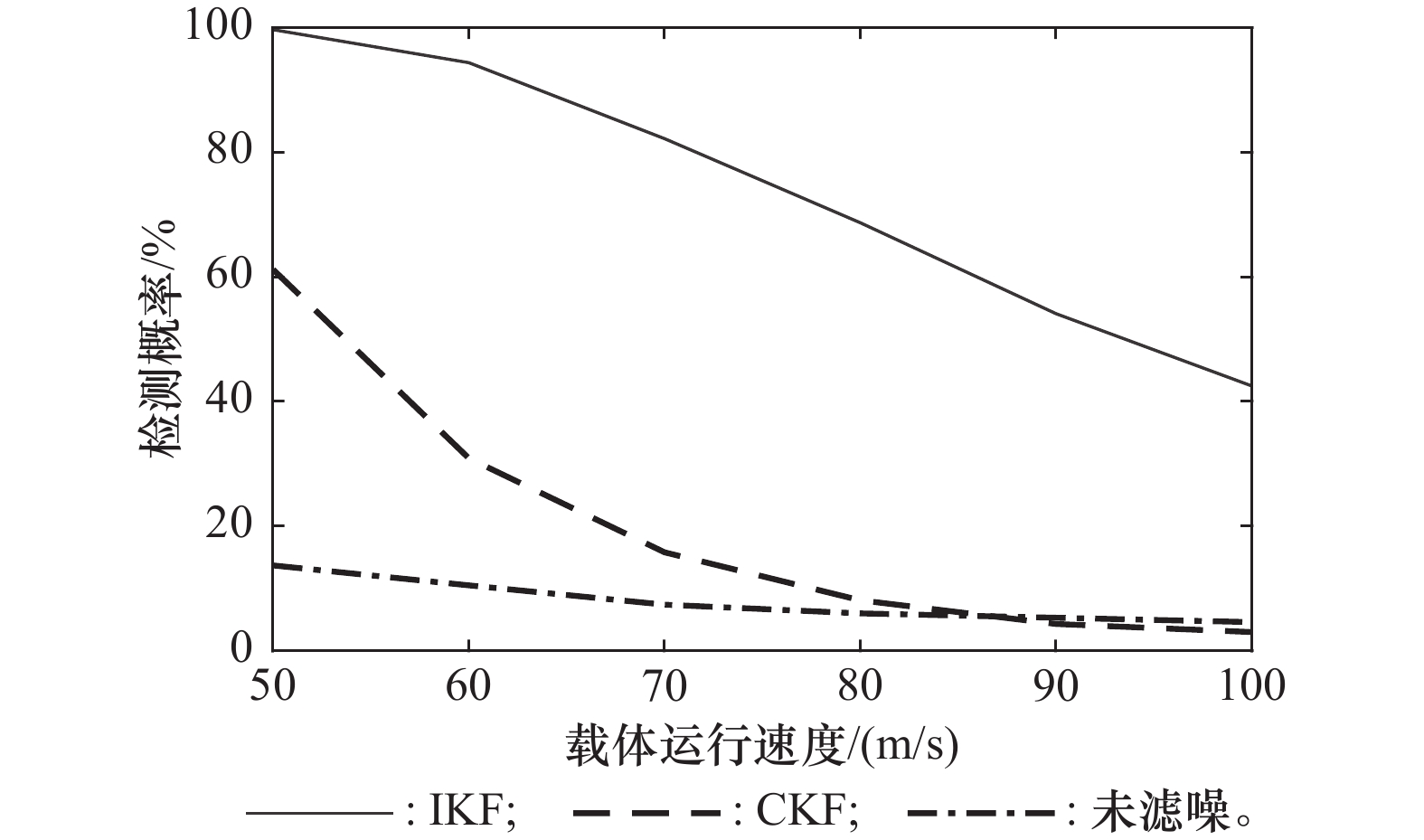
Fig.12
Detection probability at different flight speeds before and after denoising"
| 1 | 焦文沛, 李杰, 张春燕, 等. 声呐图像智能感知算法综述[J]. 水下无人系统学报, 2025, 33 (3): 559- 572. |
| JIAO W P, LI J, ZHANG C Y, et al. Review of intelligent perception algorithms for sonar images[J]. Journal of Unmanned Undersea Systems, 2025, 33 (3): 559- 572. | |
| 2 |
LI C J, HUANG S C, WEI D Z, et al. Detection range of airborne magnetometers in magnetic anomaly detection[J]. Journal of Engineering Science and Technology Review, 2015, 8 (4): 105- 110.
doi: 10.25103/jestr.084.17 |
| 3 |
CAO Q, YU S, XU L, et al. Spin-exchange relaxation-free magnetometer enhanced by biased weak measurement[J]. Results in Physics, 2024, 60, 107627.
doi: 10.1016/j.rinp.2024.107627 |
| 4 |
WANG T, LEE W J, LIMES M, et al. Pulsed vector atomic magnetometer using an alternating fast-rotating field[J]. Nature Communications, 2025, 16 (1): 1374.
doi: 10.1038/s41467-025-56668-2 |
| 5 |
冷洁, 易佳成. 基于COMSOL Multiphysics建模的水下目标空中磁场特性分析[J]. 舰船电子工程, 2024, 44 (7): 177- 180.
doi: 10.3969/j.issn.1672-9730.2024.07.038 |
|
LENG J, YI J C. Analysis of airborne magnetic field characteristics of underwater targets based on COMSOL Multiphysics modeling[J]. Ship Electronic Engineering, 2024, 44 (7): 177- 180.
doi: 10.3969/j.issn.1672-9730.2024.07.038 |
|
| 6 |
JIN H H, WANG H, ZHUANG Z H, et al. Underwater target correlation detection and location method based on normalized magnetic moment[J]. Measurement Science and Technology, 2024, 35 (4): 045114.
doi: 10.1088/1361-6501/ad1dae |
| 7 | SUI Y Y, LESLIE K, CLARK D. Multiple-order magnetic gradient tensors for localization of a magnetic dipole[J]. IEEE Magnetics Letters, 2017, 8, 6506605. |
| 8 |
JIANG W, TAN X L. Improved ellipsoid fitting aided geomagnetic sensor calibration algorithm[J]. Measurement Science and Technology, 2024, 35 (7): 076302.
doi: 10.1088/1361-6501/ad3a88 |
| 9 |
LU B J, ZHANG X B. An improved composite ship magnetic field model with ellipsoid and magnetic dipole arrays[J]. Scientific Reports, 2024, 14 (1): 4070.
doi: 10.1038/s41598-024-54848-6 |
| 10 | 赵高阳, 刘勇, 朱平杰, 等. 基于有限元法的水下航行器地磁异常模拟研究[J]. 系统工程与电子技术, 2024, 46 (7): 2191- 2200. |
| ZHAO G Y, LIU Y, ZHU P J, et al. Simulation of geomagnetic anomaly for underwater vehicles based on finite element method[J]. Systems Engineering and Electronics, 2024, 46 (7): 2191- 2200. | |
| 11 |
WEAVER J T. Magnetic variations associated with ocean waves and swell[J]. Journal of Geophysical Research, 1965, 70 (8): 1921- 1929.
doi: 10.1029/JZ070i008p01921 |
| 12 |
ZHU X J, XIA M Y. Magnetic field induced by wake of moving body in wind waves[J]. Progress in Electromagnetics Research, 2014, 149, 109- 118.
doi: 10.2528/PIER14070706 |
| 13 |
ZHOU H J, SONG R H, JIN T, et al. On the magnetic field induced by swell in inhomogeneous seawater[J]. Deep Sea Research Part I: Oceanographic Research Papers, 2024, 205, 104244.
doi: 10.1016/j.dsr.2024.104244 |
| 14 | FREIRE N L, DOUGLAS S C. Adaptive cancellation of geomagnetic background noise using a sign-error normalized LMS algorithm[C]// Proc. of the IEEE International Conference on Acoustics, Speech, and Signal Processing, 1993. |
| 15 | TSENG C H, WU J Y. SHAKF-PU: Sage-Husa adaptive Kalman filtering-based pedestrian characteristic parameter update mechanism for enhancing step length estimation in pedestrian dead reckoning[J]. Applied Bionics and Biomechanics, 2024 (1): 1150076. |
| 16 | 葛健, 董浩斌, 刘欢, 等. 基于Sage-Husa算法的拖曳式Overhauser 海洋磁场传感器海浪磁场噪声实时抑制方法[J]. 地球科学, 2018, 43 (10): 3792- 3798. |
| GE J, DONG H B, LIU H, et al. Real-time reduction of magnetic noise associated with ocean waves via Sage-Husa algorithm for towed overhauser marine geomagnetic sensor[J]. Earth Science, 2018, 43 (10): 3792- 3798. | |
| 17 | LYALL R, LI X, ROWE J. Identification and removal of ocean swell effects in aeromagnetic surveys[C]// Proc. of the SEG International Exposition and Annual Meeting, 2014. |
| 18 |
JIN H H, GUO J, WANG H B, et al. Magnetic anomaly detection and localization using orthogonal basis of magnetic tensor contraction[J]. IEEE Trans. on Geoscience and Remote Sensing, 2020, 58 (8): 5944- 5954.
doi: 10.1109/TGRS.2020.2973322 |
| 19 | GINZBURG B, FRUMKIS L, KAPLAN B Z. Processing of magnetic scalar gradiometer signals using orthonormalized functions[J]. Sensors and Actuators A: Physical, 2002, 102 (1/2): 67- 75. |
| 20 |
WU X S, HUANG S, LI M, et al. Vector magnetic anomaly detection via an attention mechanism deep-learning model[J]. Applied Sciences, 2021, 11 (23): 11533.
doi: 10.3390/app112311533 |
| 21 | 徐磊, 张志强, 林朋飞, 等. 磁异常检测方法研究现状及发展趋势[J]. 数字海洋与水下攻防, 2022, 5 (1): 66- 72. |
| XU L, ZHANG Z Q, LIN P F, et al. Research status and development trend of magnetic anomaly detection methods[J]. Digital Ocean and Underwater Warfare, 2022, 5 (1): 66- 72. | |
| 22 |
LIU H, ZHANG X L, DONG H B, et al. Theories, applications, and expectations for magnetic anomaly detection technology: a review[J]. IEEE Sensors Journal, 2023, 23 (16): 17868- 17882.
doi: 10.1109/JSEN.2023.3294498 |
| 23 | 陈路昭, 朱万华, 吴佩霖, 等. 地磁背景环境中基于分形特征的磁异常信号检测算法[J]. 电子与信息学报, 2019, 41 (2): 332- 340. |
| CHEN L Z, ZHU W H, WU P L, et al. Magnetic anomaly signal detection algorithm based on fractal features in geomagnetic background[J]. Journal of Electronics & Information Technology, 2019, 41 (2): 332- 340. | |
| 24 | CAO C H, BAO L W, GAO G, et al. A novel method for ocean wave spectra retrieval using deep learning from Sentinel-1 wave mode data[J]. IEEE Trans. on Geoscience and Remote Sensing, 2024, 62, 4204016. |
| 25 | XIU M L, LI L H, WANG Y B, et al. Pierson-Moscowitz spectrum simulation based on the rough sea surface[C]// Proc. of the Journal of Physics: Conference Series, 2021. |
| 26 |
KHODARAHMI M, MAIHAMI V. A review on Kalman filter models[J]. Archives of Computational Methods in Engineering, 2023, 30 (1): 727- 747.
doi: 10.1007/s11831-022-09815-7 |
| 27 | LANGE T, STANNAT W. On the continuous time limit of the ensemble Kalman filter[J]. Mathematics of Computation, 2021, 90 (327): 233- 265. |
| 28 |
LIU K N, ZHAO W Y, SUN B G, et al. Application of updated Sage–Husa adaptive Kalman filter in the navigation of a translational sprinkler irrigation machine[J]. Water, 2019, 11 (6): 1269.
doi: 10.3390/w11061269 |
| 29 |
WANG Z T, ZHENG E R, LIU J G, et al. Adaptive orthogonal basis function detection method for unknown magnetic target motion state[J]. Applied Sciences, 2024, 14 (2): 902.
doi: 10.3390/app14020902 |
| 30 | WANG T, LI J T, LIU N Z, et al. A new data processing method for magnetic anomaly detection and localization based on 2-D orthonormal basis functions[J]. IEEE Trans. on Geoscience and Remote Sensing, 2023, 61, 5912011. |
| [1] | Ronghua TAO, Chun ZHOU, Baoqiang ZHANG, Zhentao YU, He QIAO, Cong LIU. Based on OBF inverse transform to eliminate square wave interference in airborne magnetic anomaly detection data [J]. Systems Engineering and Electronics, 2025, 47(7): 2110-2118. |
| [2] | Gaoyang ZHAO, Yong LIU, Pingjie ZHU, Bing XIANG, Hongjuan ZHOU. Simulation of geomagnetic anomaly of underwater vehicle based on finite element method [J]. Systems Engineering and Electronics, 2024, 46(7): 2191-2200. |
| [3] | Yu SHI, Leixiang BIAN, Zhihong ZHUANG, Mengyin FU, Chune WANG, Jie QIN. Optimal flight direction analysis for aeromagnetic anomaly detection of unknown attitude targets [J]. Systems Engineering and Electronics, 2024, 46(1): 42-50. |
| [4] | XIONG Xiong, YANG Rijie, SHEN Yang. Search probability evaluation model of airborne magnetic anomaly detection based on equivalent average sweep width [J]. Systems Engineering and Electronics, 2014, 36(3): 487-493. |
| Viewed | ||||||
|
Full text |
|
|||||
|
Abstract |
|
|||||