Systems Engineering and Electronics ›› 2026, Vol. 48 ›› Issue (7): 2133-2143.doi: 10.12305/j.issn.1001-506X.2026.07.01
• Electronic Technology •
Multi-source image target detection method based on evidence theory
Na JIANG1,2( ), Lin LIU1,2(), Shilong CHEN3
- 1. Aerospace Information Research Institute,Chinese Academy of Sciences,Beijing 100094,China
2. School of Electronic,Electrical and Communication Engineering,University of Chinese Academy of Sciences,Beijing 100049,China
3. School of Electronics, Peking University, Beijing 100080, China
-
Received:2025-05-09Revised:2025-06-06Online:2025-10-28Published:2025-10-28 -
Contact:Lin LIU E-mail:jiangna23@mails.ucas.ac.cn;lliu@mails.ie.ac.cn

CLC Number:
Cite this article
Na JIANG, Lin LIU, Shilong CHEN. Multi-source image target detection method based on evidence theory[J]. Systems Engineering and Electronics, 2026, 48(7): 2133-2143.
share this article
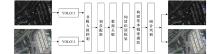
Fig.1
Framework of the proposed algorithm"
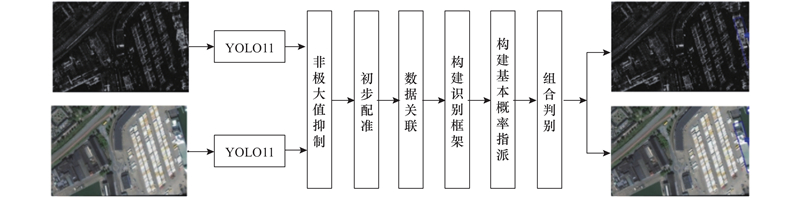
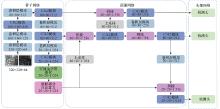
Fig.2
YOLO11 network structure"
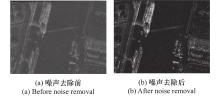
Fig.3
Comparison before and after noise removal"
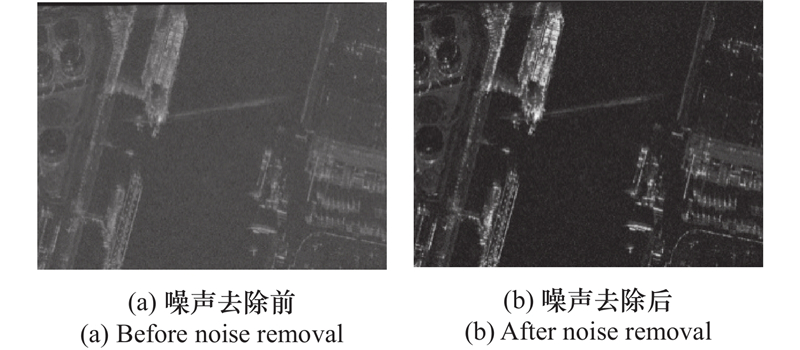
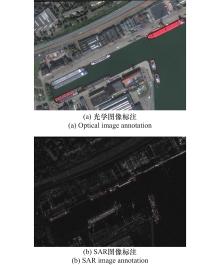
Fig.4
Data annotations"
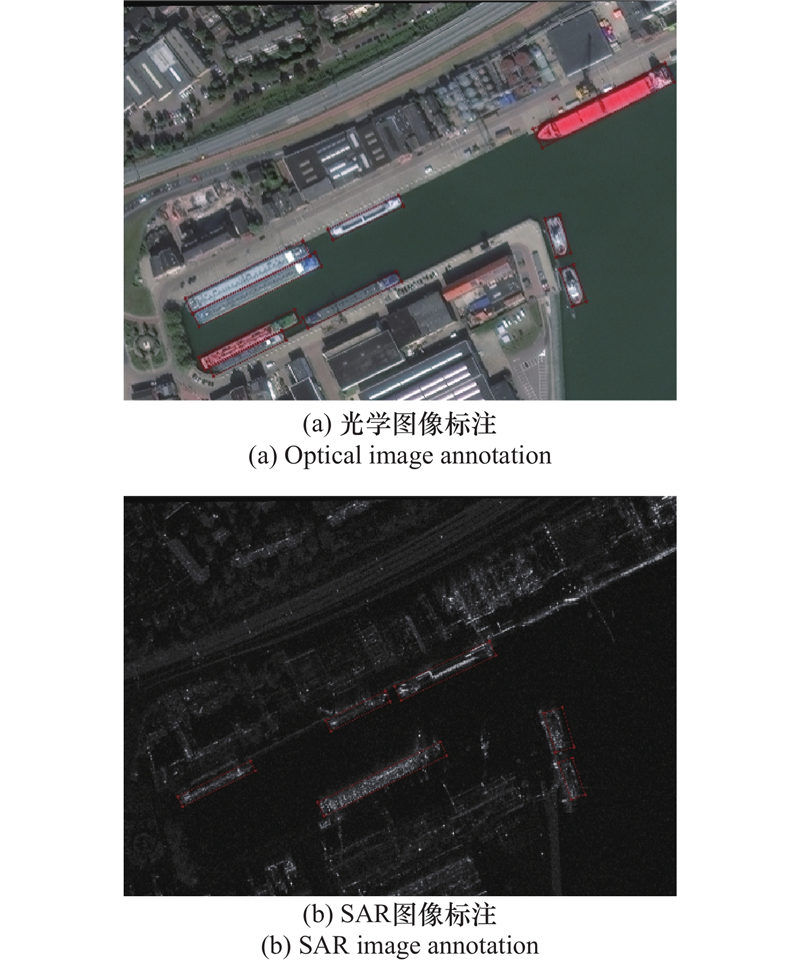
Fig.5
Impact of parameter settings on accuracy"
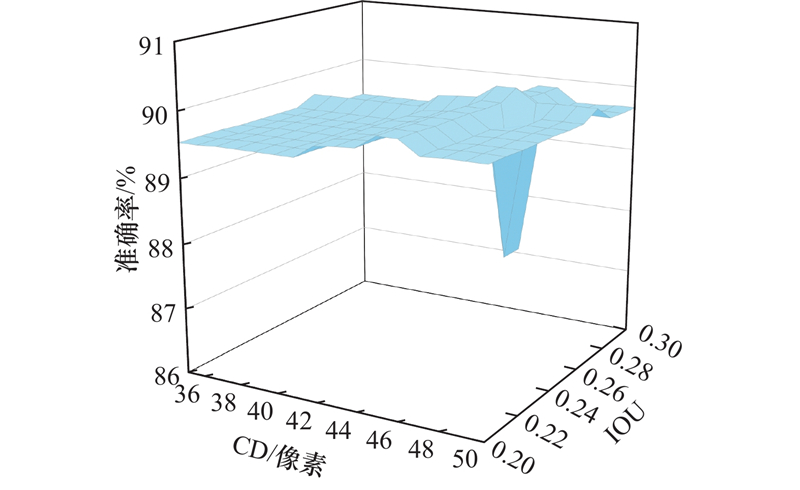
Fig.6
Standardized clustering results"
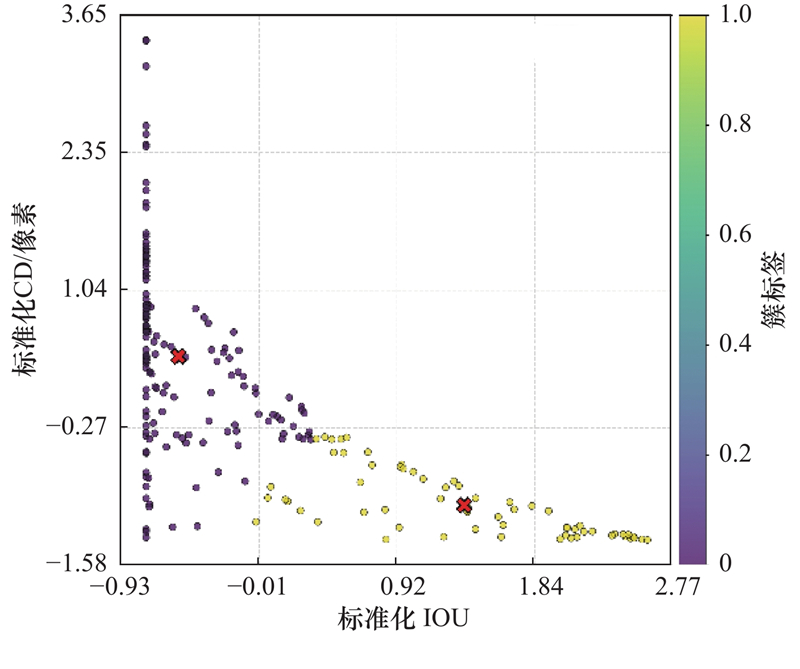
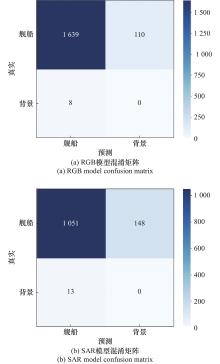
Fig.7
Confusion matrix"
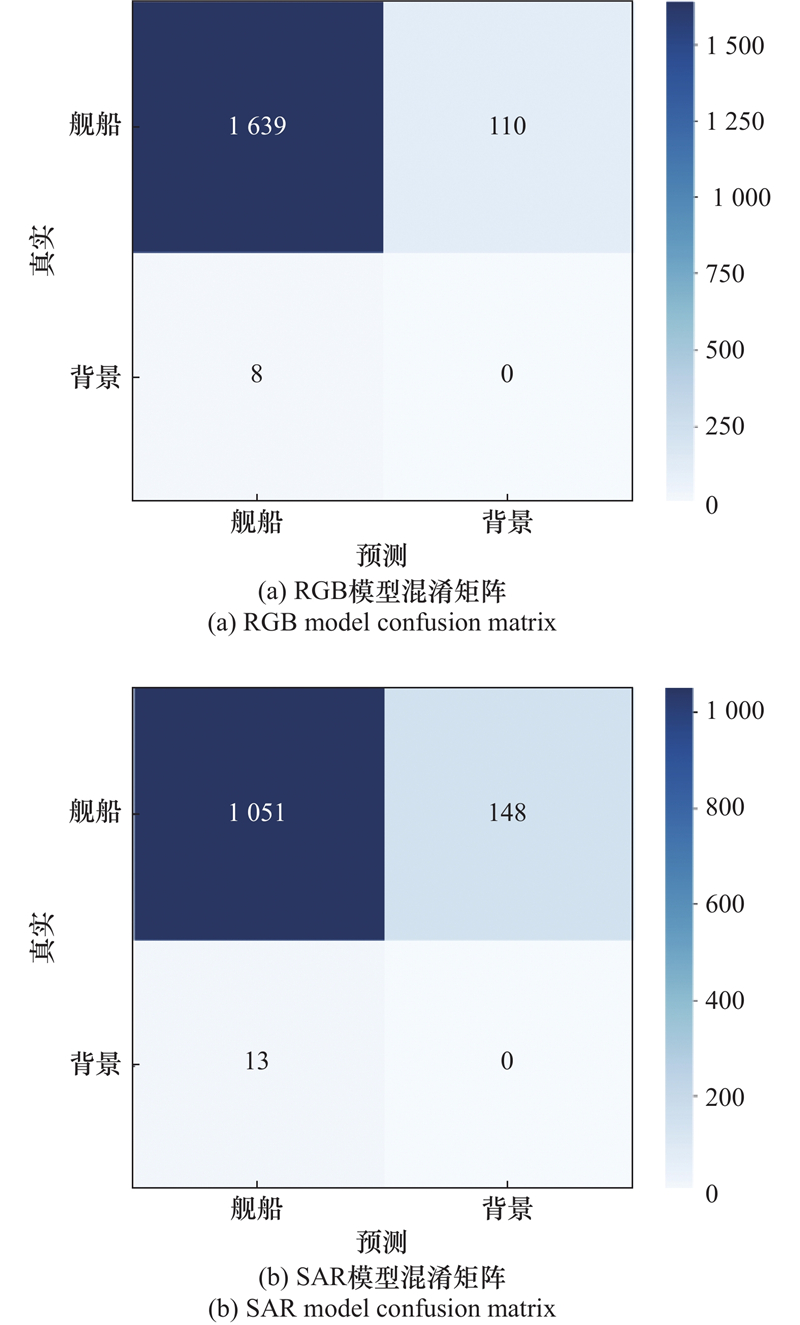
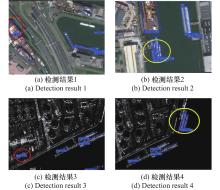
Fig.8
Target detection results"
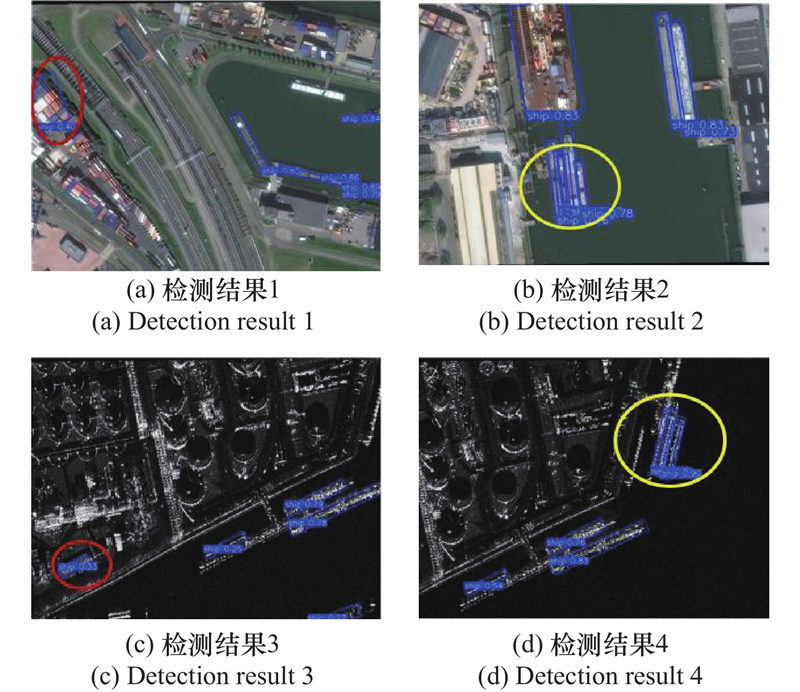
Fig.9
Comparison between the proposed method and single source detection results"
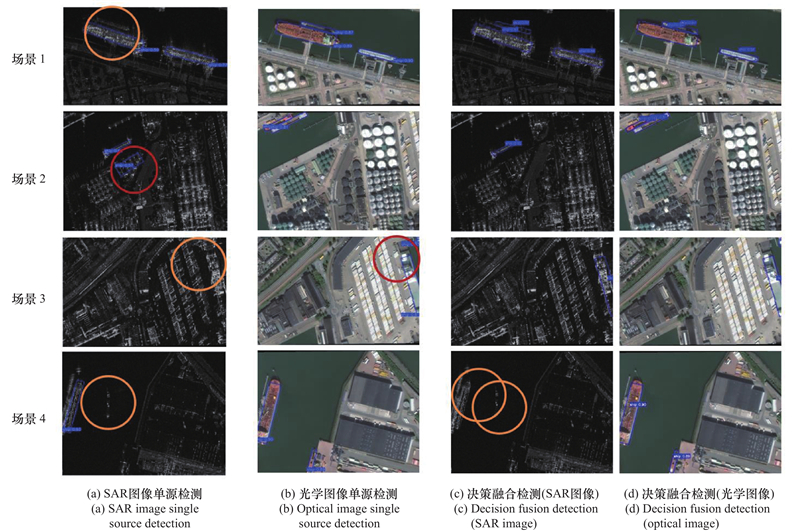

Table 1
Comparison of performance between the proposed method and single source detection"
| 方法 | 数据集 | AP/% | R/% | F1/% |
| YOLO11-obb | PSRGB | 94.93 | 95.54 | 90.36 |
| Rotate Faster R-CNN | PSRGB | 84.12 | 88.85 | 84.16 |
| ROI-Transformer | PSRGB | 91.30 | 93.31 | 91.28 |
| 本文方法 | PSRGB | 95.63 | 96.50 | 95.73 |
| YOLO11-obb | SAR | 74.68 | 86.82 | 84.85 |
| Rotate Faster R-CNN | SAR | 42.44 | 56.59 | 45.77 |
| ROI-Transformer | SAR | 52.60 | 62.40 | 60.64 |
| 本文方法 | SAR | 77.60 | 87.21 | 86.71 |
Fig.10
Comparison of decision fusion results with detection results obtained through other fusion methods"
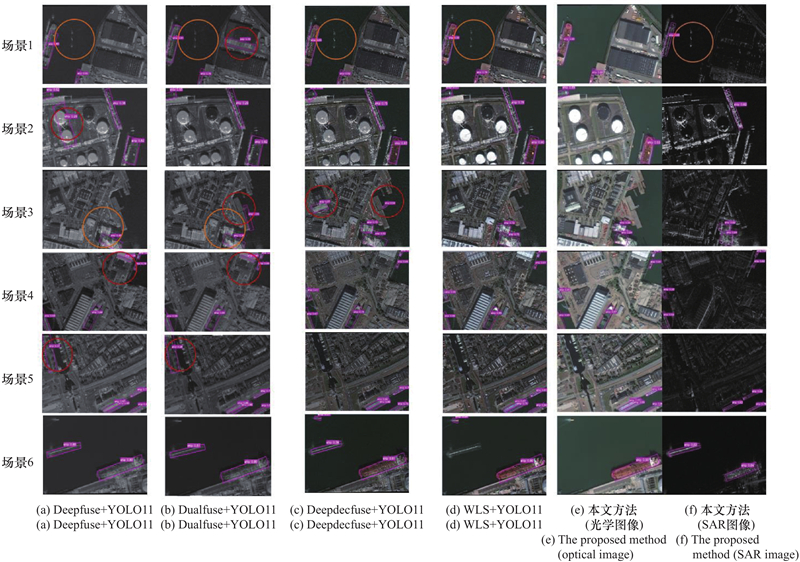
Table 2
Comparison of the proposed method with other multi-source detection methods"
| 方法 | AP/% | R/% | F1/% |
| Deepfuse+YOLO11 | 72.09 | 85.54 | 84.22 |
| Dualfuse+YOLO11 | 71.10 | 84.34 | 82.64 |
| Deepdecfuse+YOLO11 | 78.83 | 89.40 | 85.09 |
| WLS+YOLO11 | 79.69 | 91.57 | 86.46 |
| 本文方法 | 87.27 | 89.51 | 89.12 |
Table 3
Quantitative analysis of computational efficiency"
| 方法 | FLOPs/G | 总参数量/×106 | GPU占用率/% | 时间/s |
| Deepfuse+YOLO11 | 19.43 | 2.67 | 11 | 5.34 |
| Dualfuse+YOLO11 | 14.87 | 2.93 | 29 | 4.73 |
| Deepdecfuse+YOLO11 | 28.30 | 2.95 | 48 | 1.41 |
| WLS+YOLO11 | 6.60 | 2.65 | 4 | 7.88 |
| 本文方法 | 13.20 | 5.30 | 9 | 1.94 |
| 1 | SONG H S, WANG L, MI L, et al. DCAPT-Net: a multi-scale ship detection algorithm for SAR images[C]//Proc. of the 10th International Conference on Big Data and Information Analytics, 2024: 441−446. |
| 2 | ASHIQUZZAMAN A, OH S, LEE D, et al. Compact deeplearning convolutional neural network based hand gesture classifier application for smart mobile edge computing[C]//Proc. of the International Conference on Artificial Intelligence in Information and Communication, 2020: 119−123. |
| 3 | XU S J, JI Y J, WANG G C, et al. GFSPP-YOLO: a light YOLO model based on group fast spatial pyramid pooling[C]//Proc. of the IEEE 11th International Conference on Information, Communication and Networks, 2023: 733−738. |
| 4 | WANG H, GAO P. Survey of small object detection methods based on deep learning[C]//Proc. of the 9th International Conference on Intelligent Informatics and Biomedical Sciences, 2024: 221−224. |
| 5 |
CHEN S L, LIU L, WANG X B, et al. Research on SAR active anti-jamming imaging based on joint random agility of inter-pulse multi-parameters in the presence of active deception[J]. Remote Sensing, 2024, 16 (17): 3303.
doi: 10.3390/rs16173303 |
| 6 | LIU S Z, LI K P, MI J H, et al. Multi-source navigation sensor backend information fusion technology based on D-S evidence theory[C]//Proc. of the 9th International Symposium on System Security, Safety, and Reliability, 2023: 197−202. |
| 7 | 赵铖鑫. 联合SAR与光学图像的目标检测与识别技术[D]. 成都: 电子科技大学, 2023. |
| ZHAO C X. Joint SAR and optical image target detection and recognition technology[D]. Chengdu: University of Electronic Science and Technology of China, 2023. | |
| 8 |
ZHONG Y T, ZHANG S Y, LIU Z Y, et al. Unsupervised fusion of misaligned PAT and MRI images via mutually reinforcing cross-modality image generation and registration[J]. IEEE Trans. on Medical Imaging, 2024, 43 (5): 1702- 1714.
doi: 10.1109/TMI.2023.3347511 |
| 9 | 陈稳. 基于光学和SAR遥感影像融合的典型目标检测识别研究[D]. 哈尔滨: 哈尔滨工业大学2019. |
| CHEN W. Research on typical target detection and recognition based on optical and SAR remote sensing image fusion[D]. Harbin: Harbin Institute of Technology, 2019. | |
| 10 |
CHEN J L, XU X Q, ZHANG J C, et al. Ship target detection algorithm based on decision-level fusion of visible and SAR images[J]. IEEE Journal on Miniaturization for Air and Space Systems, 2023, 4 (3): 242- 249.
doi: 10.1109/JMASS.2023.3269434 |
| 11 | 王梓衡, 沈继锋, 左欣, 等. 基于特征级与决策级融合的农作物叶片病害识别[J]. 江苏大学学报(自然科学版), 2024, 45 (3): 286- 294. |
| WANG Z H, SHEN J F, ZUO X, et al. Crop leaf disease recognition based on feature level and decision level fusion[J]. Journal of Jiangsu University (Natural Science Edition), 2024, 45 (3): 286- 294. | |
| 12 | 周策, 赵秋博, 王明杰, 等. 基于证据理论的可见光和红外融合检测算法[J]. 无线电工程, 2025, 55 (3): 484- 492. |
| ZHOU C, ZHAO Q B, WANG M J, et al. Visible light and infrared fusion detection algorithm based on evidence theory[J]. Radio Engineering, 2025, 55 (3): 484- 492. | |
| 13 | WANG Z Y, WANG H Q, WANG Y. Pyramid attention network for medical image registration[C]//Proc. of the IEEE International Symposium on Biomedical Imaging, 2024. |
| 14 | WU Q, MA Y N, WANG Y, et al. Comparison of pixel-level and feature-level image fusion networks for slow-moving landslide detection[C]//Proc. of the IGARSS IEEE International Geoscience and Remote Sensing Symposium, 2024: 3963−3966. |
| 15 | LIU L, SUN N, WANG J C. Spearman-coefficient-based improved D-S evidence theory algorithm considering the initial importance of evidence body and its application on multi-source information fusion[C]//Proc. of the 3rd International Conference on Computer Science, Electronic Information Engineering and Intelligent Control Technology, 2023: 312−318. |
| 16 |
BECK J, KEMETER L M, DÜRRBECK K, et al. Toward integrating ChatGPT into satellite image annotation workflows: a comparison of label quality and costs of human and automated annotators[J]. IEEE Journal of Selected Topics in Applied Earth Observations and Remote Sensing, 2025, 18, 4366- 4381.
doi: 10.1109/JSTARS.2025.3528192 |
| 17 | HU Y K, TANG Y S, BU S M, et al. Hungarian algorithm integrated with iterative method for multi-UAV penetration game strategy[C]//Proc. of the IEEE International Conference on Unmanned Systems, 2024: 1423−1428. |
| 18 | BAKIRCI M, BAYRAKTAR I. The cutting-edge YOLO11 for advanced aircraft detection in synthetic aperture radar (SAR) imagery[C]//Proc. of the 8th International Symposium on Innovative Approaches in Smart Technologies, 2024. |
| 19 |
DANG Z C, WANG X S. FD-YOLO11: a feature-enhanced deep learning model for steel surface defect detection[J]. IEEE Access, 2025, 13, 63981- 63993.
doi: 10.1109/ACCESS.2025.3559733 |
| 20 | ZHANG B N, CHEN H, CHEN J L, et al. Design and implementation of anti-peeping screen algorithm based on soft-NMS YOLOv7[C]//Proc. of the 7th International Conference on Pattern Recognition and Artificial Intelligence, 2024: 71−76. |
| 21 | YUE D S, SHI Y C, CHEN X, et al. Wellhead assignment model and improved hungarian algorithm for large scale cluster well group[C]//Proc. of the 2nd International Conference on Big Data & Artificial Intelligence & Software Engineering, 2021: 296−299. |
| 22 | JANOS L L, EDWIN S T, JOSE J A C. Efficient vehicle counting algorithm using gaussian mixing models and IOU based tracker for LPWAN based intelligent traffic management systems[C]// Proc. of the IEEE 14th International Conference on Humanoid, Nanotechnology, Information Technology, Communication and Control, Environment, and Management, 2022. |
| 23 | CHEN C J, LUO B C, YIN K X. Research on bearing fault diagnosis based on DS evidence theory and convolutional neural network[C]//Proc. of the 5th International Seminar on Artificial Intelligence, Networking and Information Technology, 2024: 2360−2364. |
| 24 | 关爱科, 杨杰. 基于SVM-DS融合算法的消防员效能评估方法[J]. 消防科学与技术, 2024, 43 (12): 1772- 1777. |
| GUAN A K, YANG J. Firefighter efficiency evaluation method based on SVM-DS fusion algorithm[J]. Fire Science and Technology, 2024, 43 (12): 1772- 1777. | |
| 25 | HAI B, YAO H L. An approach to information fusion and group deecision making based on choquet integral operators for interval-valued intuitionistic fuzzy data[C]//Proc. of the International Conference on Machine Learning and Cybernetics, 2018: 109−114. |
| 26 | SURATHONG S, MAISEN C, PIYAWONGWISAL P. Modified fuzzy dempster-shafer theory for decision fusion[C]//Proc. of the 13th International Conference on Information Technology and Electrical Engineering, 2021: 244−248. |
| 27 | WANG H L, WANG W S, HE J Y. Cafeteria self-service billing system based on YOLOv11 and HSV threshold segmentation algorithm[C]//Proc. of the 5th International Conference on Consumer Electronics and Computer Engineering, 2025: 306−312. |
| 28 | GIURGI D V, DEZERT J, JOSSO L, et al. Fusion of semantic segmentation models for vehicle perception tasks[C]//Proc. of the 27th International Conference on Information Fusion, 2024. |
| 29 | SUN L F, ZHANG Y Y, FU Z M, et al. An approach to multi-sensor decision fusion based on the improved jousselme evidence distance[C]//Proc. of the International Conference on Control, Automation and Information Sciences, 2018: 189−193. |
| 30 | SHERMEYER J, HOGAN D, BROWN J, et al. SpaceNet 6: multi-sensor all weather mapping dataset[C]//Proc. of the IEEE/CVF Conference on Computer Vision and Pattern Recognition Workshops, 2020: 768−777. |
| 31 | CHEN Y S, JIA Z Y, HIROTA K R, et al. A multimodal emotion perception model based on context-aware decision-level fusion[C]//Proc. of the 41st Chinese Control Conference, 2022: 7332−7337. |
| 32 | PRABHAKAR K R, SRIKAR V S, BABU R V. DeepFuse: a deep unsupervised approach for exposure fusion with extreme exposure image pairs[C]//Proc. of the IEEE International Conference on Computer Vision, 2017: 4724−4732. |
| 33 | FU Y, WU X J. A dual-branch network for infrared and visible image fusion[EB/OL]. [2025-04-03]. http://arxiv.org/abs/2101.09643. |
| 34 | FU Y, WU X J, KITTLER J. Deep decomposition network for image processing: a case study for visible and infrared image fusion[EB/OL]. [2025-04-03]. http://arxiv.org/abs/2102.10526. |
| [1] | Weishan ZHAO, Siyang YOU, Lijia HUANG, Guangyao ZHOU. Dual-stream SAR aircraft detection network enhanced by scattering topology [J]. Systems Engineering and Electronics, 2026, 48(6): 1848-1858. |
| [2] | Xin WANG, Shenghua ZHOU, Xinxun ZHANG, Jingyi NAN, Shikun SUN. Full polarization MIMO radar mainlobe suppression jamming suppression method [J]. Systems Engineering and Electronics, 2026, 48(5): 1539-1550. |
| [3] | Mingyu LU, Fei MENG, Chunmao YE, Zhangfeng LI, Qingyuan ZHAO. A prior knowledge-assisted extended target detection method [J]. Systems Engineering and Electronics, 2026, 48(4): 1209-1217. |
| [4] | Kun CHENG, Hongtao LEI, Zhixuan LYU. Lightweight unmanned aerial vehicle tracking method of improved YOLOv8 [J]. Systems Engineering and Electronics, 2026, 48(3): 737-750. |
| [5] | Wei WANG, Yong YANG, Jingwen HAN. Radar sea surface weak target detection technology based on correlation [J]. Systems Engineering and Electronics, 2026, 48(3): 787-794. |
| [6] | Yanzi MIAO, Zhifei ZHAO, Wei WU. Research on detection method of small sea surface targets based on cost-sensitive learning DBN-XGBoost [J]. Systems Engineering and Electronics, 2026, 48(2): 402-409. |
| [7] | Kai CHEN, Yongbo ZHAO, Rengli LIU, Haitao DENG, Long SUN. High resolution SAR imaging algorithm for maritime moving ships with airborne long synthetic aperture time [J]. Systems Engineering and Electronics, 2026, 48(2): 456-465. |
| [8] | Hao DING, Jifeng WEI, Yunlong DONG, Zheng CAO, Hengli YU. Method for detecting small targets using prior information under high sea states [J]. Systems Engineering and Electronics, 2026, 48(1): 44-55. |
| [9] | Ning GAO, Feng XU, Juan YANG. Parameter estimation algorithm of underwater moving small target in MIMO sonar based on FrFT [J]. Systems Engineering and Electronics, 2025, 47(9): 2797-2807. |
| [10] | Shuyao LAN, Yu LI, Chunhua ZHANG, Cheng CHI, Chunhui CHEN. Diversity shading vertical array signal transmission strategy for shadow zone detection [J]. Systems Engineering and Electronics, 2025, 47(8): 2454-2462. |
| [11] | Yingcong LUO, Lei ZHANG, Shaopeng WEI, Zhichao MENG. Joint design algorithm using chaotic waveform and mismatched filter for low sidelobe near mainlobe region [J]. Systems Engineering and Electronics, 2025, 47(8): 2511-2518. |
| [12] | Weihong FU, Wenhong PENG, Naian LIU. SAR image small target detection method with hybrid attention optimization [J]. Systems Engineering and Electronics, 2025, 47(8): 2519-2526. |
| [13] | Junhao JIA, Xuebin CHEN, Zhangfeng LI, Chunmao YE. ISAR imaging and detection method for space group target [J]. Systems Engineering and Electronics, 2025, 47(6): 1843-1854. |
| [14] | Jingwen HAN, Yong YANG, Jing LIAN, Wei WANG. Ship detection method of amplitude-phase polarization feature fusion for radar seeker at high grazing angle [J]. Systems Engineering and Electronics, 2025, 47(4): 1127-1135. |
| [15] | Houhong XIANG, Hongwei MA, Haijun YU, Yufeng CHEN, Fengyu WANG, Xiaolu ZENG. Constant false alarm rate detection method for self-supervised feature similarity representation [J]. Systems Engineering and Electronics, 2025, 47(12): 4012-4023. |
| Viewed | ||||||
|
Full text |
|
|||||
|
Abstract |
|
|||||